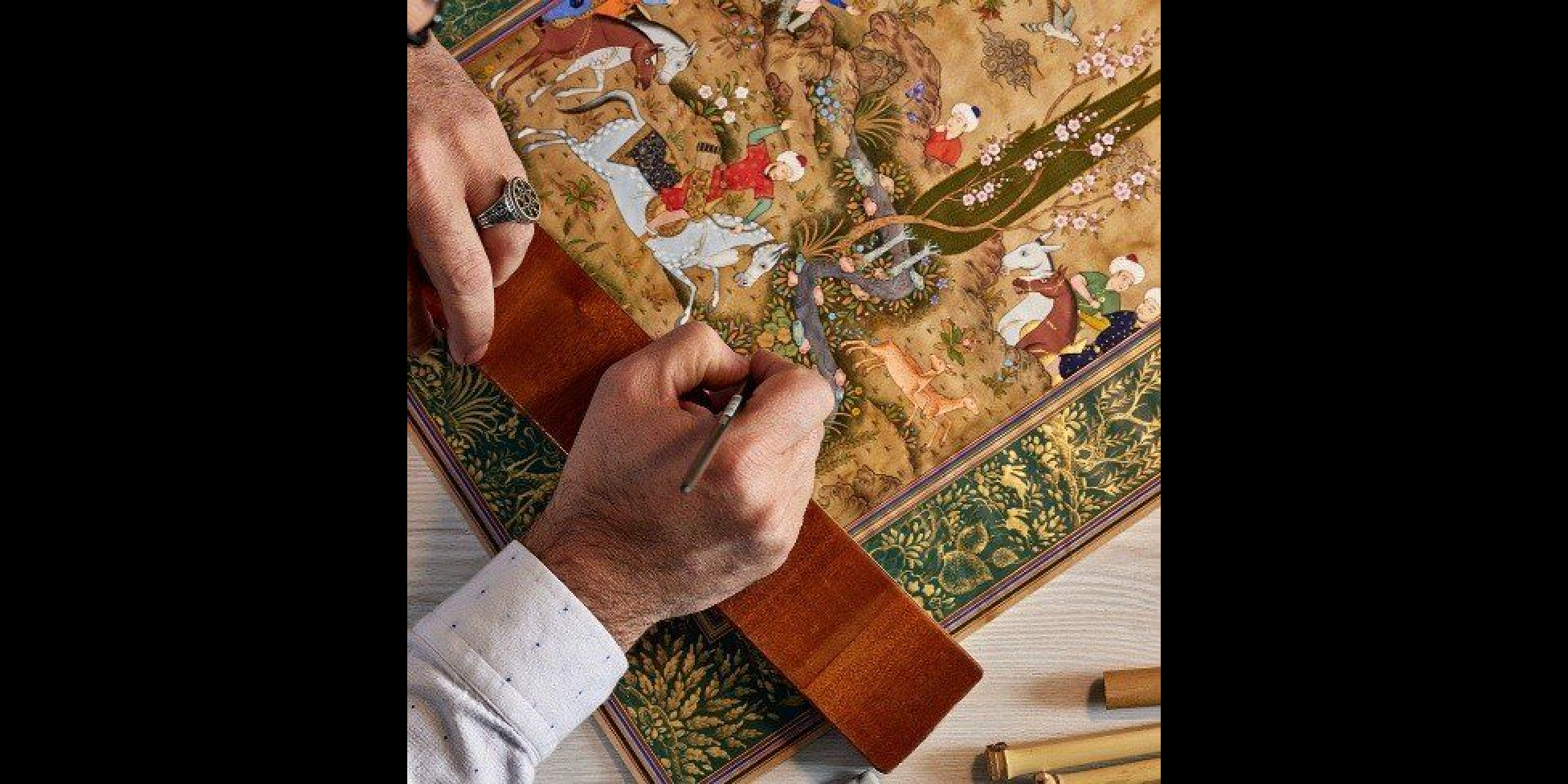
Three Uzbek artists are transforming traditional floral designs into glass sculptures, embroidered textiles, and miniature paintings at the second Design Doha Biennial in Qatar. Their exhibition, A Leaf from the Rose Garden, takes its inspiration from a 13th-century Persian literary classic.
Organized by the Uzbekistan Art and Culture Development Foundation (ACDF), the exhibition opened on November 5, 2026, and runs until January 31, 2027. It brings together Tashkent-based artists Ruben Saakyan and Madina Kasimbaeva, alongside Bukhara-based artist Davlat Toshev, each exploring floral ornamentation through a different material and technique.
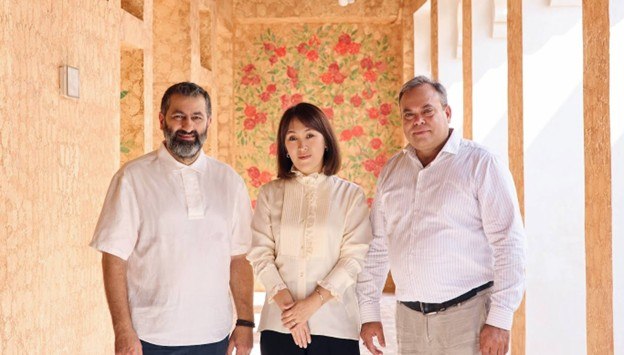
Participating Artists for A Leaf from the Rose Garden, commissioned by ACDF at Design Doha Biennial 2026. Ruben Saakyan, Madina Kasimbaeva and Davlat Toshev.
The venue is a traditional courtyard house in Fereej Al Asmakh, one of Doha’s oldest historic districts.
The title refers to Gulistan (The Rose Garden), a collection written in 1258 by Persian poet Saadi Shirazi. In the work’s preface, Saadi compares the short-lived beauty of a cut flower with the lasting nature of a garden preserved through literature. The exhibition explores how artistic traditions can survive across generations through the skills and knowledge passed between craftspeople.
Floral ornament has a long history in Uzbekistan’s visual culture, appearing in textiles, ceramics, manuscripts, and architecture. Although these patterns have been preserved over centuries, artists have continued to adapt them to different materials and individual styles.
“A Leaf from the Rose Garden reflects an idea central to our work at ACDF: that cultural heritage is sustained through the people who continue to practise, reinterpret and transform it,” Gayane Umerova, ACDF’s chairperson, said in a statement.
Three artists, one floral motif
Saakyan, a floral artist and designer, presents a large-scale installation of glass flowers in the house’s central courtyard. The installation builds on his earlier project, Fragile Garden: The Embroidery of Uzbekistan Crafted from Murano Glass, presented in Venice in 2024.
Sample of Ruben Saakyan’s work.
Developed with Venetian glassware company Laguna~B and its Murano glassmakers, that work transformed motifs from Bukhara embroidery into more than 500 handmade glass elements. For the Doha exhibition, the concept has been adapted to create a garden in which the delicate colors and contours of flowers are preserved in glass.
The choice of material also introduces a contrast between fragility and permanence, with glass capturing forms that would otherwise change and disappear.
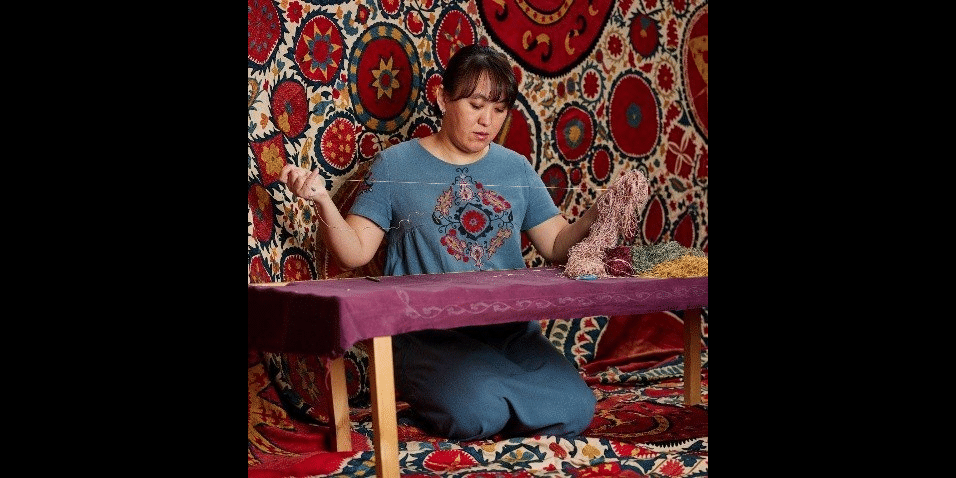
Kasimbaeva, a master of traditional suzani embroidery, contributes textiles whose floral patterns are rendered in colored threads and intricate stitching.
Suzani embroidery has traditionally been associated with family life, celebrations, and the transfer of artistic knowledge between generations. Kasimbaeva’s works retain these connections while exploring how established patterns can be reinterpreted through contemporary design.
Toshev works with miniature painting, calligraphy, and traditional papermaking. His contribution combines the precision of miniature painting with the fluid patterns of ebru, a marbling technique in which designs are created on the surface of water and transferred onto paper.
Five-year partnership expands cultural cooperation
Uzbekistan’s participation in the biennial comes as ACDF and Qatar Museums begin implementing a five-year cooperation agreement signed on September 3, 2026. The agreement provides for artist residencies and joint exhibitions, alongside professional training.
“Returning to Design Doha Biennial for the second edition is particularly meaningful as we begin a new five-year partnership with Qatar Museums,” Umerova said.
The partnership builds on earlier cooperation, including Uzbekistan’s participation in the inaugural Design Doha Biennial in 2024. On that occasion, ACDF presented Crafting Uzbekistan: Tradition in Threads, an exhibition exploring the country’s textile and wood craftsmanship through historical artifacts and contemporary design.
In April, Uzbekistan presented When Apricots Blossom at Milan Design Week. Organized by ACDF, the exhibition at Palazzo Citterio explored the environmental challenges facing Karakalpakstan, including the shrinking of the Aral Sea, through collaborations between international designers and Uzbek artisans.