New Year remains one of the most significant holidays in Central Asia. While its scale and prominence have gradually declined due to rising religiosity, many residents still regard it as the foremost secular and ideology-free celebration of the year. Across the region, households prepare their most beloved dishes to ring in the occasion.
No New Year Without Olivier Salad
For many families, traditional fare is an essential part of New Year’s Eve. Olivier salad has long been a staple of the holiday table. Originally created in the 1860s by a French chef in Russia, the dish once featured ingredients such as hazel grouse and seafood. Over time, particularly during the Soviet era of shortages, the recipe evolved.
Today, Olivier salad typically includes beef, chicken (or boiled sausage), potatoes, green peas, pickled cucumbers, and mayonnaise. It is usually prepared in large batches to ensure there is enough for all guests.
Other popular salads include herring under a fur coat, vinaigrette, and “Tenderness”, hearty dishes that can leave guests too full for main courses. Even in modest households, red caviar often finds its way to the table, adding a touch of festivity and indulgence.
Kazakhstan: Beshbarmak with a Twist
In Kazakhstan, beshbarmak remains the centerpiece of the New Year’s feast, as it is for most major celebrations. Traditionally, the dish combines three cuts of horse meat, kazy, karta, and zhay, served with flat noodles and onions. However, some families are adapting their menus in line with the Chinese zodiac. As the Year of the Red Horse approaches, online advice has suggested avoiding horse meat out of respect for the symbolic animal. A vegan version of beshbarmak, featuring mushrooms and pumpkin, is gaining traction.
Baked koktal fish is another showpiece dish, while kuydak (lamb with potatoes and onions) and khan syrbaz (a rich stew of lamb, vegetables, barley, and broth) are popular additions. Desserts often include traditional fermented milk products such as zhent, katyk, and irimshik, and the table is rarely without kumys, a fermented mare’s milk beverage.
Uzbekistan: Pilaf Reigns Supreme
In Uzbekistan, New Year is celebrated with great enthusiasm. According to folklore, Korbobo, a local version of Santa Claus, arrives on a donkey with his granddaughter Korgyz to distribute gifts to well-behaved children.
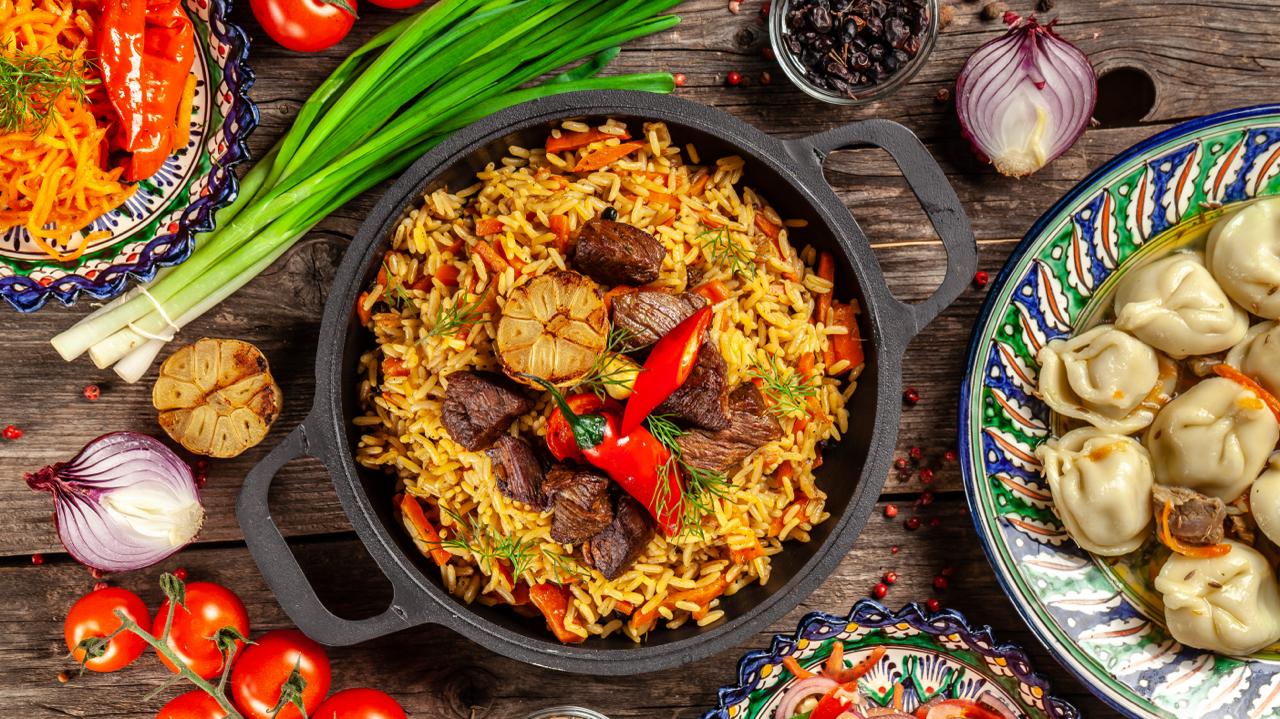
Pilaf, or plov, is the dominant holiday dish. Made with rice, carrots, onions, meat, and spices, regional variations might include raisins or quince for added sweetness. Each area boasts its own version of the national favorite.
Samsas, meat-filled pastries baked in a tandoor, are also served, as are manti, large, steamed dumplings filled with lamb, beef, or pumpkin. Other popular dishes include kazan-kabob (fried meat and potatoes). For dessert, chak-chak (fried dough with honey) and halva (made from sesame, semolina, or nuts) are perennial favorites.
Kyrgyzstan: Boorsoki and Beshbarmak
In Kyrgyzstan, beshbarmak, prepared with either horse meat or lamb, is also a central dish. Families commonly serve manti, baked chicken, and boorsoki (known in Kazakhstan as baursaki), fried dough balls that are a holiday staple.
Other meat-based specialties such as kabyrga (lamb rolls), asip (lamb sausages), chuchuk (horse meat sausages), and offal dishes like karta and karyn are also featured. Preparations often take place communally, with Soviet-era films playing in the background.
In Tajikistan, pilaf, referred to in its festive form as Oshi Milli, is also the dish of choice. While Olivier salad, herring under a fur coat, and holodets (jellied meat) remain popular, appetizers are often led by Shakarob, a fresh salad of greens, tomatoes, and cucumbers.
Turkmenistan also upholds culinary traditions, with Olivier salad offering a cultural link to its Soviet past. Pilaf dominates the table, prepared with meat, rice, vegetable oil, onions, and carrots. Elengi rice, prized for its size and juiciness, is typically used for festive meals. In many households, the New Year’s table is set directly on the carpet, on a large tablecloth, around which families gather. As in years past, children write letters to Santa Claus with their holiday wishes.