Freight volumes transported along the Trans-Caspian International Transport Route (TITR) through Kazakhstan have increased more than fivefold over the past seven years, highlighting the growing importance of the corridor as companies seek alternatives to routes passing through Russia. According to Kazakhstan’s Ministry of Transport, volumes have risen from 0.8 million tons to 4.5 million tons annually.
Also known as the Middle Corridor, the TITR is a multimodal transport route linking China and Europe via Central Asia and the South Caucasus. The rapid growth of the route reflects wider shifts in Eurasian logistics since Russia’s full-scale invasion of Ukraine in 2022. With many Western companies seeking alternatives to traditional northern routes through Russia, governments and logistics operators across Central Asia and the South Caucasus have accelerated investment in the Trans-Caspian corridor, hoping to position it as a key artery linking Asian manufacturing hubs with European markets.
Container transportation has been one of the fastest-growing segments of the corridor. In 2025, approximately 77,000 TEUs were transported along the TITR. Authorities aim to increase this figure to 300,000 TEUs by 2029.
Despite rapid growth, the corridor still carries far less cargo than traditional northern routes through Russia, underscoring both its potential and the scale of investment still required.
The expansion reflects ongoing infrastructure development and growing cooperation among participating countries and logistics operators. Key contributing factors include improved conditions for international freight transport, such as simplified customs procedures, as well as significantly shorter delivery times, reduced from roughly 28-32 days to 13-17 days. Demand has also risen for integrated “single-window” logistics services designed to enhance transparency and reliability.
Kazakhstan, Azerbaijan, and Georgia continue to coordinate efforts under joint roadmaps to eliminate remaining bottlenecks along the corridor.
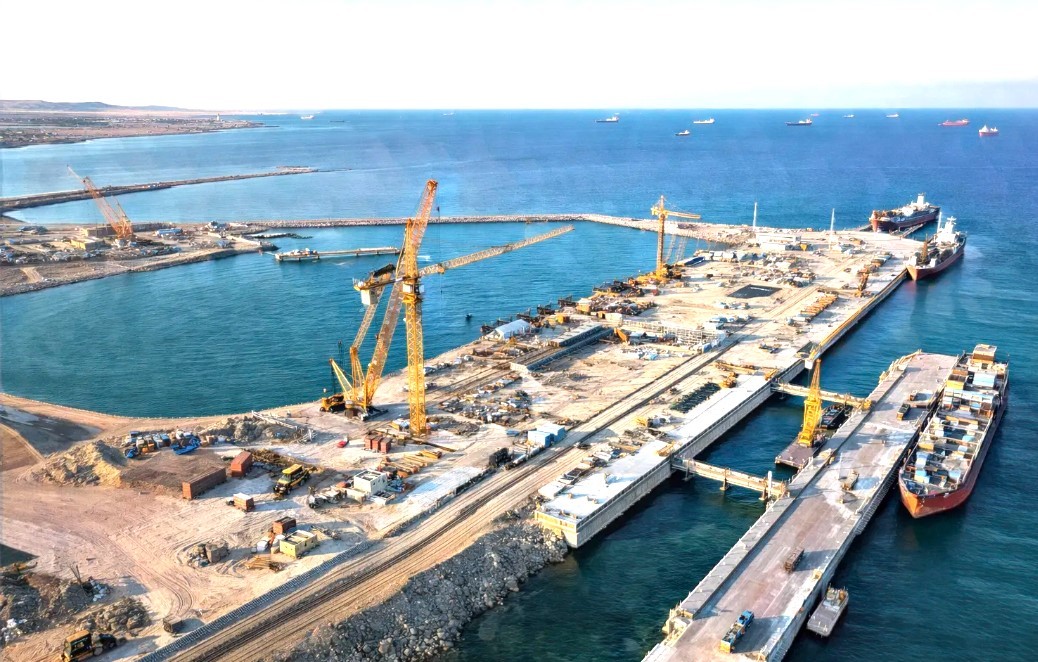
To ensure year-round navigation and strengthen competitiveness, Kazakhstan is investing in infrastructure on the Caspian Sea coast. Dredging has already been completed at Kuryk Port, while similar work is planned at Aktau Port this year to increase depth and improve vessel access.
Construction is also underway at Kuryk on the Sarzha multifunctional terminal, a project being implemented in cooperation with Abu Dhabi Ports Group from the United Arab Emirates. The terminal is expected to have an annual capacity of five million tons.
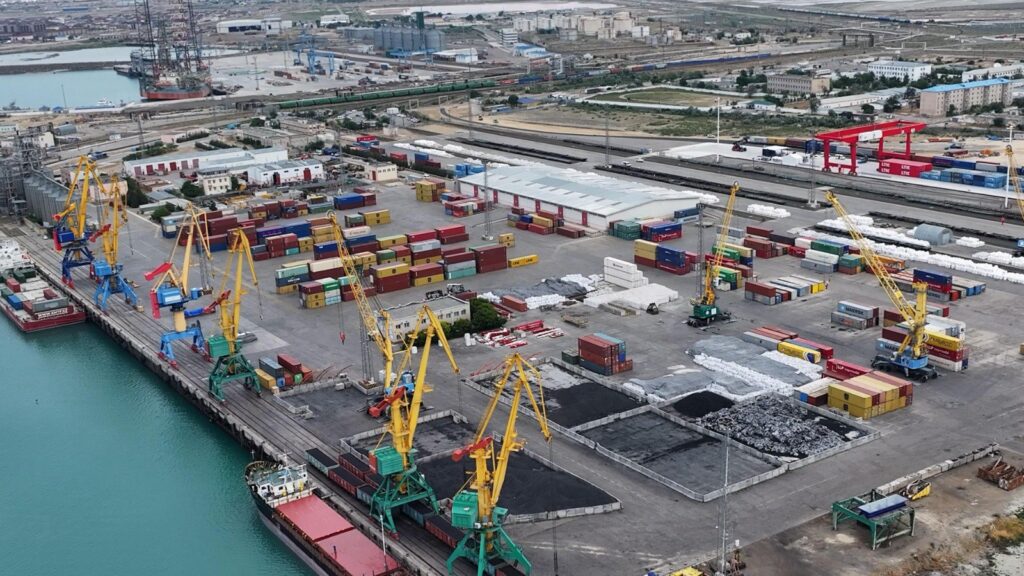
Meanwhile, a container hub has been launched at Aktau Port, further enhancing maritime logistics capacity along the corridor.
Kazakhstan has also expanded its transport infrastructure abroad. A Kazakh-operated terminal with a capacity of 120,000 TEUs has been launched at the Georgian port of Poti, improving cargo handling efficiency along the TITR.
The European Union is also supporting the corridor’s development. A grant has been allocated for the reconstruction of Berths No. 3 and No. 12 at Aktau Port. The funding will be used to purchase wind-resistant ship-to-shore cranes to ensure stable operations during adverse weather conditions.
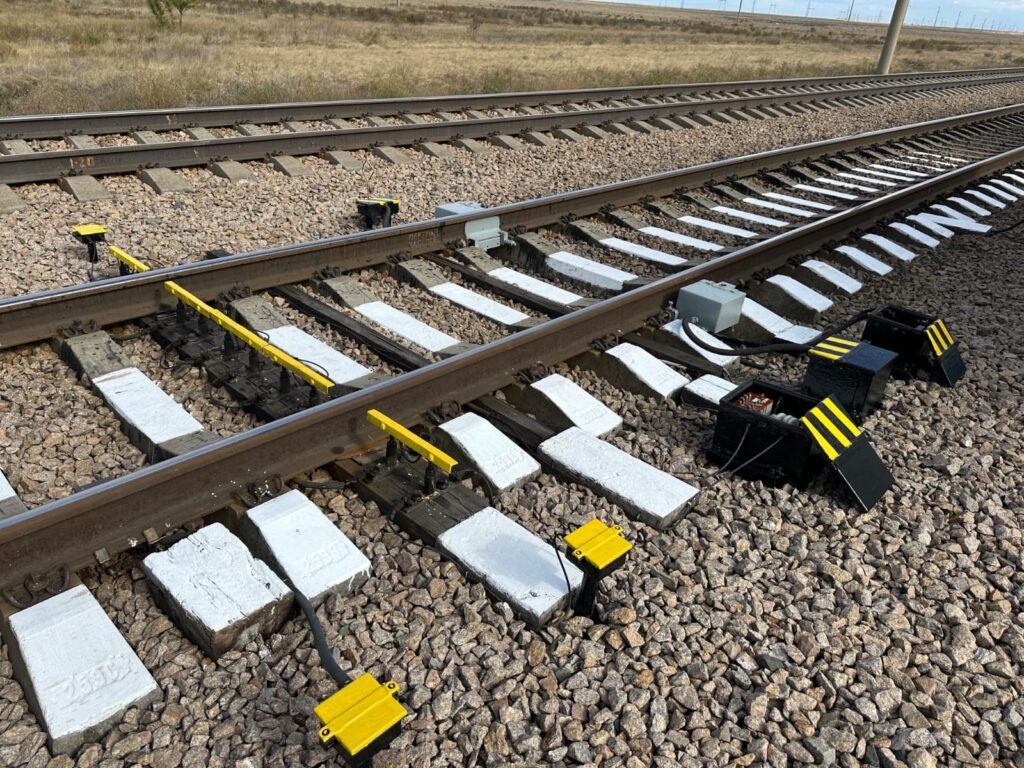
On the railway side, Kazakhstan is upgrading more than 2,000 kilometres of rail infrastructure connected to the corridor.
In 2025, construction and modernisation work were completed on 911 kilometres of railway lines. Key projects include the construction of second tracks along the Dostyk-Moiynty section (836 kilometres) and the development of a 75-kilometre bypass railway line around Almaty station. Both projects are considered critical components of the Middle Corridor’s logistics network.
The Trans-Caspian International Transport Route is increasingly viewed as a key element of the evolving global logistics system. Participating countries continue to coordinate investment and infrastructure initiatives aimed at improving reliability, expanding throughput capacity, and making the corridor more attractive for international freight operators.