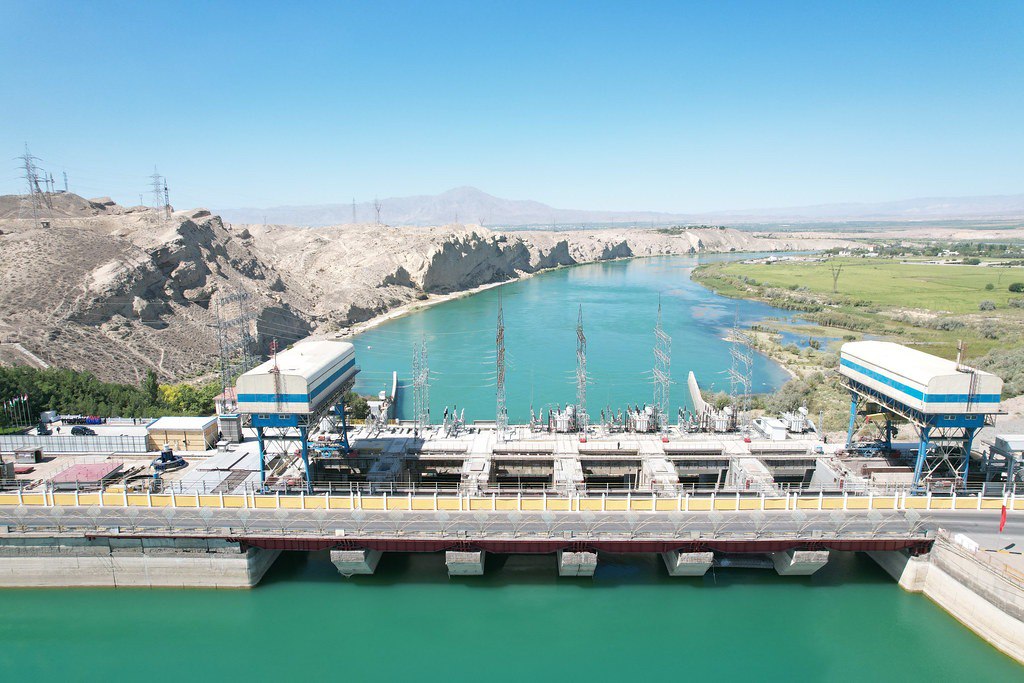
DUSHANBE (TCA) — An European Bank for Reconstruction and Development (EBRD) climate resilience project proposal for the modernisation of a hydropower plant in Tajikistan has been approved for co-financing by the Green Climate Fund (GCF), the Bank said on April 6.
The EBRD and other co-lenders are providing US$ 158 million for the climate-resilient upgrade of Qairokkum hydropower plant, with co-financing of US$ 50 million from the GCF.
The modernisation of the Qairokkum hydropower plant will address the energy security needs of 2.4 million people in the northern Sughd region in the face of increasing climatic variability. GCF support will enable best international practices on climate risk management to be introduced to the Tajik hydropower sector.
More reliable and climate-resilient energy generation will address the frequent electricity blackouts which are severely harming the economy of Tajikistan, a country where hydropower sources are responsible for 98 per cent of electricity generation.
Extensive cooperation between the EBRD, the Tajik authorities and international experts involved detailed climatic and hydrological studies, which informed the design of the Qairokkum project. This led to the selection of turbine, spillway and dam safety monitoring equipment that is designed to cope with the projected increasing variability in climatic conditions in the Syr Darya river basin.
The project will also include technical cooperation on climate resilience capacity building, which will involve improving trans-boundary cooperation on hydropower cascade management. It will build the resilience of this nationally critical infrastructure in the face of changing climatic conditions and the GCF support is critical for achieving this.
The Qairokkum hydropower project is complemented by a range of other activities by the government of Tajikistan in collaboration with donors to strengthen the country’s energy system. For example, the EBRD’s CLIMADAPT Climate Resilience Financing Facility provides affordable finance for Tajik households, farmers and businesses through the local banking sector and with support from the Climate Investment Funds to access sustainable energy, water and sustainable land management solutions. This includes finance for small-scale renewable energy and household energy efficiency.