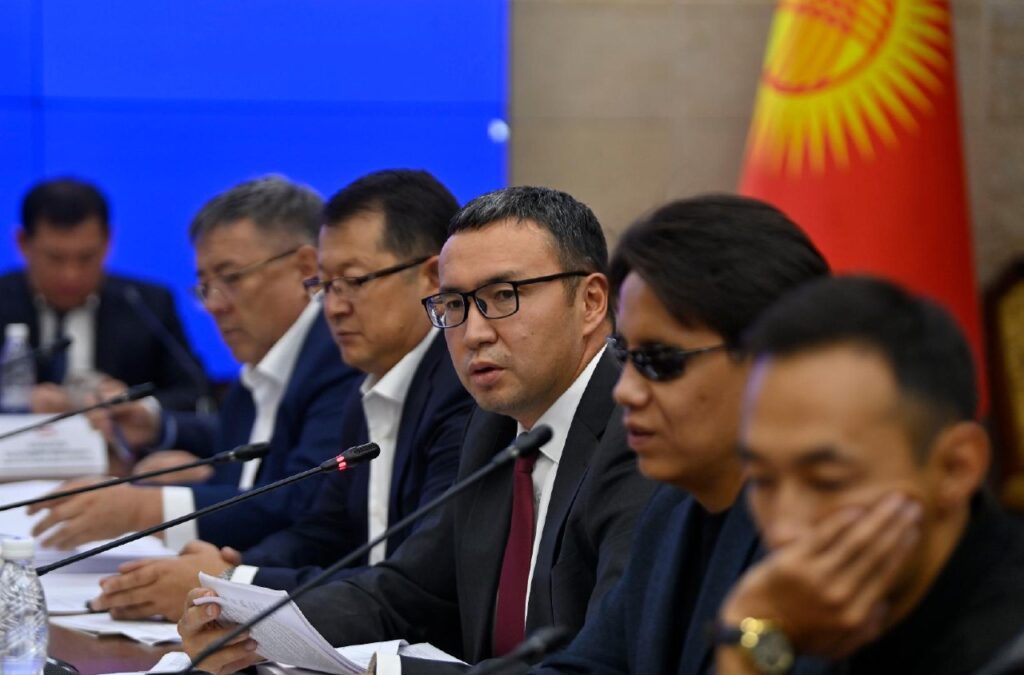
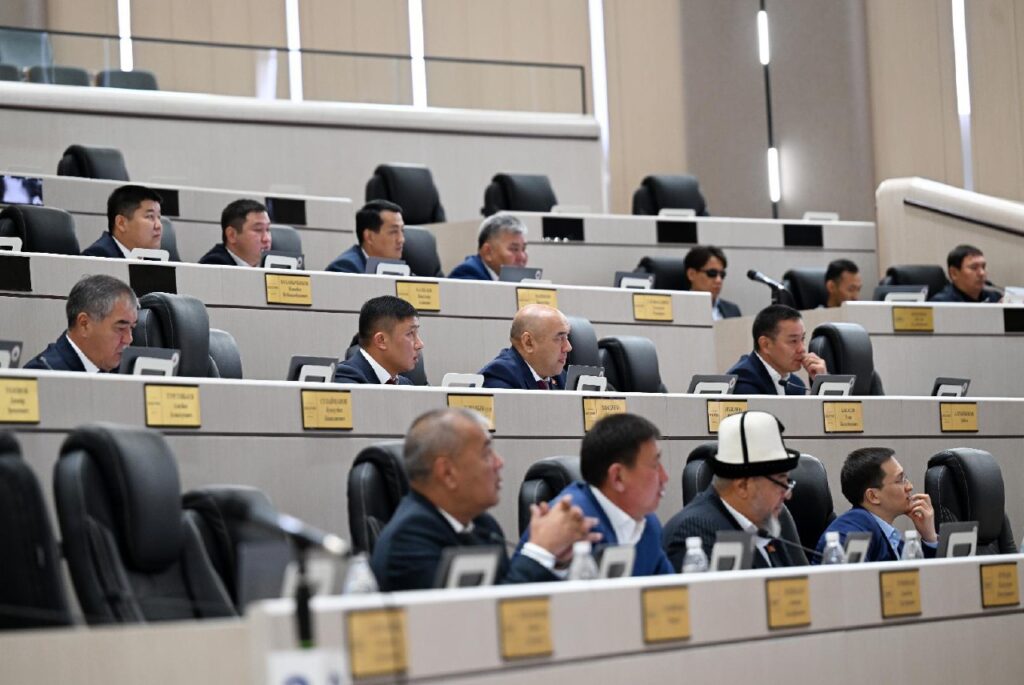
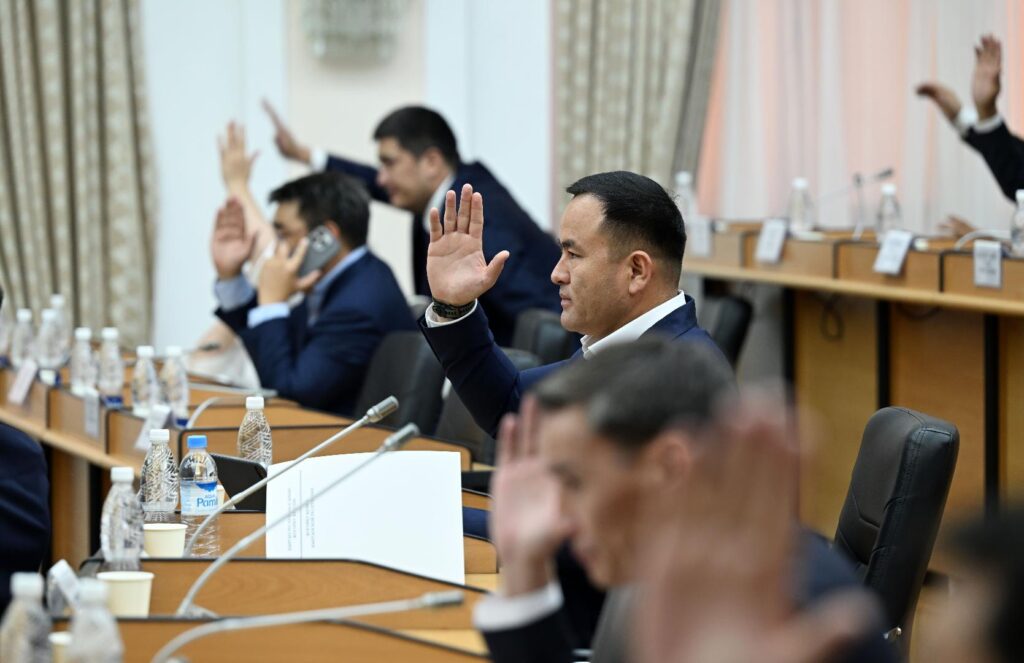
One of the most debated elements of President Kassym-Jomart Tokayev’s annual address to the nation was his proposal for sweeping parliamentary reform. Tokayev suggested a return to a unicameral legislature, mirroring the single-chamber Supreme Council of the early post-independence years.
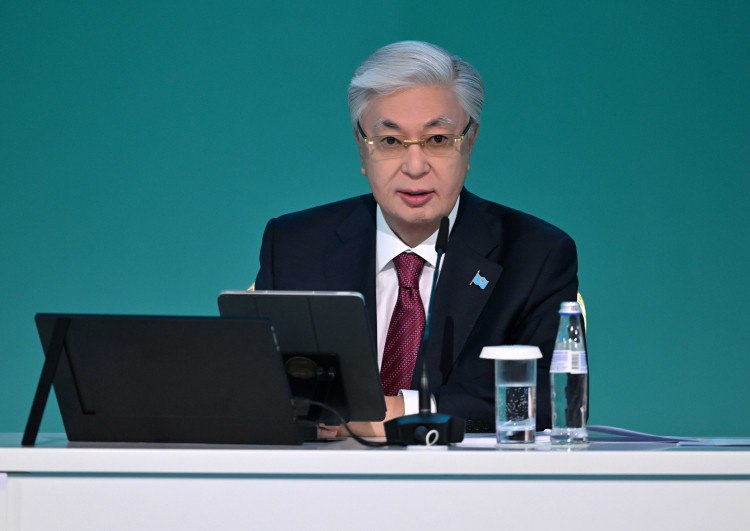
“I personally had the honor of leading the Senate for ten years, and I have always regarded this work as a great privilege and responsibility,” Tokayev stated. “That’s why it is not easy for me to speak about parliamentary reform from this podium. Nevertheless, today I propose that in the foreseeable future, Kazakhstan consider creating a unicameral Parliament.”
Tokayev went on to propose holding a national referendum on the issue in 2027.
From Supreme Council to Bicameralism: Lessons of a Political Crisis
The Supreme Council of the 13th convocation, elected in March 1994, quickly fell into conflict with then-President Nursultan Nazarbayev. Citing a constitutional discrepancy, Nazarbayev dissolved the council in March 1995, leaving Kazakhstan without a legislative body until December of that year.
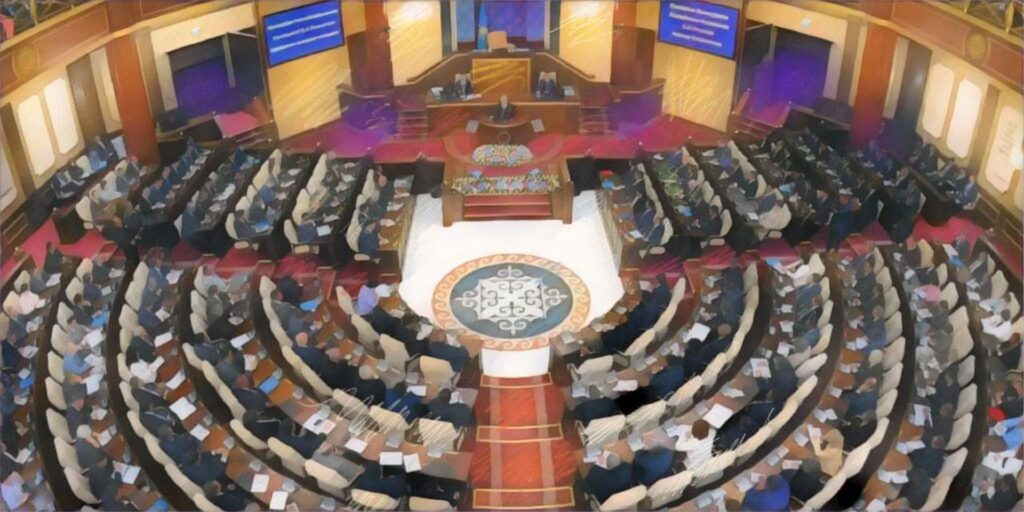
Kazakhstan’s current bicameral system, comprising the Mazhilis (lower house) and the Senate (upper house), emerged as a response to that political crisis. Initially, the Mazhilis included both party-list and independent candidates, though the system later shifted toward proportional representation. In 2022, the mixed system was reinstated, allowing for majority candidates once again.
The Senate, meanwhile, has historically served to counterbalance the more agile Mazhilis. Senators are chosen through regional maslikhat voting or appointed directly by the president, a practice introduced under Nazarbayev. Critics argue this has enabled the central government to neutralize local dissent or sideline bureaucrats by sending them to a largely ceremonial upper chamber.
The Senate’s inertia became especially problematic during past confrontations between the executive branch and parts of the Mazhilis. In 2001-2002, then Prime Minister Tokayev even threatened to resign unless Nazarbayev dismissed several cabinet members linked to the reformist Democratic Choice of Kazakhstan (QDT). Facing mounting political pressure, Nazarbayev promptly removed officials, including Deputy Prime Minister Oraz Jandosov and Deputy Defense Minister Jannat Ertlesova, among others. That political standoff, clearly not forgotten by Tokayev, may explain his desire to simplify the legislative structure and reduce expenses tied to maintaining the Senate.
Reform Proposal Met with Mixed Reactions
Kazakh media and political experts were quick to weigh in on the announcement. Most agreed on two points: the Senate has long been criticized, and Tokayev remains committed to opening up major reforms to public debate. Still, the initial wave of enthusiasm quickly gave way to more cautious analyses.
Political scientist Daniyar Ashimbayev expressed concerns on his Telegram channel about regional representation in a purely party-list system. He noted that bicameralism is not exclusive to federal states and pointed out that Kazakhstan’s diverse regions have varying interests requiring nuanced representation. According to Ashimbayev, the Senate has functioned as a “collective lobbyist” and as a “social elevator” for regional elites. Single-mandate deputies, he argued, have also served similar functions.
This critique highlights a less-discussed element of Tokayev’s reform: eliminating majority-elected deputies, a key feature of the 2022 democratic reforms. Political scientist Marat Shibutov echoed this concern. On his Telegram channel, he pointed out that while the return of single-mandate deputies in 2022 was initially popular, their performance has since been underwhelming.
Shibutov observed that prominent single-mandate deputies submitted two to three times fewer official requests than their party-list counterparts. “Where did their activity go?” he asked rhetorically, suggesting their energy was diverted into media grandstanding and populist attacks on businesses, behavior Tokayev is unlikely to endorse.
Indeed, many single-mandate deputies from the regions act as lobbyists for local elites and business interests. Tokayev’s reform appears aimed at closing these avenues of influence.
Who Will Lead the New Majority?
Were the abolition of the Senate and independent candidates to proceed, the leader of the majority party would likely become the most powerful figure within the legislature, centralizing legislative authority. The most obvious contender for this role is Yerlan Koshanov, leader of Amanat, Kazakhstan’s current ruling party.
Formerly known as Otan, and later Nur Otan, the party was long associated with Nazarbayev. Although Tokayev formally left the party in 2022, Amanat has remained dominant, adapting quickly to the new political reality. Koshanov, an experienced civil servant and current Chair of the Mazhilis, has built a reputation as a loyal ally of Tokayev. Before becoming speaker, he served as governor of the Karaganda region and as chief of the Presidential Administration. His leadership of Amanat positions him as the most likely figure to consolidate power in a future unicameral system.
Ak Zhol, led by veteran lawmaker Azat Peruashev, may offer some competition. The party enjoys popularity in business circles and industrial regions, and styles itself as the parliamentary opposition. However, it lacks broad appeal in Kazakhstan’s populous southern regions.
Other parties, such as the People’s Party of Kazakhstan, Auyl, the National Social Democratic Party (NSDP), and Respublica, remain marginal players. The People’s Party has lost its northern strongholds and lacks southern reach. Auyl, while active in rural areas during elections, has a tendency to fade quickly afterwards. NSDP and Respublica, though more visible in urban centers like Astana and Almaty, have yet to demonstrate significant electoral traction.
Continuity, Not Upheaval
Ultimately, Tokayev’s proposed reform is unlikely to alter the party balance significantly. Amanat remains dominant and, barring unexpected developments, will likely continue to shape the legislative agenda.
The true question is whether Yerlan Koshanov will remain at the helm of the new parliament, or whether Tokayev has a more strategically advantageous candidate in mind. With Tokayev’s mandate expiring in 2029 – and no possibility of reelection under the 2022 constitutional changes – the proposed reform takes on added significance, raising questions about succession planning and the political landscape of the post-Tokayev era.