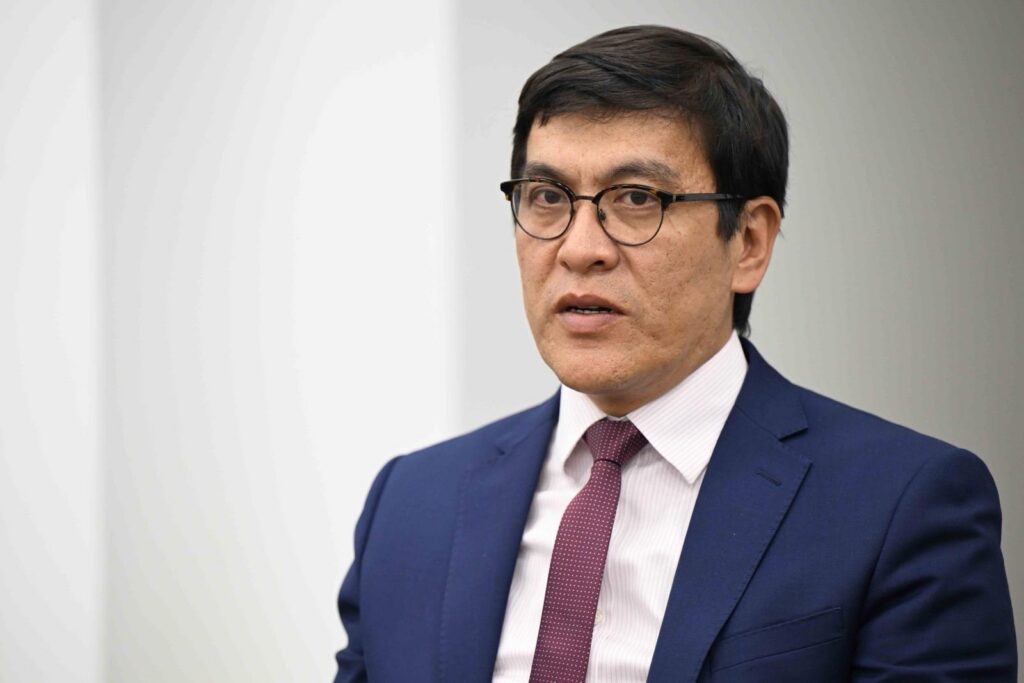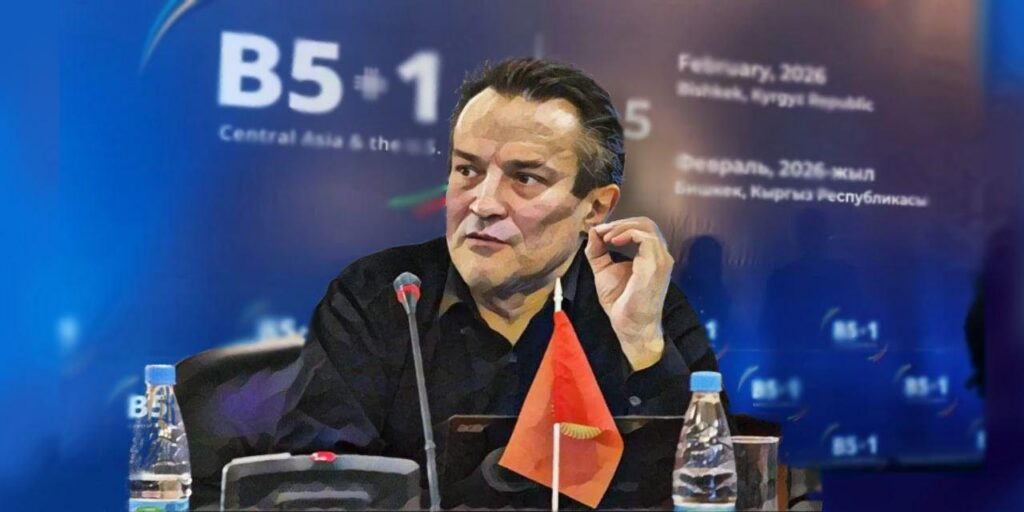
As Kazakhstan prepares to celebrate its Independence Day on December 16th, The Times of Central Asia (TCA) sat down with its special correspondent, Javier M. Piedra, a banker, corporate executive, writer, and seasoned international development expert whose professional ties to Kazakhstan date back to 2000. Piedra lived in Kazakhstan for 16 years. Over that time, he headed KPMG’s M&A (2007 – 2012), set up a credit bureau – the only one in the region at the time – and was a senior advisor for a private equity fund. He also taught corporate finance at Narxoz University. Back in Washington, he later managed USAID’s multibillion-dollar Asia Bureau under Donald Trump. Drawing on decades of experience in financial consulting, international development, and regional policy, Piedra offers wide-ranging insights into the nation’s evolution since 1991.
In this conversation, he reflects on the mindset of Kazakhstan’s leadership – especially in recent years – that has led to, despite challenges, to its achievements – from economic reforms and institutional development to social progress and an increasingly dynamic national outlook. He highlights milestones worth celebrating, offers guidance to the next generation, and provides nuanced commentary on religious freedom and the country’s ongoing development path.
The views expressed in this interview are those of the speaker and do not necessarily reflect the editorial position of The Times of Central Asia.
TCA: As Kazakhstan marks Independence Day on December 16, what core achievements of the country are most worth celebrating at this moment in its history?
Piedra: On December 16th, I expect – and this is good news – President Tokayev to repeat what he said last year, i.e., “I am convinced that by maintaining our unity, tranquility and stability in society, we will overcome all challenges and reach new heights on the path of progress.” Put simply, Kazakhstan can stay unified and stable despite challenges if it commits to doing so. People need to hear this message because it is positive, and the record supports his optimism. It is worth celebrating the country’s positive attitude and confidence in the future.
Kazakhstan’s greatest achievement since independence, despite forces pushing in the contrary direction, has been the ability of its multiethnic and multicultural society to flourish. Kazakhstan has preserved unity, strengthened friendships with neighbors, ensured economic freedoms, and inspired its youth with hope, despite trials, corruption, and human shortcomings.
Kazakhstan’s dedication to unity is strengthened by its refusal to get pulled into unnecessary geopolitical ambitions or Great Power maneuverings that tend to rob countries of their sovereignty; this mindset is worth celebrating on Independence Day.
TCA: You mention “confidence in the future.” What does that mean in the context of Independence Day?
Piedra: The early days of Independence were rough, very rough, not only for Kazakhstan, but for the rest of the countries of Central Asia. Since independence in 1991, Kazakhstan has worked hard to build social and institutional structures that enable people to have greater “confidence in the future,” and there were many mistakes made, but Kazakhstan came away stronger and clearer-eyed. As I mentioned already, without a positive outlook, pessimism and negativity could have set in, destroying the common man’s ability to participate in the building of the nation. But that did not happen.
Over time, an increasing number of citizens recognized Kazakhstan’s development path as sound, since everyday life remained comparatively calm and stable even amid uncertainty, cronyism, institutional weaknesses, and assorted other corruption-related difficulties.
Independence shows itself when fear, despair, and disorder are limited in society. Kazakhstan’s ongoing commitment to its traditional values, though not without flaws, contributes to the sense of “confidence in the future.”
TCA: How would you describe Kazakhstan’s approach to nation-building and governance since independence, particularly in terms of its socio-economic model and the values that underpin it?
Piedra: One can debate the meaning of ‘nation-building,’ both in theory and in practice. But it is my sense that Kazakhstan has tried to implement a system of governance oriented to the common welfare, which means the implementation of a socio-economic program that respects human dignity, subsidiarity, and solidarity – these are important concepts. Astana has been putting in place the socio-political infrastructure to help all people and communities, not just the privileged, maintain their families and make ends meet. Fortunately, Kazakhstan recognized that nation-building required ditching the legacy of Soviet atheism in the body politic and society. That recognition, however, did not mean embracing forms of ideological neoliberal atheism as an economic model – but that is a different story which I can touch upon later.
TCA: What are some of the changes that have been made over the past five years? You speak of subsidiarity; what is the meaning of subsidiarity?
Piedra: I am glad you flagged the term “subsidiarity,” which is a fundamental principle, in my opinion, for meaningful change at an organic level. In the context of Kazakhstan, subsidiary means that Kazakhstan’s leadership has been comfortable with the idea that decisions – social, economic, and political – should be made as close to the people affected by those decisions as possible, with outside authorities stepping in only as and when local groups truly cannot handle problems or deliver on a public service. More work needs to be done. but the concept of subsidiarity is not foreign to the cultures of Central Asia.
At a structural level, changes have come about through political reforms that strengthen institutions and demand responsible governance at a local level. The process of reforms, of course, is a work in progress and filled with shortcomings, but at least it seems that genuine efforts are being made to decentralize decision-making.
At the economic level, the country is shifting from raw-material dependence towards diversified industries, SME growth, value-added exports, and stronger educational systems to support long-term development.
TCA: There is a lot of talk in the West about the need to reform the reigning – and many would argue failed – global economic system of ideological neoliberalism. In the context of Kazakhstan, can you share your thoughts?
Piedra: In the first instance, I must say that there is more to economics and economic theory than productivity, shareholder wealth, efficiency, and the implementation of cost-saving measures – that is all good. But Kazakhstan, it seems to me, based on years of observation, sees economic development more from the perspective of common good capitalism – at least at a policy level – than from that of corporate shareholders and minority special interest groups. This, in my opinion, is worth celebrating on Independence Day. Kazakhstan wants economic opportunity available over time to the majority on a stable basis, which is a measure of success in itself.
At a more granular level, Kazakhstan’s experience reflects its broader reckoning with neoliberalism as an economic model. In the West, neoliberalism promised prosperity but more often than not produced inequality and impoverished millions, resulting in oligarchic wealth concentration without meaningful trickle-down. Experience shows that unfettered privatization in Central Asia in the 1990s undermined social trust.
Recognizing this, in recent years, Kazakhstan introduced a new paradigm – curbing oligarchic dominance, promoting SME development, and supporting local enterprise through targeted financing and regulation. It also favored pragmatic entrepreneurship over cold economic ideology that lacks any empathy for the common man, the family, and society at large. This is worth celebrating as well.
TCA: Independence Day is especially meaningful for the younger generation. What guidance or message would you like to offer to young Kazakhs as they contribute to the country’s future development?
Piedra: Kazakhstan’s young people, shaped by respect for a multicultural society, benefit from living in a nation that prioritizes its citizens over special interests and agendas disconnected from the country’s future. What I mean is that the youth should not be mesmerized by terms like “globalism” and “multiculturalism” in an ideological sense – those ideas tend to facilitate the elimination of a nation’s personal history and identity.
What’s more, Independence Day should hold resonance among Kazakhstan’s youth as a testament to tangible progress since the turbulent 1990s – an era marked by post-Soviet chaos and institutional breakdown. Students in college today do not remember those days. Youth should sit down with elders and ask questions and listen instead of – if I may say – playing games or engaging in senseless blabber on the internet.
There’s another point I’d like to make – and it is a note of warning. Even though credit expansion – bank lending at the retail level – sounds great, students should be vigilant. While youth benefit from enhanced access to business/housing finance, financial literacy does not guarantee against overindebtedness and credit schemes designed to create unnecessary dependencies. One’s desires should not be financed by others’ money or wishful thinking. Those dependencies often lead to despair and a sense of helplessness. A healthy society avoids overindebtedness.
TCA: Speaking of demographics, since Independence, Kazakhstan’s population growth has been significant. Is this a measure of success? Is it a matter to celebrate on Independence Day?
Piedra: President Tokayev said this past September that “The family is a sacred concept for our people. Every person, first of all, is shaped as an individual within their cherished home, where they learn by example and absorb the noble qualities inherent in a true citizen. Thanks to the upbringing received in the family, our country raises patriotic, hardworking, educated, and cultured generations.” That mindset is something to celebrate on Independence Day and an attitude that, unfortunately, has been lost to many in the so-called developed world.
The family is the fundamental building block of society. Family cohesion matters because it strengthens the fabric of society, and a strong society underpins economic stability and growth. By celebrating children, supporting motherhood and childhood, and promoting traditional family values, as Kazakhstan does, the country is not only fostering demographic growth and national solidarity, but also building a reliable foundation for long‑term prosperity. Yes – new children and healthy families are worth celebrating on this Independence Day.
TCA: President Tokayev talked about the need for civility, not rudeness, in everyday life in his Republic Day address this past October. What did he mean?
Piedra: Yes, President Tokayev made comments about the need for more civil behavior in his Republic Day Address. I think Tokayev was saying that true independence means acting in accordance with – making every effort to live by – traditional values and civil norms of behavior while keeping in mind the common good of the nation. Tokayev sees refined manners – or, in his words, “culture, integrity, and decency,” i.e., civilized behavior – as essential for genuine human development. He has stated that “rudeness, profanity, and brawls have unfortunately become commonplace [in society]” and exhorted people to “develop an intolerance towards insults, cruelty, and violence.”
In his recent State of the Nation speech, Tokayev said that “[Our citizens] must unite and support each other and rid ourselves of such negative qualities as envy and ill will.” Most anywhere else, that would draw jeers, not cheers. Tokayev went further: “Disparaging someone’s work, ridiculing their opinion, or denigrating another person are actions alien to a developed, civilized society and are even shameful”.
It is difficult to imagine a European head of state who would, in a major public address, articulate concerns about civilized behavior, mocking others, and envy. In my opinion, a free and independent society will discuss these matters openly, and that is another reason to celebrate.
TCA: Moving onto a sensitive issue, would it be fair to say that the status of religious freedom in Kazakhstan is a matter to celebrate or decry three decades after independence in 1991?
Piedra: Religious freedom is a sensitive issue. I will therefore stick to what I know best. Since Kazakhstan’s independence in 1991, the Catholic Church has grown from a tiny, formerly repressed community into a stable nationwide institution. Under Soviet rule, there were only about two registered Catholic churches – in hidden-away places for private worship – but by 2024, the institutional Catholic Church had expanded to more than 70 parishes and a significant network of pastoral centers with an open and public community life. Clergy and religious personnel – who may walk outdoors publicly wearing a cassock if they so wish – have also increased: from a handful of priests in the early 1990s to around 95 priests and 105 religious sisters today. Is that a good or bad thing?
Although the exact numbers fluctuate, the Catholic population today in Kazakhstan is estimated at less than 150,000, representing a small but steady minority despite significant emigration of ethnic-German and Polish Catholics after independence.
This growth is remarkable because it occurred after decades of Soviet repression, when the Church had almost no legal presence in the country and operated largely underground. After independence, new freedoms allowed the Vatican to establish dioceses, rebuild institutions, and open parishes across the country. These churches are perfectly visible and often smack in the middle of town in plain view. The Catholic church also diversified from a mostly European-origin community into a multiethnic one. Its expansion – despite a decline among traditional Catholic groups – reflects institutional depth, growing pastoral capacity, and the ability to sustain a meaningful religious presence in the public square in a majority-Muslim nation. As a final note, Pope John Paul II and Pope Francis, who visited Kazakhstan on separate occasions, met with the President of the Republic. I was there on both occasions.
TCA: Concerning geopolitics, do you think it’s true that Kazakhstan is a force for peace in the region and on the world stage?
Piedra: Kazakhstan has positioned itself as a magnet for stability in Central Asia – but this is true in part because the other countries in the region are of the same mindset. Kazakhstan seeks cooperation and compromise instead of conflict on the international stage. It also has an emergent middle power status, pursuing diplomatic mediation, reconciliation, and open border policies beyond Central Asia. To its credit, Kazakhstan has worked to reduce long-standing tensions in other parts of the world, expand intraregional trade, and promote connectivity via transport corridors – the Middle Corridor and the North-South Corridor are but two examples. No other country has organized as many regional forums over the past 25 years as Kazakhstan. These efforts reflect a growing emphasis on diplomacy, with Kazakhstan working as a convening and stabilizing actor in the international arena. Kazakhstan has not taken sides in others’ conflicts or ambitions, but rather engaged thoughtfully and constructively. That is worth celebrating on Independence Day.
TCA: Explain how Kazakhstan has maintained its foreign policy independence despite close relations with China, Russia, the United States, and Europe.
Piedra: Kazakhstan maintains foreign policy independence by skillfully balancing relations with major powers. While it has close economic ties with Russia and China, it also engages the United States and Europe, leveraging these relationships to achieve mutually beneficial outcomes. India is also increasingly in the picture. Through smart diplomacy, Kazakhstan ensures that no single country can dominate its decisions, pursuing realistic ambitions without alienating any partner.
The country reinforces its autonomy by emphasizing its sovereignty, stability, and active participation in international organizations. By promoting win-win deals and a pragmatic, rules-based approach to global engagement, Kazakhstan secures its interests while navigating the regional balance of power, preserving both independence and influence. That is also worth celebrating.