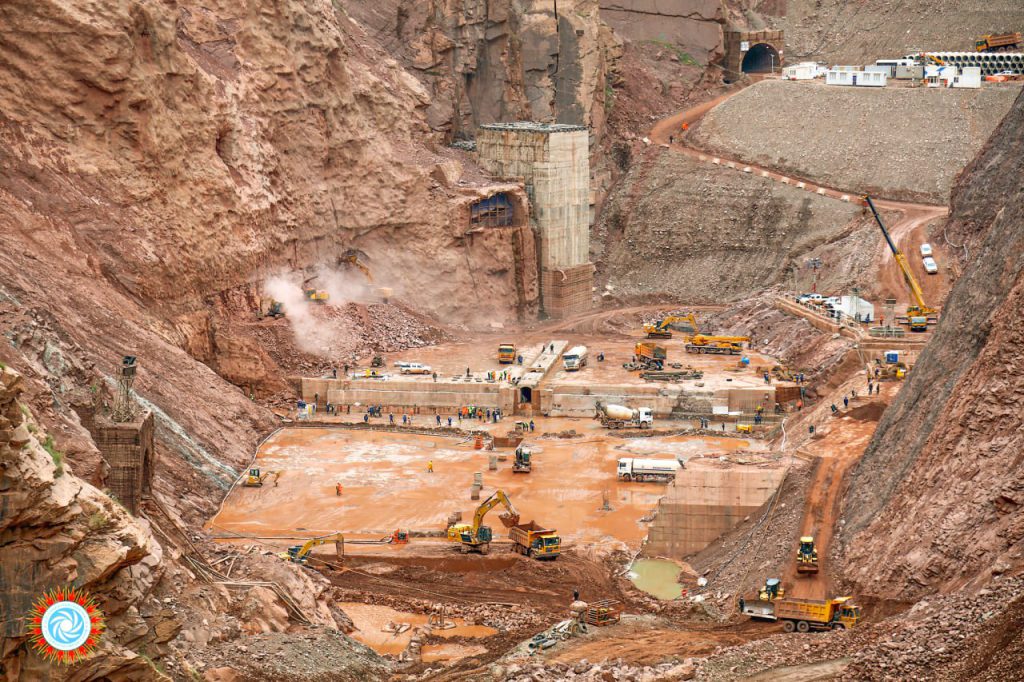
BISHKEK (TCA) — Kyrgyzstan has found investors for the construction of the Upper Naryn hydropower plants (HPPs) cascade, Sapar Isakov, head of the Office of the President of Kyrgyzstan, said at a roundtable discussing challenges and reforms in the country’s energy sector on July 4 in Bishkek.
Earlier, President of Kyrgyzstan Almazbek Atambayev and Chairman of the State Committee for Industry, Energy and Subsoil Use Duishenbek Zilaliev also spoke about investors but did not provide details. “We are at the final stage of negotiations. As soon as we are ready, we will immediately tell you about the results,” Zilaliev told local media.
Background
In January 2016, President of Kyrgyzstan signed laws on denunciation of agreements between the governments of Kyrgyzstan and Russia on the construction and operation of Kambarata-1 HPP and the Upper Naryn HPPs cascade. The agreements were signed in September 2012 in Bishkek, during the visit of Russian President Vladimir Putin to Kyrgyzstan.
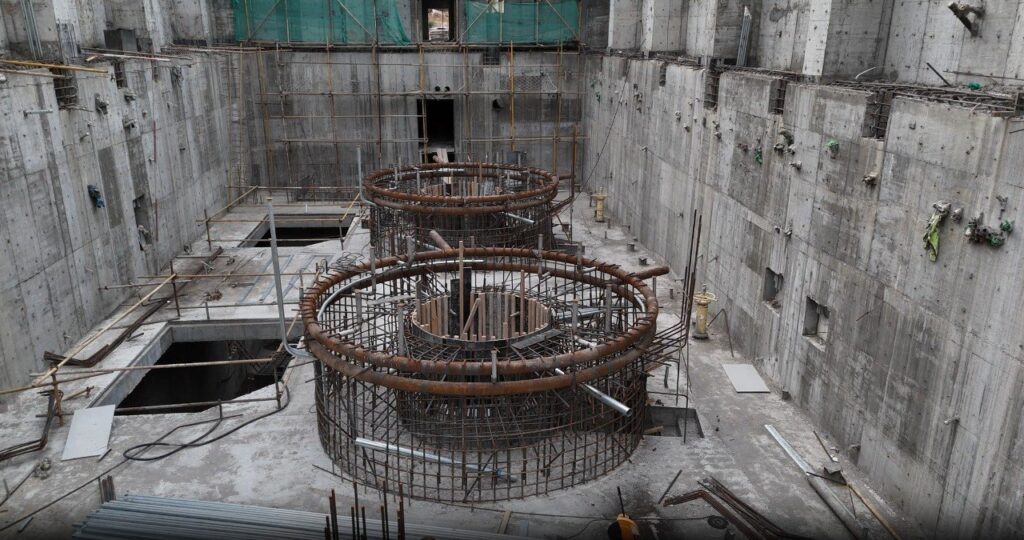
It was planned to build the Naryn cascade within six years, and the first hydraulic unit of the main Naryn HPP-1 should have been put into operation in 2016. The Upper-Naryn cascade would include Ak Bulun, Naryn HPP-1, Naryn HPP-2, and Naryn HPP-3 power plants. The total capacity of the cascade should be at least 191 MW, with average annual electricity production of 1.55 billion kilowatt-hours. The project was estimated at $425 million in 2012, and it was increased to $727 million at the end of 2013.
According to the Kyrgyz side, Russia did not find sources of funding for 2016. This led to delays of the HPPs construction. In addition, Russia had offered new terms that did not meet the interests of Kyrgyzstan.
Toktogul HPP
Kyrgyzstan’s National Energy Holding is optimizing the expenses of energy companies, Sapar Isakov said. He spoke about good changes in the energy sector including the reconstruction of the Toktogul HPP whose capacity will increase by 240 megawatts after the reconstruction.
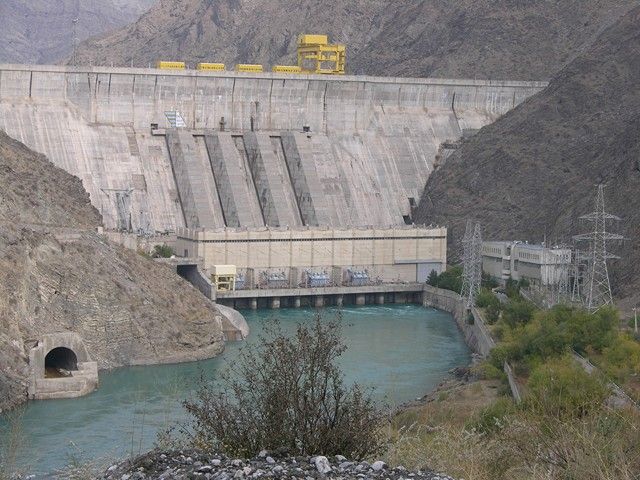
The Toktogul HPP, located in the south of Kyrgyzstan and built in 1975, is the country’s largest power plant, generating up to 40 percent of electricity in the country. Last year, it suffered two major accidents. Russian energy specialists helped find causes and cope with their consequences.
Rehabilitation of the Toktogul HPP is implemented in three phases and will result in a 20% increase in its capacity. During the first phase, the electrical and mechanical equipment was upgraded. The second phase includes replacing of two hydraulic units, resulting in 60 megawatts power increase of each unit. In the third phase, the remaining two hydraulic units will be replaced by new ones.
The rehabilitation of the Toktogul HPP will be accomplished in 2022. $175 million will be allocated for the third, final phase of rehabilitation. The Asian Development Bank will allocate $110 million ($60 million as a loan and $50 million as a grant) for 40 years with an 8-year grace period at 1% per annum. The Eurasian Development Bank will allocate $40 million at 1% per annum for 20 years and with the same grace period, and Kyrgyzstan’s contribution is $25 million.
New tariff policy needed
The roundtable participants also discussed the energy tariff policy. “We clearly understand that without an optimal approach to the tariff policy, we will not be able to develop the energy sector,” Isakov said. “We have been discussing this issue for a very long time, but to increase the price for electricity, it is necessary to provide our population with adequate wages and social benefits,” he added, urging to take a decisive step, and “then the energy sector will not pull the country back, but produce a huge economic effect.”
The World Bank supports a reasonable increase in electricity tariffs in Kyrgyzstan, a representative of the WB Office in Kyrgyzstan said. The energy sector is a priority for Kyrgyzstan and development partners, because the reliable work of this sector is the basis for sustainable economic development of the country and the private sector.
A new strategy for cooperation between the World Bank and Kyrgyzstan is currently being developed, and special attention is paid to the energy sector. Without its financial recovery, all the major initiatives that are taking place now will not have significant results.
A good medium-term tariff policy should be adopted in Kyrgyzstan, head of the National Energy Holding Aibek Kaliev said.
External loans to the energy sector amounted to 92 billion soms, and the peak of repayments will be in 2024-2025. The only way out is to enter new markets to export electricity.
The National Energy Holding plans to export at least 500 million kWh of electricity annually to repay loans. There will be revenues from the CASA-1000 project.
“But we should focus on the domestic market, because the lion’s share of electricity remains in the country. This requires a good balanced tariff policy. It should work from 2018 to 2022, because we must have a clear vision of how we will repay our loans,” Kaliev said.
The head of the State Committee for Industry, Energy and Subsoil Use, Duishenbek Zilaliev, supported Kaliev, saying that tariffs should be revised upwards but they should be fair.
Exporting electricity
Kyrgyzstan has started exporting electricity to Uzbekistan, and will continue it while there is enough water in the Toktogul HPP reservoir, Kaliev said.
From June 16 to July 4, 2017, Kyrgyzstan exported 192.5 million kWh to Uzbekistan. Under the contract between the two countries, it is planned to export 1.25 billion kWh until October.
According to the Electric Stations JSC, the water volume in the Toktogul reservoir had reached 18.78 billion cubic meters on July 6, 2017. For comparison, two years ago it was 11.93 billion cubic meters. According to preliminary calculations, on July 22, 2017 the volume of water in the reservoir can reach a maximum of 19.5 billion cubic meters.