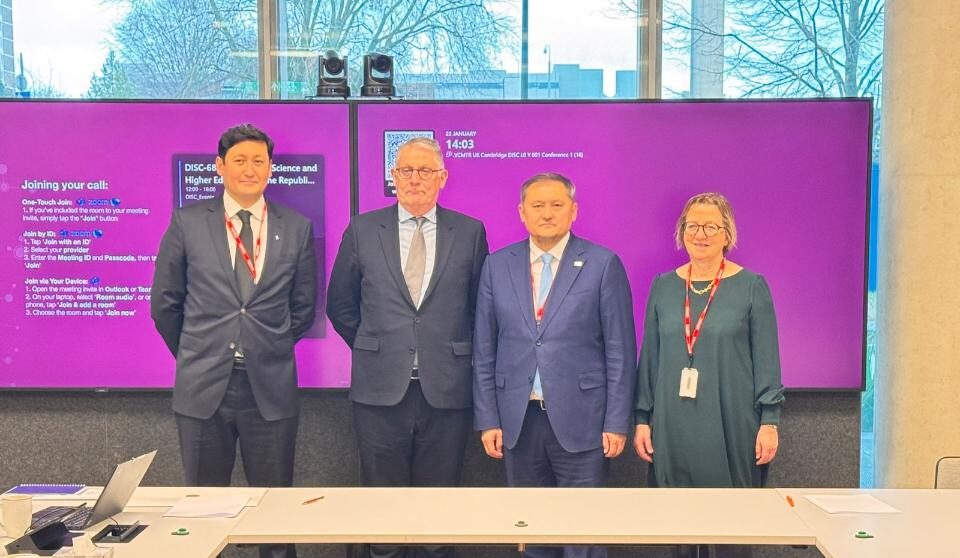
The Kazakh-German University (DKU), the National Academy of Sciences of Kazakhstan, and the Kazakh National Agrarian Research University (KazNARU), with support from Germany’s Hanns Seidel Foundation, have announced the creation of a new scientific and educational hub, the Kazakh-German Nexus Institute.
A New Center for Sustainable Solutions
The Nexus Institute will be headquartered at KazNARU in Almaty and aims to integrate the expertise of Kazakhstani and international scientists to address Central Asia’s pressing environmental issues. Its core mission is to develop comprehensive solutions in land and water management, energy, and ecology.
Key priorities include:
- Developing effective policies for sustainable land and water use
- Introducing digital tools for monitoring natural resources
- Training professionals to respond to climate-related challenges
- Promoting practices that prevent land degradation and desertification
German Support and Collaboration
German institutions, led by the Hanns Seidel Foundation, will offer both technical and financial support. Planned initiatives include joint research projects, strategic planning sessions, and the development of modern educational platforms.
The establishment of the Nexus Institute is considered a significant milestone in strengthening Kazakh-German scientific collaboration. It also contributes to building institutional capacity that aligns with the UN Sustainable Development Goals (SDGs), particularly in the areas of environmental sustainability and climate resilience.
Forum in Almaty: A Platform for Regional Dialogue
The initiative gained further momentum during the international forum “Central Asia’s Sustainable Development Goals in a Changing Global Order,” held in Almaty on September 19. Co-organized by DKU, the National Academy of Sciences of Kazakhstan, and Germany’s University Alliance Ruhr, the event convened stakeholders from academia, government, business, and international organizations.
Participants underscored shared priorities, including:
- Climate resilience and energy transition
- Scientific integration into public policy
- Cross-border cooperation
- Development of sustainable value chains
Future areas of collaboration include:
- Creating roadmaps tailored to the region’s mountainous and glacial ecosystems
- Expanding academic mobility and research exchange
- Strengthening technology transfer mechanisms
- Advancing frameworks for climate risk financing
The launch of the Nexus Institute and the Almaty forum signal a new phase in Kazakh-German cooperation, focused on forging actionable strategies for sustainable development and climate adaptation across Central Asia.