• KGS/USD = 0.01144 0%
  • KZT/USD = 0.00213 0%
  • TJS/USD = 0.10456 0.19%
  • UZS/USD = 0.00008 0%
  • TMT/USD = 0.28490 0%
  • KGS/USD = 0.01144 0%
  • KZT/USD = 0.00213 0%
  • TJS/USD = 0.10456 0.19%
  • UZS/USD = 0.00008 0%
  • TMT/USD = 0.28490 0%
  • KGS/USD = 0.01144 0%
  • KZT/USD = 0.00213 0%
  • TJS/USD = 0.10456 0.19%
  • UZS/USD = 0.00008 0%
  • TMT/USD = 0.28490 0%
  • KGS/USD = 0.01144 0%
  • KZT/USD = 0.00213 0%
  • TJS/USD = 0.10456 0.19%
  • UZS/USD = 0.00008 0%
  • TMT/USD = 0.28490 0%
  • KGS/USD = 0.01144 0%
  • KZT/USD = 0.00213 0%
  • TJS/USD = 0.10456 0.19%
  • UZS/USD = 0.00008 0%
  • TMT/USD = 0.28490 0%
  • KGS/USD = 0.01144 0%
  • KZT/USD = 0.00213 0%
  • TJS/USD = 0.10456 0.19%
  • UZS/USD = 0.00008 0%
  • TMT/USD = 0.28490 0%
  • KGS/USD = 0.01144 0%
  • KZT/USD = 0.00213 0%
  • TJS/USD = 0.10456 0.19%
  • UZS/USD = 0.00008 0%
  • TMT/USD = 0.28490 0%
  • KGS/USD = 0.01144 0%
  • KZT/USD = 0.00213 0%
  • TJS/USD = 0.10456 0.19%
  • UZS/USD = 0.00008 0%
  • TMT/USD = 0.28490 0%

Russia Says TV Host’s Remarks on Central Asia Do Not Reflect State Policy

Russia’s Foreign Ministry moved on January 16 to distance the Kremlin from comments by television host Vladimir Solovyov after his remarks about potential military action in Central Asia provoked backlash across the region. Foreign Ministry spokesperson Maria Zakharova stated that comments by television presenters do not represent the official position of the Russian government and that Russia’s foreign policy is articulated only through authorized state channels, with relations with Central Asian countries described as based on partnership and respect for sovereignty.

The clarification followed criticism in Uzbekistan, Kyrgyzstan, and Kazakhstan after Solovyov suggested that Moscow could extend its “special military operation” framework beyond Ukraine and into Central Asia. In Kyrgyzstan, public calls emerged to restrict Solovyov’s entry into the country, while officials indicated that the government would respond differently if similar claims were made by Russian state officials rather than a media figure. In Kazakhstan, political commentators warned that rhetoric questioning sovereignty risked damaging relations with Russia, even in the absence of a formal diplomatic protest.

Solovyov made the remarks during a January 10 broadcast of his program “Solovyov Live.” During the segment, he described Central Asia as part of Russia’s sphere of influence and argued that international law should not constrain Moscow’s actions in territories it considers strategically important. He drew parallels with Russia’s military campaign in Ukraine and implied that states within Russia’s perceived geopolitical space could be treated differently from countries outside it.

The language resonated strongly in Uzbekistan, where academics, analysts, and commentators criticized the implication that sovereignty could be conditional. Public discussion focused on the suggestion that Central Asian states might face pressure based on historical ties rather than be treated as independent actors. Critics described the framing as inconsistent with the principles of statehood established after the collapse of the Soviet Union in 1991.

An Uzbek academic later issued a rebuttal rejecting the idea that Central Asia could be treated as a single external “zone” governed by different rules. The response emphasized that regional states have distinct political systems, alliances, and security priorities, and that none had delegated authority over those choices to outside powers.

The episode highlighted the influence of Russian political talk shows during wartime. Figures like Solovyov command large domestic audiences and operate in an environment where commentary often overlaps with geopolitical messaging. In Central Asia, such remarks attract close scrutiny regardless of whether they carry formal policy status, particularly when they echo language used by Russian officials in other conflicts.

Economic and social ties heighten that sensitivity. Millions of Central Asian citizens work in Russia, and remittances remain a significant factor in several regional economies. Russia also plays a role in regional security arrangements and energy transit routes. Statements implying that sovereignty could be overridden therefore carry weight far beyond television studios.

No Central Asian government has announced formal diplomatic measures in response to Solovyov’s remarks, and Moscow’s intervention appears to have contained the immediate fallout. The episode nonetheless shows how rhetoric shaped by the war in Ukraine readily carries over into Russia’s relations with its neighbors, where questions of influence and autonomy remain sensitive more than three decades after the Soviet Union’s collapse.

Mapping the Inner Landscape: An Interview with Oyjon Khayrullaeva

In recent years, a new generation of Uzbek artists has begun to reshape how culture, history, and identity are visually narrated. Among them is Oyjon Khayrullaeva, whose practice moves fluidly between photography, digital collage, and large-scale public installations.

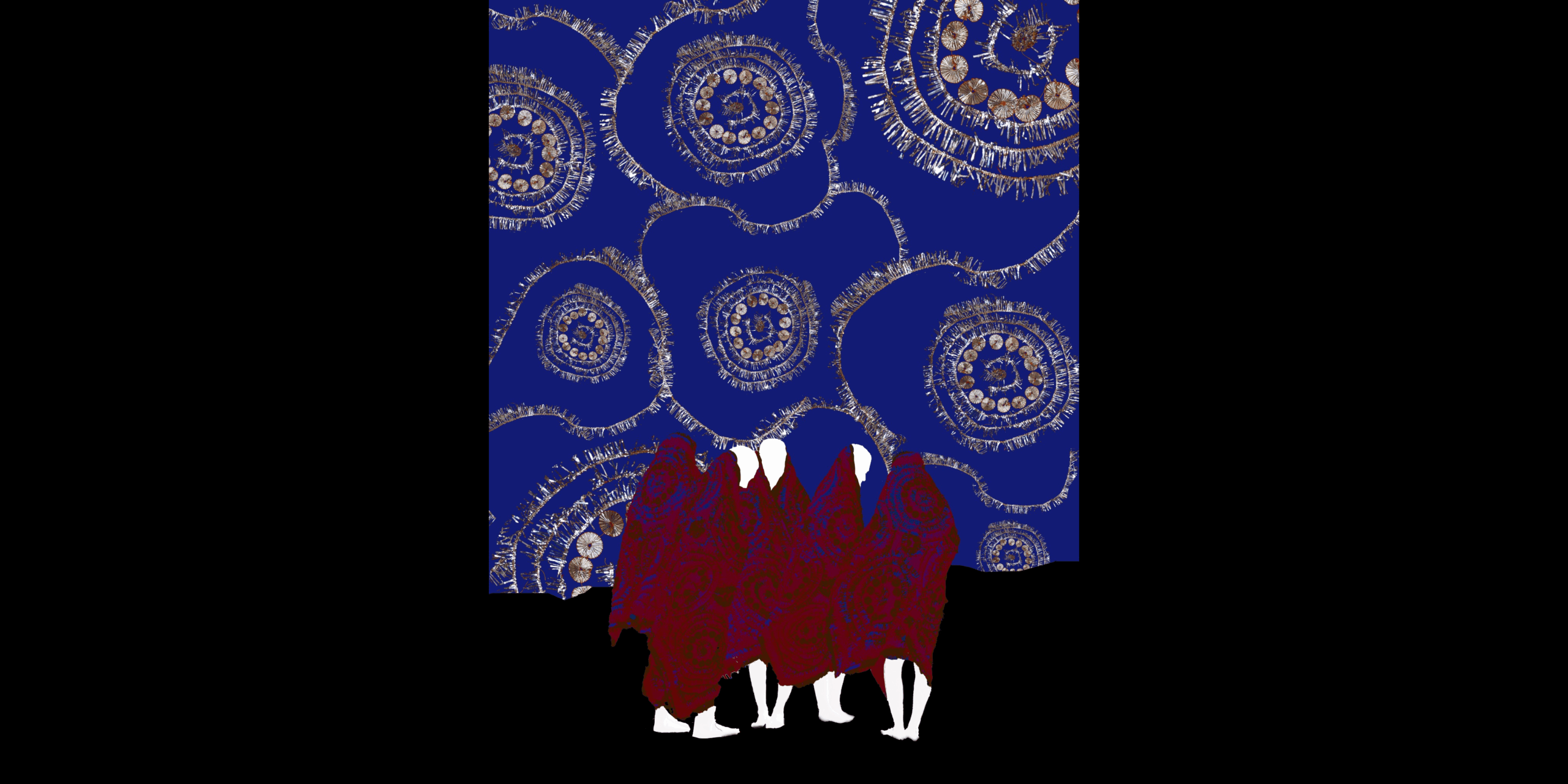
Born after independence and largely self-trained outside formal art institutions, Khayrullaeva works with inherited visual languages such as Islamic ornament and traditional textiles, reassembling them into contemporary forms that speak to the present moment.

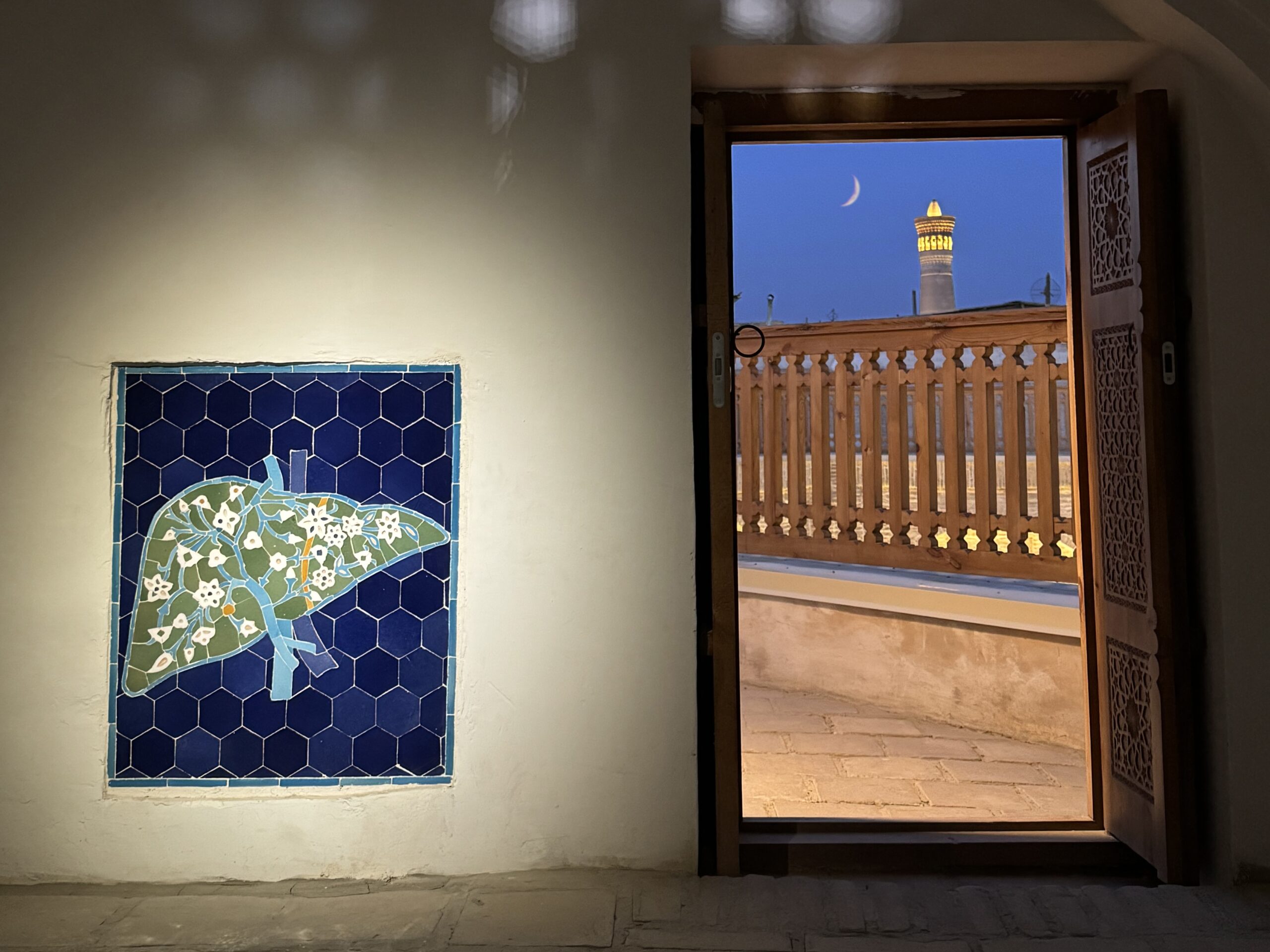
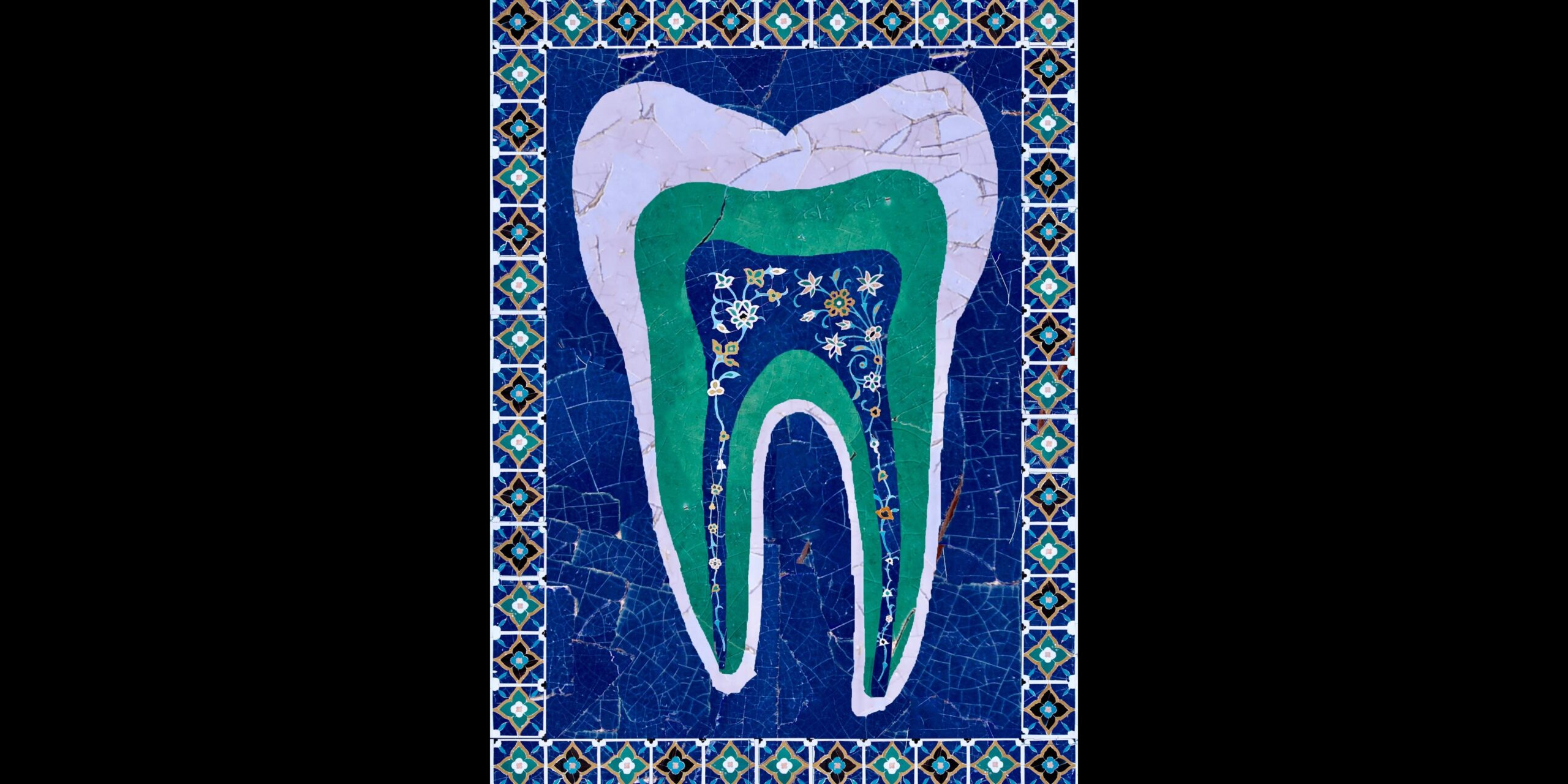
Her recent project for the Bukhara Biennial, called “Eight Lives, marks a turning point in this exploration. Installed in the public and historical spaces of the ancient city, the work consists of monumental mosaic organs that connect physical vulnerability with emotional states and collective memory. Through the human body, Khayrullaeva maps experiences of anxiety, healing, spirituality, and social pressure, transforming ornament into anatomy and architecture into inner landscape.
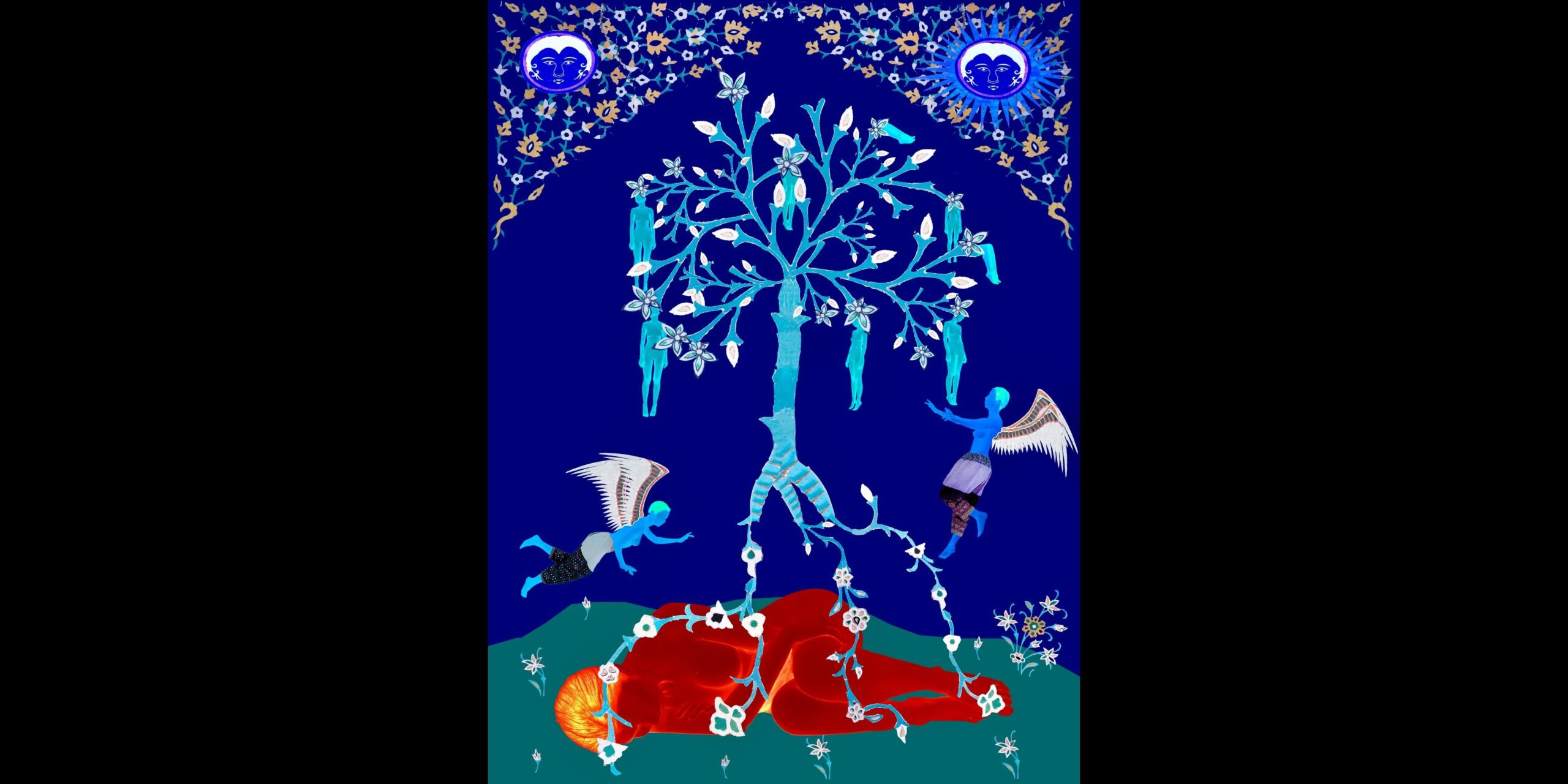
The Times of Central Asia spoke with the artist to trace how Eight Lives emerged, how collaboration with mosaic masters shaped its final form, and how audiences in Uzbekistan are responding to seeing contemporary art in public spaces.

TCA: Can you tell me about your beginnings as an artist? Did you always want to become one?

Khayrullaeva: From early childhood, my parents noticed that there was something a bit unusual about me. My father has always called me – and still does – an “alien,” because I’m probably the only person in my family who chose a creative path. No one else in my family has been involved in art, at least not for the past seven generations.

I was always a creative child, but I never imagined that I would become an artist. As a child, I tried many things; I went to music school, studied piano, and attended various creative clubs. Still, the idea of pursuing art professionally never crossed my mind.

Becoming an artist was, in many ways, an unexpected turn in my life. For a very long time, honestly, until around the age of 24, I had no clear idea of what I wanted to do or what my profession would be. I was never certain about it.

So yes, life is an interesting thing. You never really know where it’s going to lead you.
TCA: Your artistic journey began with photography before evolving into digital collage. How did your early work in photography shape the way you now approach layering, texture, and composition in your digital pieces?

Khayrullaeva: When I was around 17 or 18, I became interested in photography. At that time, I didn’t have a camera, so I was shooting with my phone. For my birthday, I was given some money, and I decided to use it to buy a camera. My father added a bit more, and I bought my very first one.

It was an incredible feeling taking photos, holding the camera, and shooting. Mobile photography and working with a camera are completely different experiences, and that difference brought me so much joy. I remember the pure pleasure of photographing everything around me. Naturally, I started with my friends.

Very quickly, I realized that I was drawn to portrait photography and staged images. I was interested in creating surreal scenes, something slightly unreal. I still keep my very first photographs taken with that camera. I intentionally printed them and put them in frames to remind myself why I chose this path in the first place.

There are moments when you want to quit everything; that happens to everyone, it’s normal. Those photographs are there to remind me that this path was never about achievements or results, but about enjoyment. I understand that without creativity, my life would lose its meaning. I live through creativity, and I simply cannot imagine myself without it.
When I decided that I wanted to dedicate my life to photography, I received a harsh comment from my father. He didn’t believe that creativity could be a profession. I clearly remember him saying that art could only ever be a hobby, not a career. Because of that, I had to choose a different path and enrolled in a university in Europe, studying tourism and hospitality.

That was the beginning of a very dark chapter in my life, a descent that eventually led to new discoveries in my creative practice. Studying something that wasn’t aligned with my inner world pushed me into a severe depression, one that I struggled with for almost three years.

Eventually, I returned to Tashkent. Despite my father’s disapproval, I went back to photography. I started by taking courses, learning the technical foundations of the medium, while the intuitive side had always been there. Soon after, my practice shifted sharply toward collage.

I don’t regret going to Europe or going through depression. It opened something new within me, as if a third eye had awakened. That experience became the source from which my later work began to flow.

Now, on the contrary, my father says that he is very proud of me and very happy for me, and now he truly believes in it. I always tell myself: everything that happens, happens for a reason, and ultimately, for the better.
TCA: Your collages often incorporate elements such as Suzani embroidery and historical mosaics. How do you decide which cultural motifs to bring together, and what guides your process of blending tradition with contemporary expression?

Khayrullaeva: The process always happens in different ways. Sometimes, certain elements inspire me to create a specific work. For example, I have one of my mother’s Suzani embroideries, her wedding Suzani, which is embroidered with golden tinsel. It’s quite unusual, though it was popular in the 1980s and 1990s. That piece inspired several of my works.

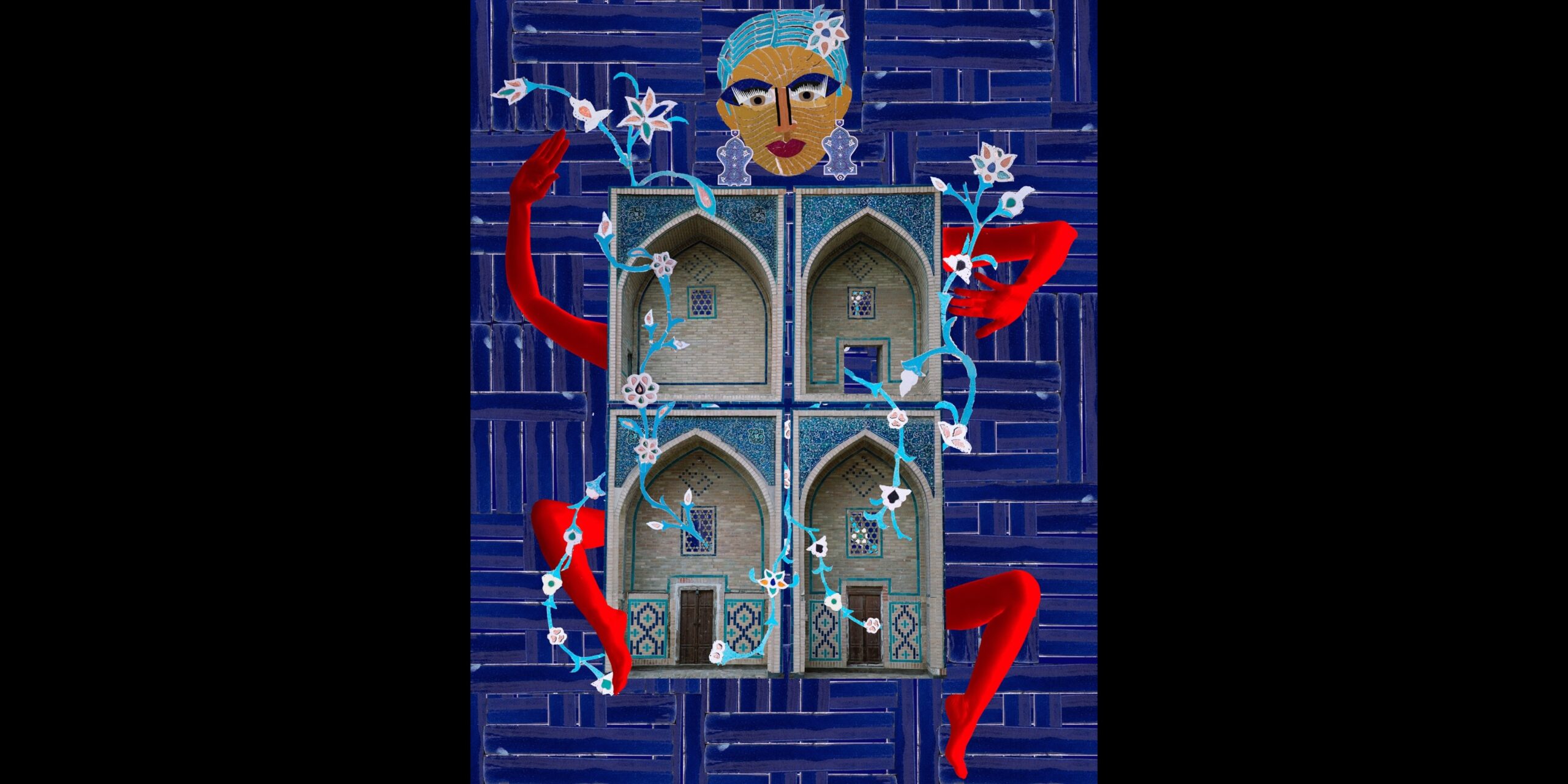
Other times, an idea simply appears first, and then I look through all my photographs, mosaics, and Suzani pieces. If something fits, I use it. Or sometimes I already know exactly which photographs I want to use for a particular idea. I’ve worked with these photographs and mosaics for so long that I’ve almost memorized all of them. This makes it easy for me to organize the process in my head and work calmly. I still rely a lot on intuition.

More broadly, I’ve always been interested in combining something old with something contemporary. At the beginning of my journey, when I was reviewing all these photographs and mosaics, I thought, Why not create something new from them? I wanted to give traditional mosaics a new life, reinterpret them, and use them in contemporary contexts.
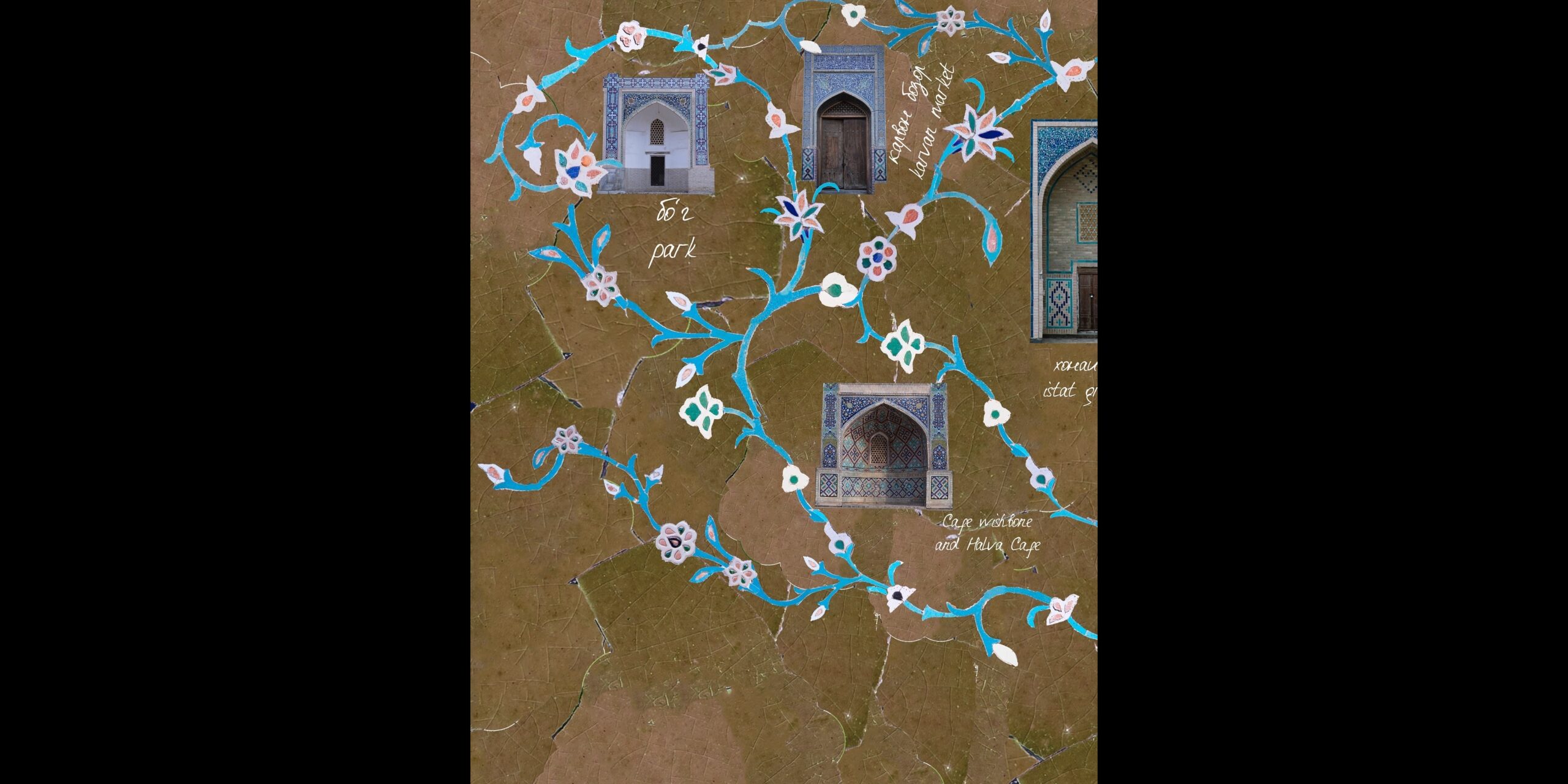
TCA: How do you envision digital tools transforming the landscape for artists in Uzbekistan?

Khayrullaeva: In the past, traditional fine art education played a very dominant role, but today its influence is gradually weakening. I see a huge number of young artists actively working with digital tools and technologies, and every year there are more and more of them, especially among the younger generation. This makes me genuinely happy, because art should never remain static.

Digital tools offer artists greater freedom and access to knowledge, to audiences, and to an international context. They allow traditional forms to be reinterpreted rather than rejected, encouraging hybrid practices that move beyond local systems and expectations. I believe it is precisely in this space between heritage and the digital present that a new artistic future for Uzbekistan is currently taking shape.
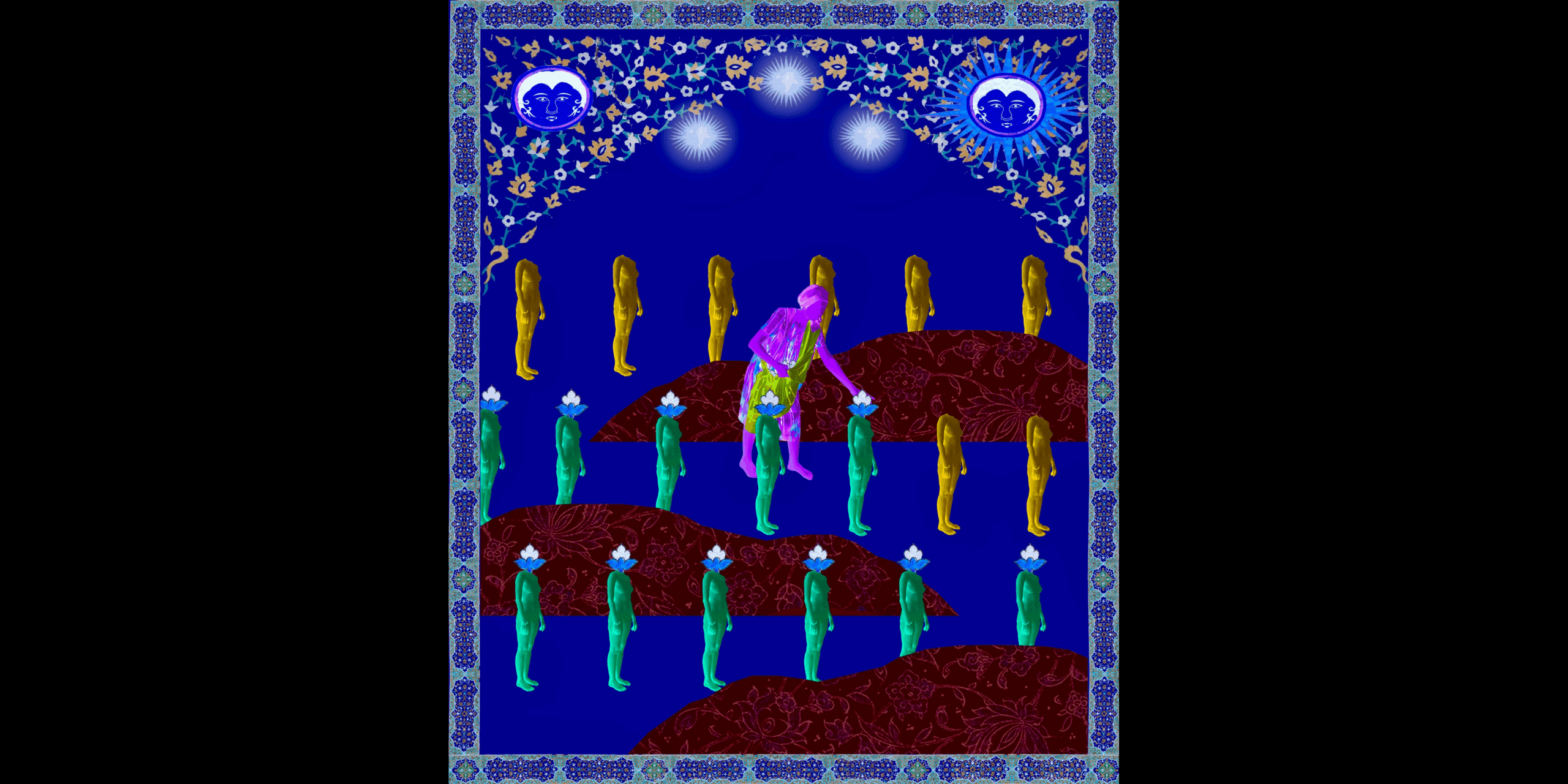
TCA: I was curious to know about Меҳргон | Mehregan | Harvesting. Can you tell me how you conceived that piece?

Khayrullaeva: I think it’s probably connected to a deep sense of frustration and injustice towards artists. Unfortunately, there’s still a lack of recognition for artists here; their work is often undervalued, and many exhibitions or projects are either unpaid or very poorly paid. I had this anger inside me, and I wanted to channel it into this piece.

In this work, as you can see, I juxtaposed cotton, the process of harvesting it, which involved exploitation in Soviet times, with the exploitation of artists today. To me, these situations are similar – work that requires effort and time often doesn’t receive proper acknowledgment or compensation. I wanted to highlight this parallel.

TCA: Your work tackles themes like identity, patriarchy, and uyat, shame. Is it somehow still taboo to speak about these themes in Uzbekistan?

Khayrullaeva: No, and it hasn’t been like that for a long time. There is growing awareness among the population, especially among women. It’s as if they are awakening, which is uplifting and inspiring. Things are changing, for example, a recent law addressing violence against women was developed by activists from the media project “Ne Molchi. UZ,” my good acquaintances.

Although taboos are gradually loosening, social pressure and stereotypes still exist, especially in more conservative regions. But art plays an important role here; it allows these topics to be discussed through images and stories, creating space for dialogue and reflection. Personally, I find it very encouraging to see women and young people beginning to speak openly about difficult issues; it inspires and motivates me to continue my work.
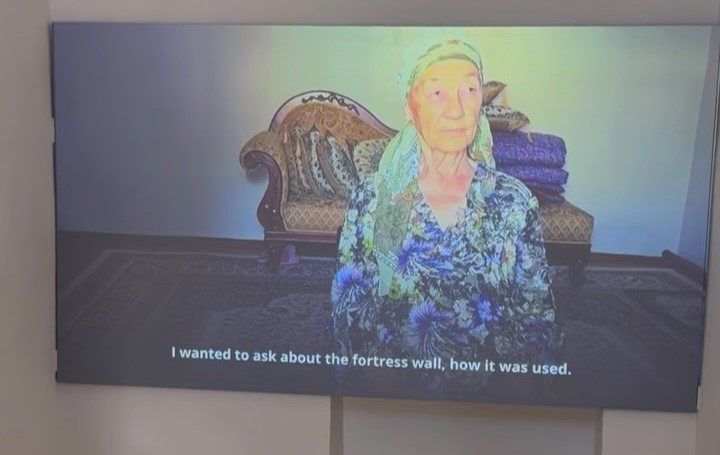
TCA: A very strong video piece you presented in Bukhara is “Grandmother’s stories.” How did you create that?

Khayrullaeva: This is an archival video of my grandmother. I started filming it about two years ago. One day, I realized that she was the only grandmother I had left, and I wouldn’t be able to remember all the stories she told me. So, I began recording them on video to preserve them and later pass them on to my nieces, nephews, brothers, or sisters who might be interested in learning more.

My grandmother is the only one who knows these stories, and unfortunately, no one paid much attention to them before I started asking. It was very important to me, and I believe it’s important for my family as well.

Later, the curator Diana Campbell, hearing the stories connected to medicinal herbs, suggested including them in the biennale. I then filmed additional footage showing what these herbs were, what rituals were performed, and the objects used, so viewers could better understand.

The final video is about 30 minutes long. Of course, these are just small excerpts; I had filmed much more, but those are personal family stories that I did not include in the biennale context.
TCA: Your work, Eight Lives, grew from a deeply personal exploration of bodily pain into a public installation. Can you tell me how you worked on that piece?

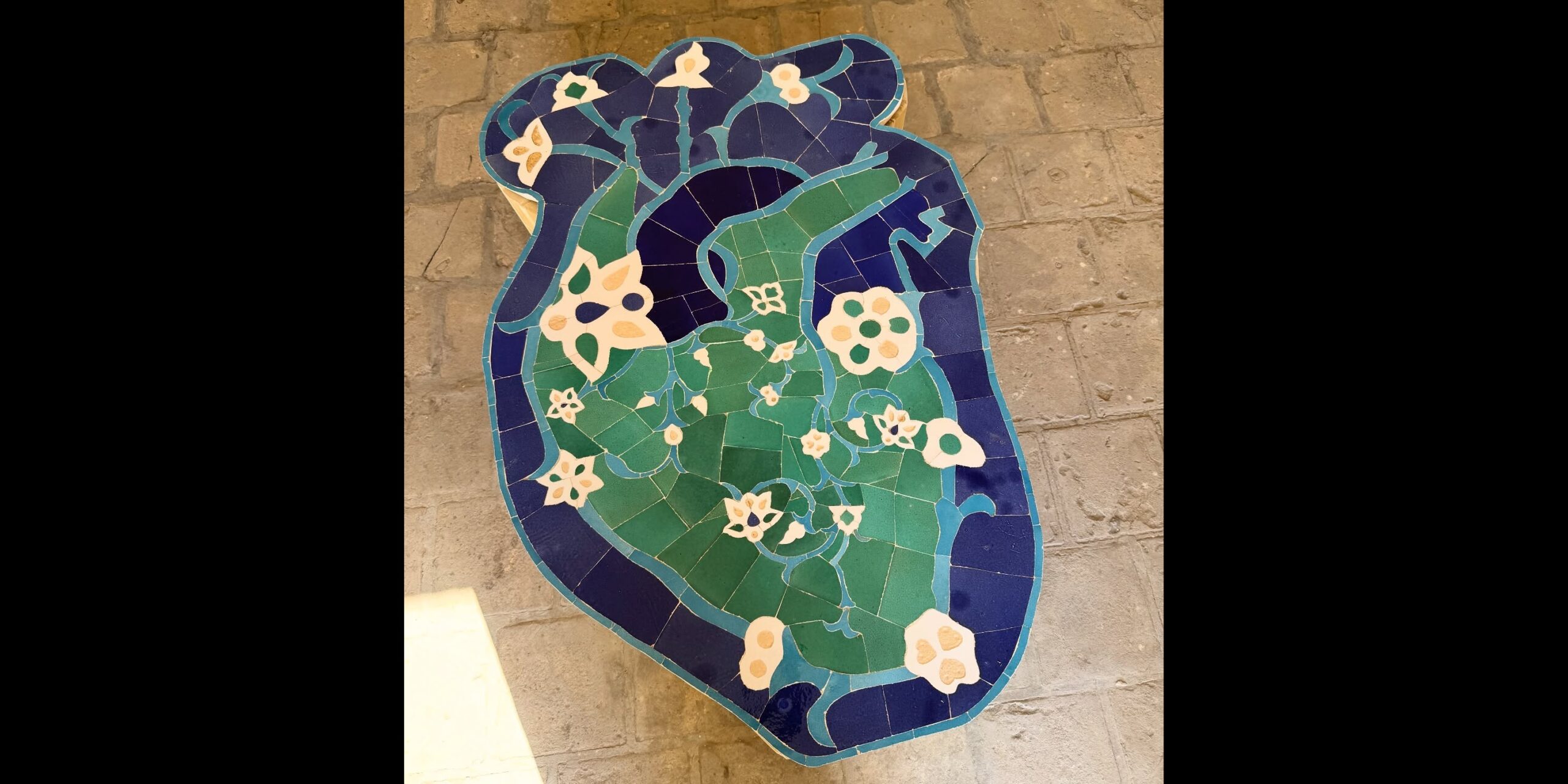
Khayrullaeva: The idea came to me in 2023 in Samarkand, at the Shah-i-Zinda necropolis. The mausoleums are completely covered in mosaics, and they are incredibly beautiful. At that time, I was in a process of healing and searching for forms of self-expression. It was then that I discovered collage and primarily began working with Islamic architecture.

At Shah-i-Zinda, I noticed mosaics with floral ornaments called islimi. Several mausoleums were almost entirely covered with these elements. I studied them closely and realized that they reminded me of veins and vessels in the human body.

Some time later, my anxiety intensified as a side effect of depression. It manifested in my body, in my heart, stomach, intestines, and nervous system. One day, I experienced severe tachycardia and had trouble breathing. I felt sharply how complex the human body is.

That was when I had the idea to use these floral elements to construct a heart. Then I created lungs dedicated to my mother. Later, I made all seven organs.

TCA: Sufi concepts appear in your work. Is Sufism part of your background?

Khayrullaeva: Sufism came to me after my depression, during my healing process. I had many existential questions, and Sufism gave me answers. I feel very connected to this philosophy. It has a therapeutic effect on me.

TCA: Collaborating with mosaic masters must have been fascinating. What did you discover?

Khayrullaeva: There were technical challenges, such as color matching. Some digital details were too small to translate into mosaic, so I had to adapt them. But overall, it was a very successful experience.
TCA: Are you working on something new?

Khayrullaeva: Yes, but I’m not ready to share. I’m continuing my series on the human body.

4 Killed in Bus Accident in Kazakhstan; Reports Say Dozens Injured

A bus crashed in the Mangystau region of southwestern Kazakhstan early Friday, killing four people, according to authorities. Citing regional police, some reports said dozens of people were injured.

“According to preliminary information, the driver of the vehicle traveling from the city of Aktau towards the village of Beineu lost control of the steering, causing the vehicle to overturn,” the Ministry of Transport said.

The ministry said three people were also injured, though some media outlets in Kazakhstan said police later reported that 42 people were injured. Seventeen of those injured were hospitalized and the rest received outpatient treatment, reported the Lada outlet, which covers the Mangystau region.

About 50 people were on the bus when it crashed around 1 a.m. Video purportedly from the crash site showed the bus on its side and emergency responders and their vehicles with flashing lights.

Transport officials said no defects were found on the road and that signs for drivers had been correctly installed. The bus, which passed an inspection last month, is registered to the Caspian Trans Corporation LLP, a logistics and transportation company.

An investigation is ongoing.

In September, 10 people died and several others were injured when a minibus crashed into a ditch on a highway in Mangystau.

Kazakhstan’s Yenlik Brings Her Sound to COLORS

Kazakhstani singer and songwriter Yenlik has made history by becoming the first artist from Kazakhstan to be featured on the international music platform COLORSxSTUDIOS.

Founded in Berlin in 2016, COLORSxSTUDIOS, commonly known as COLORS, has grown from a small creative experiment into one of YouTube’s most influential music platforms. Recognized for its minimalist visual style, each performance is filmed against a single-color backdrop without set design or special effects, placing the focus squarely on the music, the voice, and the artist. The channel now counts more than 8.2 million subscribers and over 3.5 billion views, cementing its status as a global tastemaker in contemporary music.

Over the years, COLORS has showcased a wide range of talent, from emerging artists to international stars such as Billie Eilish, Drake, Doja Cat, and Joji. The platform describes its mission as an effort to “connect people, countries, and cultures on a creative and emotional level,” framing its global, genre-spanning approach as a form of cultural exchange as much as a musical one.

Yenlik’s Voice: Rooted in Culture, Reaching Beyond Borders

Yenlik, born Enlik Kurarbek, is one of the most prominent figures in Kazakhstan’s emerging musical wave. Her sound blends alternative pop with modern R&B influences, creating a style that feels both personal and closely tied to her cultural identity. The Kazakh language plays a central role in her work, not as a folkloric reference but as a contemporary form of expression. Her music reflects a broader shift in which Kazakh is increasingly present in global pop contexts without being confined to traditional or ethnic frameworks.

Yenlik’s authorial sound, shaped by contemporary production and subtle national influences, is paired with an emotionally restrained vocal delivery that has become her signature. Observers suggest it was this originality that drew the attention of the COLORS curators. Known for prioritizing authenticity over commercial success, the platform seeks artists with strong individuality and a distinctive voice, qualities that align closely with Yenlik’s creative vision.

From Rejection to Recognition

For Yenlik, the invitation from COLORS marked a long-awaited milestone. She had previously applied to the project without receiving a response, making the eventual outreach from the platform all the more meaningful.

“When the invitation came, I was overjoyed and burst into tears,” she recalled. “This project always felt so distant. Two years ago, we submitted an application with no response. And now, COLORS reached out to us first.”

The performance was filmed outside Kazakhstan and completed within a few hours. Yenlik was struck by the production’s simplicity, defined by an absence of elaborate sets and large crews, and by the quiet intimacy that has become a hallmark of COLORS. The team fostered a welcoming atmosphere, and she was even able to choose the episode’s background color, which she described as symbolizing “true gentle strength,” a visual reflection of the emotional tone of her performance.

Rising Digital Momentum

Yenlik’s digital presence has continued to grow steadily, with her music gaining traction among younger audiences on social media. Her songs often circulate widely online, helping to expand her reach beyond Kazakhstan.

In the fall of 2025, she released BIPL, an 11-track album that marked a turning point in her artistic development. The project introduced a more mature and cohesive sound, earning an enthusiastic response and spreading quickly across streaming platforms.

Two tracks drew particular attention. Meili amassed nearly five million views on YouTube, while 16 Qyz surpassed 2.5 million views and gained additional momentum through short-form video content.

More Than a Milestone

Yenlik’s appearance on COLORS represents more than a personal milestone. It marks a significant moment for Kazakhstani music, as an artist from Central Asia steps onto one of the world’s most influential music platforms without reshaping or softening her cultural identity.

Her success, rooted in authenticity and artistic clarity, carries a broader message: local culture can engage global audiences without compromise. By staying true to her language and creative vision, Yenlik demonstrates that music grounded in national context can resonate far beyond its place of origin, and that international recognition does not require abandoning one’s roots.

Kazakhstan Deploys AI to Tackle Shadow Economy

Kazakhstan is entering a new phase of fiscal digitalization, leveraging artificial intelligence to identify and analyze illicit schemes in the shadow economy. Building on the existing Smart Data Finance platform, a system for storing and processing big data, a new digital solution will be developed to integrate information systems across government agencies.

Deputy Minister of Finance Yerzhan Birzhanov announced the initiative, stating that Smart Data Finance, which has been in use for over a year, has already proven effective in detecting tax violations. The system aggregates data from external sources and implements a “Taxpayer Dossier,” enabling the creation of digital profiles for legal entities and individual entrepreneurs.

The forthcoming upgrade will enhance Smart Data Finance’s capabilities by allowing it to cross-reference data from tax, customs, labor, and industry systems. This integration will help identify vulnerable sectors prone to “gray” economic practices and track the flow of illicit activity across industries.

Simultaneously, the government has decided to replace separate sectoral roadmaps with a unified Comprehensive Plan to Combat the Shadow Economy. This plan, too, will be monitored using AI-powered tools.

According to the Cabinet, substantial progress has already been made in digitizing high-risk sectors such as trade, construction, transport, healthcare, education, and agriculture.

Special attention is being given to the trade sector, which remains one of the most susceptible to shadow operations. The ongoing implementation of several tools, including the National Catalogue of Goods, a domestic producer registry, labeling and traceability systems, electronic invoicing, digital VAT, and the digital tenge, is intended to reduce opportunities for illegal transactions.

As previously reported by The Times of Central Asia, Kazakh authorities have steadily escalated pressure on the shadow sector in recent years. Measures range from tightening controls on smartphone imports to negotiating with employers to curb the practice of paying salaries “in envelopes.”

Speed vs. Stability: How Kazakhstan Is Leading Eurasia’s Transit Race

China’s successful test of a maglev platform weighing about one ton, accelerating to 700 kilometers per hour in just two seconds, once again underscored Beijing’s technological ambitions in the transport sector. With more than 50,000 kilometers of high-speed rail connecting cities such as Beijing, Shanghai, Guangzhou, Shenzhen, and Chengdu, China is paving the way for the next generation of mobility.

Yet beyond China’s borders, speed alone is no longer the decisive factor. In Eurasia and particularly in Central Asia, stability, predictability, and reliability have become the primary metrics for transit success. Within this context, Kazakhstan is positioning itself as a central hub in Eurasia’s evolving logistics landscape.

China’s High-Speed Model vs. Eurasia’s Freight Realities

Inside China, Fuxing high-speed trains and maglev routes have transformed domestic connectivity, forming the backbone of national economic integration. However, exporting this model faces inherent limitations. High-speed passenger lines require dedicated tracks, strict safety protocols, and massive investment factors incompatible with most of Eurasia’s existing freight-centric rail infrastructure.

As a result, the China-Central Asia-Europe corridor is focused on accelerated freight movement. The goal is not maximum speed, but consistent delivery times, reliable scheduling, and minimal disruption, elements vital to modern supply chains.

Kazakhstan’s Strategic Role in Eurasian Land Transit

Kazakhstan serves as a critical artery for China’s westward land transit. Key corridors to the Eurasian Economic Union, Europe, and Central Asia, including the Middle Corridor, traverse Kazakh territory.

In the first ten months of 2025, Kazakhstan’s State Revenue Committee reported that more than 11 million tons of goods were transited from China through Kazakhstan, marking double-digit growth year-on-year. This success stems not only from increased volume but from qualitative improvements in transit management.

Digitalization has been pivotal. An automated system for filing and issuing transit declarations has slashed processing times from several hours to just 30 minutes per container train, facilitating the clearance of millions of tons of cargo. For businesses, this translates into lower costs and more reliable delivery schedules — an essential factor amid ongoing global economic uncertainty.

These institutional upgrades are reinforced by infrastructure investment. According to Kazakhstan’s Ministry of Transport, cargo transportation volumes have reached record levels, with steady growth in transit flows. Projects like the Dostyk-Moyinty line and the Almaty bypass are specifically designed to expand transit capacity.

Why High-Speed Passenger Rail Isn’t on the Agenda

Given China’s high-speed rail successes, some may question why similar routes are not planned between China and Kazakhstan. However, in the near term, such initiatives remain economically and logistically unfeasible.

Existing rail lines in the region prioritize freight and mixed-use traffic, falling short of the standards required for high-speed passenger transport. Building separate lines would demand significant capital and a stable passenger base, conditions that currently do not exist. Freight transit, aligned with the Belt and Road Initiative, remains the primary focus.

Unlocking the Caspian Bottleneck

Despite the growth in rail transit, the Caspian Sea route remains a capacity bottleneck. Plans to build a new seaport in the Karakiyansky district of Mangistau region, through a partnership with China’s Zhongyong International, aim to address this constraint.

The project envisions phased implementation, joint operation, and eventual transfer of management to Kazakhstan. The port’s integrated rail infrastructure and automated container terminal are expected to ease pressure on the overloaded ports of Aktau and Kuryk. Rising container traffic across the Caspian Sea underlines the urgency of this development.

National Strategy Anchored in Connectivity

Transforming Kazakhstan into a Eurasian transport and logistics hub is now official state policy. President Kassym-Jomart Tokayev has identified this goal as a national priority, calling for not only the construction of roads and ports, but also the development of a full-scale logistics ecosystem, including digital services, logistics centers, and modern border infrastructure.

While China is redefining the limits of speed, Kazakhstan is proving the value of efficiency. In the Eurasian transit race, victory does not belong to the fastest, but to the most reliable. Through digitalization, institutional reform, and targeted infrastructure development, Kazakhstan is consolidating its role as a central transport hub for Eurasia, without maglev trains, but with sustainable economic dividends.