• KGS/USD = 0.01144 0%
  • KZT/USD = 0.00211 0%
  • TJS/USD = 0.10438 0%
  • UZS/USD = 0.00008 0%
  • TMT/USD = 0.28490 0%
  • KGS/USD = 0.01144 0%
  • KZT/USD = 0.00211 0%
  • TJS/USD = 0.10438 0%
  • UZS/USD = 0.00008 0%
  • TMT/USD = 0.28490 0%
  • KGS/USD = 0.01144 0%
  • KZT/USD = 0.00211 0%
  • TJS/USD = 0.10438 0%
  • UZS/USD = 0.00008 0%
  • TMT/USD = 0.28490 0%
  • KGS/USD = 0.01144 0%
  • KZT/USD = 0.00211 0%
  • TJS/USD = 0.10438 0%
  • UZS/USD = 0.00008 0%
  • TMT/USD = 0.28490 0%
  • KGS/USD = 0.01144 0%
  • KZT/USD = 0.00211 0%
  • TJS/USD = 0.10438 0%
  • UZS/USD = 0.00008 0%
  • TMT/USD = 0.28490 0%
  • KGS/USD = 0.01144 0%
  • KZT/USD = 0.00211 0%
  • TJS/USD = 0.10438 0%
  • UZS/USD = 0.00008 0%
  • TMT/USD = 0.28490 0%
  • KGS/USD = 0.01144 0%
  • KZT/USD = 0.00211 0%
  • TJS/USD = 0.10438 0%
  • UZS/USD = 0.00008 0%
  • TMT/USD = 0.28490 0%
  • KGS/USD = 0.01144 0%
  • KZT/USD = 0.00211 0%
  • TJS/USD = 0.10438 0%
  • UZS/USD = 0.00008 0%
  • TMT/USD = 0.28490 0%

Kazakhstan’s Fish Production Continues Upward Trend

Kazakhstan’s fishing industry continues to show steady growth, reinforcing its role as a key contributor to economic development, job creation, and food security.

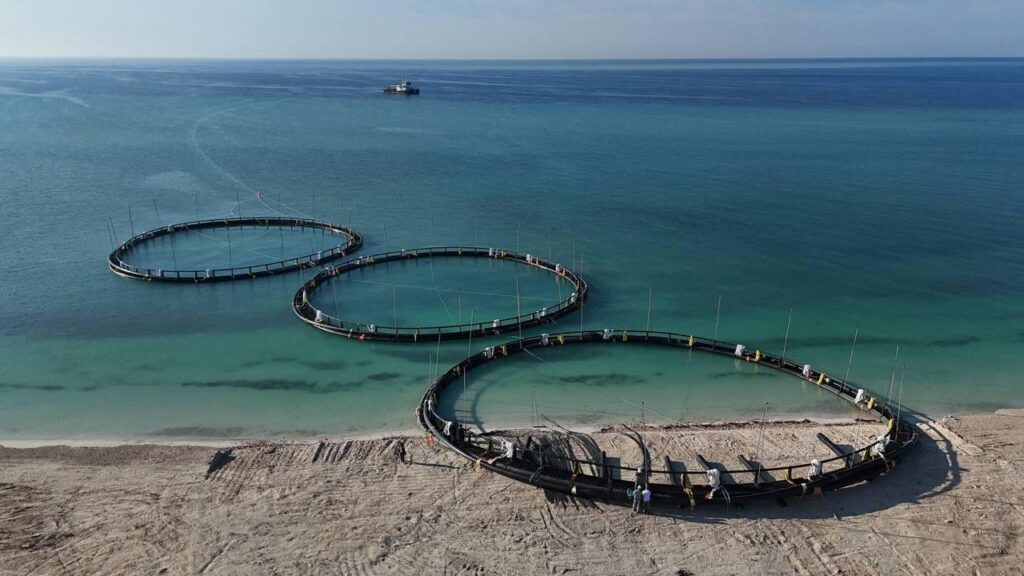
According to the Ministry of Agriculture, Kazakhstan produced 76,800 tons of fish between January and November 2025, marking a 10% increase compared to the same period in 2024. Of this, 38,500 tons were sourced from natural water bodies, also a 10% rise, while aquaculture accounted for 20,900 tons, reflecting a 22% year-on-year increase.

The country currently operates 72 fish processing plants with a combined annual capacity of around 120,000 tons. Of these, 20 facilities are certified to export to the European Union. Kazakhstan exports fish products to 21 countries, including Germany, the Netherlands, Russia, and China.

In 2024, Kazakhstan exported 23,400 tons of fish products valued at $74.7 million. Data for 2025 is not yet available.

During the first 11 months of 2025, the country produced 59,400 tons of processed fish products. This was supported by state-backed measures, including a 70% reduction in VAT and preferential loans at 5% annual interest, aimed at expanding the fish processing sector.

Investment in the industry also continues to grow. Between 2021 and 2024, Kazakhstan implemented 87 aquaculture projects totaling 21.4 billion tenge (USD 41.9 million). An additional 4.6 billion tenge (USD 9 million) was invested in fisheries development during the first 11 months of 2025.

One of the key projects under development is the modernization of the Atyrau Sturgeon Farm, which aims to increase the annual production of sturgeon fry from 5 million to 7.5 million.

In 2025, 21.92 million juveniles of valuable fish species, including sturgeon, were released into natural and artificial water bodies across the country. With ongoing modernization of state-run hatcheries, total production capacity is expected to rise significantly from 18.4 million to 80.5 million fry per year.

Kazakhstan’s fishing sector has entered a stage of sustainable growth. Increased government support, rising investment, and infrastructure modernization are laying a strong foundation for further expansion in fish production and processing, while also contributing to the conservation of aquatic ecosystems and improving access to high-quality fish products for the population.


Kazakhstan Mandates BIM Design for All New Buildings

Kazakhstan has approved a digitalization plan for its construction sector that mandates the use of Building Information Modeling (BIM) for all new residential and commercial developments.

According to the press service of the Prime Minister of Kazakhstan, Deputy Prime Minister  Minister of Artificial Intelligence and Digital Development Zhaslan Madiev and Minister of Industry and Construction Yersayin Nagaspayev have jointly endorsed the 2026-2027 plan to digitize the construction industry. The initiative outlines the sector’s digital transformation across the full lifecycle of facilities from planning and design to construction, commissioning, and post-construction operation.

“The plan includes a series of practical measures aimed at simplifying and accelerating construction processes,” the press service stated. “Among the priorities are mandatory BIM design, automation of public services in construction, creation of digital facility passports, and conversion of building norms and standards into machine-readable formats. These changes are expected to reduce manual processes, minimize errors, and improve predictability in project delivery.”

BIM design integrates data on geometry, technical characteristics, and construction processes into a unified digital model, enabling stakeholders to coordinate changes, assess design decisions, and identify potential issues prior to construction. Its adoption is expected to enhance quality, efficiency, and coordination throughout a project’s lifespan from conception to demolition.

The digitalization drive is also intended to increase transparency in the sector, reduce costs and timelines, lower administrative barriers, and improve the safety and quality of construction projects.

In a related development, President Kassym-Jomart Tokayev recently signed a new Construction Code aimed at streamlining regulations in architecture, urban planning, and construction. The code seeks to improve procedural transparency and establish uniform rules for all market participants.

The document clarifies permit procedures, reinforces quality control, and standardizes construction materials and technologies. Following criticism from the business community, the Ministry of Industry and Construction revised the draft to address key concerns.

Nazira Usenova, deputy chair of the board of the Atameken National Chamber of Entrepreneurs, noted that some provisions risked complicating processes and increasing bureaucratic burdens. “What is important for the industry is not the number of control mechanisms, but their effectiveness and predictability,” she said.

Compromise solutions were ultimately reached on the most sensitive issues. Experts have cautioned, however, that some provisions will require further scrutiny during implementation.Viktor Mikryukov, president of the Association of Developers of Kazakhstan, said transparency and consistency were essential. “The new rules must not become a tool for excessive pressure on entrepreneurs. Their application must avoid broad interpretation by regulators and ensure uniformity across Kazakhstan.”

Among the key agreements reached was the retention of a five-year warranty period for completed construction projects and a ten-year warranty for structural elements, including the load-bearing frame, facade, and roof. The Code also promotes self-regulation, improves engineering and technical certification standards, furthers digitization, strengthens oversight in seismic zones, expands the powers of local maslikhats, and enhances public involvement in urban planning.

The Construction Code will come into force on July 1. As previously reported by The Times of Central Asia, Kazakhstan launched a unified electronic construction platform on January 1.

Kazakhstan and Kyrgyzstan Plan Shorter Route from Almaty to Lake Issyk-Kul

Kazakhstan has formed a working group to develop a shorter road route from Almaty to Lake Issyk-Kul in Kyrgyzstan, which could reduce travel time by nearly half. The initiative, reported by Kazakh media, aims to improve regional connectivity and enhance tourism flows between the two countries.

According to Kazakhstan’s Ministry of Transport, the proposed route will serve as an alternative to the current 460-kilometer drive through Korday and Bishkek. The new road is expected to be approximately 277 kilometers long, with a travel time of about three hours.

Preliminary estimates indicate the road will traverse roughly equal distances in both countries: 127 kilometers in Kazakhstan and 150 kilometers in Kyrgyzstan. Much of the required infrastructure is already in place. Kazakhstan will need to repair about 80 kilometers of road, while Kyrgyzstan is expected to reconstruct just six kilometers.

The project was initiated by the Asian Development Bank (ADB), which has committed grant funding for the development of a feasibility study. An agreement to that effect was signed in December 2024.

In spring 2025, Kazakhstan and Kyrgyzstan established a joint working group to develop infrastructure for the Almaty-Bishkek and Almaty-Issyk-Kul economic corridors. That summer, both countries also began upgrading border crossing facilities. The current phase of the project involves preparing the feasibility study.

The study, led by the Kazakh authorities in collaboration with the Eurasian Development Bank, is expected to be completed by September 2026. It will determine the road’s exact route, classification, projected traffic volume, financial model, and potential toll structure. Early indications suggest the road may operate as a toll road.

Once approved by both governments, the feasibility study will serve as the basis for a final construction decision. Project financing is expected to follow a public-private partnership model, including the formation of a joint venture between Kazakhstan and Kyrgyzstan.

The idea of creating a direct route to Issyk-Kul for Kazakh tourists has been under discussion for decades. Since Kyrgyzstan’s independence, successive presidents have expressed support for the project, but political disagreements have repeatedly stalled progress.

Similar political issues prevented the reopening of a once-popular hiking trail from Almaty to Issyk-Kul. During the Soviet era, tourists could walk from Kol-Sai to Issyk-Kul via the Kyrgyz village of Tyup, roughly a 30-kilometer journey. The trail remained active until the 2000s, when it was closed due to bilateral tensions.

A final attempt to revive cross-border tourism occurred in August 2022, when a delegation of politicians, journalists, and tourism experts retraced the route. While the two governments agreed on border and passport control protocols, the initiative was soon suspended again.

Experts suggest that, with sustained political will, both the highway project and the restoration of the historic hiking route could be implemented in the future.

Kazakhstan Blocked Nearly 85 Million Fraudulent Phone Calls in 2025

Kazakhstan’s law enforcement agencies blocked approximately 85 million fraudulent phone calls in 2025, according to Interior Minister Yerzhan Sadenov. The announcement was made during a meeting of the Ministry of Internal Affairs.

“Systematic work continues to combat cybercrime and internet fraud,” Sadenov stated. “A total of 84.5 million fraudulent calls were blocked, helping to prevent significant financial losses and reduce citizen exposure to fraudulent schemes. Thirteen call centers were shut down, including some located abroad. Fifty-six criminal cases have been launched against individuals involved in so-called ‘dropperism,’ aiding internet fraudsters.”

Sadenov also highlighted Kazakhstan’s signing of the United Nations Convention on Combating Cybercrime, which he said will strengthen international cooperation in addressing cross-border digital crimes.

As part of its broader digital transformation, Kazakhstan introduced the Law and Order service last autumn, a new tool enabling citizens to interact with law enforcement agencies. Integrated into eGov Mobile, the government’s digital services platform, as well as the Kaspi.kz and Halyk Bank mobile apps, the service is accessible nationwide. In addition to reporting offenses, users can submit complaints against police officers and send text, voice, photo, and video messages.

Every report submitted through the service is automatically registered in the Ministry’s information system, with users receiving real-time updates on the status of their submissions.

To support these initiatives, the Ministry of Internal Affairs has established a Department of Digitalization and Artificial Intelligence. The department is tasked with integrating smart technologies into law enforcement. One of its flagship projects is the National Video Monitoring System, which uses video analytics to enhance street and public safety, including the ongoing development of the Safe City initiative.

As previously reported by The Times of Central Asia, engineers in Karaganda unveiled three prototype unmanned aerial vehicles last year aimed at improving public safety across Kazakhstan.

Families in Tajikistan Relocated from Zones at High Risk from Disasters

Authorities in Tajikistan have relocated hundreds of families from areas vulnerable to natural disasters, continuing a multi-year effort to reduce risk to life and property.

Jamshed Kamolzoda, Head of the Main Directorate for Civil Protection and Territories under the Committee for Emergency Situations and Civil Defense, outlined the scope of the relocation initiative, the primary threats identified, and the state resources allocated for disaster prevention.

According to Kamolzoda, 328 households were moved from high-risk zones in 2024-2025. Of these, 154 were relocated in 2024, and 174 followed in 2025. The relocations were carried out under the government-approved “Medium-Term Plan for the Organized Resettlement of Environmental Migrants for 2024-2026,” which mandates the annual resettlement of 175 households based on risk assessments.

Kamolzoda emphasized that the Committee annually conducts geological and engineering evaluations of vulnerable areas and develops corresponding risk-reduction measures in cooperation with other agencies. A central component of this effort remains the relocation of at-risk populations.

“Special working groups have been established under the Committee, comprising experts in engineering, geology, construction, and emergency response,” he said.

These groups inspect residential buildings and infrastructure on-site and issue recommendations grounded in technical and scientific analysis. Their findings form the basis for resettlement decisions.

The relocation program is part of the broader National Strategy for Disaster Risk Reduction for 2019-2034, which aims to minimize human and material losses, bolster preventative measures, and improve public preparedness for emergencies.

Mudslides, earthquakes, and avalanches are the most frequent natural disasters in Tajikistan, with earthquakes considered the most  dangerous due to their potential scale. With 93% of the country’s territory classified as mountainous, the most at-risk regions include the Gorno-Badakhshan Autonomous Oblast (GBAO), the Rasht Valley, the Zeravshan Valley, and the mountainous areas of the Sughd Region.

In 2025 alone, the Committee recorded 287 emergency incidents across Tajikistan, 12 of

which were natural disasters. The total estimated damage exceeded $2.2 million.

Ukraine Says it Hit Russian Oil Targets in Caspian Sea

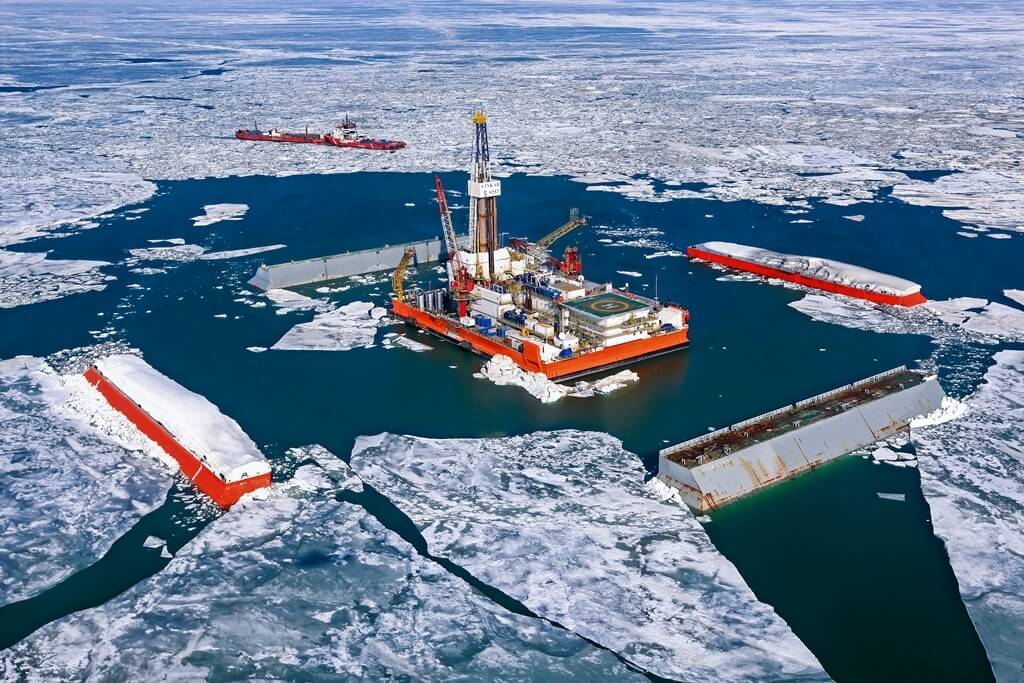
The Ukrainian military says it has struck three Russian oil drilling platforms in the Caspian Sea, an area that is vital to Central Asia’s role in trade linking China and Europe.

“Direct hits have been recorded,” the Ukrainian military said on Telegram on Sunday. “The extent of the damage is being assessed.”

The statement said the drilling infrastructure belongs to Russia’s Lukoil Corporation and it identified the targets as the V. Filanovsky, Yuri Korchagin and Valery Grayfer platforms.

The Ukrainian military did not provide details about how it carried out the attack, though unverified video circulating on social media appeared to show an aerial drone approaching a platform during the operation.

Ukraine has used drones to conduct other strikes on Russian oil targets in the Caspian Sea in recent weeks, as well as long-range missions against oil installations in many parts of Russia. Five countries have shores along the Caspian: Russia, Kazakhstan, Turkmenistan, Iran and Azerbaijan.

Ukrainian authorities say Russian energy infrastructure is a legitimate target because it generates revenue to support Russia’s invading forces in Ukraine as well as Russian air strikes on Kyiv and other civilian centers. Russia describes Ukrainian attacks on its oil industry as terrorism.

Ukrainian military operations have also hit infrastructure belonging to the Caspian Pipeline Consortium (CPC) near the Russian port of Novorossiysk on the Black Sea, leading to diplomatic protests from Kazakhstan. The Central Asian country relies heavily on the port´s facilities for the transhipment of oil from Kazakh fields to international markets.