• KGS/USD = 0.01144 0%
  • KZT/USD = 0.00212 0%
  • TJS/USD = 0.10456 0.19%
  • UZS/USD = 0.00008 0%
  • TMT/USD = 0.28490 0%
  • KGS/USD = 0.01144 0%
  • KZT/USD = 0.00212 0%
  • TJS/USD = 0.10456 0.19%
  • UZS/USD = 0.00008 0%
  • TMT/USD = 0.28490 0%
  • KGS/USD = 0.01144 0%
  • KZT/USD = 0.00212 0%
  • TJS/USD = 0.10456 0.19%
  • UZS/USD = 0.00008 0%
  • TMT/USD = 0.28490 0%
  • KGS/USD = 0.01144 0%
  • KZT/USD = 0.00212 0%
  • TJS/USD = 0.10456 0.19%
  • UZS/USD = 0.00008 0%
  • TMT/USD = 0.28490 0%
  • KGS/USD = 0.01144 0%
  • KZT/USD = 0.00212 0%
  • TJS/USD = 0.10456 0.19%
  • UZS/USD = 0.00008 0%
  • TMT/USD = 0.28490 0%
  • KGS/USD = 0.01144 0%
  • KZT/USD = 0.00212 0%
  • TJS/USD = 0.10456 0.19%
  • UZS/USD = 0.00008 0%
  • TMT/USD = 0.28490 0%
  • KGS/USD = 0.01144 0%
  • KZT/USD = 0.00212 0%
  • TJS/USD = 0.10456 0.19%
  • UZS/USD = 0.00008 0%
  • TMT/USD = 0.28490 0%
  • KGS/USD = 0.01144 0%
  • KZT/USD = 0.00212 0%
  • TJS/USD = 0.10456 0.19%
  • UZS/USD = 0.00008 0%
  • TMT/USD = 0.28490 0%

Kazakhstan Makes Its Biggest Bet on Geological Exploration in Decades

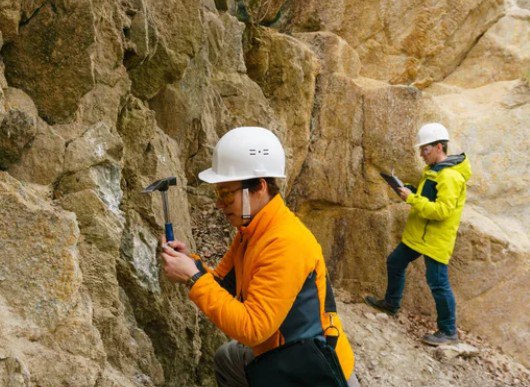
Kazakhstan is embarking on its most ambitious geological exploration program in over 15 years. Over the next three years, the government plans to invest more than $470 million in the study of mineral resources, a figure that surpasses the total investment in the sector over the previous decade and a half.

According to the government, a central element of this strategy is the shift toward more detailed mapping of mineral resources, aligned with international standards.

In 2025, new-generation geological survey projects were launched, covering an area of approximately 100,000 square kilometers. These territories will later be divided into the most promising sites for in-depth exploration and analysis.

This initiative is not merely a budgetary expansion but a long-term effort to lay the foundation for Kazakhstan’s future resource base. Detailed mapping helps reduce geological uncertainty and significantly influences private investors’ readiness to commit to early-stage projects.

The total funding, set at $470 million, will cover a range of activities, including geological surveys, seismic studies in underexplored sedimentary basins, and the development of modern geological infrastructure. For context, total investment in Kazakhstan’s geological exploration from 2010 to 2025 amounted to $469 million.

The program incorporates remote sensing, aero geophysical and geochemical studies, and large-scale fieldwork. In identifying high-potential sites, authorities considered factors such as reserve depletion, low activity by current subsoil users, and the strategic value of specific minerals.

The government has highlighted regions with strong potential for copper, gold, lead, zinc, rare earth elements, barite, and bauxite. A dedicated portion of the program will focus on seismic exploration in the largely understudied oil and gas basins in the north and south of the country.

Plans also include modernizing laboratory and analytical capabilities and digitizing geological data. The shift to high-resolution mapping, already standard practice in countries such as Canada, Australia, and EU member states, is expected to improve forecasting accuracy and reduce investment risks.

As previously reported by The Times of Central Asia, Kazakhstan has emerged as a global leader in proven reserves of rare earth metals, driving renewed interest from international companies in the country’s expanding geological exploration sector.

Kazakhstan’s Transport Ministry to Investigate “Serious Aviation Incident” Involving Russian and Uzbek Flights

A serious aviation incident involving Russian and Uzbek commercial aircraft occurred in the airspace over southern Kazakhstan, according to Kazakhstan’s Department for the Investigation of Transport Accidents and Incidents. The incident was first reported by Kazinform, citing official comments from the agency.

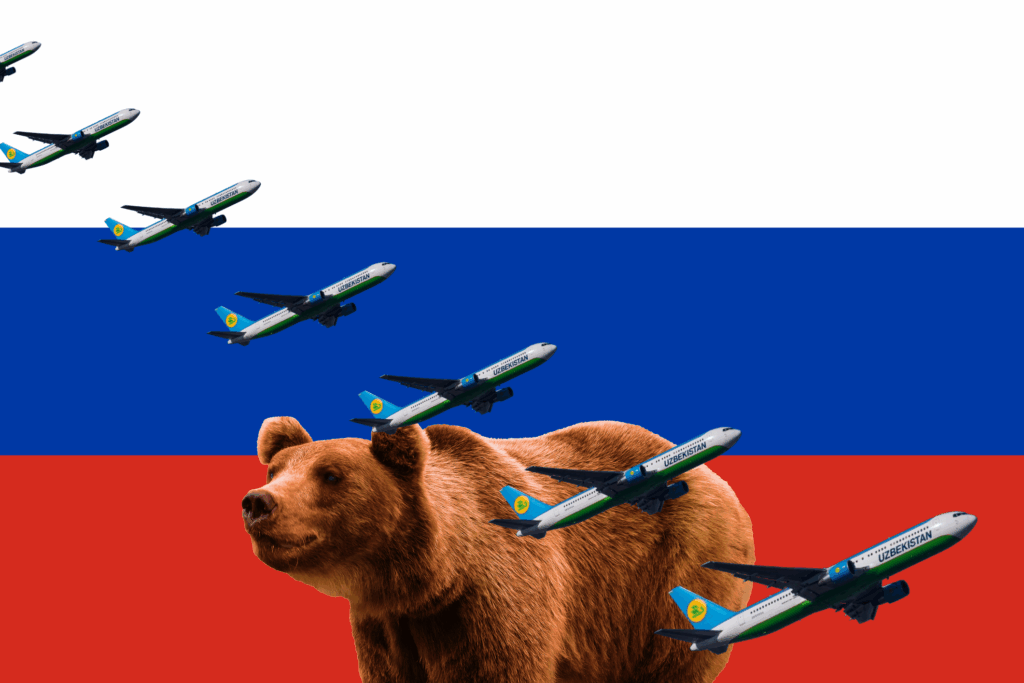
The event took place on the morning of January 10, within the area of responsibility of the Shymkent regional air traffic control center. At approximately 05:42 Astana time, air traffic controllers were managing two international flights when the incident occurred. The aircraft involved were Pobeda Airlines flight PBD997, en route from Moscow’s Vnukovo airport to Samarkand, and Uzbekistan Airways flight UZB9609, flying from Termez to Moscow.

“In the A2I sector of the Shymkent regional dispatch center, during the handling of Pobeda Airlines flight PBD997 and Uzbekistan Airways flight UZB9609, an aviation event occurred,” the department stated, as quoted by Kazinform. The incident was classified as a “serious aviation incident” under national regulations, triggering a mandatory investigation by the relevant authorities.

Kazakhstan’s Ministry of Transport has announced the formation of a special commission to investigate the case. According to the ministry’s press service, the standard duration for such investigations, from the establishment of the commission to the approval of the final report, is typically no more than three months, barring the need for additional analysis or technical assessments.

At this stage, no information has been released regarding injuries, aircraft damage, or specific operational details, as the investigation remains ongoing.

This incident follows a similar near-miss that occurred in September 2025, when an Uzbekistan Airways passenger jet narrowly avoided a collision with a private business aircraft in Russian airspace near Serpukhov, south of Moscow.  That event took place shortly after midnight on September 29, during descent into Vnukovo airport. It involved an Uzbekistan Airways Airbus A320 arriving from Samarkand and an Embraer Legacy 650 business jet flying from Bodrum in Turkey.

Investigators later attributed the incident to radio miscommunication, which resulted in a breach of the minimum required separation between the two aircraft.

Mandatory Participation in Elections Proposed in Kyrgyzstan

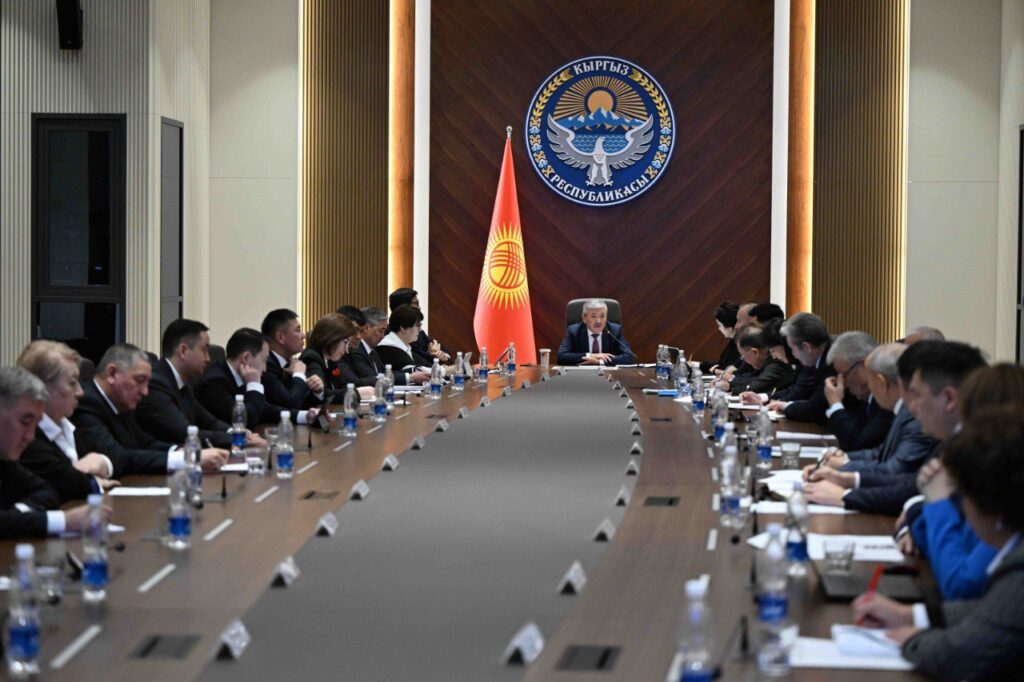
On January 13, Marlen Mamataliev, a member of Kyrgyzstan’s parliament, the Jogorku Kenesh, introduced a bill proposing mandatory participation in elections and referendums, along with penalties for non-participation and incentives to encourage voting.

The draft legislation has been submitted for public discussion.

According to the bill, all Kyrgyz citizens registered as eligible voters would be required to participate in elections. However, the proposal affirms that freedom of political expression remains protected: voters would retain the right to support any candidate or to vote “against all”, as currently allowed on the ballot.

The bill outlines several exemptions. Citizens over 70 years old, those legally deemed incapacitated, individuals outside Kyrgyzstan on election day, and voters who fail to appear due to valid reasons, such as illness, natural disasters, military service, or other emergencies, would not be penalized.

Proposed penalties for non-participation without a valid excuse include:

  • A written warning for the first offense;
  • An administrative fine for repeat violations;
  • A temporary ban of up to five years on running for elected office or holding public service positions for systematic evasion (defined as three or more violations).

The bill also proposes incentives to boost voter engagement, including discounts on state and municipal services, and awarding additional points for candidates seeking public sector employment.

Notably, the legislation includes a provision for issuing a lottery ticket along with each ballot, with the Central Commission for Elections and Referendums tasked with organizing state-sponsored lotteries and prize drawings during election periods.

The bill’s explanatory note highlights declining voter turnout as one of the most serious challenges facing Kyrgyzstan’s electoral system.

Turnout statistics illustrate a steady drop over the past 15 years. In the 2011 presidential election, participation was 61.28%; it fell to 56.11% in 2017, and to 39.16% in 2021. Parliamentary election turnout followed a similar trend: 59.19% in 2010, 39.78% in 2015, 54.38% in the contested 2020 vote, 34.61% in 2021, and just 36.9% in the most recent parliamentary elections held on November 30, 2025.

The bill’s authors point to international examples of compulsory voting, in countries such as Belgium, Australia, Turkey, Singapore, and several Latin American nations, where turnout regularly exceeds 80-90%.

This initiative follows concerns voiced by President Sadyr Japarov about low voter participation in the 2025 parliamentary elections. The president addressed the issue at the fourth People’s Kurultai (National Assembly), a national forum for direct dialogue between citizens and the state, held in Bishkek in December 2025, one month after the election.

Uzbek Professor Hits Back at Vladimir Solovyov for Central Asia “Military Operation” Comments

Controversial remarks by Russian television host Vladimir Solovyov, suggesting that Moscow could conduct “special military operations” in Central Asia and Armenia, have continued to provoke a strong reaction in Uzbekistan. Scholars, journalists, and political analysts have all weighed in on the rhetoric as indicative of a dangerous political mindset developing in Russia.

During a recent broadcast, Solovyov referred to Russia’s role in the region in terms that some Uzbek experts interpret as veiled threats of interference in the affairs of sovereign Central Asian states. The comments drew immediate responses from Uzbek academics, who underscored their nations’ independence and territorial integrity.

Political scientist and university professor Sherzodkhon Qudratkhodja issued a detailed rebuttal, emphasizing the historical and strategic gravity of Solovyov’s words. “As a citizen of a sovereign state, such remarks are unacceptable,” he said. “They challenge our independence, our territorial integrity, and our peoples’ right to determine their own futures.”

Qudratkhodja rejected the notion of Central Asia as a geopolitical periphery. “We are not subjects of external governance. Central Asia is a region with its own history and geopolitical agency. We are no longer objects in foreign policy, we are actors.”

He warned that such public commentary normalizes the concept of military intervention by gradually expanding the so-called Overton window, the range of ideas tolerated in public discourse. “When statements like this are introduced as provocation, then normalized through discussion, and ultimately proposed as policy, it becomes a form of normalizing violence through public speech,” he said.

Qudratkhodja also highlighted Central Asia’s long-standing sovereignty and global contributions. “Our history spans at least 3,500 years. Turkic peoples, including Uzbeks, pioneered the domestication of horses, early metallurgy for agriculture and warfare, and other advancements. Our ancestors were defenders of their lands and civilizations.”

Turning to the geopolitical relationship between Russia and Central Asia, he said that strategic partnerships must be based on mutual respect. “Partnerships are not built on public threats or innuendo. Statements like Solovyov’s are unacceptable, especially when made about strategic partners in an increasingly multipolar world.”

While Qudratkhodja acknowledged that Solovyov’s views do not represent official Russian policy, he warned that silence from Russian authorities allows such rhetoric to gain legitimacy. “Even when expressed as personal opinion, if such statements go unanswered by officials, they gain undue influence and risk becoming perceived signals that can destabilize the region.”

Uzbek experts also pointed to the cultural and historical resilience of the region. Qudratkhodja invoked the legacy of Tamerlane, arguing that Central Asia has played pivotal roles in shaping regional history. “If our ancestor Tamerlane had not defeated Tokhtamysh in 1395, there would be no Russian Federation as we know it today. Our strategic role in Eurasia cannot be dismissed.”

He also directly addressed Solovyov, rejecting any sense of professional kinship. “I do not consider Mr. Solovyov a colleague. His worldview belongs to the propaganda of the past. Today, discourse must be grounded in historical fact and mutual respect, not threats or insinuations.”

The reaction in Uzbekistan has extended beyond academia. Social media users, public figures, and journalists have echoed Qudratkhodja’s views, emphasizing the importance of regional sovereignty and vigilance against foreign attempts to assert influence.

Qudratkhodja further cited Uzbekistan’s ethnic and cultural diversity, noting that more than 135 nationalities, including Russians, Ukrainians, Kazakhs, and Koreans, live peacefully within the country. He highlighted the legacy of hospitality during World War II, when Uzbek families hosted hundreds of thousands of children evacuated from besieged Soviet cities.

In conclusion, he stressed that provocative statements from foreign media personalities cannot divide Central Asian societies. “Our nations are united by shared histories, cultures, and struggles. Attempts to intimidate or manipulate us from outside will only deepen our unity and sharpen our sense of identity,” he said.

The incident has reignited debate over the role of media rhetoric in shaping international perceptions and tensions. Analysts note that high-profile media figures like Solovyov, particularly when closely aligned with political power, can influence diplomatic climates, even if their statements are unofficial.

As Qudratkhodja summarized: “Central Asia is not a periphery. We are part of a great Asia, an Asia with its own people, history, and voice. To suggest otherwise is not only historically inaccurate but politically dangerous.”

Kyrgyzstan Reduces Working Hours for Certain Professions

The Kyrgyz government has approved a new list of worker categories subject to “special working conditions,” for whom reduced working hours will now be implemented.

According to the official decree, the measure aims to formally regulate the working time of employees in high-stress or hazardous roles, taking into account the specific nature of their professional duties.

The order applies to over 100 professions across healthcare, sanitary and epidemiological control, pharmaceuticals, diagnostic and laboratory services, as well as social and educational institutions. Under the new regulations, many employees in these fields will see their workday reduced to five or six hours, depending on their role and workplace conditions.

Medical professions associated with elevated occupational risks received particular attention in the drafting of the list. Among the affected are personnel working with infectious diseases, psychiatric and tuberculosis patients, emergency medical services, pathology departments, and morgues. The list also includes laboratory specialists handling dangerous pathogens or toxic substances, as well as those exposed to ionizing radiation or radioactive materials.

Special provisions have been made for medical workers involved in gamma therapy and experimental gamma irradiation. For these roles, the government has set a maximum working day of four hours, the shortest among all categories covered by the regulation.

Attacks on Tankers in the Black Sea Raise Risks for Oil Markets and Kazakhstan’s Exports

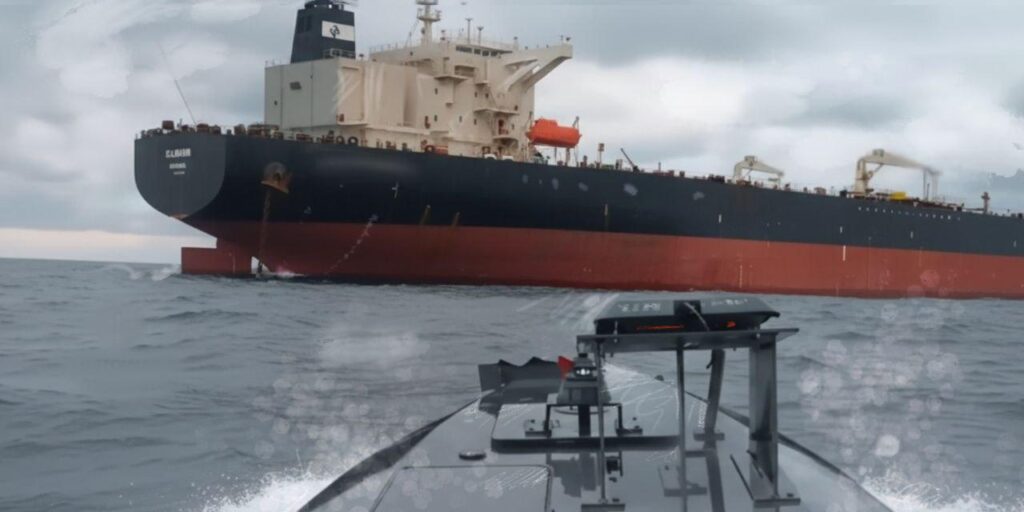
Recent drone attacks on the Delta Harmony and Matilda oil tankers in the Black Sea have added to the growing geopolitical risks facing the global oil market. Both tankers were awaiting loading to transport Kazakh crude via the Caspian Pipeline Consortium (CPC), which operates through the Novorossiysk port in southern Russia.

The attacks have placed renewed attention on the exposure of Western energy majors operating in Kazakhstan, particularly Chevron, a key stakeholder in CPC-linked exports.

“We are aware of reports of incidents involving vessels inbound to CPC loading facilities, including one Chevron-chartered tanker,” Chevron spokesperson Sally Jones told The Times of Central Asia. “All crew are safe, and the vessel has now reached a safe location. We are coordinating with the ship operator and relevant authorities. The safety of personnel and the protection of the environment remain our top priorities. There has been no impact on TCO operations or exports. Chevron continues to closely monitor the situation, and we refer all further inquiries to CPC.”

According to Kazakhstan’s Ministry of Energy, export volumes were unaffected. The fact that attacks occurred near a key export hub has, however, deepened concerns among market participants over the security of regional oil infrastructure.

The country’s Ministry of Foreign Affairs added in a statement: “We emphasize that the Republic of Kazakhstan is not a party to any armed conflict, makes a significant contribution to strengthening global and European energy security, and ensures uninterrupted energy supplies in full compliance with established international standards.”

Reuters, citing unnamed sources, reported that up to three vessels may have been struck, suggesting a broader and potentially escalating threat to maritime safety in the area.

The latest incidents follow a series of security-related disruptions in and around the Black Sea and Caspian regions that The Times of Central Asia has previously reported on, including attacks on energy and transport infrastructure linked to regional export routes. While earlier incidents did not result in prolonged outages, they have steadily heightened concerns among industry participants over the vulnerability of critical energy corridors.

The CPC is a vital artery for Kazakhstan’s oil industry. More than 80% of the country’s crude exports, including output from major fields like Tengiz and Karachaganak, flow through this route. Disruptions in the Novorossiysk area could quickly affect shipping timetables, freight and insurance rates, and, ultimately, global oil prices.

Some analysts warn that these repeated incidents near the CPC expose Kazakhstan’s strategic vulnerabilities, forcing markets to price in a “geopolitical premium.” More significantly, interruptions in oil product flows could have domestic political consequences, potentially prompting a reconfiguration of Kazakhstan’s political timetable.

“The situation involving the CPC, the Orenburg Gas Processing Plant, and reported attempted attacks on the Central Asia-Center gas pipeline, used to transport Russian gas through Kazakhstan, could significantly destabilize the country’s economy,” wrote oil and gas analyst Olzhas Baidildinov on his personal Telegram channel.

He added that, in his view, it could become politically rational either to accelerate elections in anticipation of further instability or to delay them until regional conditions improve or diplomatic agreements are reached between Russia, the United States, Europe, and Ukraine.

The attacks have heightened risks for shipping in the Black Sea, which is already classified as a high-risk area by insurance firms. Under such circumstances, insurers may revise coverage terms, raise premiums, or limit insurance for voyages through the region. These higher logistics and risk-management costs are generally passed on to consumers through increased oil prices, further intensifying inflationary pressure on global energy markets.

Amid ongoing instability, the CPC corridor remains under close scrutiny from traders and policymakers. Kazakhstan’s reliance on Black Sea routes is increasingly viewed as a critical strategic vulnerability both for its economy and for international consumers of Kazakhstani oil.

Compounding the concern, the Black Sea incidents nearly coincided with drone strikes on Lukoil’s offshore drilling platforms in the Caspian Sea. This region is central to Kazakhstan’s long-term efforts to expand its energy transit potential. In 2025, Kazmortransflot, a subsidiary of KazMunayGas (KMG), boosted its transportation volumes by over 15% compared to 2024, reaching 51,400 DFE. This growth was driven by surging demand for shipments along the Trans-Caspian International Transport Route.

However, with military activity now reaching into the Caspian basin, even this alternative corridor may be at risk. The foreign ministry’s statement concluded: “We note that the increasing number of incidents indicates growing risks to the functioning of the international energy infrastructure and call on our partners to closely cooperate in developing joint measures to prevent similar incidents in the future.”

While exports remain uninterrupted, the incidents highlight the increasingly complex security environment surrounding key energy routes. For Kazakhstan and its partners, maintaining the resilience of critical export corridors is likely to remain a central challenge amid continued regional instability.