• KGS/USD = 0.01144 0%
  • KZT/USD = 0.00212 0%
  • TJS/USD = 0.10456 0.19%
  • UZS/USD = 0.00008 0%
  • TMT/USD = 0.28490 0%
  • KGS/USD = 0.01144 0%
  • KZT/USD = 0.00212 0%
  • TJS/USD = 0.10456 0.19%
  • UZS/USD = 0.00008 0%
  • TMT/USD = 0.28490 0%
  • KGS/USD = 0.01144 0%
  • KZT/USD = 0.00212 0%
  • TJS/USD = 0.10456 0.19%
  • UZS/USD = 0.00008 0%
  • TMT/USD = 0.28490 0%
  • KGS/USD = 0.01144 0%
  • KZT/USD = 0.00212 0%
  • TJS/USD = 0.10456 0.19%
  • UZS/USD = 0.00008 0%
  • TMT/USD = 0.28490 0%
  • KGS/USD = 0.01144 0%
  • KZT/USD = 0.00212 0%
  • TJS/USD = 0.10456 0.19%
  • UZS/USD = 0.00008 0%
  • TMT/USD = 0.28490 0%
  • KGS/USD = 0.01144 0%
  • KZT/USD = 0.00212 0%
  • TJS/USD = 0.10456 0.19%
  • UZS/USD = 0.00008 0%
  • TMT/USD = 0.28490 0%
  • KGS/USD = 0.01144 0%
  • KZT/USD = 0.00212 0%
  • TJS/USD = 0.10456 0.19%
  • UZS/USD = 0.00008 0%
  • TMT/USD = 0.28490 0%
  • KGS/USD = 0.01144 0%
  • KZT/USD = 0.00212 0%
  • TJS/USD = 0.10456 0.19%
  • UZS/USD = 0.00008 0%
  • TMT/USD = 0.28490 0%

Opinion: Iranian Unrest Creates Opening for U.S., Partners in Central Asia

As protests in Iran enter their third week, nationwide unrest is exerting political strain and societal pressure on the Islamic Republic. The nation’s current escalation reflects a level of sustained mobilization comparable to Iranian demonstrations that erupted in 2022 following the death of Mahsa Amini. While the outcome of these developments remains uncertain, ongoing unrest in Iran is more likely to impact Central Asia’s existing energy, transit, and security dynamics, rather than alter the broader regional landscape. This moment nonetheless offers the United States and its partners a strategic opportunity to advance long-term objectives in Central Asia while supporting regional resilience at a time when geopolitical alignments are rapidly shifting.

Combined with ongoing disruptions caused by Russia’s War in Ukraine, the recent protests in Iran may create a heightened sense of uncertainty or risk perceptions in global energy markets. In particular, the current Iranian unrest may raise concerns regarding potential oil supply disruptions and broader geopolitical tensions. For neighboring producers like Kazakhstan, which maintains an oil-dependent economy, this elevated volatility could translate into higher revenues from existing exports. Increased fiscal flexibility from rising oil revenues may therefore provide Astana with the opportunity to expand its scope for economic cooperation with Western partners. The United States, which maintains long-standing bilateral energy ties with Kazakhstan, could draw on these existing partnerships to deepen its bilateral energy and technical ties.

Beyond its impact on energy markets, ongoing instability in Iran may also affect regional connectivity initiatives. For example, disruptions could emerge along the International North-South Transport Corridor (INSTC), a multimodal network connecting India, Iran, and Russia, with branches that involve the Caspian and Central Asia. Although the Kazakhstan-Turkmenistan-Iran railway sits along this route and facilitates the transport of energy resources and critical minerals across the region, the corridor currently plays a more limited role in regional transit across Central Asia. This route nonetheless remains of interest to Central Asia because it offers the region an opportunity to enhance long-term economic diversification through access to new markets in the Persian Gulf. Minor disruptions could therefore underscore the corridor’s growing geopolitical value as a connector for trade and energy transport across multiple countries and regions.

This context creates a strategic opening for the United States and its partners to contribute to the region’s long-term trade and connectivity landscape. By supporting Central Asian nations in reducing reliance on Iranian transit, the United States can accelerate investment in alternative routes like the Middle Corridor that bypass both Russia and Iran. During an investors’ forum in Tashkent late last year, Europe announced it would increase its investment in the Middle Corridor. However, the United States continues to remain on the periphery of this project. By collaborating with European partners to enhance infrastructure along this route during a critical time, the United States can help Central Asian nations position the Middle Corridor as the region’s most resilient and viable alternative for trade and exports. This would ultimately advance shared interests by enhancing Central Asia’s connectivity and facilitating greater U.S. access to trade and critical minerals across the region.

Finally, any long-term instability in Iran raises security concerns, such as border insecurity, refugee crises, or a potential rise of violent extremism that could strain Central Asian governments, the majority of which are committed to secular governance and internal stability. In response, the United States and its partners can deepen and extend cooperation in the region through the development of technical capacity building and information sharing. In this case, following Kazakhstan’s ascension, the Abraham Accords could serve as a framework through which Israel’s expertise in emergency preparedness can be applied to support Central Asian partners in addressing shared transnational threats. By leveraging multilateral support, Central Asian nations can strengthen their resilience against potential effects resulting from Iranian unrest.

Growing instability in Iran presents an opportunity for the United States and its partners to deepen partnerships with Central Asian nations. Enhanced collaboration in the energy, transit, and security sectors can help reinforce regional stability during a volatile time. This moment also offers the United States an opening to encourage greater regional cooperation with established partners such as Israel, under the auspices of the Abraham Accords. Through broader multilateral coordination, these partnerships can prevent destabilizing effects from taking hold in Central Asia, while promoting the region’s accelerating growth.


The views expressed in this article are those of the author and do not necessarily reflect the official policy or position of the publication, its affiliates, or any other organizations mentioned.


Kazakhstan Warns of Severe Water Shortages as Syr Darya Levels Drop

Kazakhstan’s Minister of Water Resources and Irrigation, Nurzhan Nurzhigitov, gave a sober warning to the country on January 13 that this year there could be significantly less water for agriculture in the southern parts of the country.

Nurzhigitov said that as of January 12, there was 1.9 billion cubic meters (bcm) less water in the reservoirs of southern Kazakhstan than on that date in 2025.

The Importance of the Syr-Darya

These areas are part of the Syr Darya Basin. The Syr Darya is one of Central Asia’s two large rivers, the other being the Amu Darya to the south, which runs along the Central Asia-Afghan border.

Equally alarming for Kazakhstan, Nurzhigitov noted that in the mountains of upstream neighboring countries, Kyrgyzstan and Tajikistan, where the Syr Darya originates, officials are also reporting low levels in reservoirs. According to the Kazakh Ministry of Water Resources and Irrigation, the reservoirs in those two countries are a combined 3.2 bcm lower than last year at this time.

Kyrgyzstan’s Energy Minister Taalaybek Ibrayev said in November 2025 that the water level in the massive Toktogul reservoir was less than 11 bcm, nearly 2 bcm lower than in November 2024, and only at about 60% of its 19.5 bcm capacity. Water from the reservoir is released into the Naryn River, which eventually merges with the Syr Darya in Uzbekistan, and flows on further into Kazakhstan.

The Toktogul hydropower plant (HPP) depends on that water to supply some 40% of Kyrgyzstan’s domestically-produced electricity, and Ibrayev called on Kyrgyzstan’s citizens to conserve electricity and help the water in Toktogul accumulate before the 2026 agriculture season.

Tajikistan’s state power company, Barqi Tojik, also called in November for the country’s citizens to save electricity as the water level at the Nurek HPP’s reservoir was low. The Nurek reservoir uses water from the Vakhsh River that does not flow into the Syr Darya, but the water shortage problems at Nurek are similar throughout Tajikistan, including tributaries that do flow into the Syr Darya.

Conservation and New Wells

In Kazakhstan, Nurzhigitov said inspections and repairs of irrigation canals were currently underway. He also mentioned that in December, Deputy Prime Minister Kanat Bozumbayev had ordered officials in the Kyzylorda, Turkestan, and Zhambyl provinces to hold meetings with farmers and herders to discuss water conservation. There were also talks with farmers about planting crops that required less water.

Water limits would be announced in February, Nurzhigitov said, and in March the Agriculture Ministry would decide how much land to sow for this year’s crops based on expected water supplies during the spring-summer period.

Nurzhigitov added that work was being done to increase the use of underground water, which he claimed could amount to some 15.7 bcm of extra water for Kazakhstan annually. Currently, Nurzhigitov said, only some 7-10% of this underground water is being used.

Bleak Forecast

Kazakhstan gathered a record harvest in 2025, some 27.1 million tons of grain, despite planting less wheat. Given the reduction in precipitation in Central Asia in recent months, it might prove difficult for Kazakhstan to match its 2025 harvest in 2026. It should be noted, though, that water to agricultural fields in northern Kazakhstan comes from rivers in Siberia or the mountains along the Chinese border, and there are no reports yet about shortages there.

However, Nurzhigitov said the country’s problems with water are an “objective reality, driven by declining autumn-winter precipitation, reduced glacial runoff, and the overall impact of climate change.”

In May 2025, Kazakh Minister of Ecology and Natural Resources Erlan Nysanbayev warned a hot, dry summer could put agriculture at risk in parts of or all of 11 of Kazakhstan’s 17 provinces.

Kazakhstan was fortunate in 2025 that its water resources and water from upstream countries were sufficient for the bountiful harvest. But as Nurzhigitov mentioned, the long-term forecast for Central Asia is less water and longer, hotter summers.

Additionally, Afghanistan plans to complete the Qosh Tepa Canal in 2028. The 285-kilometer canal will water fields in northern Afghanistan but siphon off some 20% of the water from the Amu Darya.

That will not directly affect Kazakhstan, but as Kazakhstan’s Deputy Minister of Water Resources and Irrigation, Aslan Abdraimov, pointed out in May 2025, “This means that Uzbekistan and Turkmenistan will receive less water. Consequently, Uzbekistan may draw more from the Syr Darya, leading to reduced water availability for Kazakhstan, potentially by 30-40%.”

That is still at least some two years in the future. For now, farmers and herders in Kazakhstan, and in other parts of Central Asia, will be closely watching the weather forecasts in the coming weeks.

There was already widespread drought in Central Asia from 2021 to 2023. Unless abundant rain and snow arrive soon, southern Kazakhstan could be looking at a difficult 2026.

Kazakhstan Elevates U.S. Ties to Presidential-Level

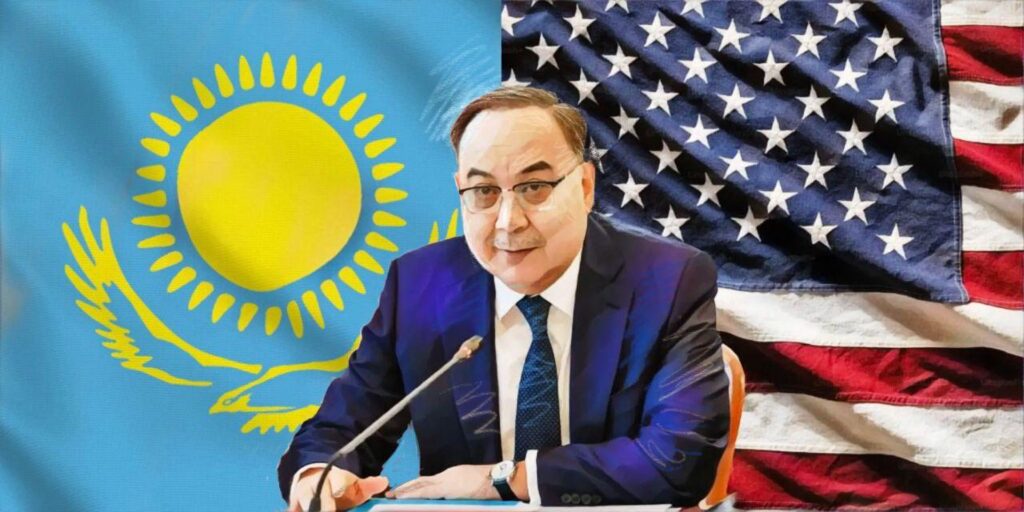
Kazakhstan’s relationship with the United States is entering a more explicitly strategic phase under Kassym-Jomart Tokayev, marked by a shift in how Astana manages its most consequential external partnerships. As economic ties deepen and geopolitical coordination expands across energy, investment, and Eurasian connectivity, engagement with Washington is increasingly being treated as a presidential priority rather than a routine diplomatic file.

In this context, Kazakhstan has formally elevated its engagement with the United States by appointing a presidential representative to steer bilateral negotiations on priority issues. By presidential decree, Ambassador Yerzhan Kazykhan—Kazakhstan’s Permanent Representative to the United Nations Office in Geneva and a veteran diplomat with prior postings as ambassador to the United States and the United Kingdom—has been designated as the President’s Representative for negotiations with Washington. The appointment places key aspects of the U.S. relationship under direct presidential oversight from the Akorda, the presidential office.

Kazykhan has previously served as foreign minister and assistant to the president, and has held senior roles within both the Foreign Ministry and the presidential administration. His experience in Washington and in multilateral settings provides institutional continuity as the bilateral agenda broadens to encompass investment, energy security, and regional connectivity, while day-to-day execution remains within established diplomatic channels.

Drivers Behind the Elevation of U.S.–Kazakhstan Engagement

The decision reflects how rapidly the scope of U.S.–Kazakhstan engagement has expanded and how Kazakhstan is positioning itself as a major investment and strategic connectivity hub. The United States is Kazakhstan’s largest source of foreign direct investment, with hundreds of American companies operating across the economy. Chevron, Kazakhstan’s single largest foreign investor, has invested more than $50 billion over time, anchoring long-term U.S. corporate presence in the country’s energy sector.

This investment relationship gained further momentum in 2025. At the C5+1 leaders’ summit in Washington, Kazakhstan and U.S. partners announced nearly $17 billion in new commercial agreements and investment commitments across energy, transport, and industrial cooperation. The package was publicly highlighted by U.S. Commerce Secretary Howard Lutnick, underscoring senior-level U.S. political backing for deeper economic engagement with Kazakhstan.

Beyond investment, the bilateral agenda has expanded into strategic and geopolitical domains. Kazakhstan’s decision to join the Abraham Accords marked a notable political alignment with a U.S.-led diplomatic initiative, extending the framework’s reach beyond its original Middle Eastern focus.

Connectivity has become central to U.S. policy thinking. The Middle Corridor is increasingly viewed as an eastward extension of the post-Azerbaijan–Armenia Caucasus transit framework, also called the ‘Trump Route for International Peace and Prosperity’, aimed at reopening and securing east–west routes across the South Caucasus. Extending it through Kazakhstan links Central Asia to Europe while reducing reliance on Russia or Iran.

Trade and energy ties reinforce this trajectory. Kazakhstan is the world’s largest uranium producer and a major supplier to the United States, making the U.S. one of its most important export markets for nuclear fuel. As U.S. policy places greater emphasis on secure and diversified supply chains, Kazakhstan’s role in critical energy inputs and transit infrastructure has taken on added strategic weight.

Taken together, these developments—large-scale investment, strategic energy trade, participation in U.S.-backed diplomatic frameworks, and growing importance in Eurasian connectivity—have moved the relationship beyond a narrow project-based focus. The agenda now spans economic, geopolitical, and reputational dimensions, driving the decision to elevate how it is managed.

Comparative Context

Kazakhstan’s approach mirrors a broader pattern among states seeking tighter alignment with Washington amid shifting U.S. foreign and economic policy. South Africa appointed a special presidential envoy to the United States in 2025 to stabilize and deepen ties, while Israel has long relied on senior political figures to manage strategic coordination with Washington outside routine diplomatic channels. Uzbekistan has also prioritized its U.S. ties, most recently through the establishment of a U.S.–Uzbekistan Business Committee.

What distinguishes Kazakhstan’s move is its formality: the appointment is grounded in a presidential decree and embedded within the diplomatic hierarchy, suggesting an intent to sustain this arrangement rather than rely on ad hoc engagement.

Outlook

Elevating management of the U.S. relationship to the presidential level reflects Kazakhstan’s response to a broader and more demanding bilateral agenda. The move places coordination under direct presidential oversight, signaling political priority rather than routine head-of-state bargaining. For U.S. counterparts, it creates a clearer political channel for advancing complex initiatives—from investment and critical minerals to connectivity and regional diplomacy—while execution continues through established diplomatic institutions. The result is not a restructuring of diplomacy, but a tightening of political control designed to keep an increasingly strategic relationship moving in step with Kazakhstan’s wider foreign-policy objectives.

“We Can’t Help You”: How Turkmenistan’s Ministry of Justice Handles Citizens’ Complaints

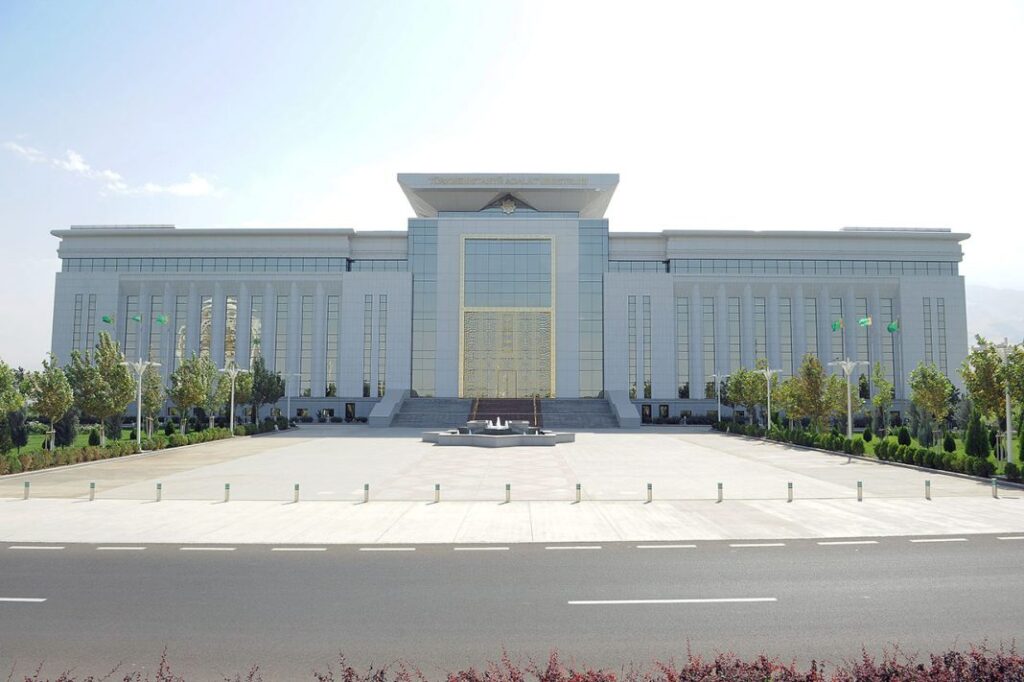
A recent public reception at Turkmenistan’s Ministry of Justice has highlighted the formal and often unproductive nature of interactions between citizens and state institutions in the country.

On January 10 the ministry held a legal consultation session, officially scheduled to run from 9:00 a.m. to 12:00 p.m. In practice, however, visitors were not admitted until 10:00 a.m.

According to Chronicles of Turkmenistan, more than 50 citizens attended the reception, many of whom had previously appealed to state agencies multiple times. They arrived with letters, formal statements, and supporting documentation in hand.

Entry was granted in groups of three. The commission included representatives from the Ministry of Justice, the Prosecutor General’s Office, the Supreme Court, and the Bar Association. Each individual was given no more than five minutes.

Despite the format suggesting legal support, the outcome for most attendees was discouragingly uniform. After speaking with 38 participants, journalists reported that all had received the same response: “We can’t help you.” Several attendees stated that officials did not even review the documents submitted with their complaints.

As a result, nearly all who came seeking redress left empty-handed. Many expressed hopelessness, stating that they had no viable path to resolve their issues, and that government institutions had effectively denied them access to justice.

The Times of Central Asia previously reported on the broader challenges faced by Turkmen citizens in navigating bureaucratic procedures and, in particular, how elderly residents endured long waits at social security offices. Although the process appears straightforward on paper, in practice it becomes a burdensome ordeal, especially given the government’s continued refusal to index pensions and social benefits. Missing a single appointment can result in suspended payments, with delays of up to six months before back payments are processed.

Kazakhstan Produced Over 171,000 Vehicles in 2025, Setting Industry Record

Kazakhstan’s automotive industry achieved record production levels in 2025, manufacturing more than 171,000 vehicles, an increase of nearly 18% compared to 2024.

According to the Kazakhstan Automobile Union (KAU), a total of 171,144 vehicles, including passenger cars, buses, and trucks, were produced in 2025, with an estimated value exceeding $4.5 billion. By contrast, 145,290 vehicles were produced in 2024, valued at approximately $3.7 billion.

“Last year’s results were the best in the history of Kazakhstan’s automotive industry. By the end of 2025, the sector accounted for about 8% of the total manufacturing industry and held a dominant 41.7% share within the mechanical engineering sector,” the KAU stated.

Investments in the sector topped $224 million in 2025, funding modernization of existing facilities, procurement of new equipment, and the launch of component manufacturing enterprises.

New production facilities launched in Almaty and Kostanay, Astana Motors Manufacturing Kazakhstan and Kia Qazaqstan, contributed to job growth. Employment in the sector rose to 11,153 workers.

Passenger cars continued to dominate production, with output rising 19% to 158,944 units in 2025. Commercial vehicle production (trucks and buses) reached 12,200 units, up 8% from the previous year.

The Allur plant in Kostanay (SaryarkaAvtoProm) produced 92,100 passenger cars and trucks, up 1.8% year-on-year. The Kia Qazaqstan plant, which began operations in Kostanay in late 2025, produced 2,885 vehicles in just three months. Hyundai Trans Kazakhstan in Almaty increased production by 14.6%, manufacturing 52,040 passenger cars. Meanwhile, the new Astana Motors Manufacturing Kazakhstan plant in Almaty produced 15,180 cars within four months of launch.

In Semey, SemAZ manufactured 3,728 commercial vehicles, down 5.3% from the previous year. In the town of Saran in Karaganda region, QazTehna boosted output by 69.1%, producing 2,665 commercial vehicles. KAMAZ Engineering in Kokshetau produced 1,426 trucks, a 6.4% decline. Hyundai Trans Almaty produced 754 commercial vehicles, and Daewoo Bus Kazakhstan in Semey assembled 341 buses. Uralskagromash produced 25 units of specialized equipment.

“We are seeing growing confidence among auto component manufacturers, an influx of new investment, and the strengthening of Kazakh-made cars in the domestic market. Looking ahead, the priorities will be increasing localization and expanding the production base,” said Anar Makasheva, president of the QAO.

As previously reported by The Times of Central Asia, the production record was already surpassed by December 1, 2025.

Kazakhstan Increases State Control Over Uranium Industry

Kazakhstan has introduced significant amendments to its Subsoil Use Code, reinforcing the role of the national atomic company Kazatomprom in the uranium sector and tightening state control over exploration and production rights.

Kazatomprom, the world’s largest uranium producer, accounted for approximately 21% of global primary uranium output in 2024.

Signed into law by President Kassym-Jomart Tokayev on December 26, 2025, the amendments grant Kazatomprom priority rights to obtain exploration licenses in prospective areas, as well as the authority to reserve blocks containing uranium mineralization and deposits. If uranium is discovered within solid mineral blocks licensed to other subsoil users, those licenses may only be extended if the relevant blocks are returned to the State. Importantly, private subsoil users who discover uranium deposits within their licensed areas will not receive priority rights for uranium production.

If Kazatomprom is awarded a new subsoil use agreement, any transfer of that agreement is now limited to entities in which the company holds a direct or indirect stake of over 75%. This is a marked tightening from the previous threshold of 50%. These changes apply only to newly issued agreements and do not retroactively affect existing ones.

Extensions of existing subsoil use agreements or increases in approved production volumes and reserves, are now permitted only if Kazatomprom holds at least a 90% stake in the joint venture. As an alternative, foreign partners may fulfill this condition by transferring uranium conversion and enrichment technologies to Kazatomprom or to a jointly established legal entity. Such transfers must include the construction of a processing facility and a guaranteed offtake contract covering at least 50% of its output over the life of the extended agreement.

The revised legislation also expands the grounds for early termination of subsoil use agreements. These now include the depletion of uranium reserves and failure to meet obligations related to Kazatomprom’s ownership share or the required transfer of nuclear fuel cycle technologies.

Additionally, the exclusive right to conduct further exploration at existing uranium deposits is reserved for Kazatomprom or entities in which it holds at least a 90% stake.

The strengthened regulatory framework is widely seen as part of Kazakhstan’s strategy to assert greater state control over its uranium sector, as the country seeks to grow its presence in global nuclear fuel markets, particularly in Asia and Europe and advance domestic plans to build a nuclear power plant.

In contrast, the same legal amendments introduced a more investor-friendly contract regime for hydrocarbon exploration and production in underexplored territories, as previously reported by The Times of Central Asia.

According to the World Nuclear Association, Kazakhstan holds approximately 14% of the world’s uranium resources and produced about 23,270 tons of uranium in 2024. The country became the leading global uranium producer in 2009 and currently accounts for over 40% of worldwide output.

Of Kazakhstan’s 13 uranium mining projects, three are wholly owned by Kazatomprom, while the remaining 10 are joint ventures with foreign partners. In 2024, Kazatomprom’s share of national uranium production totaled 12,286 tons.