• KGS/USD = 0.01144 0%
  • KZT/USD = 0.00211 0%
  • TJS/USD = 0.10460 0.19%
  • UZS/USD = 0.00008 0%
  • TMT/USD = 0.28490 0%
  • KGS/USD = 0.01144 0%
  • KZT/USD = 0.00211 0%
  • TJS/USD = 0.10460 0.19%
  • UZS/USD = 0.00008 0%
  • TMT/USD = 0.28490 0%
  • KGS/USD = 0.01144 0%
  • KZT/USD = 0.00211 0%
  • TJS/USD = 0.10460 0.19%
  • UZS/USD = 0.00008 0%
  • TMT/USD = 0.28490 0%
  • KGS/USD = 0.01144 0%
  • KZT/USD = 0.00211 0%
  • TJS/USD = 0.10460 0.19%
  • UZS/USD = 0.00008 0%
  • TMT/USD = 0.28490 0%
  • KGS/USD = 0.01144 0%
  • KZT/USD = 0.00211 0%
  • TJS/USD = 0.10460 0.19%
  • UZS/USD = 0.00008 0%
  • TMT/USD = 0.28490 0%
  • KGS/USD = 0.01144 0%
  • KZT/USD = 0.00211 0%
  • TJS/USD = 0.10460 0.19%
  • UZS/USD = 0.00008 0%
  • TMT/USD = 0.28490 0%
  • KGS/USD = 0.01144 0%
  • KZT/USD = 0.00211 0%
  • TJS/USD = 0.10460 0.19%
  • UZS/USD = 0.00008 0%
  • TMT/USD = 0.28490 0%
  • KGS/USD = 0.01144 0%
  • KZT/USD = 0.00211 0%
  • TJS/USD = 0.10460 0.19%
  • UZS/USD = 0.00008 0%
  • TMT/USD = 0.28490 0%

Games, Ambitions, and a New Industry: How Esports are Developing in Kazakhstan

Just ten years ago, esports in Kazakhstan were widely seen as little more than a hobby for teenagers and university students. Today, the situation has changed dramatically. The industry is expanding, international tournaments are being hosted in the country, and Kazakhstani players are competing on the global stage. The development of infrastructure, growing government support, and the success of individual esports athletes are gradually making Kazakhstan a visible player on the global esports map.

From Computer Clubs to International Arenas

The first esports competitions in Kazakhstan were held in small computer clubs, which became centres for the formation of local gaming communities. Over time, the standard of tournaments rose, and audiences grew.

Today, Kazakhstan hosts major international competitions. One such event was the PGL Astana 2025 Counter-Strike 2 tournament, held in the capital. Featuring some of the world’s strongest teams, the event had a prize pool of $1,250,000. Team Spirit defeated Astralis in the final. The tournament attracted thousands of spectators to the arena and a large online audience worldwide.

Mobile esports are developing in parallel. In spring 2025, Almaty hosted the PUBG Mobile Super League Central & South Asia Spring 2025. Teams from across the region took part, competing for a total prize pool of $200,000. Alpha Gaming won the tournament after demonstrating consistent performance throughout the championship.

Hosting events at this scale highlights Kazakhstan’s growing attractiveness as a venue for international esports tournaments.

Government Support and Future Plans

The rising popularity of esports has prompted the government to view the sector as a promising area for development. In 2025, the Concept for the Development of Esports in Kazakhstan for 2025-2029 was approved.

The document outlines plans to create a comprehensive system for player development. These include expanding school and university leagues, organising regional tournaments, and developing infrastructure for training professional teams. According to projections, the country’s esports audience could reach around 5 million people by 2026.

Kazakhstan is also preparing to host the international “Games of the Future” in 2026, a large-scale “phygital” event combining traditional sports and esports. Organisers have indicated a multi-million dollar prize fund, with figures varying depending on the competition structure.

Hosting such a tournament could become one of the biggest esports milestones in the region’s history.

A New Generation of Stars

Kazakhstan’s esports scene has long been regarded as one of the strongest in the CIS region, particularly in Counter-Strike 2 and Counter-Strike: Global Offensive. In recent years, several players from the country have gained international recognition.

Among them is Abay “HObbit” Khasenov, champion of one of the biggest CS:GO tournaments, PGL Major Kraków 2017. Also well-known are Alexey “Qikert” Golubev, who played for Virtus.pro, and Dauren “AdreN” Kystaubayev, one of the most experienced players on the Kazakhstani scene and a winner of major international championships. Their achievements have helped shape Kazakhstan’s reputation as a country with a strong Counter-Strike tradition.

A new generation is continuing this legacy. One of its most notable representatives is Counter-Strike 2 player Danil “molodoy” Golubenko, who is widely considered one of the most promising players in his role. In 2025, he received the HLTV Rookie of the Year award, given annually to the best newcomer on the global Counter-Strike scene. His confident performances and professionalism made him one of the most talked-about players of the season.

Kazakhstani players also compete in international multi-sport esports events. In 2023, the national team took part in the qualification tournament Road to Asian Games 2022, held from June 15 to July 2. More than 400 esports athletes from 28 Asian countries participated in the qualifiers, representing the entire region, from Western to Southeast Asia.

Kazakhstan competed in three disciplines, with a total of 14 esports athletes representing the country and achieving solid results against strong international opposition.

Women’s esports is also developing. In Almaty, the first season of the Female Pro League by Olimpbet, an international Counter-Strike 2 league created and organised in Kazakhstan, has concluded. The tournament brought together some of the strongest women’s teams in the world.

The emergence of such initiatives marks an important step in developing the women’s scene. Kazakhstan is making an increasingly strong statement on the global esports map. While PGL Astana 2025 demonstrated the country’s ability to host tier-1 tournaments, the launch of the Female Pro League showed that Kazakhstan can also create its own international competitions.

Computer Clubs – The Heart of Local Esports

Despite the growth of large arenas and professional leagues, computer clubs remain the foundation of esports culture. Local tournaments are held there, and new generations of players take their first steps.

Entrepreneur Tair Olzhabekov, owner of the “52” computer club in Astana, says interest in esports among young people has grown significantly.

“When we first opened, people came just to play with friends. Now, many come to train and participate in tournaments. Young players now have a goal: to become professional gamers. We regularly hold small championships, and the level of play is growing literally before our eyes,” he says.

According to Olzhabekov, such clubs often serve as the first platform for aspiring players to test themselves in competition and begin a professional career.

An Industry Still Taking Shape

Today, esports in Kazakhstan is undergoing a period of active formation. New tournaments, teams, and training infrastructure are emerging across the country.

Esports have already moved beyond simple entertainment. For many young people, it is becoming a viable career path, whether as a player, coach, analyst, or tournament organiser.

If current growth continues, Kazakhstan could strengthen its position in the coming years and become one of Central Asia’s key esports hubs.

Kyrgyzstan Establishes State-Owned Company to Implement Satellite Technologies in Agriculture

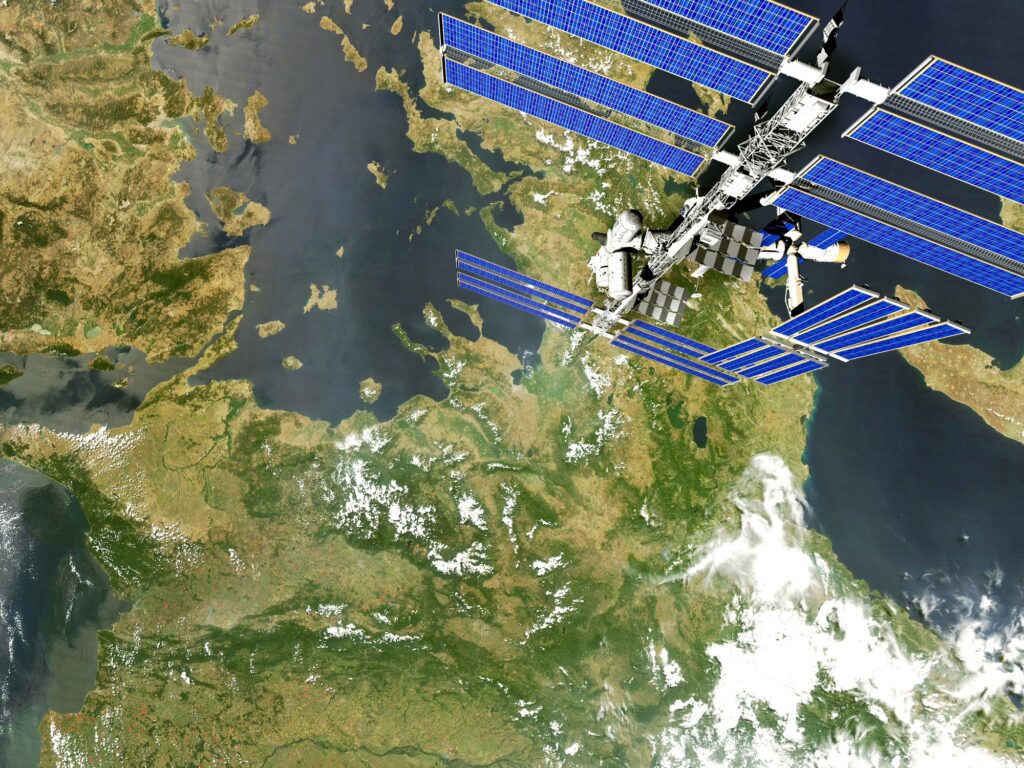
The Kyrgyz authorities are taking a step towards the digitalization of agriculture and natural resource management. The country’s Cabinet of Ministers has decided to establish a state-owned company, Kyrgyz Sputnik, which will focus on the use of satellite data in key economic sectors. The new entity will be created as an open joint-stock company with 100% state ownership. Its founder will be the Ministry of Water Resources, Agriculture, and Processing Industry.

Kyrgyz Sputnik is expected to serve as a tool for expanding the use of aerospace data in natural resource management. The company’s infrastructure will be located in the city of Karakol in the Issyk-Kul region.

The creation of Kyrgyz Sputnik is intended to lay the groundwork for developing national expertise in space technologies and strengthening the country’s technological independence. The authorities view the project as a long-term investment in sustainable development, security, and the growth of an innovation-driven economy.

At the same time, Kyrgyzstan has already begun implementing satellite solutions in agriculture. According to Deputy Minister of Agriculture Asel Kenenbaeva, the ministry is cooperating with international operators that provide high-resolution satellite imagery. Kenenbaeva said such data can be used to monitor crop conditions and cultivated areas, as well as oversee pasture use. It can also help analyse water resources and detect plant diseases.

The information obtained will be made available to farmers, enabling them to assess the condition of their fields in near real time and receive recommendations on cultivation and fertilisation.

Kazakhstan Navigates a Fragmented Global Space Race

The United States, China, Russia, and Europe are pursuing different models of space strategy, ranging from institutional leadership to technological autonomy. At the same time, the number of middle powers that view space as a tool for economic development and the strengthening of sovereignty is growing. In this context, a multi-level system is emerging in which the architecture of near-Earth space is becoming an element of the global balance of power.

For Kazakhstan, these changes are of direct importance. The country possesses a unique infrastructure asset, the Baikonur Cosmodrome, and is gradually developing its own satellite and manufacturing capabilities. However, amid the fragmentation of the global space order, the question of strategic choice is becoming increasingly pressing. Will Kazakhstan remain primarily an infrastructure hub, or will it build a sustainable national model for participation in the evolving space architecture?

Models of Space Strategies

The United States remains the world’s leading space power in terms of funding and launch frequency. Total government space spending, including allocations for NASA, the U.S. Space Force, and intelligence programmes, reached a record $79.7 billion in 2024 out of approximately $135 billion in global government space spending.

A defining feature of the U.S. model is the close integration between government institutions and the private sector. Companies such as SpaceX and Blue Origin have become integral to national strategy, helping to reduce launch costs and accelerate innovation.

A central component of the current phase is the Artemis lunar programme. The Artemis II mission is planned to conduct a crewed flyby of the Moon, while Artemis III is intended to return humans to the lunar surface using a landing system being developed by SpaceX.

China’s space strategy is built on the concept of long-term technological sovereignty and the phased expansion of its presence in space. Deployment began in 2021, and the three-module Tiangong space station was completed in 2022. Chinese astronauts now conduct scientific experiments and test technologies for long-duration missions in low Earth orbit.

In lunar exploration, China is implementing a step-by-step research programme that includes returning soil samples and advancing plans for an international lunar research station. The Tianwen-1 Mars mission, which included the landing of the Zhurong rover, demonstrated the country’s capacity to carry out complex interplanetary operations independently.

Amid sanctions pressure and reduced international cooperation, Russia’s space strategy is focused on ensuring independent access to space, maintaining orbital infrastructure, and preserving key capabilities in human spaceflight.

Despite ongoing uncertainty over its long-term involvement, Russia continues to participate in the International Space Station programme, conducting regular crewed launches and sending Progress cargo spacecraft. At the same time, work is underway on the planned Russian Orbital Station (ROS), with initial deployment planned for the late 2020s. The project is viewed as an important step in preparing for future missions, including potential lunar initiatives.

Europe’s space strategy emphasises strategic autonomy alongside broad international cooperation. In addition to traditional Ariane and Vega launch vehicles, European countries are investing in commercial startups such as Isar Aerospace and Orbex, which are developing small- and medium-class rockets designed to provide more flexible access to orbit.

In the field of orbital infrastructure, Europe is strengthening its autonomy through its own satellite systems. The Galileo navigation network is intended to ensure independence from GPS and other global positioning systems, while the Copernicus programme is building one of the world’s largest Earth observation frameworks.

Space activity is no longer limited to traditional superpowers. During the 2020s, a wide group of middle powers has emerged that sees space as a tool for technological advancement, security, and international prestige. India is preparing its Gaganyaan crewed programme, aiming to become the fourth country capable of independently sending humans into space. The United Arab Emirates is shifting from single flagship missions to a long-term strategy, from the Hope Mars mission to the “Mars 2117” vision.

Japan is also strengthening both the scientific and defence dimensions of its space policy through participation in Artemis and institutional reforms within its Self-Defense Forces. South Korea is developing its Nuri launch vehicle and planning lunar missions; Israel is focusing on miniaturisation and reconnaissance technologies; Turkey is advancing a national space programme with lunar ambitions; and Canada continues to specialise in robotics for international space stations.

Kazakhstan’s Infrastructure Base

The modern space race reflects the emergence of a multi-tiered system in which major powers shape overall architecture, while middle powers seek stable niches in areas such as launch services, robotics, satellite data, and defence-related technologies. Attempting to define its role within this group, Astana is shaping its space strategy by combining its historical infrastructure legacy with the gradual development of national capabilities.

Kazakhstan operates the KazSat-2 and KazSat-3 communications satellites, as well as Earth observation spacecraft, helping to ensure telecommunications resilience and enabling monitoring of natural resources, agriculture, and infrastructure. At the same time, new satellites are being developed, including radar observation systems that could strengthen analytical capacity and expand export opportunities in space-based data services.

Since 2024, a spacecraft assembly and testing complex has been operating in Astana in cooperation with Airbus Defence and Space. This facility allows satellites to be designed, assembled, and tested domestically.

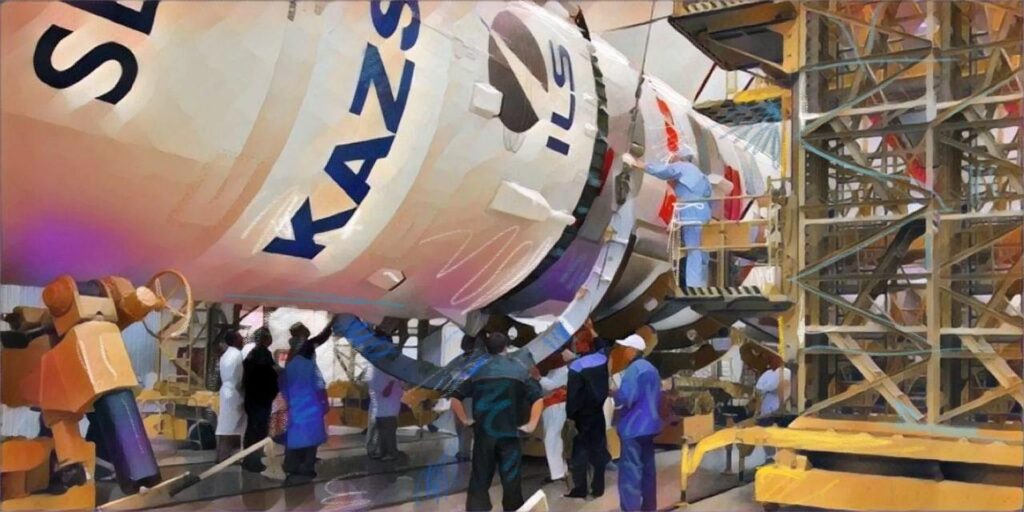
The Baikonur Cosmodrome remains a central element of the national space ecosystem. Kazakhstan receives lease payments from Russia while also seeking to expand its own role in launch operations through the Baiterek project, under which the first launch of the joint Kazakh-Russian Soyuz-5 (also known as Sunkar) launch vehicle is being prepared. The project is reportedly approaching a critical phase but continues to face technical challenges.

Recent reports indicate that the transport of the launch vehicle to the launch complex, initially scheduled for March 24, has been postponed to March 26. According to sources at the cosmodrome, this delay has also affected the timeline for the first test launch.

Developing this sector is viewed as a means of increasing Kazakhstan’s share in the commercial launch market and diversifying revenue from space infrastructure.

Kazakhstan also aims to transform Baikonur into a hub for international cooperation, scientific exchange, tourism, and educational initiatives. Expanding into new markets for space services and creating opportunities for young engineers and researchers could provide significant long-term benefits.

Pragmatism Over Ambition

Unlike the leading space powers, Kazakhstan is not currently pursuing large-scale interplanetary missions or the creation of an independent crewed space programme. Instead, its approach is pragmatic, focusing on strengthening the technological base, developing satellite services, and gradually increasing participation in commercial launches.

In a fragmented global space environment, where American, Chinese, European, and Russian technological ecosystems coexist, middle powers face both heightened risks of dependency and opportunities to act as bridges between different systems. Kazakhstan’s geographical position, experience in multi-vector diplomacy, and involvement in international security frameworks provide a foundation for developing a focused and realistic national strategy in the space sector.

This underscores the need for a comprehensive policy centred on data services, technological partnerships, and regulatory engagement. Under such conditions, space could become not only an extension of Kazakhstan’s infrastructure legacy but also a pillar of long-term technological resilience in a rapidly evolving global order.

Cargo Spacecraft Docks at Space Station After Baikonur Lift-Off

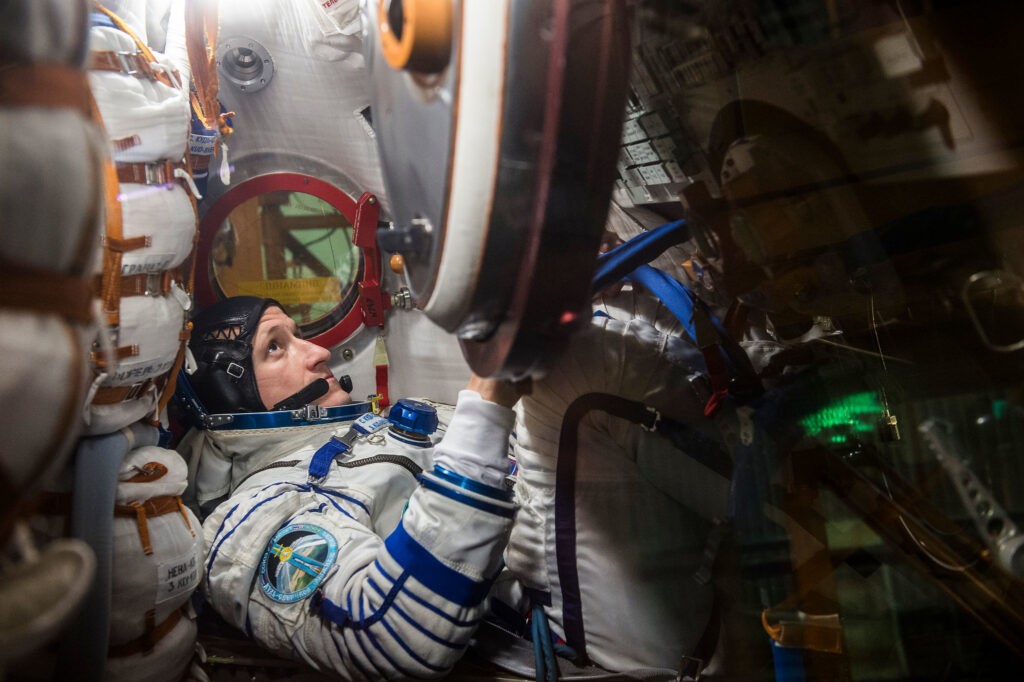
A Russian cosmonaut on the International Space Station conducted a manual docking of an arriving cargo spacecraft on Tuesday, two days after the craft lifted off from the Baikonur Cosmodrome in Kazakhstan.

The docking would normally be an automatic process, but the Russian space agency Roscosmos had said that an antenna used in that process remained unfolded after the uncrewed Progress MS-33 cargo ship launched on a Soyuz-2.1a rocket on Sunday. Troubleshooting efforts during the journey to the space station, or ISS, failed to fix the problem.

On board the space station, cosmonaut Sergey Kud-Sverchkov used a joystick during the manual docking. A live video feed on the NASA website showed that the procedure went smoothly as the cargo ship slowed down and approached its docking port on the Russian segment of the ISS.

“Well done, congratulations on your successful work!” Roscosmos said on Telegram.

A NASA commentator said the docking process occurred as the space station and cargo spacecraft flew about 400 kilometers over the border between Kazakhstan and Mongolia.

The Progress MS-33 had launched from a key Baikonur launch pad that was repaired and used for the first time since it was damaged in a lift-off in November. It carried about 2.7 tons of food, fuel and other supplies to the International Space Station.

World Bank Approves $200 Million for Road and Transport Reforms in Uzbekistan

The World Bank’s Board of Executive Directors has approved a $200 million project to modernise transport infrastructure in Uzbekistan’s Surkhandarya region, the institution said in a statement on March 23.

According to the World Bank, the five-year initiative will focus on reconstructing a key section of the M41 regional road corridor while also supporting broader reforms in the country’s transport sector. The project is expected to contribute to job creation and stimulate business activity along the upgraded route.

Uzbekistan’s transport sector currently accounts for nearly 8% of gross domestic product and employs around one million people. Its performance has improved in recent years, with the country rising from 129th to 88th place in the World Bank’s Logistics Performance Index between 2014 and 2023. However, rapid growth in the number of vehicles has placed increasing pressure on infrastructure, with officials estimating that road capacity will need to expand by about 500% by 2030 to meet rising freight demand.

“Developing efficient and safe road and railway networks is essential to connect people to jobs, support domestic and international trade, and strengthen Uzbekistan’s overall competitiveness,” said Najy Benhassine, the World Bank’s Division Director for Central Asia.

A central component of the project involves reconstructing a 91-kilometer stretch of the M41 highway in Surkhandarya, a region bordering Tajikistan, Kyrgyzstan, and Afghanistan. The existing two-lane road will be expanded into a four-lane highway. Once completed, it is expected to serve around 35,000 drivers and passengers daily and improve access to transport services for approximately 550,000 residents living in nearby communities.

The project will also finance upgrades to road surfaces, safety features, and bus stops, as well as the construction and rehabilitation of around 180 bridges and drainage systems designed to reduce flood risks. These improvements are expected to shorten travel times, with average speeds projected to increase from 65 to about 90 kilometers per hour on interurban sections, and to reduce accidents along the route.

In addition to infrastructure works, the World Bank will support the development of a National Multimodal Transport Strategy. The roadmap is intended to strengthen government capacity, improve coordination between different modes of transport, and promote more resilient and efficient logistics systems.

Further support will be provided to Uzbekistan Railways, aimed at improving corporate governance, financial transparency, service planning, and its ability to attract private investment.

The latest project builds on ongoing cooperation between Uzbekistan and the World Bank. In December last year, the institution approved a $250 million loan to support reforms in the country’s education system through the Edumkon programme, which aims to expand access to higher and vocational education for around 600,000 young people between 2026 and 2028.

Tajikistan Loses Chance to Host the Asian Cup

Asian football is set for a major overhaul of its schedule. Under pressure from FIFA, the Asian Football Confederation (AFC) has decided to cancel the current selection process for Asian Cup hosts and effectively restart it, while also changing the traditional timing of the tournaments.

The AFC has informed national federations of the suspension of the bidding process for the 2031 and 2035 Asian Cups. The decision came as a surprise, as the list of candidates had been published only a few weeks earlier.

Among the bids was a joint proposal from Tajikistan, Uzbekistan, and Kyrgyzstan. However, the entire process has now been “reset”: all submitted applications are no longer valid, and the selection procedure will have to begin again.

The changes follow a FIFA initiative to revise the schedule of continental competitions and move them to even-numbered years. After consultations, the AFC agreed to adopt the new model.

As a result, the 2031 Asian Cup has been postponed to 2032, and the 2035 tournament to 2036. The 2027 Asian Cup, however, will take place as planned.

The revised calendar is expected to place additional pressure on the international football schedule. With the rescheduling of major competitions, tournaments such as the UEFA European Championship, the Copa América, and the Asian Cup could be held in the same years. This may significantly “overload” national team calendars, forcing federations, coaches, and players to adapt to a more congested schedule and more complex planning requirements.

The cancellation of the current bidding procedures means that countries will have to compete again for the right to host the tournaments. A new selection cycle has not yet been announced, and the timeline for its launch remains unclear.