• KGS/USD = 0.01144 0%
  • KZT/USD = 0.00193 -0%
  • TJS/USD = 0.10866 0.55%
  • UZS/USD = 0.00008 0%
  • TMT/USD = 0.28490 0%
  • KGS/USD = 0.01144 0%
  • KZT/USD = 0.00193 -0%
  • TJS/USD = 0.10866 0.55%
  • UZS/USD = 0.00008 0%
  • TMT/USD = 0.28490 0%
  • KGS/USD = 0.01144 0%
  • KZT/USD = 0.00193 -0%
  • TJS/USD = 0.10866 0.55%
  • UZS/USD = 0.00008 0%
  • TMT/USD = 0.28490 0%
  • KGS/USD = 0.01144 0%
  • KZT/USD = 0.00193 -0%
  • TJS/USD = 0.10866 0.55%
  • UZS/USD = 0.00008 0%
  • TMT/USD = 0.28490 0%
  • KGS/USD = 0.01144 0%
  • KZT/USD = 0.00193 -0%
  • TJS/USD = 0.10866 0.55%
  • UZS/USD = 0.00008 0%
  • TMT/USD = 0.28490 0%
  • KGS/USD = 0.01144 0%
  • KZT/USD = 0.00193 -0%
  • TJS/USD = 0.10866 0.55%
  • UZS/USD = 0.00008 0%
  • TMT/USD = 0.28490 0%
  • KGS/USD = 0.01144 0%
  • KZT/USD = 0.00193 -0%
  • TJS/USD = 0.10866 0.55%
  • UZS/USD = 0.00008 0%
  • TMT/USD = 0.28490 0%
  • KGS/USD = 0.01144 0%
  • KZT/USD = 0.00193 -0%
  • TJS/USD = 0.10866 0.55%
  • UZS/USD = 0.00008 0%
  • TMT/USD = 0.28490 0%
11 December 2025

Kazakh Wheat Flour Enters U.S. Market

Kazakhstan has reached a new milestone in diversifying its agricultural exports with the inaugural shipment of wheat flour to the United States. A 50-ton batch recently arrived in New York, marking the beginning of what could become a regular supply channel.

Marketed under the Eurasian Legacy brand, the flour is now available on Amazon and Walmart. It retails for $14.50 per 1.36 kg package on Amazon and is advertised as non-GMO and glyphosate-free. Each package bears the label “Product of Kazakhstan,” highlighting the country’s positioning as a producer of environmentally friendly, high-quality food products.

According to the QazTrade Center for Trade Policy Development, monthly exports could exceed 100 tons in the near future. In addition to e-commerce platforms, discussions are underway with American restaurants, coffee shops, and major retail chains about incorporating Kazakh flour into their supply chains.

In July, QazTrade opened a representative office in the United States to boost the visibility of Kazakhstani food products. “We are not limited to flour. We have already presented buckwheat, granola, talkan, chocolate, and cocoa in the United States, and partners in New York, Chicago, and Washington have tested their quality. A business mission of Kazakh producers to these cities is the next logical step. This is not only an opportunity to strengthen ties with partners but also to enter the HoReCa segment, where natural and authentic products are in demand,” said Aitmukhammed Aldazharov, CEO of QazTrade.

The move into the U.S. market follows Kazakhstan’s growing grain and flour exports to Europe. For the first time, Kazakh wheat has been shipped to Belgium, Estonia, Italy, Norway, Poland, Portugal, and the United Kingdom.

Despite this growing diversification, Kazakhstan’s primary grain buyers remain Uzbekistan, Tajikistan, Afghanistan, Kyrgyzstan, Iran, and Azerbaijan.

Next Stop, Wi-Fi: Kazakhstan Pilots Satellite Internet on Rails

Just a few years ago, internet access on passenger trains in Kazakhstan seemed like an unattainable dream. Today, this service is becoming a reality.

In an interview, Anuar Akhmetzhanov, Chairman of the Board of JSC Passenger Transport, told The Times of Central Asia that providing passengers with access to high-speed internet on trains is one of the key directions in the digitalization of the passenger transportation sector.

Since the beginning of this year, the national company, Kazakhstan Temir Zholy (Kazakhstan Railways), together with the official distributor of the low-orbit satellite network OneWeb in Kazakhstan, has launched a pilot project to provide internet access on passenger trains. The service was first introduced on the Astana–Almaty route, and in the spring, on the Astana–Oskemen route. According to Akhmetzhanov, Kazakhstan is among the first countries in the world to implement low-orbit satellite internet on passenger trains. In addition, internet access based on Starlink technology was recently launched in pilot mode on the Astana–Borovoe electric train.

“The preliminary results of the pilot project show strong demand from passengers. According to surveys, 87% of our passengers are satisfied with the quality of the internet, and the service meets their expectations,” said Akhmetzhanov.

High-speed internet of up to 150 Mbps benefits both passengers and the carrier. Travelers can remain connected throughout the journey, have access to various online services, make online payments during the trip, and enjoy unlimited entertainment options.

JSC Passenger Transport will, in turn, gain additional opportunities to sell tickets, control passenger boarding, provide additional services, and ensure safety control by connecting an onboard video surveillance system.

“As of today, only three trains are equipped with internet. Work is underway to expand the service to all types of trains. Based on testing results, we plan to roll out the solution to all major routes as early as next year,” noted Akhmetzhanov.

One of the main questions for passengers is whether the introduction of internet services on trains will affect ticket prices. On this point, Akhmetzhanov stated that an increase in ticket prices is not currently under consideration. “However, to reduce and offset expenses, the national carrier, together with its partner, is conducting market research on the demand for paid internet packages with higher speeds,” he said.

For example, the operator Jusan Mobile offers paid internet services; currently, passengers can choose tariffs for the entire trip or purchase 1 GB packages with the option to increase the volume as needed. There are no restrictions on which internet resources can be accessed.

In the near future, JSC Passenger Transportation is preparing to launch internet services on trains traveling on western routes, such as Aktobe–Almaty, Kyzylorda–Semey, and others.

The Train Internet project, based on satellite technology, ensures a stable, high-speed connection even in remote and hard-to-reach regions where traditional mobile services are limited. For Kazakhstan, with its vast territory and long travel distances, providing internet access on passenger trains is a service in high demand.

Turkmenistan Expands Educational Partnership with UK’s AQA

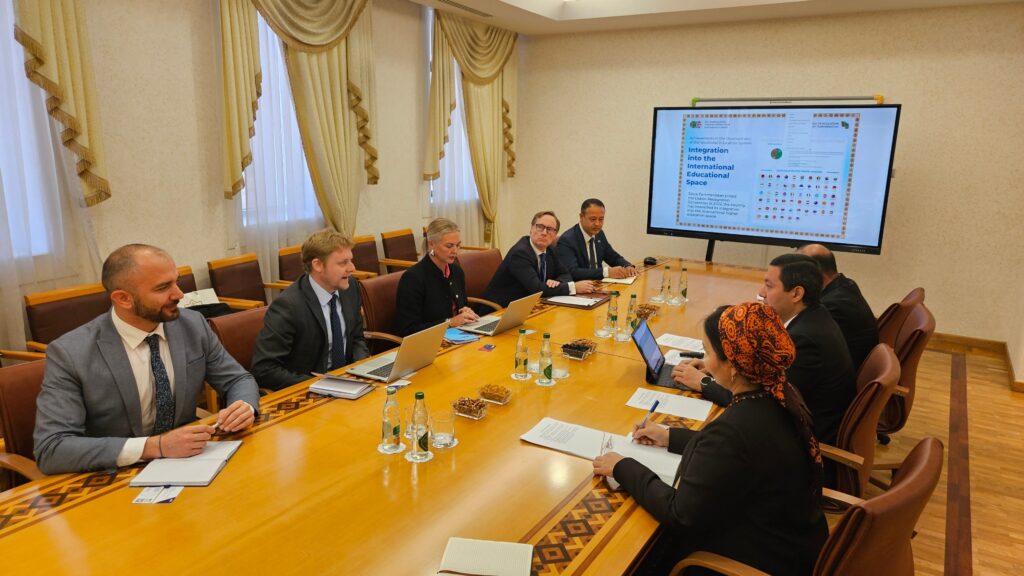
The Ministry of Education of Turkmenistan has held an official meeting with representatives of AQA Global Assessment Services, a leading UK-based organization specializing in educational assessment.

The AQA delegation included Sean Crowley, Director of International Business Development; Anna Green, Director of Assessment Systems; and regional consultant Vali Huseyn. Deputy Minister of Education Azat Ataev emphasized Turkmenistan’s interest in deepening strategic cooperation with AQA, particularly in introducing modern methods of academic evaluation.

“Our key task is to improve the quality of education and ensure it fully meets the needs of the labor market,” Ataev said.

Regional Experience

AQA has led numerous educational reform initiatives globally, including across Central Asia. In Uzbekistan, the organization contributed to the development of a new model for senior school graduation exams, aligning national assessments with international standards. In Kazakhstan, AQA supported the transition to a criteria-based assessment system, which formed the basis for updated qualification requirements.

Experts note that such reforms increase trust in national diplomas, improve transparency, and make education systems more competitive and aligned with labor market demands.

Prospects for Cooperation

During the meeting in Ashgabat, both sides discussed several areas for collaboration, including:

  • the introduction of modern examination platforms
  • digital analytics of learning outcomes
  • development of qualification standards
  • training of teachers and administrators in examination processes

Particular emphasis was placed on methodological support and establishing a systematic approach to educational planning. According to participants, the adoption of international best practices will help Turkmenistan build a sustainable, data-driven model of educational development.

Uzbekistan to Host First-Ever Web Summit Spotlight in Central Asia

Uzbekistan will host its first Web Summit Spotlight on September 27 in Tashkent, marking a significant milestone for the country’s growing tech sector. The Ministry of Digital Technologies and IT Park Uzbekistan, co-organizers of the event, confirmed the announcement in an official press release.

The event is being held in partnership with Web Summit, one of the world’s most prominent technology conferences, which draws more than 70,000 participants each year to its flagship gathering in Lisbon. In recent years, Web Summit has expanded globally with editions in Rio de Janeiro, Qatar, and Vancouver. Tashkent will now join this lineup, positioning Uzbekistan as a rising hub for innovation and international tech collaboration.

According to organizers, Web Summit Spotlight: Uzbekistan will bring together leading global experts, venture capitalists, startup founders, and IT industry executives. The program will highlight Uzbekistan’s evolving role as a center for technological innovation, opportunities for international investment in emerging markets, and current trends in venture funding.

President Shavkat Mirziyoyev has consistently stressed the importance of digital transformation for Uzbekistan’s future. “We are creating conditions for Uzbekistan to become a true center of innovation, where young people can turn their talent and energy into globally competitive projects,” the president said earlier this year while outlining the country’s digital development strategy.

The forum comes amid rapid growth in Uzbekistan’s IT sector. As previously reported by The Times of Central Asia, revenues from IT outsourcing tripled to more than $300 million, following four consecutive years of annual doubling. The United States remains the primary destination for Uzbek IT exports, accounting for half of all outsourcing contracts. Authorities aim to grow outsourcing revenues to $5 billion by 2030, with a projected 300,000 people employed in the sector.

IT Park Uzbekistan has played a pivotal role in this transformation. By the end of 2023, it was home to 1,652 resident companies, nearly half of which were founded that year. With attractive tax incentives and support services, the park has become a magnet for both domestic and international tech talent.

Uzbekistan Approves Share Purchase Plan to Join Eurasian Development Bank

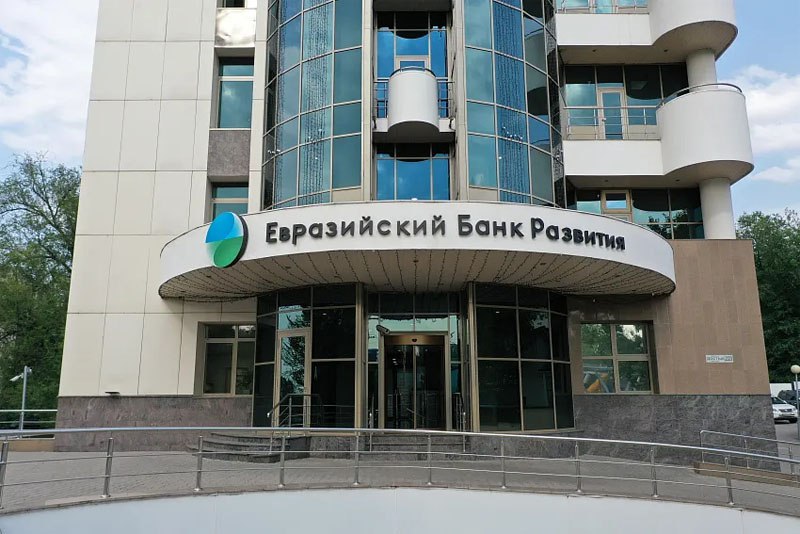
President Shavkat Mirziyoyev has approved Uzbekistan’s plan to acquire shares in the Eurasian Development Bank (EDB), formally initiating the country’s accession to the institution’s 2006 founding agreement. The decision was published on the official legal portal, Lex.uz.

Under the approved terms, Uzbekistan will receive 777,777 shares in the EDB’s charter capital, each valued at $1,000. Of these, 168,411 shares (21.7%) are payable, while the remaining 609,366 shares (78.3%) will be paid on demand. The president’s decree also outlines a payment schedule, with funding to begin from the state budget in 2025.

The Ministry of Investments, Industry, and Trade has been tasked with executing the share purchase in accordance with established procedures. The Ministry of Economy and Finance will allocate the necessary funds, which will be included in the state budget from 2026 onward. The Central Bank of Uzbekistan will serve as the depository for EDB funds and assets within the country.

President Mirziyoyev described Uzbekistan’s participation in the EDB as a strategic move to strengthen regional economic ties. “Joining the Eurasian Development Bank will open new opportunities for financing infrastructure, industrial, and trade projects that directly serve our long-term development goals,” he said.

Deputy Prime Minister Jamshid Khodjaev has been appointed Uzbekistan’s authorized representative to the EDB, with Deputy Minister Khurshid Teshabaev designated as his deputy. The Ministry of Investments, Industry, and Trade will serve as the country’s authorized body in dealings with the bank.

This move is part of Uzbekistan’s broader strategy to deepen integration with Eurasian economic institutions. In 2024, officials confirmed that Uzbekistan aims to complete its accession to the EDB by early 2025.

Uzbekistan has held observer status in the Eurasian Economic Union (EAEU) since 2020 and already participates in collaborative projects on trade, transport, e-commerce, and climate change.

Founded in 2006 by Russia and Kazakhstan, the EDB now also includes Armenia, Belarus, Kyrgyzstan, and Tajikistan. The bank’s core mission is to finance large-scale investment projects that promote economic growth and regional integration.

Kyrgyzstan Says It’s Close to Being Removed from EU Flight Ban

A delegation from Kyrgyzstan’s Civil Aviation Agency will meet European officials in Brussels next month, marking another step in the campaign to end a two-decade ban on Kyrgyz airlines operating in the European Union because of safety concerns.  

The October 7 meeting will be followed by a final European audit in December as Kyrgyzstan moves into the last stage of being removed from the EU’s so-called “blacklist” of air carriers, Kyrgyz President Sadyr Japarov said last week during the re-opening of two of the country’s airports, Naryn and Kazarman.  

“Thus, we firmly believe that the European skies, which have been closed since 2006, will reopen for Kyrgyzstan,” said Japarov, who predicted that the possible removal of the ban would boost international tourism in the Central Asian country. 

Kanat Tologonov, deputy director of Kyrgyzstan’s Civil Aviation Agency, said this week that European officials will decide on whether to lift the air ban on Kyrgyzstan in May 2026, according to the 24.kg news agency. Speaking to a parliamentary committee on budget and fiscal policy, Tologonov said Kyrgyzstan successfully passed 2023-2024 audits of the International Civil Aviation Organization, a U.N. agency that oversees safety and other aspects of air travel. 

As Kyrgyzstan’s bid to regain access to EU skies gains momentum, civil aviation chief Daniyar Bostonov met representatives of the International Air Transport Association this week to discuss upgrading air navigation and the digitization of passenger and air cargo transportation. 

The EU Air Safety List is a list of air carriers that it says do not fulfil international safety standards and it bars those airlines “from operating to, in and from the EU, including the overflight.”

Sixteen carriers from Kyrgyzstan are on the list, out of a total of 169 banned airlines, according to a June update. The EU barred Kyrgyzstan because of inadequate regulation in the aviation sector and failure to comply with international safety standards. 

Civil aviation has been developing in some other parts of Central Asia, including Uzbekistan and Kazakhstan.