• KGS/USD = 0.01144 0%
  • KZT/USD = 0.00193 -0%
  • TJS/USD = 0.10866 0.55%
  • UZS/USD = 0.00008 0%
  • TMT/USD = 0.28490 0%
  • KGS/USD = 0.01144 0%
  • KZT/USD = 0.00193 -0%
  • TJS/USD = 0.10866 0.55%
  • UZS/USD = 0.00008 0%
  • TMT/USD = 0.28490 0%
  • KGS/USD = 0.01144 0%
  • KZT/USD = 0.00193 -0%
  • TJS/USD = 0.10866 0.55%
  • UZS/USD = 0.00008 0%
  • TMT/USD = 0.28490 0%
  • KGS/USD = 0.01144 0%
  • KZT/USD = 0.00193 -0%
  • TJS/USD = 0.10866 0.55%
  • UZS/USD = 0.00008 0%
  • TMT/USD = 0.28490 0%
  • KGS/USD = 0.01144 0%
  • KZT/USD = 0.00193 -0%
  • TJS/USD = 0.10866 0.55%
  • UZS/USD = 0.00008 0%
  • TMT/USD = 0.28490 0%
  • KGS/USD = 0.01144 0%
  • KZT/USD = 0.00193 -0%
  • TJS/USD = 0.10866 0.55%
  • UZS/USD = 0.00008 0%
  • TMT/USD = 0.28490 0%
  • KGS/USD = 0.01144 0%
  • KZT/USD = 0.00193 -0%
  • TJS/USD = 0.10866 0.55%
  • UZS/USD = 0.00008 0%
  • TMT/USD = 0.28490 0%
  • KGS/USD = 0.01144 0%
  • KZT/USD = 0.00193 -0%
  • TJS/USD = 0.10866 0.55%
  • UZS/USD = 0.00008 0%
  • TMT/USD = 0.28490 0%
11 December 2025

Central Asia’s First Rowing Canal Opens in Kazakhstan

Kazakhstan has inaugurated Central Asia’s first-ever rowing canal in the southern city of Turkestan. Opened on September 15, the facility is the only one of its kind in the region and meets the standards of both the International Canoe Federation (ICF) and the International Rowing Federation (FISA).

Spanning 100 hectares, the canal stretches 2.5 kilometers and is equipped to host international competitions, including World Cup and Asian Cup events in rowing and canoeing. It will also serve as a dedicated training base for athletes.

The complex includes spectator grandstands, a one-kilometer city beach, and an on-site hotel. In addition to its sporting function, the canal will contribute to environmental sustainability by supplying water for irrigating Turkestan’s green belt.

According to the Ministry of Tourism and Sports, more than 6,000 people in Kazakhstan regularly participate in rowing and canoeing. Officials highlight rowing as one of the most “medal-rich” sports, with 14 medal sets awarded at the Olympic Games and more than 20 at the World Rowing Championships, offering strong opportunities for national athletic achievement.

Authorities expect the new facility to significantly advance the development of rowing in Kazakhstan and to strengthen Turkestan’s profile as a regional hub for both culture and sports.

Russia Opens Criminal Case After Attack on Uzbek Migrants in Vladivostok

Russian authorities have opened a criminal investigation following a violent assault on Uzbek migrants in Vladivostok, carried out by a group of teenagers. The incident, which occurred several days ago, was recorded on video and widely circulated on social media, sparking public outrage. The footage shows the young attackers beating the migrants, mocking them, and shouting insults while one of them filmed and laughed.

According to the press service of the Investigative Committee of Russia for Primorsky Krai, the assault took place during the night of September 10 on Khabarovskaya Street. Investigators reported that the 15-year-old suspects, allegedly intoxicated, first damaged a parked car and sprayed an aerosol can inside it before attacking the driver. They later entered a 24-hour store and beat another man in front of staff and customers. The group also assaulted a truck driver, a taxi driver, and his passenger, using stones and other objects as weapons while shouting loudly in the street.

The committee confirmed that one suspect has been detained, while two others remain at large. All are described in police records as negatively characterized, and at least one is already on trial in a separate hooliganism case stemming from an incident at a local store. If convicted, the suspects could face up to seven years in prison under Article 213, Part 2, of Russia’s Criminal Code, which addresses aggravated hooliganism.

Uzbekistan’s Consul General in Vladivostok, Yusuf Qobiljonov, stated that the victims filed an official complaint with local police. Diplomatic notes have also been sent to Russia’s Foreign Ministry office in Vladivostok and the Primorsky Krai Prosecutor’s Office, urging authorities to take appropriate measures. Qobiljonov emphasized that the case is being closely monitored by both the Uzbek consulate and Russian law enforcement agencies.

Kipling and Code: Tokayev Advocates Global AI Ethics Principles

Kazakhstan’s President Kassym-Jomart Tokayev has called for the creation of an international body to address the ethical dimensions of artificial intelligence (AI) and to draft universal legislation regulating its development and application.

Speaking at the VIII Congress of Leaders of World and Traditional Religions in Astana, Tokayev emphasized that technologies such as AI, big data, and bioengineering are transforming societies at a pace that outstrips the development of ethical and legal frameworks.

“New challenges arise, freedom of choice and privacy, digital equality and security, the use of artificial intelligence and many other technologies. Universal moral values and ideals must be included in the discussion of humanity’s digital future. Any technology should work for the benefit of people,” Tokayev said.

He proposed the creation of an international commission on AI ethics to draft a set of universal principles for responsible AI use.

“We are talking about a kind of ‘commandments for algorithms’ that imply respect for human dignity and the inadmissibility of discrimination when making life-defining decisions,” he explained. Tokayev said such “commandments” would require ongoing dialogue among spiritual leaders, scientists, and technology developers.

Expanding beyond AI, Tokayev underlined the growing importance of spiritual diplomacy at both regional and global levels. He reiterated his previous proposal for a global peace movement under the auspices of the Congress, with religious leaders forming its moral foundation.

“This initiative could unite not only the broader community of believers, but also politicians, representatives of international organizations, state institutions, experts, and, of course, youth,” Tokayev said.

He also warned of mounting risks of global conflict, including the increasing threat of nuclear escalation and what experts have described as a “civilizational crisis”, a worldwide inability to reconcile opposing political ideologies. Citing Kipling, Tokayev noted that divisions between East and West may seem irreconcilable but argued that responsible statecraft and political leadership can bridge cultural and religious divides.

Tokayev further expressed concern over the growing convergence of ultranationalism and patriotism, which he said may confuse younger generations. He also pointed to intensifying clashes between conservative and liberal ideologies, warning that such polarization is driving political instability in numerous countries.

“In such complex realities, constructive diplomacy must play a key role as the main instrument for dialogue, overcoming alienation, and building trust at the international level,” he concluded.

Rail, Water, and Helicopters – Uzbekistan’s “Limited Recognition” of the Taliban

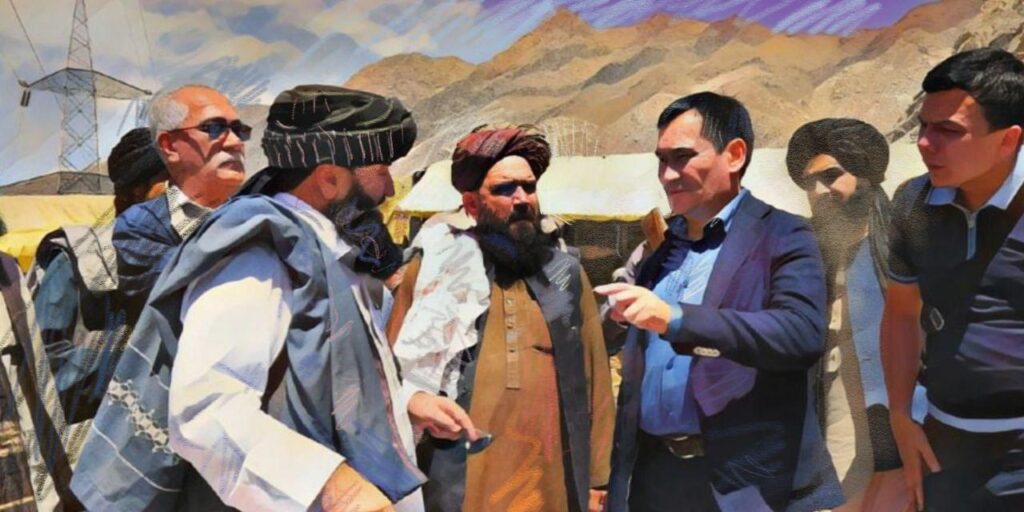
Uzbekistan has spent the middle of September embroiled in an increasingly tetchy press battle over an unusual topic: helicopters. The Taliban, who run the de facto government in Kabul, have long claimed that several dozen military aircraft and helicopters currently residing in Uzbekistan are rightfully theirs.

On September 11, a Taliban official announced publicly that Uzbekistan had agreed to hand them back. This was reported widely in the regional media, with the Uzbek foreign ministry slow off the mark in denying these claims.

The dispute goes back to the fall of Kabul in August 2021, when a total of 57 aircraft were flown from Afghanistan to Uzbekistan and Tajikistan as Ashraf Ghani’s government collapsed.

“The helicopters came from the Afghan territory to Uzbek territory illegally, so actually we had the right to confiscate them,” Islomkhon Gafarov, an Afghanistan expert at the Center for Progressive Reform, a Tashkent think tank, told the Times of Central Asia.

However, Gafarov adds that the aircraft were the property of the U.S. military loaned to the previous government of Afghanistan, and therefore, Washington will have a say in their return.

This has not stopped the Taliban from continuing to demand the helicopters back for use in “humanitarian operations,” in the words of Foreign Minister Amir Khan Muttaqi.

Such wrangling is part of the daily diplomatic in-tray for Tashkent when dealing with a neighbor whose government has not been recognized by almost the entire world.

“Afghanistan is our neighbor,” said Gafarov. “According to the geopolitical situation, we have to conduct a dialogue with this government. It’s true, Uzbekistan hasn’t recognized the Taliban government, but de facto, we work with them; we’ve had diplomatic relations with them since 2018.”

Tashkent certainly has reasons to work with the Taliban. Helicopters are a mere sideshow compared to two far larger issues that will define their relations for years to come: rail and water.

Railway

On the positive side of the ledger, the Taliban have brought to Afghanistan a reasonable degree of stability – enough to start contemplating large-scale infrastructure projects. In July, an agreement was struck between Pakistan, Afghanistan, and Uzbekistan to conduct a feasibility study for a trans-Afghanistan railway, with 647 kilometers of new track being laid to link Uzbekistan with Pakistan’s Indian Ocean ports.

This railway could bring significant benefits to Uzbekistan, one of only two double-landlocked countries in the world. Currently, sea-bound exports must travel via Turkmenistan to Iran. Other routes almost all rely on going via Kazakhstan. The China-Kyrgyzstan-Uzbekistan railway, currently being constructed, should remove some of the need for sea-bound routes, but the Pakistan route would be faster.

“The trans-Afghan route is the shortest way to the seaports of Karachi and Gwadar,” Gafarov told TCA. With a line from Termez, Uzbekistan, to Mazar-i-Sharif in Northern Afghanistan already operational, this only leaves two sections unbuilt – from Mazar to Kabul, and then from Kabul to Peshawar in Pakistan.

The teams are still only at the feasibility stage right now, and have, with some chutzpah, predicted that it will be completed in just five years. But the project is filled with assumptions that many argue are unrealistic. Afghanistan has some of the world’s most challenging terrain, as well as an unpredictable security situation.

“Another problem is the difficulties between Afghanistan and Pakistan,” Gafarov said. “There have been several conflicts across the Durand Line since the end of last year.” Pakistan has accused Afghanistan of providing aid and shelter to the Tehrik-e-Taliban, or Pakistani Taliban, which has led to conflict in border areas and strained relations between the two states. A raid on Tehrik-e-Taliban positions by Pakistani forces on September 12 led to 47 deaths.

This has also led to a gloomy prognosis in Tashkent. “Even if we build a railroad from Mazar-i-Sharif to Kabul, it’s the question of how we can build from Kabul to Peshawar,” said Gafarov. He adds that in his opinion, it might be worth Uzbekistan’s while putting more resources into accessing the sea via Iran’s Chabahar free port, which has been exempt from U.S. sanctions since 2018.

Water

Another issue forcing Tashkent to engage with the Taliban is water.

In March 2022, the Taliban began construction on the long-planned Qosh Tepa Canal, almost fifty years after the idea was first floated in 1973 by Afghanistan’s first President, Mohammad Daud.

The 285-kilometer-long canal is designed to divert 10 billion cubic meters of water from the Amu Darya to irrigate arid areas of northern Afghanistan. Construction has been progressing rapidly, with “Phase 2” of the project now 93% complete, according to an August update from the country’s National Development Corporation.

For Afghanistan, where some 12.6 million people face high levels of acute food insecurity, the project is a potential lifeline. But it will also siphon water from the Amu Darya, a river critical to Central Asia. Kabul insists it has the right to use the water. Afghanistan is not a party to the 1992 UN Water Convention and was also left out of the Almaty Accord, which sought to regulate the shared water resources in Central Asia following the collapse of the Soviet Union. Afghanistan also argues that it uses a minimal percentage of the water from the river compared to its neighbors.

Even so, the impact on Uzbekistan could be severe. The country depends heavily on the Amu Darya to irrigate its agriculture, particularly its thirsty cotton crop. Rising temperatures do not help as they increase evaporation. This year, Uzbekistan recorded its hottest June ever, with temperatures in the capital, Tashkent, hitting 43.5 degrees. On top of this is the issue of a growing economy and rapidly expanding population.

Uzbekistan already knows all too well how desertification can impact the country. The Aral Sea disaster remains a stark reminder of how water mismanagement can devastate health, livelihoods, and ecosystems.

There are also worries that Afghanistan, which has insisted on completing the canal without outside funding and expertise, may bungle parts of the project, leading to even greater water losses than expected. A breach in one of the outer dikes in 2023 compounded these fears.

However, in May 2025, there were steps in a more harmonious direction when Uzbekistan’s Deputy Minister of Agriculture, Jamshid Abduzukhurov, signed a bilateral agreement with the governor of Balkh Province in Northern Afghanistan on the joint management of the Amu Darya River.

“Theoretically, we call it the policy of limited recognition,” said Gafarov. “We don’t recognize the Taliban government yet, but on a regional level or sectoral level, we can recognize and deal with one another.”

Regional Solutions 

Whether such agreements will withstand being buffeted by less benign geopolitical winds remains to be seen. As a region, Central Asia is beginning to wake up to the shared perils and opportunities of dealing with their southern neighbor, and is beginning to look beyond mere regional agreements. Late August saw the formation of the contact group on Afghanistan between all five Central Asian states.

Designed to present regional solutions and projects when dealing with Kabul, if it can be properly institutionalized, it may be another sign that Central Asian leaders are learning to find strength through unity as they mature as sovereign actors.

Kyrgyzstan Announces Dates For World Nomad Games 2026

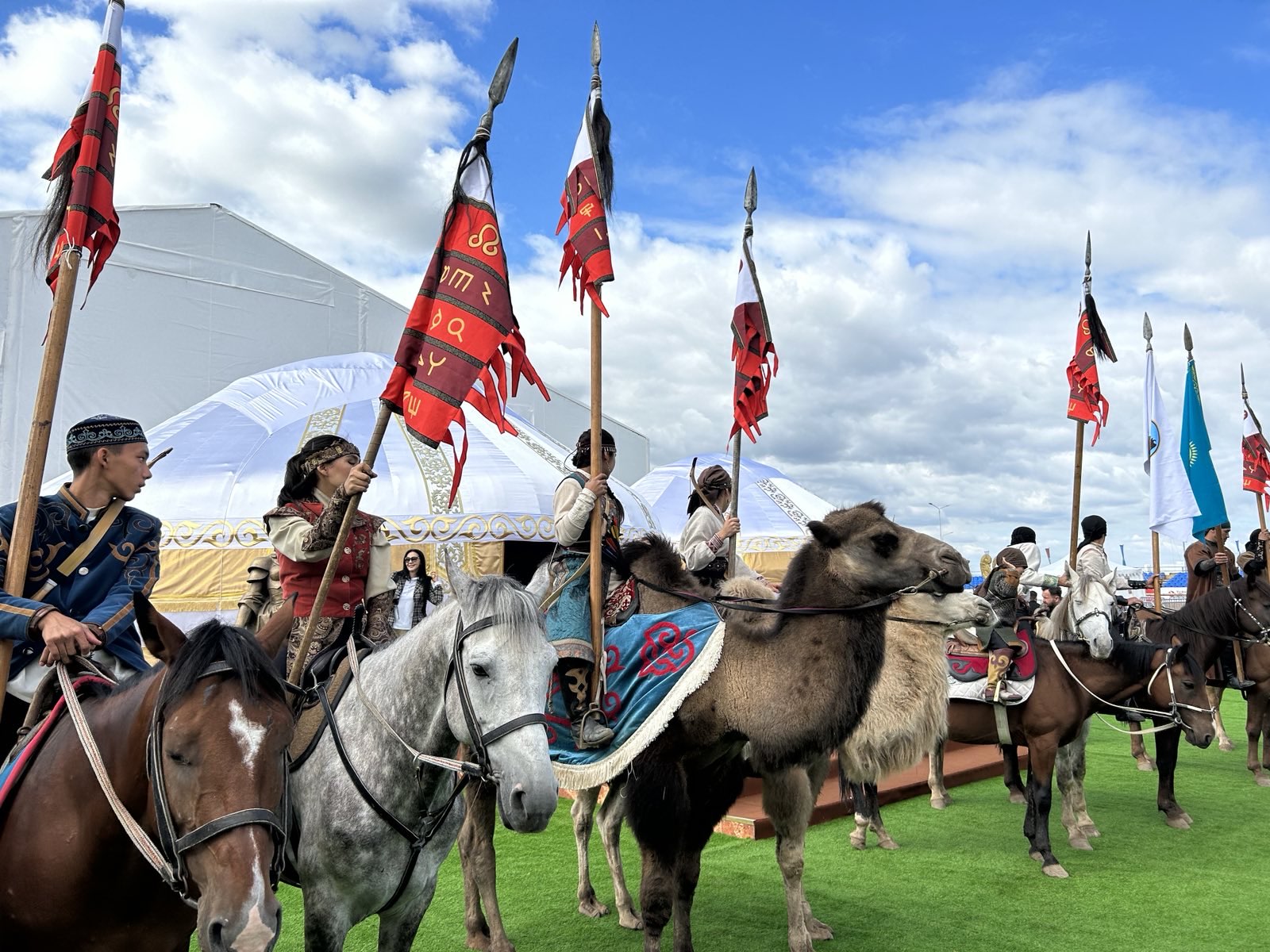
Kyrgyzstan, host of the 2026 edition of the World Nomad Games, says the opening ceremony will be held in Bishkek on August 31 and the games will end on the shores of the scenic Lake Issyk-Kul on September 6.

The dates of the games were announced on Tuesday by the organizing committee, which expects participants and guests from more than 89 countries. Aside from the opener in the Kyrgyz capital, the main schedule of the games will be held at Issyk-Kul, a northeastern resort area near the border with Kazakhstan.

Image: TCA, Stephen M. Bland

Kyrgyzstan hosted the first three World Nomad Games in the same area in 2014, 2016, and 2018. The 2022 games were held in Turkey, and the last edition in 2024 occurred in Kazakhstan. The games have expanded over the years, providing a showcase for the cultural heritage of Central Asian and regional societies through sports involving birds of prey, dogs, horses, wrestling, archery, as well as displays of agility and other physical feats.

The games will demonstrate Kyrgyzstan’s role as “an international platform for cultural dialogue,” organizers said.

Earlier this month, Kyrgyz President Sadyr Japarov invited cultural and sports delegations from member countries of the Shanghai Cooperation Organization to participate in the games next year. He spoke during a meeting of SCO leaders in Tianjin, China. The Eurasian group’s members include Belarus, India, Iran, Kazakhstan, China, Kyrgyzstan, Pakistan, Russia, Tajikistan, and Uzbekistan.

.

Kazakhstan Criminalizes Forced Marriage in Landmark Legal Reform

Kazakhstan has introduced criminal liability for forced marriage for the first time, following the adoption of significant amendments to the country’s criminal legislation.

Effective September 16, the reforms formally recognize coercion into marriage as a criminal offense. Penalties range from fines of up to $14,500 and corrective labor, to prison terms of up to 10 years in cases involving serious consequences.

“These changes to criminal law are aimed at strengthening the protection of citizens’ rights and freedoms,” the Ministry of Internal Affairs said in a statement.

The legislation, titled On Amendments and Additions to Certain Legislative Acts on the Optimization of Criminal Legislation, also eliminates a loophole in Article 125 of the Criminal Code. Previously, individuals who voluntarily released a kidnapped person could avoid prosecution. That exemption has now been revoked.

A new provision, Article 125-1, Coercion to Marry, has been introduced, criminalizing marriages entered into under duress or physical coercion. Penalties are more severe when the victim is a minor, when the crime is committed by a group, or when the perpetrator abuses an official position.

Targeting Bride Kidnapping Practices

The amendments aim in part to curb the persistent tradition of alyp qashu, the abduction of girls for the purpose of forced marriage. Despite its legal status as a crime, the practice still occurs in parts of the country.

Human rights activists have highlighted that alyp qashu often involves physical and psychological abuse, with victims subjected to family pressure. Many are told that refusing to marry would bring shame or misfortune to their relatives. The psychological toll can be profound, leading to anxiety, depression, panic attacks, and social withdrawal.

On July 16, President Kassym-Jomart Tokayev signed into law the specific criminalization of bride kidnapping. The Mangistau Region Prosecutor’s Office emphasized the importance of consent, stating:

“Coercion into marriage is the conclusion of a marriage against a person’s will through pressure or violence. Such an act is a gross violation of human rights.”

The office also stressed that:

“Kidnapping a girl without her consent is not a tradition, but a crime.”

The legal reforms are designed to protect vulnerable people, particularly women and adolescents. By increasing penalties for forced marriages, Kazakhstan’s government signals a clear intent to confront deeply rooted practices that undermine basic human rights.