• KGS/USD = 0.01144 0%
  • KZT/USD = 0.00211 0%
  • TJS/USD = 0.10460 0.19%
  • UZS/USD = 0.00008 0%
  • TMT/USD = 0.28490 0%
  • KGS/USD = 0.01144 0%
  • KZT/USD = 0.00211 0%
  • TJS/USD = 0.10460 0.19%
  • UZS/USD = 0.00008 0%
  • TMT/USD = 0.28490 0%
  • KGS/USD = 0.01144 0%
  • KZT/USD = 0.00211 0%
  • TJS/USD = 0.10460 0.19%
  • UZS/USD = 0.00008 0%
  • TMT/USD = 0.28490 0%
  • KGS/USD = 0.01144 0%
  • KZT/USD = 0.00211 0%
  • TJS/USD = 0.10460 0.19%
  • UZS/USD = 0.00008 0%
  • TMT/USD = 0.28490 0%
  • KGS/USD = 0.01144 0%
  • KZT/USD = 0.00211 0%
  • TJS/USD = 0.10460 0.19%
  • UZS/USD = 0.00008 0%
  • TMT/USD = 0.28490 0%
  • KGS/USD = 0.01144 0%
  • KZT/USD = 0.00211 0%
  • TJS/USD = 0.10460 0.19%
  • UZS/USD = 0.00008 0%
  • TMT/USD = 0.28490 0%
  • KGS/USD = 0.01144 0%
  • KZT/USD = 0.00211 0%
  • TJS/USD = 0.10460 0.19%
  • UZS/USD = 0.00008 0%
  • TMT/USD = 0.28490 0%
  • KGS/USD = 0.01144 0%
  • KZT/USD = 0.00211 0%
  • TJS/USD = 0.10460 0.19%
  • UZS/USD = 0.00008 0%
  • TMT/USD = 0.28490 0%

New Report Highlights Persistent Gender Equality Gaps in Kyrgyzstan

Kyrgyzstan has released its Country Gender Equality Profile (CGEP), a comprehensive, evidence-based assessment prepared by the Ministry of Labor, Social Welfare, and Migration in collaboration with UN Women and with support from the European Union. The report, presented during a National Dialogue on Promoting Gender Equality Policy, examines structural barriers to gender equality through government statistics, legislative analysis, and stakeholder consultations. 

Speaking at the event, Deputy Prime Minister Edil Baisalov highlighted the strategic importance of the CGEP, noting that women remain underrepresented in public administration. He called for systemic and practical solutions to ensure women’s full participation in both elected and appointed leadership positions.

While Kyrgyzstan’s National Gender Equality Strategy through 2030 outlines women’s economic empowerment, cultural transformation, prevention of gender-based violence, and gender parity in decision-making as core priorities, the CGEP finds that implementation remains constrained by deep-rooted challenges.

The report notes that gender quotas have proven effective in elected bodies, with women now holding 39% of seats in local councils. However, the absence of similar mechanisms in appointed positions has led to ongoing exclusion. Women currently hold only 5% of cabinet posts, occupy none of the positions of Presidential Representatives or district heads, and account for just 3.5% of leadership roles in rural administration. Media representation further skews public perception, with male politicians receiving seven times more coverage than their female counterparts. 

The CGEP also highlights growing economic and social disparities. Women’s employment rate declined from 49.3% to 43.8% over the past 15 years, driven by traditional gender norms and rising religious conservatism. The majority of employed women (77%) work in lower-paid sectors such as education and healthcare or in informal roles, contributing to a 25% gender pay gap. On average, women spend 4 hours and 20 minutes per day on unpaid household labor, compared to just 55 minutes for men.

Access to property and finance remains limited. Women own only 29% of registered real estate, restricting their ability to secure credit and scale businesses. They make up just 27% of entrepreneurs and hold only 1.2% of leadership roles in Water User Associations.

Digital inequality is another critical barrier. In 2023, just 45% of rural women had internet access, compared to 65% of men. Women’s representation in the information and communications technology (ICT) sector dropped from 40.8% in 2020 to 31.9% in 2022, and they hold only 15% of leadership roles in the tech industry. Meanwhile, women account for just 33.9% of students enrolled in computing-related degree programs.

According to the National Statistical Committee, as of January 1, 2025, Kyrgyzstan’s population stood at 7.28 million, 3.68 million women and 3.60 million men. 

The findings underscore that despite a robust policy framework, Kyrgyzstan continues to face entrenched structural and cultural barriers that limit women’s full participation in political, economic, and digital spheres.


Kazakhstan’s Automotive Industry Approaches $4 Billion by End of 2025

Kazakhstan’s automotive industry posted record-breaking results in the first 11 months of 2025, with total production valued at nearly $4 billion, already exceeding the full-year total for 2024 by approximately $251 million.

According to official data from the Bureau of National Statistics, the industry reached its highest monthly output in November, producing 22,580 units of automotive equipment valued at around $601 million. This marked a 25.5% year-on-year increase in production volume.

A record number of passenger cars, trucks, buses, trailers, and specialized vehicles were manufactured during the month. In total, from January through November, Kazakhstan produced 146,163 vehicles worth approximately $3.9 billion, 15.7% more than during the same period in 2024.

While physical output remained comparable to previous years, the increase in the total value of production, surpassing $3.6 billion in 2024 and $3.4 billion in 2023, indicates rising added value and growing complexity in domestic manufacturing processes.

Automotive production accounted for 41.7% of Kazakhstan’s overall machine-building sector during the first 11 months of 2025, up from the previous year. According to the Kazakhstan Automobile Union (KAS), Allur, based in the Kostanay region, remained the industry leader with more than 79,000 vehicles produced during the reporting period.

Southern Kazakhstan also saw strong growth, with over 48,000 cars assembled at the Hyundai Trans Kazakhstan and Hyundai Trans Almaty plants, up 26.7% year-on-year. In the Karaganda region, QazTehna expanded commercial vehicle output by more than 50%. However, production declined in eastern Kazakhstan, particularly in Semey, underscoring regional disparities in industry development.

The Chevrolet Cobalt, Hyundai Tucson, Kia Sportage, Hyundai Mufasa, and Hyundai Elantra were the top models produced, and also ranked among the most popular vehicles on the domestic market.

The production surge coincided with a revival in consumer demand. As previously reported by The Times of Central Asia, Kazakhstan set a new car sales record in November 2025, further supporting high factory utilization across the country.

KazTransOil Opens First EU Office in Poland to Boost Oil Transit and Exports

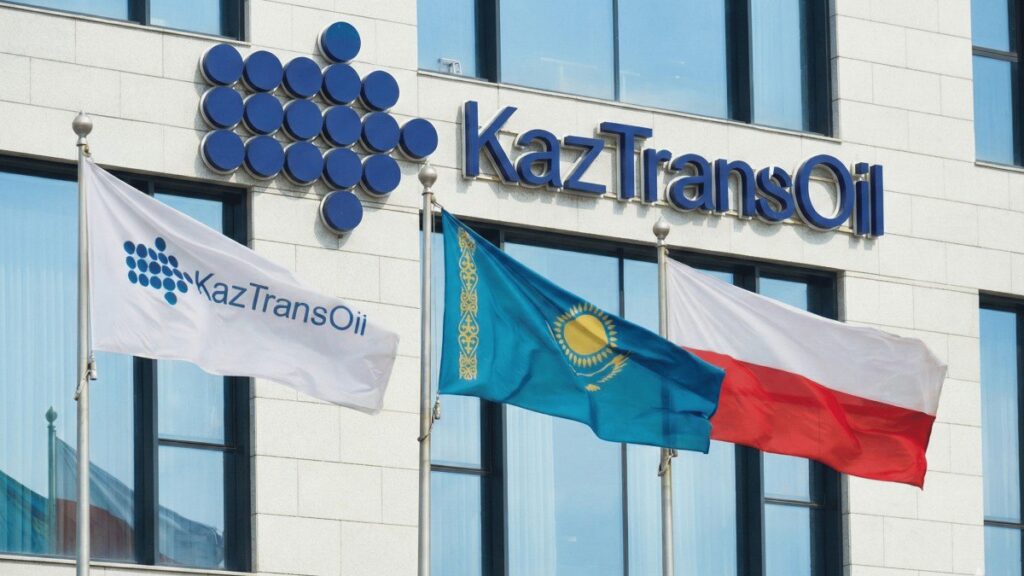
Kazakhstan’s national oil pipeline operator KazTransOil has announced the opening of its first representative office in the European Union, selecting Poland as the location. The decision, approved by the company’s board of directors, aims to strengthen Kazakhstan’s presence in European energy markets, the company said in a statement.

The new office will focus on protecting KazTransOil’s commercial interests in Poland and facilitating the transit of Kazakh crude oil through Belarus and Poland. It will also oversee the handover of oil at the Adamova Zastava delivery point on the Belarusian-Polish border, from where it is transported to the Schwedt refinery in eastern Germany.

KazTransOil stated that the move is intended to expand alternative export routes, enhance supply reliability, and reinforce Kazakhstan’s role as a strategic energy partner to Europe.

The expansion comes amid deepening oil cooperation between Kazakhstan and European countries. On December 18, KazTransOil and Russia’s state-owned pipeline operator Transneft signed a transit agreement for 2026, allowing Kazakh oil to continue flowing through Russian territory. While specific volumes were not disclosed, the agreement covers shipments to Russian ports such as Novorossiysk and Ust-Luga, and to the Russia-Belarus border for onward delivery to EU countries.

Germany, in particular, has ramped up imports of Kazakh oil as part of its broader effort to reduce reliance on Russian energy. Following the 2022 invasion of Ukraine and subsequent EU sanctions, Berlin halted Russian oil imports and began receiving regular shipments of Kazakh crude in 2023.

In 2024, Germany imported 1.5 million tons of Kazakh oil and plans to increase that to 1.7 million tons in 2025, with a long-term target of 2.5 million tons annually.

In October 2025, KazMunayGas, Kazakhstan’s national oil and gas company, signed an updated agreement with Rosneft Deutschland GmbH to extend oil supply arrangements through the end of 2026. The revised deal boosts monthly deliveries from 100,000 to 130,000 tons. Additional volumes are expected from the Karachaganak field, while supplies from the Kashagan and Tengiz fields are set to begin in 2024 and 2025, respectively.

According to KazMunayGas, approximately 1.5 million tons of Kazakh oil were delivered to the Schwedt refinery between January and September 2025. Rosneft Deutschland GmbH, which holds a stake in the refinery, remains under German government trusteeship as part of Berlin’s effort to minimize exposure to Russian energy assets.

Deliveries of Kazakh oil to Europe are conducted via the Druzhba pipeline. Originating in Samara, Russia, the pipeline splits near Bryansk and Mozyr into two branches: the northern route through Belarus and Poland to Germany, and the southern route through Ukraine to Hungary, Slovakia, and the Czech Republic.

Kazakhstan to Permit Limited Saiga Horn Exports Under Strict Controls

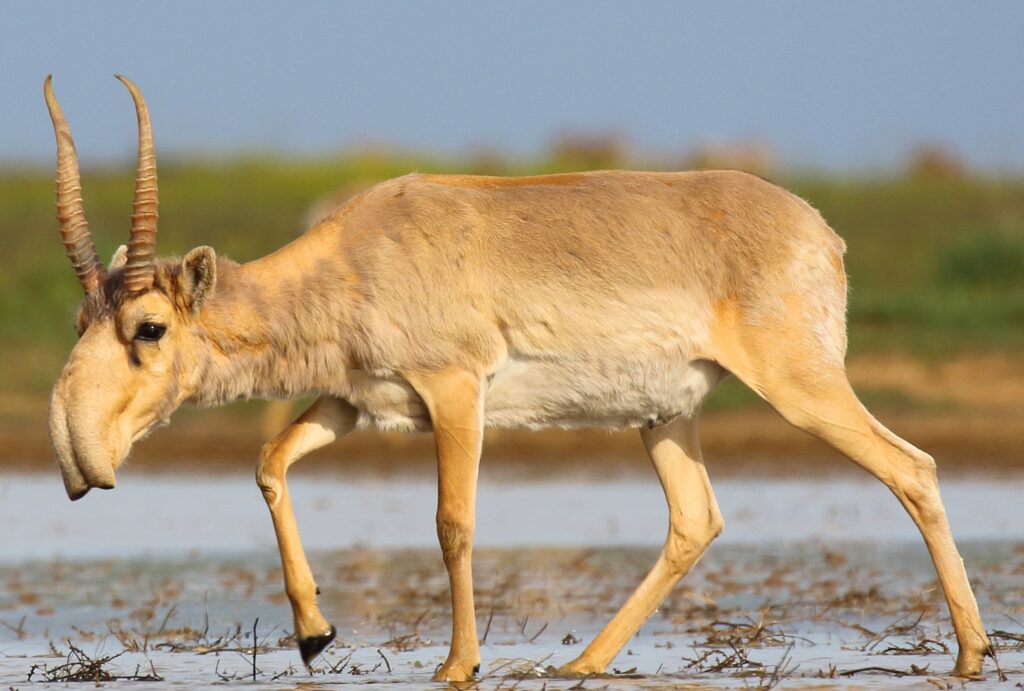
Kazakhstan plans to begin limited and strictly regulated exports of saiga antelope horns, according to the Ministry of Ecology and Natural Resources, as reported by Nege.Aqsha.

Minister of Ecology Yerlan Nysanbayev emphasized that unrestricted trade is not under consideration. He stated that exports will be allowed only under rigorous regulation, with restrictions on both volume and export mechanisms. A three-year quota system is expected to be implemented.

A critical condition for authorizing exports is the establishment of a traceability system. Kazakhstan aims to integrate its national tracking database with China’s, enabling the monitoring of saiga horn derivatives from the point of harvest to final processing. Nysanbayev noted that this system has been under development since 2023. All harvested saiga horns are currently microchipped and individually registered to minimize the risk of illegal trafficking.

The legal basis for these potential exports stems from a decision at the 20th Conference of the Parties to the Convention on International Trade in Endangered Species of Wild Fauna and Flora (CITES), held in Samarkand from November 24 to December 5. While this decision does not trigger automatic exports, it provides Kazakhstan with a legal framework to manage regulated trade in accordance with international agreements.

Simultaneously, the Ministry of Ecology has finalized a national roadmap for managing the saiga population. As of May 2025, Deputy Minister of Ecology Nurken Shabiev confirmed the roadmap’s completion, although the accompanying biological justification was still under preparation.

“As many as they are ready to process will be seized to prevent a repeat of last year’s experience, when there was damage in some places,” a ministry spokesperson said.

Between July and November 2025, approximately 196,000 saigas were culled in Kazakhstan, with the carcasses transferred to local processing facilities.

Kazakhstan is home to three main saiga populations, Betpakdala, Ural, and Ustyurt which together account for more than 90% of the global saiga population. As of March 2025, the total population in Kazakhstan stood at 4.1 million, a dramatic increase from the historical high of 1.2 million during the Kazakh SSR period.

The saiga antelope has been listed as critically endangered by the International Union for Conservation of Nature since 2002. A nationwide moratorium on hunting and trade in saiga parts remained in effect until 2024. However, the sharp population increase led authorities to transition from a blanket ban to a model of regulated harvesting.

The renewed interest in saiga horn exports is also driven by persistent demand in traditional Chinese medicine, where the antlers are highly valued.

Uzbekistan and Japan Announce Over $12 Billion in New Strategic Projects

Uzbek President Shavkat Mirziyoyev has concluded an official visit to Japan that both Uzbek and Japanese sources have described as a turning point in bilateral relations. According to Sherzod Asadov, the president’s press secretary, the visit elevated Uzbekistan-Japan ties to an expanded strategic partnership, marking a shift from primarily humanitarian and technical cooperation to a broader economic framework grounded in long-term strategic planning.

During the visit, Mirziyoyev held meetings with Emperor Naruhito, Prime Minister, Sanae Takaichi, parliamentary leaders, senior government officials, and representatives from Japan’s business and academic communities. Asadov noted that a new portfolio of cooperation projects, valued at more than $12 billion, was formed, encompassing sectors such as education, healthcare, environmental protection, water management, transport, urban development, tourism, agriculture, and disaster-risk reduction.

Particular emphasis was placed on green energy, energy storage systems, and industrial cooperation. Major Japanese corporations were invited to join long-term partnership programs, signaling a deepening of economic ties.

Japanese media also underscored the economic dimension of the visit. NHK World reported on a business forum in Tokyo where Mirziyoyev urged Japanese companies to invest in Uzbekistan’s industrial transformation, highlighting areas such as advanced technology, stable energy supply, and critical minerals development. He emphasized that Japanese participation would bolster ongoing reforms aimed at enhancing productivity and boosting exports.

Japan’s Minister of Economy, Trade and Industry, Ryosei Akazawa, expressed Tokyo’s support for sustainable development in Uzbekistan, with a focus on private-sector cooperation. Japanese firms operating in Uzbekistan presented current projects in renewable energy and mineral exploration. Uzbek business representatives, in turn, highlighted the country’s demand for Japanese technology and acknowledged improvements in the investment environment.

The visit also included President Mirziyoyev’s participation in the first “Central Asia + Japan” summit. Discussions focused on regional connectivity, green economic initiatives, digital and investment collaboration, and human capital development. The summit concluded with the adoption of the Tokyo Declaration, which reaffirmed both sides’ commitment to deepening multilateral cooperation.

Following the engagements in Japan, Mirziyoyev traveled to Russia for a working visit to attend the Supreme Eurasian Economic Council meeting and an informal summit of CIS heads of state in St. Petersburg.

Kyrgyzstan to Launch State Nurseries as Part of National Afforestation Campaign

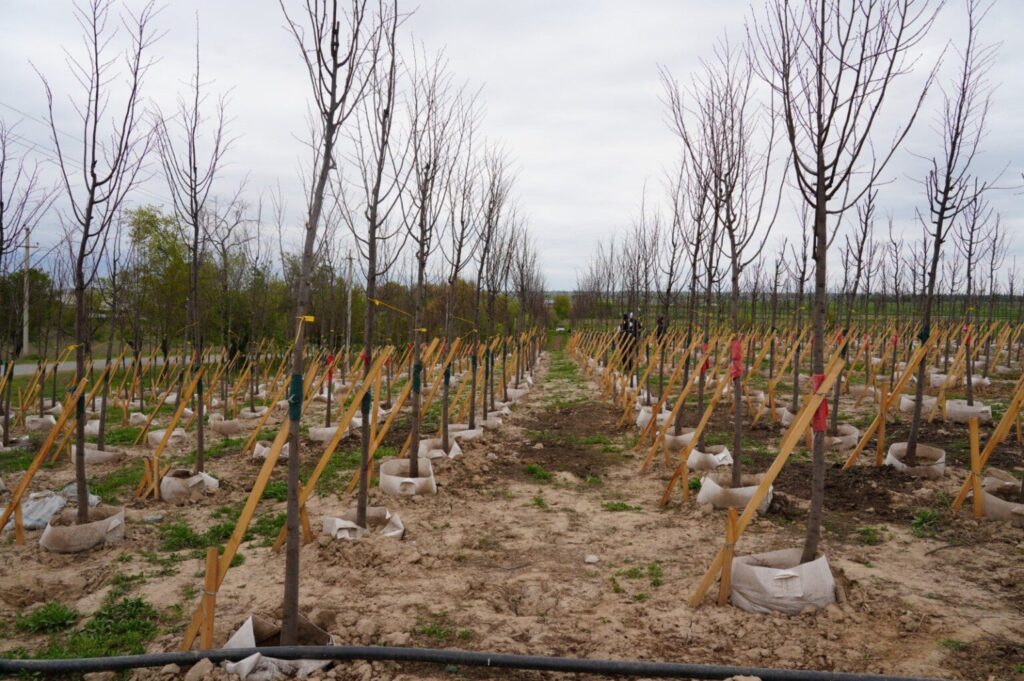
Four institutions in Kyrgyzstan have been awarded a total of $534,000 in grant funding to establish and develop state-owned nurseries for growing tree saplings, as part of a nationwide effort to restore forests, improve sapling quality, and support environmental sustainability.

According to the Ministry of Natural Resources, Ecology and Technical Supervision, the funding was allocated through a competitive selection process to Osh Forestry, Chon-Kemin State Nature Park, Kara-Kulja Forestry, and the Kyrgyz National Agrarian University. Applicants were required to submit a business plan and have access to at least five hectares of land to qualify. The grants were approved by the International Fund for Agricultural Development (IFAD), which serves as the project’s donor.

The Ministry of Water Resources, Agriculture, and Processing Industry stated that the new nurseries will have the capacity to produce up to 2 million saplings annually. These will include nut, fruit, and conifer species and serve as a stable supply of planting material for various regions across the country.

“The establishment of modern nurseries is not just an investment in reforestation and environmental health. It is a step toward ecosystem restoration and helping rural communities adapt to climate change,” said First Deputy Minister Janybek Kerimaliev.

The nursery initiative is part of Kyrgyzstan’s broader “Jashyl Muras” (Green Heritage) campaign, launched in March 2022 by President Sadyr Japarov. The national program targets the planting of 5 to 6 million saplings annually.

In 2024, more than 8.1 million saplings were planted across the country under the program, according to official figures.