• KGS/USD = 0.01144 0%
  • KZT/USD = 0.00212 0%
  • TJS/USD = 0.10454 -0.1%
  • UZS/USD = 0.00008 0%
  • TMT/USD = 0.28571 0.28%
  • KGS/USD = 0.01144 0%
  • KZT/USD = 0.00212 0%
  • TJS/USD = 0.10454 -0.1%
  • UZS/USD = 0.00008 0%
  • TMT/USD = 0.28571 0.28%
  • KGS/USD = 0.01144 0%
  • KZT/USD = 0.00212 0%
  • TJS/USD = 0.10454 -0.1%
  • UZS/USD = 0.00008 0%
  • TMT/USD = 0.28571 0.28%
  • KGS/USD = 0.01144 0%
  • KZT/USD = 0.00212 0%
  • TJS/USD = 0.10454 -0.1%
  • UZS/USD = 0.00008 0%
  • TMT/USD = 0.28571 0.28%
  • KGS/USD = 0.01144 0%
  • KZT/USD = 0.00212 0%
  • TJS/USD = 0.10454 -0.1%
  • UZS/USD = 0.00008 0%
  • TMT/USD = 0.28571 0.28%
  • KGS/USD = 0.01144 0%
  • KZT/USD = 0.00212 0%
  • TJS/USD = 0.10454 -0.1%
  • UZS/USD = 0.00008 0%
  • TMT/USD = 0.28571 0.28%
  • KGS/USD = 0.01144 0%
  • KZT/USD = 0.00212 0%
  • TJS/USD = 0.10454 -0.1%
  • UZS/USD = 0.00008 0%
  • TMT/USD = 0.28571 0.28%
  • KGS/USD = 0.01144 0%
  • KZT/USD = 0.00212 0%
  • TJS/USD = 0.10454 -0.1%
  • UZS/USD = 0.00008 0%
  • TMT/USD = 0.28571 0.28%

Kazakhstan and Iran Discuss Trade on Pezeshkian’s Visit to Astana

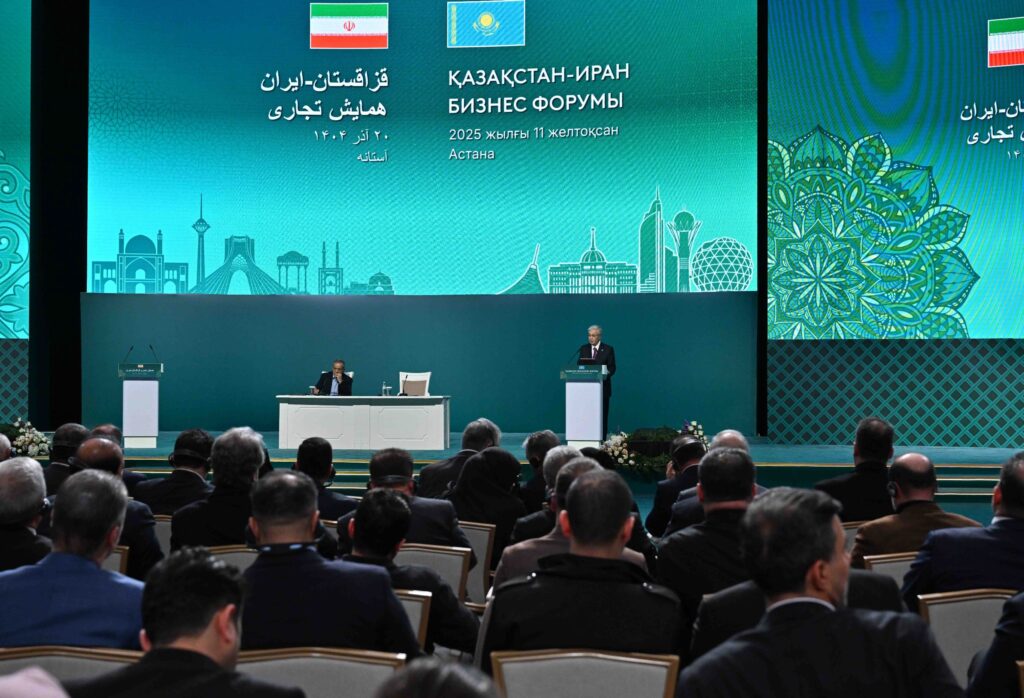
Kazakhstan and Iran have announced plans to significantly deepen economic cooperation, aiming to triple bilateral trade turnover to $1 billion in the coming years. The announcement was made by Kazakh President Kassym-Jomart Tokayev during the Kazakh-Iranian business forum, held as part of the official visit of Iranian President Masoud Pezeshkian to Astana.

According to Tokayev, mutual trade exceeded $340 million last year and is expected to “increase many times over” in 2024. The two countries have set an initial target of reaching $1 billion in trade, with an eventual goal of $2 billion, relying on expanded logistics and the establishment of sustainable supply chains. A key mechanism will be the opening of the Kazakhstan Trade House in Tehran, intended to facilitate systematic exports of Kazakhstani products.

Over the past two decades, Iran has invested more than $226 million in Kazakhstan’s economy, and more than 350 Iranian companies currently operate in the country. Tokayev emphasized Kazakhstan’s readiness to initiate new joint projects across sectors ranging from industry to agribusiness.

Strengthening corridors and access to the Persian Gulf

Tokayev highlighted the development of transport and logistics infrastructure as a primary enabler of increased trade. Kazakhstan, he noted, is a vital transit hub in Eurasia, with 85% of cargo between China and Europe passing through its territory.

Astana plans to construct a transport and logistics terminal at the port of Shahid Rajai, linking Kazakhstan’s ports of Aktau and Kuryk with the Iranian ports of Amirabad and Anzali. The Kazakh side also expressed readiness to integrate the ports of Bandar Abbas and Chabahar into the regional supply chain.

The Kazakhstan-Turkmenistan-Iran railway plays a central role in these plans. Traffic volumes along this corridor are expected to double by 2030, delivering a substantial boost to regional trade and industrial development.

Key market for Kazakh grain

Iran remains a key buyer of Kazakh grain. In the first 10 months of 2024 alone, exports reached $280 million. Total agricultural trade between the two countries stood at $220 million in 2023, underscoring the sector’s growth potential.

Iran’s Solico Group plans to build a dairy plant with an annual capacity of 200,000 tons and launch baby food production. Meanwhile, Kourosh Food Industry is exploring opportunities to establish vegetable oil plants and poultry farms.

Kazakhstan, in turn, is inviting Iranian investors to participate in modern manufacturing projects and develop export-oriented supply chains.

A shared challenge: the declining Caspian Sea

The environmental situation in the Caspian region was another key topic of discussion. Falling sea levels are already affecting port operations, logistics, and fish stocks. Tokayev called for the creation of an intergovernmental program to preserve the Caspian Sea and urged greater involvement from international organizations.

Kazakhstan intends to take part in the upcoming VII Caspian Summit in Tehran and has proposed hosting the IV Caspian Economic Forum within the next two years.

Pezeshkian noted that the private sector has already identified promising areas for collaboration from the creation of a joint shipping consortium on the Caspian to the development of mineral projects and the opening of an export park for Iranian building materials in Almaty.

As previously reported by The Times of Central Asia, regular container traffic has now been launched between Russia and Iran via Kazakhstan and Turkmenistan, further enhancing regional trade connectivity.

Uzbekistan, Paraguay Deepen Ties During First-Ever Presidential Visit

Uzbekistan and Paraguay have agreed to enhance political and economic cooperation following high-level talks in Tashkent, according to the presidential press service.

The meeting between Uzbek President Shavkat Mirziyoyev and Paraguayan President Santiago Peña took place at the Kuksaroy residence, with participation from both countries’ official delegations. Mirziyoyev welcomed his counterpart and highlighted the historical significance of the visit, noting it as the first time a president from a Latin American country has traveled to Uzbekistan. The visit is expected to usher in a new era of bilateral relations.

The two leaders discussed expanding cooperation across several sectors. Talks focused on increasing mutual trade, strengthening business contacts, and initiating joint projects in agriculture, food production, the chemical industry, digital technologies, tourism, and sports. Cultural, educational, and humanitarian collaboration were also emphasized as priority areas. The sides also exchanged views on international and regional developments.

Following the talks, Mirziyoyev and Peña signed a joint statement reaffirming their commitment to strengthening political dialogue and expanding practical cooperation. Uzbek media reported that two additional documents were signed in the presence of the presidents: a protocol concluding bilateral market-access negotiations related to Uzbekistan’s accession to the World Trade Organization, and a memorandum between the foreign ministries to establish a mechanism for political consultations.

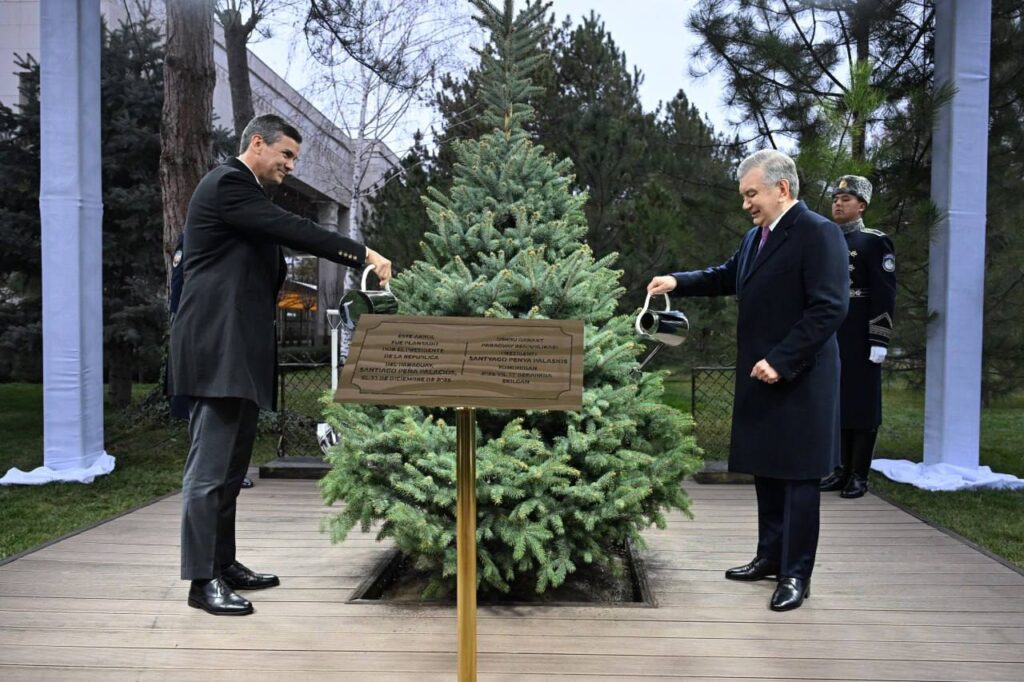
The meeting concluded with a symbolic gesture. The two presidents planted a tree on the Alley of Honored Guests at the Kuksaroy residence, symbolizing their intention to open a new chapter in Uzbekistan-Paraguay relations.

Kyrgyzstan Advances Underground Project at Kumtor Mine

The state-owned Kumtor Gold Company, Kyrgyzstan’s largest gold mining asset, has announced the high efficiency of its new underground mining operations. According to the company, up to 5 grams of gold can be extracted from each ton of ore mined using the underground method. Experts believe this yield is sufficient to ensure the long-term viability of the deposit.

Although underground mining was officially launched in August 2025, actual excavation began in February. In a response to The Times of Central Asia, the company reported that geological reserves in the underground zones of Kumtor are estimated at 147 tons of gold, enabling the mine to remain operational for at least another 17 years.

“Two tunnels are currently being developed. Poor ore is being mined at the moment, and the system is reaching its design capacity. Full-scale production will be achieved in the coming years,” the company stated.

To date, over 1.5 kilometers of underground tunnels have been excavated at Kumtor. Operations continue around the clock, with special equipment transporting ore out of the mine every ten minutes. To maintain a safe working environment in the high-altitude, cold conditions, warm air is pumped into the tunnels to ensure worker comfort and safety.

Kumtor was nationalized in 2022 after nearly 30 years of operation by the Canadian company Centerra Gold. The previous operator had planned to complete mining operations in 2024 and begin land reclamation. While underground mining was explored in 2015, it was deemed unprofitable at the time, in part due to low global gold prices.

Today, gold is trading at approximately $4,280 per ounce, around $1,000 more than five years ago. This price increase has significantly improved the profitability of underground extraction, making the project economically viable.

Tajikistan Struggles to Fund Cleanup of Soviet-Era Uranium Waste

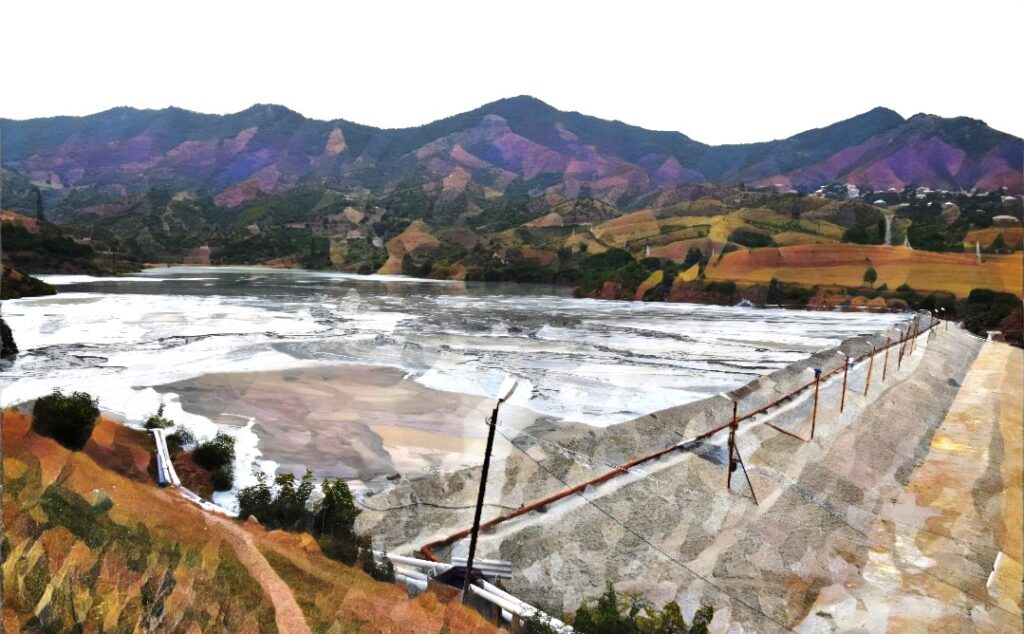
Tajikistan continues to grapple with the extensive environmental legacy of the Soviet-era uranium industry. Tens of millions of tons of radioactive waste still pose serious risks to human health and the environment. Addressing this legacy will require hundreds of millions of dollars and sustained international support.

Uranium mining in Tajikistan began in the 1940s in areas including Taboshar, Adrasman, and nearby settlements. After mining operations were shut down, the country was left with abandoned mines, underground tunnels, and extensive tailings ponds containing more than 55 million tons of radioactive waste across an area exceeding 170 hectares.

In 2023, partial rehabilitation work was completed in Taboshar, where 7.6 million tons of waste, representing 17.5 percent of the total, were remediated.

The Tajik government has agreed to continue cooperation with Russia, which is expected to allocate approximately $17 million for the reclamation of selected facilities.

However, the most hazardous areas remain unaddressed. These include early-stage Taboshar tailings ponds, underground workings, and the Degmai complex.

International consultants Wismut GmbH, WISUTEC GmbH, and GEOS estimate that restoring the Taboshar facilities will require approximately $9.5 million, while reclamation of the Degmai tailings pond is expected to cost about $27 million. All of these sites are included in the International Atomic Energy Agency master plan and have been designated as funding priorities.

Progress remains slow, largely due to limited financial resources. Despite some external support, current funding levels fall far short of what is required. To date, only 17 percent of contaminated sites have been decontaminated. The European Bank for Reconstruction and Development special environmental rehabilitation account for Central Asia has yet to become fully operational.

In 2025, the government approved a national rehabilitation program covering the 2025 to 2030 period. The plan includes legislative updates, project design, implementation, and ongoing monitoring.

Preliminary estimates suggest Tajikistan will need more than $110 million by 2030 to complete its remediation objectives. Given the scale of the required investment, international financing remains essential.

Tajikistan is working to transform its uranium legacy into a manageable and transparent project, but without sustained international partnership, the challenge is unlikely to be resolved.

Uzbekistan Announces New Electricity Rationing Amid Power Shortages

Uzbekistan has announced a new electricity rationing schedule as power shortages strain the national grid. The Ministry of Energy said temporary evening outages would help stabilize supply while repairs and emergency measures continue. The outages, which began this week, are concentrated during peak hours between 5:00 p.m. and 9:00 p.m. and are expected to last until mid-January.

Causes of the Shortfall

The crisis stems from a major failure at the Syrdarya thermal power plant, one of the country’s largest. A newly installed Mitsubishi gas turbine suffered a mechanical fault in late November, forcing the station to shut down part of its capacity. A replacement 114-ton rotor was delivered by air on December 8, and engineers expect to finish installation and testing in four weeks.

Seasonal factors have also reduced the available power supply. With winter’s shorter daylight hours, output from solar stations has dropped significantly, increasing the load on the grid. An unexpected gas supply disruption has further strained generation: Energy Minister Jurabek Mirzamakhmudov revealed that an accident in a neighboring country’s network cut Uzbekistan’s gas intake by about 6 million cubic meters per day. Natural gas fuels a large share of the country’s power plants, so this drop in fuel supply, combined with cloudy weather, has constrained electricity production. “Because of rain, there was neither wind nor sun,” Mirzamakhmudov said. These factors combined have left the grid struggling to meet peak demand in early December.

Peak-Hour Outages to Balance Demand

Officials have emphasized that rolling blackouts will be kept brief and targeted; each outage is not expected to last more than about two hours, and consumers will be notified in advance whenever possible. By shedding some load at peak times, the grid can avoid more dangerous unplanned breakdowns and ensure critical facilities remain powered. Residents have also been urged to use electricity sparingly and to monitor official announcements, rather than panic if an interruption occurs.

The Energy Ministry has stressed that rumors of any nationwide “blackout” are unfounded, and any power cuts will be localized and limited in scope, not a return to the wide-ranging outages seen in the past. Citizens have been cautioned against spreading unverified information on social media and encouraged to rely on updates from authorities.

Winter Energy Challenges and Reforms

Winter months have historically tested Uzbekistan’s energy infrastructure. In previous years, electricity deficits forced scheduled outages – commonly known as rolling blackouts – across the country. However, officials note that the situation has improved markedly due to new power projects and efficiency measures. According to Energy Ministry data, the volume of electricity consumption that had to be curtailed through such restrictions fell from about 4 billion kWh in 2013 to just 357 million kWh in 2024. Even during the Central Asian energy crisis of winter 2022, Uzbekistan’s forced power cuts totaled around 2 billion kWh, a figure that has since sharply declined as new capacity comes online.

Uzbekistan has been racing to expand its electricity generation to meet growing demand and reduce chronic winter shortages. The government has partnered with international firms to build modern gas-fired plants and large renewable energy projects. As a result, wind and solar power output have surged. The country’s solar and wind farms generated a record 10 billion kilowatt-hours of electricity this year, saving an estimated 2.7 billion cubic meters of natural gas that would otherwise have been burned for power. Still, these gains can be hampered by seasonal conditions: on cold, overcast days, when new solar panels and wind turbines yield less energy. By announcing targeted evening rationing now, the authorities hope to manage the current shortfall in a controlled way and avoid a repeat of the widespread outages that have plagued past winters.

Kazakhstan Launches First Domestic Green Hydrogen Production Station

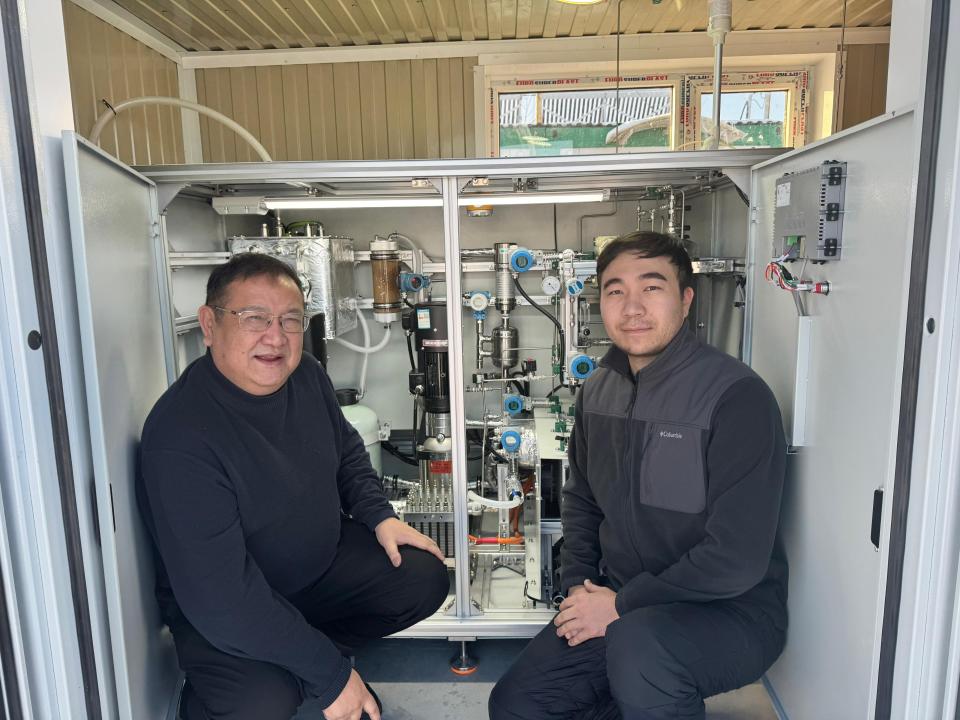
Kazakhstan has unveiled its first fully integrated green hydrogen production station, a significant milestone in the country’s transition toward renewable energy and industrial innovation. The project, spearheaded by the Renewable Energy Laboratory at Nazarbayev University in Astana, is the first of its kind in Kazakhstan to receive a national patent, according to the Ministry of Science and Higher Education.

Powered entirely by solar and wind energy, the pilot facility uses innovative, locally developed catalysts to convert renewable electricity into hydrogen through electrolytic water splitting. The hydrogen is then stored and can be used as fuel for motor vehicles or standalone generators. Currently, the laboratory-scale station is capable of filling a six-cubic-meter hydrogen cylinder in three hours.

“This is a significant step toward the practical implementation of hydrogen technologies in Kazakhstan. What began as laboratory prototypes has evolved into a functional, outdoor industrial-scale system,” said Professor Nurshat Nurazhi, head of the Renewable Energy Laboratory.

The project was developed in collaboration with Zhejiang H2-Bank Technology Co., Ltd. of China. “Partnership with an industrial leader ensured scalability and compliance with international standards for hydrogen production and safety,” noted Dr. Yerbolat Magazov, head of the hydrogen production team. “This system demonstrates the potential of domestic innovation in clean energy and sets a milestone for Kazakhstan’s scientific community.”

The Kazakh government has identified hydrogen as a strategic component of its low-carbon transition. The Concept for the Development of Hydrogen Energy through 2030, approved in 2024, outlines hydrogen’s critical role in reducing greenhouse gas emissions and diversifying the national energy mix.