• KGS/USD = 0.01143 0%
  • KZT/USD = 0.00216 0%
  • TJS/USD = 0.10684 -0.28%
  • UZS/USD = 0.00008 0%
  • TMT/USD = 0.28571 0%
  • KGS/USD = 0.01143 0%
  • KZT/USD = 0.00216 0%
  • TJS/USD = 0.10684 -0.28%
  • UZS/USD = 0.00008 0%
  • TMT/USD = 0.28571 0%
  • KGS/USD = 0.01143 0%
  • KZT/USD = 0.00216 0%
  • TJS/USD = 0.10684 -0.28%
  • UZS/USD = 0.00008 0%
  • TMT/USD = 0.28571 0%
  • KGS/USD = 0.01143 0%
  • KZT/USD = 0.00216 0%
  • TJS/USD = 0.10684 -0.28%
  • UZS/USD = 0.00008 0%
  • TMT/USD = 0.28571 0%
  • KGS/USD = 0.01143 0%
  • KZT/USD = 0.00216 0%
  • TJS/USD = 0.10684 -0.28%
  • UZS/USD = 0.00008 0%
  • TMT/USD = 0.28571 0%
  • KGS/USD = 0.01143 0%
  • KZT/USD = 0.00216 0%
  • TJS/USD = 0.10684 -0.28%
  • UZS/USD = 0.00008 0%
  • TMT/USD = 0.28571 0%
  • KGS/USD = 0.01143 0%
  • KZT/USD = 0.00216 0%
  • TJS/USD = 0.10684 -0.28%
  • UZS/USD = 0.00008 0%
  • TMT/USD = 0.28571 0%
  • KGS/USD = 0.01143 0%
  • KZT/USD = 0.00216 0%
  • TJS/USD = 0.10684 -0.28%
  • UZS/USD = 0.00008 0%
  • TMT/USD = 0.28571 0%

Opinion: Bishkek Between Sanctions and Africa: The Quiet Architecture of Proxy Sovereignty

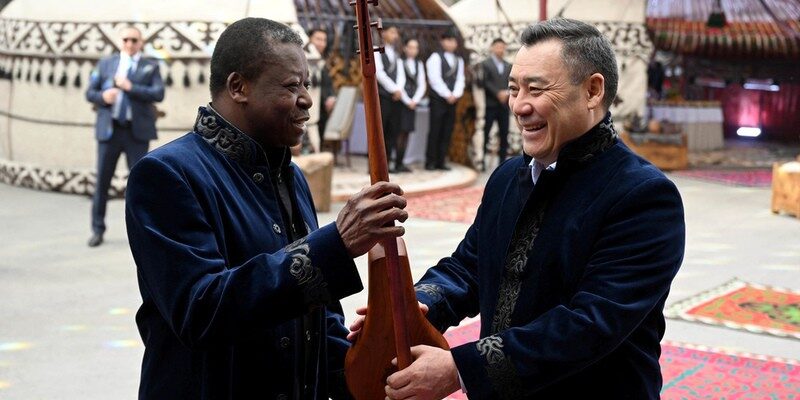
The official visit of Togo’s head of government, Faure Gnassingbé, to Kyrgyzstan on April 28–30 should not be read as an isolated diplomatic event. It is taking place inside an unusually dense cluster of activity: the SCO Council of Defence Ministers, the presence of China’s defence minister, the fifth meeting of Shanghai Cooperation Organization (SCO) digital and ICT ministers, and a parallel SCO Forum on Artificial Intelligence.

Bishkek, in other words, was not simply hosting an African leader. It was presenting itself — intentionally or not — as a Eurasian platform where security, digital governance, AI, transport, tourism, and external partnerships intersect.

This geometry deserves attention.

Bishkek as a Digital Interface

Over the past several years, Kyrgyzstan has worked to reposition itself — not only as a mountainous transit country, but as a provider of digital state capacity: e-government tools, secure documents, digital identification, fintech infrastructure, and special financial regimes such as the proposed Tamchy special financial and investment territory, which combines Kyrgyz sovereignty with elements of English law and international arbitration.

For many African countries, this offer can be attractive. Governments across the continent are looking for administrative modernization, digital sovereignty, and alternatives to legacy Western-controlled infrastructure. For Bishkek, such partnerships offer something equally valuable: visibility, geopolitical relevance, and an opportunity to export state technology beyond Central Asia.

Togo is a particularly interesting test case. Lomé is one of West Africa’s important maritime and logistical hubs, with access not only to the Gulf of Guinea but, indirectly, to the Sahel region — Mali, Burkina Faso, and Niger — where Russia has expanded its security footprint.

If Kyrgyz digital infrastructure were to enter this corridor, it would not be a minor technical export. It would connect a Central Asian jurisdiction to one of Africa’s most strategically sensitive zones.

It must be said honestly: this remains a hypothesis. Public information about specific Kyrgyz digital products being offered to Togo remains limited. But the political signal is difficult to ignore: Bishkek is not approaching this visit as a routine bilateral courtesy.

The Russia Question

There is a more sensitive layer to this picture.

Kyrgyzstan is a close partner of Russia. Russia, in turn, is under heavy Western sanctions and is searching for alternative financial, commercial, and logistical routes. This creates a natural suspicion that Kyrgyz digital and financial infrastructure could — directly or indirectly — become useful to Russian-linked actors.

This does not mean every Kyrgyz initiative abroad is directed from Moscow. That reading is too simplistic.

A more precise framing is this: Kyrgyzstan may be becoming part of a distributed sanctions-era infrastructure in which Russian, Chinese, Central Asian, and Global South interests increasingly overlap.

In this sense, Bishkek may not be a “front office” for Russia alone. It may be emerging as a Eurasian adapter — a jurisdiction through which larger actors can interact with sensitive markets under a less toxic, more flexible brand.

A7A5 and the Closing Window

The crypto-financial dimension makes this issue urgent.

A7A5, a ruble-pegged stablecoin issued by the Kyrgyzstani company Old Vector LLC, has attracted growing attention from blockchain analytics firms, sanctions researchers, and Western regulators. Elliptic has reported more than $100 billion in transactions less than a year after launch, while The Guardian has also described the token as a central instrument in concerns over Russian sanctions evasion. The U.S. Treasury has stated that the A7A5 token is issued by Old Vector and was linked to a broader crypto network involving sanctioned actors.

The function of such instruments is not abstract. They offer speed, cross-border reach, reduced transparency, and the ability to bypass SWIFT, correspondent banking, and Western compliance frameworks. This is precisely what a sanctioned economy needs, and precisely what worries Western regulators.

The EU’s 20th sanctions package, adopted in April 2026, marks a doctrinal shift. Crypto assets are no longer peripheral to sanctions enforcement; they are becoming a primary target. Reuters reported that the EU banned certain exports to Kyrgyzstan over concerns about re-export to Russia and sanctioned a Kyrgyz entity involved in trading A7A5. Local reporting has identified this entity as TengriCoin, operator of the Meer platform, where significant volumes of A7A5 are traded.

The signal is clear: third-country virtual asset service providers facilitating Russian state-adjacent crypto instruments are now within the scope of European sanctions, regardless of where they are incorporated.

The pressure is not only European. In April 2026, The Guardian reported that a cross-party group of British MPs and peers had called on the UK government to impose personal sanctions on senior Kyrgyz officials over alleged facilitation of Russian sanctions evasion. They also warned of broader sectoral measures if the situation does not change.

Earlier this year, one could still argue that Bishkek had a wide window of opportunity to institutionalize new financial and digital routes before facing serious pressure. That window now appears to be narrowing. Western attention has already arrived. The question is no longer whether it comes, but how fast it escalates — and whether Kyrgyzstan can formalize new external partnerships before the sanctions environment becomes significantly harsher.

The SCO Layer

This is where the Shanghai Cooperation Organization context becomes important.

The simultaneous presence of SCO defense and digital events in Bishkek gives the Togo visit a broader meaning. It places the African track inside a Eurasian setting shaped not only by Russia, but also by China, India, the Central Asian countries, and a growing non-Western institutional vocabulary around security, digital sovereignty, AI, infrastructure, and alternative development models.

China’s role is especially important and should not be reduced to a protective background. Beijing is a second center of gravity. Its infrastructure investments, trade volumes, and institutional weight create the environment in which smaller states like Kyrgyzstan can expand their room for maneuver.

Any hard Western measure against Bishkek would have to factor in the risk of affecting Chinese infrastructure, trade, and investment interests across Central Asia.

This does not mean China is directing the Togo track. But it does mean that Bishkek’s emerging role cannot be understood through a Russia-only lens.

Proxy Sovereignty

The concept that best describes Kyrgyzstan’s possible new position is proxy sovereignty — a small country monetizing its sovereignty, jurisdiction, neutral brand, and digital infrastructure by offering services that larger, more constrained actors cannot easily provide under their own name.

For Kyrgyzstan, this role may look attractive. It offers agency, revenue, diplomatic visibility, and a path beyond the status of a peripheral post-Soviet economy. But the risks are serious.

If Western capitals conclude that Kyrgyzstan is not just a partner of Russia but an active operational node in sanctions circumvention, pressure could move quickly from warnings to secondary sanctions, banking restrictions, export controls, personal designations, and measures targeting digital infrastructure.

The visit of Togo’s leader to Bishkek may therefore be more than a diplomatic courtesy. It may be an early signal of a new geography — one in which Central Asia, the SCO space, Africa, digital governance, crypto-finance, and sanctions politics begin to converge.

The central question is no longer whether Kyrgyzstan is participating in a larger geopolitical game. Increasingly, it appears that it is.

The real question is whether Bishkek can turn this role into a durable strategic agency — or whether it risks becoming an expendable proxy node in someone else’s architecture.


The views expressed in this article are those of the author and do not necessarily reflect the official policy or position of the publication, its affiliates, or any other organizations mentioned.


Kyrgyz Jewelers to Receive Discounted Gold as Government Expands Industry Support

Kyrgyzstan’s Cabinet of Ministers has approved a package of support measures for the jewelry industry, implementing a directive from President Sadyr Japarov aimed at improving producers’ access to raw materials.

Earlier, Japarov instructed the government to ensure that jewelers could obtain raw materials from the State Fund of Precious Metals and Precious Stones on more favorable terms.

Under the new resolution, Kyrgyz jewelry manufacturers will be able to purchase domestically produced gold from the state at a 2% discount to the London Bullion Market Association (LBMA) fixing price.

The State Fund will supply precious metals to jewelers in raw form, without the right of resale. To purchase gold, companies must either sign a direct contract with the fund or acquire the metal through a commodity exchange.

Jewelers will also be granted deferred payment terms of up to 180 days. Transactions will be conducted at market prices in the national currency, the som.

Access to gold scrap and refined bullion will be limited to companies operating under a special tax regime, with confirmed production capacity and compliance with requirements for accounting and the targeted use of raw materials.

In addition, the government has approved a preferential lending mechanism for the jewelry sector. Authorities will subsidize interest rates on loans issued by state-owned banks, with approximately $11.5 million allocated to the program.

The maximum loan amount will be $1 million, with a term of up to 60 months. The interest rate is set at 6% per annum, with a possible payment deferral of up to 180 days.

Funds may be used for production modernization, equipment purchases, and the upgrading of manufacturing facilities. Eligible borrowers include legal entities and individual entrepreneurs registered with the State Tax Service.

“The implementation of these initiatives will create a sustainable foundation for the development of the jewelry industry and increase its contribution to the national economy,” the Ministry of Economy and Commerce said in a statement, adding that the measures are expected to reduce costs, expand production, and create jobs.

Stalbek Akmatov, head of the Kyrgyz Jewelers Association, told The Times of Central Asia that the industry had been advocating for such measures for many years.

According to him, local producers were previously forced to purchase domestic gold at prices about 5% above London market levels, making imports from Russia and Turkey more common, despite higher logistics costs.

“Now the situation will change, and the industry has real prospects for development,” Akmatov said.

Uzbekistan Launches Global Cinema Weekend to Attract Film Industry

Uzbekistan is taking a new step to position itself as an international filming destination with the launch of Global Cinema Weekend, an industry platform designed to connect cinema, tourism, and the creative economy.

The initiative was formalized through a memorandum signed between the National PR-Center and Global Tech Weekend. The platform will be held as part of Global Tech Weekend Tashkent on May 15-17.

Organizers say the new platform aims to bring together international film professionals, government representatives, and local businesses. The goal is to foster partnerships and promote Uzbekistan as a competitive destination for global film production.

Global Cinema Weekend will take place across Tashkent as part of Global Tech Weekend, described as the region’s largest decentralized innovation forum. The event is expected to attract participants from across the global creative industry, including producers, directors, and investors.

A key focus of the initiative is developing film-induced tourism, a model in which films and television productions drive interest in filming locations and increase visitor numbers. Organizers say this approach aligns with Uzbekistan’s broader tourism strategy and could help boost international visibility.

The memorandum outlines plans for long-term cooperation, including the annual organization of similar events with participation from leading global film industry figures, including representatives from Hollywood. Officials say this could open new opportunities for collaboration, knowledge exchange, and improvements in production standards.

The initiative is also supported by government incentives designed to attract foreign production companies, including cash rebate programs. These measures are intended to make Uzbekistan more competitive as a filming location.

“Signing this memorandum marks an important step in positioning Uzbekistan as an open and competitive destination for international film production,” said Shakhboz Saidkhanov, Director of the National PR-Center. “We are building an ecosystem where the film industry contributes to tourism growth, investment attraction, and the country’s global image.”

Nodo Ivanidze, co-founder of Global Tech Weekend, said Uzbekistan already offers strong potential for filmmakers. “Uzbekistan has everything a filmmaker needs: ancient cities, dramatic landscapes, and a government that is actively building the infrastructure to welcome international productions,” he said. “What has been missing is a dedicated industry platform that connects that potential directly to global decision-makers.”

He added that Global Cinema Weekend is intended to become a long-term initiative rather than a one-time event. “This memorandum is not a one-time activation. It is the beginning of a long-term effort to make Uzbekistan a permanent fixture on the map of global film production,” Ivanidze said.

Global Tech Weekend, launched in 2025, is expanding its activities across the Eurasia region, with events planned in Tashkent, Tbilisi, and Baku in 2026.

Kyrgyzstan Moves to Simplify Obtaining Residence Permits for Foreign Citizens

Kyrgyzstan has drafted legislative amendments aimed at simplifying the process for foreign citizens to obtain residence permits.

Proposed changes to the law “On External Migration” were submitted for public discussion on April 27.

The bill proposes eliminating the mandatory requirement to obtain immigrant status, which previously required applicants to apply to multiple government agencies and submit numerous documents. Instead, the process would shift to a “single-window” system, reducing processing time and administrative complexity.

The procedure for obtaining a temporary residence permit would also be simplified by removing the requirement to reside in the country for at least six months prior to application.

The list of grounds for obtaining a residence permit would be expanded to include employment, education, investment, family reunification, and residency for citizens of former Soviet republics that enjoy a visa-free regime with Kyrgyzstan.

The draft law also proposes eliminating the outdated requirement for the registration of foreign nationals in hotels.

A residence permit could be revoked if a foreign citizen leaves Kyrgyzstan for more than one year without notifying the authorities.

According to the bill’s explanatory note, a residence permit is intended to ensure permanent residence in Kyrgyzstan, provide access to government services and social benefits, and exempt holders from visa and work permit requirements. Adoption of the new procedures is expected to improve the efficiency of migration regulation in the country.

According to the Ministry of Labor, Social Security, and Migration, the quota for foreign workers in Kyrgyzstan for 2026 has been set at 52,000.

Uzbekistan and China to Develop Early Warning Systems for Dust Storms

Uzbekistan and China have agreed to expand cooperation on environmental protection, including the development of early warning systems for dust and sandstorms, according to Uzbekistan’s National Committee on Ecology and Climate Change.

The agreement was discussed during a meeting between Aziz Abdukhakimov, Advisor to the President of Uzbekistan on environmental issues, and Huang Runqiu, China’s Minister of Ecology and Environment. The talks took place on the sidelines of a regional environmental summit.

Both sides noted that cooperation between the two countries in environmental protection has been expanding and becoming more practical. Officials focused on joint efforts to address environmental challenges, introduce modern technologies, and strengthen scientific collaboration.

Uzbekistan expressed appreciation for China’s support in establishing the Central Asian Regional Research Center for Combating Desertification and Developing Desert Economies at Green University, created with the participation of the Chinese Academy of Sciences. The center is expected to serve as a platform for research, training, and the development of solutions to land degradation.

According to Huang Runqiu, cooperation between the two countries has already produced concrete results. He noted that 11 waste-to-energy plants are currently being built in Uzbekistan by Chinese investors, reflecting what he described as “a high level of trust” and effective bilateral cooperation.

The Uzbek side proposed several new areas for collaboration, including studying China’s use of satellite systems for climate monitoring, gaining experience in tracking dust and sandstorms, and exploring the work of China’s national environmental monitoring centers. Other proposals included organizing a joint international forum on ecology and establishing a shared laboratory to monitor air and water quality.

China expressed support for these initiatives and confirmed its readiness to move toward practical implementation. The two sides discussed creating a joint laboratory for environmental monitoring and expanding scientific research, including cooperation with international organizations such as the World Meteorological Organization.

A key outcome of the meeting was an agreement to apply China’s experience in early warning systems for dust and sandstorms in Uzbekistan. These systems are expected to improve preparedness and response to environmental risks.

China also offered to send scientists and experts to Uzbekistan to support training and capacity building, while inviting Uzbek specialists to China for knowledge exchange.

AI in Kazakhstan to Affect Four Million Jobs in Next Decade, Says Labor Ministry

Around half of all professions in Kazakhstan are expected to change under the impact of AI over the next decade, with some jobs declining and others disappearing entirely, lawmakers and government officials have said.

Daniya Yespayeva, Deputy Chair of the lower house of parliament, the Mazhilis, citing data from the Ministry of Labor, stated that by 2035, transformations will affect 562 jobs, about 44% of the labor market, equivalent to roughly 4 million workers.

According to her, employment in 46 professions, covering around 362,000 people (about 4% of the labor market), is expected to decline, while 14 professions, employing approximately 49,000 people, may disappear completely.

Yespayeva did not specify which professions are at greatest risk. However, Minister of Science and Higher Education Sayasat Nurbek noted that couriers and taxi drivers could be among the first affected.

He said that around 700,000 people in Kazakhstan currently work in these sectors through platforms such as Glovo, Yandex, and Wolt.

“These are temporary forms of employment. As early as this year, several Kazakh companies are launching autopilot technologies in both taxi services and delivery, so within a few years, couriers and taxi drivers may no longer be needed,” Nurbek said, urging citizens to focus on more sustainable career paths.

Earlier reports indicated that a pilot drone delivery project could be launched in Almaty, while driverless taxis are planned for introduction in Astana.

Askhat Aimagambetov, a Mazhilis deputy, also warned about risks facing several popular academic fields. According to him, in 2025, the highest competition for university admissions was in programs such as Translation Studies, International Relations, and Law, fields that, in his view, could be among those most affected by automation.

Aimagambetov stressed the need to revise the allocation of state-funded educational grants to avoid encouraging training in professions at high risk of decline.

He also noted that employment among young developers aged 22-25 declined by nearly 20% over the past year, despite significant investment in IT education.

“We are training an army of coders at a time when AI is already writing code itself. It is no longer enough to train ‘coders of yesterday,’” he said.

Nurbek agreed with this assessment, pointing to a shortage of specialists in eight key sectors, including advanced manufacturing, digital technologies, clean energy, finance, life sciences, defense, creative industries, and professional services.

According to him, part of the gap is being addressed through private-sector involvement. Kazakhstan has established 75 joint laboratories across 19 universities in partnership with companies such as Amazon Web Services, Cisco, Huawei, Schneider Electric, and Honeywell, as well as Eurasian Resources Group, Freedom Holding, and KEGOC.

More than 7,500 students are currently studying in these laboratories across 179 disciplines.

Business investment in these initiatives has totaled around $5.2 million, although the minister noted that such efforts remain limited in scope.

“If this gap is not addressed, the education system will continue to train specialists for yesterday’s economy,” Nurbek said, emphasizing that aligning education with economic needs has become a matter of national security.