• KGS/USD = 0.01144 0%
  • KZT/USD = 0.00196 -0%
  • TJS/USD = 0.10899 -0%
  • UZS/USD = 0.00008 -0%
  • TMT/USD = 0.28490 0%
  • KGS/USD = 0.01144 0%
  • KZT/USD = 0.00196 -0%
  • TJS/USD = 0.10899 -0%
  • UZS/USD = 0.00008 -0%
  • TMT/USD = 0.28490 0%
  • KGS/USD = 0.01144 0%
  • KZT/USD = 0.00196 -0%
  • TJS/USD = 0.10899 -0%
  • UZS/USD = 0.00008 -0%
  • TMT/USD = 0.28490 0%
  • KGS/USD = 0.01144 0%
  • KZT/USD = 0.00196 -0%
  • TJS/USD = 0.10899 -0%
  • UZS/USD = 0.00008 -0%
  • TMT/USD = 0.28490 0%
  • KGS/USD = 0.01144 0%
  • KZT/USD = 0.00196 -0%
  • TJS/USD = 0.10899 -0%
  • UZS/USD = 0.00008 -0%
  • TMT/USD = 0.28490 0%
  • KGS/USD = 0.01144 0%
  • KZT/USD = 0.00196 -0%
  • TJS/USD = 0.10899 -0%
  • UZS/USD = 0.00008 -0%
  • TMT/USD = 0.28490 0%
  • KGS/USD = 0.01144 0%
  • KZT/USD = 0.00196 -0%
  • TJS/USD = 0.10899 -0%
  • UZS/USD = 0.00008 -0%
  • TMT/USD = 0.28490 0%
  • KGS/USD = 0.01144 0%
  • KZT/USD = 0.00196 -0%
  • TJS/USD = 0.10899 -0%
  • UZS/USD = 0.00008 -0%
  • TMT/USD = 0.28490 0%
08 December 2025

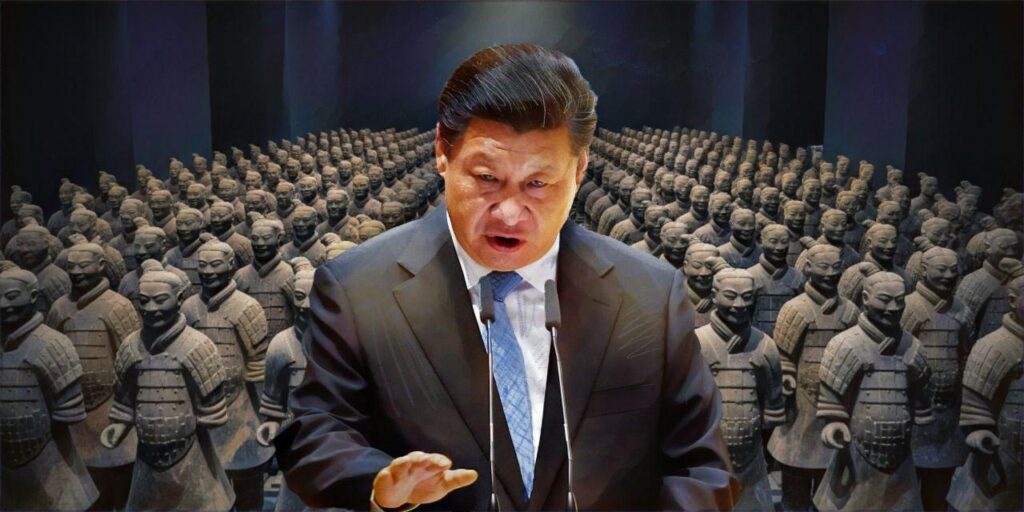
China Steps Into the Central Asian Power Vacuum

China’s footprint in Central Asia is growing rapidly, with the number of joint projects and strategic initiatives expanding across the region. Analysts attribute this shift to the waning influence of both Russia and the United States.

Kazakhstan: From Agriculture to Atomic Energy

In recent months, China has significantly deepened its cooperation with Kazakhstan. As The Times of Central Asia recently reported, on July 24, the Kazakh Ministry of Finance announced a pilot project with China involving unmanned freight trucks crossing the Bakhty (Kazakhstan) and Pokitu (China) border points. The initiative, known as “Smart Customs,” will employ autonomous guided vehicles (AGVs) and implement a unified electronic customs declaration system recognized by both countries.

Further institutional cooperation had earlier emerged on July 23, with the launch of the China-Central Asia Poverty Reduction Cooperation Center and the China-Central Asia Education Exchange and Cooperation Center in Urumqi, Xinjiang. These centers aim to deepen collaboration on poverty alleviation and education, priorities reaffirmed during the second China-Central Asia Summit in Astana, where 24 bilateral agreements were signed during President Xi Jinping’s visit.

Meanwhile, China is asserting itself in Kazakhstan’s energy sector. On June 14, the China National Nuclear Corporation (CNNC) was announced as the leader of a consortium to build a new nuclear power plant in Kazakhstan. Although Russia’s Rosatom is slated to construct the country’s first nuclear plant, logistical and financial setbacks at its Akkuyu project in Turkey have led some experts to suggest that CNNC may ultimately be responsible for Kazakhstan’s inaugural facility.

Meanwhile, as previously reported by The Times of Central Asia, transit routes through Russia are seeing multiple problems, with Kazakhstan temporarily suspending oil exports via the Black Sea ports of Novorossiysk and Yuzhnaya Ozerovka due to newly enforced Russian regulations. At land borders, new entry procedures for foreign citizens, including Kazakhs, have led to massive traffic jams.

China’s Strategic Pivot

According to sociologist Gulmira Ileuova, China’s assertive role is a response to the diminishing presence of both Russia, distracted by the war in Ukraine, and the United States, which has scaled back developmental efforts. In March, President Donald Trump signed an executive order curtailing the global operations of the United States Agency for International Development (USAID), leading to the suspension of several NGO and media initiatives in Central Asia.

“China is rapidly filling the vacuum,” Ileuova noted in an interview with The Times of Central Asia. “Beijing is transitioning from economic engagement to ideological influence, promoting narratives of social harmony and a shared future.”

Ileuova anticipates that a broad ideological campaign, comparable to the “One Belt, One Road” infrastructure initiative, may follow, amplifying China’s soft power in the region. Rather than emphasizing democratic values, Chinese cooperation projects often focus on poverty alleviation, which finds greater resonance among Central Asian populations.

Xi Jinping’s Repeated Visits Signal Priority

As previously stated, Chinese President Xi Jinping visited Kazakhstan on June 16 for the Second China-Central Asia Summit in Astana, during which leaders signed the Astana Declaration and a treaty on “eternal good-neighborliness.” According to political analyst Kanat Ospanov, Xi’s regular visits underscore Kazakhstan’s strategic importance to Beijing. To date, China has invested over $57 billion across 200 projects in Kazakhstan, spanning industry, energy, and logistics.

Deepening Ties with Uzbekistan, Kyrgyzstan, and Tajikistan

China is now Uzbekistan’s top trading partner, with bilateral trade reaching $4.2 billion between January and April 2025, outpacing Russia and Kazakhstan. Chinese investments in Uzbekistan between 2017 and 2024 totaled $14 billion, and account for one-third of all foreign investment in early 2025. Over 3,500 enterprises with Chinese capital are registered in Uzbekistan.

In Kyrgyzstan, China is spearheading a major railway project that will connect western China with Central Asia, strengthening regional trade routes. Construction of the China–Kyrgyzstan–Uzbekistan (CKU) railway officially began on 27 December 2024 during a ceremony in the village of Tosh‑Kutup in Kyrgyzstan’s Jalal-Abad region. Present at the ceremonial launch were President Japarov of Kyrgyzstan and officials representing China’s National Development and Reform Commission, whilst remarks were conveyed from Uzbek President Shavkat Mirziyoyev.

Meanwhile, China has surpassed Russia as Tajikistan’s largest trading partner, with a 24.8% share of the country’s foreign trade turnover. Beijing’s strategy combines investment, credit lines, and infrastructure development to exert influence.

This growing economic presence is increasingly accompanied by cultural and political engagement, as Beijing ramps up language programs, media cooperation, and elite exchanges. With infrastructure, trade, and ideology now deeply intertwined, China is positioning itself as Central Asia’s most consequential long-term partner.


Tajikistan Uncovers Major Rare Earth Deposits in Rasht Valley

Newly discovered deposits of the rare earth metals tantalum and niobium in Tajikistan could reshape the country’s mining sector and economic future, according to the Tajik Geological Survey.

Strategic Discoveries in the Rasht Valley

Ilkhom Oymukhammadzoda, head of the Geological Administration, announced the discovery of substantial niobium and tantalum concentrations in the Rasht Valley, based on the analysis of 125 samples collected from the Nazaraylok and Yosuman areas.

Tantalum is critical to electronics manufacturing, while niobium is used in high-strength alloys for the aerospace and construction industries both metals are of growing strategic importance.

Oymukhammadzoda also confirmed the identification of 15 additional sites rich in rare metals such as lithium, niobium, and tantalum across remote eastern regions including Karasu, Agbasoy, Pyron, and Rohshif.

Gold prospects have also emerged. At the Novy Sarimardi site, a gold-bearing ore body with a concentration of 0.96 grams per tonne has been located, potentially attracting investor interest.

Geophysical surveys have identified three anomalies in the Laylakul and Sangibek areas, suggesting further opportunities for mineral exploration and development.

Key Geological Zones

Tajikistan’s rare earth resources are primarily concentrated in two strategic zones: the Central Region and the Gorno-Badakhshan Autonomous Region (GBAO).

In the Central Region, exploration is focused on the Zeravshan and Karategin ridges. Pegmatite fields in Karasu, Akbasai, and Payron are currently under assessment for reserves of niobium, tantalum, lithium, and tin.

In GBAO, exploration is underway in the Shughnan, Rushan, Ishkoshim, and Vakhsh ridges. Sites such as Kolkhozabad, Taglikhas, and Vez-Dara have shown traces of rubidium and other rare elements essential to high-tech industries.

Economic Potential and National Strategy

Geological survey work is state-funded and focused on assessing reserves of strategic resources. One of the most promising sites is Nazaraylok, where preliminary projections suggest reserves of niobium and tantalum may reach several hundred thousand tons.

Beyond these metals, Tajikistan’s subsoil contains beryllium, cesium, lithium, tin, and light lanthanides, all in increasing demand on global markets.

Rare earth resources are emerging as a cornerstone of future economic development. With its expanding inventory of strategic metals, Tajikistan could become a key player in the global rare earth supply chain.

Kazakhstan to Launch First International Full-Cycle Geo-Laboratory in Almaty

Kazakhstan is establishing GeoLab Eurasia, the first internationally certified full-cycle geological laboratory in Central Asia. Located in Almaty, the facility will provide high-precision analysis of ore composition and quality in accordance with internationally recognized standards, including NI 43-101, JORC, and ISO/IEC 17025.

The creation of this domestic laboratory marks a strategic move to improve the accuracy and credibility of Kazakhstan’s mineral reserve assessments, enhance investor confidence, and reduce reliance on foreign laboratories. GeoLab Eurasia is expected to streamline the mineral certification process and boost the country’s competitiveness in global geological markets.

International Collaboration and Scientific Sovereignty

The project is being implemented through a tripartite partnership involving the Satpayev Institute of Geological Sciences, Kazakhstan’s Kepler Group, and Chinese firm Eurasia Mineral Standard, which serves as the project’s strategic investor. Founding documents were signed in Almaty on July 23.

Askar Syzdykov, Director of the Satpayev Institute, emphasized the broader impact of the initiative:

“We view this project as a long-term platform not only for rock and core analysis, but also for joint training programs and the exchange of best international practices. This marks a historic moment where science, technology, and Kazakhstan’s development strategy converge.”

Sultan Kinzhekulov, Deputy Chairman of the Investment Committee under the Ministry of Foreign Affairs, underscored the strategic value of the initiative:

“GeoLab Eurasia represents a new level of Kazakhstan’s industrial and scientific sovereignty. Projects like this are crucial not only economically, but also in positioning Kazakhstan as a reliable player in global critical mineral supply chains.”

Infrastructure and Timeline

GeoLab Eurasia will consist of two main components: a laboratory and educational center housed at the Geological Institute in Almaty, and an industrial hub outside the city that will include sample preparation lines and core storage facilities. The laboratory is expected to open in October 2025, with the industrial complex slated for launch in the first quarter of 2026.

Once operational, GeoLab Eurasia will serve as a regional center for geological research and mineral certification. The facility is positioned to elevate Kazakhstan’s technological and scientific capabilities in geology and to strengthen its standing in the global market for strategic mineral resources.

Kyrgyzstan Moves to Address Falling Water Levels in Lake Issyk-Kul

Kyrgyzstan is stepping up efforts to combat the declining water level of Lake Issyk-Kul, a critical ecological and economic resource, as the effects of climate change intensify. Deputy Prime Minister and Minister of Water Resources Bakyt Torobaev raised the issue at a government meeting this week, highlighting a combination of shrinking glaciers, reduced precipitation, and inefficient water use, particularly in agriculture, as key contributing factors.

Lake Issyk-Kul, located in northeastern Kyrgyzstan, is the country’s largest lake and a vital component of the regional climate system. It also supports biodiversity and tourism. Torobaev warned that the continued decline in water levels could have far-reaching environmental, economic, and social consequences.

Strategic Measures to Stabilize the Lake

To address the crisis, Torobaev proposed a set of comprehensive interventions requiring cooperation between government agencies, scientists, local communities, and civil society. Key initiatives include:

  • Modernizing irrigation systems and introducing water-saving technologies;
  • Expanding green areas across the Issyk-Kul region;
  • Enhancing research on glaciers and water resources;
  • Developing long-term climate adaptation strategies.

As previously reported by The Times of Central Asia, water diversion for agricultural irrigation, particularly outside the lake basin, was identified by experts at the 2024 National Water Forum as one of the primary threats to Issyk-Kul’s sustainability.

Government Investment and Monitoring

In response, the Kyrgyz government has pledged $392 million toward efforts to stabilize the lake’s water level. This includes $200 million dedicated to installing modern irrigation systems across 100,000 hectares of farmland. An additional investment will fund the deployment of 2,200 automated sensors to monitor water consumption in real time.

Authorities expect these measures to return up to 200 million cubic meters of water to the lake, helping to mitigate the decline and protect Issyk-Kul’s long-term ecological balance.

Kyrgyzstan Sets New Summer Electricity Consumption Record

Kyrgyzstan has recorded a new peak in daily electricity consumption during the summer season, reaching 44.1 million kilowatt-hours (kWh) in a single day, according to the National Electric Grid of Kyrgyzstan (NEGK).

This marks a 22% increase compared to the same period in 2024, when the maximum daily load stood at 36 million kWh. The surge is largely attributed to an extended heatwave, with temperatures in major cities exceeding 40°C, prompting heavy use of air conditioners and cooling systems.

The NEGK also reported a steady rise in electricity consumers, with an estimated 30,000 new subscribers joining the grid annually. This trend is fueled by Kyrgyzstan’s ongoing construction boom, which includes the development of residential complexes and industrial sites, sectors that have become pillars of the national economy.

Despite the strain, the power grid remains stable. “We urge citizens to use electricity sparingly. Rational resource use contributes to the reliable operation of the energy system,” the company stated in a public advisory. Residents were also encouraged to unplug unused appliances to conserve energy.

Summer Surplus, Winter Strain

Unlike the winter months, Kyrgyzstan typically enjoys a surplus of electricity in summer due to the seasonal melting of glaciers, which boosts hydroelectric output. The country is preparing to participate in the CASA-1000 project alongside Tajikistan, aiming to export surplus electricity to Pakistan via Afghanistan. These exports will be limited to the summer, as Kyrgyzstan faces significant energy shortages in winter.

According to the National Energy and Power System Company, winter electricity demand can reach 80 million kWh per day, placing substations under considerable stress. To mitigate shortages and prevent rolling blackouts, Kyrgyzstan imports electricity from Kazakhstan and Russia, and under contracts with Turkmenistan and Uzbekistan.

The country’s energy reserve capacity is shrinking due to increasing demand. In response, the Ministry of Energy is investing in network expansion and voltage stabilization. In 2024, five 110 kV substations were constructed. In 2025, two additional major facilities are slated to open in the Issyk-Kul and Batken regions, each with a capacity of 500 kWh.

Kyrgyzstan Tops EAEU in Construction Growth Despite Labor Woes

Kyrgyzstan recorded the highest growth in construction activity among member states of the Eurasian Economic Union (EAEU) during the first half of 2025, according to data published by the Eurasian Economic Commission (EEC).

Infrastructure Boom Drives Expansion

Between January and May 2025, construction volumes in Kyrgyzstan nearly doubled compared to the same period in 2024. Last year, the sector had already grown by 38% year-on-year.

Armenia followed with a growth rate of 29%, while Kazakhstan, Belarus, and Russia posted more modest increases of 15.4%, 12.3%, and 5.5% respectively. Across the EAEU, construction grew by an average of 6.8%.

The primary drivers of Kyrgyzstan’s construction boom include extensive state and private investment in housing, infrastructure, and industrial development. The government has focused on building hydroelectric power plants, residential complexes, and administrative buildings. Notably, the state mortgage program offers housing loans at 4-8% interest rates, well below market levels.

From January to April 2025, the Cabinet of Ministers allocated nearly $500 million toward housing projects, supplemented by $77 million in equity financing. To help stabilize construction costs, the government also classified cement as a socially significant good, subject to price controls.

According to The Times of Central Asia, investment in housing, infrastructure, and social facilities rose by 62% year-on-year during the first four months of 2025, reaching approximately $800 million, the highest figure in recent years. The construction sector contributed an estimated 3% to Kyrgyzstan’s GDP growth in the first half of the year.

Quality and Labor Concerns Persist

Despite these achievements, concerns are growing over construction quality and labor shortages. Residents in major cities report poorly planned developments that lack supporting infrastructure, including roads and essential utilities such as water and electricity.

Speaking to The Times of Central Asia, construction auditor Bakhtiar Kasymaliyev highlighted critical challenges in project execution. “We have serious problems with quality and professionalism,” he said. “There is a shortage of skilled concrete workers and bricklayers. They are in high demand. As a temporary solution, companies are bringing in labor from Pakistan, India, and Egypt, but most of them are unskilled. To improve quality, we need to attract qualified specialists from abroad.”

According to Kasymaliyev, the labor shortage is already impacting project timelines and structural integrity, raising red flags amid the sector’s rapid expansion.