• KGS/USD = 0.01144 0%
  • KZT/USD = 0.00212 0%
  • TJS/USD = 0.10432 -0.29%
  • UZS/USD = 0.00008 0%
  • TMT/USD = 0.28571 0.28%
  • KGS/USD = 0.01144 0%
  • KZT/USD = 0.00212 0%
  • TJS/USD = 0.10432 -0.29%
  • UZS/USD = 0.00008 0%
  • TMT/USD = 0.28571 0.28%
  • KGS/USD = 0.01144 0%
  • KZT/USD = 0.00212 0%
  • TJS/USD = 0.10432 -0.29%
  • UZS/USD = 0.00008 0%
  • TMT/USD = 0.28571 0.28%
  • KGS/USD = 0.01144 0%
  • KZT/USD = 0.00212 0%
  • TJS/USD = 0.10432 -0.29%
  • UZS/USD = 0.00008 0%
  • TMT/USD = 0.28571 0.28%
  • KGS/USD = 0.01144 0%
  • KZT/USD = 0.00212 0%
  • TJS/USD = 0.10432 -0.29%
  • UZS/USD = 0.00008 0%
  • TMT/USD = 0.28571 0.28%
  • KGS/USD = 0.01144 0%
  • KZT/USD = 0.00212 0%
  • TJS/USD = 0.10432 -0.29%
  • UZS/USD = 0.00008 0%
  • TMT/USD = 0.28571 0.28%
  • KGS/USD = 0.01144 0%
  • KZT/USD = 0.00212 0%
  • TJS/USD = 0.10432 -0.29%
  • UZS/USD = 0.00008 0%
  • TMT/USD = 0.28571 0.28%
  • KGS/USD = 0.01144 0%
  • KZT/USD = 0.00212 0%
  • TJS/USD = 0.10432 -0.29%
  • UZS/USD = 0.00008 0%
  • TMT/USD = 0.28571 0.28%

Uzbekistan to Borrow $400 Million to Accelerate Agricultural Mechanization

Uzbekistan has approved a plan to attract up to $400 million in foreign loans to finance the purchase of agricultural machinery and equipment, according to a presidential decree signed on March 13.

The initiative is intended to increase the level of mechanization in the agricultural sector, with particular emphasis on cotton harvesting. Officials have set a target of achieving a 70% share of machine-assisted cotton picking in 2026, aiming to improve efficiency and reduce labor intensity.

Under the decree, commercial banks will distribute foreign credit lines provided under state guarantees to farmers and agricultural enterprises. The loans will have a maturity period of up to 10 years, including a two-year grace period. Interest rates will be set at the Central Bank’s base rate plus a 4% margin charged by participating banks.

Payments for cotton and grain harvesters supplied through these preferential loans and leasing arrangements in 2026 will be scheduled twice a year, on January 31 and July 31.

Uzbekistan has officially abolished Soviet-era practices of forced labor and eliminated state cotton production quotas in 2020. The government has also cooperated with the International Labour Organization to monitor labor conditions in the sector.

In March 2022, the international coalition Cotton Campaign lifted its boycott of Uzbek cotton, citing the elimination of systemic forced labor that had previously prompted more than 330 global brands to avoid sourcing from the country.

Turkmenistan’s Army Facing a Growing Exodus of Personnel

Turkmenistan’s Ministry of Defense is attempting to halt mass resignations among officers. Military personnel who have left their units without permission are being offered the opportunity to return to service on the condition that they are transferred to their home region. However, this measure has so far produced little effect and does not address the army’s core problems.

Turkmenistan’s Minister of Defense, Begench Gundogdyyev, has sought to revise the government’s approach to the personnel crisis in the armed forces. At a meeting with unit commanders reviewing the results of the first two months of 2026, he addressed the issue of widespread officer resignations.

Several commanders reportedly asked him to approve discharge requests for subordinates who had not reported to their units for an extended period. According to a source cited by turkmen.news, the minister reacted sharply and stated that he would not sign any such documents.

“Lock them up in the armoury if you must, but don’t let them leave the army,” the source quoted him as saying.

A few days after the meeting, some officers reportedly received phone calls from the Ministry of Defense offering them the chance to return to duty. In exchange, they were promised transfers to their home region.

Such a practice had not existed previously. Since Soviet times, military personnel were typically assigned to serve in regions other than their own so that, in the event of unrest, they would defend state authority rather than side with local populations. Now, an exception has been made for those seeking discharge after leaving their units without permission, in some cases for more than a year. However, according to sources, almost no one has accepted the offer, and the number of officers wishing to leave the army continues to grow.

Officers cite housing as the main problem. Two years ago, a ministerial order abolished the option to privatize service housing, which had previously been available based on length of service. Following this decision, the outflow of personnel reportedly intensified. About a year ago, the Ministry of Defense proposed that officers purchase newly built apartments with their own funds, requiring them to cover 100% of the cost while also prohibiting subsequent resale.

Many officers view these conditions as unreasonable. According to them, several years of work abroad, for example in Russia, make it possible to save enough money to buy a home, a car, and secure their children’s future.

Military personnel also report insufficient pay, hazing, and corruption affecting not only conscripts but officers as well. As a result, some officers who are unable to formally resign reportedly remain in service until retirement age. Sources claim that morale and discipline in the armed forces have deteriorated to such an extent that any conflict with commanders can prompt an officer to submit a resignation request and stop reporting for duty.

The problems facing Turkmenistan’s armed forces come amid broader regional tensions. On February 27, Pakistan’s defense minister, Khawaja Asif, announced what he described as the start of an “open war” against the Taliban in Afghanistan. According to various reports, the death toll ranges from 95 to several hundred people, including civilians.

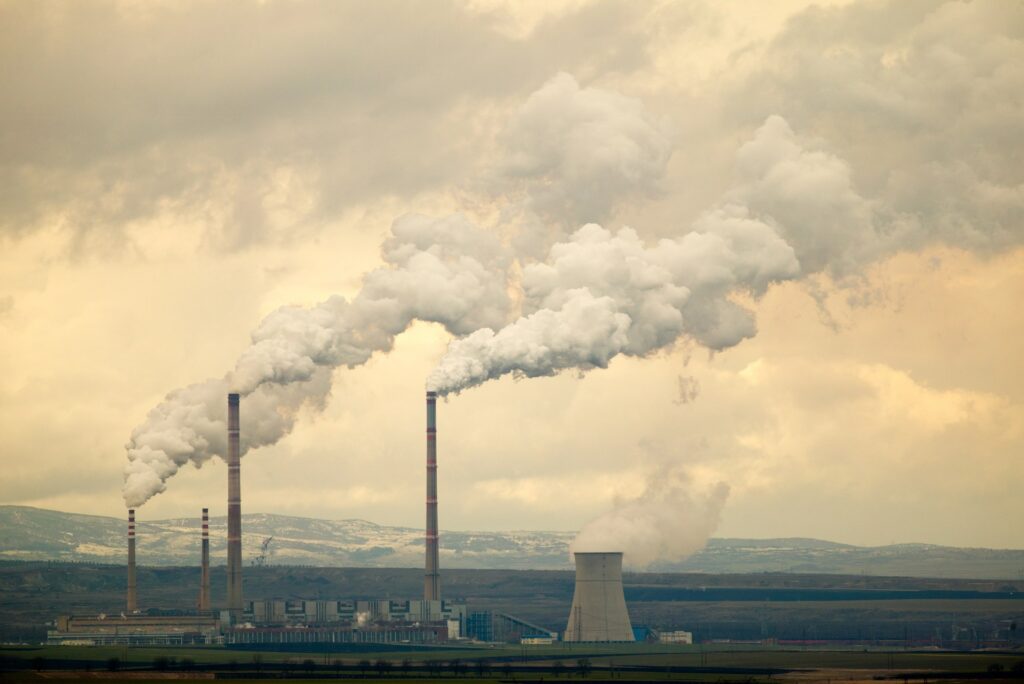
Kyrgyzstan Seeks Climate Finance and Carbon Market Funding to Cut Emissions

Kyrgyzstan is preparing to sign a carbon project aimed at supporting the country’s transition to sustainable energy. The announcement was made by Energy Minister Taalaibek Ibrayev following a meeting with World Bank Country Manager for Kyrgyzstan Hugh Riddell on March 13.

The initiative will be supported by the Transformative Carbon Asset Facility (TCAF), a World Bank trust fund designed to help developing countries introduce market-based carbon pricing mechanisms and attract private investment in low-carbon technologies.

TCAF provides a hybrid financing model that combines climate finance with carbon market funding. Payments are made only after verified reductions in greenhouse gas emissions are achieved.

The project is being implemented under the Innovative Finance for Resilient and Sustainable Energy Transition (iFIRST) program. According to Kyrgyzstan’s Ministry of Energy, it will use a results-based payment mechanism, meaning that emission reductions must first be measured and independently verified before financial compensation is disbursed.

If the reductions are confirmed, Kyrgyzstan could receive up to $4.5 million in climate finance to support its commitments under the Paris Agreement. The initiative may also attract up to $5.5 million in additional funding through carbon market mechanisms.

The project includes technical assistance grants of up to $1.5 million to strengthen the institutional capacity of government agencies, develop a national system for monitoring greenhouse gas emissions, and establish a national carbon unit registry.

Officials say the initiative will help advance reforms in Kyrgyzstan’s energy sector, strengthen the country’s climate policy framework, and increase access to international climate finance. It is also expected to contribute to environmental sustainability, modernization of the energy sector, and reductions in greenhouse gas emissions.

In July 2025, Kyrgyzstan’s Cabinet of Ministers approved the Concept for Achieving Carbon Neutrality in the Kyrgyz Republic. The strategy outlines a phased transition toward a carbon-neutral economy, focusing on key sectors including energy, transport, industry, agriculture, waste management, and forestry.

The concept prioritizes reducing greenhouse gas emissions, expanding renewable energy, improving energy efficiency, restoring forest ecosystems, adopting innovative technologies, and integrating climate risks into national planning. The government views the initiative as a foundation for attracting climate finance, creating green jobs, and ensuring long-term environmental security.

Under the strategy, Kyrgyzstan has pledged to achieve carbon neutrality by 2050 and reduce greenhouse gas emissions by 44% by 2030.

Despite these ambitions, the country’s overall emissions remain relatively low, accounting for less than 0.032% of global greenhouse gas emissions.

In October 2025, the Ministry of Natural Resources, Environment, and Technical Supervision published Kyrgyzstan’s first Biennial Transparency Report. According to the document, total greenhouse gas emissions in 2023 reached 19.38 million tons of CO₂ equivalent. Forests, soils, and other ecosystems absorbed 10.31 million tons, resulting in net emissions of 9.07 million tons.

The energy sector remains the largest source of emissions, accounting for more than half of the total. Agriculture is the second-largest contributor, largely driven by livestock production. At the same time, emissions from transport, electricity generation, and heating have declined significantly since the early 1990s due to the adoption of cleaner technologies and improvements in energy efficiency.

Kazakhstan Plans to Introduce Social Media Monitoring

Kazakhstan plans to introduce a system for monitoring the information space in order to identify illegal online content. This was reported by the country’s Financial Monitoring Agency (FMA).

The agency has drafted rules on monitoring the information space aimed at detecting unlawful content, including on the internet, and enabling subsequent measures to restrict access to it. The draft document has been published on the Open Regulatory Acts portal.

According to the proposal, monitoring would cover information published in open sources, including websites, social networks, messaging platforms, mass media outlets, and other information and communication channels.

The Financial Monitoring Agency would be responsible for carrying out the monitoring.

If unlawful content is identified, the agency would be able to initiate further response measures.

“If the posting of illegal content is established, the authorized financial monitoring body, within the limits of its competence and in the presence of signs of a criminal offense, shall take the measures provided for by the country’s criminal procedure legislation,” the document states.

If no signs of a criminal offense are found, the materials would be forwarded to other authorized bodies in order to hold the authors administratively liable.

In both cases, if criminal or administrative violations are identified and the materials fall under restrictions established by Kazakhstan’s legislation or by court decisions that have entered into force, the agency would notify the authorized body responsible for mass media regulation.

Following such notification, a decision could be made to block the relevant content. These notifications would be transmitted through the state information system.

The draft rules were prepared on the basis of subparagraph 15 of Article 16 of the Law “On the Prevention of Offenses,” adopted on December 30, 2025.

The new regulations are expected to take effect once the relevant normative legal act enters into force.

According to the Financial Monitoring Agency, the introduction of the monitoring system is intended to improve the effectiveness of crime prevention in the digital environment.

The rules are also expected to establish a clearer mechanism for interagency cooperation in identifying and restricting illegal online content.

The Times of Central Asia previously reported that Kazakhstan outperformed several post-Soviet countries in the 2026 global internet freedom ranking published by the research agency Cloudwards, although within Central Asia it ranked behind Tajikistan and Kyrgyzstan.

Tokayev Says Kazakhstan Will Continue Supporting ‘Board of Peace’ Initiative

Kazakh president says the format offers a new blend of diplomacy and business that could help ordinary people, particularly in Gaza

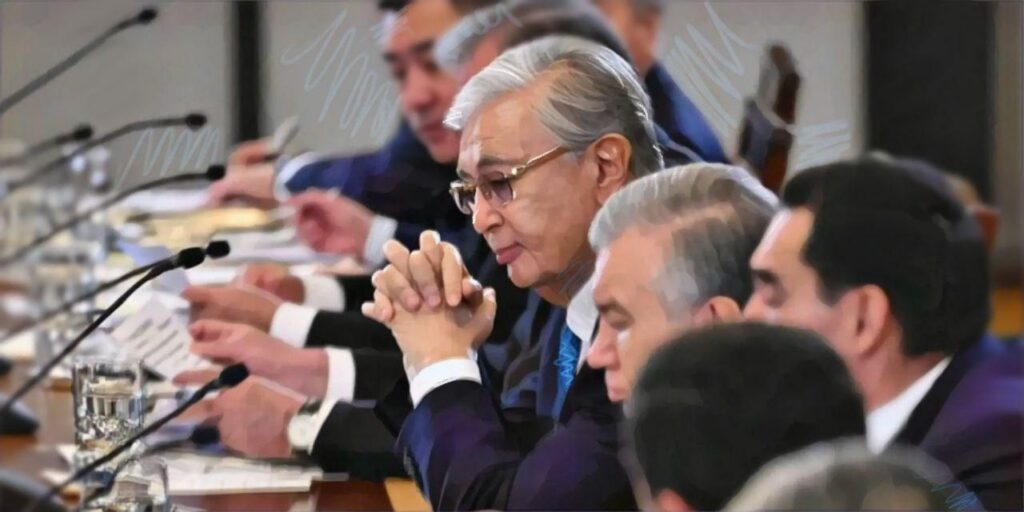
In remarks released by Aqorda, Kazakhstan’s presidential press office, President Kassym-Jomart Tokayev said Kazakhstan will continue to support the “Board of Peace” initiative, describing it as an innovative diplomatic format that could still play a role in efforts to advance peace in the Middle East.

Tokayev made the comments while answering a question from Bojan Brkic, Astana bureau chief for Euronews, during Kazakhstan’s national referendum. Brkic asked whether the initiative remained viable amid current developments in the Middle East and why Kazakhstan had decided to join it in the first place. He framed the question in the context of Tokayev’s repeated assertion that Kazakhstan is positioning itself as a “middle power” on the international stage.

In his response, Tokayev said he was drawn to the initiative because of what he called its unconventional and practical approach to resolving complex international issues.

“It is a mixture or a combination of traditional diplomacy and big business which will benefit ordinary people, particularly in the Gaza Strip,” Tokayev said. “So I think that this idea needs to be supported, and that is why we made the decision to join the Board of Peace.”

The president argued that the international community has grown weary of diplomatic processes that produce statements but few concrete results. In his view, new mechanisms are needed to address long-running crises more effectively.

“People around the world got tired of endless conferences with wishful-thinking resolutions that very few people read, as a matter of fact,” he said. “That is why we should support this idea, because it is a very new one.”

Tokayev also voiced strong personal respect for U.S. President Donald Trump, praising what he called Trump’s “strategy of common sense” and expressing confidence that the prospects for peace in the Middle East had not disappeared.

“I think that the prospect of peace in the Middle East, and particularly in Palestine, still exists,” Tokayev said. “And I believe that the future of this idea, of this initiative — at least I would like to hope so — is very bright.”

He added that Kazakhstan intends to remain committed to the initiative.

“As far as Kazakhstan is concerned, of course, we will continue to support this initiative,” Tokayev said.


U.S. Air Tanker Crash in Iraq Recalls KC-135 Loss in Kyrgyzstan in 2013

The March 12 fatal crash of a U.S. military KC-135 refueling aircraft supporting air strikes on Iran was the first accident involving that type of plane since a 2013 crash in Kyrgyzstan during U.S. military operations in Afghanistan.

The U.S. Central Command said on Friday that that all six crew members on a KC-135 that went down in western Iraq had died, and that the aircraft was lost while flying over “friendly airspace,” and was not downed by hostile or friendly fire. U.S. military officials previously said two aircraft were involved in the incident, and that the second one landed safely.

An investigation into the crash is underway as U.S. and Israeli aircraft continue intense attacks on targets in Iran, which has retaliated with missile and drone strikes on Israel and other countries. Shipping has been disrupted in the Strait of Hormuz, driving up global energy prices.

Thirteen years ago, the United States was engaging in military operations against Taliban insurgents in Afghanistan when a KC-135 tanker crashed soon after taking off from Manas air base in Kyrgyzstan, killing all three crew members on board.

The crash occurred on May 3, 2013. On March 14 of the following year, the U.S. Air Force released the results of an investigation into the fatal accident.

“A unique combination of six factors — flight control malfunctions, insufficient crew force training, incomplete crew checklist response, use of rudder while in a Dutch roll condition, crew composition, and cumbersome procedural guidance — all came together during the flight’s short 11-minute duration and resulted in this accident,” the investigation report said.

It described a Dutch roll as “a more dangerous oscillatory instability” that followed initial instability causing the plane’s nose to drift from side to side.

In 2006, a Kyrgyz airliner that was taking off from Manas accidentally struck a KC-135 tanker aircraft that had landed after a mission in Afghanistan and was awaiting instructions from the control tower. There were no injuries on the Kyrgyz plane, and one of the three KC-135 crew members suffered abrasions while evacuating from the refueling aircraft.

Between 2001 and 2014, the U.S. Air Force operated a logistics hub at Manas, near Bishkek in Kyrgyzstan.