• KGS/USD = 0.01144 0%
  • KZT/USD = 0.00196 -0%
  • TJS/USD = 0.10904 0%
  • UZS/USD = 0.00008 0%
  • TMT/USD = 0.28490 0%
  • KGS/USD = 0.01144 0%
  • KZT/USD = 0.00196 -0%
  • TJS/USD = 0.10904 0%
  • UZS/USD = 0.00008 0%
  • TMT/USD = 0.28490 0%
  • KGS/USD = 0.01144 0%
  • KZT/USD = 0.00196 -0%
  • TJS/USD = 0.10904 0%
  • UZS/USD = 0.00008 0%
  • TMT/USD = 0.28490 0%
  • KGS/USD = 0.01144 0%
  • KZT/USD = 0.00196 -0%
  • TJS/USD = 0.10904 0%
  • UZS/USD = 0.00008 0%
  • TMT/USD = 0.28490 0%
  • KGS/USD = 0.01144 0%
  • KZT/USD = 0.00196 -0%
  • TJS/USD = 0.10904 0%
  • UZS/USD = 0.00008 0%
  • TMT/USD = 0.28490 0%
  • KGS/USD = 0.01144 0%
  • KZT/USD = 0.00196 -0%
  • TJS/USD = 0.10904 0%
  • UZS/USD = 0.00008 0%
  • TMT/USD = 0.28490 0%
  • KGS/USD = 0.01144 0%
  • KZT/USD = 0.00196 -0%
  • TJS/USD = 0.10904 0%
  • UZS/USD = 0.00008 0%
  • TMT/USD = 0.28490 0%
  • KGS/USD = 0.01144 0%
  • KZT/USD = 0.00196 -0%
  • TJS/USD = 0.10904 0%
  • UZS/USD = 0.00008 0%
  • TMT/USD = 0.28490 0%
08 December 2025

Kazakhstan Faces Scandal Over Drug Procurement System

A political and financial scandal is emerging in Kazakhstan following revelations from the Supreme Audit Chamber (SAC) concerning widespread violations in the country’s public drug procurement system.

Deputy Health Minister Ardak Amangeldiev has not ruled out legal action against the SAC after its findings were presented to parliament. SAC Chairman Alikhan Smailov, a former prime minister, said that some materials have already been referred to law enforcement, prompting several members of parliament to call for systemic reform.

Audit Uncovers Extensive Irregularities

Kazakhstan’s public drug procurement system was audited in both 2023 and 2024. According to Smailov, auditors identified the following violations:

  • Financial losses totaling KZT 741 million (approximately $1.4 million);
  • Inefficient use of KZT 32 billion ($62.7 million);
  • Lost profit amounting to KZT 58 billion ($113 million).

In total, 134 cases have been referred for administrative proceedings, with five cases passed to law enforcement agencies.

Among the most alarming findings was the discovery of more than 67,000 cases involving expired medications being dispensed, rendering them unusable and resulting in budgetary losses. Auditors also identified extreme price discrepancies, up to 600%, for 15 of the most expensive drugs when comparing public sector prices with those in the retail market. Smailov suggested that medicines intended for free outpatient care were being illicitly written off and sold through commercial pharmacies.

Delays in medication deliveries were cited as a major cause of treatment disruptions. Quarterly instead of monthly shipments caused shortages, forcing patients to buy medications out-of-pocket.

One particularly troubling case involved a private supplier delivering 62 million medical gloves in 2024 for KZT 8 billion ($15.6 million). Auditors noted the batch’s specifications matched those of products imported from Thailand during the same period, suggesting they were resold as “domestically produced” goods.

The SAC also questioned the rationale behind long-term procurement contracts. State-run distributor SK Pharmacy has signed agreements with domestic manufacturers for up to 10 years. Over the past five years, total purchases under such contracts increased from KZT 69 billion to KZT 112 billion (approximately $135 million to $220 million). However, the number of unique domestically produced drugs dropped from 968 to 507, indicating a growing reliance on basic medical devices rather than genuinely localized pharmaceutical production.

Ministry of Health Pushes Back

The Ministry of Health has disputed several of the audit’s conclusions. Deputy Minister Amangeldiev told journalists that the evidence cited in many of the findings was insufficient. The ministry has filed a pre-trial claim against the SAC.

“We have verified that the evidence is insufficient for a number of facts. We have sent a pre-trial claim. If we cannot reach an understanding, there will be a court case. As a state body, we have a constitutional right to defend our honor and dignity and to provide evidence on all points,” Amangeldiev stated at a parliamentary session.

Parliamentary Voices Demand Reform

Notably, no government agency in Kazakhstan has ever challenged an SAC audit in court. Still, some members of the Mazhilis have supported the chamber’s conclusions and are calling for sweeping changes.

Deputy Askhat Aimagambetov pointed to over-complicated and expensive drug registration procedures as one reason for the shortage of affordable but essential medicines. He cited the lack of oral penicillin in the country, explaining that its low cost deters companies from registering or importing it, forcing doctors to prescribe more expensive antibiotics.

Aimagambetov also criticized SK Pharmacy for sourcing up to 60% of its drugs through local distributors rather than directly from manufacturers, inflating procurement costs. He advocated for logistics reforms, direct purchasing, and restricting long-term contracts to companies that truly localize production in Kazakhstan.

As previously reported by The Times of Central Asia, Aimagambetov has also proposed amendments to the Tax Code that would exempt certain essential medicines from VAT and reduce the overall tax burden on healthcare institutions.

Ruins of a Burned Medieval City Unearthed in Southern Kazakhstan

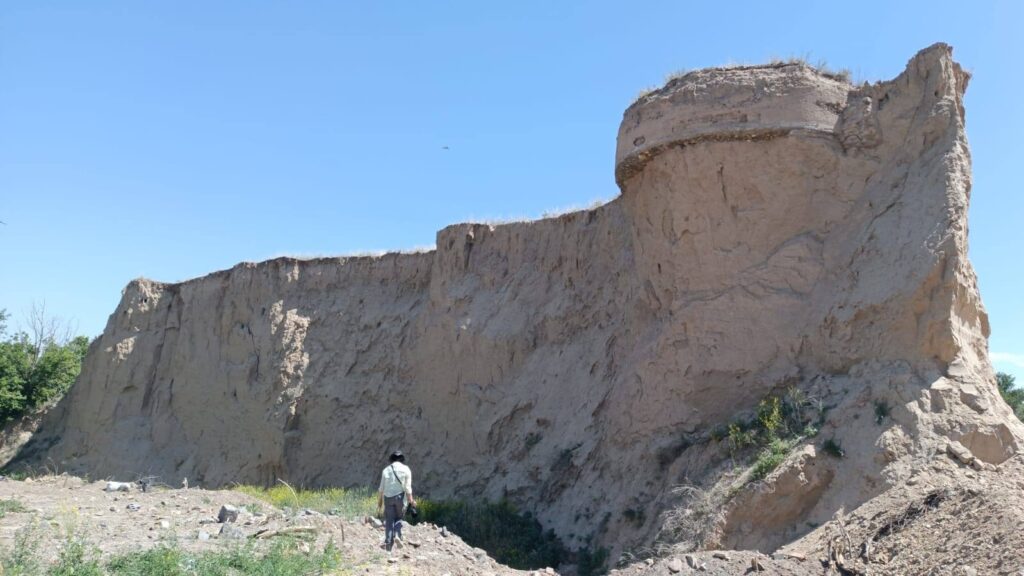
Archaeologists in Kazakhstan may have uncovered the ruins of a long-lost medieval city previously known only from historical texts. The discovery was announced by Olga Gumirova, executive director of the Petroglyph Hunters Foundation.

Tower, Masonry, and a Burned Past

The remains were found in the Zhetysu region, and experts believe the site could be as archaeologically significant as Talkhiz or Koylyk, both of which are included on the UNESCO World Heritage List.

“It looks like we’ve found the medieval city that everyone has been looking for! First, we saw the remains of brickwork in a quarry, a miraculously preserved tower, and then a wall… Medieval bricks protruded from the ground. The city was severely burned during the Mongol invasion,” Gumirova wrote on Facebook. Archaeologists have been informed, though analysis and discussion are just beginning.

Talkhiz, now part of the Almaty region, was established in the 8th century as a hub of trade and industry. Koylyk, also known as Antonovskoe, thrived from the 8th to 14th centuries. Both are recognized as cultural heritage sites of global significance.

Twenty-Five New Sites in the Saryarka Steppes

Meanwhile, archaeologists from the Saryarka Archaeological Institute made significant discoveries in the Shet district of Karaganda region. In May 2025, researchers uncovered 25 new historical and cultural sites, including burial mounds, necropolises, and complex structures from the Bronze, Iron, and Medieval Ages.

“Work is just beginning, but we can already confidently speak about the importance of the finds,” said Alexei Kukushkin, director of the institute. Dating and full excavation await official approval.

Eastern Kazakhstan’s “Golden Man”

A remarkable earlier discovery occurred in 2018 in the Tarbagatai district of East Kazakhstan. An expedition led by archaeologist Zeynolla Samashev uncovered a burial site containing nearly 3,000 gold artifacts dating back to the 7th-8th centuries BCE. Items included women’s earrings, gemstone necklaces, and ornate horse gear, highlighting the artistic and cultural richness of the era.

Buddhist Temple Found in Zhambyl Region

In another discovery underscoring Kazakhstan’s diverse historical legacy, archaeologists unearthed the remains of a Buddhist temple in the Ayranada Gorge, Merken district, Zhambyl region. Fragments of a structure and a partially buried stone sculpture of a Buddha were found, reinforcing the area’s importance along the Great Silk Road.

“The Buddhist temple and the head of Buddha could become interesting tourist attractions,” said Anna Krokosheva, senior researcher at the Museum of Ancient Taraz. However, the site remains difficult to access, located at over 3,000 meters above sea level with no existing infrastructure. Krokosheva noted that this inaccessibility has helped preserve the artifacts.

From steppe burial mounds to ancient ruins, Buddhist temples to gold-laden tombs, Kazakhstan continues to reveal a rich, multilayered historical narrative. The recently discovered city in Zhetysu may become a vital link in this story, an archaeological treasure of national and potentially global significance. What remains hidden beneath the soil may yet reshape our understanding of medieval Kazakhstan.

Turkmen Authorities Order Social Media Campaign to Showcase “Positive Image”

Authorities in Turkmenistan have launched a new initiative aimed at promoting a positive image of the country on social media platforms abroad. The campaign, ordered by the presidential administration in late May, is designed to counter what officials call “foreign centers of ideological subversion”, a term reminiscent of Soviet-era rhetoric used to describe independent media and opposition groups.

Scripted Positivity: Who Films What

Under the directive, regional administrations have been tasked with producing video content that highlights the country’s “achievements.” Cultural and arts workers are now expected to travel to rural areas to film staged interviews with farmers, gardeners, cotton growers, and artisans. These interviews must portray high living standards, rising incomes, modern amenities, and open support for the country’s leadership.

Visual presentation is tightly controlled: if a villager’s home is deemed sufficiently presentable, new construction, clean yard, the interview may be conducted there. Otherwise, filming must take place in fields or gardens to ensure an appealing backdrop.

Begenchmyrat Orazov, khyakim (local governor) of the Mary region, emphasized that all content must be shot on ordinary mobile phones and without the involvement of professional teams or extra payment. “You get paid,” he reportedly reminded cultural workers during a May 28 meeting with local officials, law enforcement, and agricultural representatives.

Millionaires on Paper

Participants are instructed to describe their “decent earnings” using the outdated currency system, speaking in millions of old manats, despite the redenomination in 2009 (1 new manat = 5,000 old manats). This approach is intended to suggest inflated incomes to an international audience less familiar with the country’s currency history.

Cultural workers are encouraged to enhance the content by incorporating traditional songs, musical performances, or recitations of poetry by former president Gurbanguly Berdimuhamedov or the revered Turkmen poet Makhtumkuli.

A Question of Translation

Similar meetings have been held across all regions, and filming is reportedly underway. Villagers are required to submit documentation of completed work to the leadership of their agricultural associations, which must then report daily to district heads (etraps).

However, a critical gap remains unresolved: how the video content will reach international viewers. The issue of translation into foreign languages has yet to be addressed. Posting videos exclusively in Turkmen is unlikely to appeal to a global audience. Additionally, many Turkmen migrants, one of the campaign’s implicit targets, are well aware of the country’s internal challenges.

Old Tools for a New Image

This initiative appears to be a response to increasing criticism from independent Turkmen media and social media platforms, which frequently report on the country’s socio-economic problems and human rights violations. These platforms, widely followed in the diaspora, have become a growing concern for the authorities in Ashgabat.

Rather than engaging with the criticism through reform or transparency, the government is opting for a top-down media campaign reminiscent of earlier propaganda models. The focus seems less on improving conditions and more on reshaping perceptions. Whether this strategy will resonate beyond the bureaucratic machinery of the state remains to be seen.

How the Shallowing of the Caspian Sea Will Affect Kazakhstan’s Ecology and Economy

Environmentalists are raising the alarm as the level of the Caspian Sea approaches a historic low. A recent review by Energyprom.kz highlights the growing environmental and economic risks facing Kazakhstan.

Sea Level Dynamics and Causes of Decline

At the 28th session of the Caspian Hydrometeorological Coordination Committee, it was reported that in November 2024, the average sea level stood at -29.03 meters relative to the Baltic elevation system. This marks the lowest level since 1977 when the sea dropped to -29.18 meters.

Historical records indicate that between 1930 and 1977, the Caspian Sea experienced a significant decline due to the large-scale hydro-technical regulation of the Volga and Ural rivers. A temporary recovery followed between 1978 and 1995, with levels rising to -26.4 meters. However, since 2006, the sea has been steadily receding once more.

According to Kazakhstan’s Ministry of Water Resources and Irrigation, the surface area of the Caspian has shrunk from 390,000 to 360,000 square kilometers in the past 18 years, with the northeastern shoreline most severely affected.

“Since 2001, it has receded by over 50 kilometers, transforming thousands of square kilometers of water into land,” Deputy Edil Zhanbyrshin said during an inspection of the Ural River’s delta in the Atyrau Region. The depth at its mouth is now just 30-40 centimeters and is no longer navigable by ship.

Climate Change and Meteorological Shifts

One of the primary drivers of the sea’s decline is a drop in precipitation in the Volga basin. Atlantic cyclones that once brought regular rainfall have shifted their paths due to climate change. Simultaneously, rising temperatures are accelerating surface evaporation.

Though the Caspian Sea borders five nations – Kazakhstan, Russia, Iran, Azerbaijan, and Turkmenistan – Kazakhstan bears the greatest risk. The sea’s northern section, vital for maritime transport and oil production, is the most vulnerable.

Pollution, Wildlife Decline, and Regulatory Failures

In addition to hydrological challenges, pollution remains a persistent threat. Members of the Mazhilis have cited ongoing toxic discharges by oil companies as a major factor in ecological degradation. The Caspian seal population has also plunged from one million to 100,000 over four decades, and sturgeon numbers have fallen by 90%.

A parliamentary inquiry highlights the detrimental impact of oil spills, industrial fishing, drilling platforms, and tanker traffic, which obstruct sturgeon spawning routes.

Compounding the problem, environmental fines levied on oil firms have reportedly been written off, either against future investments or royalties.

Vadim Ni, director of the Social and Environmental Fund, told the Mazhilis he has been denied access to the environmental clauses in contracts with major field operators at Kashagan, Tengiz, and Karachaganak. The Ministry of Ecology has declined to release the data, citing confidentiality, and court appeals for transparency have so far failed.

A Looming Migration Crisis?

Without a reversal like the sea-level rise of 1978, Kazakhstan could face severe consequences. These include the cessation of shipping, collapse of marine ecosystems, and potential mass displacements.

“By 2040, the issue of resettling up to five million Kazakhs living near the sea may become unavoidable,” warned Mazhilis Deputy Sergei Ponomarev.

Kazakhstan’s Ministry of Water Resources has presented two projections. Under a moderate climate scenario with a 0.9-2°C temperature rise by 2050, sea levels could drop to -31.8 meters. A more severe warming of 1.4-2.6°C could see levels fall to -33.7 meters, posing critical risks to the country’s environment and economy.

To address these threats, Kazakhstan established the Scientific Research Institute of the Caspian Sea six months ago. However, the institute remains non-operational due to a lack of funding. Repairs, equipment, and staffing require 1.8 billion tenge ($3.5 million), but the Ministry of Finance has rejected the allocation. A new request has been submitted to the government’s reserve fund.

Kazakhstan: The Key Link Connecting China and Europe

China is one of Kazakhstan’s key partners, particularly in the development of its transit potential, with Kazakhstan serving as a strategic gateway for goods moving from China to the Eurasian Economic Union, Central Asia, and the European Union. Today, more than 80% of freight transported by rail between China and Europe transits through Kazakhstan.

Railway Connections

This year marks the 35th anniversary of the connection between the railways of Kazakhstan and China when the Dostyk-Alashankou crossing became the first international transportation route established in the era of Kazakh independence. For many years, it remained the sole railway connection, until in 2012, a second international border crossing, Altynkol-Khorgos, was opened.

Today, freight traffic through these two crossings continues to show consistent and significant growth. Last year, rail freight between the two countries exceeded 32 million tons, which is a historic high. In the first four months of 2025 alone, rail freight volume reached 11.4 million tons, a 13.3% increase compared to the same period in the previous year. According to Kazakhstan’s national railway company, Kazakhstan Temir Zholy (KTZ), the projected volume between the two countries for 2025 has been preliminarily agreed on at more than 33 million tons.

To further increase capacity, Kazakhstan is building a second track on the Dostyk-Moyynty railway segment and constructing a bypass line around Almaty station. Both projects are scheduled for completion this year, which will boost throughput and significantly reduce delivery times for goods moving between Asia and Europe. Additionally, Kazakhstan is currently building the Bakhty-Ayagoz line, which will include the opening of a third border crossing, Bakhty-Chuguchak, which is expected to expand rail capacity with China by an additional 25 million tons.

Maritime Development

Kazakhstan’s maritime infrastructure on the Caspian Sea is a major focus of development and foreign investment. A key initiative currently underway is the creation of a container hub at the port of Aktau, being developed as a joint venture with the Chinese port of Lianyungang.

Construction and installation work is actively in progress. According to the project plan, by the end of this year, the hub will feature a specialized cargo loading complex, a container terminal, and new cargo handling equipment. Once completed, the project is expected to increase container processing capacity from 140,000 TEU to 240,000 TEU, significantly enhancing Kazakhstan’s maritime logistics capabilities.

Road Transport

In addition to rail and sea, road transport is also a key pillar of Kazakhstan-China transportation cooperation. According to Kazakhstan’s Ministry of Transport, 2.8 million tons of cargo were moved by road for export/import purposes in 2024, a 41% increase from the previous year, whilst transit cargo volumes reached 3.6 million tons, marking a 68% year-on-year rise. In the first quarter of 2025 alone, road cargo volumes jumped by 83%, reaching 822,000 tons.

A major driver of this growth is the continued development and operation of the Western Europe–Western China highway corridor. Kazakhstan is also considering the opening of two new border checkpoints to strengthen connectivity between the regions of East Kazakhstan and Almaty with neighboring Chinese provinces: Terekty (East Kazakhstan) – Aketubieke (China), and Narynkol (Almaty region) – Muzha’erte (China). These proposed checkpoints are expected to significantly increase both freight and passenger traffic and enhance cross-border tourism. This proposal is currently under consideration by the Chinese authorities.

Air Transport

Thanks to a series of bilateral negotiations between Kazakhstan and China, the legal framework for operating regular flights between the two countries has been significantly expanded. Kazakhstan and China currently operate flights under the Open Skies regime, which allows for a broader range of routes.

At present, there are 56 passenger flights a week operating between the two countries across 10 routes. By the end of the year, that number is expected to jump to 124 weekly flights. Additionally, airlines have been granted permission to operate up to 42 flights a week under the “fifth freedom of the air” provision of the open skies agreement, which allows planes to carry passengers or cargo between two foreign countries on a flight originating or ending in its home country.

According to Kazakhstan’s Ministry of Transport, there are currently two air corridors between Kazakhstan and China used for international flights from Europe to China, South Korea, and other Southeast Asian nations. These corridors handle up to 215 flights a day, placing a significant burden on air traffic management systems. In this regard, Kazakhstan is actively exploring the possibility of opening a third international air corridor. This move, according to industry officials, would help distribute air traffic more evenly, improve the quality of navigation services, reduce flight times, and lower carbon dioxide emissions. It would also enhance the overall attractiveness and strategic value of airspace over both Kazakhstan and China.

Trans-Caspian International Transport Route

The Trans-Caspian International Transport Route holds huge strategic importance for the region. In 2024, cargo volume along this corridor reached 4.5 million tons, an increase of 62% compared to the previous year. From January to March 2025, the route handled 1.1 million tons of cargo, marking a 6.3% increase over the same period in 2024. By 2030, Kazakhstan aims to increase the annual volume to 10 million tons as China becomes more actively involved in the development of this corridor.

To further enhance regional connectivity and diversify its export channels, Kazakhstan is also pursuing the development of a transport corridor along the Kazakhstan-China-Mongolia route, which would open new export opportunities to the Mongolian market. The Ministry of Transport of Kazakhstan has already proposed a joint exploration of this route to the Chinese side, including improvements to infrastructure, simplification of administrative procedures, and the creation of favorable tariff conditions.

Strategic Logistics Hubs

Global demand for Chinese goods, from clothing to high-tech equipment and automobiles, is on the rise. This surge creates tremendous potential for developing logistics infrastructure aimed at efficiently distributing goods to markets in Central Asia, Russia, the Caucasus, and onward to Europe. Kazakhstan is therefore actively engaging Chinese partners in establishing joint logistics hubs and bonded warehouses both within the country and abroad.

The first such Kazakhstan-China joint project was launched in 2014 with the construction of a terminal at the Port of Lianyungang. In 2017, the largest dry port in Central Asia, Khorgos-Eastern Gate, was launched. In partnership with Xian Free Trade Port, Kazakhstan’s national railway company, KTZ, built a terminal in Xi’an in February 2024. The company also plans to construct similar joint terminals in the Port of Alat in Azerbaijan, at Selyatino station in the Moscow region, Svietloch in the Grodno region of Belarus, and Budapest. In Kazakhstan, meanwhile, work has already begun on a joint logistics center in Almaty.

Unlocking River Logistics Potential

River transportation between Kazakhstan and China also holds significant promise for expanding regional logistics. One such initiative involves developing a shipping route along the transboundary Ili River, stretching from the city of Konaev in Kazakhstan to Yining in China. According to Kazakhstan’s Ministry of Transport, current navigation in the Ili River basin is limited to the 90-kilometer Kapshagay Reservoir. There is no existing river traffic on the Ili from the Chinese border to the reservoir.

Opening a route near Konaev would involve establishing a logistics hub capable of aggregating and distributing cargo flows throughout the region, including to other Central Asian nations. To support this, 100 hectares of land have been allocated for the construction of a river port and transport hub. The project is envisioned as a joint effort between Kazakh and Chinese businesses. On the Kazakh side, the project investor is Ili River Port LLP. The first Chinese partner has also been identified as the Horgos Xinjiu International Trade Co., Ltd.

Another promising project is the creation of a multimodal transit corridor connecting Russia, Kazakhstan, and China via the transboundary Irtysh River. The proposed route, championed by Kazakhstan’s transport authorities, would use river transport from Omsk, Russia, to the village of Tügel in the East Kazakhstan Region. From there, the cargo would continue either via the planned Tugyl-Maikapshagai railway or by road.

Implementing this corridor would provide a direct link to the Northern Sea Route through the Ob-Irtysh basin and serve as a vital connector to the revival of the ancient Silk Road. By integrating these routes into the global transport system, Kazakhstan is seeking to boost its strategic importance in Eurasian logistics. This topic is scheduled to be discussed at the upcoming Shanghai Cooperation Organization (SCO) Transport Ministers’ Meeting in China this July.

President Tokayev Dismisses Ministers of Defense and Transport

Kazakhstan’s political landscape has undergone a significant shift as President Kassym-Jomart Tokayev announced the dismissal of two key cabinet members, Ruslan Zhaksylykov, Minister of Defense, and Marat Karabayev, Minister of Transport. The decision marks a reshuffling within the country’s leadership as the administration seeks to address critical challenges in defense and infrastructure.

Defense Minister Zhaksylykov Removed, Kosanov Appointed

Ruslan Zhaksylykov’s removal as Minister of Defense comes during a time of heightened scrutiny over Kazakhstan’s military readiness and regional security. While the government has not disclosed specific reasons for the dismissal, defense analysts suggest it is tied to concerns about military efficiency, resource management, and preparedness in a challenging geopolitical environment.

Criticism has mounted regarding the state of the country’s defense capabilities, with insiders pointing to inefficiencies in handling resources and gaps in modernization efforts. Zhaksylykov’s departure aligns with President Tokayev’s broader drive to reform and modernize the armed forces, aiming for greater accountability and effectiveness.

During Zhaksylykov’s time in office, the ministry faced frequent criticism over tragic incidents within the army, including fatal injuries and servicemen suicides, which sparked widespread public outrage.

The administration has moved swiftly in appointing Dauren Kosanov as Zhaksylykov’s successor, with the President instructing him to enhance the army’s combat readiness, expand special operations forces, and modernize military infrastructure. A seasoned military leader, Kosanov has previously held key positions including commander of the Air Force and director of the Military Institute of Air Defense Forces.

Transport Minister Marat Karabayev Dismissed After Short Tenure

Simultaneously, Marat Karabayev has been relieved of his duties as Minister of Transport, a position he had held since September 2023 when the ministry was established. His term was marked by escalating challenges in the transport and logistics sector, culminating in mounting criticism from the President himself.

Earlier this year, President Tokayev issued Karabayev an official reprimand for his unsatisfactory performance. The dismissal comes following a Security Council meeting chaired by the President during which Karabayev and other officials faced criticism for the state of the transport sector.

Tokayev highlighted systemic issues, including delays in transit projects, bottlenecks at border crossings, and inadequate infrastructure at checkpoints. The President also condemned the lack of progress in fulfilling key plans designed to boost the country’s capabilities as a transit hub.

Karabayev’s dismissal underscores the urgent need for reforms in the transport sector. President Tokayev stressed the importance of modernizing infrastructure to position Kazakhstan as a competitive player in international trade. He pointed to strategic initiatives such as establishing “green corridors” for streamlined border trade, improving transit volumes, and ensuring reliable aviation fuel supplies.

Implications and Broader Context

The twin dismissals demonstrate President Tokayev’s resolve to address inefficiencies and push forward with ambitious reforms. Both defense and transport are critical sectors for Kazakhstan’s future, given the country’s strategic geographical position. The defense ministry is facing growing pressure to modernize in response to regional security tensions, while the transport sector is vital for integrating Kazakhstan into global supply chains.