• KGS/USD = 0.01144 0%
  • KZT/USD = 0.00192 -0%
  • TJS/USD = 0.10895 -0%
  • UZS/USD = 0.00008 0%
  • TMT/USD = 0.28490 0%
  • KGS/USD = 0.01144 0%
  • KZT/USD = 0.00192 -0%
  • TJS/USD = 0.10895 -0%
  • UZS/USD = 0.00008 0%
  • TMT/USD = 0.28490 0%
  • KGS/USD = 0.01144 0%
  • KZT/USD = 0.00192 -0%
  • TJS/USD = 0.10895 -0%
  • UZS/USD = 0.00008 0%
  • TMT/USD = 0.28490 0%
  • KGS/USD = 0.01144 0%
  • KZT/USD = 0.00192 -0%
  • TJS/USD = 0.10895 -0%
  • UZS/USD = 0.00008 0%
  • TMT/USD = 0.28490 0%
  • KGS/USD = 0.01144 0%
  • KZT/USD = 0.00192 -0%
  • TJS/USD = 0.10895 -0%
  • UZS/USD = 0.00008 0%
  • TMT/USD = 0.28490 0%
  • KGS/USD = 0.01144 0%
  • KZT/USD = 0.00192 -0%
  • TJS/USD = 0.10895 -0%
  • UZS/USD = 0.00008 0%
  • TMT/USD = 0.28490 0%
  • KGS/USD = 0.01144 0%
  • KZT/USD = 0.00192 -0%
  • TJS/USD = 0.10895 -0%
  • UZS/USD = 0.00008 0%
  • TMT/USD = 0.28490 0%
  • KGS/USD = 0.01144 0%
  • KZT/USD = 0.00192 -0%
  • TJS/USD = 0.10895 -0%
  • UZS/USD = 0.00008 0%
  • TMT/USD = 0.28490 0%
15 December 2025

Turkish Authorities Move to Deport Turkmen Dissident Umida Bekchanova

On May 30, Turkmen citizen and outspoken critic of the Ashgabat regime, Umida Bekchanova was detained in Istanbul and now faces deportation to Turkmenistan.

Detained Without Warning

According to Turkmen.news, Bekchanova was seized by unidentified individuals in plain clothes and transferred to a deportation center in Turkey. The incident was later reported by opposition blogger Kalmurad Soyunov, who lives in Sweden, via his YouTube channel. Citing Bekchanova’s legal team, Soyunov claimed that the arrest was conducted with the involvement of Turkmen special services in cooperation with local Turkish authorities.

Bekchanova resides in Turkey legally and has long been a vocal opponent of the Turkmen government. Her activism has led to reprisals against her family in Turkmenistan, including a criminal case against her younger son, whom she alleges was tortured with electric shocks during interrogation. He remains in custody.

The activist has also received threats and significantly curtailed her public activity following the forced return of fellow dissidents Farhad Meymankuliev and Merdan Mukhamedov, as well as the detention of Alisher Sakhattov and Abdulla Orusov.

Allegations of Entrapment

Soyunov claims the operation to detain Bekchanova was premeditated and involved strategic deception. After Turkmen intelligence failed to locate her for months in Istanbul, a city of over 15 million people, they allegedly turned to subterfuge. In January, Bekchanova was informed by her bank that her card had been deactivated due to an expired visa, despite her visa being valid. Her sister-in-law, who had recently arrived in Turkey for work, was unknowingly used to reveal Bekchanova’s location.

According to the report, men posing as police officers approached the residence and lured Bekchanova out. She was then detained, transported in a minibus, and held for four hours before being taken to a deportation facility.

Attempted Emergency Deportation

The timing of her detention on a Thursday was reportedly deliberate. “The calculation was that on Friday, lawyers and government offices would be closed, and with the weekend ahead, it would be the ideal moment to deport Umida before any intervention could occur,” Soyunov said. Similar tactics have been used in past deportations of Turkmen dissidents.

By June 1, Bekchanova had reportedly been taken to the airport for extradition, without her identification documents. Her legal team is actively working to halt the deportation.

Voice of Dissent

Bekchanova began publicly criticizing the Turkmen authorities in 2020. Her activism was galvanized by a series of national crises, including the deaths of dozens of Turkmen migrants in Turkey purportedly from alcohol poisoning, the government’s concealment of the COVID-19 outbreak, and a devastating hurricane that went unreported in state media.

Her current legal status and future in Turkey remain uncertain. Should the deportation proceed, Bekchanova may face severe risks in Turkmenistan, where her family has already suffered intimidation and abuse.

Kyrgyzstan Moves to Join Chinese Banking Payment System

Kyrgyz Finance Minister Almaz Baketaev and National Bank Chairman Melis Turghanbaev met with Chinese Finance Minister Lan Fuan in Beijing to discuss expanding financial and economic cooperation between the two countries.

A key outcome of the meeting was an agreement to establish a financial infrastructure for cross-border settlements and to deepen interbank cooperation. Among the proposals discussed was the connection of Kyrgyz state banks to China’s Cross-Border Interbank Payment System (CIPS), an alternative to the international SWIFT system, along with the opening of correspondent accounts in Chinese financial institutions.

“This step will create a secure and stable channel for bilateral settlements in yuan, reduce transaction costs, and decrease dependence on settlements through third currencies,” noted the Kyrgyz Ministry of Finance.

Toward Deeper Financial Integration

Kyrgyz officials also expressed interest in acquiring or establishing a licensed payment organization in China. Such a move could streamline financial transactions with Chinese companies and individuals and connect Kyrgyzstan more directly to China’s national payment systems. This would significantly enhance opportunities for Kyrgyz businesses operating in or with the Chinese market.

Baketaev reaffirmed Kyrgyzstan’s commitment to maintaining a systematic dialogue with the People’s Bank of China and the National Financial Regulatory Administration.

The Kyrgyz delegation also participated in a meeting of finance ministers and central bank governors from member states of the Shanghai Cooperation Organization (SCO), reinforcing the regional dimension of Kyrgyzstan’s financial diplomacy.

Kazakhstan and China Launch Chip Manufacturing Project in Semey

Construction has commenced on a high-tech chip and electronics manufacturing plant in the Ondiris industrial zone of Semey, the administrative center of Kazakhstan’s Abai region. The project is being developed by the joint Kazakh-Chinese venture, Suto Kazakhstan.

The initiative was formally presented at the Big Altai international subregional conference held in Altai, located in China’s Xinjiang Uygur Autonomous Region. During the forum, 15 memoranda of cooperation were signed between the Abai region and Chinese investors, amounting to a total of $1.5 billion.

$50 Million Investment in High-Tech Infrastructure

The Semey plant, with an investment of $50 million, will be developed in three stages from 2025 to 2028. Once completed, the facility will manufacture microchips, microcircuits, optoelectronic modules, intelligent host controllers, and electronic displays. The products will be supplied to both domestic and international markets.

“A modern microchip manufacturing plant labeled ‘Made in Kazakhstan’ will appear in Semey. We have been allocated a 20-hectare site. In the first stage, we will build the main building and production facilities. If we manage to complete construction within 90 days, we will immediately launch the first line,” said Suto Kazakhstan founder Ernur Bolatuly. “Our main goal is to establish the production of chips that have never before been manufactured in Kazakhstan only assembled.”

Broader Context of Technological Expansion

The project is part of a broader effort by Kazakhstan to position itself as a technological hub in Central Asia. As previously reported by The Times of Central Asia, in May 2025, the country received the region’s most powerful supercomputer, further demonstrating its ambitions in high-performance computing and digital infrastructure.

Long Airport Screenings for Uzbek Fans Ahead of World Cup Qualifier in UAE

Football fans from Uzbekistan have experienced lengthy airport screenings on arriving in the United Arab Emirates to attend a World Cup qualifying match that could, in the event of a win for their team, send the Central Asian country into its first FIFA World Cup.

More than 100 Uzbek fans who traveled to the UAE ahead of the June 5 game between Uzbekistan and the United Arab Emirates were “detained” at Sharjah airport for seven to nine hours on Monday, the Gazeta.uz media outlet reported. A journalist from the outlet who was among the passengers on the flight said women and elderly people were let through first, but many men were held for long periods.

The delays, which prompted the two governments to hold negotiations aimed at improving the situation, come just over a month after warnings that the visa-free arrangement between Uzbekistan and the United Arab Emirates could be in jeopardy because of an increase in violations by Uzbek citizens in the emirates.

In March, a court in Abu Dhabi sentenced three Uzbek citizens to death after they were convicted of murdering Zvi Kogan, an Israeli-Moldovan rabbi whose body was discovered in the Emirati city of Al Ain in 2024. In April, more than a dozen Uzbek nationals were detained after a street brawl in Dubai in which some people were stabbed and one was reportedly killed.

Following the recent airport delays for football fans, a spokesman for Uzbekistan’s Ministry of Foreign Affairs said its diplomats in Abu Dhabi and Dubai held urgent negotiations with UAE officials.

“According to the UAE, screening times at airports are increasing due to increased security measures in the country in connection with various international events,” ministry spokesman Akhror Burkhanov said on Telegram. “Currently, all resources have been mobilized to quickly screen our citizens, and as a result, they have begun to enter the country.”

Uzbekistan’s national team is second with 17 points in Group A after Iran, which has already qualified. FIFA says “a point in Abu Dhabi would send Uzbekistan into a maiden FIFA World Cup,” but the Central Asian team can still qualify if it then beats Qatar at home.

The World Cup will be held in the United States, Canada, and Mexico in 2026.

U.S. Veterans Exposed to Toxic Chemicals at K2 Uzbek Base Still Waiting for Recognition

After the 9/11 attacks, thousands of U.S. troops were deployed to Karshi-Khanabad Air Base (K2) in Uzbekistan in support of operations in Afghanistan. But what many service members didn’t know at the time was that they were entering a highly contaminated environment.

K2, a former Soviet military facility, was riddled with toxic substances. Matthew “Nick” Nicholls, a U.S. Army environmental technician who was part of the initial assessment team, described the site to Fox News Digital as “probably the most toxic soup of chemicals that any service member has ever been exposed to.”

Nicholls reported that yellowcake uranium leaked from the ground, while jet fuel and other hazardous chemicals permeated the air and soil. Toxic fumes and dust surrounded the base. His team recommended safety measures such as gravel coverage and restricted exposure times in certain zones. While some precautions were implemented, others were ignored.

Today, many of the veterans who served at K2 are battling serious health conditions, including rare forms of cancer and debilitating joint issues. Some have died young. “These are not the cancers that young people normally get,” Nicholls said. “People I served with are dying.”

Between 2001 and 2005, more than 15,000 U.S. troops and thousands of contractors passed through K2. Many now face difficulties receiving adequate medical care or recognition from the Department of Veterans Affairs (VA). Although the VA has acknowledged exposure risks, it maintains that available studies do not definitively link K2 service to the illnesses reported.

However, U.S. lawmakers are pressing for action. Rep. Mark Green (R-Tenn.) has criticized the Pentagon for neglecting early warnings and underestimating the risks. Alongside Rep. Stephen Lynch (D-Mass.), Green introduced a provision in the 2021 National Defense Authorization Act mandating a study into toxic exposure at K2. Nearly four years later, the study remains incomplete.

“This is unjust,” Green told Fox News Digital. “The Pentagon ignored the health and safety of our service members.”

Green has renewed calls for the Department of Defense to complete its report, stating that veterans continue to wait for answers. While the Pentagon has pledged a private response, veterans and advocates demand public accountability.

In 2024, the VA relaxed eligibility requirements for K2-related disability benefits. But Green argues that this is insufficient. He has proposed additional legislation to ensure that medical conditions linked to toxic exposure at K2 are formally recognized by the VA.

“These veterans served their country with honor,” Green said. “Now it’s time for the country to stand by them.”

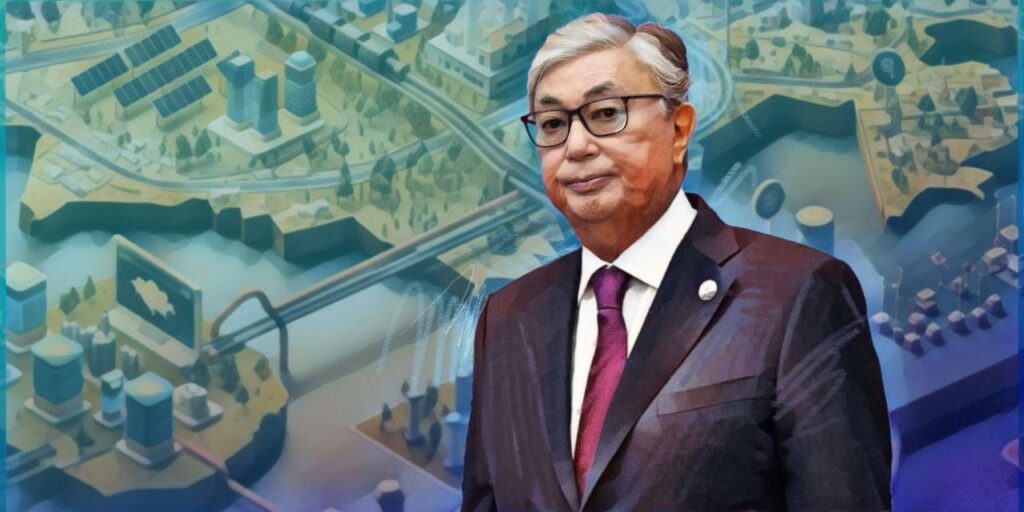
President Tokayev: Kazakhstan Charts Its Own Course

In a rare, candid interview with Al Jazeera, President Kassym-Jomart Tokayev of Kazakhstan projected a steady, pragmatic vision for his country’s future, portraying it as a stabilizing force amid turbulent global currents. Tokayev explained how his government is navigating complex pressures at home and abroad, from economic modernization and digital transformation to balancing ties with Russia, China, Europe, and the United States. The message was one of controlled ambition: Kazakhstan will not be rushed, but rather steer a measured course of reform and integration, balancing domestic stability with global engagement.

Tokayev opened the interview by acknowledging the obstacles facing Kazakhstan’s domestic reforms, notably the global pandemic and the war in Ukraine. These external shocks, he explained, have tested the country’s resilience and delayed the delivery of the “New Kazakhstan” that he promised three years ago. Yet he remained firm in his commitment to a gradual but determined path forward. “We must be frank, we must be pragmatic, but at the same time we need to be very much bold,” he said.

Domestically, Tokayev defended his record on political reform, including the legalization of opposition parties and the introduction of a one-term presidency of seven years. “I have already announced that I will step down” in 2029, he said, adding that this was “a demand of my people.” This latter move is unprecedented in the region.

Tokayev characterized Kazakhstan’s laws as “quite democratic,” dismissing criticisms from organizations like the Organisation for Security and Co-operation in Europe and Human Rights Watch as biased and detached from the country’s political and historical context. “I don’t believe that we should follow recommendations of human rights organizations nowadays,” he said, also mentioning foreign funders behind certain NGOs, which he left unnamed.

Acknowledging the need for further reforms, particularly in media freedom and civil liberties, Tokayev made clear that stability remains the overriding priority. “Without stability, there will be no reforms, no modernization, no transformation of our society,” he said. Tokayev emphasized Kazakhstan’s commitment to a “law and order” strategy to promote greater stability, where the laws fully comply with international standards.

Tokayev’s remarks on measured progress typify his leadership style, which admits the complexity of transformation while setting pragmatic goals. His program of a “fair and just Kazakhstan” reflects his awareness of domestic discontent with wealth disparities that simmer beneath the surface of economic expansion.

The country’s economy remains dominated by hydrocarbon fuels, which account for over half of exports. Tokayev’s vision of transforming Kazakhstan into a “non-hydrocarbon country” by 2060 strikes a pragmatic note. “Coal in our domestic energy balance accounts for 73%. We cannot give up coal just overnight,” he said, signaling both realism and the limits of immediate energy transition. The diversification of transport routes — including the Trans-Caspian International Transport Route (the Middle Corridor) and the Baku-Tbilisi-Ceyhan pipeline — aligns with his goal of mitigating overdependence on Russia and ensuring economic security amid global uncertainty.

Tokayev’s foreign policy strikes a careful balance between continuity and adaptation. While acknowledging Kazakhstan’s reliance on the Caspian Pipeline Consortium (CPC) through southern Russia for 80% of its oil exports, he framed this dependence as both strategic and pragmatic. Kazakhstan, he stressed, counts Russia as an immediate neighbor and a strategic partner. However, he did not rule out diversifying transport options, mentioning trans-Caspian routes through Azerbaijan and the Middle Corridor as potential alternatives to the CPC. “We count on Russia as our strategic partner,” he explained, “but it doesn’t mean that we are focusing only on one transportation route.”

Tokayev’s broader international vision reflects his reading of global dynamics. In this context, he voiced concern over the weakening of multilateralism. Kazakhstan, by contrast, was a “pillar of stability and security in Eurasia.” He described the UN Security Council as “in deadlock,” warned that the erosion of cooperative mechanisms is a “big threat to the world,” and called for middle powers to step up as guardians of peace and reformers of the multilateral system. His pragmatic skepticism about BRICS — which lacks “fixed structures … no charter, no secretariat, no programs” — suggests a balanced engagement with emerging multilateral groups vis-à-vis established relationships with Europe, China, and the United States.

Trade remains a cornerstone of Kazakhstan’s foreign relationships. The European Union heads the list of Kazakhstan’s trading partners with $50 billion in trade, followed by China at $45 billion, and Russia at $27 billion. Despite Kazakhstan’s modest $4 billion trade volume with the United States, Tokayev emphasized its strategic nature, pointing to key exports such as uranium, oil, and chrome. Recent U.S. tariffs on Kazakh exports, he said, are being addressed pragmatically. A desire to diversify economic ties is evident in his continuing focus on attracting U.S. investment.

Tokayev’s nuanced approach to anti-corruption efforts was likewise pragmatic. While acknowledging past embezzlements and mentioning ongoing investigations, he resisted calls for sweeping crackdowns that might risk destabilizing the political landscape, asserting that change must be balanced against the imperative of social cohesion. “I’m not going to make a mess here in Kazakhstan because it would lead to the destabilization of the situation in my country,” he stated, pointing to Kazakhstan’s careful handling of Nazarbayev-era institutions.

When asked about the pace of economic reform and its social impact, Tokayev expressed confidence in targeted initiatives, despite the constraints of external shocks and various natural impediments. He pointed to a focus on infrastructure, digitalization, agriculture, and transport to drive growth in the coming years. Tokayev’s vision of Kazakhstan’s future rests on technological advancement, a steady transition away from hydrocarbons, and measured social reform aimed at creating a “fair Kazakhstan.” The Al Jazeera interview sketches the portrait of a leader who combines caution with ambition, and realism with idealism.

Such a balancing act perhaps mirrors Kazakhstan’s position at the crossroads of Eurasia, but his message was clear: Kazakhstan will chart its course with pragmatism, patience, and an uncompromising commitment to stability. The interview also gave Tokayev the chance to express his personal philosophy of leadership, which he grounds in modesty and responsibility. Reaffirming his commitment to step down in 2029, he indicated his clear commitment to institutional governance over personalized rule or a divine mandate: “The president of any country — first of all, my country — is a state manager,” Tokayev said. “He’s not a messenger of God.”