• KGS/USD = 0.01144 0%
  • KZT/USD = 0.00193 -0%
  • TJS/USD = 0.10811 -0.28%
  • UZS/USD = 0.00008 0%
  • TMT/USD = 0.28490 0%
  • KGS/USD = 0.01144 0%
  • KZT/USD = 0.00193 -0%
  • TJS/USD = 0.10811 -0.28%
  • UZS/USD = 0.00008 0%
  • TMT/USD = 0.28490 0%
  • KGS/USD = 0.01144 0%
  • KZT/USD = 0.00193 -0%
  • TJS/USD = 0.10811 -0.28%
  • UZS/USD = 0.00008 0%
  • TMT/USD = 0.28490 0%
  • KGS/USD = 0.01144 0%
  • KZT/USD = 0.00193 -0%
  • TJS/USD = 0.10811 -0.28%
  • UZS/USD = 0.00008 0%
  • TMT/USD = 0.28490 0%
  • KGS/USD = 0.01144 0%
  • KZT/USD = 0.00193 -0%
  • TJS/USD = 0.10811 -0.28%
  • UZS/USD = 0.00008 0%
  • TMT/USD = 0.28490 0%
  • KGS/USD = 0.01144 0%
  • KZT/USD = 0.00193 -0%
  • TJS/USD = 0.10811 -0.28%
  • UZS/USD = 0.00008 0%
  • TMT/USD = 0.28490 0%
  • KGS/USD = 0.01144 0%
  • KZT/USD = 0.00193 -0%
  • TJS/USD = 0.10811 -0.28%
  • UZS/USD = 0.00008 0%
  • TMT/USD = 0.28490 0%
  • KGS/USD = 0.01144 0%
  • KZT/USD = 0.00193 -0%
  • TJS/USD = 0.10811 -0.28%
  • UZS/USD = 0.00008 0%
  • TMT/USD = 0.28490 0%
10 December 2025

Kazakhstan to Launch First International Outlet Center

An agreement to establish Kazakhstan’s first international outlet center has been signed at the Astana International Forum.

According to the Ministry of Trade and Integration, the large-scale project will be located in the Almaty region and developed by QSM Group in partnership with Austria’s Ekazent Management GmbH, a leading player in the European commercial real estate market.

Ekazent will oversee the entire planning and operational framework for the outlet center. This includes conducting a marketing study to determine the optimal location, defining the architectural and functional concept, developing a long-term management strategy, and managing day-to-day operations after the center opens. The Austrian firm will also be responsible for attracting international brands and tenants to the retail spaces.

The future outlet center will span between 80,000 and 120,000 square meters and will include shopping galleries, hotels, restaurants, playgrounds, and other leisure facilities.

Kazakhstan’s Minister of Trade and Integration, Arman Shakkaliyev, hailed the project as a milestone for the country’s retail sector. “Today, there are no Western-style outlet centers in Central Asia, which creates a unique competitive advantage. Kazakhstani consumers show consistent interest in branded goods and lifestyle-oriented shopping,” Shakkaliyev said. He also emphasized the strategic value of the Almaty region’s location, noting its proximity to the capitals of Uzbekistan and Kyrgyzstan and well-established transport corridors from China, Turkey, the UAE, and Russia.

The outlet is expected to become a major attraction for both residents and international visitors.

Globally, the outlet retail market exceeds $100 billion and continues to grow at an annual rate of 5-7%, with the fastest expansion occurring in Asia.

The announcement coincided with the broader discussions at the Astana International Forum, which brought together leaders from several countries to address key global issues such as energy security, geopolitical cooperation, trade, and sustainable development.

Central Asia’s Transport Logistics Shift Eastward

At a recent roundtable in Bishkek on economic ties with China, former Kyrgyz Prime Minister and former presidential economic advisor Akylbek Japarov called on Central Asian states to improve coordination on regional transport infrastructure. He noted that Kyrgyz transport companies increasingly view transit through the Chinese city of Kashgar as the most efficient route.

Japarov argued that China, given its global stature, should engage with Central Asia as a unified and coordinated region rather than as a collection of separate states. “We are facing both an opportunity and a challenge,” he said. “We must think not in terms of competition between countries, but as a single interconnected system. Only in this way will we achieve sustainable growth and maintain our independence in the new world order.”

Eastern Shift: Freight Volumes Rise Through China

According to the Kyrgyz Association of International Carriers, a growing volume of freight is now transported through China, and this trend is expected to accelerate following the completion of the China-Kyrgyzstan-Uzbekistan railway.

Deputy Chairman of the Association, Igor Golubev, told The Times of Central Asia that private carriers are independently negotiating routes with transit countries across both eastern and western corridors. “We are actively cooperating with neighboring countries, developing new routes, and finalizing logistics. There are some challenges, like visa issues and fuel surcharges, but they are all solvable,” Golubev said.

Previously, some carriers established routes through Turkmenbashi to transport goods across the Caspian and Black Seas to Europe. However, a shortage of ferries in Turkmenistan has created a serious bottleneck. In response, the Turkmen government is reportedly exploring the purchase of additional vessels.

Western Routes: Costly and Complex

Logistics along western routes remain difficult. Sanctions and transit restrictions through Russia, the shortest and most economical path to Europe, have forced freight operators to reroute via the so-called Middle Corridor. This involves ferrying goods across the Black Sea to Georgia, transporting them to Azerbaijan, then shipping them across the Caspian Sea to Aktau (Kazakhstan) or Turkmenbashi (Turkmenistan), and continuing overland to Uzbekistan and Kyrgyzstan.

“This route is very expensive. Waiting for ferries adds to the costs,” Golubev explained. “We rarely use the Black Sea route. European cargo is primarily transported via Turkey, Iran, and the Caspian Sea. These logistics remain expensive and time-consuming.”

Exploring Southern Routes: Pakistan and the Push Toward Karachi

As Chinese industrial output continues to expand, the country’s existing logistics infrastructure is increasingly strained. Beijing is investing in new railways, expanding route networks, and seeking to streamline carrier operations.

Amid high costs and administrative hurdles in western corridors, Kyrgyz carriers are turning to the east and south. Last year, Pakistani transport companies and wholesalers participated in the Kyrgyzstan Logistics Forum. Talks are now underway to secure access to Pakistan’s port of Karachi.

“We had planned a joint motor rally with Pakistan, but tensions at the India-Pakistan border forced us to postpone,” Golubev said. A new route is being considered that would pass through China and Iran, bypassing Afghanistan. “Pakistanis are already using Afghan transit to deliver goods from Central Asia,” he added.

Kyrgyzstan and Kazakhstan are also in discussions with China and Pakistan to facilitate transit via the Karakoram Highway, which links western China to Karachi. Golubev confirmed that Kashgar has already become a favored logistics hub for Kyrgyz carriers.

Strategic Access: Iran’s Growing Role in Regional Trade

Following a free trade agreement between Iran and the Eurasian Economic Union (EAEU), Tehran is emerging as a key logistics hub. Iran offers strategic access to both the Caspian Sea and the Persian Gulf, including via the port of Bandar Abbas, a vital point for cargo from Gulf states such as the UAE and Qatar.

Government Support for Logistics Expansion

Kyrgyz authorities have taken steps to support the private logistics sector. A new tariff policy and revised customs transit fees were introduced last year to boost revenue and reduce corruption. Efforts are also underway to increase the capacity of the Torugart and Irkeshtam border crossings with China.

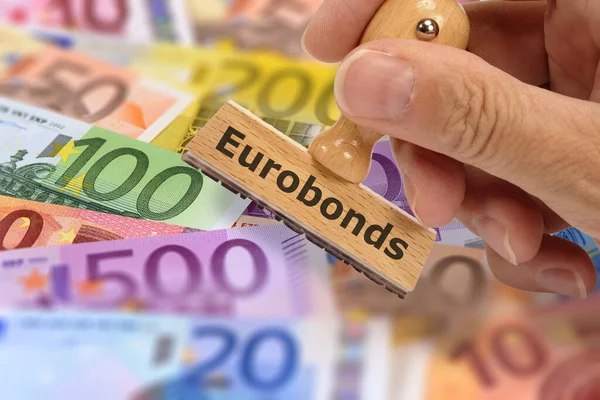
Kyrgyzstan Raises $700 Million in Landmark Eurobond Debut on London Stock Exchange

Kyrgyzstan has successfully issued its first Eurobonds on the London Stock Exchange, raising $700 million at an annual interest rate of 7.75% with a five-year maturity.

According to the Ministry of Finance, investor demand for the debut issuance exceeded the offer by a factor of three, reflecting strong international confidence in Kyrgyzstan’s economic prospects. More than 100 investors from the United Kingdom, the United States, and various Asian countries participated in the placement.

“The high demand confirms growing confidence in Kyrgyzstan’s macroeconomic policy, the strengthening of its financial system, and the government’s commitment to transparency, fiscal discipline, and international financial integration,” the Ministry stated.

Former Prime Minister Akylbek Japarov, writing on his official Facebook page, highlighted the historical significance of the move. Kyrgyzstan had been the last country in Central Asia not to issue Eurobonds, he noted, and for many years such an operation appeared unattainable. The successful launch, he added, was the result of sustained work across all levels of government, improving macroeconomic indicators, building investor trust, and elevating the country’s sovereign credit rating.

Japarov proposed that the $700 million raised be directed toward strategically important sectors, including energy and mineral resources. Specifically, he recommended funding the construction of a new coal-fired thermal power plant in Naryn region and a power station in Chui region. He also emphasized the need to develop rare earth metal deposits in Chui and Issyk-Kul regions.

The Eurobond issuance was a central topic at the recent Bishkek International Financial Forum, which focused on innovation, digital transformation, and sustainable development in the financial sector.

In an interview with The Times of Central Asia, Medetbek Nazaraliev, former CEO of the Kyrgyz Stock Exchange (KSE), said Kyrgyzstan’s entry into global debt markets could pave the way for private sector growth. “We have been waiting for this step for a long time. Large-scale foreign investment is unlikely unless the state leads by example, demonstrating how to attract capital, fulfill international obligations, and act as a reliable partner in global financial markets,” he said.

Experts Warn Tajikistan’s Melting Glaciers Threaten Regional Food Security

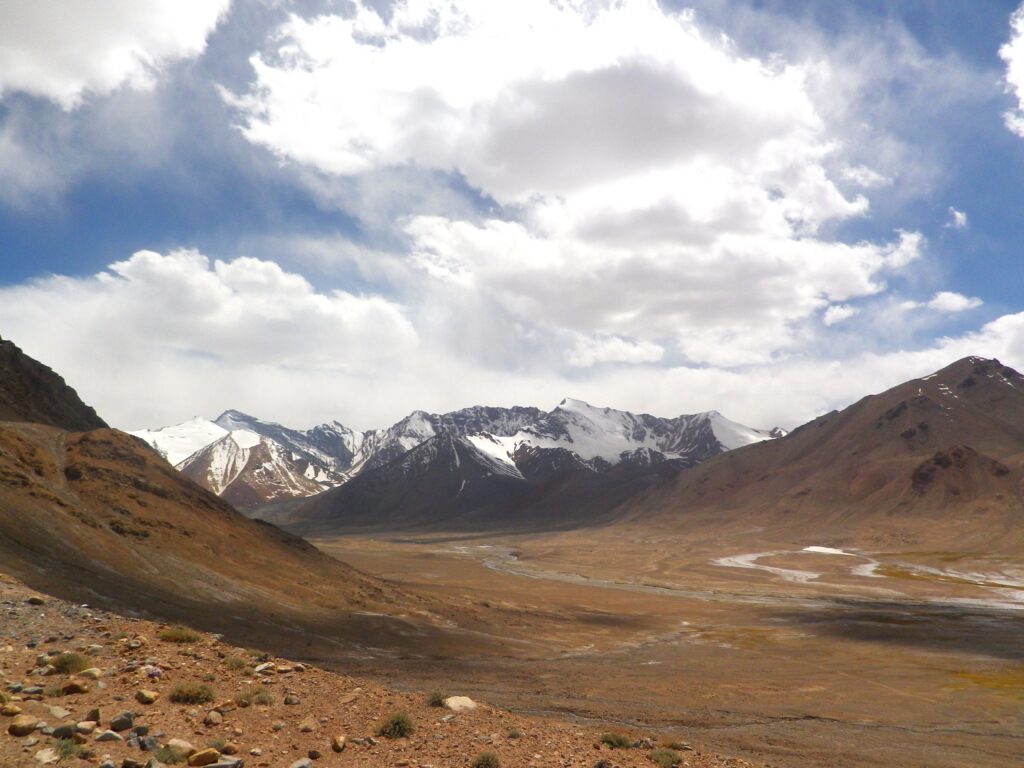
From May 29 to 31, Dushanbe is hosting the first-ever International Conference on Glacier Preservation. The event has drawn more than 2,500 representatives from 80 countries to the Tajik capital. On the eve of the forum, alarming data was released: Tajikistan has lost more than 1,000 glaciers over the past 23 years, a trend that jeopardizes food security for millions across Central Asia.

Glaciers in Retreat, Climate in Crisis

Tajikistan’s Deputy Prime Minister Dilrabo Mansuri noted that average air temperatures in the country have risen between 0.7°C and 1.9°C over the past 65 years, depending on the region. In the same period, glaciers have lost 20% of their volume and 30% of their area.

“The disappearance of glaciers is not a distant threat, but a constant crisis,” emphasized Agasi Arutyunyan, the Food and Agriculture Organization’s (FAO) representative in Tajikistan.

Bahodur Sheralizoda, Chairman of the Committee on Environmental Protection, highlighted the increasing frequency of natural disasters, landslides, droughts, and floods, that threaten both the economy and daily life. UNICEF Executive Director Catherine Russell warned that up to 27% of regional water resources could be lost, with children and vulnerable groups being disproportionately affected.

Amina Mohammed, Deputy Secretary-General of the United Nations, stressed the need for immediate resource mobilization and reliance on scientific data. Her UN colleague, Armida Salsiah Alisjahbana, Executive Secretary of ESCAP, proposed a regional meeting ahead of the 2026 UN Water Conference to build momentum.

Agriculture Under Climate Stress

Adham Musallam, Director of the World Food Programme in Tajikistan, reiterated that more than 1,000 glaciers have vanished since 2000, leading to water shortages and degradation of arable land. Forum participants underscored the urgency of adopting climate-resilient agricultural practices.

Tajikistan is home to around 14,000 glaciers, with a combined volume exceeding 845 km³. Approximately 1,000 glaciers have disappeared over the last 150 years. The Vangjakh glacier, for example, is retreating by more than 16 meters annually. According to UNEP, Central Asia could lose over 50% of its glaciers by 2050, endangering the water supply of more than 70 million people.

Tajik glaciers currently contribute over 80% of the Amu Darya’s flow, 1% of the Syr Darya’s, and around 64 km³ to the Aral Sea basin. Their decline could severely disrupt the region’s water balance and worsen shortages in neighboring countries.

Regional Initiatives and Scientific Collaboration

The forum emphasized the importance of inclusive climate action, particularly the leadership roles of women and youth. Yasmine Siddiqui of the Asian Development Bank stated, “Women must not only be participants, but also leaders in environmental decisions.”

New initiatives included the launch of the Blue World of Central Asia 2.0 project and promotion of the WEFE Nexus approach, integrating water, energy, food, and ecosystem management to enhance cross-border cooperation.

Participants also discussed establishing a regional glaciology coordination center, expanding satellite glacier monitoring, and leveraging science diplomacy to mitigate climate risks.

The melting of Central Asia’s glaciers is no longer a future concern, it is a present-day crisis impacting water availability, food production, public health, and regional stability. The Dushanbe conference marked a significant step in rallying collective international response, but the success of these efforts will depend on their implementation.

Kazakhstan and Italy Forge a New Strategic Nexus

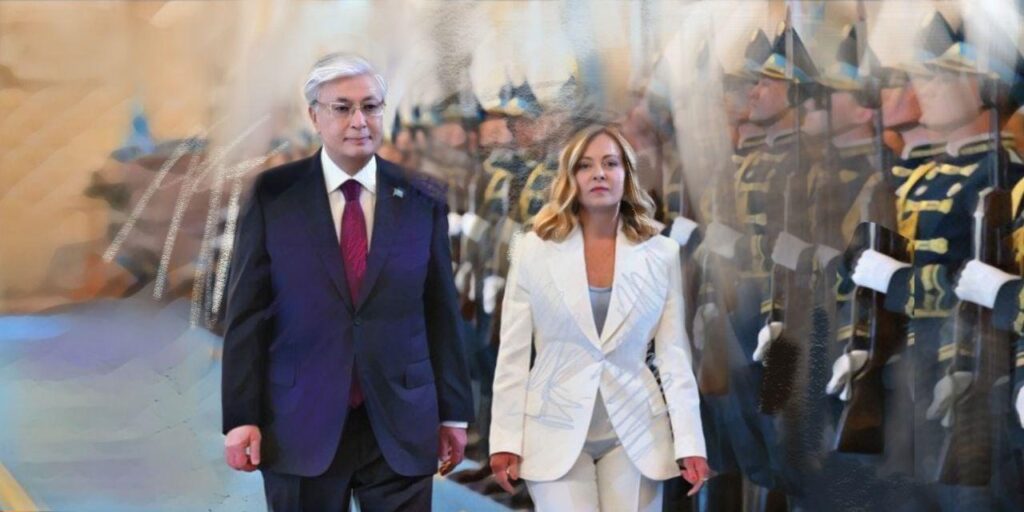
Italian Prime Minister Giorgia Meloni’s visit to Kazakhstan marks a pivotal moment in the deepening relationship between the two nations. This diplomatic mission comes on the heels of historical ties reinforced by Pope Benedict XVI’s 2022 visit to the Central Asian nation, where he met with President Kassym-Jomart Tokayev. Benedict’s trip was a testament to Kazakhstan’s role in promoting interfaith dialogue and global peace, a legacy that continues to shape its international relationships.

Now, with a new American Pope at the helm of the Vatican, Meloni has renewed Italy’s commitment to strengthening its partnership with Kazakhstan. Her meeting with Tokayev and participation in the C5+Italy Summit underline her focus on fostering collaboration in energy diversification, regional stability, and economic growth. The terms for Meloni’s arrival in Astana were set by Kazakhstan’s previous engagements with Italy, including President Kassym-Jomart Tokayev’s visit to Rome in early 2024 and his meeting with Meloni in Abu Dhabi in January 2025.

Those substantive bilateral talks set the bilateral agenda in the joint context of Italian active Eurasian diplomacy and Kazakhstan’s own strategic vision. Meloni’s direct discussions with Tokayev focused on deepening bilateral diplomatic and economic ties; expanding cooperation in energy, trade, and defense; and discussing regional security and joint training programs. As she put it prior to departing Italy, “This visit confirms the strategic value of our collaboration and the excellent level of relations between our nations.”

Kazakhstan’s geography, resource wealth, and evolving political posture since independence over a third of a century have also enabled it to craft a nuanced foreign policy balancing traditional ties with Russia and China against emerging alignments with Europe and beyond. Italy’s diplomacy, underpinned by proactive outreach and sustained by major trade and investment flows, has become Kazakhstan’s principal EU partner and third-largest global trading counterpart.

Meloni’s engagement with Kazakhstan underscores her broader strategic vision of positioning Italy as a pivotal player in the evolving geopolitical landscape. Central to this ambition is her ability to connect Italy’s foreign policy with global power structures, including her relationship with former U.S. President Donald Trump, a bond that has bolstered both her personal stature and Italy’s diplomatic leverage. This alignment, rooted in shared ideologies of nationalism and sovereignty, allows Italy to project itself as a transatlantic bridge linking Europe, the United States, and strategically critical regions like Central Asia.

Beyond energy and trade, Italy’s approach aims to institutionalize its presence in the region, as demonstrated by the simultaneous hosting of the Central Asia–Italy Summit, which builds on the “5+1” dialogue launched in 2019 and its 2024 iteration at the foreign-ministerial level. Convening this summit at the head-of-government/head-of-state level in Astana subtly underscores Kazakhstan’s linchpin role in regional coordination and Italy’s capacity to frame its engagement as a multilateral and strategic enterprise.

Meloni’s ambitions extend to securing Italy’s role in stabilizing ties with Central Asia and former Soviet states. For instance, strengthening relationships with energy-rich nations like Kazakhstan underpins her focus on energy diversification, critical for reducing Europe’s reliance on Russian gas while addressing global resource and security challenges.

If the economic cooperation can be said to have a centerpiece, this would be the cooperation between Samruk-Kazyna, Kazakhstan’s sovereign wealth fund, and Italy’s Maire engineering firm to establish a high-end industrial hub in Kazakhstan. This initiative reflects Astana’s determination to position itself as a Eurasian node in advanced production by elevating its manufacturing and technological capacity.

The energy dimension, long the cornerstone of Kazakhstan-Italy relations, was reinforced through Samruk-Kazyna’s agreement with Ansaldo Energia to produce gas turbine components domestically. This agreement bolsters Kazakhstan’s drive for industrial self-sufficiency while extending Italy’s role as a strategic energy partner. It builds on Ansaldo’s earlier commitments to supply turbines and generators for the reconstruction of Almaty’s TPP-3 power plant and collaborate on new energy projects.

The bilateral relationship was already strong, as the two countries have engaged in a wide range of joint initiatives outside these industrial ventures. There has been cooperation in defense and cybersecurity, encompassing joint training, cyber resilience exchanges, and even the possible co-production of military equipment. Kazakhstan has developed a multilayered security partnership with Italy that skillfully demonstrates its capacity to define regional security parameters.

The relationship was further strengthened when on May 28, at the Kazakhstan-Italian Business Forum — the economic backbone of this emerging partnership — ten memoranda of understanding were signed, valued at €180 million, across other sectors including mechanical engineering, petrochemicals, agri-processing, and logistics. The launch of a blockchain-driven logistics transparency initiative called the Digital Supply Chain 4.0 project and of the “Made in Kazakhstan with Italy” program illustrates Kazakhstan’s drive to integrate global value chains on its own terms as well as Italy’s diplomatic ambitions in Central Asia. The agreements enhance Kazakhstan’s key position along the Middle Corridor by bringing Italian investment to foster joint production, technology transfer, and industrial integration.

Rome’s alignment of its investments and industrial cooperation with Astana’s modernization goals enables it to embed itself within a broader Eurasian strategy. The economic ties are anchored by a new joint investment fund and the development of enhanced export risk insurance mechanisms. To Italy’s energy security considerations, long tied to Kazakhstan’s oil and gas reserves, broader goals are now added. These include securing critical raw materials, advancing the EU’s green transition, and reinforcing Europe’s autonomy amid geopolitical flux. One of the agreements included the production of certified “green” aluminum and ferroalloys by 2027.

While the immediate outcomes of Meloni’s visit are significant, their realization depends on sustained effort. Details of the Maire and Ansaldo Energia projects, operationalization of digital logistics, and concrete steps in defense cooperation will determine whether this momentum translates into lasting impact. The planned Italy–Central Asia Summit in Rome later this year presents a natural venue for assessing progress and deepening commitments.

The two countries also face shared challenges. The shrinking Caspian Sea is a shared concern for Meloni and Tokayev, as it threatens both economic and environmental stability. Italy’s energy company ENI, heavily invested in the region, faces challenges like costly dredging to maintain operations in oil fields such as Kashagan. Approximately 80% of Kazakhstan’s oil exports flow through the Caspian Pipeline Consortium, anchoring the country’s reliance on the Caspian Sea as a vital conduit for its energy sector. This dependency sharpens the shared interest of both Kazakhstan and Italy in sustaining energy production while also addressing the environmental crisis impacting the region.

Kazakhstan and Italy pursued intersecting yet distinct strategies that found practical convergence during Meloni’s visit. For Kazakhstan, the agreements advanced industrial modernization, economic diversification, and regional leadership, showcasing its capacity to attract foreign expertise on its own terms. For Italy, the partnership secured an expanded economic footprint, diversified energy sources, and a firmer position in a region where Russia, China, and Turkey increasingly shape outcomes.

The two countries’ shared vision was underlined not only in the political and economic realms but also in grappling with the shared environmental challenges of the shrinking Caspian Sea. The collaboration between Italy’s energy firm ENI and Kazakhstan’s authorities faces the dual challenge of sustaining production in fields like Kashagan while addressing the environmental crisis threatening both economic and ecological stability. These intertwined ambitions — balancing industrial growth, regional security, and environmental stewardship — reflect the evolving nature of diplomacy and partnership in a world where geopolitical challenges are increasingly complex.

Tokayev and Meloni’s rapport illustrates how pragmatic diplomacy can generate momentum even amid shifting global alliances. Their shared commitment to navigating intricate energy, environmental, and security issues underlines the capacity for bilateral relationships to evolve beyond transactional interactions. In addressing the Astana International Forum on 30 May, Meloni emphasized, “Kazakhstan and Italy stand united in forging a new strategic nexus, rooted in collaboration, innovation, and mutual growth, building bridges that transcend borders for shared prosperity and a brighter future.” While this partnership cannot resolve every geopolitical challenge, it highlights how mutual respect, shared interests, and measured leadership can forge pathways to tangible progress in a complex world.

Kazakhstan and Uzbekistan Strengthen Cooperation on Cancer Treatment and Child Health

At the high-level conference, “Dialogue for Children: Central Asia and UNICEF,” held recently in Tashkent, the health ministers of Kazakhstan and Uzbekistan met to expand bilateral cooperation in healthcare.

Kazakhstan’s Health Minister Akmaral Alnazarova and her Uzbek counterpart Asilbek Khudayarov discussed a range of initiatives aimed at enhancing the quality of medical services in both countries. According to the Uzbek Health Ministry, the discussions focused on joint research projects, the exchange of medical expertise, and collaboration within the coalition of countries supporting primary healthcare. The two sides also considered conducting environmental studies in the Aral Sea region to assess the health impacts of local ecological conditions.

Focus on Pediatric Health and Cancer Treatment

Children’s health emerged as a central theme in the talks. Kazakhstan proposed establishing an international academic hub for childhood cancer and offered to take the lead on the initiative.

Minister Alnazarova outlined Kazakhstan’s use of advanced diagnostic and treatment methods for pediatric cancer, including immunohistochemistry, immunophenotyping, tumor marker detection, high-dose chemotherapy for bone and soft tissue sarcomas, and organ-preserving surgeries. She also announced that a new Proton Therapy Center will open in Astana this October. The center is expected to treat over 800 patients annually and will offer radioiodine therapy for children from across Central Asia.

Kazakhstan also proposed creating two additional international hubs: one for adult oncology and oncohematology, and another for pediatric heart surgery at the UMC Heart Center. The heart surgery hub would be open to patients from Uzbekistan, including children from Karakalpakstan.

Alnazarova noted that several areas of Kazakhstan’s healthcare system now meet international standards, with hospitals adopting globally recognized technologies and practices.

Expanding Bilateral Healthcare Ties

To deepen bilateral engagement, the two ministers agreed to hold “Kazakhstan Medicine Days” in Uzbekistan in 2025, followed by “Uzbekistan Medicine Days” in Kazakhstan in 2026. They also endorsed the creation of an international healthcare hub to promote cross-border collaboration.

In a related development, Kazakhstan’s Minister of Science and Higher Education, Sayasat Nurbek, announced in March that the country is developing a new anti-cancer drug. Phase II clinical trials, completed last year, showed promising results, including an average tumor size reduction of 30%. The drug is expected to be registered and released to the market by the end of 2024.