• KGS/USD = 0.01144 0%
  • KZT/USD = 0.00213 0%
  • TJS/USD = 0.10456 0.19%
  • UZS/USD = 0.00008 0%
  • TMT/USD = 0.28490 0%
  • KGS/USD = 0.01144 0%
  • KZT/USD = 0.00213 0%
  • TJS/USD = 0.10456 0.19%
  • UZS/USD = 0.00008 0%
  • TMT/USD = 0.28490 0%
  • KGS/USD = 0.01144 0%
  • KZT/USD = 0.00213 0%
  • TJS/USD = 0.10456 0.19%
  • UZS/USD = 0.00008 0%
  • TMT/USD = 0.28490 0%
  • KGS/USD = 0.01144 0%
  • KZT/USD = 0.00213 0%
  • TJS/USD = 0.10456 0.19%
  • UZS/USD = 0.00008 0%
  • TMT/USD = 0.28490 0%
  • KGS/USD = 0.01144 0%
  • KZT/USD = 0.00213 0%
  • TJS/USD = 0.10456 0.19%
  • UZS/USD = 0.00008 0%
  • TMT/USD = 0.28490 0%
  • KGS/USD = 0.01144 0%
  • KZT/USD = 0.00213 0%
  • TJS/USD = 0.10456 0.19%
  • UZS/USD = 0.00008 0%
  • TMT/USD = 0.28490 0%
  • KGS/USD = 0.01144 0%
  • KZT/USD = 0.00213 0%
  • TJS/USD = 0.10456 0.19%
  • UZS/USD = 0.00008 0%
  • TMT/USD = 0.28490 0%
  • KGS/USD = 0.01144 0%
  • KZT/USD = 0.00213 0%
  • TJS/USD = 0.10456 0.19%
  • UZS/USD = 0.00008 0%
  • TMT/USD = 0.28490 0%

Kyrgyzstan Seeks Climate Finance and Carbon Market Funding to Cut Emissions

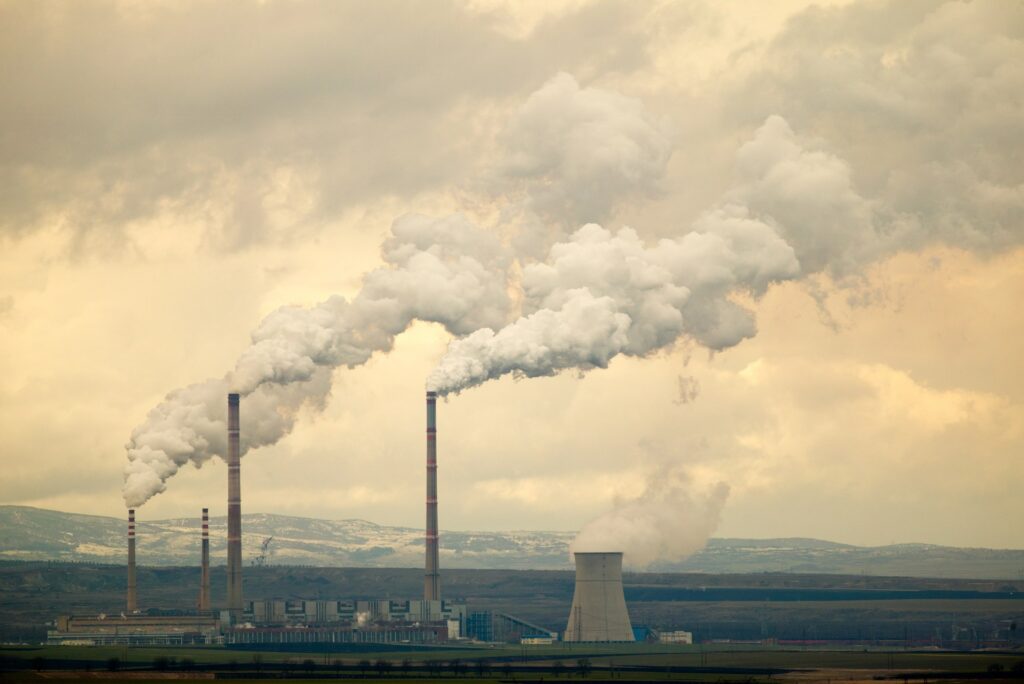
Kyrgyzstan is preparing to sign a carbon project aimed at supporting the country’s transition to sustainable energy. The announcement was made by Energy Minister Taalaibek Ibrayev following a meeting with World Bank Country Manager for Kyrgyzstan Hugh Riddell on March 13.

The initiative will be supported by the Transformative Carbon Asset Facility (TCAF), a World Bank trust fund designed to help developing countries introduce market-based carbon pricing mechanisms and attract private investment in low-carbon technologies.

TCAF provides a hybrid financing model that combines climate finance with carbon market funding. Payments are made only after verified reductions in greenhouse gas emissions are achieved.

The project is being implemented under the Innovative Finance for Resilient and Sustainable Energy Transition (iFIRST) program. According to Kyrgyzstan’s Ministry of Energy, it will use a results-based payment mechanism, meaning that emission reductions must first be measured and independently verified before financial compensation is disbursed.

If the reductions are confirmed, Kyrgyzstan could receive up to $4.5 million in climate finance to support its commitments under the Paris Agreement. The initiative may also attract up to $5.5 million in additional funding through carbon market mechanisms.

The project includes technical assistance grants of up to $1.5 million to strengthen the institutional capacity of government agencies, develop a national system for monitoring greenhouse gas emissions, and establish a national carbon unit registry.

Officials say the initiative will help advance reforms in Kyrgyzstan’s energy sector, strengthen the country’s climate policy framework, and increase access to international climate finance. It is also expected to contribute to environmental sustainability, modernization of the energy sector, and reductions in greenhouse gas emissions.

In July 2025, Kyrgyzstan’s Cabinet of Ministers approved the Concept for Achieving Carbon Neutrality in the Kyrgyz Republic. The strategy outlines a phased transition toward a carbon-neutral economy, focusing on key sectors including energy, transport, industry, agriculture, waste management, and forestry.

The concept prioritizes reducing greenhouse gas emissions, expanding renewable energy, improving energy efficiency, restoring forest ecosystems, adopting innovative technologies, and integrating climate risks into national planning. The government views the initiative as a foundation for attracting climate finance, creating green jobs, and ensuring long-term environmental security.

Under the strategy, Kyrgyzstan has pledged to achieve carbon neutrality by 2050 and reduce greenhouse gas emissions by 44% by 2030.

Despite these ambitions, the country’s overall emissions remain relatively low, accounting for less than 0.032% of global greenhouse gas emissions.

In October 2025, the Ministry of Natural Resources, Environment, and Technical Supervision published Kyrgyzstan’s first Biennial Transparency Report. According to the document, total greenhouse gas emissions in 2023 reached 19.38 million tons of CO₂ equivalent. Forests, soils, and other ecosystems absorbed 10.31 million tons, resulting in net emissions of 9.07 million tons.

The energy sector remains the largest source of emissions, accounting for more than half of the total. Agriculture is the second-largest contributor, largely driven by livestock production. At the same time, emissions from transport, electricity generation, and heating have declined significantly since the early 1990s due to the adoption of cleaner technologies and improvements in energy efficiency.


Kazakhstan Plans to Introduce Social Media Monitoring

Kazakhstan plans to introduce a system for monitoring the information space in order to identify illegal online content. This was reported by the country’s Financial Monitoring Agency (FMA).

The agency has drafted rules on monitoring the information space aimed at detecting unlawful content, including on the internet, and enabling subsequent measures to restrict access to it. The draft document has been published on the Open Regulatory Acts portal.

According to the proposal, monitoring would cover information published in open sources, including websites, social networks, messaging platforms, mass media outlets, and other information and communication channels.

The Financial Monitoring Agency would be responsible for carrying out the monitoring.

If unlawful content is identified, the agency would be able to initiate further response measures.

“If the posting of illegal content is established, the authorized financial monitoring body, within the limits of its competence and in the presence of signs of a criminal offense, shall take the measures provided for by the country’s criminal procedure legislation,” the document states.

If no signs of a criminal offense are found, the materials would be forwarded to other authorized bodies in order to hold the authors administratively liable.

In both cases, if criminal or administrative violations are identified and the materials fall under restrictions established by Kazakhstan’s legislation or by court decisions that have entered into force, the agency would notify the authorized body responsible for mass media regulation.

Following such notification, a decision could be made to block the relevant content. These notifications would be transmitted through the state information system.

The draft rules were prepared on the basis of subparagraph 15 of Article 16 of the Law “On the Prevention of Offenses,” adopted on December 30, 2025.

The new regulations are expected to take effect once the relevant normative legal act enters into force.

According to the Financial Monitoring Agency, the introduction of the monitoring system is intended to improve the effectiveness of crime prevention in the digital environment.

The rules are also expected to establish a clearer mechanism for interagency cooperation in identifying and restricting illegal online content.

The Times of Central Asia previously reported that Kazakhstan outperformed several post-Soviet countries in the 2026 global internet freedom ranking published by the research agency Cloudwards, although within Central Asia it ranked behind Tajikistan and Kyrgyzstan.

Tokayev Says Kazakhstan Will Continue Supporting ‘Board of Peace’ Initiative

Kazakh president says the format offers a new blend of diplomacy and business that could help ordinary people, particularly in Gaza

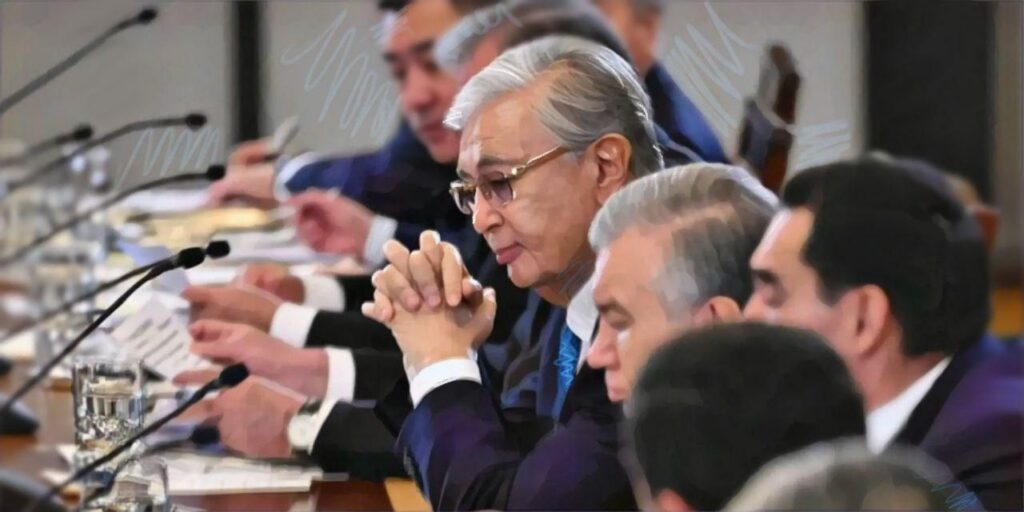
In remarks released by Aqorda, Kazakhstan’s presidential press office, President Kassym-Jomart Tokayev said Kazakhstan will continue to support the “Board of Peace” initiative, describing it as an innovative diplomatic format that could still play a role in efforts to advance peace in the Middle East.

Tokayev made the comments while answering a question from Bojan Brkic, Astana bureau chief for Euronews, during Kazakhstan’s national referendum. Brkic asked whether the initiative remained viable amid current developments in the Middle East and why Kazakhstan had decided to join it in the first place. He framed the question in the context of Tokayev’s repeated assertion that Kazakhstan is positioning itself as a “middle power” on the international stage.

In his response, Tokayev said he was drawn to the initiative because of what he called its unconventional and practical approach to resolving complex international issues.

“It is a mixture or a combination of traditional diplomacy and big business which will benefit ordinary people, particularly in the Gaza Strip,” Tokayev said. “So I think that this idea needs to be supported, and that is why we made the decision to join the Board of Peace.”

The president argued that the international community has grown weary of diplomatic processes that produce statements but few concrete results. In his view, new mechanisms are needed to address long-running crises more effectively.

“People around the world got tired of endless conferences with wishful-thinking resolutions that very few people read, as a matter of fact,” he said. “That is why we should support this idea, because it is a very new one.”

Tokayev also voiced strong personal respect for U.S. President Donald Trump, praising what he called Trump’s “strategy of common sense” and expressing confidence that the prospects for peace in the Middle East had not disappeared.

“I think that the prospect of peace in the Middle East, and particularly in Palestine, still exists,” Tokayev said. “And I believe that the future of this idea, of this initiative — at least I would like to hope so — is very bright.”

He added that Kazakhstan intends to remain committed to the initiative.

“As far as Kazakhstan is concerned, of course, we will continue to support this initiative,” Tokayev said.


U.S. Air Tanker Crash in Iraq Recalls KC-135 Loss in Kyrgyzstan in 2013

The March 12 fatal crash of a U.S. military KC-135 refueling aircraft supporting air strikes on Iran was the first accident involving that type of plane since a 2013 crash in Kyrgyzstan during U.S. military operations in Afghanistan.

The U.S. Central Command said on Friday that that all six crew members on a KC-135 that went down in western Iraq had died, and that the aircraft was lost while flying over “friendly airspace,” and was not downed by hostile or friendly fire. U.S. military officials previously said two aircraft were involved in the incident, and that the second one landed safely.

An investigation into the crash is underway as U.S. and Israeli aircraft continue intense attacks on targets in Iran, which has retaliated with missile and drone strikes on Israel and other countries. Shipping has been disrupted in the Strait of Hormuz, driving up global energy prices.

Thirteen years ago, the United States was engaging in military operations against Taliban insurgents in Afghanistan when a KC-135 tanker crashed soon after taking off from Manas air base in Kyrgyzstan, killing all three crew members on board.

The crash occurred on May 3, 2013. On March 14 of the following year, the U.S. Air Force released the results of an investigation into the fatal accident.

“A unique combination of six factors — flight control malfunctions, insufficient crew force training, incomplete crew checklist response, use of rudder while in a Dutch roll condition, crew composition, and cumbersome procedural guidance — all came together during the flight’s short 11-minute duration and resulted in this accident,” the investigation report said.

It described a Dutch roll as “a more dangerous oscillatory instability” that followed initial instability causing the plane’s nose to drift from side to side.

In 2006, a Kyrgyz airliner that was taking off from Manas accidentally struck a KC-135 tanker aircraft that had landed after a mission in Afghanistan and was awaiting instructions from the control tower. There were no injuries on the Kyrgyz plane, and one of the three KC-135 crew members suffered abrasions while evacuating from the refueling aircraft.

Between 2001 and 2014, the U.S. Air Force operated a logistics hub at Manas, near Bishkek in Kyrgyzstan.

Global Internet Freedom Rankings: Tajikistan, Kyrgyzstan Far Ahead of Eurasian Neighbors

The 2026 Global Internet Freedom Rankings, published this week by the research agency Cloudwards, have revealed that the five countries of Central Asia have significantly less internet censorship than all of their Eurasian neighbors. Tajikistan and Kyrgyzstan’s online environments emerge as particularly encouraging cases.

Cloudwards defines internet censorship as the banning or restricting of online content or services, such as social media platforms, VPN apps, and certain political or religious messaging. It also covers the more welcome deletion of harmful content. Censorship can be done by governments, or initiated by a country’s internet service providers and other businesses. The internet freedom rankings do not measure state censorship per se.

Cloudwards’ research scored 171 countries on a scale of 0-100, rating their overall levels of internet censorship using five key criteria: torrenting availability; adult content accessibility; social media platforms; access to varied political and religious content; and VPN regulations.

Eleven nations returned the highest score of 92, including New Zealand, Belgium and Timor Leste. While North Korea scored 0, the next four worst countries for internet censorship – each scoring just 4 – all border Central Asia: China, Pakistan, Iran and Russia.

Tajikistan’s score of 56, while only middling in the global context, means that its internet is subject to significantly less interference than almost anywhere in the wider Eurasia region. The Times of Central Asia reported last year that the country has repealed a law that allowed citizens to be prosecuted for ‘liking’ posts on social media that are critical of the government.

The only Eurasian country to rival Tajikistan is its northern neighbor Kyrgyzstan, which has the second freest internet in Central Asia, scoring 52 in Cloudwards’ ranking. For comparison, 52 is also the overall score given to the United Kingdom and Brazil.

Kazakhstan scored 36 – above Singapore and South Korea, which both received a mark of 32. Uzbekistan scored 24.

While Turkmenistan’s mark of 16 places it firmly among the world’s worst countries for internet censorship, this is nonetheless higher than countries including India and Turkey (both 12). Turkmen netizens still experience fewer restrictions than internet users in the aforementioned China, Pakistan, Iran and Russia.

The authors of the Cloudwards report, British editors Kit Copson and Sandra Pattison, commented: “The reasons behind online censorship range from protecting people targeted by hate speech to quelling political dissent. In especially restrictive locations, censorship and internet monitoring are tools commonly to control narratives.”

They added: “The consequences for breaching government-imposed censorship laws depend on the country. They could include fines or even arrest or imprisonment for those in highly restrictive locations.”

Spring Sowing Begins in Kyrgyzstan as Officials Stress Food Security

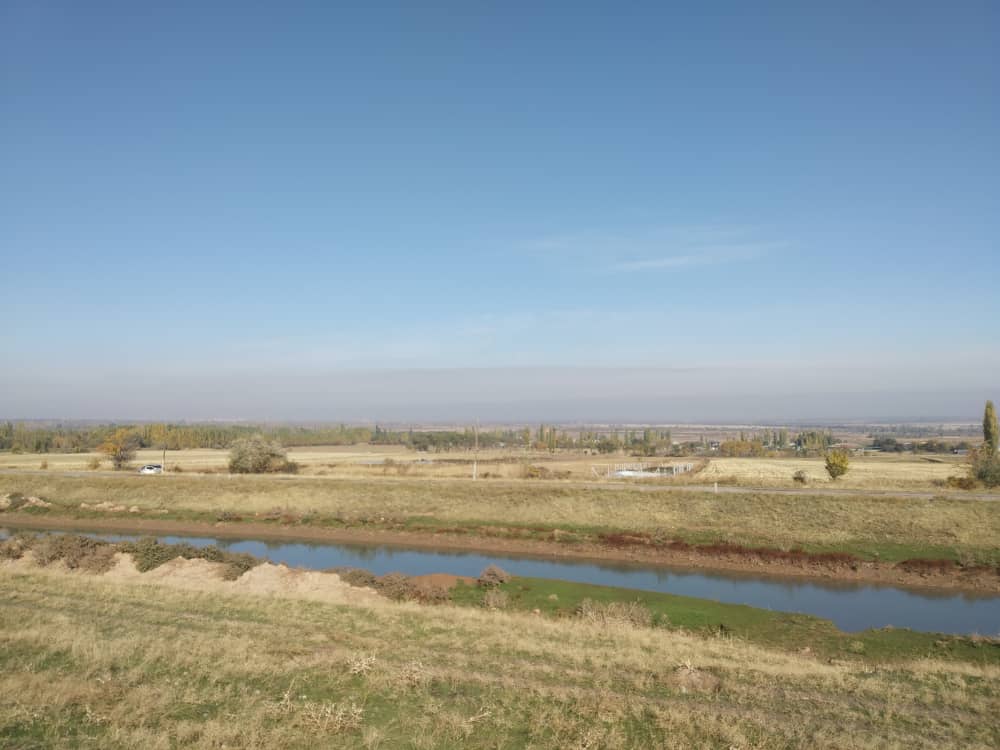
Spring sowing has begun in Kyrgyzstan, where agricultural crops are expected to be planted on a total of 1.25 million hectares in 2026, according to the Ministry of Water Resources, Agriculture, and Processing Industry. Of this area, about 818,000 hectares are irrigated land and 432,000 hectares are rainfed.

As of March 12, sowing was underway in the southern regions of Osh, Jalal-Abad, and Batken, as well as in the Chui Valley. Fieldwork has not yet started in the colder regions of Talas, Issyk-Kul, and Naryn.

Farmers have so far planted grain crops, including wheat and barley, along with potatoes and various vegetables.

The ministry has recommended that farmers prioritize crops considered important for national food security. Turatbek Idrisov, head of the ministry’s Department of Plant Growing, Horticulture, and Cooperatives, said producers should focus on socially significant crops such as wheat, barley, potatoes, onions, and sugar beet. He noted that grain crops and sugar beet are included in the country’s list of strategic food reserves.

According to ministry monitoring data, the expansion of livestock farming in recent years has led to increased cultivation of fodder crops, particularly barley and maize.

Officials also noted that crops such as maize, raspberries, and strawberries have demonstrated relatively high profitability for farmers.

The ministry is encouraging producers to adopt water-saving irrigation technologies, including drip and sprinkler systems. Farmers who implement such methods are eligible for state-supported concessional loans with reduced interest rates.

Authorities say Kyrgyzstan is currently fully self-sufficient in six of nine socially significant food products, potatoes, milk, meat, vegetables, eggs, and sugar. However, the country remains partially dependent on imports of three key staples: bread products (including flour and grain), vegetable oil, and fruit.