• KGS/USD = 0.01144 0%
  • KZT/USD = 0.00193 -0%
  • TJS/USD = 0.10811 -0.28%
  • UZS/USD = 0.00008 0%
  • TMT/USD = 0.28490 0%
  • KGS/USD = 0.01144 0%
  • KZT/USD = 0.00193 -0%
  • TJS/USD = 0.10811 -0.28%
  • UZS/USD = 0.00008 0%
  • TMT/USD = 0.28490 0%
  • KGS/USD = 0.01144 0%
  • KZT/USD = 0.00193 -0%
  • TJS/USD = 0.10811 -0.28%
  • UZS/USD = 0.00008 0%
  • TMT/USD = 0.28490 0%
  • KGS/USD = 0.01144 0%
  • KZT/USD = 0.00193 -0%
  • TJS/USD = 0.10811 -0.28%
  • UZS/USD = 0.00008 0%
  • TMT/USD = 0.28490 0%
  • KGS/USD = 0.01144 0%
  • KZT/USD = 0.00193 -0%
  • TJS/USD = 0.10811 -0.28%
  • UZS/USD = 0.00008 0%
  • TMT/USD = 0.28490 0%
  • KGS/USD = 0.01144 0%
  • KZT/USD = 0.00193 -0%
  • TJS/USD = 0.10811 -0.28%
  • UZS/USD = 0.00008 0%
  • TMT/USD = 0.28490 0%
  • KGS/USD = 0.01144 0%
  • KZT/USD = 0.00193 -0%
  • TJS/USD = 0.10811 -0.28%
  • UZS/USD = 0.00008 0%
  • TMT/USD = 0.28490 0%
  • KGS/USD = 0.01144 0%
  • KZT/USD = 0.00193 -0%
  • TJS/USD = 0.10811 -0.28%
  • UZS/USD = 0.00008 0%
  • TMT/USD = 0.28490 0%
10 December 2025

Kazakhstan, Azerbaijan, Georgia, and China Deepen Cooperation on Trans-Caspian Transport Corridor

Railway companies from Kazakhstan, Azerbaijan, and Georgia have signed a cooperation agreement with China Railway Container Transport Corp., Ltd. (CRCT) to jointly develop the Trans-Caspian International Transport Route (TITR), also known as the Middle Corridor – a strategic link connecting China and Europe via Central Asia and the South Caucasus.

The agreement was signed during the Second China Railway Express Cooperation Forum, held on 18 November in Xi’an, under the theme “Connecting Asia and Europe for a Shared Future.”

According to Kazakhstan Temir Zholy (KTZ), the country’s national railway operator, the agreement establishes formal cooperation between Chinese railways, through CRCT, and MIDDLE CORRIDOR MULTIMODAL Ltd., a joint venture created in 2023 by the railway companies of Kazakhstan, Azerbaijan, and Georgia.

The initiative aims to enhance the efficiency, safety, digitalization, and sustainability of China-Europe rail container transport services along the trans-Caspian route.

Kazakhstan, Azerbaijan, and Georgia play key roles along the TITR, which offers a vital alternative trade corridor between China and Europe that bypasses Russia. In recent years, Kazakhstan has strengthened its position as a regional transit hub.

KTZ reports that freight transportation between Kazakhstan and China has increased more than 4.5-fold over the past decade. For 2025, total freight volume is projected to reach 35 million tons, with over 29 million tons transported in the first ten months, an 11% year-on-year increase.

Joint infrastructure projects in China and Kazakhstan, including hubs in Lianyungang, Khorgos, and Xi’an, continue to demonstrate strong growth. Container shipments have more than quintupled in the past ten years, exceeding 1.4 million twenty-foot equivalent units (TEUs).

Momentum along the Trans-Caspian route also remains strong: the number of container trains increased by 12% in the first ten months of this year.

To capitalise on this growth, Kazakhstan is investing in railway infrastructure. Modernization and construction of 5,000 kilometers of railway track is underway, which will raise the country’s annual cross-border freight capacity with China to 100 million tons in the coming years.

Central Asia Faces Growing Water Risks as Qosh Tepa Canal Nears Completion

Kazakh media, Inbusiness.kz, reports that discussions within the Russian Academy of Sciences have revived a decadesold idea to redirect Siberian rivers toward Central Asia. Researchers have proposed that Russia’s Ministry of Science and Higher Education include a study of the project in its state research plan, arguing that the region is entering a critical phase of water scarcity.

This renewed debate comes as Afghanistan advances construction of the Qosh Tepa Canal, a massive irrigation project in the country’s north. The first 108 kilometer section began operating in 2023, and work on the second phase is nearing completion. Once fully operational, the 285 kilometer canal is expected to divert more than 15% of the Amu Darya river’s flow to irrigate around 550,000 hectares of farmland in Afghanistan’s drought-prone regions. Construction began in March 2022 and its impact is already being felt across Central Asia.

Experts warn the canal could reduce Uzbekistan’s water supply by around 15% and Turkmenistan’s by up to 80%, which may lead to lower crop yields, job losses, rising poverty and even potential migration or tensions.

Scholars in Kazakhstan note rising alarm. Ravshan Nazarov, an associate professor based in Tashkent, said that failure to address water shortages could trigger mass population movements. He argued that redirecting Siberian rivers, though technically complex and costly, may become unavoidable. He warned that if Russia does not share its water resources, it might eventually face “an influx of 100 million refugees.”

Data from the Food and Agriculture Organization (FAO) show that Turkmenistan is the region’s largest water consumer, using 53 cubic kilometres annually despite a population of just about 7 million. Experts attribute this to ageing infrastructure, high evaporation losses and a lack of concrete-lined canals. Meanwhile, Kyrgyzstan has faced water shortages since 2020.

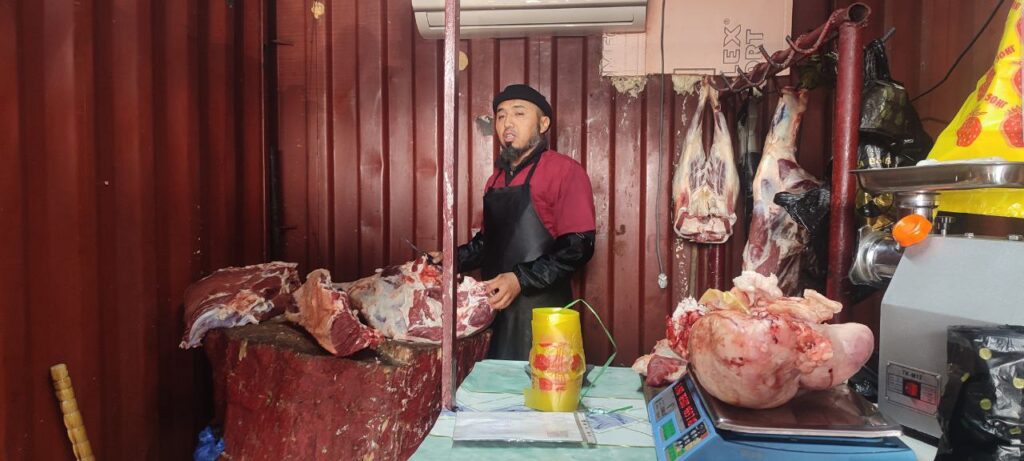
Kyrgyz Authorities Tighten Control Over Meat Prices

Temporary state regulation of meat prices has been in effect in Kyrgyzstan for several months. Inspectors fine sellers who exceed the permissible price caps. The first violation typically results in a warning.

The Ministry of Economy and Commerce recently extended the regulation. The price controls were due to expire last week, but officials argue that without oversight, rising meat prices could trigger an increase in the cost of other goods and the broader consumer basket.

In Bishkek, the government has set maximum retail prices at $7.50 per kilogram for lamb and $7.70 for beef. Price caps in the regions are slightly lower.

According to sellers, rising prices are driven not by profit motives but by external pressures, prolonged drought, higher fuel prices, increased transportation costs, and a surge in meat exports, especially to Uzbekistan.

“Meat is indeed becoming more expensive, mainly because it is being exported abroad. We need to provide for ourselves first. When we sell at state-set prices, it becomes unprofitable, we operate at a loss. We still have to pay rent, electricity, patent fees, security, and water,” said Mirlan Tursunaliyev, a meat seller in Bishkek, speaking to The Times of Central Asia.

He added that vendors hope the price caps will be revised to better reflect their operational costs.

Officials from the Antimonopoly Regulation Service note that some sellers are unwilling to comply with legal requirements such as submitting documents, updating price tags, or paying fines. In some cases, enforcement raids are carried out jointly with police.

According to the agency, meat prices in Kyrgyzstan typically rise between May and September.

Authorities expect demand to decline toward the end of the year, as is customary in winter. A seasonal drop in demand could also bring down production costs.

Kazakhmys Partners with Freedom Cloud to Modernize IT Infrastructure

Kazakhmys, the world’s largest copper producer, has signed a memorandum of cooperation with Kazakh IT company Freedom Cloud to implement advanced digital technologies in its operations. The agreement outlines plans to modernize Kazakhmys’ IT infrastructure, introduce cloud-based solutions, and integrate artificial intelligence (AI) into production processes.

Company representatives say that transitioning to a cloud architecture will allow computing and network resources to be consolidated into a unified digital system, enhancing data protection and ensuring uninterrupted operation of critical systems.

Nurakhmet Nuriev, Chairman of the Board of Kazakhmys Corporation LLP, emphasized that the company is ready to outsource non-core IT functions to professional service providers without compromising system reliability.

A pilot project will be launched from January to June 2026 to test the new cloud infrastructure and digital services.

Freedom Cloud will provide Tier III infrastructure with backup systems, cybersecurity safeguards, and 24/7 monitoring. The infrastructure will support AI-driven production management tools and DevOps practices to accelerate the rollout of digital solutions.

“We are creating an infrastructure that will enable Kazakhmys not only to increase operational efficiency, but also to set an example for the entire mining and metallurgical industry in the use of AI and cloud platforms,” said Freedom Cloud CEO Temirlan Zinalabdin.

Kazakh Government to Reconsider Minimum Wage Increase No Earlier Than 2027

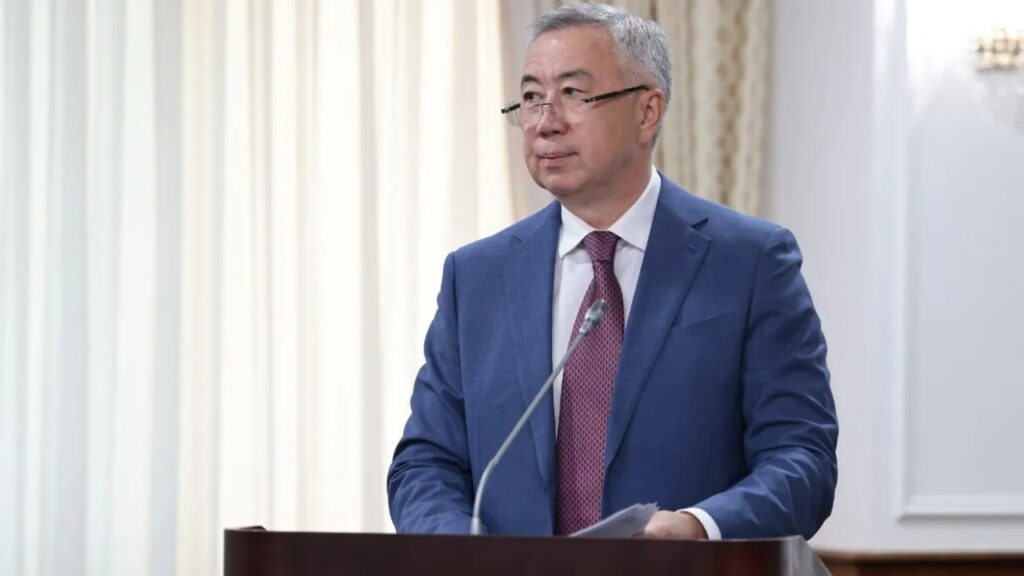
The Kazakh Cabinet of Ministers does not plan to revisit the issue of raising the minimum wage before 2027-2028, according to Deputy Prime Minister and Minister of National Economy Serik Zhumangarin.

Earlier this year, in June, Minister of Labor and Social Protection Svetlana Zhakupova had announced plans to raise the minimum wage from January 1, 2026. At the time, the minimum wage stood at approximately $163, and Finance Minister Madi Takiev indicated that an increase to just over $172 was under consideration. However, in August, Zhumangarin announced that the minimum wage would remain frozen at its current level.

Speaking at a government meeting this week, Zhumangarin confirmed that a review of the minimum wage is not scheduled in the near term. “In 2027-2028, the issue of raising the minimum wage will be considered,” he said, presenting a draft program of joint actions by the government, the National Bank, and the Agency for Regulation and Development of the Financial Market (ARDFM) aimed at macroeconomic stabilization and improving the population’s well-being from 2026 to 2028.

Under the program, more than 100 investment projects in the manufacturing and agro-industrial sectors are to be launched annually to support employment.

“The program’s priority is to increase real incomes by promoting high-quality, sustainable economic growth and reducing inflation. To this end, a set of tools has been developed across key areas of economic policy,” Zhumangarin stated.

To curb inflation, the government plans to saturate the domestic market with local goods, strengthen pricing oversight, and tackle monopolistic practices.

Zhumangarin also outlined plans to enhance transparency on e-commerce platforms. This includes requiring disclosure of commission fees included in the cost of goods, as well as optimizing commission structures for trading platforms and intermediaries. To protect consumers, dual pricing will be introduced, listing prices both with and without installment plans.

A separate priority will focus on boosting long-term economic productivity through improvements in labor efficiency, effective employment, and capital modernization. These efforts aim to reduce the persistent gap between GDP growth and wage growth.

Between 2026 and 2028, the government expects real income to grow by at least 2-3% annually.

“At the end of the first nine months, nominal wage growth stood at 10%, but real growth was negative due to inflation,” Zhumangarin said at a briefing. “Our task is to ensure that inflation does not erode incomes. If we aim for real income growth of 2-3%, this means nominal growth must exceed inflation by that margin in the coming years.”

As previously reported by The Times of Central Asia, inflation has significantly eroded household income this year, driven by Kazakhstan’s reliance on imports, rising utility rates, and an increased tax burden.

New York Mayor Eric Adams Discusses Expanding Economic Ties During Visit to Uzbekistan

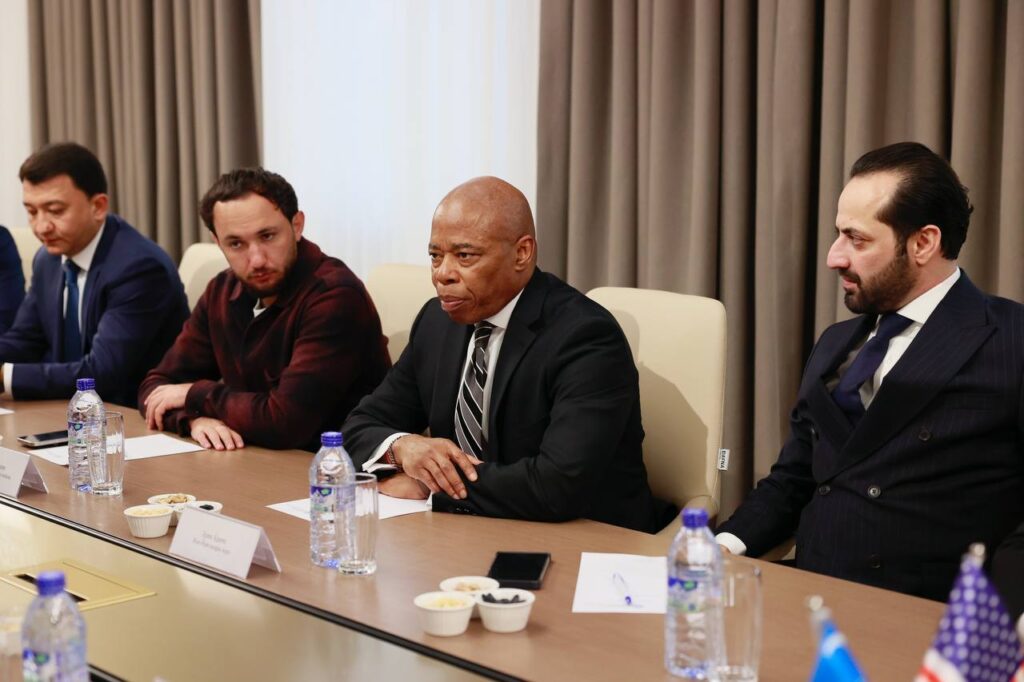
A delegation led by New York City Mayor Eric Adams met with the Chamber of Commerce and Industry of Uzbekistan on 19 November to explore new avenues for economic and business cooperation. The session brought together Adviser to the Chairman Umid Safarov, prominent Uzbek entrepreneurs and businessassociation representatives.

Discussions focused on strengthening trade and investment links between Uzbekistan and New York. Safarov proposed collaboration with the New York Stock Exchange to help prepare Uzbek companies for U.S. capitalmarket access, creating business schools and accelerator programmes in partnership with leading American universities, and opening a joint vocationaltraining college in Tashkent.

Kamolat Mirzaaliyeva, head of Uzbekistan’s Small Business Association, sought support in building ties between Uzbek and New York smallbusiness networks and expanding exports of Uzbek products to the U.S. market. Other entrepreneurs at the meeting raised proposals to increase agricultural exports, develop biochemical production and support innovative projects.

Officials described the talks as constructive and expect them to lift bilateral business cooperation to a new level.

Mayor Adams also met with Tashkent Mayor Shavkat Umurzoqov. The two agreed to begin drafting a partnership agreement between New York and Tashkent to cover longterm cooperation in urban development, culture, innovation and economic projects.

The visit comes amid renewed interest in the U.S.-Uzbekistan economic corridor and at a time when Adams’ international engagements are under scrutiny.