• KGS/USD = 0.01144 0%
  • KZT/USD = 0.00193 -0%
  • TJS/USD = 0.10838 -0.09%
  • UZS/USD = 0.00008 0%
  • TMT/USD = 0.28490 0%
  • KGS/USD = 0.01144 0%
  • KZT/USD = 0.00193 -0%
  • TJS/USD = 0.10838 -0.09%
  • UZS/USD = 0.00008 0%
  • TMT/USD = 0.28490 0%
  • KGS/USD = 0.01144 0%
  • KZT/USD = 0.00193 -0%
  • TJS/USD = 0.10838 -0.09%
  • UZS/USD = 0.00008 0%
  • TMT/USD = 0.28490 0%
  • KGS/USD = 0.01144 0%
  • KZT/USD = 0.00193 -0%
  • TJS/USD = 0.10838 -0.09%
  • UZS/USD = 0.00008 0%
  • TMT/USD = 0.28490 0%
  • KGS/USD = 0.01144 0%
  • KZT/USD = 0.00193 -0%
  • TJS/USD = 0.10838 -0.09%
  • UZS/USD = 0.00008 0%
  • TMT/USD = 0.28490 0%
  • KGS/USD = 0.01144 0%
  • KZT/USD = 0.00193 -0%
  • TJS/USD = 0.10838 -0.09%
  • UZS/USD = 0.00008 0%
  • TMT/USD = 0.28490 0%
  • KGS/USD = 0.01144 0%
  • KZT/USD = 0.00193 -0%
  • TJS/USD = 0.10838 -0.09%
  • UZS/USD = 0.00008 0%
  • TMT/USD = 0.28490 0%
  • KGS/USD = 0.01144 0%
  • KZT/USD = 0.00193 -0%
  • TJS/USD = 0.10838 -0.09%
  • UZS/USD = 0.00008 0%
  • TMT/USD = 0.28490 0%
10 December 2025

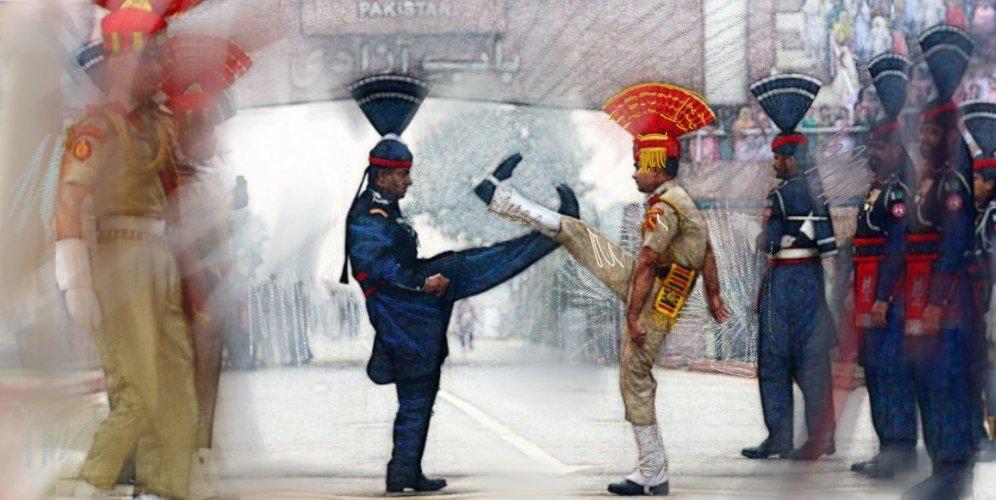
India and Pakistan: A Central Asian Perspective on Two Military Giants

The new round of heavy clashes involving India and Pakistan over the disputed region of Kashmir – then settled by a bilateral adherence to a “full-scale ceasefire” – has also been a confrontation involving the players surrounding the two Asian giants.

The involvement of some of them took place in plain sight: take the case of Turkey’s President Recep Tayyip Erdoğan, a staunch ally of Pakistan, which sent the country a military ship and a group of fighter jets. Or China, which in recent years has invested tens of billions of dollars in Pakistan under the Belt & Road Initiative, and has become by far the largest supplier of military equipment to Islamabad. Beijing immediately called on both sides to engage in diplomacy.

On the Indian front, as reported by recent research on the subject, New Delhi is purchasing weapons from an increasingly varied group of countries, including Russia, France, Israel and the United States. The ceasefire saw direct involvement from Washington, which acted as mediator between the two sides.

Given also its geographical proximity to the Indian subcontinent, when it comes to Central Asia it is clear that the region may be called into question in any confrontation between India and Pakistan – or that, at least, would be heavily affected by it.

During the strikes carried out by India against Pakistan following the deadly attack in Indian-controlled Kashmir, the Indian media emphasized the strategic role that the military base India allegedly operates in Tajikistan could play in a possible open confrontation with Pakistan.

Indian experts pointed out that the base could have given New Delhi the ability to strike Pakistan from the west, seriously compromising Islamabad’s air defense capabilities.

Furthermore, China was also called into question in India’s alleged use of the military outpost, as New Delhi is said to be monitoring China’s movements on the northern front using its presence in Tajikistan.

This base is Ayni Airbase, a Soviet-era military facility located near the Tajik capital Dushanbe. The facts we know for certain point to an Indian involvement in the Tajik base which appears to have ended around 2015. In 2002, India, in collaboration with Tajikistan and Russia, financed an operation to refurbish the base, investing around $70 million in the project.

Among the changes made was the lengthening of the runway, which was intended to ensure that it could be used by aircraft operated by the Indian armed forces.

As also stated in the report on Central Asian armed forces drafted by the DC-based The Oxus Society for Central Asian Affairs, after a phase in which it seemed that India would play a concrete role in the management of the base, Dushanbe subsequently backtracked, partly due to pressure from Russia.

The same path was followed by New Delhi’s involvement in the Farkhor airbase, initially used to reach Afghanistan by land by landing Indian cargo planes at the base, located near the border between Tajikistan and Afghanistan. Over the years, the logistical importance of the structure gradually declined until it was finally abandoned by India.

Despite the rhetoric of Indian media, New Delhi’s military presence in Tajikistan is therefore essentially non-existent, unlike that of China. Since 2015, with much attention from the international media, Beijing has built two military outposts in Tajikistan and is said to already have agreements with Dushanbe for the construction of a third facility.

Used purely for intelligence and anti-terrorism purposes, it is not certain that these bases will not also house personnel from the People’s Liberation Army, the Chinese army, in the future.

Pakistan has itself deepened its bilateral security relationship with Tajikistan in recent years. One of the most important steps was taken in 2021 with the signing of a memorandum of understanding, according to which Pakistan would begin supplying Tajikistan with domestically produced weapons.

Given the absence of an Indian military outpost in Tajikistan, and more generally in the region, New Delhi nevertheless maintains significant bilateral relations on security affairs with the Central Asian republics.

Proof of this can be found, for example, in the military drills that the Asian giant periodically conducts with Kazakhstan, Uzbekistan and Kyrgyzstan. The longest relationship in this regard is with Bishkek: in March 2025, the twelfth edition of the joint exercises, known as Khanjar, was held, which saw the participation, as reported by the Indian Ministry of Defence, of troops from The Parachute Regiment (Special Forces) for India and the Kyrgyz Scorpion Brigade.

In 2024, the eighth edition of the joint exercises between India and Kazakhstan, Kazind, was held on Indian territory, for the first time including the Air Forces and Airborne Assault Forces of Kazakhstan.

A few weeks ago, in mid-April 2025, the sixth edition of Dustlik, the joint exercises held annually by New Delhi and Tashkent, took place as well.

A few weeks ago, another very important step was taken but on the Pakistani side: Kazakh president Kassym-Jomart Tokayev received in Astana General Asim Munir, the Chief of Army Staff of the Pakistan Armed Forces.

During the several meetings that took place, possible collaborations in the field of defense were also discussed, including technical-military cooperation and combat and special forces training. Munir, who is usually active behind the scenes and far from the spotlight, during the recent crisis emerged as one of the most prominent figures, clearly announcing Islamabad’s willingness to respond forcefully to any Indian attack.

As can be seen, the security ties between India and Pakistan and the Central Asian republics are remarkable. The latter’s caution on security issues and close military ties with Russia are factors that would suggest that Central Asia would be spared from a large-scale conflict between India and Pakistan.

On the other hand, however, in such a case, China could be called upon to support its ally Pakistan. As we have seen, Beijing has a significant military presence in Tajikistan, a factor that should not be underestimated when considering the possible repercussions in Central Asia of the instability in the subcontinent.

That said, what is certain is that an open conflict could destabilize the entire area, from Afghanistan to the Central Asian republics, and its impact would be felt on several fronts.


Top Kyrgyz Heart Surgeon Warns of Critical Infrastructure Shortfalls Costing Lives

Prominent heart surgeon Kaldarbek Abdramanov has issued a stark warning about the dire state of cardiac care in Kyrgyzstan, stating that thousands of lives are being lost due to the lack of adequate medical infrastructure. His urgent appeal, posted on Facebook, has sparked widespread public concern.

Abdramanov emphasized that while Kyrgyz cardiac surgeons have performed more than 70,000 heart surgeries since the country’s first operation in 1959, systemic failures are now threatening the field’s progress. “Although we do not yet perform heart transplants, which is every cardiac surgeon’s dream, this is due to a lack of proper infrastructure and equipment, not knowledge,” he wrote.

The surgeon recalled a fire last winter at the Research Institute of Heart Surgery and Organ Transplantation, which left the facility severely damaged. Since then, staff have been working in makeshift, substandard conditions not suited for complex procedures. He criticized the international aid programs targeted at the center as largely symbolic, offering little real assistance.

“We are the students and followers of the great Isa Akhunbaev. We’ve conducted 70,000 heart surgeries and perform nearly all procedures that clinics in Europe and the U.S. do. We have the expertise and the specialists, but not the environment to support our work,” Abdramanov stated.

He called for the urgent construction of a new, modern cardiology complex with at least 250 beds. “Yes, such facilities are expensive. But no cost is higher than the lives of hundreds or thousands of citizens who die each year due to the absence of this kind of center,” he warned.

Abdramanov also voiced frustration with foreign medical missions, accusing them of offering superficial support. “They come and perform basic surgeries that our young specialists could handle. They don’t teach us new technologies and they don’t leave behind any equipment. This is not real help,” he said.

His remarks come amid political fallout in the health sector. President Sadyr Japarov recently publicly criticized Health Minister Erkin Chechebaev for failing to manage the country’s hospitals effectively. The president was informed that 24 children with critical heart conditions are awaiting surgery, with three deaths reported in recent days.

Mysteries Remain Over Soviet Spacecraft That Reentered Earth’s Atmosphere

The saga of a Venus-bound lander probe that launched from Soviet-run Kazakhstan in 1972 and made an uncontrolled reentry into Earth’s atmosphere on Saturday had triggered wide international interest, partly because there was so much uncertainty about its return. Would the spacecraft make it through the atmosphere intact? Where exactly would it end up?

One thing is for sure: the Cosmos 482 spacecraft is down (and no one has to worry anymore about the very remote possibility of an encounter with flying spacecraft debris). But the answers to some of the mysteries about the lander still appear to elude scientists, or at least are the subject of continuing debate.

Russian space agency Roscosmos said on Telegram on Saturday that the lander “entered the dense layers of the atmosphere at 9:24 Moscow time, 560 km west of Middle Andaman Island, and fell in the Indian Ocean west of Jakarta.”

The Russian statement was extensively reported by media organizations around the world. However, Dr. Marco Langbroek, a scientist based in the Netherlands, said on X that “it is not at all clear how accurate that position is and what it is based on, and whether it better represents the other estimates.”

Some other space agencies and institutions had predicted other reentry points, including in the Pacific Ocean.

“There is a planet-size discrepancy in some predictions about the Soviet Venus probe’s impact point this morning, but everybody seems to agree it is down and it is in the ocean (our condolences to all “hope it is in my backyard” wishes),” space journalist Anatoly Zak wrote on Saturday.

For its part, NASA concurred with Roscosmos that the lander probe had plunged into the ocean west of Jakarta, but the U.S. space agency didn’t say how it arrived at the conclusion. “Because the probe was designed to withstand entry into the Venus atmosphere, it is possible it survived reentry,” NASA said.

The spacecraft had a titanium protective shell originally designed to get through the extreme atmosphere of Venus, which has the hottest surface of any planet in the solar system.

There was also uncertainty at the European Space Agency, which said in its last update on Saturday that the spacecraft hadn’t been spotted over Germany as expected and that it hadn’t received “any reports on visual direct observations of the final re-entry, or on any impacts on the ground.”

The Soviet Union launched Cosmos 482 from the Baikonur Cosmodrome in Kazakhstan, then a Soviet republic. The probe never got out of Earth’s orbit and moved closer to Earth’s atmosphere over the decades.

Today, Russia operates the Baikonur Cosmodrome, which retains a popular allure for its role in early space exploration and is still a vital part of the Russian space program.

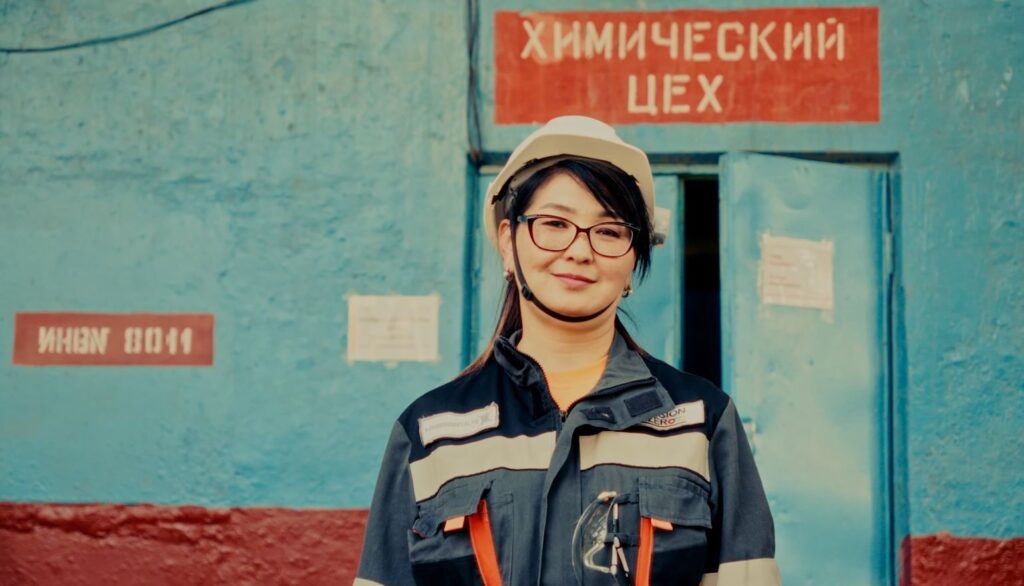
Video: Meet Marziya Aitzhanova, the Woman Helping To Bring Purified Water to Shymkent

The Times of Central Asia spoke to Marziya Aitzhanova, who is helping to bring purified water to Shymkent as part of the growing number of women in management positions in New Kazakhstan. “We purify two kinds of water,” she told TCA, “one desalinated and the other chemically purified. The first goes to the boiler and turbine, and the second goes to the city for heating.”


Kazakhstan Attracts British Agricultural Technologies

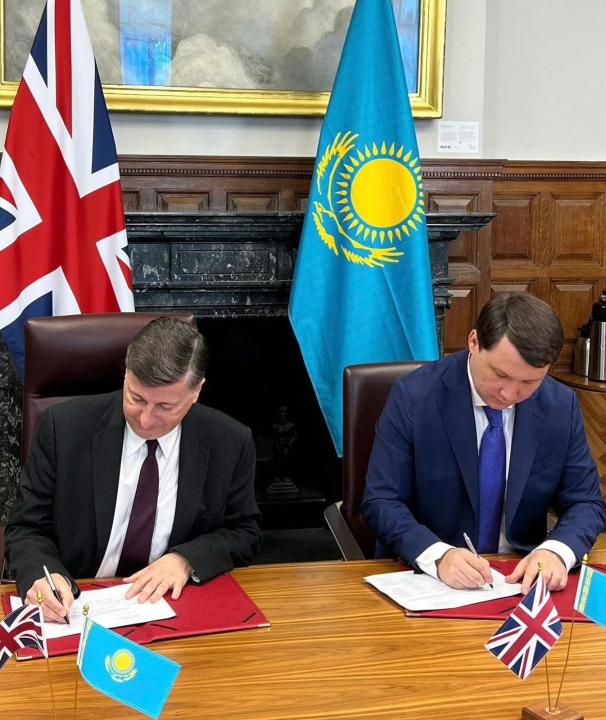
Kazakhstan and the United Kingdom have signed a roadmap for cooperation in agriculture, paving the way for partnerships in agricultural science, the export and processing of agricultural products, and the transfer of British agricultural technologies.

According to the Kazakh Ministry of Agriculture, the two countries also signed memorandums of understanding on collaboration in water resource management and the production of biopharmaceuticals in Kazakhstan in partnership with AstraZeneca.

These agreements were concluded during the 11th meeting of the Kazakhstan-UK Intergovernmental Commission on Trade and Economic Cooperation, held in London last week.

Deputy Minister of Agriculture Ermek Kenzhekhanuly stated that the introduction of British technologies and investment would enhance the competitiveness of Kazakhstan’s agro-industrial sector and improve its resilience to climate change. “In 2024, agricultural trade between Kazakhstan and the UK totaled $50 million. We intend to significantly increase this figure,” he said.

At the meeting, Deputy Minister of Foreign Affairs Alibek Kuantyrov, who headed the Kazakh delegation, emphasized the UK’s strategic role: “The UK is one of Kazakhstan’s key trading partners and top investors, with total FDI (Foreign Direct Investment) exceeding $22 billion. We greatly value the UK’s contribution to the development of Kazakhstan’s key industries and are committed to building a next-level partnership, focused on investment, technology, and knowledge transfer.”

The Strategic Partnership and Cooperation Agreement signed between the two countries last year has opened new avenues for collaboration in critical minerals, green energy and climate initiatives, transport and logistics, pharmaceuticals and healthcare, education, and financial services.

Kazakh Partisans Honored for Role in French Resistance

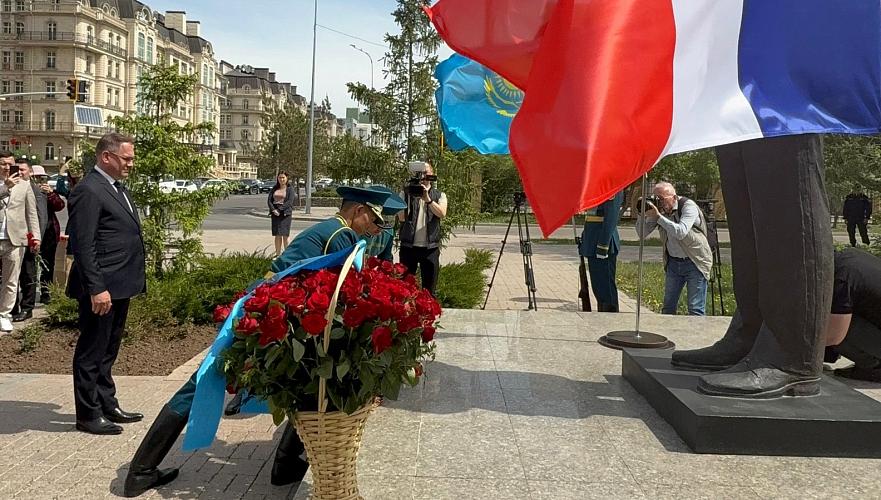
On May 8, 2025, a solemn ceremony commemorating the 80th anniversary of the Liberation of France was held in Astana at the monument to General Charles de Gaulle. During the event, French diplomats posthumously awarded medals to three Kazakh partisans, Kadem Dzhumaniyazov, Kabysh Omarov, and Ashimbek Istybayev, for their contributions to the French Resistance during World War II.

The awards were presented by Sylvain Guillemot, Ambassador Extraordinary and Plenipotentiary of France to Kazakhstan. According to the French Embassy’s press service, the medals were signed personally by Sébastien Lecornu, France’s Minister of the Armed Forces, who also took part in the ceremony.

“The memory of May 8, 1945, unites us, for this day marks the end of hostilities against a common enemy. However, today, in addition to celebrating the 80th anniversary of the Liberation of France, we are particularly keen to pay tribute to the Kazakh partisans who fought side by side with French soldiers on our soil,” Guillemot stated during the ceremony. “All of France stands behind us.”

Guillemot emphasized that Dzhumaniyazov, Omarov, and Istybayev were not just names but “faces and destinies” among the hundreds of Kazakh fighters who demonstrated heroism in France. “I am deeply proud and moved to have the honor of presenting the awards that rightfully belong to them and that should adorn their chests upon their return to their homeland. These are not commemorative medals, but real combat decorations,” he said.

The ambassador added that the recognition represents a powerful symbol of the enduring friendship between France and Kazakhstan, a bond, he noted, “forged in blood.”

Historical records indicate that approximately 300 ethnic Kazakhs participated in the French Resistance during World War II.