• KGS/USD = 0.01144 0%
  • KZT/USD = 0.00211 0%
  • TJS/USD = 0.10460 0.19%
  • UZS/USD = 0.00008 0%
  • TMT/USD = 0.28490 0%
  • KGS/USD = 0.01144 0%
  • KZT/USD = 0.00211 0%
  • TJS/USD = 0.10460 0.19%
  • UZS/USD = 0.00008 0%
  • TMT/USD = 0.28490 0%
  • KGS/USD = 0.01144 0%
  • KZT/USD = 0.00211 0%
  • TJS/USD = 0.10460 0.19%
  • UZS/USD = 0.00008 0%
  • TMT/USD = 0.28490 0%
  • KGS/USD = 0.01144 0%
  • KZT/USD = 0.00211 0%
  • TJS/USD = 0.10460 0.19%
  • UZS/USD = 0.00008 0%
  • TMT/USD = 0.28490 0%
  • KGS/USD = 0.01144 0%
  • KZT/USD = 0.00211 0%
  • TJS/USD = 0.10460 0.19%
  • UZS/USD = 0.00008 0%
  • TMT/USD = 0.28490 0%
  • KGS/USD = 0.01144 0%
  • KZT/USD = 0.00211 0%
  • TJS/USD = 0.10460 0.19%
  • UZS/USD = 0.00008 0%
  • TMT/USD = 0.28490 0%
  • KGS/USD = 0.01144 0%
  • KZT/USD = 0.00211 0%
  • TJS/USD = 0.10460 0.19%
  • UZS/USD = 0.00008 0%
  • TMT/USD = 0.28490 0%
  • KGS/USD = 0.01144 0%
  • KZT/USD = 0.00211 0%
  • TJS/USD = 0.10460 0.19%
  • UZS/USD = 0.00008 0%
  • TMT/USD = 0.28490 0%

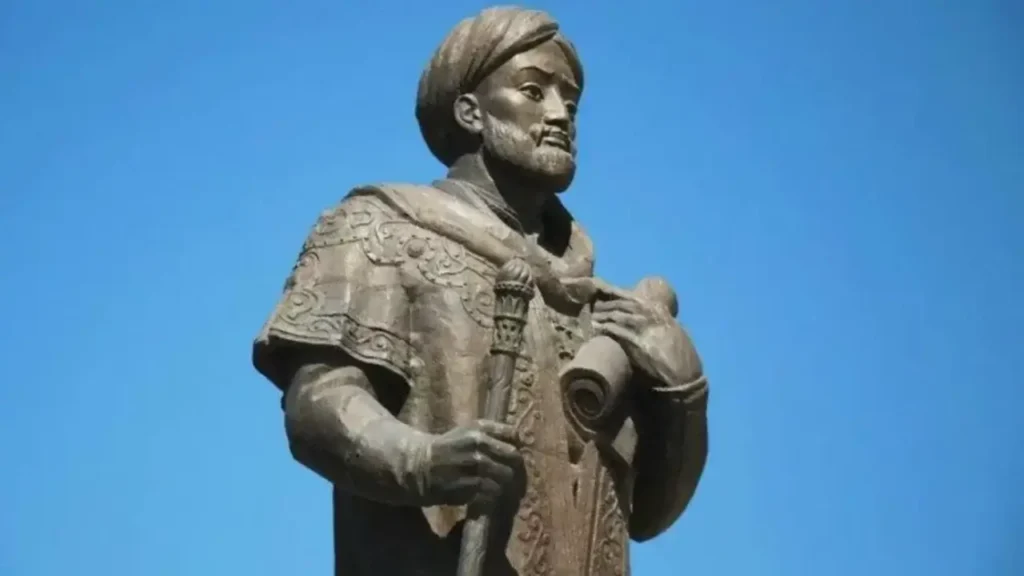
Afghanistan Dismantles Navoi Statue, Plans New Memorial Amid Uzbek Backlash

The Taliban authorities in Afghanistan have dismantled the statue of renowned Timurid-era poet and thinker Alisher Navoi in Mazar-i-Sharif, according to a report by Amu.

Local sources told the outlet that the monument, located in the telecommunications square of the city’s third district, was completely removed. The decision has drawn criticism from Uzbek cultural figures and officials, who argue that the Taliban are disregarding the spiritual heritage of other peoples and eroding the region’s historical and cultural uniqueness.

In response, Uzbekistan’s Ministry of Foreign Affairs, through spokesperson Ahror Burhonov, sought clarification on August 21. “As soon as we learned that the monument to the great poet and thinker Alisher Navoi in Mazar-i-Sharif had been dismantled, Uzbekistan’s Foreign Ministry immediately contacted representatives of the Afghan authorities to obtain an official explanation,” Burhonov said.

Initial explanations from Afghan officials claimed the statue’s location was not dignified enough to properly honor Navoi. They announced plans to construct a new memorial complex, which would include a new statue, restored inscriptions on Navoi’s life and work, and the renaming of the square in his honor.

Burhonov added that Afghan authorities had expressed regret over the statue’s removal without prior consultation with the Ministry of Culture or the public. He emphasized that the Afghan side reaffirmed its commitment to preserving Navoi’s legacy and pledged to take appropriate measures to commemorate him respectfully.

Alisher Navoi (1441-1501), born in Herat, modern-day Afghanistan, is widely recognized as the father of early Turkic literature. He remains a powerful cultural symbol for Uzbeks and other peoples across Central Asia.

The statue had stood in Mazar-i-Sharif for approximately 17 years. It was previously damaged before its complete removal.

As reported by Dunyo, Afghan officials reiterated that the statue’s location was unsuitable and reaffirmed plans to establish a larger and more dignified memorial site. The new monument is expected to include multilingual plaques in Uzbek, English, Dari, and Pashto, recounting Navoi’s life and contributions.

At a public event on August 21 attended by local officials, diplomats, and journalists, Mazar-i-Sharif Mayor Abdurahman Himmat said that Afghans deeply respect Navoi’s legacy. “We will turn this monument into a worthy place of remembrance for both local residents and foreign visitors,” he stated.

Himmat noted that around 40 projects are currently planned in the city, including restoration efforts for monuments dedicated to cultural icons such as Navoi, Magtymguly Pyragy, and 13th-century poet Jalal ad-Din Rumi. He also highlighted the construction of the Imam al-Bukhari madrasah, supported by Uzbekistan, as a symbol of close bilateral ties. The project was first announced by Uzbekistan last year.

Jafar Fattayev, head of the Uzbek Council in Mazar-i-Sharif, welcomed the Afghan initiative, calling it a gesture of respect for Navoi and Uzbek cultural heritage.

Kazakhstan Introduces Criminal Liability for Stalking

For the first time, Kazakhstan has established criminal liability for stalking at the legislative level, according to the General Prosecutor’s Office.

New Article in the Criminal Code

On July 16, 2025, President Kassym-Jomart Tokayev signed a law amending the Criminal Code to include Article 115-1, titled “Stalking.”

The article defines stalking as the unlawful pursuit of an individual through persistent attempts to establish contact or conduct surveillance against their will, causing significant harm but without the use of physical violence.

Punishments include a fine of up to 200 monthly calculation indices (MCI), up to 200 hours of community service, or arrest for up to 50 days. If stalking involves threats, blackmail, or invasion of privacy, it may be prosecuted under other provisions of the Criminal Code.

“The purpose of introducing this liability is to protect victims at an early stage and to establish zero tolerance for violent and aggressive behavior,” the Prosecutor General’s Office stated.

From Proposal to Law

The idea to criminalize stalking was first raised in 2023 during a coordination council meeting at the Prosecutor General’s Office. Marat Abishev, head of the Service for the Protection of Public Interests, highlighted the growing prevalence of obsessive harassment, particularly targeting women.

“Women are increasingly faced with the phenomenon of stalking, that is, obsessive persecution,” he said.

Abishev noted that many countries, including Germany, the US, Canada, the UK, Norway, Poland, Moldova, the Netherlands, and India, have long established criminal penalties for stalking.

In contrast, Kazakhstan lacked even administrative regulation until now. Abishev initially proposed studying the issue and introducing relevant amendments to the Code of Administrative Offenses. However, the country has since taken a stronger stance by enacting full criminal liability.

The General Prosecutor’s Office urges citizens not to ignore signs of stalking. “In such situations, it is necessary to immediately contact the internal affairs authorities,” the agency advised.

How to Identify Stalking

In an interview with MIR24.TV, lawyer Artem Baghdasaryan explained that under the new Kazakh legislation, stalking involves intrusive, repeated attempts to contact or monitor a person against their will, resulting in significant psychological or personal harm but without physical violence.

He emphasized that stalking is defined by systematic behavior rather than isolated incidents.

Key indicators include:

  • Continuous surveillance near the victim’s home or in public
  • Frequent phone calls, text messages, or unwanted social media interactions
  • Collecting personal data without consent, such as routes or contacts
  • Lurking in public places frequented by the victim

Internationally, this list often includes online harassment and the sending of unsolicited gifts.

Comparison with International Practice

Many Western countries have recognized stalking as a criminal offense since the 1990s, with laws in the US, UK, and Germany carrying prison terms for offenders.

In contrast, Russia has not yet adopted a separate criminal statute. There, lawmakers have proposed a phased approach: beginning with administrative liability and restraining orders, followed by criminal prosecution for repeat offenses.

“While Kazakhstan has taken a decisive step by introducing a criminal article right away, Russia is moving toward gradual regulation,” Baghdasaryan noted.

In his view, both approaches aim to protect fundamental human rights to privacy and personal security.

With this reform, Kazakhstan becomes one of the first countries in Central Asia to explicitly criminalize stalking and intrusive interference in private life.

Henry Wallace’s Journey to Central Asia and Its Connection to Kazakhstan

Central Asia has long held significance for the Western world — both in the past century and today. The region is home to ancient peoples and rich indigenous traditions. As a journalist from Kazakhstan, I became curious about the cultural ties between the United States and my country. In 2023, I studied at George Washington University through the Bolashak scholarship program to explore this subject in depth. My research led me to numerous works written by American travelers and scholars. Among them, I discovered a book authored by former U.S. Vice President Henry Wallace, based on his journey to Central Asia.

Henry Wallace
Credit Hudson Institute

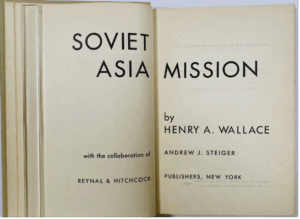
His book, Soviet Asia Mission, was published in New York in 1946 and reflects observations from that trip. During this special mission in 1944, Wallace first traveled through Siberia, where he studied the conditions of the local population, before continuing on to the Kazakh steppe.

Wallace describes the social and political realities of Kazakhstan under Soviet rule, as well as the industrial projects that caught his attention. As a senior American politician, he was particularly interested in production and agriculture. “Down to meet us at the airfield was the director, Georg Georgevich Spitsen. In motorcars, we drove at once to the largest of Karaganda’s three big open-pit coal mines. With a sweeping gesture, Spitsen said: “We are digging 6,000 tons of coal a day here. Production began a year ago.” A proud shovel operator, scooping up tons of run-of-mine coal to load into steel hopper cars, waved to us. The tracks were driven directly into the cut. We looked closely at the shovel’s trademark. It was a Bucyrus Erie electric shovel, one of three at work here, and had been shipped in under lend-lease from the United States.”

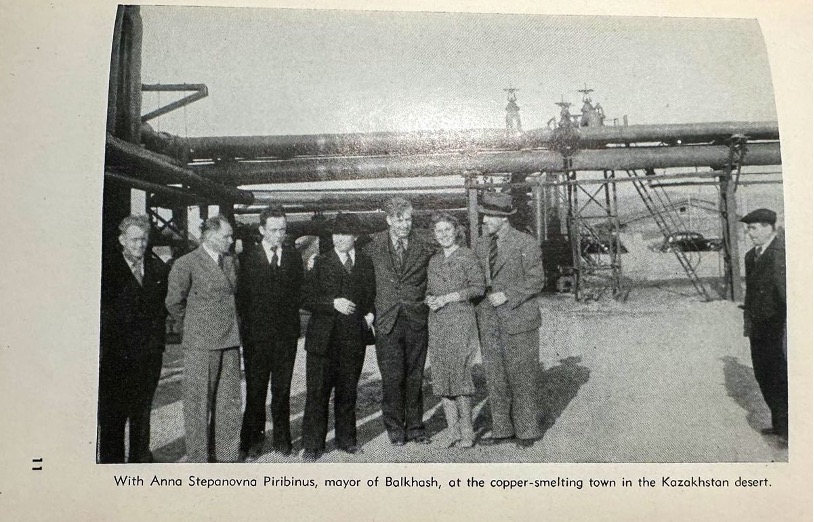
His journey to Kazakhstan in the previous century demonstrates that U.S.–Kazakh political contacts began earlier than is often assumed.. Although Kazakhstan’s place in the Soviet system was highly constrained, Wallace’s account provides valuable insight into the wartime Soviet republics.. “After lunch at Karaganda, we took off, flying southwest over very dry country. Even the streams were dried out, except in deep valleys where clusters of huts could be seen in the midst of green oases. When still a long distance away, we could see a wide expanse of water ahead. It was Lake Balkhash, bright blue in the midst of gray, treeless country. Along the shore rose the smoking stacks of smelters. On landing at the dirt airfield, we were welcomed to the copper-smelting town of Balkhash by its mayor, Anna Stepanovna Piribinus, president of the city Soviet.”

His next stop was Semipalatinsk (today’s Semey). There Wallace spoke with Dimitri Chuvakhin of the Soviet Foreign Office, who accompanied him on the trip. “This kind of thing,” he said, referring to the new towns we had seen, “this kind of thing saved Russia. Trotsky was against it; he thought there had to be a world revolution. Stalin had faith in the moral stamina of the Russian people. Stalin said: We can and we will. And our people did. They created the necessary capital out of their own hides. Russia would have lost the war without Karaganda.”


Henry A. Wallace was greeted with music and performances throughout his tour
Credit Wallace Center of Iowa

History records that livestock numbers in Kazakhstan dropped sharply during Soviet collectivization and wartime requisitioning, leading to widespread famine. Wallace noted these hardships in his book “During the war, the Far Eastern farms helped supply the Red Army. The flour milled at Karaganda was being shipped to soldiers at the front. Siberia is also aiding in the restoration of agriculture in the devastated areas of European Russia. A typical example is Semipalatinsk oblast, which sent 5 carloads of relief goods, 40,000 head of cattle, and 2,000 farm workers to help re-establish the cattle industry in reoccupied territory. These contributions to the national farm life are a further illustration of the present strength of Siberian agriculture. Its future is assured.”

Nurtas Undasynov, Prime Minister of Kazakhstan, 1938-1951

At a welcome banquet, Wallace sat beside Nurtas Undasynov, then chairman of the Council of Minsters of the Kazakh Soviet Socialist Republic. Wallace mistakenly referred to him as “President” in his book. Wallace notes that Undasynov is the chief executive in a country four times the size of Texas, a region that provides the Soviet Union with 40 percent of its copper and more than 80 percent of its lead, and has reserves of strategic minerals-tungsten, molybdenum, mercury, tin, and uranium, source of atomic energy.


Route of the Wallace mission, 1944.
Credit Henry A. Wallace, Soviet Asia Mission
(New York: Reynal and Hitchcock, 1946).

Different historical sources record Kazakhstan’s population in the 20th century with some variation. Wallace offered his own impression: “In other words, the Kazakh Soviet Republic has a population comparable to that of New York City, dispersed in an area as large as the United States east of the Mississippi. The Russian [republic] is four times greater in extent but with a comparably sparse settlement. The Uzbek is the most densely populated of these three republics, which contain 95 percent of the land and go percent of the People of Soviet Asia. Soviet Asia’s remaining three union republics-the Turkmen, the Tadzhik, and the Kirghiz, all in its central section have a combined area of about 300,000 square miles and in 1939 had a combined population of 4,500,000—both figures comparable to the single state of Texas.”


Despite the limits of his perspective, Wallace’s records remain significant. He began his chapter on Kazakhstan with a clear statement: “I expressed my opinion about the need to raise the standard of living of the people here. I am sure that it is impossible to achieve lasting peace without it. The next morning, June 18, I said goodbye to Ambassador Harriman, who was about to return to Moscow, and he told me that my visit would bring a positive start.”

Henry Wallace’s Soviet Asia Mission remains one of the most detailed American accounts of Central Asia during the Soviet era. His observations of Kazakhstan and its neighbors provide a rare Western perspective on the region at a pivotal moment in world history.

South Korea to Support Air Quality Improvement in Kyrgyzstan

The Korea International Cooperation Agency (KOICA) has launched a major initiative to improve air quality in Kyrgyzstan, with a particular focus on the capital, Bishkek.

On August 20, Bishkek hosted the signing ceremony for the Record of Discussions between KOICA and the Ministry of Natural Resources, Ecology, and Technical Supervision, marking the official start of the Air Quality Improvement Project in the Kyrgyz Republic.

The event was attended by Kim Kwang-jae, Ambassador of the Republic of Korea to the Kyrgyz Republic; Meder Mashiev, Minister of Natural Resources, Ecology, and Technical Supervision; and Lim So Yeon, KOICA Country Director in Kyrgyzstan.

According to KOICA, the project will run through 2028 with a budget of $10 million. It aims to enhance Kyrgyzstan’s capacity to respond to climate change and improve urban air quality.

Air pollution is a persistent challenge in Bishkek, home to over one million residents. The situation worsens during winter when widespread coal use for heating sharply increases harmful emissions. Bishkek frequently ranks among the world’s top 10 most polluted cities on IQAir’s global air quality index.

Key components of the project include:

  • Phased implementation of air pollution mitigation measures in Bishkek
  • Development of a “Comprehensive Air Quality Management Plan for 2028-2038”
  • Pilot introduction of green heating systems (heat pumps) in public educational institutions

The project plans to install heat pumps in approximately 30 schools and kindergartens in the Chui region, which includes Bishkek. This initiative is expected to benefit an estimated 2.3 million residents by creating a healthier and more comfortable environment.

At the launch event, Ambassador Kim highlighted the urgency of the initiative: “The issue of air quality is of particular concern in Bishkek, and it is important to address it. We look forward to the successful implementation of the project and continued collaboration with the Ministry.”

KOICA Country Director Lim added: “We hope these efforts will lead to tangible results in combating climate change and improving public health, serving as an important example of international cooperation.”

Minister Mashiev expressed gratitude to KOICA, which has operated in Kyrgyzstan for over a decade: “We highly value our cooperation with the government of the Republic of Korea and intend to continue developing our relations.”

South Korean involvement in environmental initiatives in Kyrgyzstan has expanded in recent months. Efforts include promoting eco-friendly transport and reducing emissions in major urban centers.

The Public-Private Partnership Center under the National Investment Agency of Kyrgyzstan, together with OJSC Chakan HPP and South Korea’s BLUE NETWORKS CO., LTD., a company specializing in EV charging infrastructure, has agreed to establish a local manufacturing facility and roll out a nationwide EV charging network.

In June, Kyrgyzstan’s Ministry of Economy and Commerce also signed a memorandum of understanding with South Korean firms EVSIS, NGS, and the Korea Automobile Environment Association to develop EV charging infrastructure in Bishkek.

Kazakhstan Establishes New Nature Reserve in Zhambyl Region

The Merke Regional Nature Park has been established in Kazakhstan’s southern Zhambyl region. Granted the status of a protected natural area, the park aims to preserve the unique ecosystems of the foothill and mountain zones of the Western Tien Shan.

Covering 86,632 hectares, Merke is home to rare and endemic species, including snow leopards, argali sheep, Indian porcupines, and Turkestan lynxes.

The park also opens avenues for developing ecotourism, environmental education, and inclusive community engagement in sustainable land use. Future plans include infrastructure development, job creation, and the implementation of scientific and educational programs.

Its establishment was made possible through strong collaboration among government bodies, scientific institutions, local communities, and international partners, including the United Nations Development Programme (UNDP).

“UNDP supports Kazakhstan’s efforts to expand its protected area system and strengthen environmental policy at the regional level. Merke Park is a strong example of how local initiatives contribute to global biodiversity goals and climate resilience,” said Katarzyna Wawiernia, UNDP Resident Representative in Kazakhstan.

As part of ongoing cooperation between Kazakhstan and the UNDP, ten new specially protected natural areas have already been created nationwide, including the Akzhayik, Altyn-Dala, and Ile-Balkhash nature reserves, as well as the Buyratau, Zhongar Alatau, and Tarbagatai national parks. Additionally, six existing protected areas have been expanded.

For the first time, Kazakhstan has also established the Kapshagay-Balkhash and Yrgyz-Torgay-Zhylanshyk ecological corridors, spanning 2.9 million hectares, to safeguard the migration routes of rare animal species.

The Forgotten Aral Sea That Holds the Key to Our Planet’s Future

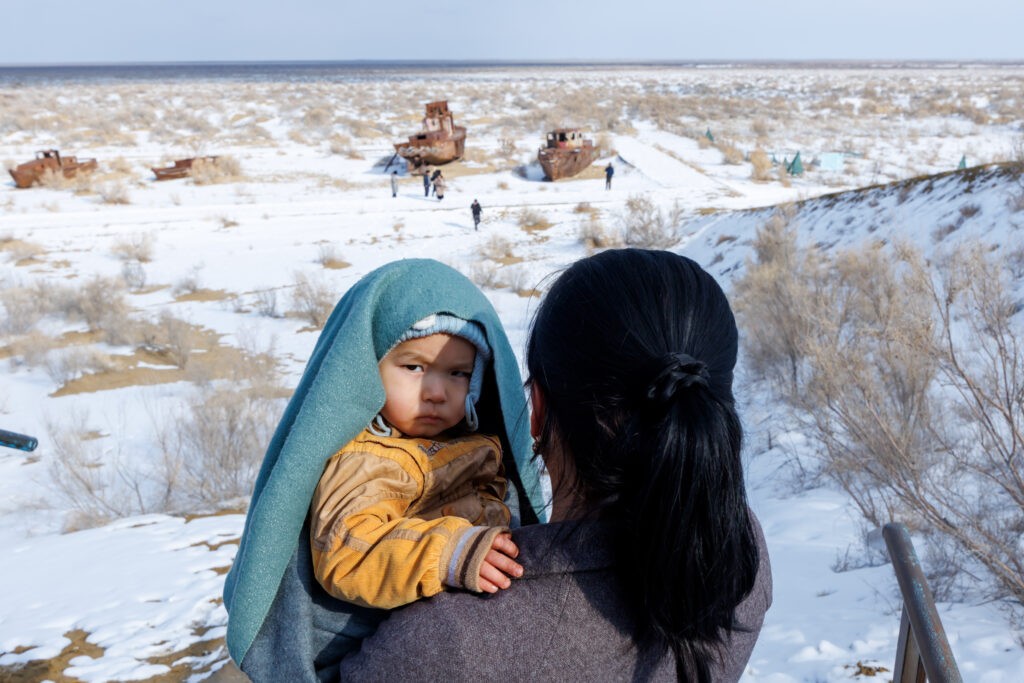
The drying of the Aral Sea is the worst environmental tragedy I have ever seen with my own eyes. Once a vast inland sea, shimmering and alive, it has now withered into patches of salt-crusted desert, where rusting ships lie stranded and winds carry toxic dust across the land.

For me, the Aral’s decline is not just a local crisis but a mirror of our broader failures to protect nature. And as I look at the globe today, I see another unfolding catastrophe of equal or even greater scale: the rise of the seas, the surge in tsunamis and cyclones, and the slow drowning of coastal cities. What connects these tragedies is our failure to understand the balance of water on this planet, and our inability to act before the damage becomes irreversible.

The Aral Sea was once the world’s fourth-largest inland lake, covering over 68,000 square kilometers. Situated between northern Uzbekistan and southern Kazakhstan, it supported millions of people with its fisheries, fertile lands, and unique ecosystem. The Amu Darya and Syr Darya rivers sustained it for centuries. But during the Soviet era, these rivers were diverted on a massive scale to irrigate cotton fields.

At first, the shrinking of the Aral was gradual. Then, over the decades, it became catastrophic. More than 90% of the Aral Sea has disappeared. Today, the once-mighty expanse has been reduced to just 3,500 square kilometers, scattered into four smaller lakes.
The consequences are heartbreaking. The fishing economy collapsed, agricultural land turned barren, and the rich biodiversity of the region has been pushed to the edge of extinction. The exposed seabed, laced with salt and pesticides, has become a toxic dust bowl, carried by winds across Central Asia, poisoning crops and human lungs alike.

Villages that once lived by the water’s edge are now stranded dozens of kilometers from the shore. I have walked across that dead seabed and seen children playing where fishing boats once floated. It is a ghostly, painful reminder of how quickly human choices can destroy nature’s gifts.

The Aral is often described as one of the world’s greatest environmental tragedies, yet so few people outside the region even know it happened. In the global imagination, it is almost forgotten, and that silence is itself a tragedy. For me, however, it has remained a wound, a constant reminder that ecological damage once done is almost impossible to undo. Restoration projects exist, but they move slowly, too slowly for a sea that once teemed with life.

While I mourn the Aral, I cannot ignore the other side of the planet’s water crisis. Even as one great body of water has disappeared, the oceans are swelling. Sea levels are rising at an accelerating rate, fueling tsunamis and cyclones that now strike more often and with greater intensity. Where the Aral vanished through human mismanagement of rivers, the oceans rise because of another kind of mismanagement: decades of greenhouse gas emissions and our failure to protect glaciers and ice sheets.

Throughout most of the twentieth century, the average global sea level rose at about 1.4 millimeters per year. But from 2006 to 2015, this rate jumped to 3.6 millimeters annually, and it continues to accelerate. I have spent more than three decades advocating for the preservation of glaciers, which are one of the key drivers of sea-level rise as they melt. I tried my best to protect them, to sound the alarm, to urge action. But after all these years, nothing substantial has been achieved. The ice continues to disappear, and the oceans creep higher, swallowing coastlines inch by inch.

The impacts of rising seas are profound. A rise of just one foot may sound modest, but a single foot of sea-level rise can flood neighborhoods, destroy wetlands, and make once-rare storm surges a regular occurrence. Drainage systems fail, rivers back up, and floods spread even far inland. Coastal homes and businesses suffer damage, transportation systems falter, and economic stability is threatened. For some communities, flooding will become permanent; for others, fertile wetlands will simply be lost to open water.

The cities most at risk are among the largest in the world. In the United States, New York and Miami are already struggling with “sunny-day flooding,” where high tides alone can inundate streets. In Asia, megacities like Shanghai, Bangkok, Kolkata, Mumbai, and Dhaka face even greater peril. Their sheer size and population density mean that millions could be displaced, with trillions of dollars in infrastructure and assets at risk. These are not hypothetical dangers—they are happening already.

The rising seas also amplify natural disasters. Just three weeks ago, tsunami waves struck parts of Russia, Japan, and the United States after a massive earthquake off Russia’s coast, with alerts spreading across Latin America, Asia, and the Pacific. Scientists have long warned that higher seas give every tsunami and cyclone greater destructive power. Storm surges push farther inland, waves rise higher, and damage multiplies. Cyclones, fed by warmer waters, are becoming stronger and more frequent, transforming once-rare disasters into routine occurrences.

As I reflect on these global events, I cannot help but see a connection between the Aral’s disappearance and the swelling seas. On the surface, they seem like opposites—one a vanishing body of water, the other an overabundance. Yet in truth, they are both symptoms of the same problem: human disregard for the planet’s natural balance. The Aral vanished because rivers were mismanaged, diverted without thought for consequences. The seas are rising because the atmosphere has been overloaded with emissions, melting glaciers that once held the world’s waters in check. Both crises teach us that delay is deadly and that the costs of inaction are unbearable.

For decades, I have thought about solutions—not just small ones but bold, technical steps that match the scale of the problem. And one solution, discussed as early as Khrushchev’s era and again in the 1980s, still strikes me as both possible and necessary. This is the idea of diverting part of Russia’s great north-flowing rivers, such as the Ob and the Irtysh, southward into Central Asia to replenish the Aral Sea.

At present, these mighty rivers flow into the Arctic Ocean, dispersing with little benefit to human societies. Redirecting part of their waters toward Central Asia could serve multiple purposes at once. It could revive the Aral Sea, breathing life back into ecosystems, economies, and communities. It could stabilize the Central Asian climate, reducing toxic dust storms and desertification.

By providing reliable water sources, it could lessen dependence on melting glaciers, which in turn would help slow sea-level rise globally. And indirectly, by stabilizing glaciers and easing water stress, such a project could reduce the risks faced by coastal cities, which are now on the frontlines of climate change.

Of course, this would not be simple. Diverting rivers on such a scale would require vast investment, unprecedented international cooperation, and careful ecological planning. Critics rightly point out that interfering with natural rivers carries risks of its own. Yet when I weigh those risks against the alternative—the loss of entire coastal megacities, the displacement of hundreds of millions, the irreversible drowning of human history—the choice becomes clearer. We cannot afford to do nothing.

Standing on the dry floor of the Aral, I realized I was looking not just at a tragedy of the past, but at a warning for the future. The Aral was once written off as unsalvageable, and today we hear similar whispers about cities like Miami or Dhaka—that saving them may be impossible. But such fatalism is dangerous. It paralyzes us at the very moment when action is most needed. If we learned anything from the Aral Sea, it is that the costs of waiting are catastrophic.

I have lived long enough to see both a sea vanish and oceans rise. These are not abstract lessons but lived experiences, etched into the land and into human lives. They tell us that our relationship with water—whether rivers, lakes, glaciers, or seas—defines the fate of our civilizations. If we continue on this path, the future will be one of drowned coasts and vanished lakes. But if we act boldly, with vision and determination, we can still alter that course. Diverting rivers, investing in resilience, preserving glaciers, cutting emissions—these are not just technical challenges, but moral imperatives.

Now is the moment for decisive global leadership. The world cannot afford to treat rising seas, devastating tsunamis, cyclones, and torrential rainfalls as isolated disasters. They are symptoms of a deeper crisis, one that demands bold and immediate action. If Donald Trump truly wishes to protect the United States from the billions in annual losses caused by cyclones and the kind of torrential rainfall that devastated Los Angeles this year, then he must recognize that the fight against sea-level rise begins not just on American shores, but in Central Asia. The most practical and impactful solution lies in reviving the Aral Sea by implementing the plan that Soviet scientists and planners first proposed in the 1980s: diverting water from Russia’s north-flowing rivers, such as the Ob and the Irtysh, into the Aral Sea first.

This is not merely a regional project; it is a global lifeline. By refilling the Aral Sea, we preserve glaciers, stabilize the climate, and slow the relentless rise of the oceans that threaten to submerge our cities. I hope that in the next high-level talks, President Trump, President Putin, and the United Nations Secretary-General will sit together, not as rivals but as stewards of humanity’s future, and commit to this urgent task. The time has come to act with courage and vision. The world must refill the Aral Sea first if we are to protect our coasts, our cities, and our future generations from the menace of rising seas, tsunamis, cyclones, sea storms, and torrential rainfall.