• KGS/USD = 0.01144 0%
  • KZT/USD = 0.00194 0%
  • TJS/USD = 0.10872 0.18%
  • UZS/USD = 0.00008 0%
  • TMT/USD = 0.28571 0%
  • KGS/USD = 0.01144 0%
  • KZT/USD = 0.00194 0%
  • TJS/USD = 0.10872 0.18%
  • UZS/USD = 0.00008 0%
  • TMT/USD = 0.28571 0%
  • KGS/USD = 0.01144 0%
  • KZT/USD = 0.00194 0%
  • TJS/USD = 0.10872 0.18%
  • UZS/USD = 0.00008 0%
  • TMT/USD = 0.28571 0%
  • KGS/USD = 0.01144 0%
  • KZT/USD = 0.00194 0%
  • TJS/USD = 0.10872 0.18%
  • UZS/USD = 0.00008 0%
  • TMT/USD = 0.28571 0%
  • KGS/USD = 0.01144 0%
  • KZT/USD = 0.00194 0%
  • TJS/USD = 0.10872 0.18%
  • UZS/USD = 0.00008 0%
  • TMT/USD = 0.28571 0%
  • KGS/USD = 0.01144 0%
  • KZT/USD = 0.00194 0%
  • TJS/USD = 0.10872 0.18%
  • UZS/USD = 0.00008 0%
  • TMT/USD = 0.28571 0%
  • KGS/USD = 0.01144 0%
  • KZT/USD = 0.00194 0%
  • TJS/USD = 0.10872 0.18%
  • UZS/USD = 0.00008 0%
  • TMT/USD = 0.28571 0%
  • KGS/USD = 0.01144 0%
  • KZT/USD = 0.00194 0%
  • TJS/USD = 0.10872 0.18%
  • UZS/USD = 0.00008 0%
  • TMT/USD = 0.28571 0%
22 December 2025

Kazakhstan Expands Role as Key Transit Hub for Chinese Exports to Europe

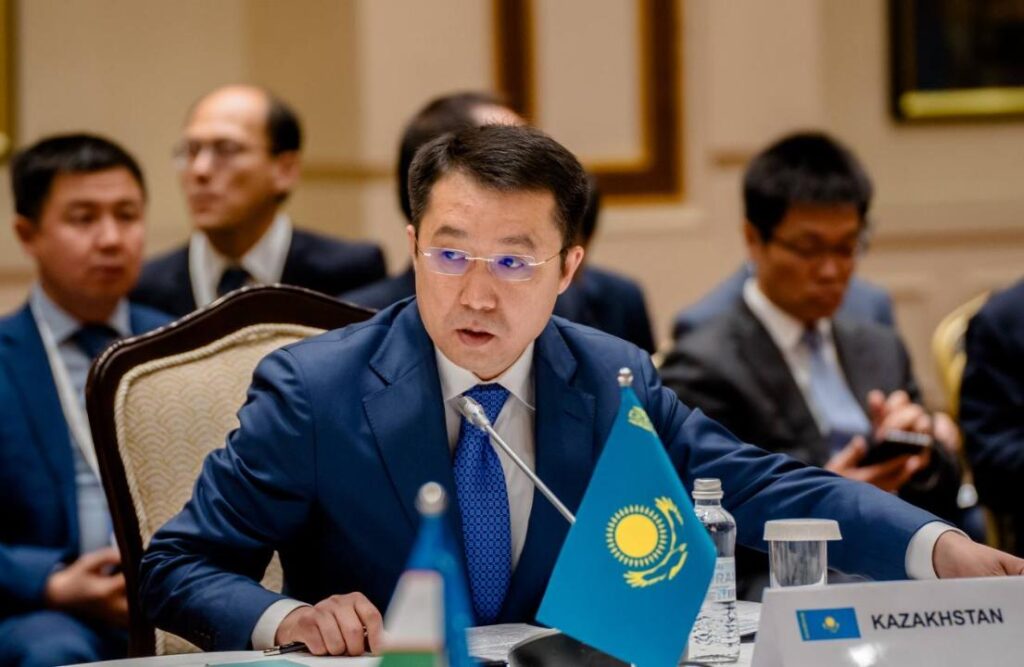
The inaugural Kazakhstan-China Transport Forum, held in Astana on May 15, unveiled a series of initiatives aimed at solidifying Kazakhstan’s position as a major transport and logistics hub for Chinese exports to Russia and Europe.

At the forum, Kazakhstan’s Minister of Transport Marat Karabayev and China’s Minister of Transport Liu Wei discussed the development of a new multimodal transit corridor linking Russia, Kazakhstan, and China. The route will utilize the transboundary Irtysh River, as well as the Ili River, establishing a navigable link from the Kazakh city of Kunayev to Yining in China’s Xinjiang region.

Key infrastructure plans include the construction of a new cross-border bridge at the Maykapshagay-Zimunay checkpoint to accommodate heavy trucks and the opening of a third international air corridor between the two countries. The ministers also discussed establishing two new road checkpoints to better connect East Kazakhstan and the Almaty regions with China.

By the end of 2025, Kazakhstan aims to complete two major rail infrastructure projects: the second track on the Dostyk-Moiynty railway and a bypass line around Almaty station. These upgrades are expected to significantly boost freight capacity and cut cargo transit times between China and Europe via Kazakhstan.

Additional developments include the launch of a direct passenger train between Almaty and Xi’an and an expansion of flight services between the two nations to 65 per week.

Meanwhile, construction is underway on a new container hub at the Caspian Sea port of Aktau, a joint venture with a Chinese company. Scheduled for completion by year’s end, the facility will expand the port’s annual capacity from 140,000 to 240,000 TEUs.

Kazakhstan’s Ministry of Transport reports that in the first quarter of 2025, road freight volumes between Kazakhstan and China surged by 82%, reaching 822,000 tons. Rail freight volumes grew by 13% over the first four months of the year, totaling 11.4 million tons.

These developments highlight Kazakhstan’s growing strategic importance in transcontinental logistics, as China continues to diversify its export routes westward.

Abu Dhabi Energy Giant Joins Offshore Gas Project in Turkmenistan

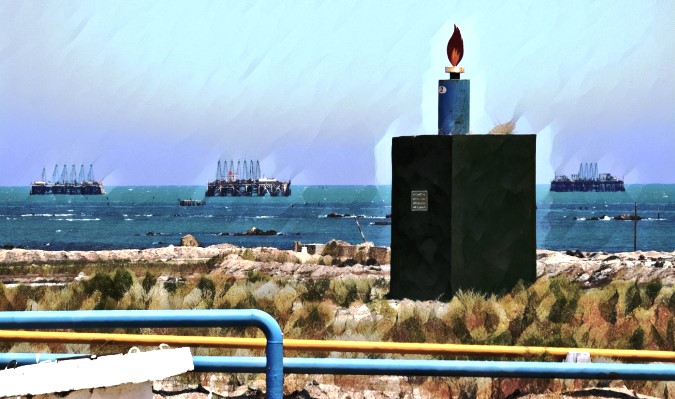
XRG, the international investment arm of the Abu Dhabi National Oil Company (ADNOC), has acquired a significant stake in a major offshore gas project in Turkmenistan’s Caspian Sea sector. The deal was announced on May 14 by energy news outlet Neftegaz, citing the company’s press service.

Established in late 2024, XRG manages $80 billion in assets and focuses on global investments in chemicals, natural gas, and renewable energy. The initiative forms part of Abu Dhabi’s broader strategy to diversify its international portfolio and reduce reliance on crude oil exports.

Under the new agreement, Malaysia’s state energy company Petronas will retain a 57% majority stake in Caspian Block I. XRG will hold 38%, while Turkmenistan’s state company Khazarnabit will control the remaining 5%.

A long-term gas sales agreement was also signed with Turkmenistan’s state concern Türkmengaz. In parallel, Petronas, Khazarnabit, and the state oil company Türkmennebit concluded a new production-sharing agreement for Block I.

Located offshore in the Caspian Sea, Block I currently produces approximately 400 million cubic feet of natural gas per day and is estimated to hold over 7 trillion cubic feet in reserves. Petronas has operated in Turkmenistan since 1996 and manages a gas processing plant and onshore terminal in Kiyanly.

This latest agreement builds on momentum from a high-level visit by Turkmenistan’s National Leader Gurbanguly Berdimuhamedov to the United Arab Emirates in January 2024. During the visit, ADNOC and Türkmengaz signed a memorandum of understanding to explore joint development of the third phase of the Galkynyş gas field and associated infrastructure.

Turkmenistan’s Arkadag Footballers Left Without Prize Money Despite AFC Victory

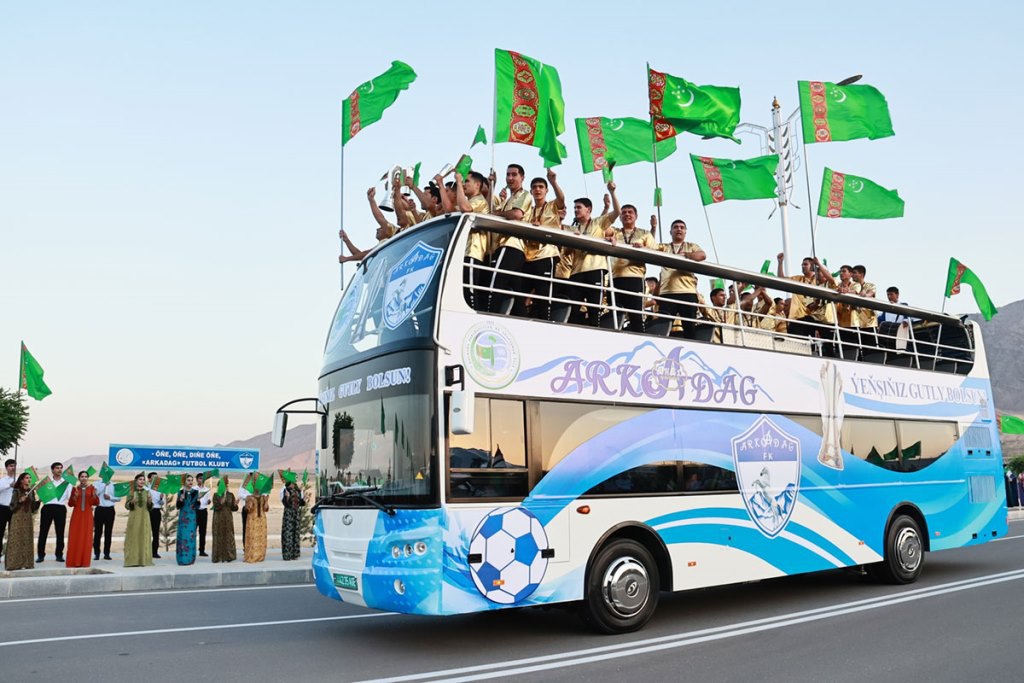
The recent triumph of Turkmenistan’s Arkadag football club in the AFC Challenge League, one of Asia’s most prestigious club competitions, has stirred controversy beyond the pitch. While the victory was widely celebrated, players were left without significant financial rewards, as over $1 million in prize money was donated to charity, prompting mixed reactions among fans and observers.

The team was honored with a hero’s welcome in the newly constructed city of Arkadag, complete with fireworks and a celebratory parade. However, expectations of substantial bonuses went unmet. Each player received a symbolic $1,000 from President Serdar Berdimuhamedov, a modest sum compared to their tournament earnings.

The total prize purse for winning the competition and reaching the final reportedly exceeded $1.5 million. According to official statements, the athletes themselves requested that the funds be donated to the Gurbanguly Berdimuhamedov Charitable Foundation for Children.

Despite their international success, the players reportedly earn official salaries of no more than $120 per month. Turkmen football remains largely cut off from global sporting networks, with few foreign players, limited match broadcasts, and minimal competitive depth in domestic leagues. Arkadag’s main rivals frequently field incomplete squads, diminishing the overall level of competition.

Sports analysts and development experts warn that the lack of meaningful financial incentives could erode player morale and hinder the growth of football in Turkmenistan. They argue that while charitable contributions are commendable, sustained investment in athletes is essential to build a competitive and inspiring national sports culture.

Kazakhstan to Introduce Fines for Illegal Online Content

Kazakhstan is set to introduce administrative liability for disseminating illegal content on the internet, Deputy Minister of Internal Affairs Igor Lepekha announced during a recent session of the Mazhilis, the lower house of parliament.

Although Kazakhstan formally banned the publication of unlawful material online in 2023, as stipulated in national legislation, the law did not include penalties for violations. Lepekha confirmed that this gap will now be addressed through new administrative measures.

Kazakhstan has already established a system to detect illegal and false online content. “The Ministry of Culture sends us reports whenever false information is identified. We forward these materials for linguistic analysis, which is conducted by independent experts. If the content is found to constitute an offense, either administrative or criminal, a case is opened,” Lepekha explained. He added that all cases must be approved by the Prosecutor’s Office, with the courts ultimately determining culpability.

The upcoming penalties mirror efforts in neighboring Kyrgyzstan, where the Ministry of Culture recently proposed similar fines for spreading disinformation online.

Kazakhstan’s Ministry of Culture and Information (MKI) has reported a sharp rise in the volume of illegal content circulating online. In 2024, authorities identified 116,354 instances of unlawful material, nearly double the figure recorded in 2023. According to Minister Aida Balaeva, the most prevalent offenses include the promotion of terrorism, religious extremism, and drug use, as well as advertisements for online gambling and pyramid schemes.

Earlier this year, activists in Almaty and Kostanay were fined for holding solo protests in support of detained satirist Temirlan Ensebek. The incident has drawn criticism from civil society groups concerned about shrinking space for dissent.

Kazakhstan’s move to tighten internet regulations reflects growing regional and global trends aimed at combating harmful digital content. However, human rights organizations have warned that such measures must strike a careful balance to avoid infringing on freedom of expression.

Tajikistan Decriminalizes Likes and Other Reactions to Provocative Social Media Posts

Tajik citizens need no longer fear that they will be imprisoned for clicking “like” on social media posts that the Tajik authorities do not like.

Among several laws that Tajik President Emomali Rahmon signed on May 14 was one that decriminalized liking posts on social networks that originate from individuals or organizations the Tajik government considers extremist.

Crackdown on Social Media

In 2018, President Rahmon signed amendments to Article 179 of the Criminal Code, making it a crime to repost, comment favorably on, or like posts that, in the opinion of Tajik authorities, are public calls to commit or justify acts of violence and terrorism. According to that law, those found guilty of liking such posts face up to 15 years in prison. Since the law came into effect, 1,507 Tajik citizens have been imprisoned.

The Tajik authorities often have a broad interpretation of what constitutes public calls to commit or justify serious crimes or acts of terrorism, but it usually boils down to comments that are critical of the Tajik government.

Weeks after the law was passed, Alijon Sharipov, a resident of the Vakhsh district in Tajikistan’s southern Khatlon Region, was sentenced to 9.5 years in prison for reposting a video of an interview with the leader of the banned Islamic Renaissance Party of Tajikistan, Muhiddin Kabiri. In July 2019, Ibrohim Kosimov from the western Tajik city of Panjakent received the same prison sentence for “pushing ‘likes’ and ‘shares’ on the posts belong[ing] to opposition figures.”

An activist of the Democratic Party of Tajikistan, Rustam Mamajonov, was sentenced to seven years in prison in June 2021 for reposting a video of Sharofiddin Gadoyev, a leader of the banned organization, Group 24. Mamajonov, who was 59 years old at the time, said he did not know how the video appeared on his Facebook page and the repost was a mistake caused by his poor knowledge of how to use the platform.

Tajik political activist Abdullo Shamsiddin was deported from Germany back to Tajikistan in January 2023 and was convicted weeks later in March of sedition and sentenced to seven years in prison. Shamsiddin’s trial was held behind closed doors and it was difficult to obtain details about the case, but apparently, he was convicted for clicking “like” on a social network post, though there is no information about what was in the post.

Shamsiddinov’s case shows the social network use of Tajik citizens who are outside Tajikistan is also being monitored by Tajik authorities.

A Strange Change of Heart

The reasons for the decision to decriminalize “posting a like or other sign on social networks,” as it officially reads in the law Rahmon signed, is unclear.

Certainly, rights groups have called on the Tajik authorities to overturn the decision to criminalize likes, comments, or reposts of what to the Tajik government are undesirable posts on social networks. However, for years Tajikistan’s government has ignored appeals from rights organizations, the United Nations, and individual governments over the Tajik authorities’ rights abuses.

A more likely explanation is fear that the people being sent to prison for liking or reposting material on social networks are being radicalized by genuine extremists or Islamic radicals who are incarcerated in the same prisons. It might have occurred to some Tajik officials that people being imprisoned on dubious charges related to their social network usage could leave prison as hardened criminals.

Whatever the reasons, in October 2024, President Rahmon criticized law enforcement agencies for groundlessly arresting people for likes on social media posts and called for “this practice to end.”

Tajikistan’s parliament finally took up the issue in April this year, passing the legislation that Rahmon signed in May.

Amnestied, Exonerated, or Retrial?

While revoking the law on reactions to social media posts seems to free Tajik citizens from worries about liking or otherwise responding to provocative – in the eyes of the government – posts, there are still more than 1,500 people in Tajik prisons for violating the now revoked law. There is speculation they could be given an amnesty. Others believe they will have to file appeals against their convictions and go through a court process before they can be freed.

No one has spoken about whether their convictions will be annulled, and the records of those convicted would be cleared, meaning they could be released, but their records would still show they had been imprisoned. That could make finding employment difficult in the future.

The issue of compensation for being imprisoned under a law that was later revoked is not even being raised.

While the changes to Article 179 remove criminal liability for likes and reactions on social media, there are still laws on joining or supporting extremist or terrorist groups. The Tajik government often views Tajik opposition parties and movements and religious organizations acting without clear state approval as falling into the categories of extremist or terrorist groups.

Tajik citizens have learned to be careful about what they post on social media networks, and they would be well advised to continue exercising caution despite the official lifting of criminal liability for social media reactions.

Astana International Forum: Not Just Another Davos

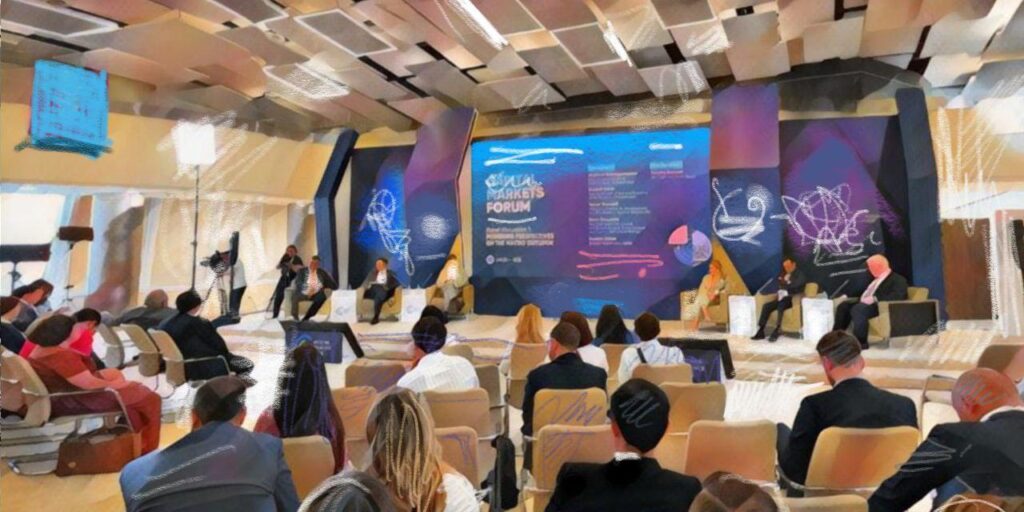
Kazakhstan’s Astana International Forum (AIF) has quietly entered a new phase in its development. Set to convene again this month, it began in 2008 as a targeted economic forum. Over time it has gradually evolved into a broader diplomatic platform aspiring to serve the so-called “Global South” as a whole. The AIF seeks to offer a deliberately open space for structured yet flexible dialogue across economic, political, and security domains, in a world full of international gatherings either overdetermined by legacy institutions or narrowly focused on crisis response.

The AIF does not model itself on any existing institution. It is meant neither to replicate global summits nor to impose consensus, nor to replace regional blocs or legacy mechanisms. Rather, it reflects Kazakhstan’s own diplomatic philosophy — what President Kassym-Jomart Tokayev calls “multi-vector foreign policy” — seeking to extend this philosophy outward through a forum that prioritizes engagement over alignment and dialogue over doctrine.

The AIF’s early period, from 2008 through roughly 2015, was defined by foundational work. Then called the Astana Economic Forum, it brought together central bankers, financial policymakers, and development agencies. The scope was technocratic, focusing on macroeconomic modernization and public-sector reform. Even in this limited format, however, the initiative revealed Kazakhstan’s national aspiration to connect with wider global trends in institutional development and governance.

Those formative years correspond to what, in terms of complex-systems theory, might be called the Forum’s phase of “emergence”: a period of assembling functions, testing formats, and learning the rhythms of international convening. These years were not marked by geopolitical ambition, but they did set in motion a process of institutional self-recognition. Kazakhstan was not just hosting events; it was experimenting with a type of global presence that would grow more distinct in later years.

From 2015 to 2022, the Forum entered a more self-defining stage. It retained its core economic focus, but it increasingly attracted participants from beyond financial and development sectors. This broadened its scope to include questions of connectivity, regional stability, and sustainable development. The shift was not an accident. It accompanied Kazakhstan’s growing involvement in regional diplomacy and its active participation in a range of other multilateral structures.

During this second period, the Forum took on the character of an institution with internal momentum. (This is what complex-systems theorists might term “autopoiesis,” i.e., the ability of a system to reproduce and maintain itself.) By adapting to a wider field of participants and issues, the AIF began to articulate a mission no longer limited to showcasing Kazakhstan’s domestic reforms but extending toward the creation of new transnational linkages. The rebranding of the old Astana Economic Forum as the Astana International Forum affirmed this shift in mandate, scope, and ambition.

That rebranding marked the beginning of what now appears to be a critical inflection point. The cancellation of the 2024 edition due to catastrophic flooding created a rupture; but the organizers, rather than rush a replacement, deferred the Forum and used the intervening time to clarify its structure and message. The thematic architecture of the 2025 edition has been streamlined, reducing four policy tracks to three: Foreign Policy and International Security, Energy and Climate Change, and Economy and Finance.

The AIF shares thematic ground with other Global South initiatives, but its structural logic differs. Probably the UN-led South-South Cooperation Forum (SSCF) has the most in common with it. Like the AIF, the SSCF functions as a coordination mechanism for development partnerships; however, it is embedded within multilateral architecture and guided by established institutional mandates. It also differs from the AIF through its emphasis on technical capacity-building and policy harmonization.

By contrast, the AIF is not development-focused and not multilateral in the traditional sense. It does not implement frameworks; rather, it constructs spaces wherein frameworks may emerge. It is not procedural like the SSCF, but instead diplomatic. It is driven less by an operational agenda than by the search to prototype new modes of cross-regional engagement. One may say that whereas the SSCF presumes a normative grammar rooted in shared postcolonial trajectories, the AIF seeks instead to write a new syntax of cooperation for a fragmenting international order. It is, in this sense, not a derivative platform but a generative one.

The new reconfiguration of the AIF’s agenda is more than logistical. It signals a willingness to redesign the Forum’s internal logic in response to changing global conditions. Its 2025 vision statement explicitly acknowledges the current global environment as one of “unprecedented complexity,” calling for actionable collaboration that “transcends borders and sectors.” The AIF has thus begun to address the demands for “organizational antifragility,” the threshold phase where any institution must reconfigure and reorient itself for new tasks and new relevance, or else risk stagnation.

The Forum’s new mission leans into that challenge with pragmatic optimism. It describes itself as a space where “vision meets action,” aiming to “reignite multilateralism” and to catalyze a movement toward “future-focused” solutions. The AIF’s expanded topical scope now includes climate action, technological innovation, sustainable development, and supply-chain resilience. These adjustments reflect the growing confidence of Kazakhstan’s foreign policy, which sees in the Forum not only a convening tool but a projection of national strategy into a shared international format.

To say that the AIF is not the World Economic Forum (WEF) is not to denigrate it. Such a comparison would simply miss the point. The WEF seeks mainly to reinforce global economic consensus and convene elite stakeholders from advanced industrialized systems. The AIF, by contrast, is a diplomatic instrument shaped by a mid-sized country offering a venue that intentionally includes underrepresented states and perspectives. It does not aim to replace existing institutions but to complement them with a platform more attuned to the network-distributed complexities of the contemporary world.

The AIF’s distinctiveness lies in its state-led but non-hegemonic structure. It is both sovereign and collaborative, national in origin but multilateral in aspiration. This is why it resonates with parts of the Global South that find few opportunities for serious, non-aligned dialogue across sectoral and ideological lines. Kazakhstan’s ambition with the AIF is to create a reliable convening node for political, business, and academic voices that otherwise lack a coherent shared venue.

What happens next depends not only on the Forum’s thematic continuity, but also on its institutional maturation. Will it develop memory, procedures, and expectations that persist beyond annual meetings? Will it build partnerships that last across cycles of participation? Will it decide to convene only every other year and, if so, how will it use the intervening year to prepare outcomes and strengthen effectiveness? If Kazakhstan succeeds in making the AIF more durable in these respects, it may well enter a new phase of evolution, in which Kazakhstan adds to its diplomatic profile the capacity to design international norms.