• KGS/USD = 0.01144 0%
  • KZT/USD = 0.00212 0%
  • TJS/USD = 0.10456 0.19%
  • UZS/USD = 0.00008 0%
  • TMT/USD = 0.28490 0%
  • KGS/USD = 0.01144 0%
  • KZT/USD = 0.00212 0%
  • TJS/USD = 0.10456 0.19%
  • UZS/USD = 0.00008 0%
  • TMT/USD = 0.28490 0%
  • KGS/USD = 0.01144 0%
  • KZT/USD = 0.00212 0%
  • TJS/USD = 0.10456 0.19%
  • UZS/USD = 0.00008 0%
  • TMT/USD = 0.28490 0%
  • KGS/USD = 0.01144 0%
  • KZT/USD = 0.00212 0%
  • TJS/USD = 0.10456 0.19%
  • UZS/USD = 0.00008 0%
  • TMT/USD = 0.28490 0%
  • KGS/USD = 0.01144 0%
  • KZT/USD = 0.00212 0%
  • TJS/USD = 0.10456 0.19%
  • UZS/USD = 0.00008 0%
  • TMT/USD = 0.28490 0%
  • KGS/USD = 0.01144 0%
  • KZT/USD = 0.00212 0%
  • TJS/USD = 0.10456 0.19%
  • UZS/USD = 0.00008 0%
  • TMT/USD = 0.28490 0%
  • KGS/USD = 0.01144 0%
  • KZT/USD = 0.00212 0%
  • TJS/USD = 0.10456 0.19%
  • UZS/USD = 0.00008 0%
  • TMT/USD = 0.28490 0%
  • KGS/USD = 0.01144 0%
  • KZT/USD = 0.00212 0%
  • TJS/USD = 0.10456 0.19%
  • UZS/USD = 0.00008 0%
  • TMT/USD = 0.28490 0%

Mice in “Miniature Hotel” Poised for Space Launch from Baikonur

A crew of mice, flies, and ants, to be used for biomedical research in space, are on board a spacecraft that Russia is preparing to launch from the Baikonur Cosmodrome in Kazakhstan.

On other missions, the rocket typically rolls to the launch pad a few days before launch. On this one, however, a Soyuz rocket that will hoist the Bion-M No. 2 biosatellite into orbit rolled out on Tuesday, one day ahead of the scheduled lift-off.

“This is due to the preservation of the biological samples on board,” said Roscosmos, Russia’s space agency. “The goal is to reach weightlessness as quickly as possible.”

The purpose of sending mice to space is to evaluate the impact of radiation and zero gravity on the rodents, including whether time in space affects their hormonal balance, immunity, reproductive processes, and metabolism. Russia has conducted similar missions in the past, including the Bion-M No.1 satellite launch in 2013 that ferried mice, gerbils, snails, and fish to space. The Bion-M No. 2 mission has been delayed multiple times in recent years.

Such experiments could help prepare humans for long-term space travel. Mice have a genetic similarity to humans, and their short life cycle allows for the tracking of changes across generations, according to Roscosmos.

During the 30-day mission of the Bion-M No. 2, “scientists will receive real-time data on the rodents’ condition using special cameras and sensors inside the mouse boxes. Moreover, some individuals will have implanted chips,” the space agency said.

It said the living conditions of the dozens of mice on the satellite resemble a “miniature hotel” in which they have feeding, lighting, ventilation, and waste disposal systems. The accommodation is more spacious than it was for the mice on the Bion-M No. 1 satellite more than a decade ago.

Fruit flies, ants, tomato seeds and fungi are also on this week’s space-bound mission. The tomato seeds, part of an experiment being conducted by Russian and Belarusian schoolchildren, will be planted on Earth after the space mission to see how they grow.

Splitting the Flow: How Central Asia Can Bypass Russia in Internet Connectivity

In today’s world, reliable mobile communications and internet access are indispensable, and Central Asia is no exception. Digital infrastructure has become a core component of development across the region. Yet, the architecture of internet connectivity in Central Asia has been shaped not only by global technological progress but also by the geopolitical upheavals of the early 2020s, a decade already recognized as historically transformative.

Recent developments have renewed focus on this issue. On August 13, Kazakhstan officially joined over 100 countries utilizing Starlink’s satellite internet services, following a June 12, 2025, agreement that confirmed SpaceX’s compliance with national laws. The Kazakh Ministry of Digital Development emphasized that Starlink offers stable connectivity “even in the most remote and inaccessible areas,” expanding access to digital services for underserved populations.

While Starlink’s rates are higher than local norms, 23,000 KZT ($42.50) a month for home users and 26,000 KZT ($48) for mobile users, the launch signals a broader shift in Kazakhstan’s internet policy. For decades, the country maintained strict control over online access. As late as 2019, the authorities blocked social networks during live streams by exiled oligarch Mukhtar Ablyazov. The 2020 pandemic further exposed infrastructure gaps, with students in remote areas forced to climb rooftops and trees for mobile signals. These stark images, along with a gradual political thaw, likely spurred the momentum for reform.

Another catalyst is the war in Ukraine. A recent report by the Internet Society highlights Kazakhstan’s efforts to reduce reliance on Russian internet infrastructure and enhance regional digital resilience. Central Asia’s landlocked geography means it depends heavily on terrestrial fiber optic cables connected to countries with undersea landing stations. Approximately 95% of Kazakhstan’s international internet traffic flows through Russia, posing strategic vulnerabilities amid heightened geopolitical tensions.

To address this, Kazakhstan is investing in low Earth orbit (LEO) satellite systems and exploring alternative terrestrial fiber routes, including a long-discussed cable under the Caspian Sea connecting to Europe.

As of January 2024, Kazakhstan had 18.2 million internet users, 92.3% of the population, with average fixed-line speeds of 53.86 Mbps, ranking 94th globally, according to Ookla’s Speedtest Index.

Uzbekistan Follows Suit

Uzbekistan, the region’s second-largest economy, is also seeking to diversify its digital dependencies. In March 2025, Tashkent signed agreements with the European Union on a satellite internet project and the “Connectivity for Central Asia” program, both aimed at extending access to remote communities and modernizing digital infrastructure. These initiatives are part of the EU’s Global Gateway strategy.

“By investing in digital connectivity, we are bridging gaps, creating opportunities, and ensuring that Central Asia has access to the benefits of the digital economy,” said European Commissioner for International Partnerships, Jutta Urpilainen.

As of early 2024, Uzbekistan had 34.2 million mobile subscribers and 29.5 million internet users, an 83.3% penetration rate. Basic fixed-line internet packages cost 55,000 UZS ($4.40) per month for 6 Mbps daytime speeds; premium plans offer 50 Mbps for about $8.

As reported by The Times of Central Asia, Starlink is expected to launch in Uzbekistan in 2026.

Lagging Behind: Kyrgyzstan, Tajikistan, and Turkmenistan

Elsewhere in Central Asia, digital development remains uneven.

In Kyrgyzstan, 5.4 million people, 79.8% of the seven million population, were internet users in early 2024. Yet 1.4 million residents remained offline. Tajikistan reported 8.3 million mobile subscribers in 2023, though only 5.6 million were active. With an internet penetration rate of 41.6%, nearly 60% of Tajiks lack regular access.

Turkmenistan’s internet statistics are even worse. Only 2.6 million of the country’s seven million people use the internet, and speeds are among the world’s slowest. According to Speedtest, Turkmenistan ranks 161st out of 162 countries, with average download speeds of just 4.31 Mbps. Internet tariffs are set by presidential decree, and prices remain prohibitively high despite limited service quality.

A Regional Crossroads

Central Asia’s digital future hinges on Kazakhstan and Uzbekistan’s ability to diversify internet traffic and reduce dependency on Russia. Kazakhstan’s Starlink rollout is a tangible step in this direction. However, broader regional transformation will depend on infrastructure investment, regulatory reform, and sustained international partnerships.

The open question now is how Moscow and, increasingly, Beijing will respond to these efforts to reshape digital connectivity across Central Asia.

Young Uzbek Engineers Set Guinness World Record with 1,946 Robots

Uzbekistan has entered the Guinness World Records after 1,946 young engineers simultaneously assembled mini-robots at a public event in Tashkent. The Ministry of Higher Education, Science and Innovation announced the achievement via its official Telegram channel.

The record-setting event took place in Yangi O‘zbekiston Park, where each participant built a robot in unison, surpassing the previous record set in India in 2023, when 1,459 students completed a similar task.

Describing the achievement as a “historic milestone,” the ministry said: “Our youth achieved it, Uzbekistan has broken a Guinness World Record! This success once again inscribes our country’s name in the Guinness Book of Records. It demonstrates the scientific-technical potential, creativity, and teamwork of Uzbek youth, opening the door to new achievements in technology and innovation.”

The event served as both a technical showcase and a celebration of collaboration, innovation, and national pride.

The accomplishment adds to a growing list of Guinness World Records from across Central Asia. In May, acrobats Batyr Zhanuzak and Marlen Maratov from the Almaty Circus earned a record in Milan for the “Fastest time climbing and descending two ladders with a person standing on their hands on the head.”

Kyrgyzstan’s New Investment Law Favors Large-Scale Investors

Kyrgyzstan has enacted a new investment law offering substantial benefits to major investors, both foreign and domestic. Under the Law “On Investments in the Kyrgyz Republic,” investors who commit at least $10 million and possess a strong international reputation and track record in large-scale projects may now sign individual investment agreements directly with the Cabinet of Ministers, according to the National Investment Agency under the President of the Kyrgyz Republic.

These agreements grant investors access to a suite of incentives, including tax and customs benefits, visa support for key personnel, and assistance with selecting and registering land plots for investment projects. The initiative aims to boost foreign direct investment by attracting high-caliber investors.

President Sadyr Japarov signed the law on August 14, 2025. It is intended to create a more transparent and competitive investment climate and strengthen institutional protections for businesses.

The legislation defines the state’s investment policy principles, guarantees the protection of investor rights, and introduces mechanisms to safeguard those interests. It also aligns with the presidential decree “On the National Development Program of the Kyrgyz Republic until 2026,” which sets out key national targets:

  • Average annual economic growth of 5%
  • GDP per capita of at least $1,500
  • Unemployment rate reduced to 5%
  • Annual foreign direct investment inflow of at least 13% of GDP

With this legal framework, Kyrgyzstan aims to position itself as a stable, predictable partner for investors and as an emerging hub for investment in Central Asia.

Tajikistan Proposes Ban on Fortune-Telling With Fines for Customers

The government of Tajikistan has submitted a legislative proposal to parliament that would ban the use of fortune-telling and other esoteric services, and introduce fines for clients, Asia-Plus reported.

If passed, the amendments would add a new clause to Article 482 of the Code of Administrative Offenses titled “Use of services of a sorcerer, magician, or fortune-teller.” Under the proposed law, individuals caught seeking such services would face fines ranging from five to ten calculation indicators, equivalent to 375-750 somoni (approximately $40-80).

This initiative is part of a broader crackdown on esoteric and mystical practices in recent years. In mid-2023, the Ministry of Internal Affairs announced that citizens who visited fortune-tellers would be summoned by authorities and entered into a database containing their names and photographs. Officials said the goal was to curb demand and ultimately eliminate the practice. The number of individuals summoned has not been disclosed.

Penalties for fortune-tellers themselves were significantly strengthened in 2024. Amendments to Article 482 increased fines for practitioners to 80-100 calculation indicators and introduced administrative detention of up to 15 days. In addition, criminal liability was introduced under Article 240 of the Criminal Code: repeat offenders may now face fines of 1,500-2,000 base units or imprisonment for one to two years. Previously, only administrative penalties applied.

The government claims the measures are designed to combat fraud and protect citizens from exploitation. However, critics argue that the proposed restrictions could spark debate over personal freedoms and traditional cultural practices.

In 2024, The Times of Central Asia reported that Tajik authorities were also considering the introduction of compulsory labor for up to six months as a punishment for engaging in fortune-telling, sorcery, or witchcraft.

Kazakhstan Ships Grain to Europe via Estonian Port

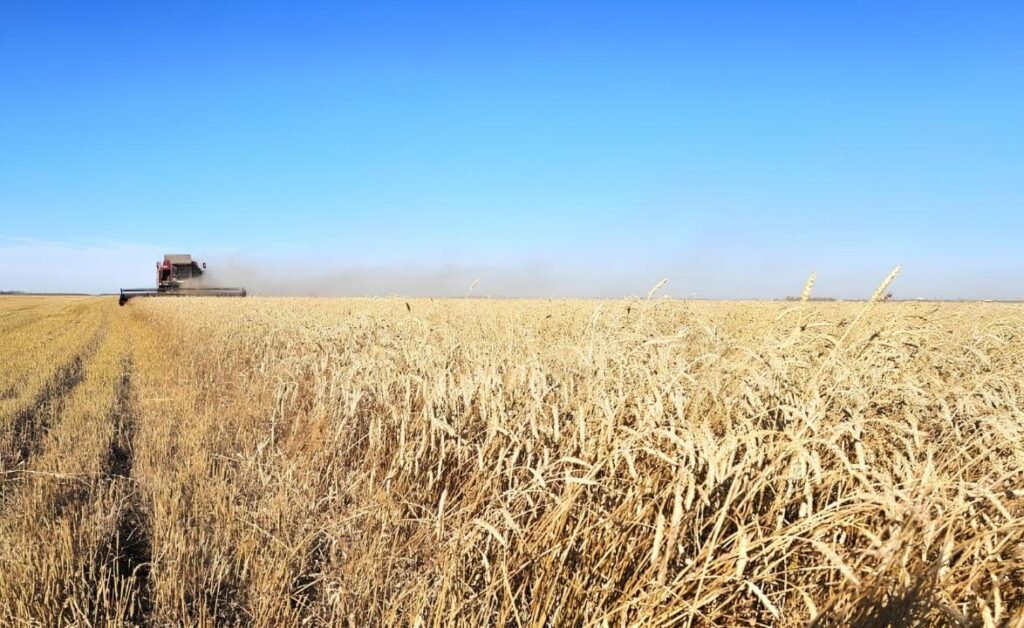
Kazakhstan is expanding its grain exports to European markets, with significant shipments routed through Estonia’s Muuga port. According to the Ministry of Agriculture, the Akmola region, the country’s top grain-producing area, exported 145,000 tons of wheat through Muuga during the first seven months of 2025.

Of this volume, more than 110,000 tons were delivered to Italy, over 28,000 tons to Belgium, and approximately 6,500 tons to Estonia. The shipments followed a memorandum of cooperation signed in February 2025 between the Akmola regional administration and the Muuga Grain Terminal.

A key milestone of Kazakhstan’s 2024-2025 export season has been the diversification of grain destinations. For the first time, Kazakh wheat was exported to Belgium, Poland, Portugal, Norway, and the United Kingdom.

From September 2024 to August 10, 2025, Kazakhstan exported 9.8 million tons of wheat from the new harvest, a 55% increase compared to the same period in the 2023-2024 season. Uzbekistan, Tajikistan, Afghanistan, Kyrgyzstan, Iran, and Azerbaijan remain the country’s primary buyers.

Including flour, Kazakhstan exported a total of 12.4 million tons of wheat grain between September 2024 and July 2025, marking a 34% rise from the 9.3 million tons exported during the same period in the previous season.