• KGS/USD = 0.01144 0%
  • KZT/USD = 0.00196 -0%
  • TJS/USD = 0.10899 -0%
  • UZS/USD = 0.00008 -0%
  • TMT/USD = 0.28490 0%
  • KGS/USD = 0.01144 0%
  • KZT/USD = 0.00196 -0%
  • TJS/USD = 0.10899 -0%
  • UZS/USD = 0.00008 -0%
  • TMT/USD = 0.28490 0%
  • KGS/USD = 0.01144 0%
  • KZT/USD = 0.00196 -0%
  • TJS/USD = 0.10899 -0%
  • UZS/USD = 0.00008 -0%
  • TMT/USD = 0.28490 0%
  • KGS/USD = 0.01144 0%
  • KZT/USD = 0.00196 -0%
  • TJS/USD = 0.10899 -0%
  • UZS/USD = 0.00008 -0%
  • TMT/USD = 0.28490 0%
  • KGS/USD = 0.01144 0%
  • KZT/USD = 0.00196 -0%
  • TJS/USD = 0.10899 -0%
  • UZS/USD = 0.00008 -0%
  • TMT/USD = 0.28490 0%
  • KGS/USD = 0.01144 0%
  • KZT/USD = 0.00196 -0%
  • TJS/USD = 0.10899 -0%
  • UZS/USD = 0.00008 -0%
  • TMT/USD = 0.28490 0%
  • KGS/USD = 0.01144 0%
  • KZT/USD = 0.00196 -0%
  • TJS/USD = 0.10899 -0%
  • UZS/USD = 0.00008 -0%
  • TMT/USD = 0.28490 0%
  • KGS/USD = 0.01144 0%
  • KZT/USD = 0.00196 -0%
  • TJS/USD = 0.10899 -0%
  • UZS/USD = 0.00008 -0%
  • TMT/USD = 0.28490 0%
08 December 2025

How Kazakhstan Revives National Traditions Through Cinema

At a recent press screening of the Kazakhstani fantasy comedy All on Mosles: Battle of the Generations, the audience laughed, applauded and, perhaps most tellingly, relived childhood memories. Some even left wanting to play asyki again.

The film’s creators achieved what seemed nearly impossible: they transformed an almost forgotten traditional game into a vibrant cinematic adventure appealing to both adults and children. The Times of Central Asia spoke with the film’s authors, Yerken Gubashev, Yerkebulan Bekturov, and Mikhail Ulanov, about how the project came to life, the challenges they encountered, and why asyk atu is more than just a game.

Now showing across Kazakhstan, the film centers on asyk atu, an ancient game where players aim to knock opponents’ asyk (ram’s knuckle bones) from a designated area using a special, often weighted and decorated, throwing asyk known as a sak. Popular across Soviet Kazakhstan until the 1990s, the game has since been revived by cultural activists. Today, asyk atu is included on UNESCO’s Representative List of the Intangible Cultural Heritage of Humanity.
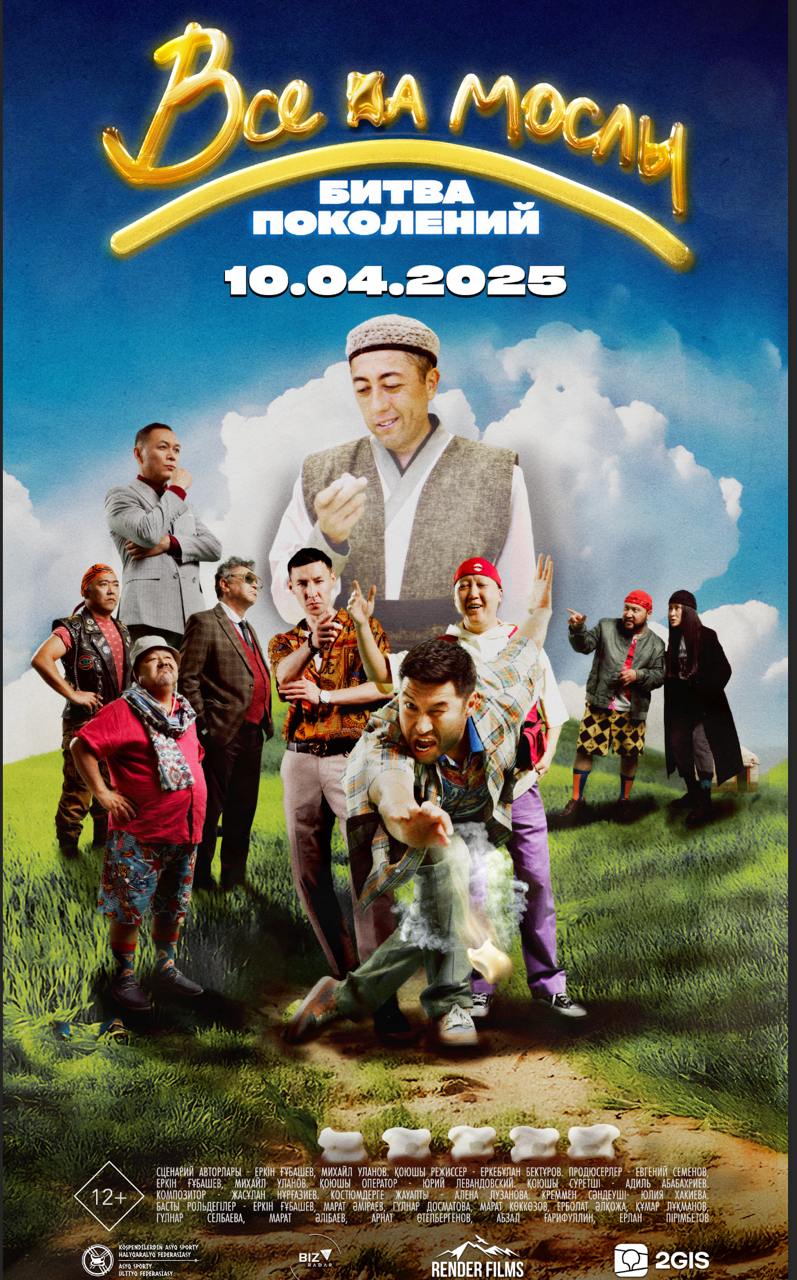
Image: TCA, Askar Kubaizhanov

TCA: Tell us about your film. How did the idea come about?

Yerken Gubashev: I was really the initiator of the whole project. I co-wrote the script, co-produced the film, and played one of the lead roles. But more than that, it was my dream to bring asyki back and turn them into something grand.

Watching my son and his friends sitting on the street, absorbed in their phones, was tough. When we were kids, asyki was real life. We played for hours, competing, learning dexterity, patience, and respect. I started imagining a world where asyki was the number one sport, with world championships and a whole culture surrounding it. I shared the idea with Yerkebulan and Mikhail, and we couldn’t stop.

Mikhail Ulanov: We began to imagine: What if asyks could fly? What if each player had a unique technique? What if one could come to life or transform into a weapon? From this, a fantastical world emerged, rooted in tradition but filled with comedy, fantasy, and even superhero parody.

Yerkebulan Bekturov: We shaped the film to resonate with modern youth: short, dynamic scenes, sharp transitions, and vivid visuals. Yet it tells a complete story. We believe it will appeal not just to Kazakhstani audiences but also internationally. There are lots of nods to Hollywood, The Gentlemen, Kill Bill, and others, which helps bridge cultures.

TCA: The film isn’t just entertainment, is it? Is there a cultural mission here?

Yerken Gubashev: Absolutely. Our goal is to bring asyki back to the playgrounds so kids share, compete, and step away from social media. More broadly, it’s about reconnecting with our roots. Kazakh traditional culture is rich but underrepresented in cinemas. Importantly, asyki isn’t only Kazakh, it’s a Turkic game played by Uzbeks, Kyrgyz, Bashkirs, Tatars, Yakuts, and even in the Caucasus. It’s a vast cultural universe that unites Turkic peoples. Today, even the U.S., Norway, and Finland have national teams. A global championship in a decade isn’t far-fetched, asyk atu is already part of the World Nomad Games.

Mikhail Ulanov: Kazakhstan is a multiethnic country, but Kazakh culture has always been a unifying thread. Through cinema, we can remind people of the values that connect us. We’re confident the film will resonate beyond Kazakhstan.

TCA: How can your project help popularize nomadic culture and raise Kazakhstan’s international profile?

Mikhail Ulanov: Someone once told us, “Your asyks fly, your characters have superpowers.” Yes, they do! But think of kung fu movies where masters float across water or leap between treetops. It’s fantasy, but it captivates audiences and inspires martial arts practice. If we can present asyki in a visually engaging way, even with fantasy, it becomes a cultural trigger.

Yerken Gubashev: Take beshbarmak, for example. Someone tries it, enjoys it, then wants to learn more about our language, culture, and traditions. I grew up on karate films and soon wanted to know how the Japanese lived. Today, visual culture, movies, streaming, screens, is our main portal into new worlds.

Mikhail Ulanov: A friend’s daughter started with Japanese manga, ended up learning the language, and now studies in Japan. It all began with a picture. Why not imagine that someone watches our film and decides to visit Kazakhstan, to play asyki, explore the culture, maybe even meet a real-life Mugalim, the guardian of ancient asyk atu secrets.

TCA: But for the film to have such an impact, it must be seen; that’s a question of distribution, right?

Yerken Gubashev: Exactly. The hardest part is getting it to audiences. Kazakhstan’s film market is highly commercialized. If a film doesn’t turn a quick profit, it vanishes. Even culturally valuable projects lose out to those with bigger advertising budgets. It’s not about quality, it’s about reach. Many great films are simply crowded out.

Take Adilkhan Yerzhanov. His work is celebrated at Cannes, Berlin, and Venice. In France, audiences gave him standing ovations. But in Kazakhstan, silence. No commercial success. It’s a Van Gogh paradox: unrecognized at home, lauded abroad. We don’t want our films to follow that path.

Image: TCA,Askar Kubaizhanov

TCA: What challenges did you face in getting your film to screens?

Yerkebulan Bekturov: Enormous ones. Local distributors compete intensely, which hurts filmmakers. Projects backed by major corporations get resources, advertising, and guaranteed screenings. Independent films like ours, made from the heart but without financial muscle, often never reach the public.

TCA: Still, Kazakh cinema seems to be in a period of growth. What’s fueling this renaissance?

Yerkebulan Bekturov: It’s amazing. Ten years ago, this would’ve been unthinkable. Last year saw 92 domestic releases; over 100 are expected this year. Interestingly, state funding has dropped below 5%; most films are privately financed. Two major players now dominate: Kinopark/Tiger Films, with strong infrastructure, and social media, which mobilizes online fanbases to draw viewers from streaming to the cinema. It’s a successful model that’s catching international attention.

TCA: How essential is government support for national cinema?

Yerkebulan Bekturov: It’s not just about money. Government support can also mean regulation. Even with private cinema networks, the state could help by negotiating quotas for cultural or festival films, ensuring they get decent time slots and reach audiences. Production is booming, but cinema space is limited. The fight for screens is fierce.

Mikhail Ulanov: State investment in infrastructure, not just as a financier, but as a regulator and facilitator, would be a game-changer. Especially in regions where cinemas are scarce. Cinema should entertain, yes, but also educate, inspire, and shape cultural taste, not by force, but by offering alternatives.


Kazakh Scientists Unveil Advanced Organ Storage Technology at Expo 2025

A team of Kazakhstani doctors from the UMC Heart Center, led by renowned cardiac surgeon Yuri Pya, presented a groundbreaking development at the World Expo 2025 in Osaka, Japan: ALEM, a device designed for long-term preservation of donor organs.

Developed with the support of the Heart Center Foundation, ALEM (Astana Life Ex-situ Machine) addresses a pressing issue in Kazakhstan’s vast geographical context, ensuring timely and effective delivery of donor organs across long distances.

Extending the Viability of Life

The ALEM device can keep a donor heart viable for more than 24 hours by replicating conditions inside the human body, including maintaining precise temperature, oxygen levels, and vital functions. This significantly extends the traditional preservation window of 4-6 hours, offering new potential for transplantation logistics and success rates.

From Emergency to Innovation

The idea for ALEM was born from necessity. As Pya recalls, “We had a difficult situation, due to weather conditions we couldn’t get a donor heart in time. Then the idea arose to create our own system, more affordable and perhaps even more effective.”

The device was developed through interdisciplinary collaboration among cardiac surgeons, anesthesiologists, and engineers. It has already passed preclinical trials on animals and is now preparing for the next phase: clinical testing.

More Than Preservation

According to Timur Lesbekov, director of the Heart Center’s cardiac surgery department, ALEM offers not only preservation but also therapeutic potential. “This product can be called a breakthrough. To sustain an organ for more than a day is a great achievement. Importantly, the system can also treat organs before transplantation,” he said.

Developers hope that showcasing ALEM at Expo 2025 will attract international attention and foster collaboration in the field of transplantology. “This is a historic moment for Kazakhstan,” said Murat Zauyrov, director of the Heart Center Foundation. “It’s the first time we are presenting a major medical innovation on such a global stage. Our aim is to contribute to global medical progress.”

Kazakhstan’s Transplant Challenges

Kazakhstan currently needs around 10 transplants per million residents annually, according to Pya. Since 2012, 100 heart transplants have been performed, a modest number, but each representing a life saved. “It’s not just a surgery. It’s a complex operation involving air ambulances, police, and coordination across at least five ministries,” he emphasized.

Plans are underway to begin serial production of the ALEM device in Astana, which would position Kazakhstan among a select group of countries with a domestically developed system for long-distance organ transport.

Expo 2025: A Global Stage for Innovation

Expo 2025 in Osaka features participation from 158 countries and nine international organizations. ALEM is on display at the Kazakhstan Pavilion in the “Connecting Lives” zone under the broader theme “Creating a Future Society for Our Lives”.

Kazakhstan’s pavilion, designed in the shape of a traditional shanyrak, was presented alongside exhibitions from South Korea, Germany, and Turkey. The opening ceremony was attended by Japanese Emperor Naruhito and Prime Minister Shigeru Ishiba, with Kazakhstan’s delegation led by Minister of Trade Arman Shakkaliev.

Kazakhstan Expands Wheat Exports to North Africa

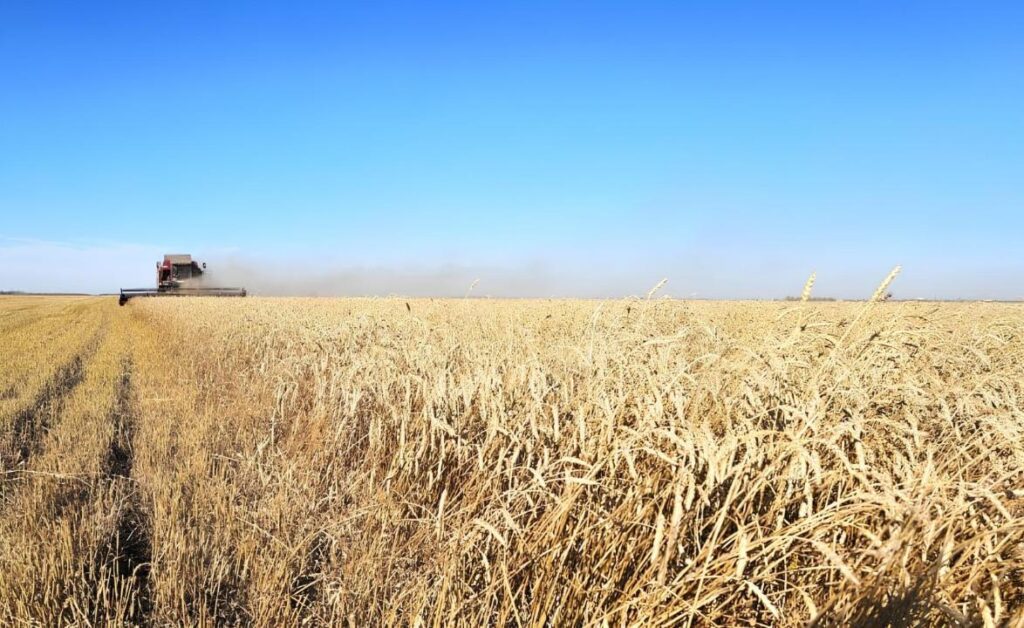
Kazakhstan, Central Asia’s leading grain producer, is broadening its export markets to include Africa. The national grain operator, Food Contract Corporation, has reached preliminary agreements to supply 300,000 tons of food wheat to Morocco and other North African countries by the end of the current marketing season, according to the Ministry of Agriculture​.

More than 200,000 tons of wheat have already been contracted for shipment to African markets. The Corporation’s export strategy emphasizes market diversification, prioritizing the European Union, the Middle East and North Africa (MENA) region, Southeast Asia, and neighboring countries such as Afghanistan, Iran, Azerbaijan, Georgia, and Armenia.

Kazakhstan’s traditional grain buyers include Central Asian states, China, and Turkey. To facilitate broader exports, the country is prepared to transport grain via the Azov, Black, and Baltic Sea ports.

In 2024, Kazakhstan harvested 26.7 million tons of grain, its largest yield in 13 years, according to the Ministry of Agriculture. The country exported 8.1 million tons of grain last year, including between 6.5 and 7.5 million tons of wheat. For the 2025 season, Kazakhstan aims to export approximately 12 million tons of newly harvested grain.

Efforts to secure new markets are ongoing, with negotiations focused on increasing agricultural exports to Azerbaijan, China, Iran, North Africa, and EU countries, as well as to Uzbekistan and Georgia, through access points at Black and Baltic Sea ports​.

Kyrgyzstan Seeks €2.7 Billion from UK for Business Development

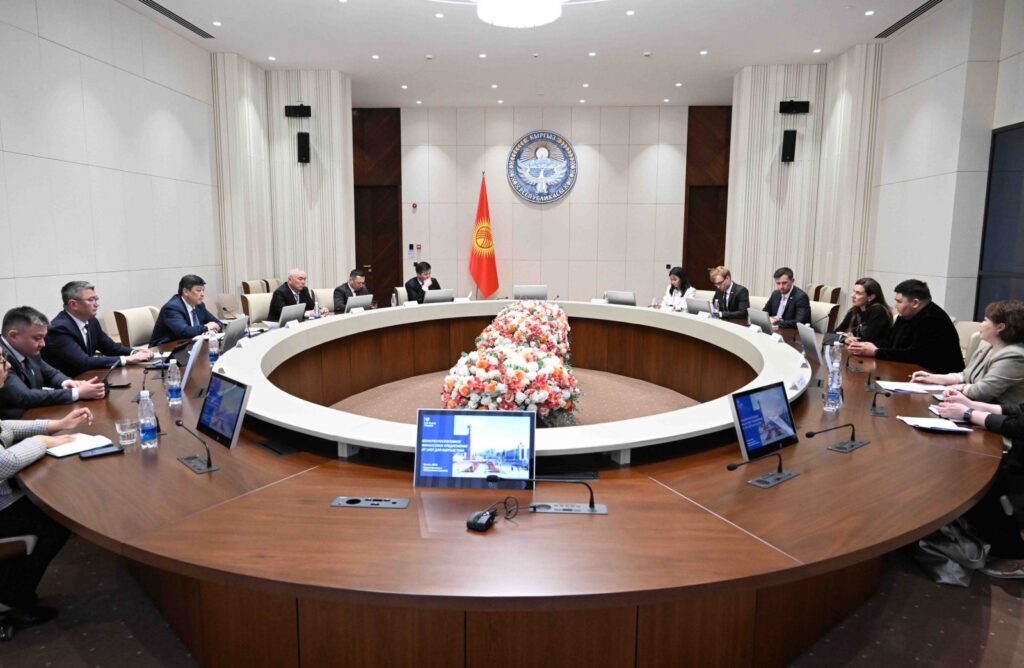
Deputy Chairman of the Cabinet of Ministers of Kyrgyzstan Bakyt Torobaev has held a high-level meeting with Shebn Alp, Regional Director of the UK Export Credit Agency (UKEF), seeking €2.7 billion in financial support to boost the country’s business sector. The meeting was held in accordance with instructions from Kyrgyz President Sadyr Japarov, who has outlined economic modernization as a government priority.

Torobaev emphasized the country’s strategic goals, which include revitalizing the agro-industrial sector, developing critical infrastructure, diversifying export markets, and enhancing Kyrgyzstan’s investment appeal. “The Cabinet of Ministers of Kyrgyzstan is committed to creating added value within the country, promoting environmentally friendly and organic agriculture, modernizing irrigation systems, and transitioning from a raw materials-based to a processing economy,” he stated.

British representatives reportedly expressed interest in cooperation in the mining, construction, and infrastructure sectors, all of which are currently experiencing robust growth in Kyrgyzstan. The construction industry, in particular, is seen as a driving force behind the nation’s economic progress, as previously reported by The Times of Central Asia.

Authorities are also investing in the mining sector, including recent efforts to rehabilitate rare earth element mines in Chui Oblast. These materials are essential for the production of electric vehicle batteries, positioning Kyrgyzstan as a potential player in the global green energy supply chain.

Tajikistan’s Passport Remains Among the World’s Weakest

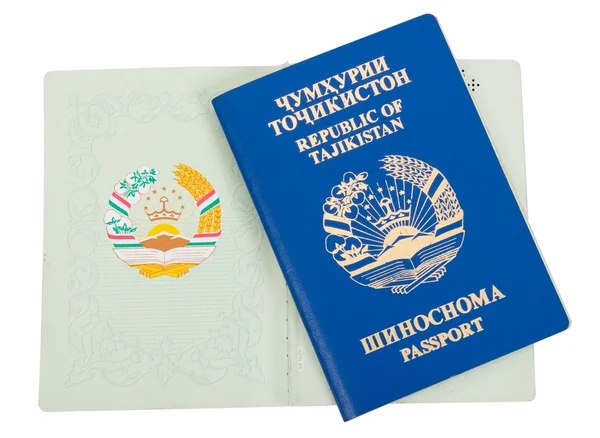
Tajikistan’s passport has once again ranked among the lowest globally in terms of travel freedom, highlighting the country’s ongoing limitations in global mobility. This is according to the updated 2025 Visa Index ranking,

Tajikistan placed 84th out of more than 90 countries surveyed. Holders of Tajik passports can travel visa-free to just 23 countries. An additional 33 countries offer visas on arrival, and two allow electronic travel authorizations (eTAs). Entry into 40 countries requires an e-visa, while advance visas are mandatory for 131 destinations.

Compared to other former Soviet republics, Tajikistan trails significantly behind. Ukraine ranks 28th with 149 visa-free destinations, Georgia 45th (125 countries), Kazakhstan 63rd (82), Kyrgyzstan 79th (63), and Uzbekistan 80th (62). The only country in the region with a weaker passport is Turkmenistan, which ranks 92nd, offering access to just 48 countries.

An alternative ranking by Passport Index places Tajikistan 66th, counting 23 visa-free countries, 47 with visa-on-arrival options, and four that accept eTAs. These slight differences arise from variations in methodology and recognition of visa regimes.

Official data from Tajikistan’s Ministry of Foreign Affairs partially supports these findings, listing 35 visa-free destinations. These include 23 countries that offer unrestricted entry to Tajik citizens, regardless of passport category. Among them are Russia, Iran, Ukraine, Georgia, Armenia, Malaysia, Belarus, the Philippines, Uzbekistan, and Kyrgyzstan.

Despite modest improvements, Tajik citizens still face significant challenges when traveling to most developed countries. Entry into the European Union, the United Kingdom, the United States, Canada, Japan, and Australia, 131 countries in total, requires advance visa processing.

Experts note that visa liberalization depends on numerous factors, including political and economic stability, diplomatic engagement, and international trust. Rankings like Visa Index and Passport Index evaluate travel freedom based on the number of countries accessible via visa-free entry, visa-on-arrival, or eTA. The highest-ranked passports provide access to over 180 destinations without the need for prior visas.

For citizens of countries with “weak” passports, some turn to citizenship-by-investment programs to circumvent travel restrictions, especially businesspeople or frequent international travelers seeking broader mobility.

Tajikistan’s passport remains one of the least mobile in the world. While visa-free travel to CIS and selected Asian countries provides some leeway, broader global access remains limited. Improving this situation will require intensified diplomatic negotiations and stronger economic partnerships that could eventually influence international visa policies.

Central Asia Creates a Rift in the Turkic World Over Cyprus

Since the beginning of the Russian invasion of Ukraine, the five Central Asian republics have been performing a very complex balancing act. In some cases, this dynamic has forced them to make difficult decisions from a geopolitical point of view. This is the case with what has happened in recent weeks regarding diplomatic recognition of the Republic of Cyprus, a member of the European Union since 2004.

Between December 2024 and the end of March 2025, Uzbekistan, Kazakhstan and Turkmenistan have each appointed diplomatic representatives in the Republic of Cyprus. Kazakhstan has decided to open its own embassy in Cyprus directly, while Uzbekistan and Turkmenistan have accredited their respective ambassadors in Italy as diplomatic representatives for the Eastern Mediterranean Island also.

Looking at the calendar, it doesn’t seem to be a coincidence that these decisions were taken in the weeks leading up to the first historic summit between the European Union and Central Asia at the level of heads of state and government. The fourth point of the official joint declaration issued at the end of the meeting clarifies the matter: the text clearly states the support of the parties involved – the European Union and Central Asia – for United Nations Security Council Resolutions 541 (1983) and 550 (1984). These two resolutions make it clear that the only recognized authority on the island is that of the Republic of Cyprus.

In recent years, there has been no shortage of explicit references to the Cyprus issue in relations between the European Union and Central Asia. This was the case, for example, in September 2023: during a conference in Brussels, Kazakhstan, Uzbekistan, Turkmenistan, Kyrgyzstan, and Tajikistan were warned against officially accepting the Turkish Republic of Northern Cyprus (TNRT) as an observer member of the Ankara-led Organization of Turkic States (OTS). Dietmar Krissler, head of the European External Action Service’s Central Asia desk, spoke of the possible “negative effects” for the Central Asian members if they were to ratify TRNT’s access to the Organization as an observer.

Returning to the summit held in Samarkand at the beginning of April, the President of the European Commission, Ursula von der Leyen, announced during the discussions that €12 billion would be invested in Central Asia in various sectors. By also using the prospect of these investments, the European Union’s diplomatic pressure on the Central Asian republics over Cyprus has been successful. As BBC Türkçe reports, this is not just a formal declaration of intent: in the official joint statement, future cooperation is in fact closely linked to compliance with the principles contained in the two UN resolutions, a very clear position.

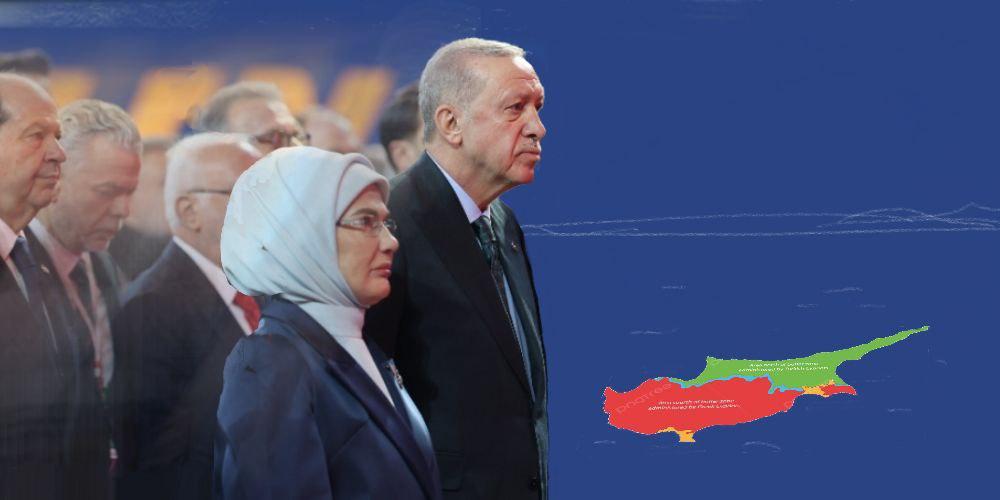
From Turkey’s point of view, however, the picture is quite different. Turkey is the only country in the world to officially recognize the TRNC, which became a self-proclaimed independent entity in 1984 after Turkey invaded part of the island in 1974. Over the years, Ankara’s pressure has succeeded in preventing relations between the Central Asian republics and the Republic of Cyprus from going as far as the appointment of official diplomatic representatives. But now the situation has changed.

The move by Kazakhstan, Uzbekistan, and Turkmenistan is particularly significant from another point of view: The three countries, with Turkmenistan only as an observer, are part of the abovementioned Organization of Turkic States, of which the TRNC has also been an observer since 2022. From the Turkish perspective, therefore, the position adopted by Astana, Tashkent, and Ashgabat can be interpreted as a betrayal of Turkish President Recep Tayyip Erdoğan’s efforts on the pan-Turkic front, one of his key foreign policy doctrines.

At the latest meeting in November last year, the Turkish President called on the Organization’s member states to give more support to the TRNC. The occasion was the summit in Kyrgyzstan, which was also attended by the president of the self-proclaimed entity, Ersin Tatar. This year, the summit of the OTS will be held in Azerbaijan, and it will be interesting to see how the issue of the appointment of Ambassadors from Kazakhstan, Uzbekistan and Turkmenistan to the Republic of Cyprus will be handled.

So far, the Turkish authorities have made no official statement on the move by the three Central Asian republics. Although the OTS has made progress in terms of economic integration among its members through initiatives such as the launch of the Turkic Investment Fund, repercussions cannot be ruled out. During an interview on Turkish television, the TRNC Minister of Transport, Erhan Arıklı, clearly stated that he expects Turkey to take effective countermeasures. The Turkish press has highlighted the nature of the decision as a real diplomatic slap in the face for President Erdoğan and also emphasized the concurrence with the announcement of European investment in Central Asia. The message to the country’s public is that countries formally allied to Turkey have sold the unity of the Turkish world to Brussels.

The Cyprus issue shows how difficult it can be for Central Asian republics to maneuver in the current international context. The pressure exerted by the European Union and Turkey also highlights the diplomatic importance of the region. This is true not only for Russia, which is facing international isolation following its invasion of Ukraine. It is a situation that offers opportunities but also contains risks. The main opportunity is the possibility of using this increased diplomatic relevance on various fronts to obtain concessions, as in the case of European investments related to critical sectors such as minerals and regional logistics. On the other hand, the main risk is the inability to maintain a balance between the different demands of the various partners of the Central Asian republics. This is a key match for the geopolitical and diplomatic relevance of Central Asia, a match for which cooperation between the regional republics, to be perceived as a united bloc, becomes even more fundamental