• KGS/USD = 0.01144 0%
  • KZT/USD = 0.00193 -0%
  • TJS/USD = 0.10811 -0.28%
  • UZS/USD = 0.00008 0%
  • TMT/USD = 0.28490 0%
  • KGS/USD = 0.01144 0%
  • KZT/USD = 0.00193 -0%
  • TJS/USD = 0.10811 -0.28%
  • UZS/USD = 0.00008 0%
  • TMT/USD = 0.28490 0%
  • KGS/USD = 0.01144 0%
  • KZT/USD = 0.00193 -0%
  • TJS/USD = 0.10811 -0.28%
  • UZS/USD = 0.00008 0%
  • TMT/USD = 0.28490 0%
  • KGS/USD = 0.01144 0%
  • KZT/USD = 0.00193 -0%
  • TJS/USD = 0.10811 -0.28%
  • UZS/USD = 0.00008 0%
  • TMT/USD = 0.28490 0%
  • KGS/USD = 0.01144 0%
  • KZT/USD = 0.00193 -0%
  • TJS/USD = 0.10811 -0.28%
  • UZS/USD = 0.00008 0%
  • TMT/USD = 0.28490 0%
  • KGS/USD = 0.01144 0%
  • KZT/USD = 0.00193 -0%
  • TJS/USD = 0.10811 -0.28%
  • UZS/USD = 0.00008 0%
  • TMT/USD = 0.28490 0%
  • KGS/USD = 0.01144 0%
  • KZT/USD = 0.00193 -0%
  • TJS/USD = 0.10811 -0.28%
  • UZS/USD = 0.00008 0%
  • TMT/USD = 0.28490 0%
  • KGS/USD = 0.01144 0%
  • KZT/USD = 0.00193 -0%
  • TJS/USD = 0.10811 -0.28%
  • UZS/USD = 0.00008 0%
  • TMT/USD = 0.28490 0%
10 December 2025

Complaint against Tajik Officials Filed with International Criminal Court

For many years now, Tajikistan’s government has been ruling the country as it wishes and ignoring all criticism of the many rights violations being committed in Tajikistan.

On April 10, two NGOs — the Ukrainian Fund of International Volunteers and Freedom for Eurasia — and the banned Tajik opposition Islamic Renaissance Party of Tajikistan (IRPT) filed a complaint with the international Criminal Court (ICC).

The complaint accuses Tajik President Emomali Rahmon and his government of committing crimes against humanity.

IRPT leader Muhiddin Kabiri said, “We hope the (ICC), (after considering) our complaint, will begin procedures for opening a criminal case and arresting the perpetrators, including the top leadership of Tajikistan.”

A Big Problem That’s Getting Worse

Evidence provided in the complaint covers the period from 2002 to 2024, but events only in the last few years tell the story of the impunity with which Tajik authorities have acted toward their citizens inside and outside Tajikistan.

In May 2022, the Tajik government responded to peaceful protests in eastern Tajikistan’s Gorno-Badakhshan Autonomous Oblast (GBAO) by implementing a counter-terrorism operation that saw dozens, at least, of locals killed, and hundreds detained.

Tajik authorities arrested people who were not involved in the protests: lawyers, activists, artists, and journalists. More than a dozen Pamiris were detained in Russia and forcibly deported back to Tajikistan where they were immediately detained and soon after, convicted and imprisoned.

GBAO is home to the Pamiris, a group of more than 200,000 who have been living in the remote Pamir Mountains for centuries. They are Shiite Muslims, not Sunnis as most ethnic Tajiks are. Pamiris have their own languages and a unique culture.

GBAO has been a restive area since Tajikistan became independent in late 1991, mainly because the Pamiris prefer to govern their territory according to their own age-old customs and have been resistant to the government’s attempts to exert control over the region.

Less than three years since the counter-terrorism operation, Pamiri culture is in danger of disappearing. Pamiris are followers of the Aga Khan. During more than 30 years of Tajikistan’s independence, the recently deceased Aga Khan IV Prince Karim spent more than $1 billion on projects in GBAO, which is the poorest region in Tajikistan. 

Since 2022, the government has seized or is currently trying to seize nearly everything the Aga Khan Development Network built or established in GBAO. The hotels, schools, including the University of Central Asia in the GBAO capital Khorog, a medical center, the park in Khorog, and other objects financed by the Aga Khan are all coming under state control. Locals are forbidden from having portraits of the Aga Khan in their homes. 

Rahmon is preparing his eldest son, Rustam Emomali, to become Tajikistan’s next president. In advance of the widely-expected transfer of power, Rahmon has been clearing away any potential opposition.

The IRPT was banned and declared by a Tajik court to be an extremist group a decade ago, despite the party having been part of the government during the previous 18 years. The IPRT was part of a coalition of groups that fought against the government during Tajikistan’s 1992-1997 civil war.

Tajik authorities alleged a coup attempt by Tajikistan by the country’s deputy defense minister in September 2015 was connected to the IRPT. The party had already had its registration canceled and following the reported failed coup attempt, a court banned the IRPT’s activities and officially branded it an extremist group.

Fourteen top IRPT members who were in Tajikistan were arrested and sentenced to lengthy prison terms. One of those 14, Muhammadali Fayzmuhammad, died in prison in July 2024 at age 65

No Hope for a Fair Trial

The trials of the IRPT were held behind closed doors, which has become the norm in Tajikistan. The government has justified these closed-door trials, saying that state secrets are being revealed as part of the proceedings.

The trials of the GBAO defendants, and at the start of 2025, the trials of eight people — former government officials and one rights lawyer, and the trial the lawyer’s niece, a journalist who reported on Tajik citizens’ attitude toward China — were also conducted behind closed doors. All were convicted.

Not guilty verdicts are rare in Tajikistan. A report in June 2022 said in more than 10,000 cases heard by Tajik courts in 2021, there were only 10 acquittals. In July 2022, the Chairman of Tajikistan’s Supreme Court Shermukhammad Shohiyon said in the first six months of the year there were 5,508 court cases and no acquittals.

Tajikistan has consistently ranked near the bottom in Freedom House’s annual Nations in Transit reports and Reporters Without Borders’ World Press Freedom Indexes.

Will the ICC Be Different?

The UN Working Group on Arbitrary Detention has issued several opinions in recent years that found violations in the detentions and convictions of people in Tajikistan, and called on Tajik authorities to immediately release these people. The Tajik government has not responded to any of the Working Group’s decisions.

Similarly, Tajik authorities ignore criticisms from international rights groups and individual governments about rights abuses.

IRPT leader Kabiri said the lawyers involved in preparing to complaint to the ICC spent four years collecting evidence.

Freedom for Eurasia said the acts documented in the complaint fall under several categories of crimes against humanity, including murders and extrajudicial executions, enslavement in penal institutions, torture, disappearances, persecution for political or religious reasons, and arbitrary detentions without a fair trial. 

Freedom for Eurasia also noted “Tajikistan’s status as a Rome Statute signatory means the ICC has clear jurisdiction… ” and concluded its statement by saying, “In the face of the total absence of domestic remedies, the international route is the only hope for justice for the victims (in Tajikistan).”
 

Earthquake in Tajikistan Kills One Child, Damages About 30 Homes

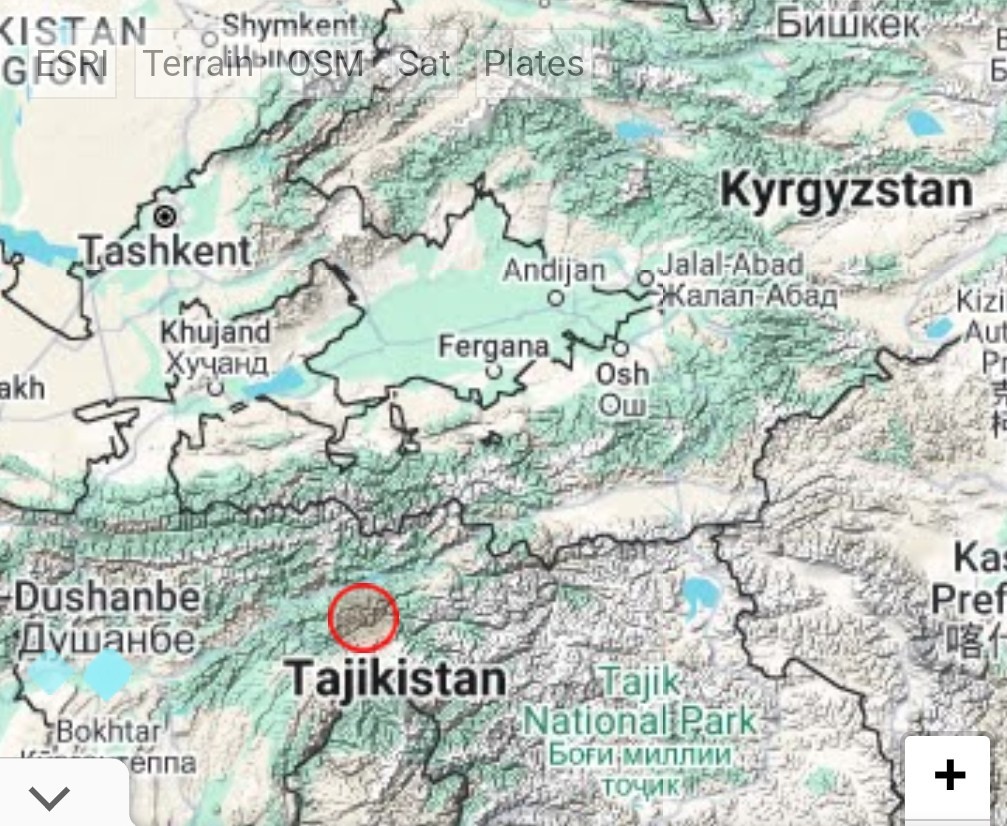
A powerful earthquake struck Tajikistan on Sunday, killing a young child who was trapped under a wall, damaging about 30 houses and alarming people in parts of neighboring countries who felt the impact.    

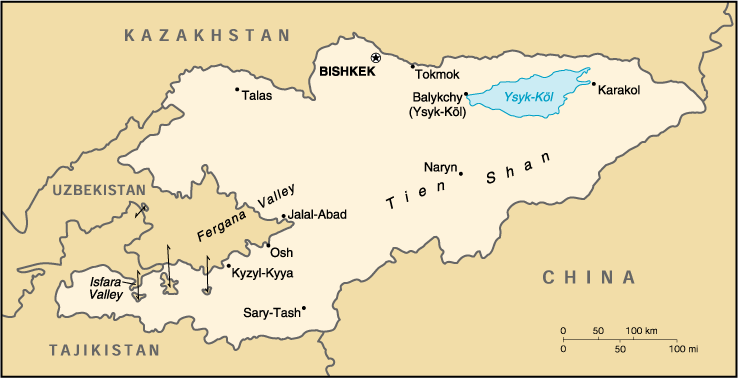
The epicenter of the quake was 25 kilometers east of Rasht, Tajikistan, at a depth of 12.6 kilometers, the U.S. Geological Survey reported. The Euro-Mediterranean Seismological Centre issued a similar report, saying the magnitude was 5.9 and citing the accounts of witnesses who said there was strong shaking in Dushanbe, the capital. The Rasht area is about 150 kilometers northeast of Dushanbe and lies on the border with Kyrgyzstan. 

Disaster response authorities in Tajikistan identified the child who died as Abdugani Mashrabov, a resident of the rural village of Ushturpast, who was born in 2022.  At least 29 residential buildings and a school were damaged in the quake, mostly in the Rasht area, according to preliminary information from the government.

The Rasht valley, which has picturesque landscapes of gorges and mountains, is relatively remote. It was an opposition stronghold during Tajikistan’s civil war in the 1990s and was the scene of intense fighting. More recently, development had been slowed by tensions between Tajikistan and Kyrgyzstan that sometimes spilled into violence, though a border agreement signed last month between the two countries could open the way to increased trade and transit.

Kyrgyzstan Tries Again to Compose a New Anthem

Kyrgyzstan’s national anthem, slated for an overhaul, isn’t going into retirement just yet.  

Earlier this year, the government said it would hold a contest to select a new anthem to replace the one that was introduced in 1992, soon after Kyrgyzstan declared independence from the Soviet Union. But a state commission that met on April 9-10 to choose the best new text and music wasn’t satisfied with the options for replacing the old version, which was widely panned as hard to perform and more in tune with Soviet rather than contemporary times. 

“Despite the diversity of the proposed projects and the active participation of citizens, the commission concluded that it had not found a work that fully met the content and artistic requirements for the national anthem as a state symbol,” the Ministry of Culture, Information and Youth said

Another contest will be held, according to the ministry statement. People who participated in the first competition can do so again, but they’ll have to come up with something new. The selection committee wants projects reflecting “the historical memory, cultural heritage, development aspirations and national unity of the Kyrgyz people,” the ministry said. 

A total of 285 anthem projects from 165 people had been registered in the first contest. 

The chorus of the old anthem reaches for the spirit of a newly independent people, though whether Kyrgyzstan’s democratic aspirations are advancing or backsliding is in dispute these days:

“March on, O Kyrgyz folk,
March towards democracy!
Keep prospering, off we go,
In your hands lies your destiny!”

The country’s president Sadyr Japarov has said he favors a new anthem. In December, he signed a bill modifying the imagery on the national flag, another change aimed at modernizing the country’s national symbols. Some Kyrgyz citizens criticized the flag change as a rebranding exercise that distracted from the country’s more pressing issues.

Kyrgyz Climber Ascends Annapurna on Same Day as Avalanche Disaster

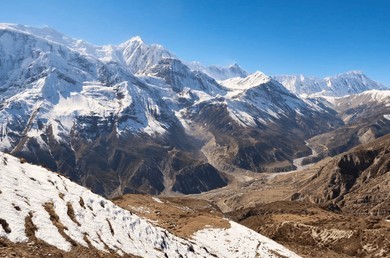
The head of Kyrgyzstan’s mountaineering federation has climbed the Himalayan mountain of Annapurna, which has a reputation as a particularly dangerous climb because of the threat of avalanches and other factors. Two sherpas on a different team were swept away in an Annapurna avalanche on the same day, prompting a helicopter search for the missing men.

Eduard Kubatov reached the peak of Annapurna, which stands 8,091 meters above sea level, on April 7. He did so without supplementary oxygen, which made the ascent much harder. He recorded a video at a location that appeared to be below the summit, saying it was hard to film at minus 40 degrees and with strong winds at the top.

“Last night, our entire team safely descended from the summit, and today we officially announce the successful completion of the oxygen-free ascent of Annapurna!” Kubatov said in an Instagram post on Wednesday.

The Kyrgyz climber, who described Annapurna as “the most difficult and dangerous mountain in the world,” said in a later post that he was still at Annapurna base camp following the ascent.

“It snowed 20-30 cm at night, several snow and stone avalanches fell! Even base camp is not a safe place on this mountain! We all team walking from Annapurna to Pokhara. It will take about 25 km to the nearest village and 4-5 hours on jeeps to the city of Pokhara! Apparently we are going all day to get to civilization!” he said.

Seven Summit Treks, a Nepal-based trek and expedition operator, said it suffered a “terrible disaster” when two of its climbing sherpas, Ngima Tashi and Rima Rinje, were caught in an avalanche on April 7 while transporting oxygen cylinders for the summit push. It said it deployed a helicopter to look for them.

Annapurna “is considered one of the most challenging and dangerous mountains to climb due to its steep slopes, exposed routes and frequent avalanches and landslides that occur on the climbing route,” the company has said.

Kubatov was among several dozen climbers who reached the summit of Annapurna on the same day. Last year, Kubatov ascended the Himalayan mountains of Lhotse and Makalu, which are also more than 8,000 meters above sea level. He did so without oxygen cylinders in those climbs as well. He has previously climbed Everest, the world’s tallest mountain above sea level.

Kyrgyzstan has a strong mountaineering tradition, and several peaks in the Central Asian country are in the 7,000-meter range.

Communities in Uzbekistan and Turkmenistan Demand World Bank Investigation into Rogun HPP

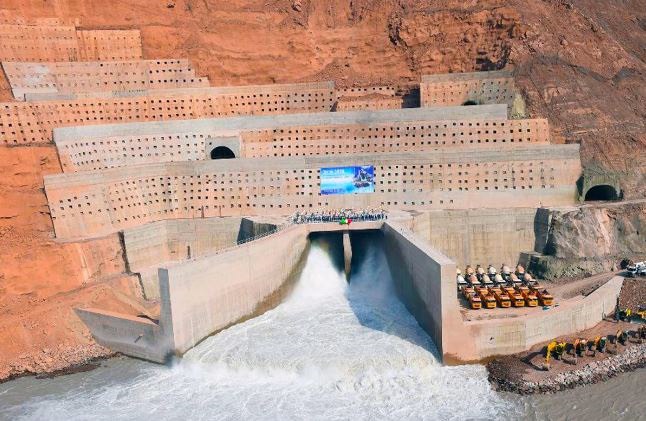
The World Bank’s Inspection Panel has agreed to formally investigate the World Bank’s involvement in the Rogun Hydropower Project (HPP) in Tajikistan, following a complaint filed on behalf of communities living downstream on the Amu Darya River in Uzbekistan and Turkmenistan.

The complaint, submitted by the international environmental coalition Rivers without Boundaries, raises serious concerns about the project’s environmental and social impacts. The group claims the World Bank approved funding for the project based on outdated and incomplete assessments, failing to adequately consider risks to local ecosystems and communities.

At the heart of the issue is the potential impact of filling the Rogun reservoir, which could reduce water flow to the Amu Darya delta by 25% or more. Experts warn this could accelerate desertification, increase soil salinity, and threaten the livelihoods and health of up to 10 million people in Uzbekistan and Turkmenistan.

Particularly vulnerable are the region’s rare tugai forests, including the Tigrovaya Balka Reserve, which was inscribed on UNESCO’s World Heritage List in 2023. The dam’s construction also endangers local aquatic species, such as the critically endangered Amu Darya false shovelnose sturgeon.

“This investigation is a crucial step,” said Yevgeny Simonov, international coordinator of Rivers without Boundaries. “The Rogun project in its current form is a massive threat to the environment and to millions of people in Central Asia. The World Bank must adhere to its own environmental and social safeguards.”

Activists also criticized the lack of public consultation in Uzbekistan and Turkmenistan, where affected communities were allegedly not informed in their native languages, Uzbek, Karakalpak, or Turkmen and where access to key documents was limited. Several complainants reportedly requested anonymity, citing fear of retaliation, which reflects the challenging environment for civic participation in the region.

“People living in the lower Amu Darya basin have already suffered for decades due to poor water management and the drying of the Aral Sea. The Rogun project could be the final blow,” said Manana Kochladze of CEE Bankwatch Network. “There has been no serious dialogue with those whose lives depend on this river, which contradicts the basic principles of transparency and participation.”

In 2023, environmental groups submitted proposed modifications to align the Rogun project with international standards, including cheaper and safer alternatives. However, the World Bank has yet to respond. Rivers without Boundaries alleges that the project violates multiple Bank policies, including those on environmental assessment, biodiversity protection, resource efficiency, dam safety, community engagement, and resettlement.

The coalition is now urging the World Bank and other financiers to pause funding until a comprehensive, independent, and transparent investigation is completed and until meaningful steps are taken to prevent further harm to both people and nature.

President Tokayev: Kazakhstan Prepared for Global Market Turbulence

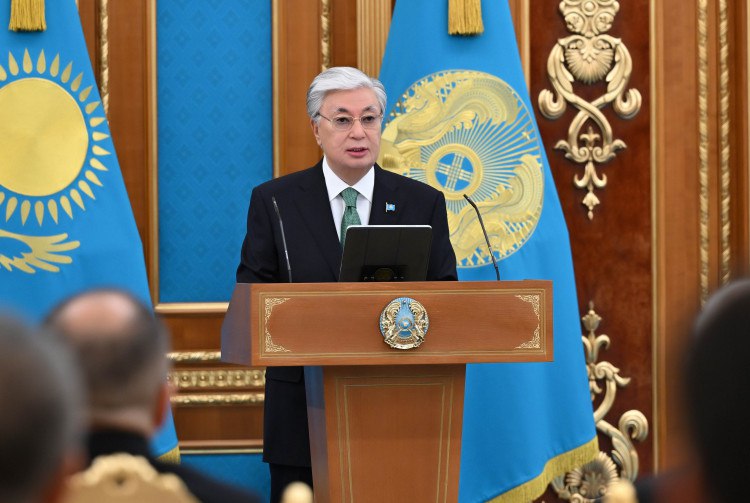
Kazakh President Kassym-Jomart Tokayev has stated that Kazakhstan is prepared to confront the consequences of what he described as one of the most severe global economic crises in recent decades. Speaking at a meeting with the country’s scientific community, Tokayev emphasized that while the international environment is turbulent, there is no reason for panic, noting that Kazakhstan has prior experience in navigating such challenges.

“Due to the onset of a ‘tariff war of all against all,’ we are witnessing the breakdown of production and trade chains, the collapse of markets, and heightened volatility in raw material prices. These developments will inevitably affect all nations, including Kazakhstan,” Tokayev warned.

Despite these external shocks, he assured that the country will stay the course on its development agenda. All priority infrastructure projects, he confirmed, will continue to receive full financing and will be implemented as planned.

In light of growing global uncertainty, Tokayev underlined the fierce competition for investment that lies ahead. “We need to be in very good shape. We must be ready for all scenarios. We must act pragmatically and confidently. Crises are beneficial in that they reveal the presence or absence of managerial talent and give rise to new opportunities,” the president stated.

A day earlier, Tokayev had convened a meeting with key figures from the government’s economic and financial sectors to assess the situation following a steep decline in global prices for energy resources and essential commodities.

As previously reported by The Times of Central Asia, Kazakhstan’s economy has recently received a temporary boost thanks to increased demand and rising prices for several key exports. This trend followed the U.S. suspension of additional tariffs on various countries, including Kazakhstan.