• KGS/USD = 0.01144 0%
  • KZT/USD = 0.00192 -0%
  • TJS/USD = 0.10849 0.37%
  • UZS/USD = 0.00008 0%
  • TMT/USD = 0.28490 0%
  • KGS/USD = 0.01144 0%
  • KZT/USD = 0.00192 -0%
  • TJS/USD = 0.10849 0.37%
  • UZS/USD = 0.00008 0%
  • TMT/USD = 0.28490 0%
  • KGS/USD = 0.01144 0%
  • KZT/USD = 0.00192 -0%
  • TJS/USD = 0.10849 0.37%
  • UZS/USD = 0.00008 0%
  • TMT/USD = 0.28490 0%
  • KGS/USD = 0.01144 0%
  • KZT/USD = 0.00192 -0%
  • TJS/USD = 0.10849 0.37%
  • UZS/USD = 0.00008 0%
  • TMT/USD = 0.28490 0%
  • KGS/USD = 0.01144 0%
  • KZT/USD = 0.00192 -0%
  • TJS/USD = 0.10849 0.37%
  • UZS/USD = 0.00008 0%
  • TMT/USD = 0.28490 0%
  • KGS/USD = 0.01144 0%
  • KZT/USD = 0.00192 -0%
  • TJS/USD = 0.10849 0.37%
  • UZS/USD = 0.00008 0%
  • TMT/USD = 0.28490 0%
  • KGS/USD = 0.01144 0%
  • KZT/USD = 0.00192 -0%
  • TJS/USD = 0.10849 0.37%
  • UZS/USD = 0.00008 0%
  • TMT/USD = 0.28490 0%
  • KGS/USD = 0.01144 0%
  • KZT/USD = 0.00192 -0%
  • TJS/USD = 0.10849 0.37%
  • UZS/USD = 0.00008 0%
  • TMT/USD = 0.28490 0%
11 December 2025

Uzbekistan to Extend Electricity Supplies to Afghanistan Through 2026

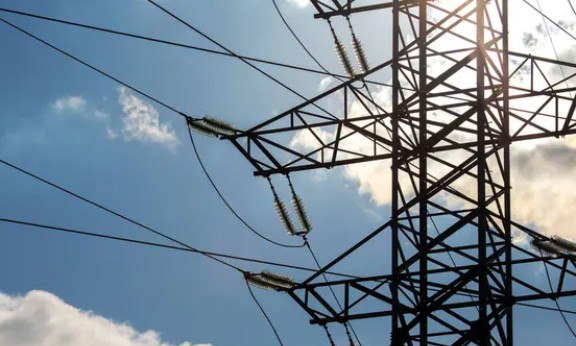
Uzbekistan will continue supplying electricity to Afghanistan in 2026, the Ministry of Energy announced following a bilateral meeting in Tashkent between Uzbek Energy Minister Jorabek Mirzamahmudov and Abdul Bori Umar, Chief Executive of Afghanistan’s state-owned power company Da Afghanistan Breshna Sherkat (DABS).

Senior officials from Uzbekistan’s energy sector also participated in the talks. The two sides referenced recent statements by President Shavkat Mirziyoyev at the 80th session of the UN General Assembly and during the Central Asia summit held in Tashkent, where he underscored the importance of supporting the Afghan people and fostering the country’s economic development. Officials said these efforts are helping to reinforce energy cooperation between the neighboring countries.

The meeting also covered progress on joint energy infrastructure projects, including the construction of high-voltage transmission lines and substations within Afghanistan. Both sides agreed to accelerate implementation of these facilities. The session concluded with the signing of a new contract extending Uzbekistan’s electricity supply to Afghanistan through 2026.

According to the Ministry of Energy, the agreement demonstrates the shared interest of both countries in ensuring stable power delivery and strengthening Afghanistan’s energy infrastructure.

Earlier this year, DABS reported that it had signed four contracts worth $243 million with Uzbekistan’s Ministry of Energy, along with partners Nego Energy and Uz Energy. These projects include the extension of the 500-kilovolt Surkhan-Dasht Alwan transmission line, capable of transmitting up to 1,000 megawatts; expansion of the Arghandeh substation to 800 MVA; construction of a new Sheikh Mesri substation in Nangarhar Province; and the extension of the 220-kilovolt Kabul-Nangarhar (Sheikh Mesri) line.

ADB Approves $56.4 Million Disaster-Response Package for Tajikistan and Kyrgyzstan

The Asian Development Bank (ADB) has approved a $56.4 million program aimed at strengthening disaster-response capacity in Tajikistan and Kyrgyzstan, the bank announced in an official statement.

According to the ADB, both countries face high exposure to earthquakes, floods, and other climate-related hazards. Their ability to respond effectively remains limited by constrained fiscal resources and a lack of risk-transfer mechanisms. The newly approved program is designed to enhance financial preparedness through two pre-arranged ADB financing instruments, each tailored to different levels of disaster risk.

Innovative Tools for Disaster-Risk Financing

The program incorporates two key components: Contingent Disaster Financing (CDF) and Disaster Resilience Bonds (DRB). CDF provides budgetary support during medium-scale natural disasters or public health emergencies. DRBs, issued on international capital markets, offer rapid liquidity for major, high-severity disasters.

“This program will help reduce the fiscal burden on both countries following natural disasters, including geophysical events, extreme weather, and health emergencies,” said Leah Gutierrez, ADB Director General for Central and West Asia. She emphasized that the combination of policy reforms, institutional strengthening, and innovative financing marks a shift from reactive response to proactive disaster-risk management.

Focus on Institutional Reforms and Regional Cooperation

The initiative also emphasizes strategic policy reforms, capacity building, and governance improvements to ensure a coordinated and transparent disaster-risk management system. It was developed under ADB’s technical assistance program to establish disaster-risk transfer mechanisms in the Central Asia Regional Economic Cooperation (CAREC) region, a partnership supporting sustainable development and regional integration.

The program will be financed through a $53.1 million grant from the Asian Development Fund (ADF), with an additional $3.3 million from the Asia-Pacific Climate Fund. ADF grants are targeted at the poorest and most vulnerable countries in the Asia-Pacific. From 2021 to 2024, the fund supported the lifting of 384,000 people out of poverty and the creation of approximately 500,000 jobs.

Kazakhstan Names First Nuclear Facility the Balkhash Nuclear Power Plant

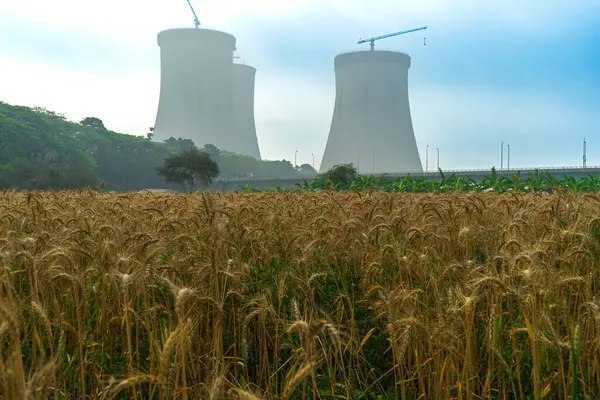
Kazakhstan has officially named its first nuclear power facility the Balkhash Nuclear Power Plant, following the results of a national competition. More than 10,000 unique names were proposed by citizens across the country, with “Balqash Atom Elektr Stansiyasy” (in Kazakh) receiving the most votes.

Nationwide Contest Engages Public in Naming

The competition to name the new plant was conducted via the eGov Mobile platform and ran from September 25 to October 10. Open to citizens aged 16 and older, the contest received 27,157 entries, generating 10,460 unique name suggestions. These figures accounted for variations in Cyrillic and Latin spelling, as well as synonymous formulations.

A selection committee was established on September 5, comprising public figures, members of the creative sector, philologists, historians, and nuclear energy experts. In its final session, the committee reviewed the 100 most popular submissions.

Why “Balqash” Was Selected

The winning name, “Balqash Atom Elektr Stansiyasy,” was submitted by 882 participants, placing it at the top of the popularity ranking. The Atomic Energy Agency noted that naming nuclear power plants after their geographical location aligns with international conventions. In this case, the name references the Balkhash Lake region, where the plant is under development.

The commission also approved the following official version of the name in English: Balkhash Nuclear Power Plant.

Participants who proposed the winning name will receive electronic certificates of co-authorship via the eGov Mobile app within one month. Authorities have compiled a database of all name proposals, which may be used in future naming efforts for additional nuclear units or plants.

Despite the public engagement, some citizens on social media questioned the outcome, expressing skepticism about the need for a contest that ultimately selected a geographically obvious name.

Construction Progresses at Ulken Site

While the naming contest was underway, initial construction began at the nuclear plant’s designated site near the village of Ulken in the Almaty region. Preparatory work commenced in August, led by the Russian state corporation Rosatom as the general contractor. By the end of October, design and survey work was already in progress.

The Ulken Nuclear Power Plant is expected to play a central role in Kazakhstan’s long-term energy strategy. Discussions are also underway regarding a potential second nuclear facility in the Zhambyl District of the Almaty region, though this project remains in the evaluation phase. Experts consider the area a promising location for future development.

New FAO Report Ranks Tajikistan Among World’s Most At-Risk Countries for Land Degradation

Tajikistan is among the countries most vulnerable to land degradation, according to a new report from the Food and Agriculture Organization of the United Nations (FAO). The findings point to alarming environmental and socio-economic risks for a country where agriculture remains the primary source of employment.

The FAO attributes Tajikistan’s vulnerability to a combination of small landholdings and intense pressure on soil resources. The country has more than 1 million rural households, including approximately 181,000 dekhkan farms. The average landholding is just 0.2 hectares, with a median size of 0.1 hectares, meaning half of all farmers operate on micro-plots.

Challenges to Sustainable Agricultural Growth

Under these conditions, expanding agricultural production is not feasible through increased acreage. Instead, growth depends on improving soil quality, upgrading irrigation systems, ensuring stable water access, and adopting modern technologies. These factors now define the boundaries of Tajikistan’s agricultural development.

According to the FAO, land degradation has affected 3.2 billion people globally, nearly 40% of the world’s population. In some regions, agricultural yields have already declined by at least 10%.

In Tajikistan, the stakes are especially high. The country has limited arable land, and its farming sector relies heavily on glacial meltwater and consistent irrigation. Climate risks are intensifying faster here than in many neighboring states.

Extent and Impact of Land Degradation

International experts estimate that nearly 70% of Tajikistan’s arable land is already degraded, with 10% of the population living in affected areas. The main drivers are erosion, salinization, and nutrient depletion, which collectively undermine soil productivity.

These environmental pressures reduce rural incomes, increase reliance on external resources such as fertilizers, and contribute to forced migration, exacerbating social and economic vulnerabilities across the country.

Ashgabat Police Intensify Crackdown on Internal Migrants Ahead of Neutrality Day

Security forces in Turkmenistan’s capital Ashgabat have stepped up operations targeting visitors from other regions in the lead-up to the country’s 30th anniversary of neutrality. Witnesses report harsh interrogations at checkpoints, physical abuse, ethnic slurs, and widespread raids in areas where day laborers gather.

Systematic Interrogations and Raids

Recent media reports highlighting police crackdowns on non-resident workers appear to represent only a fraction of a broader campaign against internal migrants. According to residents, anyone arriving in Ashgabat now faces multi-stage inspections at all major entry points, including from the Gokdepe, Dashoguz, Mary, and Lebap regions.

Checkpoint officers question travelers in detail, asking where they are going, who they are visiting, the length of their stay, and their purpose. Those suspected of seeking work are often forced to return to their regions of origin.

Within Ashgabat, authorities continue searches at the Gurtly bus station and expand checks to markets, construction sites, and agricultural outlets, any location where day laborers might be found. The raids extend to suburban areas, including the city of Arkadag.

Ethnic Discrimination and Unofficial Policies

Longstanding unofficial policies appear to disproportionately affect ethnic Uzbeks. Residents of Dashoguz and Lebap regions report that career advancement in government is often limited for Uzbeks, with many being encouraged to change their names from childhood to improve their prospects. Even in districts where Uzbeks form the majority, leadership roles are predominantly held by ethnic Turkmen.

According to Turkmen.news, the surge in pressure on non-residents coincides with preparations for high-profile events. In the summer, similar measures were observed in the resort town of Avaza before a United Nations forum. Now, authorities appear focused on “cleaning up” Ashgabat and Arkadag ahead of Neutrality Day.

Eyewitnesses believe the government aims to present an idealized image of the capital as Turkmenistan prepares to mark 30 years of neutrality. Gurbanguly Berdymuhamedov, the previous president and current Chairman of the country’s People’s Council, is reportedly placing significant emphasis on the celebrations. High-ranking international delegations are expected to attend.

Institutionalized Control Since 2022

The origins of the current policy trace back to January 2022, when Berdymuhamedov, during a Security Council meeting, directed the head of the migration service, Nazar Atagaraev, to increase controls on internal movement. Since then, raids have become routine, with enforcement intensifying ahead of state events.

Metro Expansion Key to Almaty Infrastructure Plans

Next year, Almaty plans another incremental step in the development of its public transport infrastructure with the opening of a new station at Kalkaman. This should see the tentacles of the transport system shift towards the west of the city. In the future, there are also plans to extend the metro north to Alatau, where the government’s “smart city” is being developed.

Investment in public transport is welcome, particularly with vocal complaints from residents about ever-increasing traffic problems and their contribution to the city’s winter smog.

“The expansion of the metro is considered one of the key tools for improving the environmental situation in Almaty,” a spokesperson for the Almaty mayor’s office (or Akimat), told The Times of Central Asia. “Increasing the share of passenger transportation via the subway reduces the use of cars, decreases traffic congestion, lowers emissions, and contributes to improved air quality.”

The ambitious new metro project is in addition to over 600 new buses expected to be added to the Almaty Bus fleet this year.

But despite these schemes, the traffic problem shows little sign of abating. It begs the question: has the city got public transport priorities right?
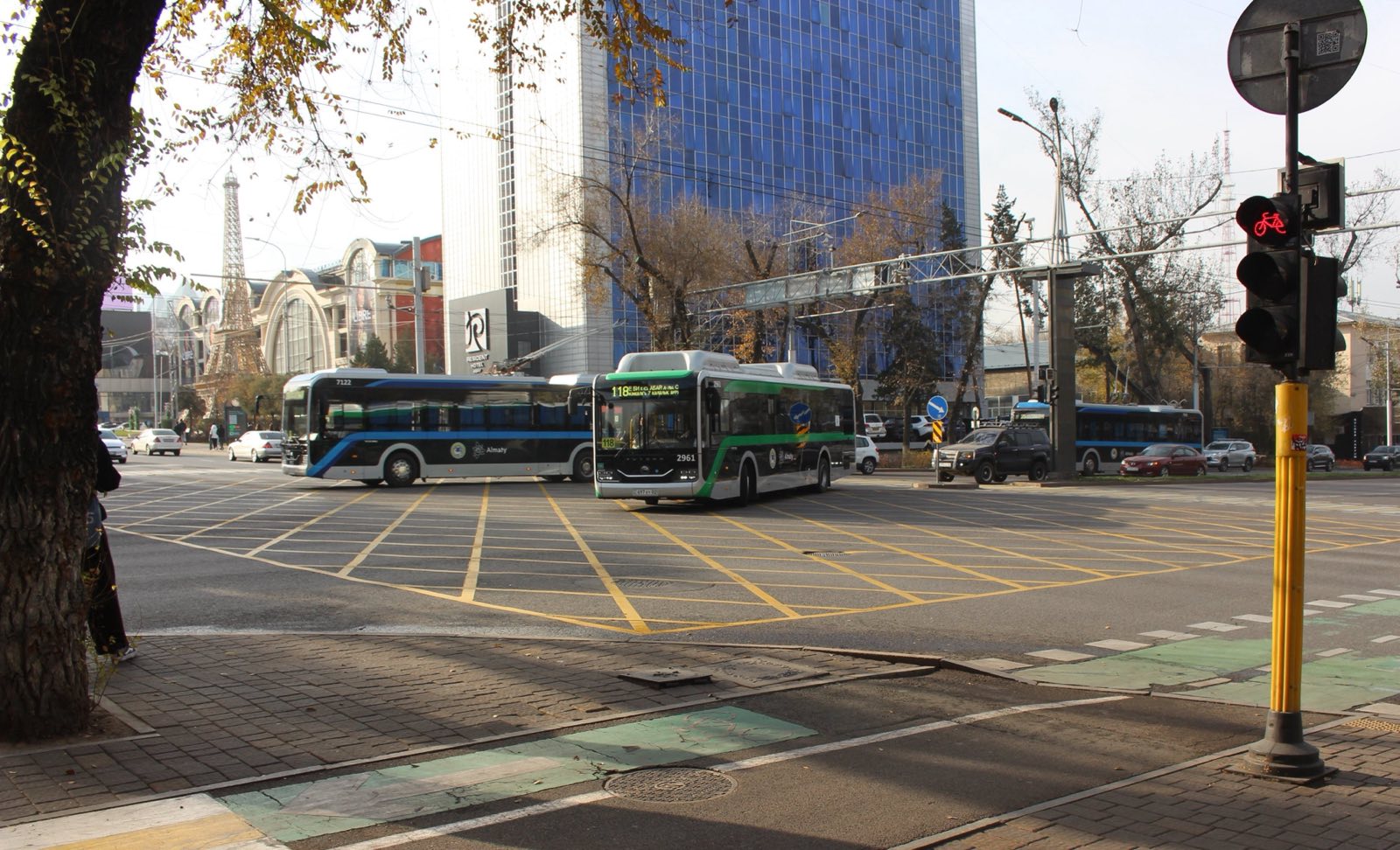
New-look trolleybuses and electro-buses can be seen as part of Almaty’s modern fleet; image: TCA, Joe Luc Barnes

The rise of the automobile

“Traffic jams in Almaty began in the early 2000s, when the economic situation improved and people started buying cars,” Dauren Alimbekov, a high-profile blogger on Almaty transport, told The Times of Central Asia.

He adds that the privatisation of other forms of public transport exacerbated this problem.

The tram network was suspended in 2015 after two high-profile accidents, with the tracks being dismantled in 2017. Its disappearance coincided almost exactly with the arrival of ride-hailing services such as Yandex Go! in July 2016. By 2023, over 200,000 residents were moonlighting as Yandex Go! drivers to earn extra money.

“In recent decades, the city has been planned with cars in mind, with major thoroughfares such as Al-Farabi almost totally lacking in convenient pedestrian crossings,” said Alimbekov.

This influx of drivers has created problems. Private cars are a major contributor to air pollution in the city. On some days earlier this year, Almaty recorded the worst pollution in the world.
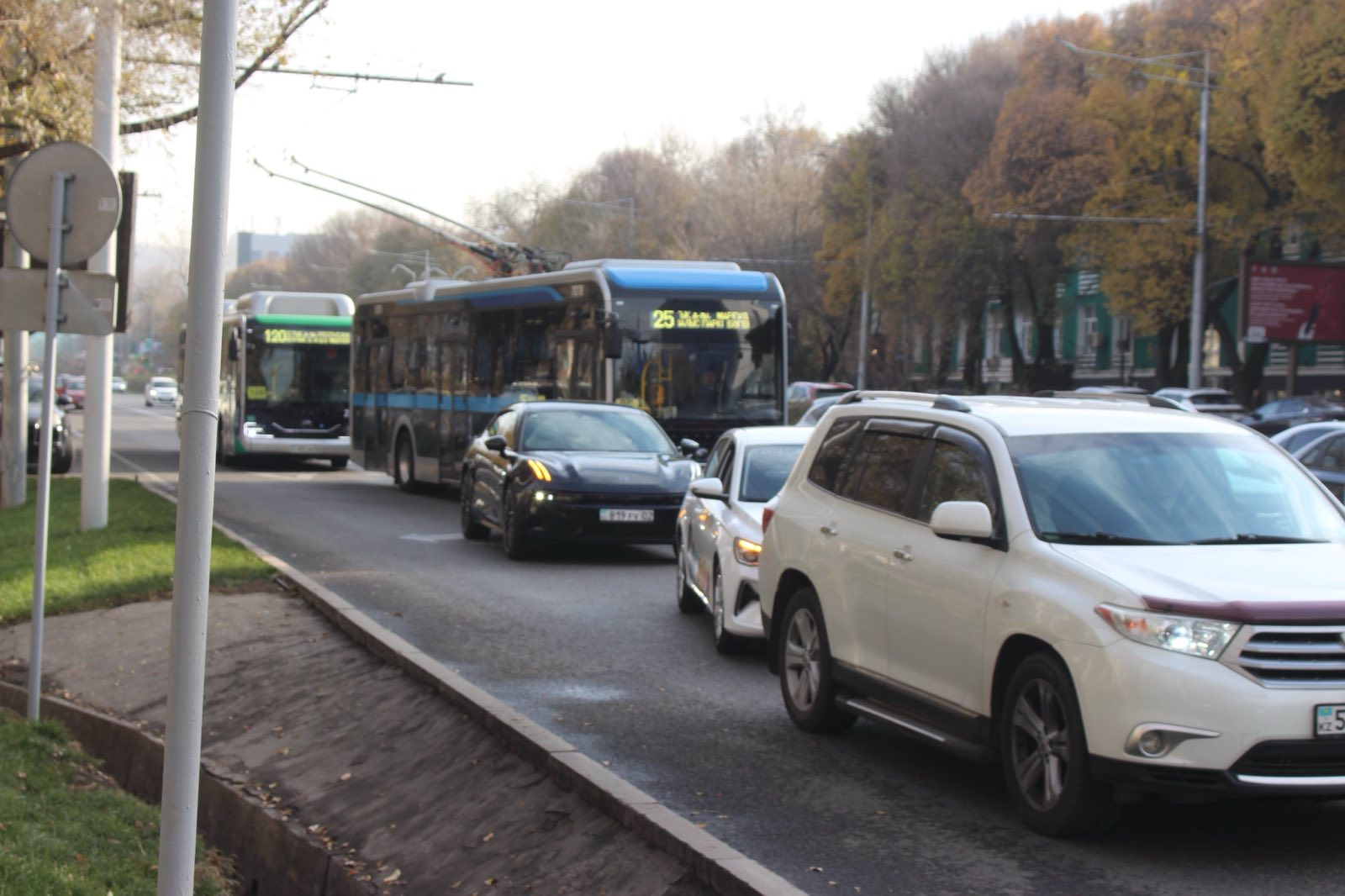
A lack of dedicated bus lanes slows journey times and prevents more people from using public transport; image: TCA, Joe Luc Barnes

Public transport

That is not to say that there is no public transport in the city. Indeed, the Almaty Metro is the only metro system in Central Asia to have opened since the collapse of communism. Trains began running in 2011, but they only travelled between an initial five stations. Two more opened in 2015, which saw a spike in passenger numbers. Today, there are eleven stations, although most of these remain along Abay Avenue, giving it little practical value to most residents.

The metro system does not connect to either of the city’s main train stations – Almaty-1 and Almaty-2 – nor with its major bus terminal at Sairan.

The metro stations in the center of the city are also inordinately far underground – Abay station is 78 meters deep, adding at least five minutes to journey times.

But despite these difficulties, passenger numbers have steadily grown. On September 2, the metro hit a new record ridership with 117,000 daily users, with daily averages hovering around 100,000.

While noting that some of the record-breaking ridership was due to the start of the academic year, the Akimat spokesperson believes that other factors are at play. “We have improved service quality in the metro – including reduced train intervals thanks to additional trains being put into operation. There is also a general trend of residents switching from private cars to public transport due to traffic congestion and rising costs of car ownership.”

The city also has a growing network of buses.

“If anything, there are now too many buses!” says Alimbekov. “The average age of the fleet is just 2-3 years old.”

He argues that the city’s leadership would be better off building, or expanding, dedicated bus lanes to speed up the journeys of these buses around the city. Journeys in the city cost a mere 120 tenge ($0.23), and the Onay! payment system is quick and easy to use, even for foreign visitors equipped with Apple Pay.
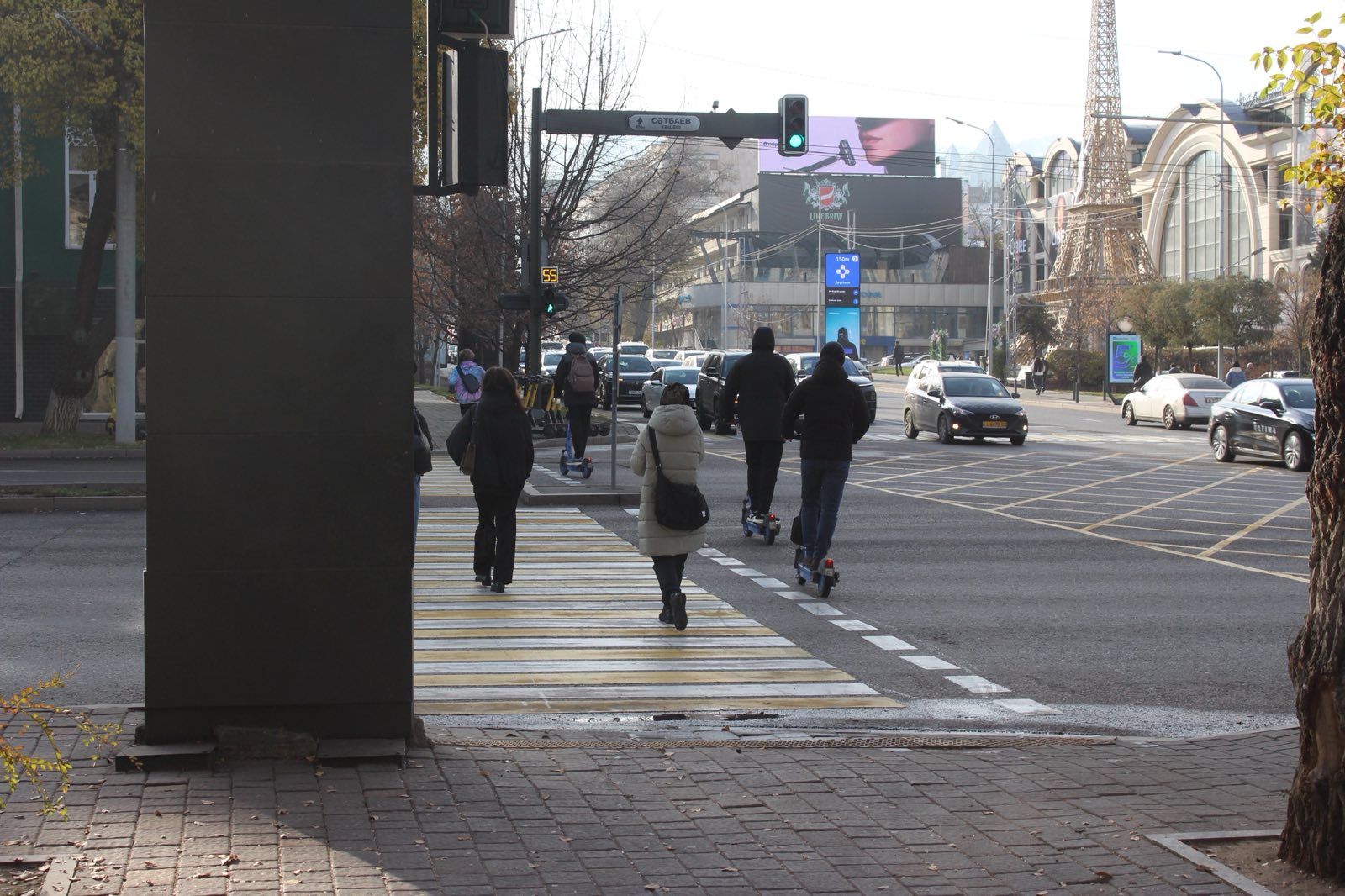
Controversial e-scooters have proliferated across the city; image: TCA, Joe Luc Barnes

There is a similar issue with scooters – there has been an enormous proliferation of e-scooters, which are quick, convenient, and popular, and could help serve to bring cars off the road.

However, these too are only served by a limited number of dedicated lanes, leading to many simply riding them on pedestrian sidewalks at dangerously high speeds.

E-scooter etiquette has ignited a furious debate among residents, especially as the police do not enforce legal restrictions to protect pedestrians. The problem has caused such public anger that even the president called on the police to be stricter in his State of the Union address in September.

The Metro Masterplan
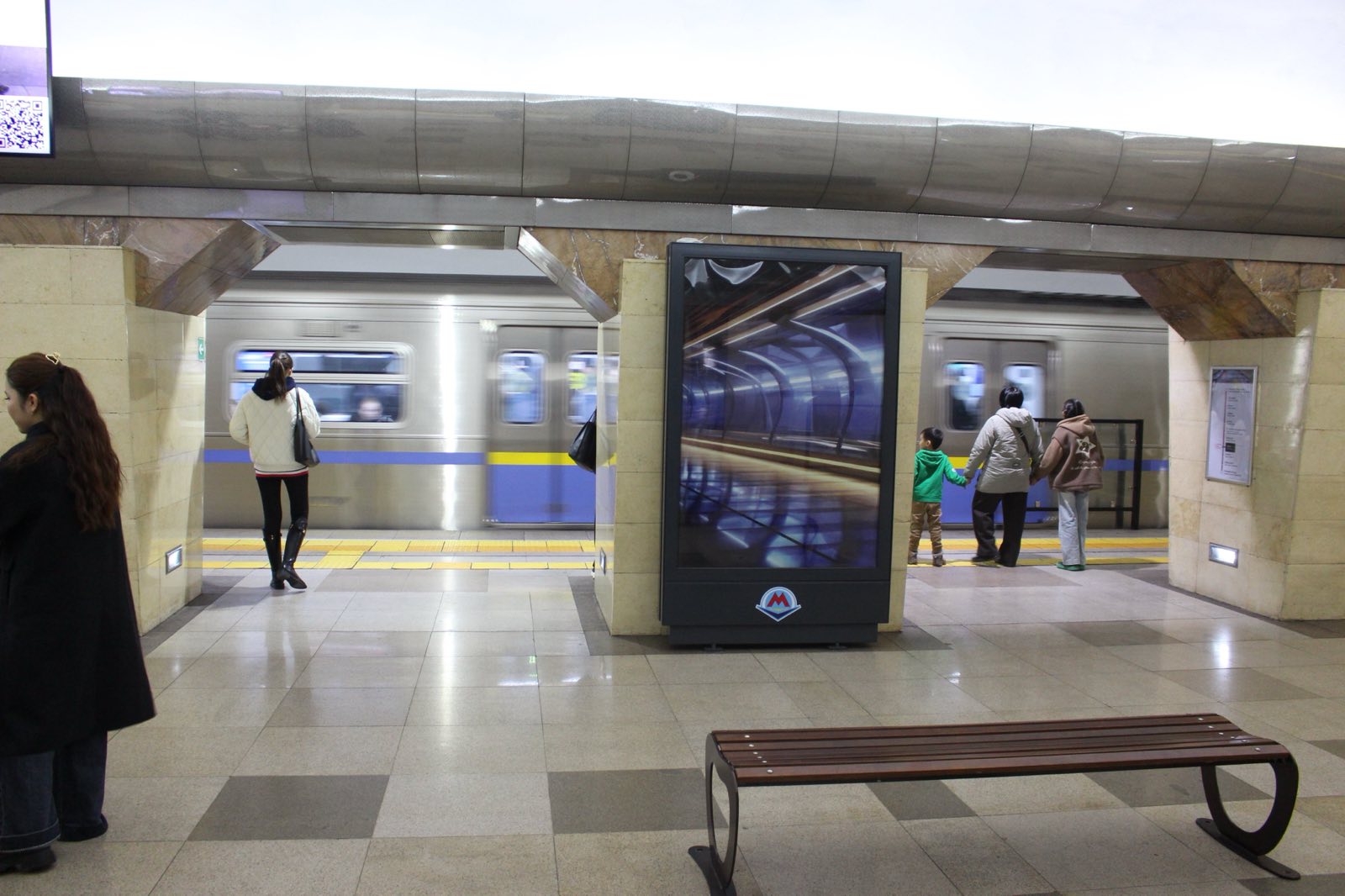
Abay Station, Almaty Metro; image: TCA, Joe Luc Barnes

The Akimat plans to incrementally expand the scale of the metro. Right now, 3.1 kilometers worth of tunnels have been dug, which will take trains westward beyond the current terminus at Bauyrjan Momyshuly to a new station called Kalkaman, located where Abay Avenue meets Ashimova Street.

“Work on the station and tunnels is progressing at an accelerated pace: tunnel excavation is close to completion, and construction of the station is nearing its final stage,” said the Akimat spokesperson, adding that Kalkaman is scheduled for completion in “the first half of 2026”.

In the longer term, the extension plans are more ambitious, with new lines going towards Alatau Smart City via Mizam Market.

“A feasibility study is also being prepared for a new branch from Zhibek Zholy station to the airport,” said the Akimat spokesperson.

But Alimbekov believes that these growth plans are misguided. He says that the priority should be to develop the metro inside the city, rather than stretching it out towards the suburbs.

“The main source of traffic problems is cars owned by city residents, not people from the outskirts,” he said. “These people who arrive by metro from the suburbs in the morning, how will they travel within the city afterwards? There is no continuation of the metro network inside the city, only along Abay Avenue. This will create a huge passenger surge exiting at just two or three stations.”

He’s also sceptical as to whether any of these expansion projects can be completed on schedule. The extension to Bauyrjan Momyshuly station, originally planned for 2018, did not open until 2022.

“I don’t know why it always takes so long to build the metro here. Not once has a project been completed on time. So, my prediction is that this one, too, will be delayed.”

In the meantime, Alimbekov suggests simply making the city more pedestrian-friendly, given that metro and bus users are also pedestrians. He adds that better bike lanes would also help, with the added benefit of saving the city from problems with e-scooters. But in the main, he thinks that bus infrastructure would be the simplest and most cost-effective solution. “It doesn’t need to be anything flashy like the BRT [bus-rapid-transit] system they are proposing. For buses to run faster and on schedule instead of being stuck in traffic, they just need dedicated lanes throughout the city.”

The city is certainly willing to invest in infrastructure, but whether it will be effective or not remains to be seen.