• KGS/USD = 0.01144 0%
  • KZT/USD = 0.00194 -0%
  • TJS/USD = 0.10883 0%
  • UZS/USD = 0.00008 0%
  • TMT/USD = 0.28571 0%
  • KGS/USD = 0.01144 0%
  • KZT/USD = 0.00194 -0%
  • TJS/USD = 0.10883 0%
  • UZS/USD = 0.00008 0%
  • TMT/USD = 0.28571 0%
  • KGS/USD = 0.01144 0%
  • KZT/USD = 0.00194 -0%
  • TJS/USD = 0.10883 0%
  • UZS/USD = 0.00008 0%
  • TMT/USD = 0.28571 0%
  • KGS/USD = 0.01144 0%
  • KZT/USD = 0.00194 -0%
  • TJS/USD = 0.10883 0%
  • UZS/USD = 0.00008 0%
  • TMT/USD = 0.28571 0%
  • KGS/USD = 0.01144 0%
  • KZT/USD = 0.00194 -0%
  • TJS/USD = 0.10883 0%
  • UZS/USD = 0.00008 0%
  • TMT/USD = 0.28571 0%
  • KGS/USD = 0.01144 0%
  • KZT/USD = 0.00194 -0%
  • TJS/USD = 0.10883 0%
  • UZS/USD = 0.00008 0%
  • TMT/USD = 0.28571 0%
  • KGS/USD = 0.01144 0%
  • KZT/USD = 0.00194 -0%
  • TJS/USD = 0.10883 0%
  • UZS/USD = 0.00008 0%
  • TMT/USD = 0.28571 0%
  • KGS/USD = 0.01144 0%
  • KZT/USD = 0.00194 -0%
  • TJS/USD = 0.10883 0%
  • UZS/USD = 0.00008 0%
  • TMT/USD = 0.28571 0%
16 December 2025

World Bank Approves $250 Million Loan to Expand Student Financing in Uzbekistan

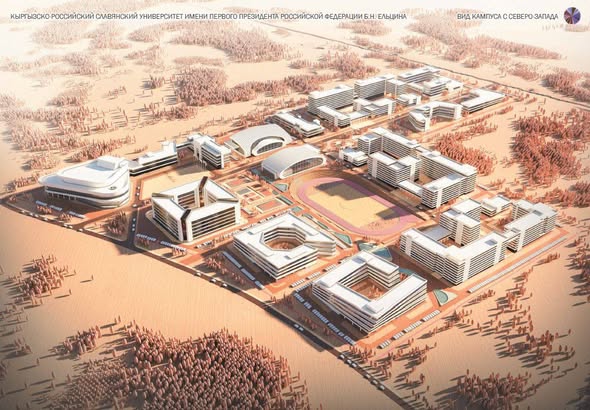
The World Bank has approved a $250 million loan to support Uzbekistan’s ambitious reform of its student financing system, the institution announced on December 11. The funding will back the Edulmkon Program, a three-year initiative aimed at expanding equitable access to higher and vocational education across the country.

Scheduled for implementation between 2026 and 2028, the program is expected to benefit approximately 600,000 young people. Roughly 80% of the loan will be allocated to tuition loans for students from low-income families and for women, groups that continue to face significant barriers to accessing higher education.

Uzbekistan, home to around 10 million people aged 14 to 30, has made educational reform a national priority in recent years. This push has led to a surge in the number of universities and vocational institutions, as well as a dramatic rise in enrollment. Between 2017 and 2024, youth participation in higher education increased from 8% to 48%.

However, the rapid expansion has exposed weaknesses in the country’s student loan system, which is based on state subsidized loans issued through commercial banks. The World Bank has noted that the current model is not well aligned with labor market needs, as loans are not directed toward high demand fields such as science, technology, engineering, and mathematics (STEM), as well as information and communication technology (ICT).

This misalignment has contributed to graduate underemployment, while gender disparities persist. Although women represent more than half of all university students and are the primary recipients of tuition loans, only one-third of female students are enrolled in STEM disciplines.

The Edulmkon Program, to be led by the Ministry of Economy and Finance, will address these challenges through a series of reforms. These include modernizing tuition loan management, improving inter-agency coordination, and launching a centralized digital platform to streamline loan processing and improve transparency. The program will also revise eligibility and subsidy criteria to better serve vulnerable students.

A cornerstone of the reform is the introduction of an income-contingent loan system, where repayments are based on a graduate’s income. This approach is designed to protect low-income borrowers and those facing temporary unemployment after graduation.

By the end of 2028, students are expected to access loans through 12 participating commercial banks operating in coordination with the Ministry. The World Bank also noted that the program aims to attract approximately $30 million in private capital, reducing fiscal pressure on the state while expanding access to education financing.

Almaty Hosts Winter Edition of Day J With JingleBendz 2025

On December 12, Almaty hosted the winter edition of Day J, a festive gathering titled JingleBendz 2025 that brought together journalists, public relations specialists, editors, bloggers, and communications professionals from across the country.

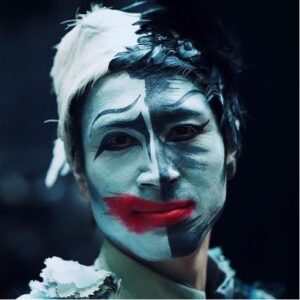
This year, organizers chose a “Multiverse” theme. Guests arrived dressed as characters from Disney films, anime, and Soviet era cartoons, giving the evening a playful, informal atmosphere.

Beyond the entertainment, JingleBendz 2025 served a familiar role in the communications community, a year end moment to take stock of professional milestones and recognize standout work. Informal awards were presented to individuals and teams across several categories.

The event was supported by partners and sponsors including Yandex Qazaqstan (general sponsor), Oriflame, KAZ Minerals, First Brewery (Heineken), RG Brands (Salaam Premium Cola), and the VNV Club.

@2BAgency

Awards and winners at JingleBendz 2025:

  • Wisest Advisor: Aibar Olzhai, OSCE consultant on national communications in Kazakhstan

  • Most Useful Media Outlet of 2025: Digital Business editorial team, led by Vitali Valianiuk (collective nomination from Yandex Qazaqstan)

  • Most Determined Media Manager: Samal Ibrayeva, founder of Ulysmedia and National Business

  • Most Productive Editor in Chief: Saida Suleeva, Tribune

  • Most Responsive Journalist: Nazira Darimbet

  • Grand Prix, Most Popular Expert: Dosym Satpayev, political scientist, publicist, and publisher

Media support was provided by Times of Central Asia, Tribune, BesMedia, Kapital, Zakon.kz, Kursiv, Shishkin_like, National Business, BlueScreen, Profit, Finratings, CheckPoint, newtimes.kz, and aleminform.kz.

@2BAgency

Day J and JingleBendz are held twice a year in Almaty, Astana, and regional centers. Now in its 11th year, the initiative has become a key platform for informal networking, partnership building, and recognition within the communications sector. It also functions as a testing ground for new ways of connecting media outlets, public relations agencies, and brands.

Özgecan Kesici-Ayoubi on How the Alash Movement Is Studied in the West

Özgecan Kesici-Ayoubi is a poet and academic whose work bridges literature and Kazakh intellectual history. Though born and raised in Europe, her writing and scholarship show a deep affinity with the Kazakh people.

Her early poetry earned attention and acclaim, and during her university studies she began researching the Alash Movement, work that culminated in a PhD completed in Ireland. We recently spoke with her in a short but insightful interview.

TCA: Your academic research focuses on the Alash Party. How did you come to choose this topic while studying in a Western country?

Özgecan: Growing up as a Kazakh in Germany, I was always interested in the formation of my identity and cultural heritage. I studied Political Science at both undergraduate and master’s level, and for my master’s thesis, I explored the process of Kazakh nation-building after independence. I then wanted to delve deeper into the foundations of the modern Kazakh nation, which I believe were significantly shaped by the Alash movement in the early 20th century. In Sociology, there’s a major subfield focused on the historical sociology of nations and nationhood, which I used as a framework to study the Alash movement.

TCA: In developed countries, academic standards are typically very high. What kind of support did your supervisor provide?

Özgecan: My supervisor, Professor Siniša Malešević, is a Full Professor of Comparative Historical Sociology at University College Dublin. He was extremely supportive of my research. His expertise in historical sociology and theories of nationalism gave me the academic guidance I needed. Moreover, Ireland’s own colonial past means that its universities have research profiles that aligned well with my work on the Alash movement.

TCA: Conducting research on the Alash movement from abroad must have presented challenges. How did you overcome them?

Özgecan: It’s important to note that my research was sociological, not purely historical. I wasn’t aiming to discover new archival materials but rather to position the Alash movement within the broader sociological field of nations and nationalism and explore its theoretical implications. That said, I did require primary sources, which I accessed during fieldwork. I connected with local Kazakh scholars who helped me find the necessary materials and books, and I’m very grateful for their support.

TCA: Are Western scholars aware of the Alash intellectuals’ civic ideals and national identity struggles? Has the topic been studied where you lived?

Özgecan: In Ireland, where I was based, the topic hadn’t been studied. However, the Alash movement has been examined by a number of Western scholars. When I began my PhD, several articles and dissertations had already been written in English, many by Kazakh scholars themselves.

TCA: You previously mentioned you’re working on a book. Can you tell us more about it?

Özgecan: Since completing my PhD, I’ve been writing a novel based on my grandparents’ migration from the Altay region in China during the 1930s to Turkey and later the West. The novel is written from a female perspective.

TCA: I’ve read your poems. What inspired your shift from poetry to academic research?

Özgecan: I wrote my first poem at sixteen and haven’t stopped since. There are periods when I write more or less, but I believe poetry will always be a part of my life.

TCA: Do you think Kazakhs living in Europe risk losing their language and ethnic identity?

Özgecan: Since the rise of the internet and social media, young Kazakhs in Europe have increasingly found representation in pop culture, arts, and sports. This visibility is significant, I know it would have helped me when I was younger. Many now follow and enjoy Kazakhstan’s emerging indie music scene.

TCA: What do you believe are the most important qualities for a scholar?

Özgecan: Openness to collaboration is crucial. It allows for the discovery of new insights and helps uncover parts of history that have remained hidden, especially in Kazakhstan. Supporting the next generation of scholars is also vital. I see my own supervisor as a role model in this regard.

TCA: You’re also a mother. How do you balance academic life with family responsibilities?

Özgecan: Would I be asked this question if I were a father, I wonder? Still, I understand why it’s asked, despite formal equality, women often carry the greater burden of caregiving. I’m only able to balance my academic and creative work because my husband believes in the value of what I do. He takes on more caregiving when necessary and supports equal opportunities as much as I do.

TCA: How important is science for a nation striving for progress?

Özgecan: Science is vital, it is the future. In the context of climate change and shifting geopolitical dynamics, science enables nations to imagine new futures. Historical sociology is equally important to understand our colonial past and envision a decolonized future.

TCA: You’ve launched a podcast series on Kazakh culture. What is the aim of this project, and who is your audience?

Özgecan: The podcast, which I co-host with my friend Merey Anas, a psychologist and artist, explores the cultural differences we’ve experienced as Kazakhs raised in Europe and Kazakhstan. We examine social, cultural, and historical themes through our professional lenses as sociologists and psychologists. As artists from interdisciplinary backgrounds, we aim to reach Kazakhs who’ve lived abroad as well as an international audience interested in Kazakh experiences.

Turkmenistan Denies Early Release to Activist Mansur Mingelov Despite Serious Illness

Turkmenistan’s Ministry of Internal Affairs has rejected a request to initiate early release procedures for imprisoned human rights activist Mansur Mingelov, despite his confirmed serious medical diagnosis and the legal provisions that would permit such action.

According to an official response dated October 20, the Department for the Enforcement of Sentences under the Ministry of Internal Affairs concluded there were “no grounds” for early release. The response followed appeals by Mingelov’s family to the Prosecutor General’s Office and the Ministry of Internal Affairs, citing his deteriorating health and referencing multiple legal articles supporting their request.

Mingelov, who has been imprisoned since 2012, was convicted after defending his own rights and those of the Baloch minority in Turkmenistan. His family cited Article 76 of the Criminal Code (“Release from punishment due to serious illness”) and Article 166 of the Criminal Enforcement Code (“Grounds for release from serving a sentence”), as well as Presidential Decree No. 202 of May 11, 2017, which outlines the medical criteria for such releases.

In mid-2024, a commission from the Ministry of Health officially diagnosed Mingelov with tuberculous arthritis in both knees, a condition that, according to doctors, cannot be treated inside Turkmenistan. He is currently being held at the MR-B/15 prison hospital.

Notably, Vepa Hajiyev, Turkmenistan’s permanent representative to the United Nations, publicly acknowledged Mingelov’s diagnosis and affirmed that national legislation provides for the release of prisoners with serious illnesses upon court approval.

Under existing law, a court can only consider such cases after receiving a joint submission from the prison monitoring commission and the sentencing authority – a process Mingelov’s family attempted to initiate but which authorities declined to advance.

Despite the official diagnosis and detailed legal framework, no follow-up medical examination or formal review of Mingelov’s health condition has been conducted, according to the independent outlet, turkmen.news.

Mingelov’s relatives argue that the Ministry’s refusal is not based on medical or legal grounds, but rather political calculation. They note that Mingelov has served more than half of his sentence, one they consider to be politically motivated and unlawful, and that his condition meets all criteria for early release.

In their view, the key decision lies with Turkmen President Serdar Berdimuhamedov. Human rights organizations and family members suggest that releasing Mingelov, along with other political prisoners, could help improve Turkmenistan’s international standing by showing a willingness to respect its own laws and humanitarian obligations.

For now, the contradiction remains stark: the illness is acknowledged, the law is in place, and the legal procedure is defined, yet no action has been taken.

Opinion: Is Uzbekistan Importing a Future Crisis?

Once hidden from the view of international investors, Uzbekistan is rapidly rewriting its economic narrative. Over the past eight years, the nation attracted over $113 billion in foreign investment, drawing financial firms and mutual funds eager to seize the momentum of Tashkent’s trade liberalization and its ambition to double GDP by 2030. And rightly so; 40% of the country’s population, which is the largest in Central Asia, is under the age of 25, while its gold production is within the top ten globally.

Uzbekistan is in its breakout moment. With Uzbek bonds receiving a further upgrade to a BB rating from both Fitch and S&P Global, comparisons to Vietnam or Indonesia no longer seem aspirational.

However, the question remains: Is Uzbekistan ready to set foot on the financial global stage, and, more importantly, is it structurally equipped to stay there?

Amidst its sweeping economic transformation, IMF officials have warned the administration to remain vigilant against economic shocks beyond its control: volatile commodity prices, contractions in foreign investor liquidity, and consequently, tighter external financing. These warnings are not theoretical. They come from decades of IMF experience with financial crises in other emerging markets, such as the Latin American debt crises in the 1980s, the “Tequila Crisis” in 1994, and the “Asian Flu” in 1997.

In those historic cases, newly liberalized economies suffered not because they lacked growth, but because they lacked a defense against the liquidity cycle. The economic reality is that global capital flows are often driven by decisions made in New York or London, not Tashkent.

This economic phenomenon is often explained by the “liquidity model,” which argues that changes in exogenous liquidity conditions – driven by the economic situation of investor countries – shape capital flows into emerging markets. Thus, without sufficient financial market depth, emerging capital markets cannot absorb external shocks. And when global liquidity tightens, these flows can abruptly reverse, resulting in prolonged economic instability and loss of monetary sovereignty.

The sequence unfolds as follows: capital inflows surge and balance-sheet vulnerabilities quietly build up; then an external shock – such as a monetary tightening in the creditor economy – causes inflows to slow; the local currency depreciates; and a feedback spiral of declining confidence and weakening balance sheets pushes the economy into crisis. Currency loses trust, struggles to recover, and money flees.

Some initial signs of this pattern can be observed in Uzbekistan’s current boom. The economy is increasingly reliant on foreign borrowing: external debt as a share of GDP rose from 24.7% in 2017 to 61.4% in 2024, reaching $78.5 billion by June 2025. According to CEIC benchmarks, this

level is already comparable to Poland’s 51.8% and Malaysia’s 69.9%, and now exceeds Kazakhstan’s 59.2%, reflecting growing dependence on financing from the World Bank, Eurobond investors, and major East Asian institutions.

High debt levels alone do not necessarily imply instability. They can reflect efforts to accelerate domestic development. The real source of fragility in past crises was not the volume of debt but its denomination. When obligations are in foreign currencies, a country becomes acutely sensitive to the economic conditions of its lenders.

To illustrate, if the Uzbek Som were to depreciate suddenly due to a commodity price shock, such as a drop in gold, the public would likely rush to buy dollars, creating a feedback loop that weakens the currency even further. Simultaneously, the cost of servicing foreign debt would spike, as every dollar of repayment would require more Som. Today, approximately 60% of Uzbekistan’s government debt is denominated in U.S. dollars.

To ensure rapid recovery from inevitable external shocks, Tashkent must shift its strategy from pure growth to structural resilience. This requires building fiscal buffers now to allow for counter-cyclical spending during downturns, rigorously stress-testing the banking sector to prevent systemic credit freezes, and maintaining a flexible exchange rate to act as a natural safety valve against global volatility.

Is Uzbekistan importing a future financial crisis? In practice, no country can be fully immunized against global volatility. Yet, history has proven that the FDI model is indispensable for rapidly improving the standards of living for citizens. The question is not if Uzbekistan should take the money, but how it manages the flow and prepares for the worst-case scenario.


The views expressed in this article are those of the author and do not necessarily reflect the official policy or position of the publication, its affiliates, or any other organizations mentioned.

Nomad TV: Russia’s Latest Media Venture in Kyrgyzstan

Kyrgyzstan has a new TV station. At first glance, it’s the kind of cozy, local news channel satirized in 2004’s Anchorman. The headline item on December 10th was the fact that it had snowed in Bishkek, with the on-screen reporter treading around the city asking residents whether they felt cold.

“Not really,” is the general response, given that plummeting temperatures are hardly a new phenomenon in the Kyrgyz capital.

“What kind of precautions did you take against the weather?” the reporter asks one gentleman.

“Put on a hat and gloves,” comes the droll reply.

This piece is followed by an interview with a representative of the city’s police service, advising people to tread carefully on the icy pavements.

Similar soft news items follow: an interview on the progress of Asman eco-city on Lake Issyk Kul; the modernization of a factory in Bishkek; and the announcement of a new coach for the national football team.

These are hardly stories to make waves. Indeed, most people in Bishkek are unaware of the new channel’s existence.

“It hasn’t been a major discussion point; the only presence that I felt is this huge, green box that has been installed on the central square,” Nurbek Bekmurzaev, the Central Asian editor of Global Voices, told The Times of Central Asia, referring to the broadcaster’s temporary studio at the heart of the city.

Yet Nomad is one of the best-funded media outfits in the country, offering salaries twice as high as those paid by rival organizations. And, in one form or another, it seems clear that the money is coming from the Russian state.

So why has the Kremlin, which is hardly underrepresented in Kyrgyzstan’s media sphere, decided to throw such sums at a local news station?

Nomad TV’s temporary studio on Ala-Too square in the heart of Bishkek; image: TCA, Joe Luc Barnes

A Bold Start

Nomad’s initial coverage was not so banal. On November 23, the channel began broadcasting with a cascade of high-profile interviews linked to Vladimir Putin’s state visit to Kyrgyzstan on November 25-27.

This followed a lavish launch ceremony at the city’s opera house, attended by Russian Foreign Ministry spokeswoman, Maria Zakharova, and the Kyrgyz deputy Prime Minister Edil Baisalov. Putin himself lauded the new channel in his speech on November 26, and gave its chief editor, Natalia Korolevich, an exclusive interview the following day.

This followed a feverish autumn, which the broadcaster had spent poaching talent from newsrooms around Bishkek.

This included Mirbek Moldabekov, a veteran broadcaster from the state television channel, UTRK; the head of Sputnik in Kyrgyzstan, Erkin Alimbekov; and his wife, Svetlana Akmatalieva, a journalist from the National TV and Radio Corporation. The channel’s producer is Anna Abakumova, a former RT journalist who gained fame reporting from Russian-occupied territories in Ukraine.

These aggressive recruitment tactics have split the profession in Kyrgyzstan. Journalist Adil Turdukolov asserted in an interview with Exclusive.kz that anyone who has chosen to work for Nomad “is not particularly concerned with the moral or civic aspects [of the job].”

Others in the media industry told TCA under condition of anonymity that the campaign against journalists joining the new channel “has become a little hysterical.”

Vladimir Putin’s state visit to Kyrgyzstan on November 26, where he praised the launch of Nomad TV; image: TCA, Joe Luc Barnes

A Warm Welcome

While Russia is hardly unique in having state media in Kyrgyzstan – Britain’s publicly-funded BBC operates a Kyrgyz service, while the United States Congress currently still funds Radio Azattyk (RFE/RL) – Rashid Gabdulhakov, associate professor at the University of Groningen, notes the contrasting reception that Nomad has received when compared to other foreign media.

“The claim that Nomad TV is ‘just another media outlet’ free to operate like any other is misleading,” he told TCA.

When Azattyk was defunded by the White House in March 2025, Kyrgyzstan’s President Sadyr Japarov responded favorably: “People do not need information from Azattyk… Trump and Musk’s decision should be supported,” he said, having accused the media outlet of disinformation.

Meanwhile, independent media in Kyrgyzstan, such as Kloop and Temirov Live, have been designated extremist organizations. “Former employees were prosecuted for having worked there,” said Gabdulhakov. “Even liking or sharing Kloop’s content can now carry risks.”

He contrasts that with the fact that leading politicians are eager to appear in interviews with Russia’s new channel.

“Nomad offers something politically convenient: predictable, Kremlin-aligned messaging that also flatters the ruling regime in Bishkek, as long as it stays within the boundaries acceptable to Moscow,” he said.

Russia’s Wider Media Ambitions

Russian television channels such as Channel One, Russia 24, Kultura, and Zvezda already broadcast in Kyrgyzstan, and coffee shops such as Vanilla Sky offer a free copy of the state newspaper Rossiyskaya Gazeta. So what purpose is being served by the creation of another channel?

Temur Umarov, research fellow at the Carnegie Russia Eurasia Center in Berlin, believes that money lies at the root of it. “I don’t think anyone in Russia is thinking about it strategically, except as a means of pitching it to decision makers; it’s much more about money,” he told TCA, asserting that the channel is a means of “washing out the resources that Russia has for the purposes of particular people in the media machine.”

Others suspect that it might be a means of restoring influence on social media. Channels funded by the Russian state were removed from YouTube in 2022.

Although Nomad is evidently linked to the Russian state, given its access to the Russian president and the number of employees linked to Kremlin media, its funding sources are grey, and it is officially designated a Kyrgyz-Russian joint project.

An investigation by Azattyk revealed Nomad’s links to the shadowy non-profit organization, Evrasia, funded by Moldovan oligarch Ilan Shor and chaired by Russian Duma speaker Vyacheslav Volodin. The organization, which opened a Russian Cultural Center in Bishkek just before Putin’s visit, has already been at the heart of a disinformation campaign in the 2024 elections in Moldova, and is said to be in charge of training the new recruits for Nomad TV.

The funding appears to be grey enough, however. The channel has not yet fallen foul of YouTube, where it has over 6,000 subscribers, while on its Instagram account, this figure has risen to more than 20,000. While these figures are modest, they may represent a test case in how to spread Russian influence abroad.

The use of these U.S. platforms is rather ironic given that Instagram has been designated as extremist by Moscow and is banned within Russia. Meanwhile, YouTube’s speed has been affected by Rozkomnadzor, the country’s internet censor, making its use difficult without a VPN.

Such hypocrisy is not unique to Russia, with Chinese state media also making use of YouTube to spread their own state narrative despite banning it at home – CGTN alone has 3.6 million subscribers. In this case, “influence strategy takes precedence over ideological consistency,” said Gabdulhakov.

Nomad’s launch in Kyrgyzstan was quickly followed by a larger Russian campaign elsewhere – on December 5, RT opened a new bureau in India, based in New Delhi.

Is there an audience?

While RT’s operation in New Delhi suggests the Kremlin sees scope for pushing its narrative in the global south, Nomad’s style is quite different. Unlike RT, there is little in the way of foreign wars, hordes of migrants, or sensationalist polemics. The thunderous, frenetic music is nowhere to be heard either.

For all the fanfare of the launch, the high-level interviews, and the glitzy studio, Nomad’s offerings have focused on the local and the everyday. When there is no news, the channel rebroadcasts NTV, another Russian state channel.

And there are further doubts about the potential audience. Although there is a Kyrgyz option on the channel, the main broadcasting language is Russian, and according to Bekmurzaev, “most people don’t understand Russian well enough to listen to news and debates.”

That said, the channel’s Kyrgyz language Instagram page has seen far faster growth than its Russian equivalent, suggesting that social media may be the long-term play.

“TV is dead,” says Umarov bluntly. “Everyone is going from TV to socials.”

Umarov is also unconvinced about Moscow’s desire to influence the Kyrgyz population. “I would be surprised if it became an effective tool to spread the Kremlin’s message,” he said.

“The Kremlin thinks that the audience doesn’t really matter. As long as there is an understanding among the elites, the Kremlin is happy. It doesn’t really need the support of the population.”