• KGS/USD = 0.01144 0%
  • KZT/USD = 0.00212 0%
  • TJS/USD = 0.10456 0.19%
  • UZS/USD = 0.00008 0%
  • TMT/USD = 0.28490 0%
  • KGS/USD = 0.01144 0%
  • KZT/USD = 0.00212 0%
  • TJS/USD = 0.10456 0.19%
  • UZS/USD = 0.00008 0%
  • TMT/USD = 0.28490 0%
  • KGS/USD = 0.01144 0%
  • KZT/USD = 0.00212 0%
  • TJS/USD = 0.10456 0.19%
  • UZS/USD = 0.00008 0%
  • TMT/USD = 0.28490 0%
  • KGS/USD = 0.01144 0%
  • KZT/USD = 0.00212 0%
  • TJS/USD = 0.10456 0.19%
  • UZS/USD = 0.00008 0%
  • TMT/USD = 0.28490 0%
  • KGS/USD = 0.01144 0%
  • KZT/USD = 0.00212 0%
  • TJS/USD = 0.10456 0.19%
  • UZS/USD = 0.00008 0%
  • TMT/USD = 0.28490 0%
  • KGS/USD = 0.01144 0%
  • KZT/USD = 0.00212 0%
  • TJS/USD = 0.10456 0.19%
  • UZS/USD = 0.00008 0%
  • TMT/USD = 0.28490 0%
  • KGS/USD = 0.01144 0%
  • KZT/USD = 0.00212 0%
  • TJS/USD = 0.10456 0.19%
  • UZS/USD = 0.00008 0%
  • TMT/USD = 0.28490 0%
  • KGS/USD = 0.01144 0%
  • KZT/USD = 0.00212 0%
  • TJS/USD = 0.10456 0.19%
  • UZS/USD = 0.00008 0%
  • TMT/USD = 0.28490 0%

Soviet-Era Spacecraft May Crash to Earth This Week, Uzbekistan Among Monitored Zones

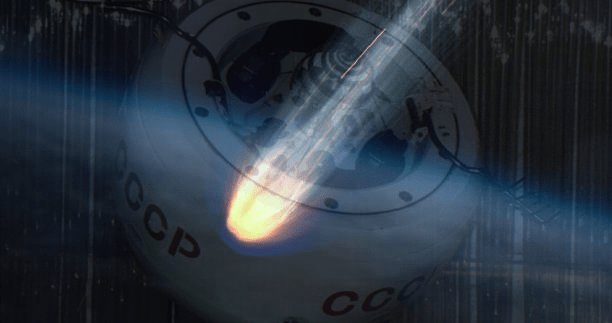
As previously reported by The Times of Central Asia, a Soviet spacecraft launched from Baikonur more than five decades ago is expected to re-enter Earth’s atmosphere between May 9 and 11, 2025. Known as Kosmos-482, the probe was part of the Soviet Union’s Venera program aimed at exploring Venus. However, due to a launch failure in 1972, it never escaped Earth’s orbit and has been circling the planet ever since.

Kosmos-482 was engineered to endure the extreme conditions of Venus, making it significantly more robust than typical satellites. Its descent module, weighing around 495 kilograms (approximately 1,100 pounds), features a durable titanium shell, raising the possibility that parts of the spacecraft could survive re-entry and reach the Earth’s surface.

Experts estimate the spacecraft will re-enter at speeds of up to 27,000 kilometers per hour (around 17,000 miles per hour). The potential impact zone spans between 52 degrees north and south latitude, covering much of the inhabited world. Despite this wide range, the risk to human life is regarded as minimal. Most likely, the spacecraft will either disintegrate in the atmosphere or fall into the ocean.

In Uzbekistan, the national space agency Uzcosmos has assessed the probability of debris landing within the country at between 0.3% and 0.5%. Ahror Agzamov, head of the New Technologies Department at Uzcosmos, stated that while the risk is low, the agency is closely monitoring the situation.

“While most of the spacecraft will burn up upon re-entry, the nearly half-ton titanium sphere, designed to operate under Venus’s harsh conditions, poses a particular concern,” Agzamov explained. “It is expected to survive re-entry, and despite being equipped with a parachute, that system may not function after 53 years in space. The object could strike the Earth at speeds up to 500 kilometers per hour.”

Agzamov cautioned the public against interacting with any debris. Due to the possibility of hazardous chemical residues in the spacecraft’s components, any discovered fragments should be reported immediately to local authorities, he stated.

Uzbekistan’s Role in the Venera Program

Uzbekistan has a historical connection to the Soviet space program. The former Tashkent Mechanical Engineering Design Bureau contributed to the later stages of the Venera missions by developing soil sampling and drilling equipment used on Venera-13 and Venera-14 (1982), and Vega-1 and Vega-2 (1985). These devices were tested at a facility in the village of Nevich in the Tashkent region.

As Kosmos-482 begins its final descent, space agencies around the world continue to track its trajectory to provide timely updates and ensure public safety.

UNICEF Delivers Over 500 Pieces of Medical Equipment to Tajikistan

The United Nations Children’s Fund (UNICEF) has handed over more than 500 units of modern medical equipment to the Ministry of Health and Social Protection of the Population of Tajikistan in a significant move to bolster the country’s healthcare system.

The official handover ceremony took place on May 6 in Dushanbe and was attended by Deputy Health Minister Shodikhon Jamshed and international partners.

Jamshed expressed gratitude for UNICEF’s longstanding cooperation, adding that such support plays a vital role in strengthening Tajikistan’s healthcare capacity. The new equipment, including CPAP (Continuous Positive Airway Pressure) machines and oxygen concentrators, will be used to treat newborns with respiratory difficulties and patients requiring oxygen therapy.

“The equipment will be distributed across 73 neonatal care facilities nationwide. Additionally, training courses will be held for healthcare workers on using these devices and providing respiratory care to newborns,” Jamshed stated.

Since its founding in 1946, UNICEF has been active in Tajikistan through various initiatives aimed at advancing children’s rights and improving access to essential services such as education and healthcare.

One of its flagship efforts includes a $1 million juvenile justice reform project, implemented in partnership with the Swiss government. The initiative seeks to establish alternative measures for minors in conflict with the law, focusing on rehabilitation and reintegration.

In the field of early education, UNICEF and USAID are implementing a five-year, $7.5 million program to enhance school readiness. This includes teacher training, updated educational materials, and the promotion of inclusive learning environments.

To address malnutrition, UNICEF has launched a three-year program in Khatlon and Dushanbe aimed at improving maternal and child nutrition and reducing mortality. Emphasis is placed on primary healthcare and preventive measures.

In collaboration with the European Union, UNICEF is also contributing to the restoration of medical infrastructure. One example is the refurbishment of the central district hospital in Tursunzade, part of Tajikistan’s National Health Strategy 2030, designed to expand access to essential health services across the country.

Issyk-Kul Authorities Launch Campaign to Improve Traffic Rule Awareness

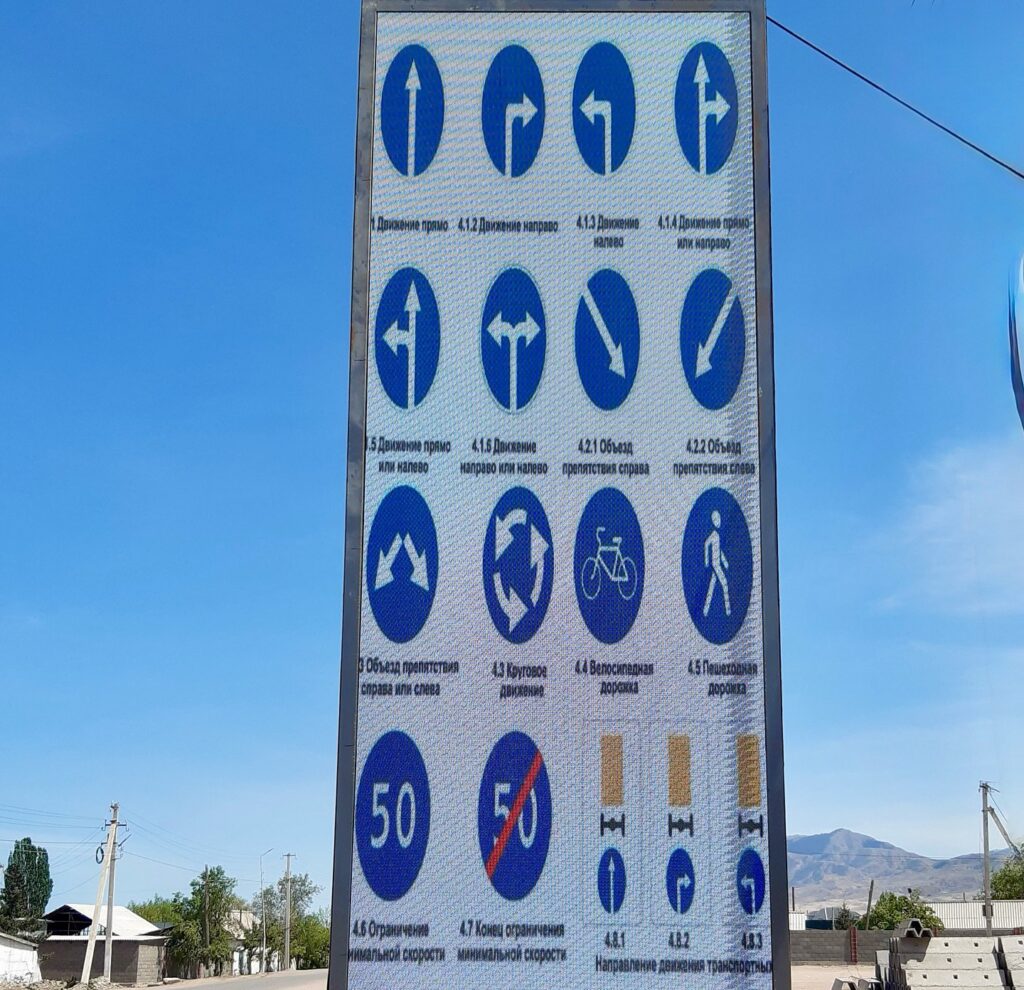
Law enforcement authorities in Kyrgyzstan’s Issyk-Kul region have launched a campaign to improve public knowledge of traffic regulations. As part of the initiative, information boards explaining the meaning of road signs have been installed along major roads.

The Ministry of Internal Affairs stated that the campaign aims to promote better understanding and adherence to traffic laws among both drivers and pedestrians. In addition to roadside boards, educational content is being disseminated via LED screens and billboards across the region.

“The main objective of the campaign is to help citizens better understand and follow traffic rules. These materials will be useful for both drivers and pedestrians, and are also aimed at improving overall road safety,” the ministry noted.

Official statistics indicate that Kyrgyzstan ranks third among Central Asian countries for the number of traffic accidents, with one in three incidents attributed to violations of rules of the road by drivers.

“Our efforts are aimed at ensuring road safety in the Issyk-Kul region. Compliance with traffic rules is important for each of us and is a guarantee of safety for both us and other road users,” stated the regional Department of Internal Affairs.

The initiative comes amid broader concerns about driving standards in Kyrgyzstan. Earlier this year, government officials revealed that more than half of all driver’s licenses in the country were obtained illegally, a disclosure that has spurred new efforts to enforce compliance and raise road safety standards nationwide.

Gold and Copper Exploration in Kazakhstan Gets Boost from Australian Joint Venture

Australian mining firm C29 Metals Limited has entered into a joint venture agreement with Bask International Group Ltd, a company registered in Astana. The newly established joint venture (JV) aims to explore promising copper and gold deposits across Kazakhstan.

C29 Metals is not a newcomer to Kazakhstan’s mineral sector. In the spring of 2024, the company obtained a geological exploration license for its Ulytau project, which includes several solid mineral deposits, notably uranium. It has since submitted two additional applications for uranium exploration. However, according to a recent company announcement, the new JV will focus exclusively on copper and gold and will not be involved in C29 Metals’ uranium interests in the country.

The joint venture, registered at the Astana International Financial Center (AIFC), will concentrate on identifying and acquiring exploration projects with significant geological potential. According to the agreement, C29 Metals will hold a 75% stake in the venture, with Bask International Group retaining 25%. C29 will fully finance the geological exploration, thereby relieving its Kazakh partner of any financial burden. The board of directors will comprise two representatives from the Australian company and one from the Kazakh side.

“The conclusion of this joint venture agreement marks another important milestone in our strategic growth plans,” said Shannon Green, Managing Director of C29 Metals. “The partnership with Bask International Group in Kazakhstan will give us access to opportunities beyond our typical reach. Bask’s network and capabilities will enable us to move at an unprecedented pace as we scale operations.”

Yerlan Issekeshev, head of Bask International Group Ltd, emphasized Kazakhstan’s untapped mining potential: “Kazakhstan is on the cusp of a new era in resource development. While exploration slowed during the post-Soviet period, the country’s mineral wealth remains vast and underexplored.”

As previously reported by The Times of Central Asia, Kazakhstan is set to auction off 50 gold and rare metal deposits in June 2025, offering electronic tenders for exploration and development rights.

Almaty University Criticized After Female Students Told to Bow to Men

A controversy has erupted at the Kazakh National Pedagogical University (KazNPU) in Almaty after first-year female students were instructed to bow to men during an orientation session. The incident, which triggered widespread criticism, has drawn sharp condemnation on social media and reignited debates about gender roles in Kazakhstani society.

According to social media posts, female students were gathered in an auditorium where they were shown a video containing behavioral “recommendations.” In the footage, men of varying ages advised young women on how to conduct themselves in public, including avoiding revealing clothing, refraining from loud speech, and bowing to men as a sign of respect.

The online response was overwhelmingly critical:

“I am for modesty, but bowing? I’m a guy myself, and I don’t support this.”

“At this rate, it won’t just be North Korea waiting for us, but Afghanistan too. What’s next, banning women from education?”

“Instead of teaching girls about their rights, financial literacy, or where to seek help, they’re being taught useless things, like how to be patient and accommodating.”

“Disobedient girls are Kazakhstan’s main problem, aren’t they?”

“And when will men be taught not to beat women and to respect their mothers?”

The KazNPU administration released a statement in response, promising stricter oversight of educational materials used in student events:

“On May 5, an educational session was held at the university to promote national values and enhance the cultural and moral awareness of students, aligned with the ethical philosophy of Abai Kunanbayev. Although similar content has not previously drawn criticism, the video shown during this session sparked a mixed reaction and significant debate. The administration acknowledges the concerns and will exercise heightened caution in selecting materials for such events going forward.”

The university also stated that KazNPU is a secular institution committed to upholding students’ rights to personal choice and freedom of expression.

The controversy continues to fuel discussions online, highlighting broader tensions between traditional values and contemporary views on gender and education in Kazakhstan.

This is not the first time Kazakhstani universities have come under scrutiny. In February 2025, a second-year student at Nazarbayev University in Astana was detained by law enforcement after being caught secretly recording female students in a restroom. The university launched an internal investigation following a public outcry.

In another incident, a guest business coach at a university in Almaty, later identified as Aika Aleami, prompted complaints after asking students to close their eyes and sing along to what appeared to be religious music. Aleami later clarified that the exercise was intended as a mindfulness technique, not a religious practice, citing its popularity in Western wellness programs.

Kazakhstan’s Astana Forum Offers Global South a New Multi-Vector Platform

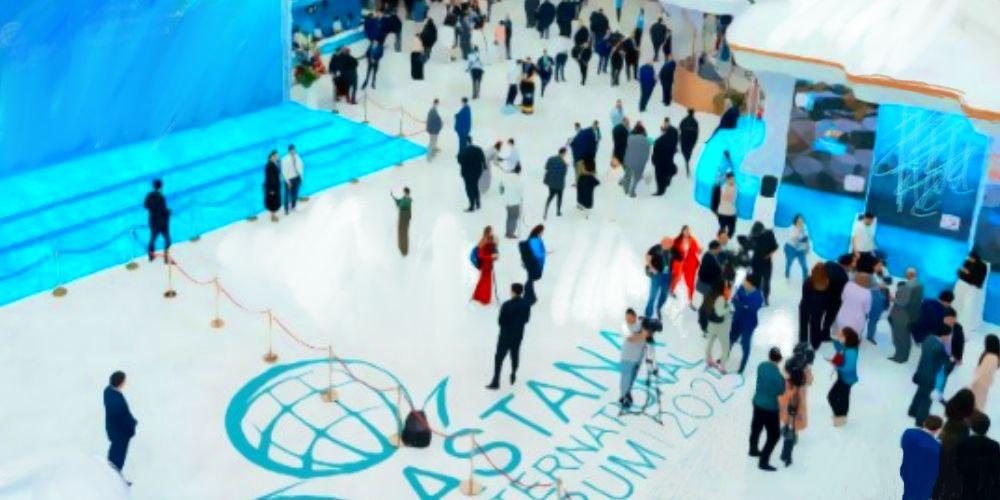
Kazakhstan will convene the Astana International Forum (AIF) later this month, on May 29–30, emphasizing its profile as an active mediator in the evolving architecture of global diplomacy. The AIF began in 2008 as the Astana Economic Forum, originally conceived as a technocratic venue focused on macroeconomic development, fiscal strategy, and public-sector reform. In its early iterations, it drew regional economists, central bankers, and international development agencies together to discuss Kazakhstan’s integration into global financial institutions.

While modest in its geopolitical profile, the Forum reflected Astana’s broader ambitions to participate in the global rules-based order without overt alignment. In 2023, the AIF was reconstituted with its new, broader mandate in response to international demands for such forums, given the evident erosion of consensus in multilateral governance structures.

President Kassym-Jomart Tokayev has invoked Kazakhstan’s unique geopolitical position to advocate for the AIF as a new platform of balanced engagement, to serve as a “bridge between East and West,” reflecting Astana’s accumulated experience in dialogue facilitation and its ambition to ameliorate the deepening fragmentation of the international system.

The rebranding of the Forum was more than cosmetic. It marked a deliberate effort by Kazakhstan to reach out beyond its customary Eurasian frame of reference. The Forum aspires to be a diplomatic innovation, seeking to complement existing institutions like the UN or OSCE without replacing them: a more flexible platform that would be more responsive to emergent global dynamics.

This aspiration is of a piece with Kazakhstan’s growing participation in multilateral forums, serving different geopolitical functions, such as the Conference on Interaction and Confidence Building Measures in Asia (CICA) and its engagements within the Shanghai Cooperation Organisation (SCO) and Organization of Turkic States (OTS). The AIF is envisioned as a complementary structure that transcends bloc affiliations, facilitating fluid dialogue among ideologically diverse actors.

The 2024 edition of the Forum was intended to be larger-scale than the 2023 version, but it was abruptly canceled after catastrophic flooding struck several regions, an event President Tokayev described as the most devastating natural disaster in the country in eight decades. The state redirected its attention and resources toward recovery, and the Forum was deferred. The 2025 iteration, now reactivated, has adopted the banner message, “Connecting Minds, Shaping the Future.”

This reflects an underlying logic in Kazakhstan’s foreign policy that privileges “multi-vectorialism” as a structure for autonomy. Within that structure, the AIF is seeking to create space for engagement among actors that often find themselves excluded from the inner circles of traditional diplomacy: the so-called “Global South,” mid-sized Western powers, and immediate regional stakeholders.

The agenda of the 2025 AIF consolidates four previous thematic streams into three: Foreign Policy and International Security, Energy and Climate Change, and Economy and Finance. This thematic restructuring signals an intention to deepen the Forum’s analytical focus while retaining general breadth across domains characterizing Kazakhstan’s long-term strategic interests.

These interests are conditioned by the continuing development of Kazakhstan’s economy. Domestic economic growth is projected to reach 4.5 to 5.0% in 2025, driven by sectoral diversification efforts and continued investment in transport and energy. The country’s international commercial profile also continued to evolve in 2024, with total trade volume increasing by 9.1% and the foreign trade balance improving accordingly.

China has emerged as Kazakhstan’s principal economic partner and largest source of foreign direct investment, with bilateral trade figures exceeding all past levels. Such economic shifts will underpin discussions at the AIF on supply-chain resilience, the reconfiguration of regional trade blocs, and the strategic implications of growing asymmetries in economic dependence.

As trade dynamics are inseparable from logistics, Kazakhstan’s participation in the Trans-Caspian International Transport Route (TITR, Middle Corridor) has intensified. This participation now encompasses soft infrastructure, such as digitalization of customs protocols and cross-border regulatory streamlining, as well as the hard infrastructure of rail upgrades, port expansions, and logistics hubs. These efforts aim to decrease transit times between China and Europe by bypassing Russia and to reduce systemic exposure to external geopolitical shocks.

Infrastructure investments have targeted throughput expansion and customs harmonization. Astana is increasingly positioned as a geoeconomic hinge, as Beijing emphasizes overland connectivity through Central Asia. The AIF’s Energy and Finance tracks are expected to emphasize this development, offering bilateral and multilateral actors opportunities to explore infrastructure finance, digital corridors, and alternative Eurasian integration in formats unconstrained by either Russian-led or Western-led institutions.

The Astana International Forum 2025 thus emerges as a controlled experiment in state-curated soft power projection. It will not be dominated by fixed alliances or crisis-response mandates. Rather, it offers Kazakhstan a sovereign venue to test ideas, build coalitions, and advance a policy profile that is neither reactive nor peripheral. The AIF integrates issue-areas of economic diversification, energy transformation, and regional diplomacy all into a single platform.

Astana is seeking to formulate a new grammar of regional agency. Whether the AIF becomes a durable institution or remains a performative gesture will depend not only on Kazakhstan’s voice but on whether the international system evolves in such a manner as to provide the space for it to echo.

If successful, the AIF may serve as a prototype for small and mid-sized powers seeking to assert constructive agency in global governance. Its effectiveness will ultimately hinge on whether institutional memory is built and whether its dialogues translate into policy traction across diplomatic cycles.