• KGS/USD = 0.01143 -0%
  • KZT/USD = 0.00192 -0%
  • TJS/USD = 0.10820 0.19%
  • UZS/USD = 0.00008 0%
  • TMT/USD = 0.28575 0%
  • KGS/USD = 0.01143 -0%
  • KZT/USD = 0.00192 -0%
  • TJS/USD = 0.10820 0.19%
  • UZS/USD = 0.00008 0%
  • TMT/USD = 0.28575 0%
  • KGS/USD = 0.01143 -0%
  • KZT/USD = 0.00192 -0%
  • TJS/USD = 0.10820 0.19%
  • UZS/USD = 0.00008 0%
  • TMT/USD = 0.28575 0%
  • KGS/USD = 0.01143 -0%
  • KZT/USD = 0.00192 -0%
  • TJS/USD = 0.10820 0.19%
  • UZS/USD = 0.00008 0%
  • TMT/USD = 0.28575 0%
  • KGS/USD = 0.01143 -0%
  • KZT/USD = 0.00192 -0%
  • TJS/USD = 0.10820 0.19%
  • UZS/USD = 0.00008 0%
  • TMT/USD = 0.28575 0%
  • KGS/USD = 0.01143 -0%
  • KZT/USD = 0.00192 -0%
  • TJS/USD = 0.10820 0.19%
  • UZS/USD = 0.00008 0%
  • TMT/USD = 0.28575 0%
  • KGS/USD = 0.01143 -0%
  • KZT/USD = 0.00192 -0%
  • TJS/USD = 0.10820 0.19%
  • UZS/USD = 0.00008 0%
  • TMT/USD = 0.28575 0%
  • KGS/USD = 0.01143 -0%
  • KZT/USD = 0.00192 -0%
  • TJS/USD = 0.10820 0.19%
  • UZS/USD = 0.00008 0%
  • TMT/USD = 0.28575 0%
13 December 2025

Bridging Borders: Louis Albertini on Central Asia’s Tech Growth, Startup Challenges, and Building Global Connections

Louis Albertini has been involved in technology and startups across the United States and Kazakhstan for a decade, working with Silicon Valley and venture capital-backed startups based in Kazakhstan, including ORBI and Farel. He is passionate about supporting founders in succeeding in the U.S. market and building connections between the U.S. and Kazakhstan. TCA spoke with Louis to gain insights from his experiences in the Kazakhstan market.


TCA: Can you share your career journey in Kazakhstan and what motivated you to work in diverse roles like marketing, consulting, and startups?

Louis: I arrived in Kazakhstan in July 2015 as a Princeton in Asia fellow and spent a year working in the President’s Office at KIMEP University with Dr. Chan Young Bang. I served as his communications officer, writing official correspondence, liaising with different departments, and managing the day-to-day affairs of the office. After my PiA fellowship ended, I decided to stay in Almaty and start exploring the nascent startup scene. In 2016, I joined the founding team of a startup called ORBI, which developed 360-degree video recording glasses. This was the first Kazakhstani startup that attracted significant venture financing and was invited to interview at Y Combinator in 2016. We raised about $7 million for the company and secured $350 thousand in pre-orders, the largest ever for a Kazakh start-up. Back then, the YC batches were extremely small, and interviews were conducted in person at their historic but now-closed 320 Pioneer Way office in Mountain View. This was my first applied experience with Kazakhstan startups, and I’ve been involved ever since.


TCA: What inspired you to create Redfern Partners, and how did you help address the challenges SMBs and tech companies face in Central Asia?

Louis: Working at the American Chamber of Commerce gave me some insight into the market research landscape in Kazakhstan, primarily by listening to business leaders complain about available options. Besides the major consulting firms like McKinsey and BCG, which are more focused on quasi-state projects that need stamps of approval, the SMB space for high-quality independent research was largely empty. The Big 4 have variations of market research services, but their core specialty is audit and tax. Most local incumbents were formed in the early 1990s and use outdated methodologies that produce inaccurate or trivial insights. International research firms lack local coverage and rely on a loose patchwork of freelancers. Redfern was formed to offer high-quality, independent market research services to fill this void. We completed about twenty projects and continue to be a partner for the European Bank for Reconstruction and Development (EBRD) small business initiative.


TCA: What common mistakes did you see SMBs in the region make, and how did you help them overcome these?

Louis: The SMB space in Kazakhstan is hugely underserved and overlooked, offering the largest surface area regarding technology adoption. In the US, SMBs employ nearly half of the American workforce, representing 45% of America’s GDP. In Kazakhstan, the market is mainly asymmetrical, with large players dominating most services and little incentive for radical, competition-driven innovation. Many larger companies were opportunistically started by black swan events in a vacuum, acquiring ownership over public enterprises and reselling them to Western corporations. They accumulated enough capital and influence to exert their will on the market. Startups and SMBs must consider their advantages, acquisition, process improvement, and customer service. And I mean this in tactical terms, not simply organizing a new “Customer Experience” department and staffing it with people untrained in the operating principles of customer service. As far as helping SMBs overcome obstacles, we brought the same process rigor and analysis to each engagement. I was personally involved in each project, and we adhered to ESOMAR and international standards. This quality helped us serve clients mainly on a word-of-mouth basis and build friendships along the way.


TCA: Central Asia’s tech ecosystem is snowballing. What trends or opportunities do you see for local entrepreneurs?

Louis: Firstly, I want to say that I’m what’s called an “operator.” Someone who’s worked deeply at several VC-backed startups in strategic and tactical roles. I’m not a VC or consultant with approximate knowledge of building startups. That said, it’s incredible to see how far the startup ecosystem has developed since I came to Almaty in 2015. Back then, Kaspi wasn’t listed for $17.5B on Nasdaq, Astana Hub, and Silkroad Innovation Hub didn’t exist, VC funding was around $5M (now nearly $100M), Freedom Finance wasn’t acquiring startups, and Patagonia vests were a rarity. And while still nascent compared to LatAm or MENA, I’m very bullish on Kazakhstan and Central Eurasia as a region and excited to see what’s next.

Money is gradually getting smarter, and terms are becoming more founder-friendly. VCs are also developing deeper bench strength, writing larger checks, and pairing portfolio companies with domain experts and industry intros. Many fantastic Kazakhstan founders are alumni of top international accelerators like YC, 500 Startups, Antler, etc.

Another trend still developing is the Digital Decolonization theme, which means that international products and services will eventually erode in favor of home-grown solutions natively in tune with consumer preferences and the ecosystem. You can see distinct examples in Nigeria and Brazil, where local players dominate over international entrants.

Another opportunity is to test the product in the local Kazakhstan market, win customers, iterate, and then meaningfully evaluate if you’re ready to scale. There are a lot of overlooked problems that could have solutions delivered as simply as possible. Many companies immediately try to enter the US and raise money from US investors/angels. This is nearly impossible without the right pedigree and signals. Yes, there are examples, but usually, it’s the case of graduates from top US universities or significant experience accumulated while already working in the US, which are all outliers. For local entrepreneurs, the image of conquering Silicon Valley is deeply alluring. However, what’s not seen is very sophisticated product management, deep ties to VCs and communities, and highly contextual marketing and sales acumen. A famous book called Ten Types of Innovation posits that you don’t need a groundbreaking feature and can innovate across different categories like business models, channels, customer engagement, etc.


TCA: What is your role as an advisor at Astana Hub, and how do you help startups prepare to scale into the US market?

Louis: Over the past year, I’ve talked to 15+ Kazakh founders, mostly at pre-seed and seed stages, half of whom have raised money. Most of my advising work focuses on fundraising strategy, go-to-market planning, and helping package the company for US import. This means “Americanizing” pitch decks and sales assets to tell better stories, assisting founders in thinking through customer acquisition by targeting the right customers and addressing important operational/logistics issues like incorporation, cap table management, taxes, payroll, etc. These founders can’t use the same marketing tools that work in Kazakhstan and expect them to work in the US.


TCA: What are the biggest challenges Central Asian startups face when entering global markets, especially the US?

Louis: I’ve worked at 3 YC-backed startups from pre-seed to Series B, so I’ve been fortunate — or misfortunate — enough to experience the various growth phases. The areas that I see the most room for improvement are as follows:

Can you deliver a meaningfully viable product, pilot and test it, gather helpful customer feedback, and then iterate in a structured and compounding way? This is extremely important for software companies; US-based startups often “bake” into R&D exceptionally well. Product management in Kazakhstan is mostly backlog management, and overall, its education feels very 2010s. So, by using dated frameworks and methodologies, you simply iterate slower, deliver the wrong things, and solve for vitamins versus painkillers when playing in more mature markets.

The largest challenge for Central Asian startups is the soft skills needed to influence, persuade, and collaborate at scale meaningfully. This extends far beyond proficiency in English but is more related to storytelling, building partnerships, selling the vision, getting first customers excited about a product, and all aspects of driving relationships. The lack of this development is rooted in the hierarchical management structure, which typically concentrates decision-making power at the top, leaving middle managers with limited autonomy and strategic ownership. This top-down approach inhibits innovation and organizational agility and is mainly disempowering over time. This is changing rapidly, though, and the soft skills gap is a huge opportunity.  

I see startups get a foothold in the US by usually selling to other CIS countrymen. This is like .001% of the US market, so scaling to a true business requires a more structured approach to building trust and credibility. Unlike Kazakhstan, decision-making frequently involves multiple stakeholders and can be a lengthy, consensus-driven process. Secondly, product-driven companies don’t succeed; solutions-driven ones do. US businesses are not just buying a product; they are buying a solution to an acute problem, a partnership, and a promise of ongoing support. I’ve seen a lot of technical demos from Kazakhstan startups that focus on being very product-centric, and it is still unclear what specific customer pain points are being addressed.


TCA: Central Asia is often seen as an emerging market. What are its biggest strengths and weaknesses in the tech sector?

Louis: I often get this question and see maximalist answers about Almaty or Astana becoming the new digital hub like Dubai. I’ve seen countless MOU signing ceremonies and splashy announcements, but few actual partnership deliverables or measurable outcomes reported. Secondly, there’s a revolving carousel of the same batch of founders and startups covered by the startup media, so in this vein, I will only share my own experience. 

The young population is highly technical, and IT outsourcing has immense potential. For example, 60% of the 36 million population in Uzbekistan is under 29 years old. Digital Kazakhstan, Astana Hub, and IT Park (Uzbekistan) are highly supportive of startups, providing infrastructure, tax advantages, and ongoing programs to help companies scale both within and beyond Central Asia. The startup scene, though still burgeoning, features a close-knit tech community. Founders are extremely supportive and willing to help and share guidance altruistically, which is a significant advantage.

Kazakhstan’s VC landscape is still maturing. Few VCs offer strong investment theses and deep ecosystems to scale companies efficiently. Operator-led VCs, where GPs are successful ex-entrepreneurs, are even rarer. This contrasts with the US trend of increasing operator-led funds versus traditional finance/PE-background VCs. Kazakhstan’s unique geopolitical position indeed places it at the center of a complex web of international relations, particularly in the context of sanctions. Navigating this, especially for startups, takes up more time and resources. As mentioned before, specialists with modern training in product management, product marketing, and technical project management are in severe shortage. Most universities and boot camps focus on the technical aspects of creating software but far less on user research, GTM planning, and the critical aspects of building an enduring company.


TCA: What technologies or industries do you think have the most potential for growth in Central Asia over the next 5–10 years?

Louis: There are many areas I’m bullish on in Kazakhstan, and the following areas stand out the most. Intelligent hardware manufacturing to take advantage of incredible amounts of land that could automate the building of vehicles, parts, appliances, etc. AgTech will modernize the Soviet-era manual agricultural processes and plug the sector into real-time analytics, predictive AI, and IoT for optimization. Anything related to automating and streamlining the still very manual logistics industry. IT outsourcing needs to raise awareness on the global stage and move beyond “technical expertise” and business expertise, which means packaging up and offering more full service versus just the backend piece.


TCA: As someone who has worked with startups and established companies, what advice would you give to aspiring entrepreneurs in the region?

Louis: It’s not how smart you are but how fast you can learn. Many founders over-index on renting experience too early, removing themselves from critical activities like sales and operations and delegating tasks as if they’re already an established company with clear market fit and processes. It’s like trying to build muscle by having another person exercise for you. What I always advise is to do the hard work yourself. You have to work hard to discover how to work smart. There aren’t any sustainable shortcuts. Avoid the trap of chasing fleeting vanity metrics. I’ve noticed many Kazakhstan founders juggling two businesses: one that exists only on Instagram and LinkedIn and another that operates in the real world with actual customers and employees. You don’t need to be a guru or visionary; just aim to improve your startup each week. Being consistently good will almost always outperform being periodically great. This boils down to intense focus, prioritizing what to build, and shaping the culture. Some of the best Kazakhstan entrepreneurs I’ve come across have been extraordinarily good at time management and knowing exactly where they should spend their time.


TCA: If you could bring one resource or initiative to Central Asia to accelerate its tech ecosystem, what would it be?

Louis: Brain drain is a critical challenge for Central Asia’s tech ecosystem. Top developers often gain experience working remotely for international companies and ultimately relocate. Innovation hubs like the Silk Road are fantastic, but they can easily become one-way pipelines and amplify the perspective that the best opportunities exist outside Kazakhstan. The region needs a structured approach to attract and retain talent, essentially bringing Silicon Valley’s ecosystem directly to Central Asia and creating pathways in that direction… a reverse brain drain to have returnees bring insightful product experience, empowerment, etc.

Kazakhstan to Train Workforce for Future Nuclear Power Plants

Kazakhstan’s first nuclear power plant (NPP) is expected to create permanent employment for approximately 2,000 people, with an additional 10,000 workers involved during its construction. This announcement was made by Energy Minister Almasadam Satkaliyev during a recent government meeting.

The country plans to commission its first NPP by 2035. A shortlist of potential builders includes four international companies: China’s CNNC, Russia’s Rosatom, South Korea’s KHNP, and France’s EDF. Authorities have also suggested the possibility of forming a consortium involving multiple countries to leverage diverse technological solutions. Alongside these efforts, Kazakhstan intends to independently train the specialists required for NPP operations.

Minister Satkaliyev highlighted plans to establish specialized training programs in domestic colleges to develop skills for roles such as dosimetrists, steam turbine equipment mechanics, nuclear power plant maintenance and repair specialists, and IT specialists for nuclear facilities. Practical training will be conducted at the National Nuclear Center and the Institute of Nuclear Physics.

“By 2030, the NPP construction project will create around 5,000 jobs, peaking at approximately 10,000 jobs in 2032. Once operational, the first plant will provide at least 2,000 permanent positions,” Satkaliyev stated.

As previously reported by The Times of Central Asia, Kazakhstan is accelerating the construction timeline for the NPP, located in the Almaty region, and plans to select a contractor in the first half of this year.

During the government meeting, which coincided with the “Year of Working Professions” initiative, Satkaliyev also addressed the broader labor demand in Kazakhstan’s energy sector. The industry is expected to require over 16,000 additional workers, including power engineers, welders, fitters, gas cutters, and electricians, by 2030. The country’s energy sector currently employs 303,000 people across 1,600 enterprises, with 99 new projects planned over the next five years.

To attract and retain talent, the Ministry of Energy aims to achieve an annual 15% wage increase for production personnel in energy-producing companies.

Meanwhile, Talgat Yergaliyev, Chairman of the Union of Builders of Kazakhstan (UBC), has called for simplifying the hiring process for foreign labor to address workforce shortages in Kazakhstan’s construction sector.

Kazakhstan Could Save America’s Energy Future

The energy crisis gripping Europe has made clear for all to see the limits of solar and wind power. Years of investment and unbridled ambition have not created renewable sources that can deliver the consistent, large-scale energy that modern economies need. Nuclear power has emerged as the only viable solution for achieving zero-emissions energy while maintaining reliability.

Europe’s urgent need to reduce its dependency on Russian gas has made all that even clearer. Meanwhile, the United States faces its own energy challenges. Its nuclear industry urgently requires a secure and stable uranium supply; yet U.S. foreign policy has largely overlooked Kazakhstan, the world’s largest uranium producer.

It gets worse. No sitting U.S. president has ever visited Kazakhstan, which produces over 40% of the world’s natural uranium. Russia and China have filled this diplomatic vacuum, embedding themselves deeply in Kazakhstan’s energy sector. The United States and Europe must act decisively to build stronger ties with Kazakhstan and Central Asia, if they are to achieve energy independence by securing their nuclear futures.

Europe’s dependence on Russian natural gas has been its geopolitical Achilles’ heel for decades. Russia’s illegal war of aggression against Ukraine, driving home the need to diversify energy sources, has further increased that vulnerability. Nuclear power offers Europe a path to energy independence. This hinges, however, on access to uranium, of which Europe imports 97% of its supply. Moreover, much of that uranium is enriched in Russia, creating a dependency analogous to that on Russian gas.

That problem can be solved by deepening cooperation with Kazakhstan, the world’s largest uranium producer. Unfortunately, Europe’s engagement with Kazakhstan has been half-hearted at best; yet the country’s reserves are essential for powering Europe’s nuclear plants. Strategic investments and partnerships are needed to unlock Kazakhstan’s role as a reliable uranium supplier to Europe, but logistical hurdles and a lack of political focus have so far stymied efforts to make that happen.

Kazakhstan, the world’s leading uranium producer, offers the United States a critical opportunity to secure its energy and national-security needs, yet Washington has ignored this and made little effort to deepen its ties with Kazakhstan. By contrast, China sources 60% of its uranium imports from Kazakhstan, supported by investments in mining and nuclear fuel facilities.

Likewise, Russia has, through Rosatom, forged strong partnerships with Kazatomprom. These efforts give Beijing and Moscow significant leverage over global uranium markets. The U.S., however, has failed to foster the political and economic relationships necessary for long-term nuclear-energy security. Kazakhstan is a particularly glaring case in point.

Over the past two decades, Kazakhstan has come to account for nearly half of global uranium production, giving it a key position in the global uranium supply chain. Neighboring Uzbekistan, the fifth-largest producer, adds another 6%, and Mongolia also has significant undeveloped reserves of future potential.

Yet Kazakhstan remains heavily dependent on Russian infrastructure for uranium transport and enrichment. Until the late 2024 signature of an agreement to supply nearly half of its annual uranium ore production to China through the rest of the decade, roughly 90% of its uranium exports have passed through Russian-controlled routes.

However, further diversification efforts are needed, for example, through the Middle Corridor to Western markets. To make this happen, Western nations must invest in infrastructure while supporting local enrichment and fuel fabrication capabilities. The United States and Europe can secure their own energy futures by helping Kazakhstan to reduce its reliance on Russia and China.

France’s approach illustrates the importance of high-level political engagement in securing critical resources. The French energy company Orano has significant stakes in the country’s uranium mines, and recent reciprocal diplomatic visits involving French President Emmanuel Macron have strengthened ties between the two nations. France has shown what Western engagement and follow-through with Kazakhstan can achieve.

The United States and Europe should emulate this behavior. Cooperative initiatives to develop transport routes, expand processing capabilities, and foster regional cooperation would benefit everyone. The Southern Gas Corridor, which successfully brought Azerbaijani gas to Europe, offers a model for integrating Central Asia’s resources into Western energy markets.

The United States should adopt a comprehensive strategy, focused on Central Asia, to secure its energy future. This strategy would have three main points: strategic diplomacy, infrastructure development, and capacity building in the nuclear sector. High-level diplomatic engagement, such as a presidential visit to Kazakhstan, would send a clear signal of America’s commitment to the region. Properly prepared, it would foster long-term partnerships while countering Russian and Chinese influence.

Complementing this effort, public-private partnerships would encourage American companies to invest in Kazakhstan’s energy sector while creating mutually beneficial economic opportunities. At the same time, the U.S. must support the development of critical infrastructure to diversify Kazakhstan’s transport routes and reduce its dependence on Russian-controlled logistics. Projects like the Trans-Caspian International Transport Route (TITR, also called the Middle Corridor) are vital for ensuring reliable large-scale access from the region to global markets. Coupled with initiatives to integrate Central Asian energy markets and power grids, these efforts would enhance regional stability and foster stronger intra-regional cooperation.

Finally, the United States should assist Kazakhstan in building local capacity for uranium enrichment and nuclear fuel fabrication. By supporting Kazakhstan’s ascent up through the nuclear value-chain, the U.S. can help the country achieve greater self-sufficiency while securing a stable uranium supply for its own reactors. These various measures, taken together, would position the United States as a key partner in Central Asia, advancing both its energy security and strategic influence in the region.

It is vital for Europe and the United States to recognize that Kazakhstan and its neighbors are not merely suppliers of resources but, indeed, strategic partners in energy policy. They share a vital interest in securing access to Kazakhstan’s uranium resources. By working together to build infrastructure and expand processing capabilities there, they can help foster political stability and a more resilient and diversified nuclear-energy supply chain. This way, Europe can reduce its dependency on Russian-enriched uranium, while the United States would be able to reinvigorate its nuclear industry while countering Chinese and Russian dominance.

Uzbekistan Ranked Second in Global Gold Purchases in November 2024

The Central Bank of Uzbekistan significantly increased its gold reserves in November, marking its first gold purchase since July 2024, according to Spot and data from the World Gold Council (WGC).

Global central banks collectively made net gold purchases of 53 tonnes in November, continuing the strong buying trend observed throughout 2024. The WGC noted that the decline in gold prices, partly influenced by the U.S. presidential elections, may have further encouraged gold accumulation by regulators.

Leading the list of gold buyers was the National Bank of Poland, which added 21 tonnes to its reserves, bringing its total to 448 tonnes. Poland also emerged as the largest buyer of precious metals in 2024, purchasing 90 tonnes over the year.

The Central Bank of Uzbekistan ranked second globally in November, purchasing 9 tonnes of gold. This marked its first increase in gold reserves since the summer and brought its annual net gold purchases to 11 tonnes. As of the end of November, Uzbekistan’s total gold reserves stood at 382 tonnes.

The Reserve Bank of India ranked third with 8 tonnes purchased in November and 73 tonnes accumulated throughout the year. Other notable buyers included Kazakhstan and China (5 tonnes each), Jordan (4 tonnes), Turkey (3 tonnes), the Czech Republic (2 tonnes), and Ghana (1 tonne). Singapore was the largest seller of gold during the month, offloading 5 tonnes.

As previously reported by The Times of Central Asia, Uzbekistan’s international reserves experienced a decline in November. The Central Bank of Uzbekistan reported a $1.7 billion drop, or approximately 3.9%, reducing total reserves to $41.5 billion as of December 1.

Kazakhstan’s High-Stakes Balancing Act in the Aktau Crash Investigation

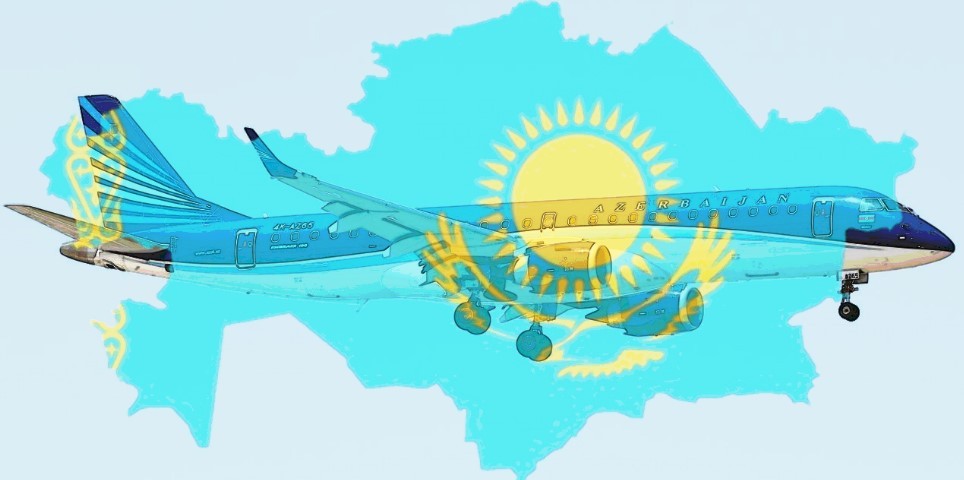
The Aktau crash of the Azerbaijan Airlines Embraer 190 aircraft, which killed 38 people on 25 December, was a tragic event with significant international repercussions. This devastating accident not only claimed lives but also raised critical questions about aviation safety and the handling of sensitive investigations.

As investigators sought to determine its cause, Kazakhstan faced an important decision regarding the handling of the flight recorder. Ultimately, the country chose to transfer the recorder to Brazil, the manufacturer of the aircraft, rather than to the Interstate Aviation Committee (IAC) of the Commonwealth of Independent States (CIS), as Russia had proposed.

This decision reflected both technical and diplomatic considerations, marking a crucial moment in the unfolding investigation. By taking this decision, Kazakhstan adhered to established industry procedures for aviation safety investigations. Such a step highlights the country’s commitment to transparency and global norms in aviation.

The move is typical of the country’s foreign policy under President Kassym-Jomart Tokayev, whose long diplomatic experience leads him to emphasize a rules-based approach over political considerations and to act in accord with established procedural norms. This choice ensured that the investigation would follow established international practices, thereby lending credibility to the process and reassuring global aviation stakeholders.

This behavior is also in line with Kazakhstan’s broader commitment to international law and a rules-based global order. Another notable example of this approach was its endorsement of the principles of sovereignty and territorial integrity through its refusal to recognize Russia’s annexation of Crimea or the independence of the Donbas regions. These decisions were not necessarily easy ones, given Kazakhstan’s economic and security ties with Russia, but they reinforced its commitment to global standards.

While some observers might frame decisions like the Aktau recorder transfer as a “snub” to Russia, such characterizations would miss the point. Like Kazakhstan’s refusal to recognize Donbas as independent and its efforts to prevent the flow of military components in violation of Western sanctions, its actions are not meant to be about rejecting one partner in favor of another. Rather, acting in its own autonomous interests, Kazakhstan seeks to “do the right thing,” because this maintains a consistent international profile with a steady foreign-policy course grounded in international law and practice.

Kazakhstan’s mediation efforts extend beyond formal multilateral forums, showcasing its active engagement in regional and global diplomacy. The country provided a neutral platform for discussions between opposing factions in the conflict over Syria; and it has also worked to ease tensions between Armenia and Azerbaijan, hosting purely bilateral consultations and thus demonstrating its capacity to engage constructively in regional conflicts without taking sides.

These efforts are in line with Kazakhstan’s larger foreign-policy strategy to act as a principled and impartial intermediary on the global stage, fostering dialogue and reducing hostilities. Similarly, Kazakhstan’s leadership in the Conference on Interaction and Confidence-Building Measures in Asia (CICA) reflects its dedication to multilateralism and peaceful conflict resolution.

Kazakhstan exemplifies the rising middle-power archetype also through its significant contributions to global nuclear non-proliferation. Its foreign policy operates on a multi-vector approach, managing relationships with global powers like Russia, China, and the West while mitigating over-reliance on any single actor.

A middle power is defined by its ability to exert substantial regional influence while contributing to global diplomacy through a combination of economic strength, strategic partnerships, and soft power. These states often act as mediators and bridge-builders in global conflicts, leveraging multilateral frameworks to balance relationships among larger powers.

Kazakhstan’s participation in organizations such as the Shanghai Cooperation Organization and the Organization of Turkic States complements its strategic engagement with the European Union and the United States. These actions demonstrate its ability to maintain balanced and constructive relationships across divergent international arenas.

The country’s adherence to international norms is part of its attempt to maintain a geopolitical equilibrium in its own foreign relations. By positioning itself as a bridge between competing spheres of influence, Kazakhstan seeks to promote dialogue and cooperation without alienating any major power.

This can be a difficult balancing act, particularly for Kazakhstan, given the country’s sensitive yet central geographic location. The decision about the flight recorder in Aktau, therefore, is part of a broader strategy to maintain sovereignty, bolster international credibility, and reinforce its image as a nation committed to peace and procedural integrity.

Kazakhstan’s domestic reform agenda is equally critical to sustaining its middle-power status. Under President Kassym-Jomart Tokayev, the government has introduced sweeping political, economic, and social reforms aimed at modernizing governance, fostering transparency, and addressing corruption and inequality.

By enhancing the rule of law and promoting economic diversification, these initiatives seek to create a stable, competitive environment for growth. The successful implementation of these reforms is vital for Kazakhstan’s ability to maintain regional leadership and expand its international influence.

Kazakhstan’s response to the Aktau crash and its broader foreign and domestic policies testify to a deliberate and nuanced strategy to solidify its position as a middle power. The country shows a pragmatic commitment to balancing geopolitical pressures through prioritizing transparency, multilateralism, and adherence to international norms.

Kazakhstan Prepares for Flood Season by Releasing Water from Reservoirs

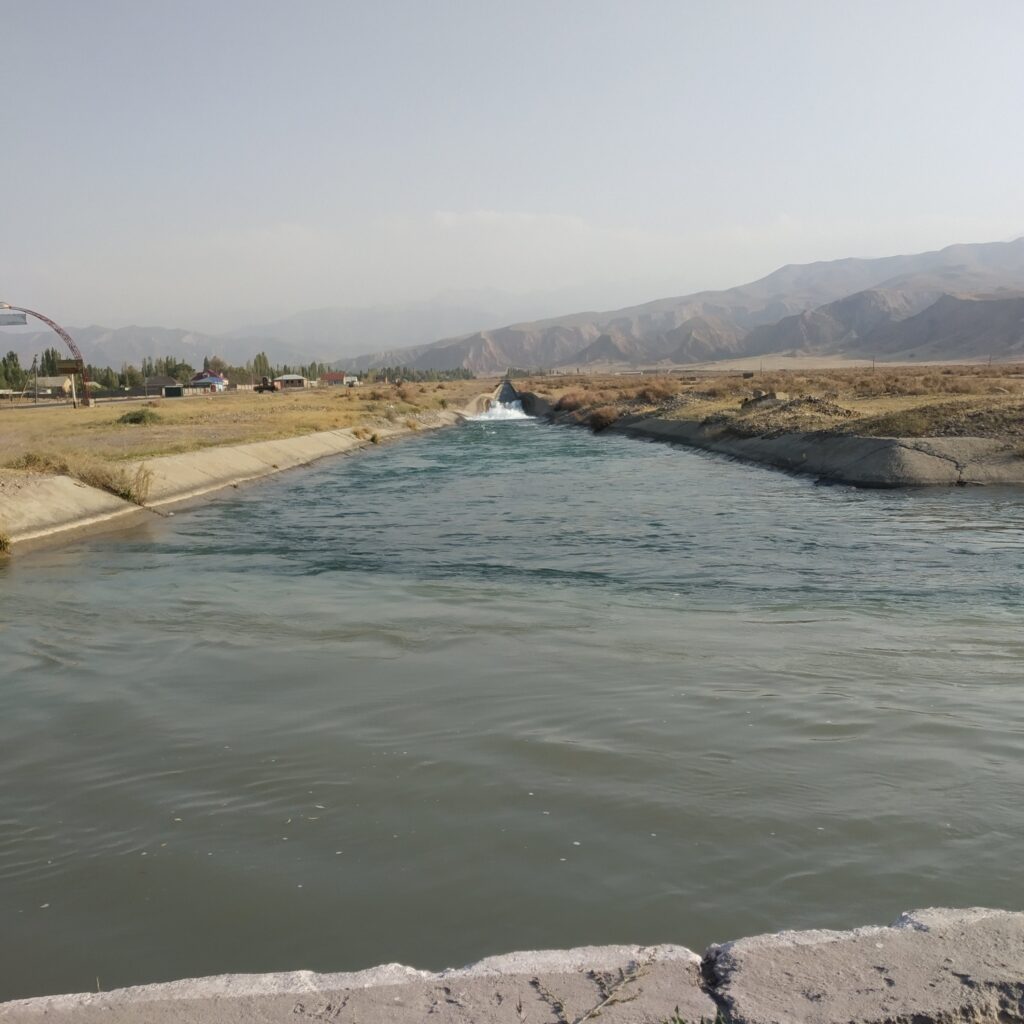
Kazakhstan’s Ministry of Water Resources and Irrigation (MWRI) has begun releasing water from key reservoirs across the country to prepare for the influx of meltwater expected during the spring thaw. This proactive measure follows the devastating floods of spring 2024, the worst in 80 years, which affected multiple regions and displaced over 120,000 people.

By pre-emptively releasing water from reservoirs, Kazakhstan hopes to mitigate the impact of the spring flood season. This preparation underscores the importance of coordinated water management to protect communities, agriculture, and infrastructure from the devastating effects of extreme weather events.

In early January, the MWRI held a meeting to discuss water management strategies for the upcoming flood season. Authorities have initiated controlled releases in reservoirs located in the west, east, north, and center of the country – regions hit hardest by last year’s flooding. These releases are designed to reduce water levels in preparation for spring meltwater.

  • Astana Reservoir: Between December 20, 2024, and January 3, 2025, 5.06 million cubic meters of water were released, lowering the reservoir to 83% of its total capacity. By April 1, its volume will be further reduced to 73% (300 million cubic meters).
  • Aktobe Reservoir: Currently holding 51 million cubic meters, this will be lowered to 47.32 million cubic meters by April.
  • Bitik Reservoir (West Kazakhstan): Discharging at 8.3 cubic meters per second, its volume has been reduced to 34.45 million cubic meters.
  • Bukhtarma Reservoir (East Kazakhstan): Now at 79% capacity, this will be reduced by another 8% by spring.
  • Yntymak Reservoir (Karaganda Region): Of its current 69 million cubic meters, only 39 million cubic meters will remain to accommodate floodwaters.
  • Kengir Reservoir (Ulytau Region): Reduced to 86% of capacity, it will be lowered by an additional 11%.
  • Upper Tobolsk Reservoir (Kostanay Region): Holding 585.4 million cubic meters, its volume will be reduced to 61% (499.37 million cubic meters) by April.

MWRI head Nurzhan Nurzhigitov emphasized the importance of strategic water management throughout the year. “In spring, it is critical not only to collect floodwaters in reservoirs but also to distribute them to lake systems, natural pastures, and meadows,” he said. Nurzhigitov urged regional authorities to plan for efficient water allocation, noting that during the previous irrigation period, farms received approximately 11 billion cubic meters of water. Efforts to restore and preserve both large and small reservoirs were also highlighted.

Last spring’s historic floods inundated regions in northern, western, eastern, and central Kazakhstan for nearly two months. Over 120,000 people were evacuated, with rescue efforts involving multiple government agencies, including the Ministries of Emergency Situations, Defense, and Internal Affairs, as well as local authorities and volunteers.

Despite extensive state aid, many citizens raised concerns about the allocation of resources, as previously reported by The Times of Central Asia.