• KGS/USD = 0.01144 0%
  • KZT/USD = 0.00193 -0%
  • TJS/USD = 0.10811 -0.28%
  • UZS/USD = 0.00008 0%
  • TMT/USD = 0.28490 0%
  • KGS/USD = 0.01144 0%
  • KZT/USD = 0.00193 -0%
  • TJS/USD = 0.10811 -0.28%
  • UZS/USD = 0.00008 0%
  • TMT/USD = 0.28490 0%
  • KGS/USD = 0.01144 0%
  • KZT/USD = 0.00193 -0%
  • TJS/USD = 0.10811 -0.28%
  • UZS/USD = 0.00008 0%
  • TMT/USD = 0.28490 0%
  • KGS/USD = 0.01144 0%
  • KZT/USD = 0.00193 -0%
  • TJS/USD = 0.10811 -0.28%
  • UZS/USD = 0.00008 0%
  • TMT/USD = 0.28490 0%
  • KGS/USD = 0.01144 0%
  • KZT/USD = 0.00193 -0%
  • TJS/USD = 0.10811 -0.28%
  • UZS/USD = 0.00008 0%
  • TMT/USD = 0.28490 0%
  • KGS/USD = 0.01144 0%
  • KZT/USD = 0.00193 -0%
  • TJS/USD = 0.10811 -0.28%
  • UZS/USD = 0.00008 0%
  • TMT/USD = 0.28490 0%
  • KGS/USD = 0.01144 0%
  • KZT/USD = 0.00193 -0%
  • TJS/USD = 0.10811 -0.28%
  • UZS/USD = 0.00008 0%
  • TMT/USD = 0.28490 0%
  • KGS/USD = 0.01144 0%
  • KZT/USD = 0.00193 -0%
  • TJS/USD = 0.10811 -0.28%
  • UZS/USD = 0.00008 0%
  • TMT/USD = 0.28490 0%
10 December 2025

Uzbekistan Moves to Penalize Financing of Mass Disturbances

Uzbekistan’s Parliament, the Oliy Majlis, is taking decisive steps to address the organization and financing of public disturbances. On December 11, the Legislative Chamber approved a draft law amending Article 244 of the Criminal Code. Passed in its first reading, the amendments aim to strengthen the country’s legal framework for tackling mass disturbances.

During a parliamentary session on December 24, the draft law advanced further, reaching its third reading and gaining adoption. The updated Article 244 introduces several significant changes:

  • A new third section establishes specific liability for individuals undergoing training with the intent to participate in mass disturbances.
  • A fourth section introduces fines for financing such activities.
  • A fifth section provides an exemption from criminal liability for individuals who voluntarily report to law enforcement after undergoing such training.

These amendments are designed to deter organized disturbances while promoting cooperation with authorities.

Uzbekistan Set to Join the Eurasian Development Bank in 2025

Uzbekistan is set to complete the procedures for joining the Eurasian Development Bank (EDB) by early 2025. The announcement was made during an expanded meeting of the Supreme Eurasian Economic Council (EAEC).

Uzbekistan has held observer status in the Eurasian Economic Union (EAEU) since 2020, and is preparing to deepen its engagement in regional economic projects.

The country is already participating in several sectoral programs between the EAEU member states. These programs focus on areas such as the digitalization of trade, cargo transportation, e-commerce development, and combating climate change.

The Eurasian Development Bank was founded in 2006 by Russia and Kazakhstan. Its current members are Armenia, Belarus, Kyrgyzstan, and Tajikistan. The EDB’s primary mission is to promote economic growth and strengthen integration among its member states by financing major investment projects across various sectors.

As of June 30, 2024, the EDB’s investment portfolio stood at USD 4.8 billion, comprising 78 projects throughout the member states. The Bank prioritizes projects with integration effects, including cross-country infrastructure development, enhanced trade and economic ties, and the creation of common markets. It also supports “green” financing initiatives to promote sustainable development and environmental safety across the region.

Experts view Uzbekistan’s plans to join the EDB as a strategic move to bolster its economic cooperation with neighboring countries. Membership in the Bank would provide Tashkent with access to new financial opportunities, facilitating the implementation of joint initiatives and strengthening its role in regional economic integration.

Uzbekistan Sends Food and Medicine to Afghanistan

Uzbekistan has delivered humanitarian aid to Afghanistan. The aid package includes food and medicines, with nine wagons of “Salomatlik” (Health) medical and sanitary products en route to the country. From December 25 to 30, residents of Afghanistan’s Balkh region will receive free medical examinations conducted by qualified Uzbek doctors.

This humanitarian initiative follows a request for medical assistance made during a meeting between the governments of Uzbekistan and Afghanistan.

To further strengthen bilateral ties, Uzbekistan’s Ambassador to Afghanistan, Abibek Usmanov, met with Mawlawi Abdul Salam Hanafi, Afghanistan’s Deputy Prime Minister for Administrative Affairs, in Kabul on December 24.

During the meeting, Usmanov underscored the importance of enhancing cooperation between the two countries across various sectors. He highlighted Uzbekistan’s willingness to deepen economic and trade relations, emphasizing the interest of Uzbek businesses in projects such as establishing health centers, exporting medicines, constructing cement plants, and engaging in coal trade.

Kyrgyzstan to Update National Anthem

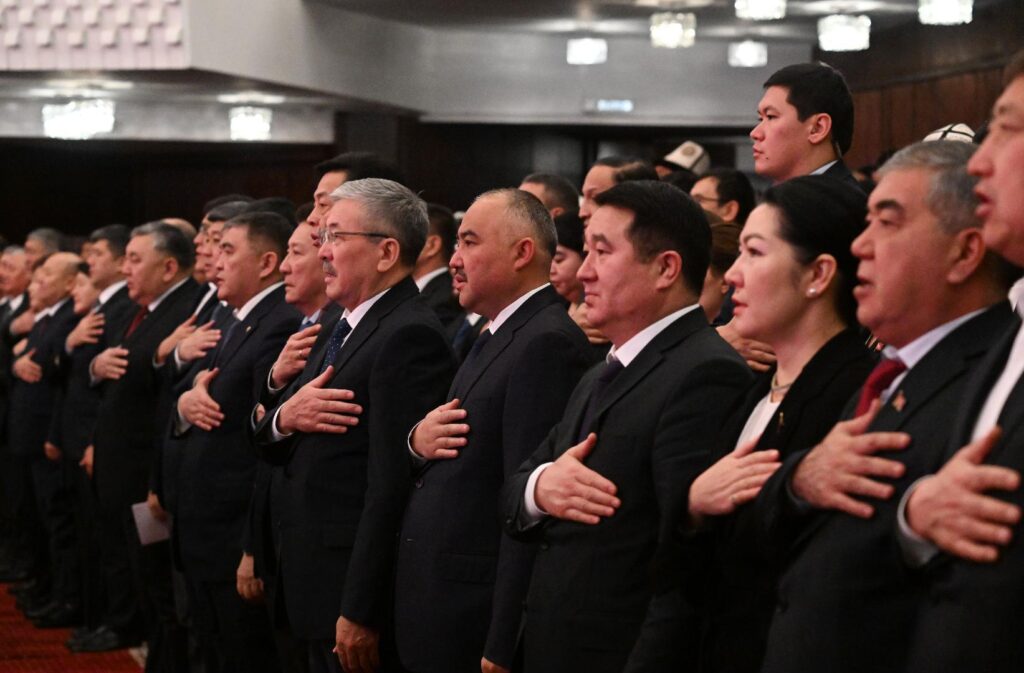
The Ministry of Culture, Information, Sports, and Youth Policy of Kyrgyzstan, in collaboration with creative unions, is working on crafting a new national anthem. The announcement was made during a press conference in Bishkek by Melis Murataliyev, chairman of the National Commission on the State Language. An interdepartmental commission has been established to evaluate proposed versions of the anthem.

“We have been tasked with conducting a linguistic examination of all selected variants to ensure they align with our culture, traditions, and worldview. We will assess whether the meaning of word combinations remains consistent when pronounced. Three versions will ultimately be submitted to the Jogorku Kenesh for approval, but not before undergoing rigorous linguistic review,” Murataliyev stated.

Parliament Speaker Nurlanbek Shakiyev had first proposed changing the anthem several months ago. He noted that the current anthem was adopted during a challenging period following Kyrgyzstan’s independence.

“Today, we are a stable and developing state. For this reason, the anthem should reflect our progress and be one that everyone can sing with pride,” Shakiyev said. He emphasized that the selection process should involve public participation, allowing citizens to contribute text and melody proposals. The contest criteria stipulate that the anthem should celebrate Kyrgyzstan, inspire its people, and encourage development and progress.

President Sadyr Japarov has also expressed support for the initiative. He believes the current anthem has lost its relevance and sees no issue with updating it.

“The anthem should be the work of creative individuals – composers and poets – and its development should involve public discussion. If the majority supports a new anthem, it would be a positive step forward. Imagine schoolchildren and Aksakals singing it together; that would be truly wonderful,” Japarov remarked.

The new anthem is expected to be adopted by April next year.

Kazakhstan Leads Central Asia in Anti-Money Laundering Efforts

The Basel Anti-Money Laundering Index (AML) has been released. It offers a comprehensive assessment of global efforts to combat money laundering.

The index evaluates the risk of money laundering and financial crime across countries and regions, using 17 indicators across five domains to identify key factors that can heighten vulnerability. The indicators are updated annually and reviewed by an independent panel of experts to ensure relevance, methodology integrity, and access to current data.

The Index does not measure the actual volume of money laundering activity. Instead, it focuses on the risk factors, scoring countries on a scale from 0 to 10 where 10 represents the highest risk and 0 the lowest.

The Times of Central Asia examined this year’s ratings, focusing on the performance of Central Asian nations: Kazakhstan achieved a notable ranking of 111th out of 164 countries, with a score of 4.65. Uzbekistan followed, ranking 81st with a score of 5.27, while Kyrgyzstan placed 45th with 5.95 points. Tajikistan ranked 30th, scoring 6.45, and Turkmenistan recorded the region’s worst result, ranking 23rd with 6.71 points.

Globally, the best results were observed in San Marino (2.96), Iceland (3.00), and Finland (3.07).

Beijing Meeting Charts Future of China-Kazakhstan-Turkmenistan-Iran Rail Corridor

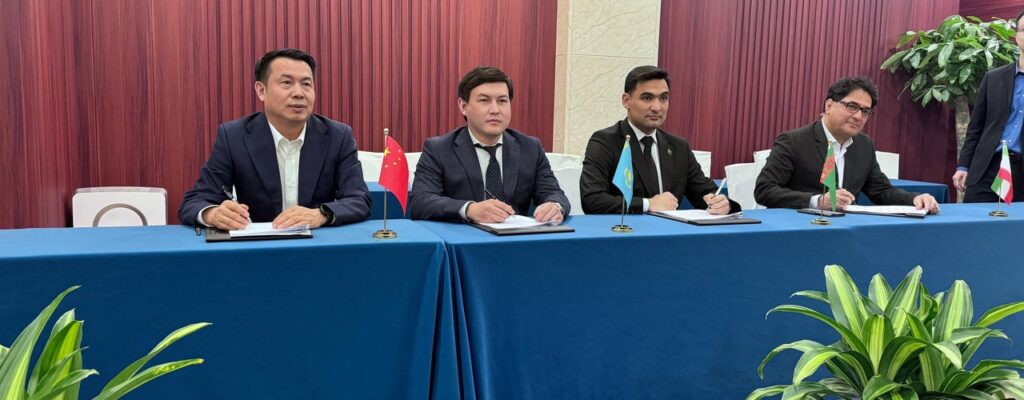
On December 25, experts convened in Beijing to evaluate the performance and future potential of the China-Kazakhstan-Turkmenistan-Iran railway route. The meeting reviewed the route’s operational results for 2024 and explored opportunities for further development.

Kazakhstan was represented by KTZ Express, a subsidiary of Kazakhstan Temir Zholy (KTZ), the national railway company. According to KTZ Express, cargo transportation volume along the route increased by 31% during the first 11 months of 2024 compared to the same period in 2023. This growth underscores the rising interest of market participants in the route and highlights Kazakhstan’s critical role as a transit hub in the global supply chain.

Key Discussion Points

Participants focused on several areas to enhance the route’s efficiency:

  • Increasing cargo delivery speeds to further reduce transit times.
  • Optimizing customs procedures to streamline cross-border operations.
  • Implementing modern digital solutions to simplify logistics processes and improve transparency.

Strategic Importance of the Route

The China-Kazakhstan-Turkmenistan-Iran railway corridor is a vital link in Eurasian trade, facilitating the rapid movement of goods from China’s eastern coast to the Persian Gulf and Middle Eastern markets. This corridor has already achieved significant milestones, reducing delivery times between China and Iran to just 15 days.

With its growing cargo volumes and strategic positioning, the China-Kazakhstan-Turkmenistan-Iran railway route is poised to become an even more significant player in Eurasian trade. Continued efforts to optimize its operations and infrastructure will further solidify its role in connecting key global markets.