• KGS/USD = 0.01144 0%
  • KZT/USD = 0.00212 0%
  • TJS/USD = 0.10456 0.19%
  • UZS/USD = 0.00008 0%
  • TMT/USD = 0.28490 0%
  • KGS/USD = 0.01144 0%
  • KZT/USD = 0.00212 0%
  • TJS/USD = 0.10456 0.19%
  • UZS/USD = 0.00008 0%
  • TMT/USD = 0.28490 0%
  • KGS/USD = 0.01144 0%
  • KZT/USD = 0.00212 0%
  • TJS/USD = 0.10456 0.19%
  • UZS/USD = 0.00008 0%
  • TMT/USD = 0.28490 0%
  • KGS/USD = 0.01144 0%
  • KZT/USD = 0.00212 0%
  • TJS/USD = 0.10456 0.19%
  • UZS/USD = 0.00008 0%
  • TMT/USD = 0.28490 0%
  • KGS/USD = 0.01144 0%
  • KZT/USD = 0.00212 0%
  • TJS/USD = 0.10456 0.19%
  • UZS/USD = 0.00008 0%
  • TMT/USD = 0.28490 0%
  • KGS/USD = 0.01144 0%
  • KZT/USD = 0.00212 0%
  • TJS/USD = 0.10456 0.19%
  • UZS/USD = 0.00008 0%
  • TMT/USD = 0.28490 0%
  • KGS/USD = 0.01144 0%
  • KZT/USD = 0.00212 0%
  • TJS/USD = 0.10456 0.19%
  • UZS/USD = 0.00008 0%
  • TMT/USD = 0.28490 0%
  • KGS/USD = 0.01144 0%
  • KZT/USD = 0.00212 0%
  • TJS/USD = 0.10456 0.19%
  • UZS/USD = 0.00008 0%
  • TMT/USD = 0.28490 0%

Escalation with Iran at the Epicenter: How Central Asian Countries Are Reacting

Over the past weekend, the Middle East has once again become a focal point of global tensions. At the center of the escalation is Iran, a country with which Central Asian states intensified engagement last year following the visit of President Masoud Pezeshkian to the region. As events unfold, the potential regional and economic consequences have become a key concern for Central Asian leaders.

Kazakhstan

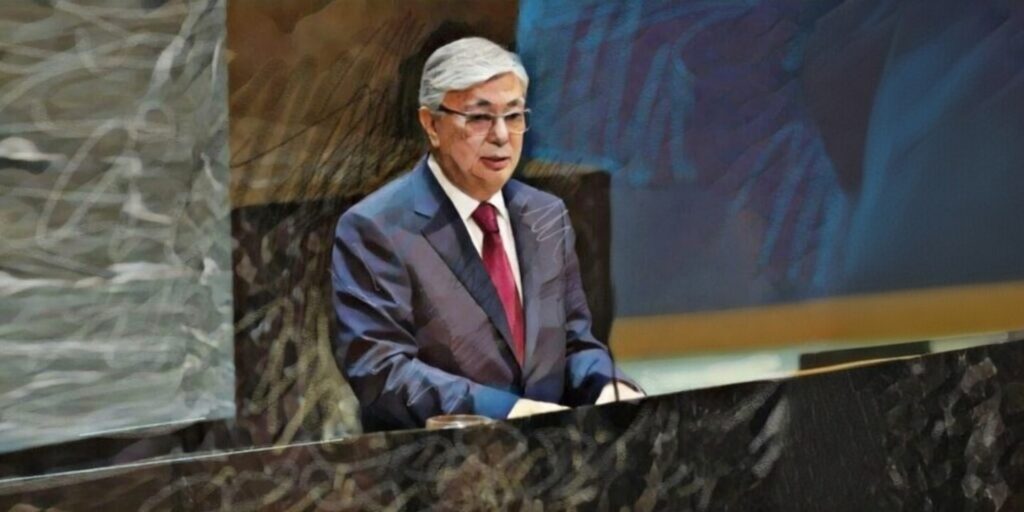
President Kassym-Jomart Tokayev responded swiftly on February 28, as Iran was reportedly preparing a retaliatory strike targeting not only Israel, which, together with the U.S., had assumed responsibility for the latest escalation, but also several Arab states in the Persian Gulf.

On February 27, Tokayev received U.S. Ambassador to Kazakhstan Julie Stufft. According to the official readout, the sides exchanged views “on further cooperation within the framework of the Board of Peace.” While it remains unclear whether the meeting was directly linked to impending military developments, Kazakhstan’s leadership moved quickly the following day.

On February 28, the president instructed Security Council Secretary Gizat Nurdauletov, together with the heads of law enforcement agencies and relevant ministries, to prepare an emergency action plan in light of the escalating situation around Iran and potential risks to domestic stability.

All law enforcement agencies were placed on heightened alert, and a special monitoring group was established within the government under the supervision of the Ministry of Foreign Affairs. Regional governors were instructed to assess potential risks stemming from developments in the Middle East.

Late on March 1, presidential press secretary Aibek Smadiyarov announced that Tokayev had sent personal messages to the leaders of the United Arab Emirates, Saudi Arabia, Qatar, Bahrain, and Kuwait, expressing solidarity and support during what he described as a difficult period.

Tokayev strongly condemned military actions that undermine the sovereignty and security of states friendly to Kazakhstan.

“Our country consistently advocates resolving complex international problems and armed conflicts exclusively through diplomatic means,” Tokayev stated.

He also expressed Kazakhstan’s readiness to provide assistance if necessary and reaffirmed the importance of maintaining working contacts with regional leaders.

Subsequently, Tokayev held telephone conversations with Emir of Qatar Sheikh Tamim bin Hamad Al Thani and President of the United Arab Emirates Sheikh Mohammed bin Zayed Al Nahyan.

In both calls, Tokayev expressed serious concern over the escalation and reiterated Kazakhstan’s support and solidarity. During the conversation with the UAE president, Tokayev also noted reports that civilian infrastructure had been damaged and stated that attacks on civilian targets deserve strong condemnation.

Sheikh Mohammed bin Zayed Al Nahyan thanked Kazakhstan for its support and expressed appreciation for its readiness to assist in overcoming the crisis.

Uzbekistan

Uzbekistan, alongside Kazakhstan, suspended flights to several Middle Eastern destinations, with some aircraft reportedly turning back after departure.

The Ministry of Foreign Affairs issued emergency contact information for Uzbek diplomatic missions and urged citizens abroad or planning to travel, to closely monitor official updates from host countries and Uzbek embassies.

The ministry advised citizens to maintain communication with diplomatic missions, register with consular services when necessary, and exercise heightened caution, particularly in areas with large public gatherings. The statement also emphasized compliance with local laws and customs.

Officials in Tashkent view instability in the Middle East as a potential risk to trade routes, labor migration channels, and broader regional security.

Azerbaijan

On March 1, Azerbaijani Foreign Minister Jeyhun Bayramov held a telephone conversation with Uzbekistan’s Foreign Minister Bakhtiyor Saidov. According to the Azerbaijani Foreign Ministry, the ministers discussed the deteriorating security environment and expressed deep concern about the expanding military confrontation.

Both sides stressed the importance of restraint and underscored the need to resolve disputes through political dialogue and diplomatic means in accordance with international law.

On the same day, Bayramov also spoke with Iran’s Foreign Minister Abbas Arakchi. During the call, Bayramov expressed condolences over reported casualties, including the death of Iran’s Supreme Leader Ayatollah Ali Khamenei and civilian victims following U.S. and Israeli strikes.

Bayramov further stated that Azerbaijani territory would not be used for military operations against Iran.

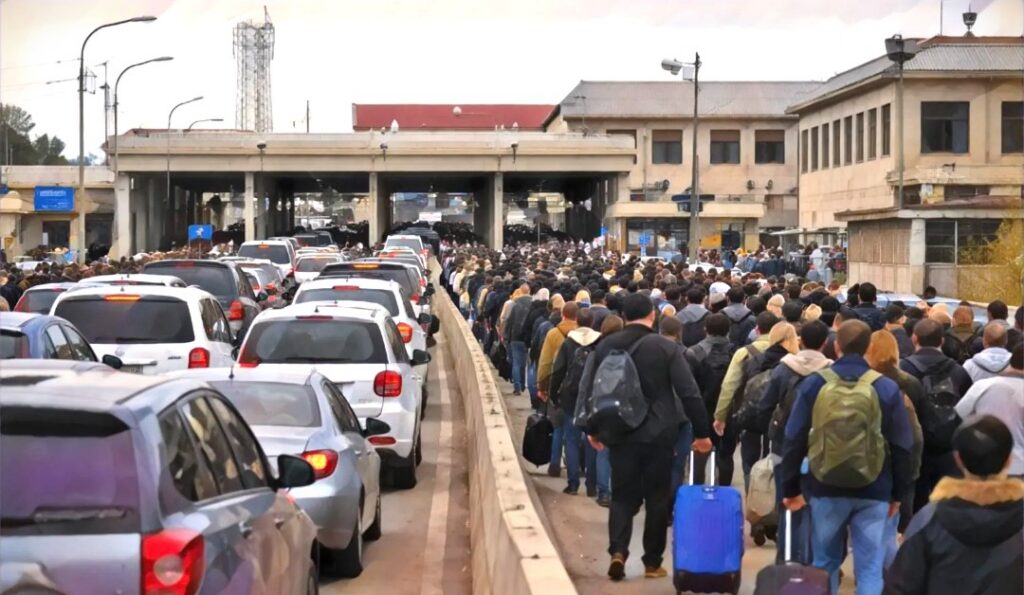
Meanwhile, at the Astara border crossing in southeastern Azerbaijan, located along the Astara River, which forms the state border with Iran, authorities reported an influx of individuals leaving Iranian territory. Most arrivals were Azerbaijani citizens returning home, though approximately 50 foreign nationals were also reported at the checkpoint, including citizens of Poland, India, Pakistan, Nepal, Brazil, Tunisia, and France.

Azerbaijani officials stated that third-country nationals must obtain an “evacuation code” to exit Iran, though some individuals reportedly arrived at the crossing unaware of this requirement.

Baku has indicated that it remains prepared to assist in the evacuation of foreign nationals from Iran if necessary.
Central Asian Countries Scramble to Help Nationals in Mideast Conflict Zone

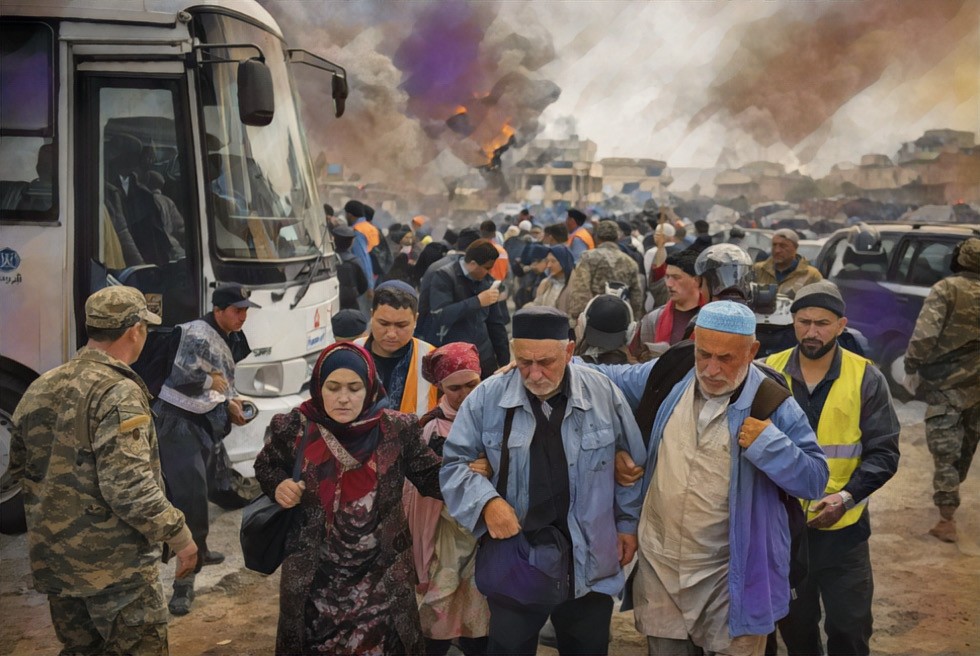
With the Mideast conflict entering a second day, Central Asian governments have urged their citizens in the region to take precautions, including following the instructions of local authorities and staying away from mass gatherings.

Five civilians from Tajikistan are among foreigners from a range of countries who have crossed from Iran into Azerbaijan since the United States and Israel launched air strikes at Iranian targets on Saturday, the Azerbaijani Press Agency reported. Others who have crossed include 18 Saudi diplomats, four diplomats from Jordan and hundreds of Russian civilians. Canada and Spain have communicated with Azerbaijan about the possible evacuation of their citizens as well.

One citizen of Azerbaijan in the region has been injured, but is in good condition and receiving support from diplomatic staff, said Aykhan Hajizade, spokesman for Azerbaijan’s Ministry of Foreign Affairs. He was quoted by state news agency Azertac.

Uzbekistan said there are no casualties among its 81 citizens in Iran. The nationals from Uzbekistan include eight employees of diplomatic missions, nine students in the city of Qom, nine who are in Iran on private visits and 55 permanent residents.

“The Embassy maintains constant contact with compatriots,” the Uzbek government said.

Iran responded to the air strikes with retaliatory waves of missiles and drones aimed at Israel as well as U.S. military facilities and civilian areas across the region.

“Air traffic has been suspended due to temporary restrictions on the use of airspace,” Uzbekistan’s Ministry of Foreign Affairs said in a message on Telegram to its nationals in Dubai, United Arab Emirates. The ministry urged them to fully comply with local laws, avoid going out unnecessarily and stay away from crowded places, and rely only on official sources of information.

Kazakhstan said it was working on “round-the-clock interaction” with authorities in countries affected by the conflict, and that its diplomatic missions are providing consular and legal assistance to compatriots. The Ministry of Foreign Affairs has opened hotlines.

“Lists of citizens in the region, including transit zones, are being updated,” the ministry said. “Operational chats have been created in messengers where compatriots can get answers to their questions and information about the situation in the country, including recommendations.”

The ministry said it was collecting information about the number of Kazakhstani citizens in the “escalation zone,” and that it was difficult to specify the exact number. There have been no reports so far of casualties among people from Kazakhstan, it said.

Last year, Mashhad, a northeastern Iranian city near the border with Turkmenistan and a significant hub for trade with Central Asia, was among the targets hit by the Israeli military. At the time, Turkmenistan facilitated the cross-border transfer from Iran of some people from Central Asia and other regions.

So far, there are no reports of U.S. or Israeli strikes on Mashhad since the latest conflict began. The city is an Islamic pilgrimage site and is the birth place of Ayatollah Ali Khamenei, Iran’s supreme leader. He was killed in air strikes on Saturday.


President Tokayev Reaffirms Support for Gulf States During Regional Crisis

Updated March 1 – President Kassym-Jomart Tokayev sent messages of support to the leaders of the United Arab Emirates, Saudi Arabia, Qatar, Bahrain, Kuwait, and Jordan reaffirming Kazakhstan’s solidarity with their peoples during what he described as a “difficult period of profound challenges.”

Messages were conveyed on Saturday to the leaders of the United Arab Emirates, Saudi Arabia, Qatar, Bahrain and Kuwait, underscoring Kazakhstan’s commitment to the sovereignty and security of its partners in the Arab world. The information was confirmed by presidential adviser and press secretary Aibek Smadyarov, according to Qazinform.

On Sunday, Tokayev sent a similar message to Jordan’s leadership, extending the same assurances of solidarity and support.

In addition, Tokayev held a phone call with the Amir of Qatar, Sheikh Tamim bin Hamad Al Thani, during which the sides discussed the evolving situation in the Middle East and emphasized the importance of diplomatic efforts to prevent further escalation.

In the messages, Tokayev condemned any military action aimed at undermining the sovereignty and security of states that Kazakhstan regards as friendly partners.

“Our country consistently advocates the resolution of all complex international issues and armed conflicts exclusively through diplomatic means,” Tokayev said.

He added that Kazakhstan stands ready to provide any assistance it can and expressed hope for continued regular contact with the senior leadership of those countries, signaling Astana’s intention to maintain close political dialogue amid regional tensions.

The messages are consistent with Kazakhstan’s long-standing foreign policy emphasis on multilateralism, non-interference, and the peaceful settlement of disputes. As Central Asia’s largest economy, Kazakhstan has sought to position itself as a constructive diplomatic actor while maintaining balanced relations across the Middle East and beyond.

Pakistan Declares “Open War” with Afghanistan’s Taliban as Cross-Border Attacks Escalate

Pakistan launched airstrikes inside Afghanistan on Friday following a Taliban-announced offensive against Pakistani military posts along the shared border, marking a sharp escalation in tensions between the two long-hostile neighbors. The Taliban has said it is open to talks.

Pakistan’s Defense Minister Khawaja Muhammad Asif said on social media that “our patience has now run out. Now it is open war between us,” framing Islamabad’s actions as a response to cross-border attacks.

According to Reuters, the Afghan authorities said operations began across several eastern provinces bordering Pakistan, while Islamabad confirmed retaliatory strikes targeting what it described as militant positions.

Both sides have released sharply conflicting casualty figures, none independently verified. Pakistani officials said more than 200 Taliban fighters were wounded and over 130 killed in retaliatory operations, while reporting Pakistani military casualties. The Taliban authorities rejected those figures and claimed dozens of Pakistani troops were killed.

The clashes threaten a fragile ceasefire reached in October 2025 after earlier border fighting. Pakistan has repeatedly accused the Taliban of allowing Tehrik-e-Taliban Pakistan (TTP) militants to operate from Afghan territory, an allegation Kabul denies. The Durand Line border has long been a flashpoint, but analysts say the scale of recent airstrikes — including reported strikes near Kabul — marks a significant escalation beyond previous localized clashes.

For Central Asian states, renewed instability between Pakistan and Afghanistan carries direct strategic and economic implications. Uzbekistan has invested heavily in the proposed Termez–Mazar-i-Sharif–Kabul–Peshawar railway, a flagship trans-Afghan corridor intended to link Central Asia to Pakistani ports and expand southbound trade. The CASA-1000 electricity transmission project, designed to export surplus hydropower from Kyrgyzstan and Tajikistan to Afghanistan and Pakistan, also depends on security conditions in Afghan territory.

Turkmenistan’s TAPI gas pipeline project faces similar vulnerabilities. Escalating violence risks delaying these connectivity initiatives and raising concerns about militant spillover into northern Afghanistan, an area closely watched by Tajikistan and Uzbekistan. Central Asian governments have pursued pragmatic engagement with the Taliban authorities to stabilize their southern frontier; sustained confrontation between Kabul and Islamabad could complicate that strategy and undermine regional integration plans.

The United Nations and regional actors have called for restraint. While both governments describe their actions as defensive, the rhetoric surrounding the latest exchange suggests a dangerous deterioration in bilateral relations. Independent verification of battlefield claims remains limited as diplomatic efforts to contain the escalation continue.

Kazakhstan to Focus on Skilled Migrants in New Migration Policy

Kazakhstan is shifting toward a more pragmatic migration policy aligned with the needs of the national economy. The government’s newly approved Migration Policy Concept through 2030 prioritizes attracting in-demand highly skilled professionals and encouraging internal migration to regions experiencing labor shortages.

According to the Ministry of Labor and Social Protection, the number of foreign labor migrants in Kazakhstan reached 16,100 in 2025.

Minister of Labor Askarbek Yertayev said that greater emphasis will be placed on assessing the professional qualifications of foreign workers. Priority will be given to specialists with relevant education, work experience, and competencies sought in the domestic labor market. By 2030, the share of skilled workers among labor migrants is expected to increase to 95%.

To support these objectives, the ministry has launched a pilot project on the digital platform migration Enbek.kz. The initiative introduces a comprehensive scoring system to evaluate applicants when issuing permanent residence permits and granting kandas status, a designation for ethnic Kazakhs returning to their historical homeland.

A draft law has also been prepared that includes revising fees for hiring foreign labor, tightening regulation of private employment agencies, and formally integrating the digital scoring mechanism into migration decision-making processes.

The quota for attracting foreign workers in 2026 has been set at 0.25% of the total national workforce, according to official data.

The main countries of origin for officially employed foreign nationals remain China, Uzbekistan, Turkey, and India.

At the same time, the government is strengthening measures to manage internal migration. In 2025, 14.7% of participants in state-supported interregional resettlement programs relocated to northern regions of the country.

Major cities such as Almaty and Astana continue to attract young people from less economically developed regions, exacerbating territorial imbalances.

Kashagan and Karachaganak: Will Kazakhstan’s Claims Lead to Changes in the Shareholder Structure?

The beginning of 2026 has been marked by a new round of confrontation between Kazakhstan and the international consortia developing the country’s largest oil and gas fields, North Caspian Operating Company N.V. (Kashagan) and Karachaganak Petroleum Operating B.V. (Karachaganak). Below is an overview of the current situation and the possible scenarios.

Arbitration proceedings initiated in early 2023 have expanded from $16.5 billion to more than $170 billion. Over three years, Kazakhstan has secured preliminary victories on several claims, enough, in my view, to suggest that the era of foreign oil consortia dominating Kazakhstan’s strategic projects may be coming to an end.

Ecology and NCOC Violations

This week, Bloomberg reported in its article “Oil Majors Seek Arbitration Over $5 Billion Kazakh Sulfur Fine” that the NCOC consortium is filing in international arbitration to challenge a Kazakh court decision to collect 2.3 trillion tenge (KZT). The Bloomberg headline, however, presents the issue inaccurately.

Environmental violations, including the excessive storage of approximately 1 million tons of sulfur, were identified during an inspection in March 2023, when the exchange rate stood at 451.71 KZT per $1. The rate later rose to 520-540 and currently stands at around 500 KZT per $1. According to investment forecasts, it may reach 600 KZT per $1 by the end of 2026.

As a result, the dollar equivalent of the fine has decreased significantly. At the March 2023 rate, 2.3 trillion KZT amounted to approximately $5.1 billion. At 500 KZT per $1, it equals about $4.6 billion. At 600 KZT per $1, it would fall to roughly $3.8 billion, a difference of about $1.3 billion.

After my earlier publications arguing that foreign consortia should be fined in foreign-currency equivalent at the exchange rate prevailing at the time of filing, the proposal was also raised in Parliament. Such an approach would be logical: the consortia export their oil and receive revenue in foreign currency, yet fines are imposed in tenge.

After several rounds of appeals, the consortium lost what became the largest environmental dispute in Kazakhstan’s history, initially involving more than 20 systematic violations of environmental legislation. Correspondence between consortium members published in Western media indicated they were aware of the violations but considered remediation and compliance financially costly. NCOC’s annual revenue is approximately $10 billion.

Media reports also stated that the consortium offered around $110 million, roughly 50 times less than the fine, for regional social programs in exchange for waiving environmental claims. Neither NCOC nor the Kazakh government confirmed such negotiations.

In 2010-2011, similar environmental and tax claims against the Karachaganak consortium resulted in Kazakhstan receiving a 10% stake in the project.

The current ownership structure of NCOC is:

  • ENI (Italy) – 16.81%
  • ExxonMobil (U.S.) – 16.81%
  • CNPC (China) – 8.33%
  • INPEX (Japan) – 7.56%
  • TotalEnergies (France) – 16.81%
  • Shell (UK) – 16.81%
  • KazMunayGas (Kazakhstan) – 16.88%

Total investment in Phase One of Kashagan is estimated at $60 billion. By analogy with Karachaganak, the environmental fine could hypothetically lead to an increase in Kazakhstan’s share by 5-7 percentage points, to 20-23%.

Under normal circumstances, a company that loses an appeal must pay the fine within a specified period. Failure to do so may result in account freezes and restrictions on senior management until the fine and penalties are paid in full. It remains to be seen what enforcement mechanisms will be applied in this case, given that environmental violations are not formally subject to international arbitration under the production sharing agreement.

Kazakh media have not raised the issue of responsibility among senior managers at KazMunayGas, even though KMG is an equal shareholder in NCOC.

If the consortium were required to pay a sum equivalent to roughly half of its annual revenue at once, the consequences could be serious, including production disruption, unpaid wages, and delayed payments to suppliers and contractors.

Whether oil companies would risk comparable environmental violations in their home jurisdictions is a rhetorical question. The shareholders may have expected to resolve these environmental issues through negotiation, but the policy vector has clearly shifted toward defending national interests.

Arbitration on Karachaganak

At the end of January 2026, Bloomberg reported that the London Court of International Arbitration ruled in favor of PSA LLP (which manages the country’s shares in NCOC and KPO) in a dispute concerning $2-4 billion in allegedly unjustified and uncoordinated expenses by the Karachaganak consortium. The consortium retains the right to appeal.

Initially, PSA LLP filed a claim for $3.5 billion under the Production Sharing Agreement, which specifies international arbitration, rather than Kazakh courts, as the venue for disputes, and later increased the claim to $6.5 billion.

The Kazakh side argued that audits had revealed inflated expenses that reduced the state’s share of revenue, as consortium costs under the PSA are reimbursed from the sale of Kazakh oil.

The shareholder structure of KPO is:

  • ENI (Italy) – 29.25%
  • Shell (UK) – 29.25%
  • Chevron (U.S.) – 18%
  • LUKOIL (Russia) – 13.5%
  • KazMunayGas (Kazakhstan) – 10%

Sanctions affecting Russian energy companies, including LUKOIL, may also influence the future balance of power in Kazakhstan’s extraction and pipeline projects, though that requires separate analysis.

The arbitration ruling strengthens Kazakhstan’s position in other disputes with NCOC, including claims exceeding $16.5 billion in allegedly unjustified expenses, roughly a quarter of total investment, and $160.5 billion in claimed lost profits linked to delays in the second and third phases of Kashagan’s development.

NCOC currently produces 400,000-450,000 barrels per day of oil and gas condensate. Phase Two envisaged output of around 800,000 barrels per day, while Phase Three targeted more than 1-1.2 million barrels per day.

NCOC and KPO vs. Tengiz

Against the backdrop of multi-billion-dollar disputes involving NCOC and KPO, the Tengiz project appears comparatively stable, despite $48.5 billion spent on the Future Expansion Project, which is expected to add about 250,000 barrels per day.

Tengiz shareholders are:

  • Chevron (U.S.) – 50%
  • ExxonMobil (U.S.) – 25%
  • LUKOIL (Russia) – 5%
  • KazMunayGas (Kazakhstan) – 20%

A key difference lies in the contractual framework. Tengiz operates under a stabilized contract with consistent management, whereas Kashagan and Karachaganak operate under production sharing agreements with rotating operators and more fragmented governance. This dispersion of authority complicates long-term planning, investment decisions, and the construction of gas-processing facilities needed to sustain or increase production.

It is also possible that dissatisfaction among certain shareholders regarding project management could affect future alignments.

Changes Are Inevitable

The ongoing court proceedings, both domestic and international, are likely to result in changes to shareholder structures and possibly management models. At the same time, KazMunayGas currently lacks the operational capacity to independently manage projects of this scale, meaning that one of the shareholders, existing or new, would likely assume a leading management role.

Both KPO and NCOC are seeking to extend their production sharing agreements, which expire in 2038 and 2041, respectively. This underscores the continued strategic importance of oil and gas for the global economy before and after 2050.

Kazakhstan’s recent arbitration successes strengthen its legal position ahead of potential ownership changes in other sectors, including mining and metallurgy.

Three additional factors may shape future developments:

  • A proposed constitutional referendum would enshrine the priority of national legislation over certain international decisions, potentially affecting the enforceability of external rulings.
  • Further legal scrutiny could extend to officials who approved cost increases under disputed arrangements.
  • Over the next five years, Kazakh projects are expected to remain among the most profitable globally for Western shareholders, with projected cumulative net cash flow exceeding $101 billion across Tengiz, Kashagan, and Karachaganak.