• KGS/USD = 0.01143 -0%
  • KZT/USD = 0.00192 -0%
  • TJS/USD = 0.10820 0.19%
  • UZS/USD = 0.00008 0%
  • TMT/USD = 0.28575 0%
  • KGS/USD = 0.01143 -0%
  • KZT/USD = 0.00192 -0%
  • TJS/USD = 0.10820 0.19%
  • UZS/USD = 0.00008 0%
  • TMT/USD = 0.28575 0%
  • KGS/USD = 0.01143 -0%
  • KZT/USD = 0.00192 -0%
  • TJS/USD = 0.10820 0.19%
  • UZS/USD = 0.00008 0%
  • TMT/USD = 0.28575 0%
  • KGS/USD = 0.01143 -0%
  • KZT/USD = 0.00192 -0%
  • TJS/USD = 0.10820 0.19%
  • UZS/USD = 0.00008 0%
  • TMT/USD = 0.28575 0%
  • KGS/USD = 0.01143 -0%
  • KZT/USD = 0.00192 -0%
  • TJS/USD = 0.10820 0.19%
  • UZS/USD = 0.00008 0%
  • TMT/USD = 0.28575 0%
  • KGS/USD = 0.01143 -0%
  • KZT/USD = 0.00192 -0%
  • TJS/USD = 0.10820 0.19%
  • UZS/USD = 0.00008 0%
  • TMT/USD = 0.28575 0%
  • KGS/USD = 0.01143 -0%
  • KZT/USD = 0.00192 -0%
  • TJS/USD = 0.10820 0.19%
  • UZS/USD = 0.00008 0%
  • TMT/USD = 0.28575 0%
  • KGS/USD = 0.01143 -0%
  • KZT/USD = 0.00192 -0%
  • TJS/USD = 0.10820 0.19%
  • UZS/USD = 0.00008 0%
  • TMT/USD = 0.28575 0%
13 December 2025

Turkmenistan Implements Gender-Sensitive Pedagogy in Education

The Ministry of Education of Turkmenistan, in collaboration with the United Nations Children’s Fund (UNICEF), has introduced new training materials on gender-sensitive pedagogy. The initiative aims to foster an inclusive educational environment that addresses the individual needs of children while enhancing the skills of professionals in education, healthcare, and social protection.

The materials are tailored for teachers, parents, and students, focusing on promoting gender-sensitive approaches in schools, kindergartens, and family settings. By equipping professionals with tools and strategies for inclusive practices, the program seeks to create a fair and equitable educational system for all children.

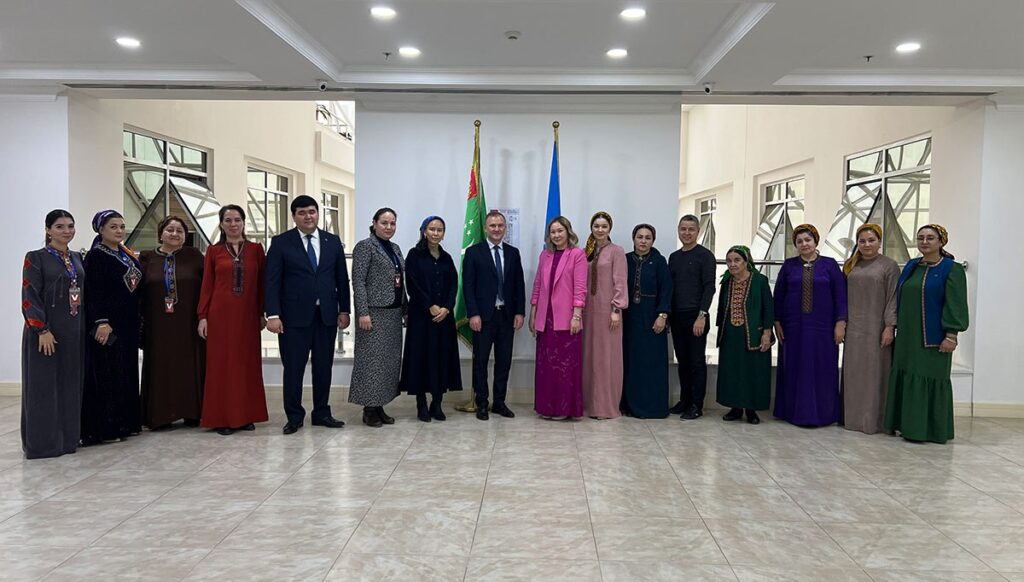
An orientation session for professionals working with children and families was recently held in Ashgabat. The event highlighted methodologies for integrating gender mainstreaming into education, with participants from educational institutions exploring new approaches and discussing their practical application.

Alexandru Nartea, Deputy Representative of UNICEF in Turkmenistan, underscored the significance of this initiative. “Integrating gender-sensitive approaches into the educational system is a vital step toward establishing a supportive environment that meets the needs of every child,” Nartea said. He added that the effort not only empowers educators but also helps shape societal values rooted in equality and inclusion.

Tomato Surplus in Turkmenistan and Uzbekistan Amid Low Russian Demand

Greenhouse vegetable farmers in Turkmenistan and Uzbekistan are grappling with a significant oversupply of tomatoes due to a decline in demand from Russian buyers, according to analysts at EastFruit.

Turkmenistan’s greenhouse farmers are reporting extreme difficulties in selling their produce, with prices falling below $1 per kilogram. “Demand in the Russian market has dropped sharply, continuously exerting downward pressure on prices,” noted the EastFruit report. Turkmenistan has rapidly expanded its greenhouse farming sector in recent years, increasing production volumes of tomatoes. However, the sharp decline in Russian purchasing power is presenting a major challenge.

Similarly, tomato prices in Uzbekistan have plummeted, averaging 32% lower than last year. Wholesale prices for red, round greenhouse tomatoes stand at $1.17 per kilogram for smaller quantities, with export prices similar to those in Turkmenistan. Despite these low prices, Uzbekistan often prioritizes exporting premium-quality tomatoes, which can fetch higher prices internationally than in the domestic market.

Uzbek exporters have highlighted the negative impact of the depreciation of the Russian ruble and financial instability in Russia. These factors have complicated the export of greenhouse vegetables to one of the region’s largest markets, exacerbating the difficulties faced by growers.

Moldovan Businessmen Hail Tokayev’s Role in Resolving Stati Dispute

On December 18, the protracted legal dispute between Kazakh authorities and Moldovan businessmen Anatol and Gabriel Stati over oil and gas assets was finally resolved. Following the agreement, the Stati representatives expressed gratitude to Kazakh President Kassym-Jomart Tokayev for his leadership in reaching the settlement.

The Ministry of Justice of Kazakhstan reported that the resolution concludes a legal saga that spanned 15 years and impacted Kazakhstan’s reputation as an investment-friendly nation. The ministry stated that the government, the National Bank of Kazakhstan, and the Stati parties, with the support of Tristan Oil’s leading creditors, successfully finalized the settlement process.

“The signed Final Settlement Agreement forms the basis for the termination of all ongoing disputes, with no possibility of reopening them in the future. The specific terms of the agreement remain confidential,” the Ministry of Justice emphasized.

Daniel Chapman, CEO of Argentem Creek Partners – investment manager for funds that are creditors of Tristan Oil Limited, the Stati family’s investment vehicle – praised the resolution. “This settlement and Kazakhstan’s approach to ensuring a fair resolution underscore the country’s respect for investor rights. We thank President Tokayev for his leadership, which has positively reshaped how foreign investors view Kazakhstan. We look forward to collaborating on new projects,” Chapman said.

Kazakhstan’s Minister of Justice, Azamat Yeskarayev, noted the settlement’s significance for the nation’s economic future. “The resolution of this longstanding dispute creates additional opportunities for economic growth and investment,” he said, emphasizing that no funds from the national budget were used in the settlement process.

The case had involved extensive litigation across multiple jurisdictions over 15 years. While the exact legal costs incurred by Kazakhstan remain undisclosed, the settlement signals a major step forward in resolving disputes with foreign investors and rebuilding trust.

Euronews Expands Central Asian Presence with New Office in Astana

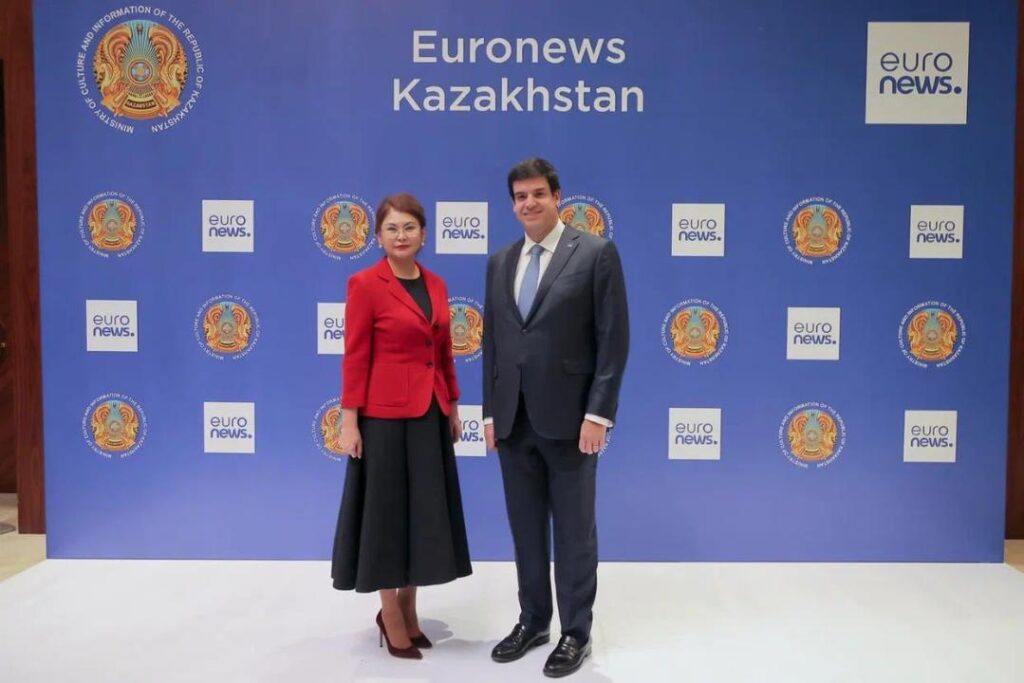
A regional office of the Euronews TV channel has opened in Astana, marking a significant milestone in promoting Kazakhstan internationally. Minister of Culture and Information Aida Balayeva described the development as an important step in showcasing the nation’s cultural heritage, tourism potential, and investment opportunities to a global audience.

“The opening of the Euronews office will provide fresh momentum for popularizing Kazakh culture and serve as a platform for intercultural dialogue and innovative solutions,” Balayeva stated.

Euronews has a history of collaboration with Kazakhstan, including its role as a media partner for the World Nomad Games held in Astana. The event’s broadcasts reached over 39 million viewers worldwide. Additionally, the channel has produced ten programs spotlighting Kazakhstan’s investment initiatives and cultural heritage.

Euronews Chairman Pedro Vargas highlighted the channel’s commitment to narrating Kazakhstan’s unique history – from the era of the Kazakh Khanate to its modern status as an independent Republic, which will celebrate 35 years of sovereignty next year. “We aim to inform global audiences about Kazakhstan’s culture, economy, and heritage by creating original TV shows and collaborating with local entrepreneurs and artists,” Vargas stated.

A cornerstone of the collaboration is the Euronews Academy project, which will offer training and masterclasses for Kazakh journalists, enhancing the professional expertise of the nation’s media personnel.

The channel is already developing 20 new initiatives, including the cultural and artistic program Modern Nomads, the business-focused East-West Connect, and the interview series, Voices from Central Asia.

Kazakhstan Considers Restrictions on AI Use by Students

Kazakh Member of Parliament Magerram Magerramov has proposed limiting the use of ChatGPT and other generative AI tools by schoolchildren. According to Magerramov, these technologies can complete school assignments, write essays, and summarize texts, which undermines students’ critical thinking and problem-solving skills.

“We risk raising a generation that cannot make quick decisions in complex situations. This threatens the intellectual potential of the country,” the MP warned.

Magerramov highlighted global efforts to regulate artificial intelligence as potential models. The European Parliament recently passed legislation to control AI usage, while Australia and some U.S. states have implemented age restrictions for social networks.

“Digital technologies should foster development, not hinder it. Thoughtful regulation is essential,” he stated, urging limits on generative AI in schools to mitigate negative impacts.

Globally, nations are grappling with the integration of AI in education. UNESCO has called on governments to train teachers in the responsible use of generative AI and issued guidelines for its application in schools. In China, strict internet censorship laws limit access to ChatGPT, effectively restricting its use in education. Meanwhile, Russia is exploring pedagogical, linguistic, and psychological frameworks for regulating AI in higher education. In Australia and parts of the U.S., age restrictions on social media may indirectly influence students’ access to AI tools.

Central Asia’s Pivotal Role in the Global Energy Transition

The United States and Europe are driving a global shift from fossil fuels to renewable energy, though progress has been slow. Central Asia’s oil, gas, uranium, and green hydrogen resources are expected to remain vital for Europe and global energy security for years to come. Within Central Asia, a shift to cleaner natural gas and nuclear energy is anticipated to replace coal-fired power, reducing environmental harm. Europe’s push for electrification has also renewed focus on nuclear energy, increasing the strategic and commercial value of Central Asia’s uranium deposits.

On December 16, 2024, The Times of Central Asia, in cooperation with the Central Asia-Caucasus Institute and the American Foreign Policy Council, hosted a Burgut Expert Talk titled, “Central Asia in the Energy Transition”. The event featured presentations by Dr. Svante Cornell and Dr. Brenda Shaffer, who outlined their takes on the topic. The discussion focused on Central Asia’s significant role in the global energy landscape, particularly in light of the push for renewable energy and Europe’s efforts to diversify its energy sources.
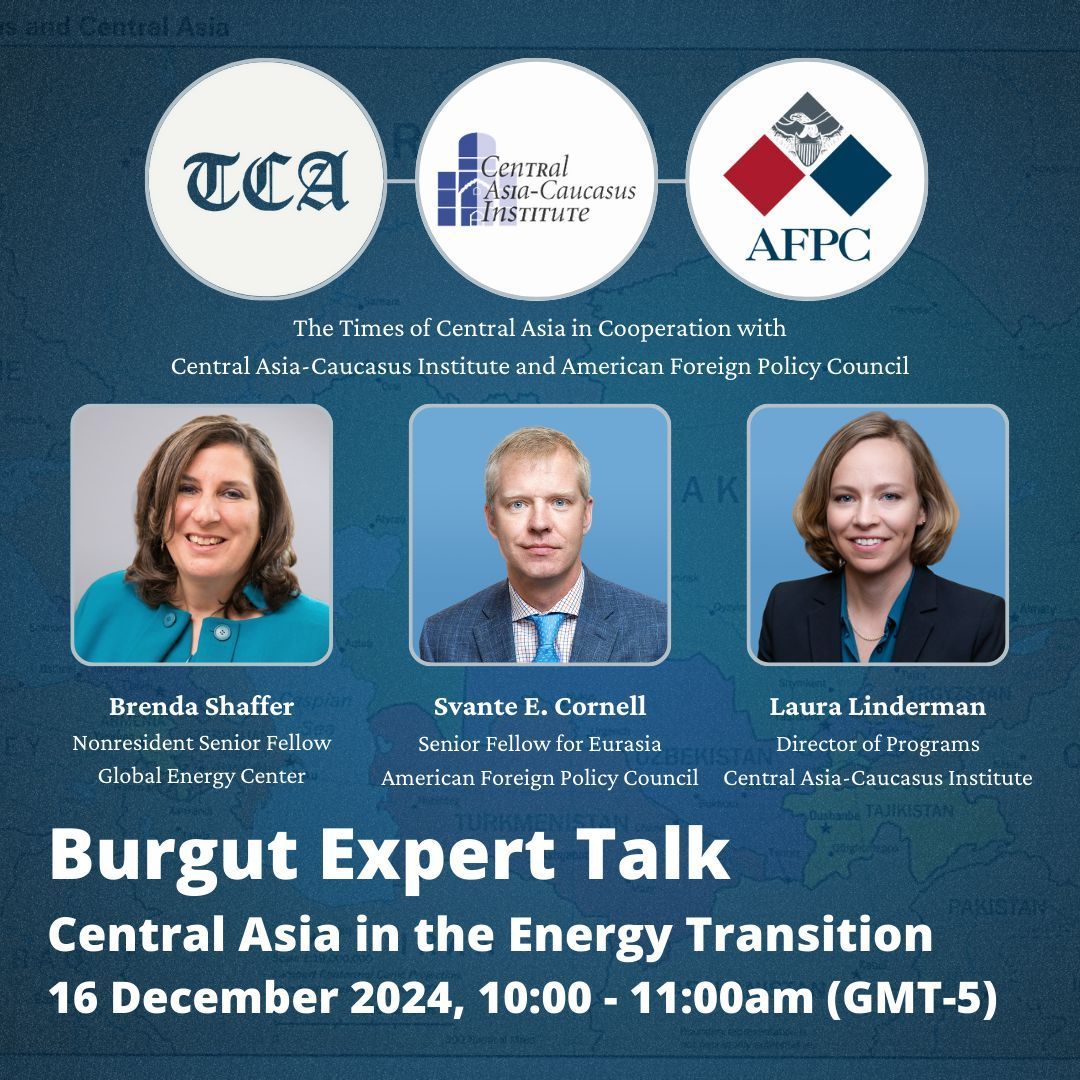
Challenging the notion of a true “energy transition,” Shaffer argued that despite substantial investment in renewable energy, fossil fuels remain dominant. Shaffer pointed out that traditional biomass burning continues to be a major energy source in developing countries, posing significant health risks. Highlighting the fact that renewables often rely on a baseload of fossil fuels, Shaffer noted that this makes complete reliance on renewables impractical, especially in regions with harsh winters, such as Central Asia.

Dr. Shaffer further emphasized that European policies, including the reluctance to finance fossil fuel projects and the instability of U.S. LNG exports, serve to hinder diversification efforts. Stressing the need for affordable and accessible energy solutions – particularly for developing countries – to address the issue of indoor pollution caused by traditional biomass burning, she argued that natural gas can serve as a bridge fuel, offering a cleaner alternative to traditional methods.

Dr. Cornell focused on the rising importance of Central Asia as a major uranium producer, supplying a crucial element for nuclear energy, which is gaining renewed interest as a low-carbon energy source. Cornell highlighted the dependence of the EU on uranium imports and the potential for Central Asia, particularly Kazakhstan, to play a pivotal role in supplying this demand.

Outlining the geopolitical dynamics surrounding uranium, Cornell noted the involvement of France, Russia, and China in Central Asia’s uranium sector, emphasizing the importance of Central Asian states maintaining a balance in their foreign relations and partnering with various countries to ensure their independence in the uranium market.

Drawing parallels to the oil and gas diplomacy of the 1990s – when Central Asian countries strategically engaged with multiple actors to safeguard their interests – Cornell advocated for the development of a robust domestic nuclear industry in Central Asia, enabling the region to move beyond raw material production and gain greater control over the value chain. Cornell also stressed the need for Western powers to actively engage in the region’s nuclear sector, supporting the development of infrastructure and expertise.

The discussion also addressed the internal energy needs of Central Asia, recognizing the competing demands of domestic consumption and export potential. Shaffer pointed out that Central Asia itself is a potential market for its gas resources, advocating for greater regional cooperation and the development of rational gas flows within the region. Shaffer also highlighted the importance of transportation infrastructure and the need for diversification of export routes for landlocked countries, such as those in Central Asia.

The experts addressed the concept of a “green energy corridor” from Central Asia to Europe, emphasizing the potential for virtual trading arrangements, where increased renewable energy production in Central Asia could free up natural gas for export. Cornell noted growing regional cooperation between Azerbaijan, Uzbekistan, and Kazakhstan, particularly in integrating their power grids, which could enhance the region’s energy resilience and foster greater independence.

In their concluding remarks, both experts highlighted the strategic importance of Central Asia in the evolving global energy landscape. Cornell pointed to the potential for reviving the long-discussed Trans-Caspian pipeline project, particularly in light of Russia’s reorientation towards Eastern markets. He also emphasized the strategic significance of the South Caucasus as a vital link between the Caspian Sea and Europe, advocating for greater Western engagement with Azerbaijan to facilitate energy transit.

Shaffer, meanwhile, stressed the critical role of Central Asia and the Caucasus as a buffer zone between major geopolitical blocs, underscoring the importance of maintaining stability and open trade relations with these countries, especially considering geopolitical uncertainties in neighboring regions. Shaffer concluded with a powerful message: “If you have no gas, you’re going to have dung,” highlighting the necessity of realistic and accessible energy solutions for a sustainable future.

The Burgut Expert Talk on “Central Asia in the Energy Transition” provided insights into the complex dynamics shaping the global energy landscape and the crucial role Central Asia plays in this evolving scenario. A full recording of the event can be viewed on YouTube, and further analysis is available on the Central Asia Caucuses Institute Substack.