• KGS/USD = 0.01144 0%
  • KZT/USD = 0.00196 -0%
  • TJS/USD = 0.10899 -0%
  • UZS/USD = 0.00008 -0%
  • TMT/USD = 0.28490 0%
  • KGS/USD = 0.01144 0%
  • KZT/USD = 0.00196 -0%
  • TJS/USD = 0.10899 -0%
  • UZS/USD = 0.00008 -0%
  • TMT/USD = 0.28490 0%
  • KGS/USD = 0.01144 0%
  • KZT/USD = 0.00196 -0%
  • TJS/USD = 0.10899 -0%
  • UZS/USD = 0.00008 -0%
  • TMT/USD = 0.28490 0%
  • KGS/USD = 0.01144 0%
  • KZT/USD = 0.00196 -0%
  • TJS/USD = 0.10899 -0%
  • UZS/USD = 0.00008 -0%
  • TMT/USD = 0.28490 0%
  • KGS/USD = 0.01144 0%
  • KZT/USD = 0.00196 -0%
  • TJS/USD = 0.10899 -0%
  • UZS/USD = 0.00008 -0%
  • TMT/USD = 0.28490 0%
  • KGS/USD = 0.01144 0%
  • KZT/USD = 0.00196 -0%
  • TJS/USD = 0.10899 -0%
  • UZS/USD = 0.00008 -0%
  • TMT/USD = 0.28490 0%
  • KGS/USD = 0.01144 0%
  • KZT/USD = 0.00196 -0%
  • TJS/USD = 0.10899 -0%
  • UZS/USD = 0.00008 -0%
  • TMT/USD = 0.28490 0%
  • KGS/USD = 0.01144 0%
  • KZT/USD = 0.00196 -0%
  • TJS/USD = 0.10899 -0%
  • UZS/USD = 0.00008 -0%
  • TMT/USD = 0.28490 0%
08 December 2025

More Than 70,000 Kyrgyz Citizens Violate Russian Migration Laws

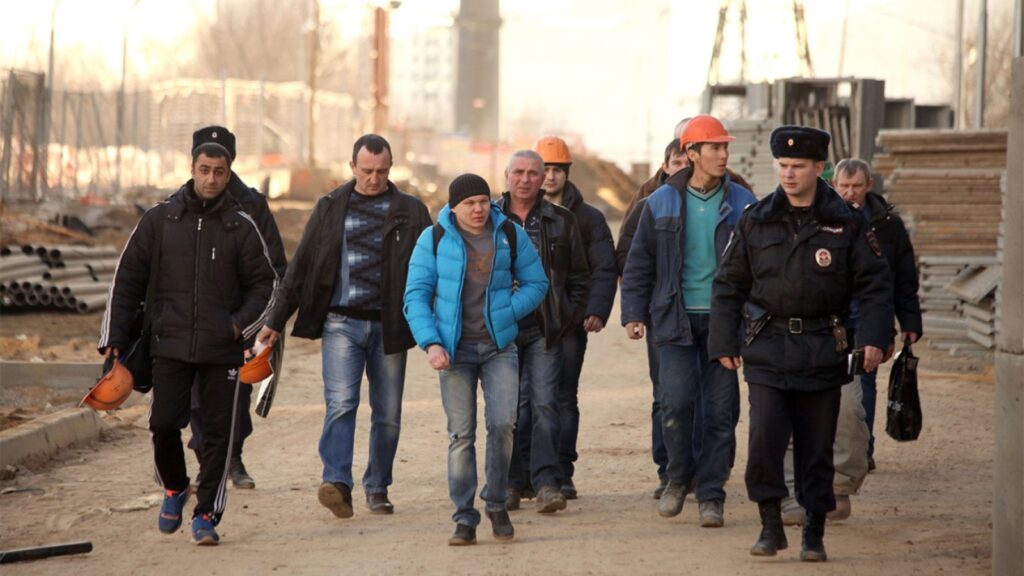
The Ministry of Foreign Affairs of Kyrgyzstan has reported that 71,949 Kyrgyz citizens working in Russia are at risk due to potential violations of Russian migration laws.

According to the ministry, the individuals at risk are those for whom the Russian Ministry of Internal Affairs’ database lacks information regarding the conclusion of labor or civil law contracts, fingerprint registration, medical examinations, or migration registration.

“For citizens with valid documents confirming legal residence in the Russian Federation, it is necessary to visit the territorial migration departments of the Russian Ministry of Internal Affairs and provide these documents to be included in the database and removed from the risk zone,” the Kyrgyz Foreign Ministry explained.

To assist its citizens, the Ministry of Labor, Social Security, and Migration of Kyrgyzstan will soon publish a list of migrants at risk on the portal migrant.kg. Citizens can use this portal to check their status and take steps to resolve any legal issues in advance.

From February 5, 2025, a new Russian law, “On the Legal Status of Foreign Citizens in the Russian Federation,” will come into force. Under this law, foreign citizens without legal grounds for staying in Russia will be added to the register of controlled persons and face expulsion.

Official data indicates that around 500,000 Kyrgyz migrants currently reside in Russia, though unofficial estimates suggest the figure exceeds one million.

Redefining Work and Innovation: The Impact of AI and Its Rise in Kazakhstan

Will artificial intelligence be able to replace humans? What professions will disappear in the future, and will mankind face an “aggressive” neural network? Aigerim Abdenbayeva, head of educational programs at the Institute of Smart Systems and Artificial Intelligence (ISSAI) at Nazarbayev University (NU), answers these questions and discusses how AI is developing in Kazakhstan.

TCA: Most people have heard the term “artificial intelligence” in one way or another, but only a small proportion know about the practical possibilities of AI. In your view, what is artificial intelligence?

Artificial intelligence can be characterized as the ability of machines to perform tasks that traditionally require human intelligence. This includes recognizing images, understanding language, making decisions, and solving complex problems. In everyday life, we encounter AI in many different forms, from voice assistants like Siri and Google Assistant to recommendations on streaming platforms like Netflix, which suggests movies based on your preferences.

The term “artificial intelligence” was coined in 1956 by American scientist John McCarthy, who is considered one of the field’s founders. Although the concept of AI was proposed more than half a century ago, its modern form only began to develop in the 1980s, when so-called expert systems emerged. These systems used rules and knowledge bases to solve specific problems, such as disease diagnosis or financial forecasting. Since then, AI has gone through several stages of development.

The 2010s saw a significant breakthrough with the emergence of deep learning and big data technologies. Based on neural networks, deep learning has allowed computers to process and analyze vast amounts of information, dramatically improving their ability to recognize patterns and understand speech. This progress has made AI more accessible to a broader audience and has become an integral part of our daily lives. Several trends in the field of artificial intelligence can be distinguished:

“Narrow AI”  is a specialized system for specific tasks. For example, algorithms are used to recognize faces or diagnose diseases. They outperform humans in a narrow domain, but cannot perform functions outside their specialization.

“General AI” involves creating machines that can perform any intellectual task at a level comparable to humans. General AI remains a theoretical concept and has not been achieved in reality.

“Generative AI” is a field that deals with creating new data based on existing data. Examples include generating text, images, and music. Algorithms such as GPT (Generative Pre-trained Transformer) can create text that looks like a human wrote it, and they are already being used extensively in various applications. Generative AI, in particular, has become popular due to its ability to make human life more manageable. For example, platforms like ChatGPT can help with writing articles, creating content for social media, and automating routine tasks, saving users a lot of time and effort.

Other AI applications have already become part of our daily lives. For example, in medicine, AI is used to analyze medical images, which helps doctors in diagnosis and treatment selection. In finance, AI helps analyze market data and predict trends, allowing investors to make more informed decisions. In manufacturing, AI is used to optimize processes, manage supply chains, and improve efficiency.

However, despite all the benefits of artificial intelligence, there are specific challenges and risks. One of the critical issues is the ethics of using AI. How can we ensure that the technology is used in the public interest and not to the detriment of society? How can we avoid biases in algorithms that may lead to discrimination against certain groups of people? These questions require attention and discussion from scientists, policymakers, and the public.

In addition, with the development of AI, the future of employment is also an issue. Automating processes could lead to job losses in some industries, which is a concern for many people. It is essential to realize that while AI can replace some routine tasks, it is also creating new opportunities and occupations that require skills in working with the latest technologies. Thus, artificial intelligence is not just a buzzword, but a powerful tool that is changing our society and daily life. It offers many opportunities to improve the quality of life, increase efficiency, and solve complex problems, but it also requires a responsible approach to its use and development. It is important to continue to research and develop this field, taking into account all aspects and consequences that may arise due to the introduction of AI into various spheres of our lives.

Aigerim Abdenbayeva; image: iitu.edu.kz


TCA: Kazakhstan has adopted the Concept for the Development of Artificial Intelligence. Tell us about the development and prospects of AI in the country.

For the development of artificial intelligence in Kazakhstan, three key aspects should be taken into account:

Funding; the successful implementation of AI requires sufficient funds from both the government and private companies.

Personnel training; a critical stage is the education of specialists and the professional development of existing ones.

Creation of the necessary infrastructure; only a few research centers in Kazakhstan can effectively develop and apply AI. To become a significant player in the region, we need to open more centers where people can download applications and conduct scientific research. For example, one of the most promising projects Nazarbayev University (NU) supported was creating a chatbot in Kazakh. This project has already succeeded and had a significant start in Kazakhstan. AI is being actively implemented in various sectors of the Kazakh economy, including the oil and gas industry, to automate industrial processes.

As I mentioned earlier, funding is an essential factor for the development of AI. Kazakh hubs, such as MOST, Astana Hub, and Terricon Valley invest heavily in startups. They introduce technologies and teach how to run startups, helping them understand what AI is and how to use it. This is especially important for those just starting their journey in this field, including schoolchildren, students, and anyone interested in development.

Building the necessary infrastructure requires the help of large private corporations and the government. We need large data centers to collect and process big data. There is already such a structure in Russia, which develops and teaches how to develop such infrastructures, but the most important thing is the training of specialists. To be competitive, we need high-quality specialists, and for this purpose, it’s necessary to introduce a program for studying AI in universities, starting from the school curriculum.

However, to achieve results, government funding, development, private sector participation, and international cooperation are needed. Developing on your own is one thing, but when you have the opportunity to cooperate with serious partners, it gives a powerful impetus for development.

TCA: Will AI be able to replace humans? What professions could disappear?

When we need information, we can easily find it on Google or other search engines. However, we still turn to professionals for expert opinions based on unique experiences.

Nowadays, replacing humans with artificial intelligence is not so easy. Even if AI is able to create great paintings, it cannot incorporate the soul, time, effort, and love that make these works unique. Humans will always have a place in creativity.

However, artificial intelligence can be helpful for tasks that do not require human thought or intervention. For example, it can write text that won’t be soulful, but will get the job done. Tasks are already being delegated to AI. People will choose whether they’re more interested in doing things manually or using artificial intelligence. AI will be in demand in areas with big data, such as information handling and big computing.

TCA: What are your predictions for the development of AI?

This is a fascinating topic, because we can fantasize and make predictions about the distant future regarding the development of artificial intelligence. AI can dramatically change not only our lives, but also society.

There are a few possible scenarios:

A technological singularity occurs when artificial intelligence reaches a level of development at which it can create and improve itself. This may lead to machines replacing most human occupations and becoming full participants in society’s development. Many people fear this scenario, and it is a genuine fear.

Then there is using AI to solve global problems – AI can be a powerful tool to overcome serious challenges such as climate change, food shortages, and medical epidemics. It will help us tackle these problems more calmly.

There are fantastic scenarios – Science fiction is already developing ideas about embedding chips and other devices in the human body to help improve human abilities. The possibilities of transmitting thoughts and information through computers are also being discussed, which could create a new type of person. All of this is possible if the technology is used correctly.

Finally, we need to think about creating institutions to regulate AI – international standards and institutions will be created to regulate the ethical use of artificial intelligence and be responsible for its safety. All states will be obliged to follow these standards.

Dredging Project in Kazakhstan’s Kuryk Port Completed

Kazakhstan Temir Zholy, the country’s national railway company, has announced the early completion of dredging works at the Caspian Sea port of Kuryk. The project was completed by its general contractor, Jan De Nul Kazakhstan LLP, in just four months.

The dredging operation involved removing over 990,000 cubic meters of soil from the port’s seabed using the Vesalius, the most powerful dredger in the Caspian Sea.

As a result, the water depth in the port’s operational area and approach channel has been increased to 7–8 meters. This enhancement allows for an increased draft of vessels entering the port, enabling them to achieve full loading capacity.

The project significantly boosts the port’s terminal capacity, further strengthening its role as a vital transit hub on the Trans-Caspian International Transport Route (TITR), also known as the Middle Corridor. This strategic route connects China and Europe via Central Asia and the Caucasus.

The Kuryk port currently handles up to 6 million tons of cargo annually, including 4.1 million tons through its railway terminal and 1.9 million tons via its automobile terminal.

Kazakh AI Startup Enters U.S. and Japanese Transportation Markets

Astana-based startup Call2action.ai, a resident of the Astana Hub International Technology Park, is making strides in the US market. Currently, over 40 transportation companies in the United States have expressed an interest in the startup’s product. Two companies have already become commercial clients, and three others are engaged in pilot projects.

Call2action.ai has developed the world’s first SaaS solution based on Generative Artificial Intelligence for automating hiring in the transportation and logistics sectors. This innovative platform streamlines the hiring process, making it more efficient and cost-effective.

Following the successful validation of its project hypotheses, Call2action.ai has launched an investment round and entered negotiations with venture capital funds and business angels, some of whom are already supporting the startup and planning investments.

“The American market is vastly different from the Kazakh market, but its potential for revolutionizing hiring processes is enormous,” said Ersultan Dzhusakinov, CEO and co-founder of Call2action.ai. “Participation in the Silicon Valley Residency Program, supported by Astana Hub and the Ministry of Digitalization, has allowed us to accelerate our progress in Silicon Valley. Within a few months, we’ve secured contracts with two companies, three pilot projects, and attracted interest from major Japanese corporations like Persol Group and Mitsui Group. We expect our product to reach a valuation of $1 billion in the coming years.”

The startup collaborates with US innovation hubs, including the Silkroad Innovation Hub, and actively participates in international trade shows such as TechCrunch Disrupt and CESV 2024. Additionally, Call2action.ai has been selected to join Mitsui Group’s accelerator program, which begins in 2025.

Call2action.ai is among 22 Central Asian startups that participated in accelerator programs in Silicon Valley under the AlchemistX and Silicon Valley Residency Program initiatives. These programs were organized by Astana Hub and Silkroad Innovation Hub, with support from the World Bank and FPIP projects.

Kazakhstani startups are becoming competitive on global markets. For example:

•  ZebraEye project, led by Yana Ten, specializes in diagnosing ophthalmic diseases using artificial intelligence and attracted investor attention at Web Summit Qatar 2024.

ClickLog, which develops freight optimization software, has established companies in Estonia and Poland to target European markets.

Dereknet plans to expand into the Middle East and Europe, including Kuwait, Qatar, Norway, the UK, and the US.

Uzbekistan to Create ‘Schools of Courage’ for Pre-Conscription Training

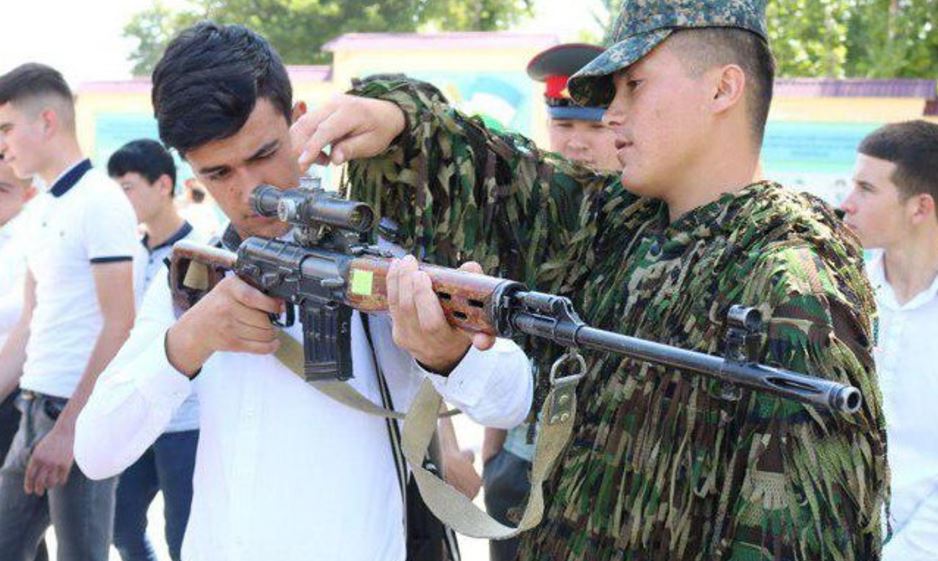
Uzbekistan’s President Shavkat Mirziyoyev signed a decree on November 15 to enhance the system of initial pre-conscription training for young citizens. As a result, one “school of courage” will be established at a school in each district and city of the country.

The primary objective of these schools is to instill patriotism, physical fitness, and spiritual growth in the younger generation. Students will receive advanced instruction in mathematics, history, physical education, foreign languages, physics, and initial pre-conscription training (IPT). Selection for the “schools of courage” will begin from the fifth grade.

These schools will feature an expanded curriculum, including robotics, medical training, legal literacy, and national sports. Practical training will be conducted biannually at military ranges and quarterly at military units. Higher military and paramilitary educational institutions will oversee the schools, providing educational and methodological support.

In other schools across the country, pre-conscription training will be taught for two hours weekly, with an additional hour for grades 10–11. Starting June 1, 2025, the position of deputy director for patriotic education will be discontinued, with its responsibilities transferred to the Ministry of Defense. In its place, a new position—head of IPT—will focus on military and patriotic training for schoolchildren.

This initiative is part of ongoing efforts to enhance patriotic education, as discussed in a recent presidential meeting. It is envisioned that the “schools of courage” will play a vital role in the national education system, fostering loyal and well-rounded citizens.

Ninety One: Revolutionizing Kazakh Music and Fighting Stereotypes

Ninety One revolutionized Kazakhstani pop music by pioneering the Q-pop genre. With their vivid images, deep lyrics and courage in expressing themselves openly. They broke gender stereotypes and inspired a new generation of artists.

How it started

Ninety One were founded in 2014, based on the “K-Top Idols” project, which sought to create Kazakhstan’s first idol group. Initially, the jury selected two participants: A.Z. (Azamat Zenkaev) and Zaq (Dulat Mukhamedkaliev). Later, after additional auditions, they were joined by Bala (Daniyar Kulumshin) and Alem (Batyrkhan Malikov). The fifth member was Ace (Azamat Ashmakyn). The producer of the group, Yerbolat Bedelkhan, sought not only to create a new musical team, but to lay the foundation for the development of a new genre – Q-pop (Qazaq pop) – to unite Kazakh culture with modern pop music and bring it to an international audience.

A challenge to society and initial successes

Released in 2015, Ninety One’s debut music video for the song “Ayyptama” (Don’t blame me), was a breakthrough. The daring style of the members – bright clothes, makeup and skirts – caused heated debates in still conservative Kazakhstani society. Many criticized the group for being “unconventional,” but young people quickly accepted the new format, seeing in it the freedom of self-expression.

Despite pressure, canceled concerts and criticism, Ninety One continued to make steady progress. Their work has been recognized both at home and abroad. The hits “Qalay Qaraisyn” (How do you look at it?), “Su Asty” (Underwater) and “Taboo” (with Irina Kairatovna) gained popularity, and the group’s albums became a cultural phenomenon.

In addition to music, the band found time to test themselves on the silver screen. On August 24, 2017, the film, Ninety One, dedicated to the history of the group and their path to success, was released. The film was directed by Askar Uzabaev, and the producers were Asel Sadvakasova and Erbolat Bedelhan. The picture entered the top three leaders at the Kazakhstan box office, reaping 32,672,000 tenge on the first weekend of its release alone.

Contributing to the fight against gender stereotypes

Ninety One broke stereotypes about how men should look and behave in Kazakhstani society. They showed that a colorful apparel, experimentation with fashion and openness to new ideas are not a weakness, but a strength.

The group inspired young people to boldly express themselves, overcome the fear of judgment, and break with outdated stereotypes. They became an inspiration for new artists, playing a key role in the development of the Q-pop industry.

Ninety One’s fan base grew so large that they gave themselves the nickname “eagles” after the symbol which was the band’s signature gesture: crossed palms representing a bird, the symbol of the national flag of Kazakhstan.

Today, Ninety One remain one of the most successful musical groups in Kazakhstan, actively touring, releasing new albums and continuing to attract the attention of international audiences. In 2023, the group released the album GAP, which became a huge hit. Among the most popular tracks is “АPEREM AI” (I’ll get the moon), which has garnered almost a million listens on Spotify. Another song on the album, “Ottegi” (Oxygen), also gained an impressive 515,000 listens.

Ninety One’s work reached beyond music to symbolize a movement for freedom of expression and cultural diversity. Ninety One remain a symbol of transformation, proving that art can change the world.