• KGS/USD = 0.01144 0%
  • KZT/USD = 0.00209 0%
  • TJS/USD = 0.10523 0%
  • UZS/USD = 0.00008 0%
  • TMT/USD = 0.28530 0%
  • KGS/USD = 0.01144 0%
  • KZT/USD = 0.00209 0%
  • TJS/USD = 0.10523 0%
  • UZS/USD = 0.00008 0%
  • TMT/USD = 0.28530 0%
  • KGS/USD = 0.01144 0%
  • KZT/USD = 0.00209 0%
  • TJS/USD = 0.10523 0%
  • UZS/USD = 0.00008 0%
  • TMT/USD = 0.28530 0%
  • KGS/USD = 0.01144 0%
  • KZT/USD = 0.00209 0%
  • TJS/USD = 0.10523 0%
  • UZS/USD = 0.00008 0%
  • TMT/USD = 0.28530 0%
  • KGS/USD = 0.01144 0%
  • KZT/USD = 0.00209 0%
  • TJS/USD = 0.10523 0%
  • UZS/USD = 0.00008 0%
  • TMT/USD = 0.28530 0%
  • KGS/USD = 0.01144 0%
  • KZT/USD = 0.00209 0%
  • TJS/USD = 0.10523 0%
  • UZS/USD = 0.00008 0%
  • TMT/USD = 0.28530 0%
  • KGS/USD = 0.01144 0%
  • KZT/USD = 0.00209 0%
  • TJS/USD = 0.10523 0%
  • UZS/USD = 0.00008 0%
  • TMT/USD = 0.28530 0%
  • KGS/USD = 0.01144 0%
  • KZT/USD = 0.00209 0%
  • TJS/USD = 0.10523 0%
  • UZS/USD = 0.00008 0%
  • TMT/USD = 0.28530 0%

Climate Change – A Catalyst for Poverty and Environmental Degradation in Central Asia

Climate change encapsulates the gradual yet profound shifts in temperature and weather patterns over extended periods. While these changes can arise naturally from various phenomena — such as fluctuations in solar energy or significant volcanic eruptions — the advent of the industrial age in the 1800s marked a pivotal point where human influence became the predominant force driving climate change. This influence stems chiefly from burning fossil fuels, including coal, oil, and natural gas. The combustion of these fuels releases vast quantities of greenhouse gases into the atmosphere, creating a thick layer that envelops the Earth and traps heat from the sun, resulting in a steady rise in global temperatures.

Carbon dioxide (CO2) and methane (CH4) are the most significant greenhouse gases contributing to this crisis. Carbon dioxide predominantly emerges from driving gasoline-powered vehicles and burning coal for heating. Additionally, the widespread practices of deforestation and land conversion continue to elevate carbon dioxide levels. Methane, meanwhile, is primarily produced through agricultural practices and the extraction processes associated with the oil and gas industries. The sectors that bear the heaviest burden in terms of greenhouse gas emissions include energy production, industrial processes, transportation, building operations, agriculture, and land use changes.

The ramifications of this unfolding climate crisis are dire, especially for the world’s most vulnerable populations, particularly those residing in poverty. According to alarming insights from the World Bank, the 74 countries with the lowest income levels contribute a mere one-tenth of global greenhouse gas emissions. Yet, ironically, these nations are poised to endure the harshest repercussions of climate change. Over the past ten years, they have experienced an astounding surge in natural disasters, facing approximately eight times the frequency of such events compared to the 1980s.

The effects on the lives of vulnerable populations are profound and far-reaching. Many face severe health challenges, including the prevalence of illnesses exacerbated by inadequate healthcare access. Erratic water supply creates a critical situation, often resulting in polluted drinking water that can lead to waterborne diseases. Additionally, the standard of education for these communities tends to be alarmingly poor, limiting future opportunities for young individuals. Many are forced to relocate as refugees, fleeing conflict and instability, which further complicates their lives. Moreover, those who find employment often encounter hazardous working conditions that put their safety and well-being at significant risk.

Climate change presents profound security challenges for Central Asia, a region grappling with the dual threats of environmental shifts and social vulnerabilities. The interplay of climate change with existing fragility intensifies the risks to peace, stability, and security across the globe. This convergence will exacerbate human insecurity and escalate socio-economic and political instability. As a result of these changing climatic conditions, critical resources such as water, food, and energy face increasing threats. Countries already characterized by vulnerability — those grappling with conflict or instability — are among the most likely to experience detrimental effects. For instance, reports indicate severe drought conditions have led to a 30-40% decrease in agricultural production in some Central Asian regions. Such declines directly and severely affect water and food security, further hindering socio-economic development.

In areas of Uzbekistan, the impact of climate change is particularly acute, posing significant challenges to agricultural output and raising concerns about the sustainability of livelihoods that depend heavily on farming. As the climate continues to evolve, it is crucial to address these interconnected issues to mitigate the risks this vulnerable region faces. For example, the desertification of the Aral Sea threatens the livelihoods and food security of socially vulnerable communities, accelerating land degradation and the salinity of agricultural lands in the region. These risks are triggering major regional food crises, exacerbating massive ecological disruption and socio-economic and political complexities. Increasing drought and dust storms due to unabated land degradation and the rapid melting of glaciers may impact water security, especially in the Ferghana Valley. The recent heatwaves and devastating wildfires have highlighted the emerging vulnerabilities faced by communities already struggling and lacking resilience. As climate-related challenges deepen existing poverty levels, there is a growing risk that these socio-economic strains could lead to social unrest and exacerbate insecurity, particularly in nations grappling with fragility and instability.
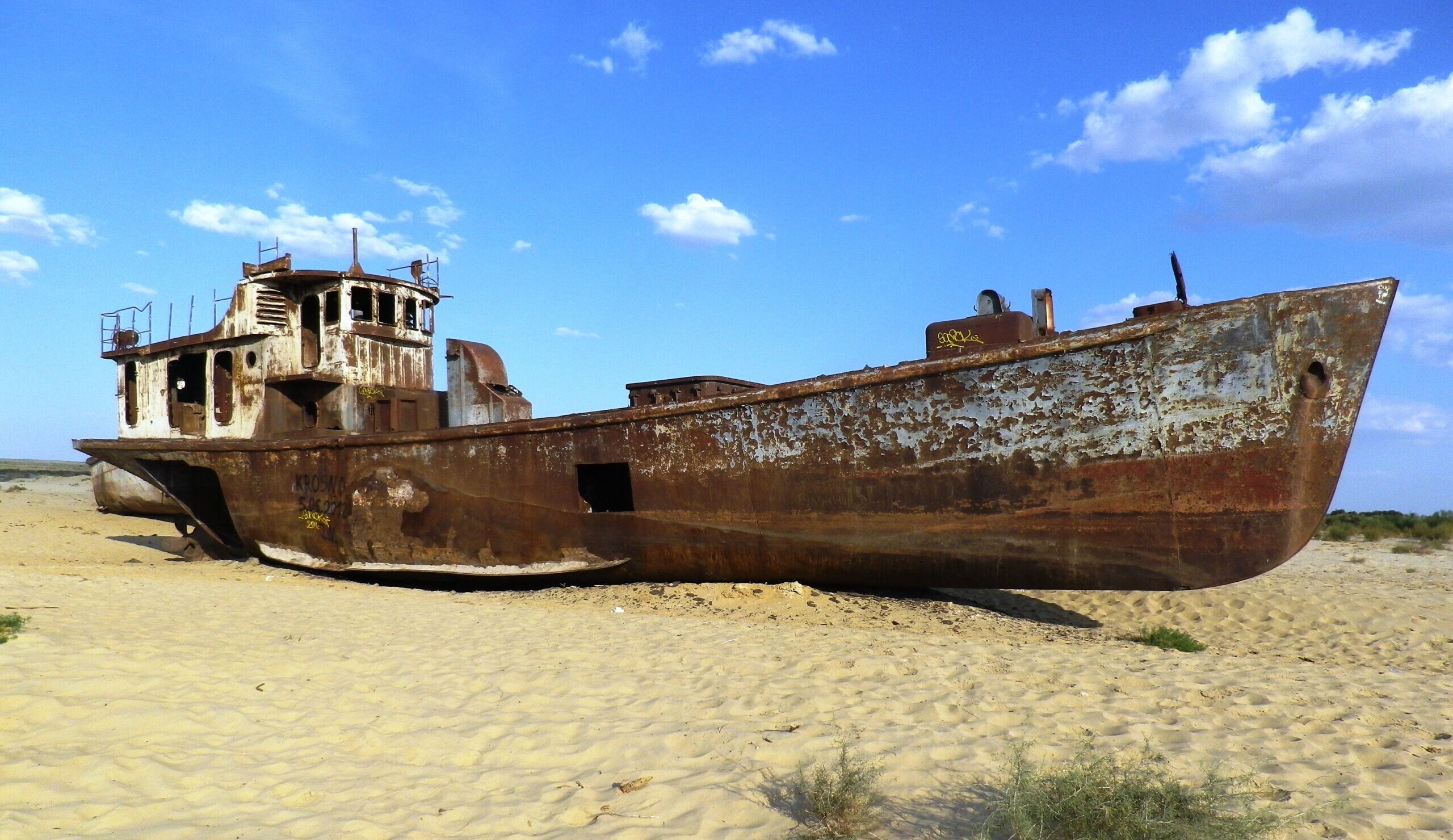
The Aral Sea has lost 80% of its volume in the last 40 years; image: TCA, Stephen M. Bland

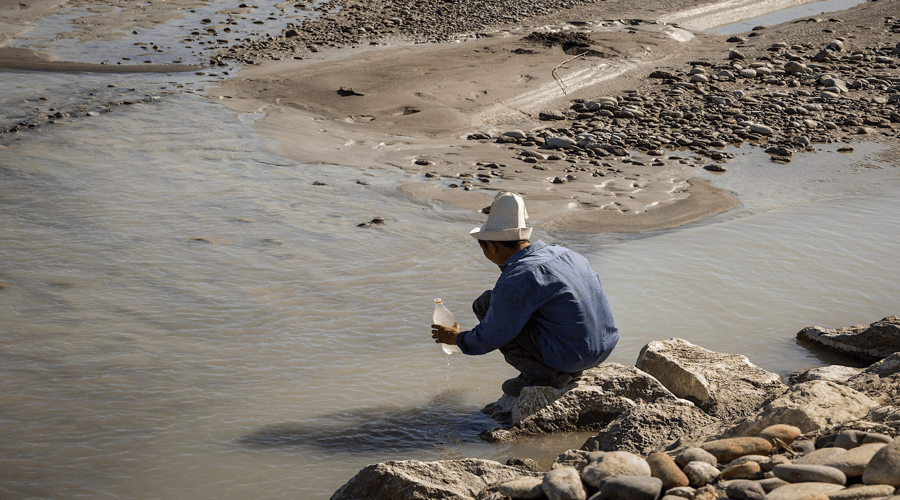
Likewise, Central Asia’s struggle for access to clean and treated water is a pressing issue. Take Kyrgyzstan, for instance, where the River Soh in the village of Aktorpak serves as the sole source of drinking water for its residents. This reliance on a single water source underscores the vulnerability of rural communities. Individuals living in these areas often encounter severe challenges related to water supply, facing not only contamination but also significant accessibility problems. Consequently, waterborne illnesses have become a common plight, affecting the health and well-being of many. Alarmingly, over 75% of citizens in rural regions find themselves in dire need of access to treated water, highlighting the urgent need for improved water infrastructure and sanitation services.

Ethnic and geopolitical tensions surrounding resource use and access — particularly shared transboundary rivers and ecosystems — will likely escalate soon. As competition for dwindling natural resources intensifies, we may witness a surge in job losses, increased socio-economic instability, and a fragmentation of social cohesion within communities. Addressing these interconnected challenges necessitates a multifaceted approach focused on ensuring water, food, and energy security, especially in fragile and crisis-affected regions.

It is crucial to accurately map the hotspots of water, agricultural, and energy systems to achieve sustainable development while assessing climate change’s social and economic repercussions. This strategic planning must include comprehensive budgeting for the water, agriculture, energy, and forestry sectors to avert future climate displacement scenarios. In the Ferghana Valley, for instance, the United Nations Development Programme (UNDP) collaborates closely with residents and government entities to foster cooperation and enhance climate resilience across the border areas of the Kyrgyz Republic, Tajikistan, and Uzbekistan. These efforts aim to promote peace and bolster social cohesion amidst the rising tide of social vulnerability and health risks.

As we gaze toward the horizon of 2050, the future of Central Asia looms with a chilling uncertainty, sharply etched by the unyielding march of climate change. Ibratjon Karimov, the Deputy General Director of Uzhydromet, has warned that by the mid-century, a staggering five million individuals across Central Asian nations may be categorized as climate migrants. Forced to abandon their ancestral homes, these people will likely seek refuge within their national borders, driven away by increasingly inhospitable landscapes. This unprecedented wave of internal migration is not merely a matter of relocation; it heralds a profound crisis that threatens the very fabric of communities and livelihoods. Families, once rooted and thriving, face the ominous specter of instability and are pushed dangerously close to the brink of poverty.

The consequences of climate change have already begun to manifest, unveiling a pattern of extreme weather phenomena — devastating droughts that parch the earth, catastrophic floods that sweep away homes and lives, and erratic temperature swings that disrupt seasonal cycles. These events devastate local ecosystems and unravel the foundations of food security and economic sustainability, endangering the lives of those who rely on these vital resources. Whole communities that once thrived, characterized by their resilience and vibrant culture, may soon grapple with the stark realities of an increasingly hostile environment. They will be forced to adapt to conditions that threaten their existence, scrambling for ways to survive in an increasingly unforgiving world. In this pivotal moment, the situation’s urgency has never been more acute. As the stakes elevate in the relentless fight against climate change, the call for collaborative efforts and innovative, sustainable solutions resonates louder than ever. We must unite in our commitment to protect the future of this vulnerable region and its resilient inhabitants. The road ahead is laden with challenges, but it also offers the opportunity for collective determination to carve out a more hopeful and sustainable tomorrow.

Uncategorized

How Nauryz Became a National Celebration in Kazakhstan: A History in Archival Photographs

Spring solstice as an astronomical phenomenon was noticed by man in ancient times. It became associated with the rebirth of nature, the arrival of a new cycle. This cosmic phenomenon was especially honored in the cults of Indo-European tribes, ancient Slavs, and Celtic tribes. The holiday has taken its rightful place in the cultures of Central Asia – since ancient times it has been celebrated by Iranians, Afghans, Tajiks, Azerbaijanis, Uzbeks, Uighurs, Kyrgyz, and Kazakhs. It is worth noting that even Muslims in the region recognize the significance of the ancient holiday.

Restoration of traditions

With the advent of Soviet power, Nauryz was recognized as a relic of tribal rituals and banned. According to official sources, the ban was in effect from 1926 to 1987.

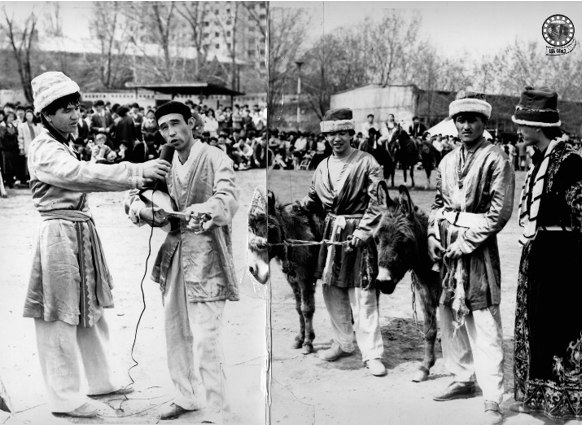
In 1987, in the territory of the Kazakh Soviet Socialist Republic, which was part of the USSR, the holiday was resumed, albeit informally. This is evidenced by photos of springtime Almaty (then called Alma-Ata, the capital of the Union Republic).

The first celebration of Nauryz in Alma-Ata. Students of the Alma-Ata Zooveterinary Institute – participants of the theatrical performance. Alma-Ata 1987

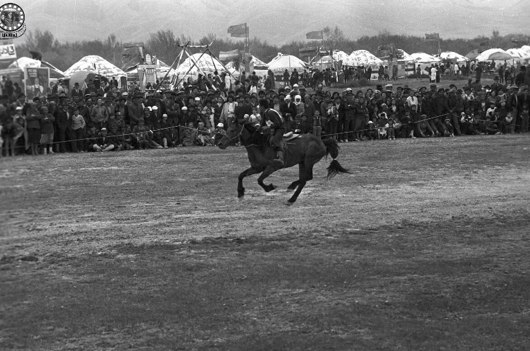
Horse racing at the Nauryz festival in the village of Narynkol. Alma-Ata region, 1988

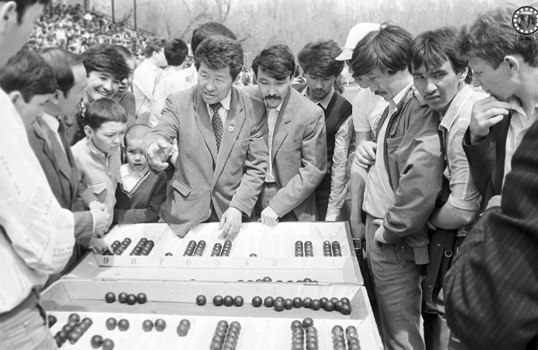
Participants and guests of the Nauryz holiday playing the Kazakh national game “Togyzkumalak”. Alma-Ata 1988

A participant in an archery competition during the Nauryz holiday. Alma-Ata 1988

Participants of the republican aitys dedicated to the celebration of the national holiday, Nauryz. Alma-Ata, 1988

At the opening of the national holiday Nauryz. Alma-Ata, 1988

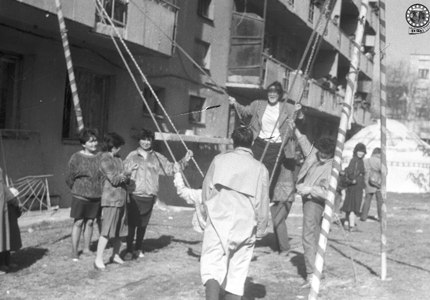
“Altybakan” – national swing, installed by students of the Alma-Ata Pedagogical Institute of Foreign Languages for the Nauryz holiday. Alma-Ata, 1989

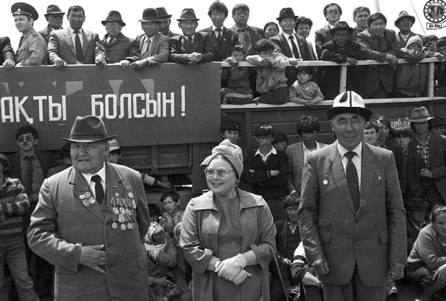
People’s Artist of the USSR Roza Baglanova (center foreground) with war veterans during the celebration of Nauryz. Alma-Ata region, Kegen district, 1989

Years of Independence

In 1991 Nauryz in Kazakhstan gained official recognition. By the decree of the President of the Republic of Kazakhstan, the day of the vernal equinox – March 22 – was declared the day of the national spring holiday “Nauryz meiramy”. Ten years later – in 2001 – Nauryz became a public holiday and was included in the list of national holidays. Since 2009, three days have been set aside for its celebration in Kazakhstan, which were declared non-working days. This status has been maintained to this day.

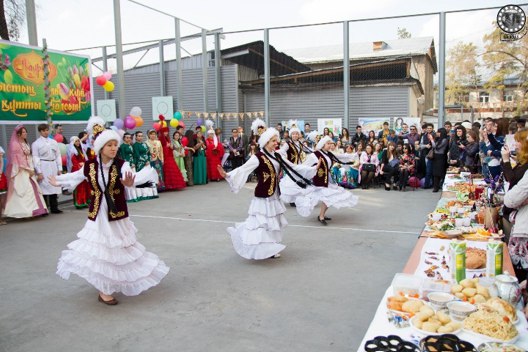
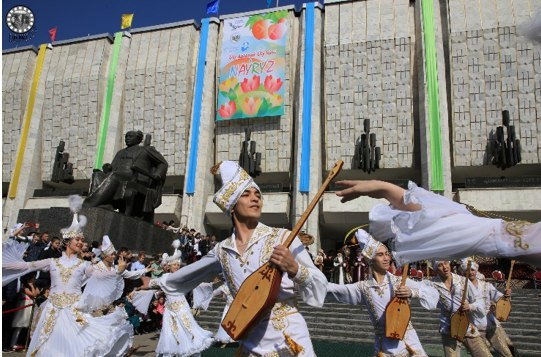
Students performing national dances during the celebration of Nauryz at the Almaty branch of the St. Petersburg Humanitarian University of Trade Unions. Almaty, 2014

Theatrical performance during the celebration of Nauryz. Almaty, 2018

Uncategorized

Opinion: In Central Asia, the EU Defies Its “Geopolitical Dwarf” Label

As the United States and Russia reportedly aim to create a new global security architecture, other major actors in the international arena are working to improve their positions in the redefined world order. Often underestimated in terms of its geopolitical influence, the European Union has actively focused its attention on the post-Soviet space, particularly the strategically important Central Asian region.

The EU, despite Russia’s and the United States’ attempts to undermine its role in the settlement of the Ukraine War and to portray it as a “geopolitical dwarf”, is seeking to increase its presence in global affairs. In Central Asia, the 27-nation bloc is often viewed as a key actor that Kazakhstan, Uzbekistan, Kyrgyzstan, Tajikistan, and Turkmenistan can rely on to balance China’s growing dominance, as well as their security and dependence on Moscow.

The EU’s desire to strengthen cooperation with Central Asia can be seen as Brussels’ attempt to reduce Russia’s influence in the region. Indeed, bogged down in Ukraine, Moscow is slowly but surely being pushed out of Central Asia – a region that has traditionally been within the Kremlin’s geopolitical orbit. As a result, China has managed to significantly increase its economic presence in all five Central Asian nations. The EU is now attempting to do the same.

The recent visit of the European Commissioner for International Partnerships Jozef Síkela to Central Asia, as well as the upcoming EU-Central Asia summit scheduled for April 3-4, 2025 in Samarkand, clearly indicates the intensifying geopolitical competition between the EU and China over the region. One of Síkela’s major goals was to expand the scope of the EU’s investment strategy, Global Gateway, in Central Asia.

The project, launched in 2021, is often viewed as the EU’s version of China’s Belt and Road Initiative (BRI). As part of its strategy to increase its economic presence in Central Asia, the European Union seems to have four priorities: the development of transport infrastructure (particularly the Trans-Caspian International Transport Route, also known as the Middle Corridor), cooperation in raw materials, digital connectivity, and the development of the water resources, energy, and climate sectors.

The problem for Brussels is that China, due to its proximity to Central Asia and the lack of bureaucratic procedures, is ahead of the EU in most, if not all of these areas. Beijing has had 12 years to strengthen economic ties with the region through the BRI. As a result, in 2024, China’s overall turnover with Central Asia reached $94.8 billion, nearly double the EU’s trade volume with the region in 2022, which stood at $47 billion.

Last year, the world’s second-largest economy replaced Russia as Kazakhstan’s biggest trade partner. In neighboring Uzbekistan, it remains the top trading partner, while in Tajikistan, over the past 18 years, China has become the major investor in the landlocked nation’s economy. The same applies to Tajikistan and China’s neighbor Kyrgyzstan.

The European Union, however, is now intensifying its efforts to position itself as a major foreign power operating in Central Asia. According to the EU Delegation to Uzbekistan, the upcoming summit in Samarkand will present a “key opportunity for the EU to demonstrate its geopolitical interest in intensifying bilateral engagement and enhance regional cooperation with Central Asia.”

For Brussels, critical minerals, along with natural gas and oil, play perhaps the most important role in its Central Asia strategy. The 27-nation bloc has already signed memoranda of understanding with Kazakhstan and Uzbekistan on raw materials, while it is also eyeing establishing closer energy ties with gas-rich Turkmenistan. The EU is aiming to help Ashgabat integrate into regional and global trade networks and to take part in the modernization of the nation’s infrastructure. Such an approach aligns perfectly with the EU’s 2019 New Strategy for Central Asia, which emphasizes the growing strategic importance of the region for the interests of the European Union.

In other words, the EU’s goals in Central Asia are not much different from U.S. President Donald Trump’s ambitions of gaining access to Ukraine’s natural resources. Unlike the American leader, however, the European Union is not in a position to issue ultimatums. Fully aware of that, the EU is seeking to increase its soft power in the region. Its plans to improve internet connections in remote rural areas in Kazakhstan, Uzbekistan, Kyrgyzstan, and Tajikistan perfectly illustrate Brussels’ strategy to strengthen influence in the region by winning the hearts and minds of the local population.

Moreover, given the fundamental transformation of USAID and the Trump administration’s reluctance to allocate billions of dollars for grant projects, the EU has the opportunity to seize the initiative and expand its presence in Central Asia by funding local non-governmental organizations and media. Euronews’ ambitions to develop media cooperation with Turkmenistan could be interpreted as one of the first steps in that direction.

Central Asian nations, on the other hand, see the EU as a counterbalance to the growing Chinese economic dominance in the region. For them, cooperation with the 27-nation bloc could be a chance to diversify their foreign trade and attract additional investments for the development of infrastructure and other key sectors of their economies.

Although policymakers in Beijing are undoubtedly aware that the EU, in the long-term, could become China’s major competitor in Central Asia, the People’s Republic does not seem to oppose Brussels’ plans to develop the Trans-Caspian Transport Corridor. The route – beginning in China and running through Kazakhstan, the Caspian Sea, Azerbaijan and Georgia, and on into Europe – effectively bypasses Russia, and reduces delivery times between Europe and China to 15 days. From a purely economic perspective, the Middle Corridor benefits China’s cooperation with Europe.

More importantly, Ukrainian officials claim that some goods from China will be transported to Europe through Ukraine via the Trans-Caspian Transport Corridor, suggesting that Russia may eventually stop playing the role of a transit country. As a result, the Kremlin may have a hard time preserving remnants of its influence in Central Asia, where the EU and China could soon start a geopolitical battle for dominance.

Cardiff University to Open New Campus in Kazakhstan

Cardiff University in Wales has announced plans to open a new campus in Astana, Kazakhstan’s capital, later this year. The move represents a major step in the university’s global expansion and underscores its commitment to providing world-class education in Central Asia.

According to Kazakhstan’s Ministry of Science and Higher Education, Cardiff University Kazakhstan will begin offering programs in STEM (Science, Technology, Engineering, and Mathematics) and Business in 2025, with undergraduate programs to follow in 2026​.

The Astana campus is being developed in partnership with the not-for-profit Public Foundation “Qualified Centre of Education” (QCEF).

To ensure broad access, the Kazakh government has pledged to provide up to 500 fully funded scholarships over the first three years of the campus’s operation. The initiative aims to make high-quality education accessible to talented students across Kazakhstan.

Once fully operational, the campus is expected to accommodate more than 2,500 students annually, contributing to the development of a skilled workforce and supporting economic growth in the region.

Cardiff University’s President and Vice-Chancellor, Professor Wendy Larner, said: “We are excited about the opportunities that the Cardiff University Kazakhstan campus will create. It is clear from our extensive discussions with the Kazakh government, investors, and other stakeholders that this initiative will be truly reciprocal and mutually beneficial.”

Artificial Glaciers Created in Kyrgyzstan for Sustainable Agriculture and Climate Change Adaptation

As the international community observed the first-ever World Day for Glaciers on March 21, a project led by the Food and Agriculture Organization of the United Nations (FAO) has demonstrated how artificial glaciers can help rural communities in Kyrgyzstan adapt to the effects of climate change.

As part of the FAO initiative, seven artificial glaciers were constructed in villages across the Batken region of southern Kyrgyzstan in late autumn 2024​.

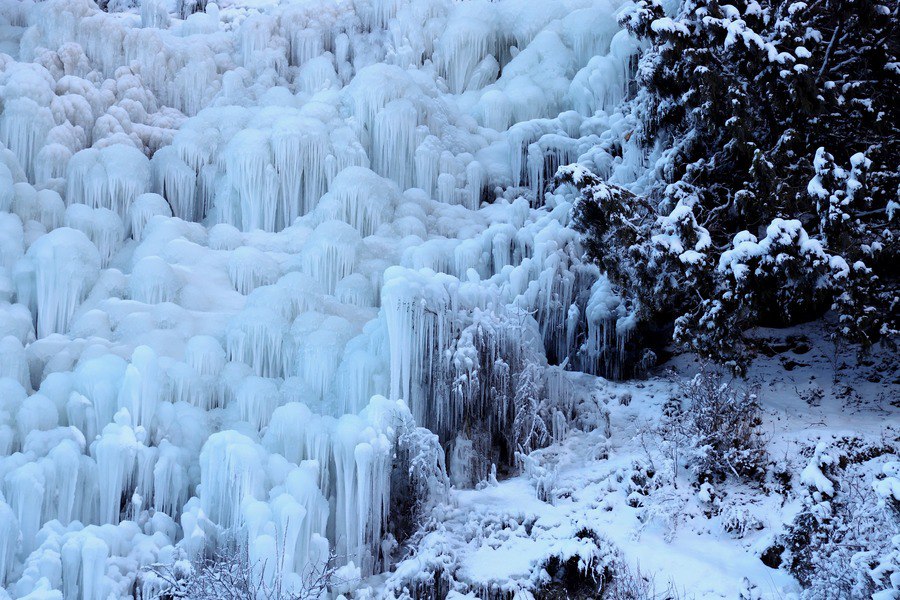
Over the winter, these glaciers accumulated more than 1.5 million cubic meters of ice. As spring temperatures rise, the ice begins to melt, providing essential irrigation water for downstream agricultural lands. According to FAO experts, more than 1,750 hectares of land, equivalent to 2,451 football fields, can be irrigated using furrow irrigation. If modern systems are introduced, this could expand to as much as 15,000 hectares.

These artificial glaciers are relatively simple structures designed to collect and freeze water in winter for agricultural use in summer, including for irrigation and livestock. On average, one glacier can support irrigation on 300 to 500 hectares.

“The key is to choose the right location,” said Matraim Jusupov, FAO expert on water-saving technologies. “We channel water from a mountain spring through a pipeline ending in a vertical pipe 10-15 meters high. The elevation difference generates pressure, which allows us to spray water into the air. At sub-zero temperatures, it freezes and gradually forms an ice cone.”

To build the glaciers, 6,956 meters of pipeline were laid. FAO supplied construction materials and technical guidance, while the work was carried out by local residents.

The FAO office in Kyrgyzstan has since developed universal guidelines for building artificial glaciers and distributed them across the country. Based on this experience, new glacier construction is already underway in other regions.

Global Glacier Melt

According to the World Meteorological Organization (WMO) and the World Glacier Monitoring Service (WGMS), five of the past six years have seen the fastest glacier retreat ever recorded. The years 2022–2024 marked the largest three-year loss of glacier mass in history​. Once regarded as “eternal ice,” many glaciers are now unlikely to survive the 21st century.

There are more than 275,000 glaciers worldwide, covering approximately 700,000 square kilometers. Along with ice sheets, glaciers store about 70% of the planet’s freshwater. Their depletion threatens water supplies for hundreds of millions of people.

In response to this growing crisis, the UN General Assembly declared 2025 the International Year of Glaciers’ Preservation and designated March 21 as the annual World Day for Glaciers. The initiative aims to raise awareness of the critical role glaciers play in the global climate and hydrological systems, and their significance to economic and ecological stability. UNESCO and WMO are leading the global coordination effort, supported by over 200 organizations and 35 countries.

Kyrgyzstan’s Initiatives

A Kyrgyz delegation led by Dinara Kemelova, the President’s Special Representative for the Five Years of Action for Mountain Regions Development, participated in World Day for Glaciers events at UNESCO headquarters in Paris on March 20-21​.

The meetings focused on the latest scientific research, knowledge exchange, technology transfer, and the socio-economic impacts of glacier retreat. Participants also discussed political strategies and financial mechanisms to address the climate crisis.

Kemelova highlighted Kyrgyzstan’s mountain-focused initiatives and upcoming projects under the Five Years of Action plan. She sounded the alarm over the rapid loss of glaciers in Kyrgyzstan and called for urgent action at both regional and global levels.

She also invited international participants to the upcoming Global Mountain Dialogue for Sustainable Development conference, set to take place in Bishkek on April 24-25.

Uncategorized

Uzbekistan Delivers Humanitarian Aid to Afghanistan for Navruz and Eid

Uzbekistan has delivered humanitarian aid to Afghanistan in advance of the Navruz holiday and the upcoming Eid al-Fitr. According to the Surkhandarya regional administration, approximately 200 tons of food products were sent to Afghanistan’s Balkh region.

The aid was formally handed over in the city of Hairaton, at the Afghan facility of the Astras company. The ceremony was attended by Ismatilla Irgashev, Special Representative of the President of Uzbekistan for Afghanistan, Ulugbek Qosimov, Governor of Surkhandarya region, and Afghan and Uzbek officials. Muhammad Yusuf Vafo, Governor of Balkh, also took part.

The shipment included flour, wheat, pasta, vegetable oil, sugar, instant noodles, red beans, and mung beans. Afghan officials expressed appreciation to the president and people of Uzbekistan for their continued support and extended their warm wishes for the upcoming Eid celebrations.

During the visit, delegations from both countries met in Mazar-i-Sharif to discuss future cooperation. Talks also covered Uzbekistan’s role in supporting the construction of the Imam Bukhari mausoleum in Afghanistan.

This aid comes amid ongoing economic challenges in Afghanistan following the Taliban’s return to power in 2021. As traditional donors such as the United States and the European Union reduce their presence, Afghanistan increasingly depends on regional support from neighbors like Uzbekistan.

Uzbekistan has previously extended medical assistance as well. At the end of last year, it was announced that Uzbek doctors would provide free medical examinations to residents of Balkh.