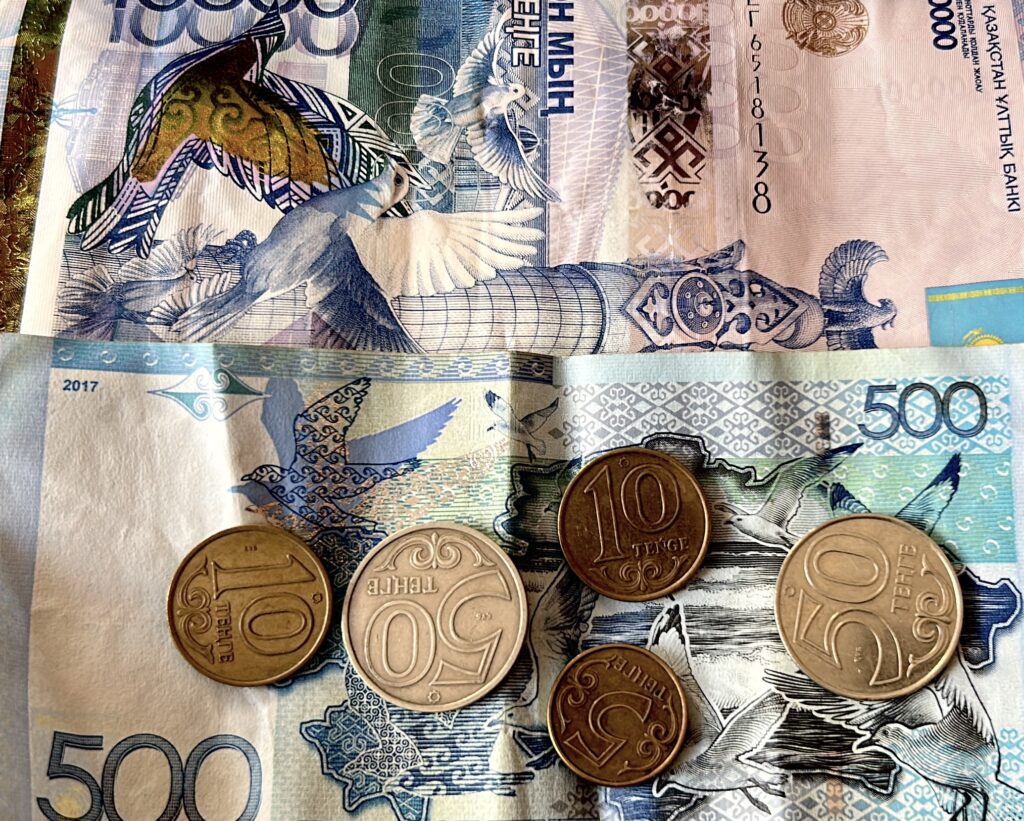
• KGS/USD = 0.01144 0%
  • KZT/USD = 0.00194 -0%
  • TJS/USD = 0.10896 -0%
  • UZS/USD = 0.00008 0%
  • TMT/USD = 0.28571 0.28%
  • KGS/USD = 0.01144 0%
  • KZT/USD = 0.00194 -0%
  • TJS/USD = 0.10896 -0%
  • UZS/USD = 0.00008 0%
  • TMT/USD = 0.28571 0.28%
  • KGS/USD = 0.01144 0%
  • KZT/USD = 0.00194 -0%
  • TJS/USD = 0.10896 -0%
  • UZS/USD = 0.00008 0%
  • TMT/USD = 0.28571 0.28%
  • KGS/USD = 0.01144 0%
  • KZT/USD = 0.00194 -0%
  • TJS/USD = 0.10896 -0%
  • UZS/USD = 0.00008 0%
  • TMT/USD = 0.28571 0.28%
  • KGS/USD = 0.01144 0%
  • KZT/USD = 0.00194 -0%
  • TJS/USD = 0.10896 -0%
  • UZS/USD = 0.00008 0%
  • TMT/USD = 0.28571 0.28%
  • KGS/USD = 0.01144 0%
  • KZT/USD = 0.00194 -0%
  • TJS/USD = 0.10896 -0%
  • UZS/USD = 0.00008 0%
  • TMT/USD = 0.28571 0.28%
  • KGS/USD = 0.01144 0%
  • KZT/USD = 0.00194 -0%
  • TJS/USD = 0.10896 -0%
  • UZS/USD = 0.00008 0%
  • TMT/USD = 0.28571 0.28%
  • KGS/USD = 0.01144 0%
  • KZT/USD = 0.00194 -0%
  • TJS/USD = 0.10896 -0%
  • UZS/USD = 0.00008 0%
  • TMT/USD = 0.28571 0.28%
09 December 2025

Kyrgyzstan Prepares for First Placement of European and American Bonds

According to Bloomberg, the Ministry of Finance of Kyrgyzstan is working on the first placement of European and American bonds in the country’s history.

Arzubek Jumaev, head of the Kyrgyz Finance Ministry’s Public Debt Department, confirmed to the publication that the agency is currently negotiating with investors for a possible first sale of euro and U.S. bonds as early as 2025.

“The size of the issue and investment banks will be determined later,” Zhumayev said.

It is also reported that the Finance Ministry expects an improvement in its credit rating from Moody’s to attract investors. Kyrgyzstan’s credit rating is at B3, six indicators below the required investment grade.

Earlier, Moody’s rating agency changed Kyrgyzstan’s credit rating from negative to stable, which, according to the Kyrgyz Ministry of Economy and Commerce, indicates the country’s balance of risks and positive dynamics in its financial and economic issues.
In addition, in September this year, the authorities signed an agreement with other Western rating agencies, Standard and Poor’s and Fitch, to collaborate on assessing credit risks and improving Kyrgyzstan’s investment attractiveness.

It should be noted that the Ministry of Finance of Kyrgyzstan places government securities guaranteed by the state. These are state treasury bills and state treasury bonds. The securities issues are placed monthly on the Kyrgyz Stock Exchange. In 2024, Kyrgyzstan’s domestic debt increased by $232 million, which indicates good demand for government securities. Loans on government securities currently amount to $1.8 billion.

Uzbekistan Ratifies Agreement to Establish CIS Russian Language Organization

Uzbekistan has ratified an agreement to establish an international organization in Russia under the auspices of the CIS.

The agreement was signed at the CIS Heads of State summit in Bishkek on October 13, 2023.

The organization’s goals and objectives include supporting high-quality Russian education, facilitating the training of teaching and research staff in “Russian Language and Literature” and “Russian as a Foreign Language,” and creating a personnel reserve of specialists in this field.

In addition, the organization will strengthen comprehensive, mutually beneficial cooperation between the CIS countries in supporting and promoting the Russian language as a language of interstate communication. Its activities will rely on friendship, good neighborliness, interethnic harmony, trust, and mutual understanding.

In Kazakhstan and Kyrgyzstan, Russian is the second official language. In Tajikistan, it is called the “language of interethnic communication.” However, it does not have an official status in Uzbekistan and Turkmenistan. More than 90% of Kazakhstanis know Russian to some degree, while 20% of the population considers it their native language. Meanwhile, those figures for Turkmenistan are 40% and 12% respectively. In Kyrgyzstan, about 44% know Russian and 5% consider it their native language; in Uzbekistan, it is about 50% and 2.7%; and in Tajikistan, 55% and 0.3%.

Kazakhstan Considering Car Exports to Afghanistan

In October this year, during the Kazakh-Afghan forum, Kazakhstan’s Deputy Prime Minister Serik Zhumangarin reported on Kabul’s request to set up deliveries of cars manufactured in Kostanai and Almaty to Afghanistan. According to the Deputy Prime Minister’s assessment, the first Kazakhstani cars may appear on the Afghan market as early as next year; automobile industry experts agree with him but note that the realism of this term will become apparent after at least several months of research.

“I understand that Afghanistan already has money; its middle class is developing, so they asked to organize meetings with our car industry businesses to create car centers to sell old and new Kazakhstani cars. I have already contacted several people about this issue, and we are working on it now. I think it is realistic to start selling the first cars next year,” Zhumangarin said. At the same time, he emphasized that the most crucial issue in establishing such a project has already been resolved. In October, Kazakhstan’s Zaman Bank opened a corresponding account at one of the largest banks in Afghanistan, Ghazanafar Bank.

This means that Kazakhstani businesses can receive direct payments from Afghan buyers without the participation of financial institutions of Kyrgyzstan, Uzbekistan, and Gulf countries, which charge additional fees for intermediation. Thus, the issue of financial logistics – how the money for sold cars from Afghanistan will arrive in Kazakhstan – has been fundamentally solved, according to Artur Miskaryan, general director of the Agency for Monitoring and Analysis of the Automobile Market of Kazakhstan (AMAAR), and there are no problems with direct logistics – cars manufactured in Kostanai and Almaty can be transported to this country by rail. Kazakh grain companies have already established this route.

In addition, this summer, at the first transport trade and export forum held in Aktau, representatives of Kazakhstan, Turkmenistan, and Afghanistan discussed the possibility of building a new railway line Turgundi – Herat – Kandahar – Spin-Buldak, which will run from the western border of Turkmenistan through Afghanistan to Pakistan and further to India. Kazakhstan is offered to join the construction of this logistic path, including withdrawing its vehicles to Afghanistan and the countries bordering it. So, logistic paths to Kabul, existing and potential, are acceptable for Kazakhstan’s automobile industry.

“From a purely technical point of view, companies of the Kazakhstani automobile industry are ready to supply equipment to all neighboring and nearby countries,” explained Miskaryan. “The issue of supplying products to one or another country largely depends on the terms of economic agreements of the Republic of Kazakhstan with other countries, as well as the policy of the head offices of brands whose models are assembled at our car plants: in the case of Russia, for example, Western head brands adhere to the sanctions restrictions on supplies. There is also the problem of customs and tariff policy of neighboring [sic] countries: in particular, Russia and Uzbekistan have recently directed their efforts to increase support for local producers.”

Since Afghanistan has no automotive industry, protectionism from Afghan authorities in favor of local manufacturers isn’t an issue. However, approval from foreign brand owners whose models are mass-produced in Kazakhstan (such as Chevrolet, Hyundai, Kia, JAC, and Jetour) will still be required to export these cars to Afghanistan. Additionally, export incentives and transaction security mechanisms are crucial for export markets like Afghanistan. Large entities, like the Export Credit Agency of Kazakhstan (Kazakhexport), could help safeguard auto exporters against the risk of non-compliance by foreign buyers.

Finally, before entering the market of Afghanistan and any other country, Kazakhstan’s automobile plants need to know how many buyers will be able to buy Kazakh cars there. Here, there are two ways: either to take risks and send to the new market small trial batches, gradually increasing their volumes in the event of operative sale of goods, or to conduct large-scale marketing research of this market to represent its total capacity initially clearly. As explained by the marketing company ICT-Marketing, on average, such research lasts six weeks. Still, considering the specificity of the Afghan market (its closedness for many decades), the research on Kazakhstan’s automobile industry can take several months.

If all these conditions are met as quickly as possible, the term of the first deliveries announced by Zhumangarin (2025) is quite realistic. Moreover, according to the Agency for Monitoring and Analysis of the Automobile Market of Kazakhstan, in recent years, the volume of exports of Kazakh cars has been constantly decreasing (2021 – 12.1 thousand, 2022 – 10 thousand, 2023 – 9.3 thousand) against the background of constant growth of domestic production (from 92 thousand in 2021 to almost 149 thousand in 2023). And new markets for Kazakhstani automakers, which now export their products mainly to Russia, Belarus, and Kyrgyzstan, are vital. The only question is to what extent the Afghan market will be interesting for the Kazakhstani automobile industry from the point of view of a sufficient number of solvent buyers.

Kazakhstan to Construct Three New Airports

Kazakhstan has started the construction of airports in the resort zones of Katon-Karagai, Zaisan, and Kenderli, which are popular tourist destinations. The airports will link the three resort areas with Astana and Almaty. Together with other measures, this will give the tourism industry a new push.

Katon-Karagai State National Nature Park is the largest national park in the country. It is located in the East Kazakhstan region and is included in UNESCO’s Man and the Biosphere Programme as a biosphere reserve.

Lake Zaisan is also located in Eastern Kazakhstan. It is a beautiful freshwater lake fed by the Irtysh River and surrounded by cliffs. Kenderli is a resort in the Mangistau region located on the coast of the Caspian Sea. It is becoming increasingly popular every year.

The Civil Aviation Committee (CAC) said reaching these tourist destinations will be much easier. The sites for the construction of airports have already been identified.

CAC reported that “In Zaisan, the airport will be located on the territory of the former military airfield named after Satpayev. The distance from the construction site to the city of Zaisan is 25 kilometers. In Katon-Karagai district, a new air harbor will be built between the villages of Katon-Karagai and Ulken Naryn, near Soldatovo. The distance from the construction site to Katon-Karagai village is 38 kilometers”. The Kenderli airport will be built 13 kilometers from the resort area.

Construction of the three airports will begin in 2025 and provide direct air routes from Astana and Almaty. In December 2023, the Ministry of Transport reported that it plans to spend 16 billion KZT to build the airport in Zaisan and an additional 23.2 billion KZT in Katon-Karagai.

Other major expenditures are planned for the development of the tourism industry.

According to the Ministry of Sports and Tourism budget plan, these expenditures will increase the number of foreign tourists from 2 million in 2024 to 3.5 million in 2026 (+75%). The number of domestic tourists will also grow by 15% over three years to 8.5 million in 2026.

It is reported that 4.6 billion KZT will be allocated for the formation and promotion of the tourism industry, including 1.52 billion KZT in 2024. In 2023, 2.44 billion KZT  was spent on these purposes. It is further planned to allocate 11.9 billion KZT for the training and education of professionals in the industry, including 3.5 billion KZT in 2024, for this purpose.

Efforts to modernize the industry are already bearing fruit. In May 2024, Kazakhstan improved its position in the tourism development index. Kazakhstan ranked 52nd among 119 countries, beating Qatar, Azerbaijan, Uzbekistan, Vietnam, Egypt, and Latvia. Kairat Sadvakasov, Chairman of the Board of Kazakh Tourism, called it a victory. He stated, “Our long-term goal is to enter the TOP-50 in this rating”.

Achieving this ambitious goal will require serious efforts. In the summer, President Kassym-Jomart Tokayev listed the shortcomings of the tourism sector and outlined priority areas of work. One of the most important points was logistics, as it is difficult to reach many tourist sites due to the country’s long distances and underdeveloped infrastructure.

Tokayev stated: “Within five years, we can double and even triple the number of tourists. We need to develop air transportation. First, we need to expand the presence of low-cost carriers on popular air routes. Currently, their share of passenger air transportation in Kazakhstan is only 21%. For comparison, in Georgia and Azerbaijan, this indicator is 56% and 37%, respectively.”

Kumys, Beshbarmak, and Other Wonders of the Kazakh Feast

Autumn in Kazakhstan is traditionally a time of abundant treats. Today, local chefs and experts are trying to break the stereotype of Kazakhstan having a bland and unhealthy national cuisine, and are actively marketing it to foreign guests.

The modern cuisine of Kazakhstan has absorbed a variety of Asian dishes, but also includes dishes from Soviet cuisine. Almost every Kazakhstani family is familiar with borscht and dumplings borrowed from Russians and Ukrainians, pilaf and samsa brought by Uzbeks, shashlik taken from the Caucasian peoples, and funchoza (Asian salad with noodles) and kuksi (cold noodle soup) adopted from Koreans. Of course, as in many parts of the former Soviet Union, Olivier salad is traditionally prepared on New Year’s Eve in Kazakhstan.

Turkish dishes have also become part of the daily diet in the years since independence. For example, it is impossible to imagine today’s fast food without the doner kebab. International fast food, such as pizza, hamburgers, and sushi, have also become popular in big cities. Nevertheless, traditional Kazakh dishes form the basis of the country’s eclectic cuisine.

Beshbarmak is truly a Khan’s dish. Any festive occasion is unthinkable without it, and restaurants specializing in traditional cuisine must include it in their menus. In its original version, beshbarmak is prepared from salted horse meat, including kazy, shujuk, and karta (horse intestines). Unleavened dough, potatoes, onions, and spices are also added. However, today, a variant using beef is also widespread.

Kazakh national dish, beshbarmak; image: iStock


Beshbarmak, like many Turkic dishes, is the subject of constant dispute between Kazakhs and Kyrgyz. The neighboring peoples will always espouse different views on the question of whom created the dish. The differences in the recipe are not very significant; in Kazakhstan, the dough is usually cut into large rhombuses, and in Kyrgyzstan, into small oblong pieces. Tatarstan and Bashkiria also lay claim to the Khan’s dish. There, mutton rather than beef is most often added to horse meat.

Another pillar of Kazakh cuisine is kuirdak. Each family cherishes its version of the recipe, and kuirdak must be served in any restaurant claiming to serve the national cuisine. The dish starts with cuts of mutton and organ meat, such as heart, liver, and kidneys. These cuts are fried in sheep fat alongside potatoes, onions, parsley, and spices.

Traditional dish kuirdak; image: iStock


Unfortunately, the most traditional Kazakh dishes are not always available to foreigners, as some can now be tasted only in villages. For example, in honor of the arrival of guests, before the main meal, guests are offered a boiled sheep’s head. It is cut right at the table, and each part (ears, eyes, tongue, etc.) is served according to the status of the guests. Another dish rarely served in restaurants is baked mutton brains.

Ethnographers continue to search for and re-popularize national dishes that were common before the Russian Revolution but have now virtually disappeared in cities. For example, the ritual dish Ylpershek was usually prepared for a daughter leaving home to get married and move into her husband’s house. For this dish, a large animal was slaughtered, and the heart was cut in half so that it opened like a book. Then, it would be cleaned of blood, and salt and pepper were added. The meat and fat of the animal are then cut into thin slices. These slices are stuffed into the heart before it is closed tightly and sewn back together before being stewed. This dish symbolizes that the parents will always be in their daughter’s heart.

Another once-famous dish is zhauzhurek. The traditional food of batyrs (warriors) and children being raised to be batyrs, it is mainly made of lamb liver and fat. As scientists have found, liver is nutrient-dense and helps prevent heart disease. Today, it would be appropriate to serve zhauzhurek as a hot appetizer, but it is still rarely found in restaurants.

In rural areas, the tradition of cooking dishes on the ground, which is widespread among many cattle-breeding peoples, has also been preserved. For example, to cook karynbyrme, lamb meat wrapped in tripe is smeared with clay and placed in a prepared pit, which replaces a modern oven. The meat is then cooked in its own juice for about two hours.

Of course, according to nutritionists, the meat-heavy diet of Kazakh cuisine is not particularly suitable for those who want to lose weight. However, it is important to remember that, like the traditional dishes of other nations, this food was intended for people engaged in hard physical labor. However, horse meat is a nutritious and lean meat, which is one reason it costs more than beef in cities.

Traditional Asian wooden utensils with kumys; image: iStock.


According to Elena Ushanskaya, a candidate of medical sciences and associate professor at the Department of Nutriciology at the Kazakh Academy of Nutrition named after Sharmanov, “horse meat contains polyunsaturated fats, which are close in structure to vegetable oils, and therefore we can recommend eating horse meat even to patients with heart disease or people suffering from obesity; though not in large quantities, of course.”

Ushanskaya says that Kazakh sour milk products should be singled out as health products. Kumys, fermented horse milk, is an excellent dietary aid that promotes intestinal health. “One liter of kumys contains as much vitamin C as 1.5 kilograms of oranges,” Ushanskaya notes. “It also has a high content of vitamin A and B, which have a favorable effect on immunity. Also, kumys contains antibiotic substances that inhibit the growth of tubercle bacillus.”

In addition to kumys, other products made from mares and camel milk, such as kurt and shubat, are extremely nutritious. Besides dairy products, traditional dishes made from Kazakh cereals: talkan, tary, and zhent serve as excellent sources of amino acids and B vitamins.

During the World Nomad Games held in Astana in September, scientists from Central Asian countries and Russia debated the future of nomadic cuisine. Most concluded that Kazakh cuisine needs to be popularized and supported. Ethnographer Aigerim Musagazhinova said in particular that “we need to develop domestic production, support our farmers, help them get subsidies, and make a collaboration between science and businesses. We can develop gastronomic tourism.”

Tashkent Announces International Contest to Design New Entrance Gates

The city authority (hokimiyat) of Tashkent has announced the start of an international competition to develop a sketch concept for four entrance gates to the capital of Uzbekistan. The new gates will be created at the Rohat, Bektemir, Erkin, and Uchkahramon posts.

The project should embody modern and traditional ideas, with construction planned to begin by the end of this year. The competition is open to both Uzbek and international participants, and those wishing to participate can submit their works individually or in teams. The three best works will receive cash prizes from 30 to 100 million UZS ($2,350 to $7,800).

The winner will be announced on November 30.

Until the 19th century, Tashkent was surrounded by a mighty fortress wall divided by 12 gates. At first, the fortress of Binkenta (the former name of Tashkent) had seven gates, but with the city’s expansion by 1864, their number reached 12. Since the shape of the city wall coincided with the system of stars, the gates were built according to the location of 12 stars of the Zodiac according to the cycle of Muchal. Thus, 12 gates were the earthly reflection of heavenly luminaries. Tashkent was the only city in the world with such celestial gates.

These gates were destroyed, and the fortress wall was demolished in the late 19th century. But in recent years, there have been repeated ideas to restore part of the entrance gates. In June 2022, the Tashkent hokimiyat presented the first sketches for the fortress gates.