• KGS/USD = 0.01144 0%
  • KZT/USD = 0.00194 -0%
  • TJS/USD = 0.10877 -0%
  • UZS/USD = 0.00008 0%
  • TMT/USD = 0.28571 0%
  • KGS/USD = 0.01144 0%
  • KZT/USD = 0.00194 -0%
  • TJS/USD = 0.10877 -0%
  • UZS/USD = 0.00008 0%
  • TMT/USD = 0.28571 0%
  • KGS/USD = 0.01144 0%
  • KZT/USD = 0.00194 -0%
  • TJS/USD = 0.10877 -0%
  • UZS/USD = 0.00008 0%
  • TMT/USD = 0.28571 0%
  • KGS/USD = 0.01144 0%
  • KZT/USD = 0.00194 -0%
  • TJS/USD = 0.10877 -0%
  • UZS/USD = 0.00008 0%
  • TMT/USD = 0.28571 0%
  • KGS/USD = 0.01144 0%
  • KZT/USD = 0.00194 -0%
  • TJS/USD = 0.10877 -0%
  • UZS/USD = 0.00008 0%
  • TMT/USD = 0.28571 0%
  • KGS/USD = 0.01144 0%
  • KZT/USD = 0.00194 -0%
  • TJS/USD = 0.10877 -0%
  • UZS/USD = 0.00008 0%
  • TMT/USD = 0.28571 0%
  • KGS/USD = 0.01144 0%
  • KZT/USD = 0.00194 -0%
  • TJS/USD = 0.10877 -0%
  • UZS/USD = 0.00008 0%
  • TMT/USD = 0.28571 0%
  • KGS/USD = 0.01144 0%
  • KZT/USD = 0.00194 -0%
  • TJS/USD = 0.10877 -0%
  • UZS/USD = 0.00008 0%
  • TMT/USD = 0.28571 0%
16 December 2025

Big Security Sweep After Attack in Tashkent Region; No Casualties

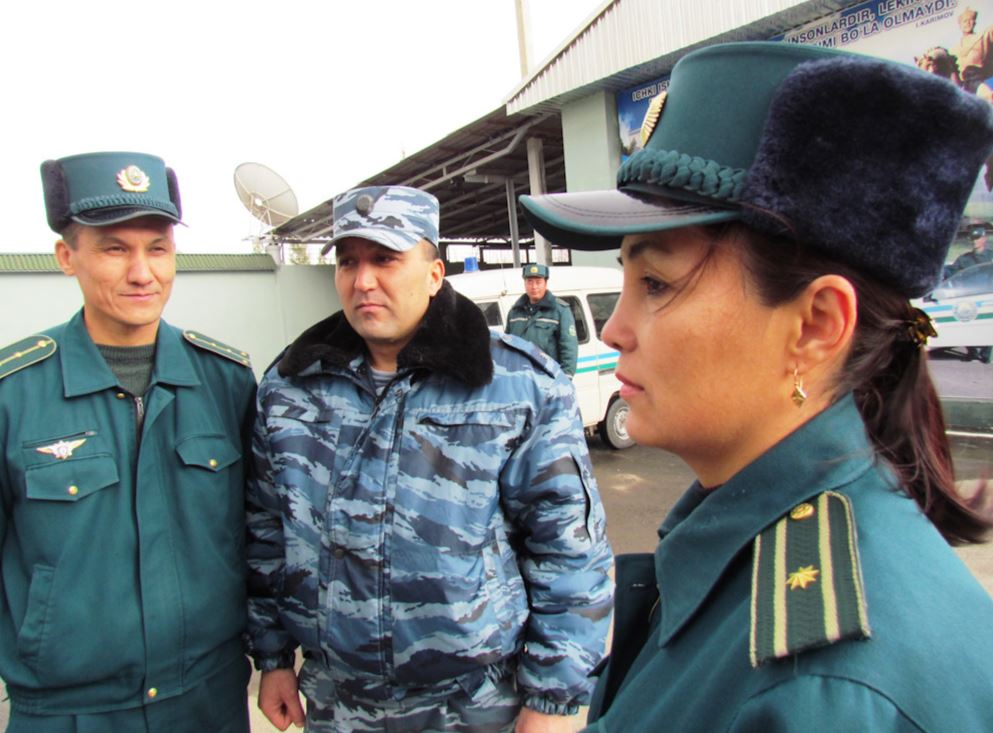
Authorities in Uzbekistan are searching for suspects who opened fire on a vehicle in the Tashkent region early Saturday, the prosecutor general’s office said. The office did not immediately confirm some Uzbek media reports that Komil Allamjonov, former chief of the presidential information department, may have been in the vehicle.

There were no injuries in the attack, which occurred around 1:40 a.m. while a person identified only as “citizen S.S.” was driving a Range Rover in Qibray district, according to a statement of the prosecutor general’s office. It said “two unidentified individuals fired multiple shots at the vehicle from a firearm and then fled the scene.”

The type of weapon used in the attack has not been determined, the statement said. An attempted murder case was opened and a search is underway.

“Currently, a rapid investigation group consisting of qualified officers from relevant agencies has been formed, and investigative actions are ongoing,” the prosecutor general’s office said.

Gazeta.uz, an Uzbek media outlet, said a large group of law enforcement officials converged on the area where the shooting occurred. It quoted an unidentified person as saying police were asking for video recordings from nearby surveillance cameras.

Allamjonov had worked as head of the presidential press service and held other posts prior to becoming chief of the presidency’s Information Policy Department in August 2023. Saida Mirziyoyeva, daughter of President Shavkat Mirziyoyev and a senior presidential aide, thanked Allamjonov when he left that job in September this year. Allamjonov said he would go into the private sector.

Uzbekistan’s Cricket Team: We’re Ready For International Matches

Supporters of Uzbek sport have had a lot to celebrate this year. The national football team currently sits at the top of its qualifying group for the 2026 FIFA World Cup, while eight of the country’s athletes took gold at this summer’s Paris Olympics. 

But next year Uzbekistan wants to enter the world stage in a more surprising sport: cricket.

The Central Asian country joined the game’s governing body, the International Cricket Council (ICC), in 2022. As an “Associate” ICC member there are hopes that the Uzbek squad will play its first international matches in 2025, in the Twenty20 (T20) version of the game. T20 games are much shorter than traditional five-day Test matches.

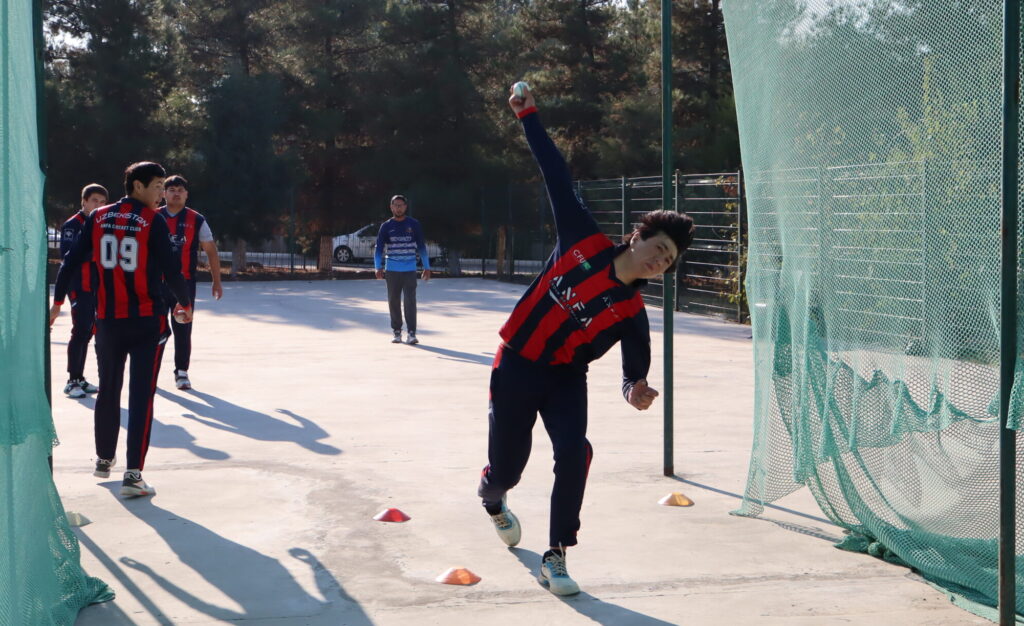
The nation’s rapid progress is due to Aziz Mihliev, the owner of Tashkent pharmaceutical company Anfa. Mihliev fell in love with the game while living in India, where cricket is the national sport. As the founder and chairman of the O’zbekiston Kriket Federatsiyasi (Uzbekistan Cricket Federation), Mihliev has created the Anfa Cricket Academy in the capital’s Yunusobod district, where three practice pitches cover a school playground.

The federation invites students at Tashkent’s sports colleges to the academy to try their hand at cricket. Many of the players picked to wear the red and dark blue striped jerseys of the new Anfa Cricket Club are also talented tennis players.

Mihliev has also built a cricket ground outside the capital, towards the town of Chirchiq, where a game between Salar Stars and Ferghana Rangers will be played this Sunday. There are plans to turn an abandoned Soviet-era stadium outside Samarkand into Uzbek cricket’s second home.

Travelling to represent Uzbekistan at global ICC conferences, Mihliev speaks with the ambition of a man who now rubs shoulders with the most influential people in the sport. From one such trip he writes: “My ambition is to see an Uzbekistan national team play a Test match against the England team. And win, of course!”

Over 4,000 Uzbeks now play the game regularly at schools and universities, from Tashkent in the north of the country to the southern Surkhandaryo region. 

Surkhandaryo borders Afghanistan, a passionate cricketing nation that reached the semi-finals of this year’s men’s T20 World Cup. And it was to Afghanistan that Mihliev turned when recruiting a former international player to train his national team. Khaliq Dad Noori played a few games for Afghanistan at the beginning of the 2010s, when his own country was at the start of its journey to the top of world cricket. 

Noori coaches his players in the Pashto language, which his Uzbek students can understand. But cricket in Uzbekistan still has a local flavour. Hitting techniques come straight from games of chilla, an old pastime played with sticks. Bats are known as tuqmoq – the name of a wooden club that Uzbek warriors used to brandish.

Although some of Uzbekistan’s best cricketers have only been playing for a year or two, judging by the talent on show during a practice session they would beat most amateur teams in big cricketing countries. Mihliev is taking his Anfa Cricket Club on a tour to the Indian city of Kanpur next month, to give the players exposure to different conditions, and a higher standard of competition.

Speaking after the session, Noori is sure that his players have big futures ahead of them – even if some of them are struggling to persuade their families that playing a complicated foreign sport is a worthwhile decision. “In the next 10 years Uzbekistan will be a real cricket country,” he says. “We want to become a full member of the ICC – and for 80% of people in Uzbekistan to understand and love cricket.”

“In terms of [senior] international matches, we first want to play against countries in our region who are also new ICC members: Mongolia, Tajikistan and Iran. We are working to set up junior [national] teams at the under-14, under-17 and under-19 level.”

Whether or not the England team ever walks out for a Test match in Samarkand, simply playing games against Mongolia would be very significant for a country that wants to be seen on the world stage.

On the concrete pitch in Yunusobod, one of the young players, Kamron, says: “I am proud to be in the national team of Uzbekistan. It takes a lot of responsibility. In the future we will win international competitions with our team, and defend the honour of our country.” His teammate Gholib adds: “Our first president Islam Karimov once said that nothing could make the country known to the world faster than sport.”

Another player, Asadbek, backs them up. “Cricket is a lovely game,” he says. “We want to connect with the world, and pass on a message of peace, which the world needs the most right now. I want to see Uzbekistan play the best teams in the world.”

***

Jonathan Campion is The Times of Central Asia’s senior editor, and the author of Getting Out: The Ukrainian Cricket Team’s Last Stand on the Front Lines of War.

Authorities Rail Against Use of Kazakhstan in Circumventing International Sanctions Against Russia

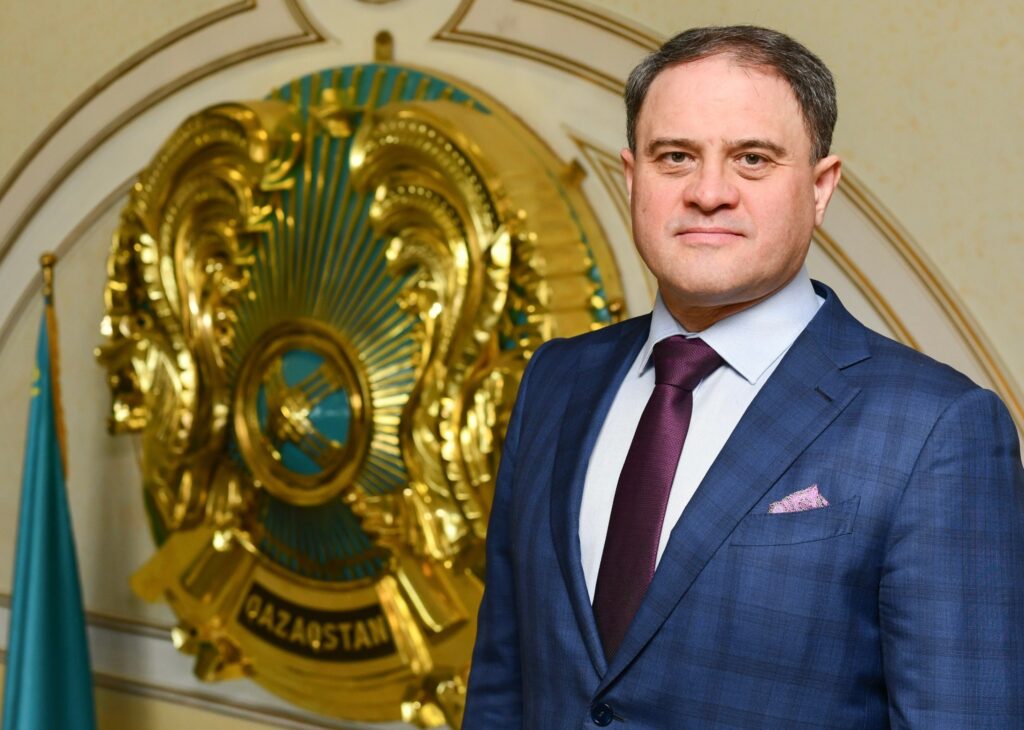
Kazakhstan’s Deputy Foreign Minister Roman Vassilenko emphasized in an interview with the Polish publication PAP that the country seeks to prevent its territory from being used to circumvent international sanctions imposed against Russia.

According to Vassilenko, although Kazakhstan has not officially imposed sanctions nor joined the anti-Russian measures, the republic’s authorities consider it essential to prevent risks associated with possible secondary sanctions against its companies. This is especially important in regard to its close economic ties with Western countries. At the same time and in acknowledgement of its position concerning both its Western partners and Russia, Kazakhstan has emphasized the need for  balance and an avoidance of circumvention of restrictive measures.

Vassilenko also noted that Kazakhstan is actively cooperating with the European Union on the sanctions regime, and as part of  these consultations, reported that he had been in dialog with David O’Sullivan, the EU special envoy for sanctions.

Vassilenko denied speculation about growing tensions between Kazakhstan and Russia, and pointing out that the countries maintain close ties, explained: “There are different issues because we are neighbors and have diverse relations. We are working with Russia to solve these issues before they become problems. This is our approach not only to the Russian Federation but to any other country.”

After the start of the Russian military operation in Ukraine, Kazakhstan took a neutral stance and did not support Western sanctions against Moscow. Nevertheless, the Kazakh authorities have repeatedly stated that they will not allow the country’s territory to be used to circumvent these restrictions. President Kasym-Jomart Tokayev, in his speeches, adheres to the principle of compliance with the international sanctions regime and aims to conduct a constructive dialog with the EU and the U.S. to  avoid possible secondary sanctions that could affect Kazakh companies.


Swiss Company Roche to Produce Anti-Cancer Drugs in Almaty

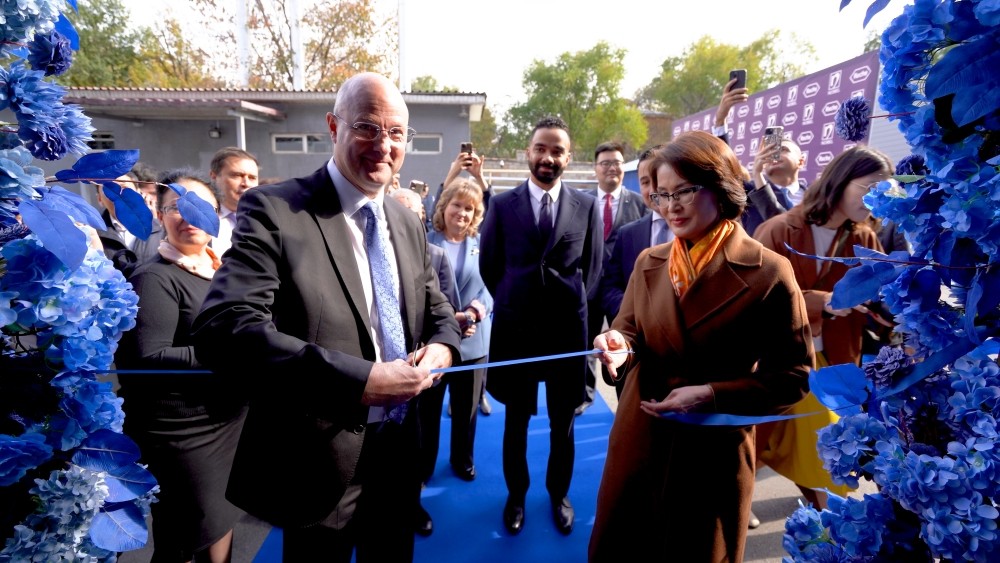
On October 24, the Swiss pharmaceutical giant F. Hoffmann-La Roche Ltd., in partnership with Nobel Almaty Pharmaceutical Factory JSC, launched the production of innovative drugs in Almaty.

The project followed an agreement between Roche, Kazakhstan’s SK-Pharmacy LLP, Nobel, and the Kazakh Research Institute of Oncology and Radiology, with the support of National Company Kazakh Invest. Under the agreement, Roche committed to establishing local production of three biotechnological drugs for the treatment of HER2-positive breast cancer, an aggressive form of the disease that affects up to 20% of breast cancer patients in Kazakhstan.

At the opening ceremony, Kazakhstan’s Minister of Health, Akmaral Alnazarova, said: “The localization [of production] of oncological drugs by a global leader like Roche is a huge step forward for our country. This project will provide patients access to advanced treatments and significantly contribute to developing Kazakhstan’s healthcare infrastructure.”

The transfer of Roche’s advanced technologies and production capabilities to local partners will reduce healthcare system costs in Kazakhstan and significantly expand patient access to essential medicines. Around 5,000 new cases of breast cancer are registered in the country annually, with approximately 1,200 resulting in death. This project is expected to increase the number of patients receiving therapy to 1,335 by 2026.

The project is part of Kazakhstan’s plan to increase the share of domestically produced medicines and medical devices to 50%.

Teachers in Turkmenistan Demand Money from Pupils to Hire Cotton Pickers

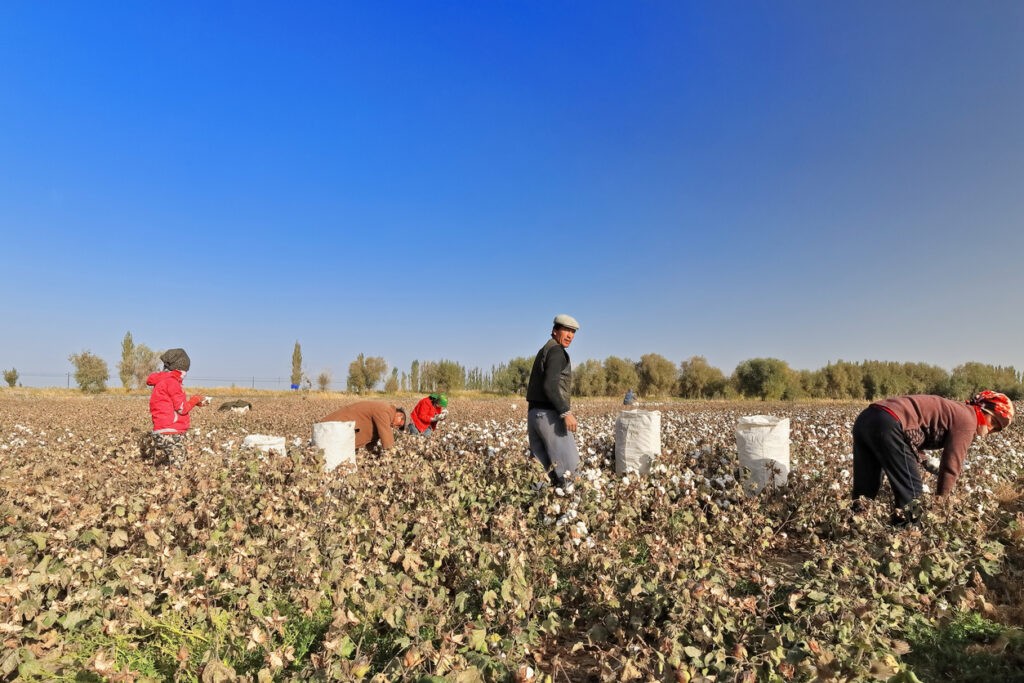
Following Turkmen President Serdar Berdymukhamedov’s recent directive to speed up the cotton-picking campaign, the Chronicles of Turkmenistan has  reported that schools in Lebap province have started collecting money from students to hire workers for the task.

The established daily norm for each class is 200-300 kilograms of cotton, depending on the number of students. Based on the requirements, schools must hire 5-6 pickers, each of whom must pick at least 50 kg of cotton daily.

In addition to schools, health facilities have also been obliged to provide workers under the cotton-picking campaign. However, despite the ban on collecting money from their subordinates, teachers and medical workers have to look for laborers among the local population, offering payment of 35-40 TMT per day ($10-12).

According to a roadmap signed in June by Turkmenistan and the ILO, forced labor in cotton harvesting, including the mobilization of children and government employees, should be eliminated. Nevertheless, mobilizing workers and schoolchildren to fulfil plans for the cotton harvesting campaign continues. In addition, students and civil servants, including teachers, are systematically forced to work in the cotton fields under threat of dismissal from their jobs or expulsion from educational institutions.

Mystery and Intrigue Behind the Death of Inessa Papernaya

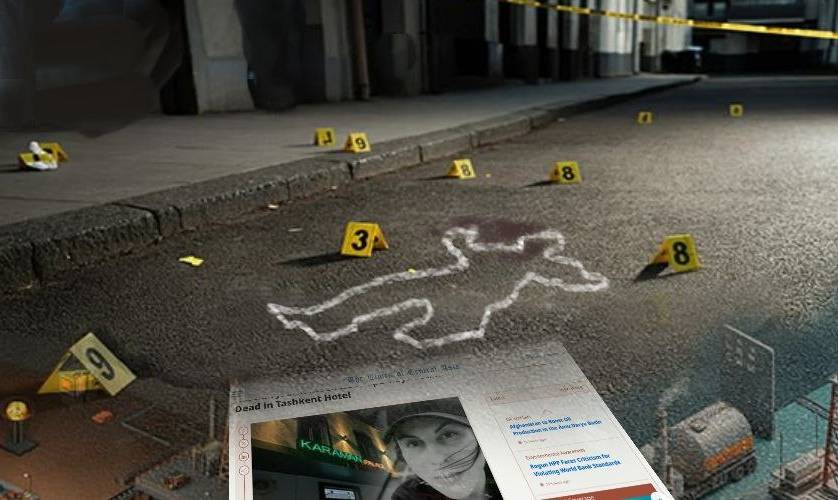
Further details have come to light which shroud the death of Inessa Papernaya in yet more mystery. As reported by TCA yesterday, Papernaya and her companion were found dead in a Tashkent hotel on October 20, along with an Uzbek man in a neighboring room whom media sources initially referred to simply as U.Kh. It has since come to light that this person was Khushnud Udekov, a well-known 48-year-old businessman from the Khorezm region whose private gas company was liquidated.

Initially, reports stated that Papernaya was a Russian journalist known for her work with lenta.ru and profile.ru. It was also reported that Papernaya was in Uzbekistan on vacation, and was staying at the Karaman Palace Hotel with her fiancé, Maxim Radchenko, whom she had traveled with in order to meet his relatives. However, Papernaya’s last post for either of these publications came in 2019, since when she had become an employee of the Russian mining company, Norilsk Nickel.

According to accounts surrounding the death of Papernaya and Radchenko, hotel staff knocked on the door of their room after the couple, who were supposed to have returned to Moscow, stopped answering the phone. Receiving no response, staff entered the room, where they discovered the bodies of the pair in the bathroom.

“When she didn’t answer her phone at 11 PM, I felt something was wrong,” Papernaya’s mother told the media. “I knew something had happened.”

The body of Udekov was subsequently found in the room directly below, with some local publications speculating that the businessman may have been the target of a contract killing.

Preliminary reports attributed the cause of the deaths to poisoning of “unknown origin,” with early suggestions being made that gas seeped into the room through the ventilation system after the hotel’s pool was cleaned on October 19-20, leading to the incident. The hotel where the incident occurred was also still under construction, and the first floor was stuffed with building materials and furniture.

Following the gruesome discovery, authorities sealed off the Karaman Palace Hotel. The Prosecutor General’s Office of Uzbekistan launched an investigation under Article 186 of the Uzbek Criminal Code, which covers the provision of unsafe services, and a forensic examination was ordered to determine the precise causes of death.

According to Hayat Shamsutdinov, the press secretary of Uzbekistan’s Prosecutor General ‘s Office, the exact cause of death will be determined after a thorough examination, the results of which are expected in about a month.

Forensic expert Alexey Reshetun, however, has stated that it is “extremely difficult to imagine that two adults would die in a single room as a result of gas entering through the ventilation.” Relatives of Radchenko, meanwhile, have disputed what they describe as several different versions of the deaths which have been put forward. Radchenko’s sister stated that the family were initially told “he had an epileptic seizure; she ran up to him, slipped, fell, hit her head and died. This is some kind of TV series: how do you fall? What nonsense… Then there was a version about drugs; since their bodies were in the bathroom, that meant they were drug addicts.”

In a further challenge to the official narrative regarding gas seepage related to the pool being cleaned, Radchenko’s sister categorically stated that “there is no pool there.” No websites advertising rooms at the Karaman Palace make any mention of a pool, with some stating outright that this amenity is not available. A builder at the site also confirmed there is no swimming pool at the hotel.

In the latest twist, it now transpires that the day before the incident in Tashkent, Mikhail Rogachev, executive director at the Onexim Group and deputy general director of Norilsk Nickel also died, after plunging from the window of his tenth-floor apartment in Moscow. Rogachev’s body was reportedly discovered by a member of Russia’s foreign intelligence agency, the SVR. The death of the former vice-president of the disbanded energy giant Yukos was quickly labeled a suicide by the state news agency, TASS, due to his suffering from cancer. However, his condition was far from critical, and on the day of his death he “had breakfast with his loved ones and was in a normal mood”. Rogachev’s passing is the latest in a spate of suspicious deaths among oligarchs, which often involve falls from windows.

Giving the timing of these events, rumors are circulating that Papernaya’s death was related to Norilsk Nickel, which had recently stepped up its activities in Central Asia. In September, the company held talks with JSC NC Kazakh Invest in Almaty regarding possible cooperation in the extraction and development of copper and gold in the Almaty region, as well as the prospects for investment in mining projects in Kazakhstan.

Officials from Norilsk Nickel had also shown interest during repeated trips to Uzbekistan in participating in the development of roughly 70 gold deposits with reserves of approximately 6,000 tons. Russian state corporation Rosatom was in discussions with the company earlier this year over the construction of small-scale nuclear plants, including in Uzbekistan.

Norilsk Nickel is majority-owned by Russian billionaire Vladimir Potanin, who holds most of his shares through the private investment company, Interros. According to Bloomberg, Potanin’s wealth stands at $32.3 billion, making him the richest man in Russia and the 57th richest person in the world. Potanin is subject to sanctions, and whilst Norilsk Nickel is not, due to Russia’s war in Ukraine the company has increasingly been snubbed by European buyers, and has seen its revenues decrease by 15% year-on-year.

Norilsk Nickel’s profits were already in steady decline, since in May 2020 the company was responsible for the second largest oil spill in modern Russian history, which led Vladimir Putin to declare a state of emergency and publicly lambast its executives. Whilst the company suffered losses in the form of a massive fine, reduced revenues and shareholder value, however, Norilsk Nickel’s board avoided any penalties. Potanin, meanwhile, blamed the environmental disaster on the “melting of permafrost.”

The Prosecutor General’s Office of Uzbekistan has confirmed that the bodies of Papernaya and Radchenko were transported back to Moscow on October 23. Papernaya’s mother, Lyubov, announced that her daughter’s funeral will take place on October 25.

Inessa Papernaya was born in Irkutsk into a family of scientists, one of three sisters. Her father, Viktor Paperniy, is a professor and head of the Department of General and Space Physics at Irkutsk State University, and her mother is a Doctor of Chemical Sciences. Inessa leaves behind a 12-year-old son, who is now being cared for by his grandparents.