• KGS/USD = 0.01144 0%
  • KZT/USD = 0.00194 0%
  • TJS/USD = 0.10872 0.18%
  • UZS/USD = 0.00008 0%
  • TMT/USD = 0.28571 0%
  • KGS/USD = 0.01144 0%
  • KZT/USD = 0.00194 0%
  • TJS/USD = 0.10872 0.18%
  • UZS/USD = 0.00008 0%
  • TMT/USD = 0.28571 0%
  • KGS/USD = 0.01144 0%
  • KZT/USD = 0.00194 0%
  • TJS/USD = 0.10872 0.18%
  • UZS/USD = 0.00008 0%
  • TMT/USD = 0.28571 0%
  • KGS/USD = 0.01144 0%
  • KZT/USD = 0.00194 0%
  • TJS/USD = 0.10872 0.18%
  • UZS/USD = 0.00008 0%
  • TMT/USD = 0.28571 0%
  • KGS/USD = 0.01144 0%
  • KZT/USD = 0.00194 0%
  • TJS/USD = 0.10872 0.18%
  • UZS/USD = 0.00008 0%
  • TMT/USD = 0.28571 0%
  • KGS/USD = 0.01144 0%
  • KZT/USD = 0.00194 0%
  • TJS/USD = 0.10872 0.18%
  • UZS/USD = 0.00008 0%
  • TMT/USD = 0.28571 0%
  • KGS/USD = 0.01144 0%
  • KZT/USD = 0.00194 0%
  • TJS/USD = 0.10872 0.18%
  • UZS/USD = 0.00008 0%
  • TMT/USD = 0.28571 0%
  • KGS/USD = 0.01144 0%
  • KZT/USD = 0.00194 0%
  • TJS/USD = 0.10872 0.18%
  • UZS/USD = 0.00008 0%
  • TMT/USD = 0.28571 0%
22 December 2025

Rahmon Calls To End Persecution For Social Media ‘Likes’

Tajik President Emomali Rahmon has called on law enforcement agencies to stop prosecuting citizens for their activity on social media, particularly for likes and comments. Rahmon said this at the opening of a new training institute for Interior Ministry personnel, timed to coincide with the 30th anniversary of the Constitution and the Day of the Tajik Police.

In Tajikistan, even adding simple “likes” on posts by opposition figures, or reposting their videos, can lead to arrest. Since 2016, the country’s Criminal Code has included a provision on “public justification of extremism,” which allows law enforcement agencies to equate likes with support for extremist ideas. For example, in August 2023, 70-year-old Kamoliddin Sharofov was sentenced to five years for liking posts on a banned website.

Rahmon expressed concern over the growth of unfounded criminal cases against social media users, and noted that law enforcement agencies’ actions undermine public confidence. He called for restraint, emphasizing that any police action should show respect for citizens’ rights and the principles of democracy.

The Tajik government has previously been criticized by the opposition and international organizations, including the U.S. State Department, for arresting citizens for their online activities.

First Kazakh Satellite for Mongolia

During Kazakh President Kassym-Jomart Tokayev’s visit to Mongolia on October 29, Kazakhstan and Mongolia signed a landmark agreement to jointly develop an Earth remote sensing satellite. This collaboration will allow each country to independently control the satellite, providing both with real-time data to monitor natural resources and advance agricultural development.

At the signing ceremony, Zhaslan Madiyev, Kazakhstan’s Minister of Digital Development, Innovation, and Aerospace Industry, commented: “This is the first export of a Kazakh satellite in the country’s history. Fully developed by Kazakh engineers, the satellite will be adapted to Mongolia’s needs, strengthening the regional satellite infrastructure and highlighting Kazakhstan’s growing potential in space technology.”

Remote sensing technologies will allow both countries to monitor land conditions, manage water resources, and analyze environmental changes more effectively.

The National Space Center of Kazakhstan will lead the project, working closely with Mongolian engineers. Throughout the initiative, Kazakh specialists will provide training to their Mongolian counterparts.

Kyrgyzstan Faces Critical Shortage of 5,000 Doctors

Kyrgyzstan’s hospitals are struggling with a shortage of medical staff, with an estimated need for around 5,000 more doctors nationwide, according to Deputy Health Minister Kaarmanbek Baidavletov. He shared these figures during a Jogorku Kenesh meeting, highlighting the urgency of the issue.

To address this issue, the Ministry of Health is negotiating with the president’s regional representatives to develop solutions. In some districts, local authorities are helping young specialists by taking over utility payments to ease doctors’ working conditions.

Baidavletov said there should be one doctor for every 1,500 people, but more staff is needed in remote regions and central hospitals.
Kyrgyzstan’s healthcare system faces several serious challenges. One key problem is the need for more medical personnel, especially in remote regions that lack hematology, neonatology, and pediatrics specialists.

In addition, the country has a high incidence of non-communicable diseases such as hypertension and diabetes mellitus, especially among women. The Women’s Health initiative has been launched to enhance awareness and early diagnosis of these diseases.

Another initiative focuses on antimicrobial resistance (AMR), which the WHO supports. This program provides diagnostic tools and training for medical staff and assesses the prevalence of AMR in Kyrgyzstan to improve clinical protocols and policies in this area.

Italian Bank to Enter Kazakhstan Market

An Italian state bank, Cassa Depositi e Prestiti, plans to establish a new credit line in Kazakhstan, as announced by Edmondo Cirielli, Italy’s Deputy Minister of Foreign Affairs and International Cooperation. Cirielli made the announcement during his meeting with Arman Shakkaliyev, Kazakhstan’s Minister of Trade and Integration, on October 29 in Astana.

Cirielli stated: “We are confident that our relations will only strengthen in the trade and economic sphere. Kazakhstan occupies a key position in Central Asia and connects Europe with the region. We plan to open a credit line of our state bank, Cassa Depositi e Prestiti, in Kazakhstan.”

Minister Shakkaliyev noted that Italy is Kazakhstan’s third-largest trading partner among European Union countries. In 2023, trade turnover between the two countries amounted to $16.1 billion, 7.8% more than the previous year. Exports from Kazakhstan to Italy reached $14.8 billion, and imports stood at $1.2 billion.

In January-August 2024, bilateral trade increased by 33%, reaching $13.8 billion, with Kazakh exports rising by 36% to $12.9 billion.
Astana hosted the 9th Kazakh-Italian working group meeting on economic and industrial cooperation on October 29. Deputy Minister of Foreign Affairs Edmondo Cirielli headed the Italian delegation.

The meeting focused on increasing the transportation volume along the Trans-Caspian International Transport Route, which will create additional opportunities for bilateral trade. The parties also confirmed their interest in developing the transport and logistics sector.
Kazakhstan proposed expanding cooperation in the agricultural sector, including fruit and vegetable growing and grain processing and expressed its readiness for long-term partnerships with Italian grain processors and the supply of high-protein wheat to the Italian market.
Italian companies were encouraged to invest in Kazakhstan’s renewable energy sector and the Khorgos Special Economic Zone, strategically located on the Kazakh-Chinese border.

Kyrgyzstan Seeks to Curb Rising Teen Interest in Quadrobics

Concern is growing in Kyrgyzstan over teenagers’ interest in quadrobics, a movement where people move on all fours and imitate animals. At a Zhogorku Kenesh meeting, MP Dastan Bekeshev raised the issue with cabinet spokesman Almasbek Abytov.

Bekeshev suggested that the Ministry of Education and Science organize explanatory activities in schools to inform about the risks of quadrobics.

“Some schoolchildren are already doing quadrobics, imitating the behavior of animals. So far, it has not become a mass problem, but preventive measures are necessary,” the deputy emphasized.

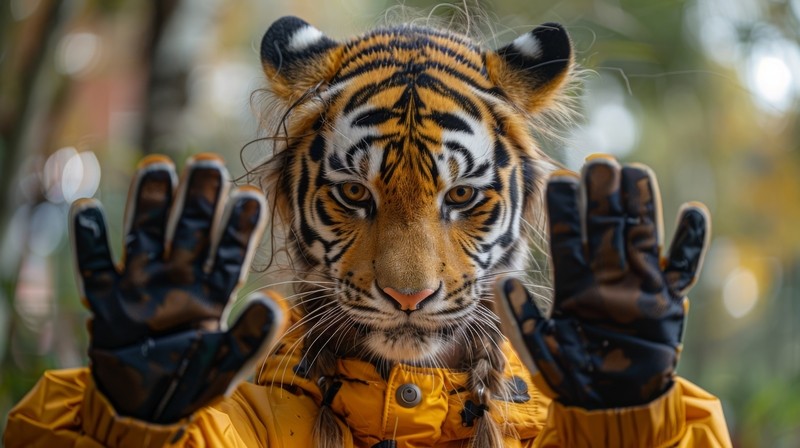
Quadrobics involves moving on all fours and imitating animals, including using masks and tails to portray foxes, wolves, and other animals. This movement has already been noticed in Kazakhstan, Russia, and Ukraine. Recently, cases of such behavior have been registered in Tashkent. On October 10, a teenager wearing an animal mask frightened passers-by, and the next day, another quadrober imitating a dog attacked passengers on public transport, leaving a child visibly frightened.

Earlier, The Times of Central Asia wrote that Uzbekistan is already taking steps to control this subculture. In particular, parents are being warned of fines for inappropriate behavior by teenagers in the quadrobika subculture. The Interior Ministry has stated that failure to fulfill parental duties will be punishable, as parents are responsible for educating their children to respect social norms and preventing inappropriate behavior.

Russia has also raised the issue of the administrative responsibility of parents who do not follow the upbringing of their children who are addicted to quadrobika. The issue has not yet been resolved, but the request to the State Duma spoke of a fine and criminal liability for the violation. In addition, Gennady Shkil, a priest of the Russian Orthodox Church, suggested in a sermon that parents of quadrobers should be deprived of parental rights. He believes one cannot do this without “tough measures” as it is “for the salvation of mankind.”

Uzbekistan: Suspects Arrested in Attack, Media on Notice

Several suspects have been arrested in Uzbekistan following a shooting attack on a vehicle in a case that is being treated as attempted murder, according to the prosecutor general’s office. The investigation and public uncertainty about some of the key details of the assault has highlighted tension in Uzbekistan over the role of media and state control of the flow of information.

The attack by two people early Saturday, a type of violence that is rare in Uzbekistan, prompted a flurry of reports by Uzbek media organizations and social media posts that a former high-profile figure in the government of President Shavkat Mirziyoyev was traveling in the vehicle and was the target. The organizations did not identify their sources.

Authorities did not directly confirm or deny the reports, but they warned that people who spread false information can be prosecuted because it can lead to panic and destabilize society.

“The Prosecutor General’s Office is conducting investigative actions concerning the criminal case related to the attempted murder in Qibray,” the office said, referring to an area in the Tashkent region where the attack occurred. “During the investigation and operational search activities, three additional individuals involved in committing this crime were identified and detained as suspects.”

The arrests brings the total number of people in detention to four. The prosecutor general’s office has not commented on widespread Uzbek media reports that Komil Allamjonov, former chief of the presidential information department, had survived an attempt to kill him. But it has said in a separate statement that “unverified and baseless information” about the case “has been widely circulated on social media, lacking reliance on credible official sources.”

The statement continued: “The law clearly defines both rights and responsibilities in the information sector—bloggers, group admins, and social media channel operators with large audiences should particularly be aware of this. Many in the public may accept any information they disseminate as fact. Media representatives must also adhere to the applicable legal norms in the same way that state agencies are required to.”

The office appealed to media outlets to “rely on and reference only official information” that the prosecutor general’s office provides about such investigations.

The law in Uzbekistan says the spread of false information that leads to the denigration of “a person´s dignity” or threatens “public order or security” can lead to prison sentences; advocates of freedom of expression say such regulations are used to muzzle criticism of the government. A recent criminal case against a blogger who made comments deemed to be offensive shows how the state seeks to regulate speech.

For now, questions remain about the weekend attack on the vehicle. Inadvertently or not, at least one Uzbek media outlet was still linking Allamjonov to the case, even though authorities have not publicly mentioned him. An online headline in UzDaily.com read: “Three more suspects in the attempted assassination of Komil Allamjonov detained.”