• KGS/USD = 0.01144 0%
  • KZT/USD = 0.00192 -0%
  • TJS/USD = 0.10876 0.55%
  • UZS/USD = 0.00008 0%
  • TMT/USD = 0.28490 0%
  • KGS/USD = 0.01144 0%
  • KZT/USD = 0.00192 -0%
  • TJS/USD = 0.10876 0.55%
  • UZS/USD = 0.00008 0%
  • TMT/USD = 0.28490 0%
  • KGS/USD = 0.01144 0%
  • KZT/USD = 0.00192 -0%
  • TJS/USD = 0.10876 0.55%
  • UZS/USD = 0.00008 0%
  • TMT/USD = 0.28490 0%
  • KGS/USD = 0.01144 0%
  • KZT/USD = 0.00192 -0%
  • TJS/USD = 0.10876 0.55%
  • UZS/USD = 0.00008 0%
  • TMT/USD = 0.28490 0%
  • KGS/USD = 0.01144 0%
  • KZT/USD = 0.00192 -0%
  • TJS/USD = 0.10876 0.55%
  • UZS/USD = 0.00008 0%
  • TMT/USD = 0.28490 0%
  • KGS/USD = 0.01144 0%
  • KZT/USD = 0.00192 -0%
  • TJS/USD = 0.10876 0.55%
  • UZS/USD = 0.00008 0%
  • TMT/USD = 0.28490 0%
  • KGS/USD = 0.01144 0%
  • KZT/USD = 0.00192 -0%
  • TJS/USD = 0.10876 0.55%
  • UZS/USD = 0.00008 0%
  • TMT/USD = 0.28490 0%
  • KGS/USD = 0.01144 0%
  • KZT/USD = 0.00192 -0%
  • TJS/USD = 0.10876 0.55%
  • UZS/USD = 0.00008 0%
  • TMT/USD = 0.28490 0%
11 December 2025

Pope Francis Receives Kyrgyzstan President Japarov

On October 4, during his official visit to Italy, Kyrgyzstan President Sadyr Japarov was received by Pope Francis at the Vatican.

As reported by the president’s press office, Japarov emphasized Kyrgyzstan’s status as a secular, multi-ethnic country which guarantees freedom of religion to the numerous communities which integral to Kyrgyz society,  play an essential role in its development. The Kyrgyz leader also noted that one of the country’s key traditional values has always been tolerance and respect for cultural diversity, and extended an open invitation to the Pope to visit.

According to the Holy See’s press office, the discussions focused on the cordial relations between the Holy See and Kyrgyzstan and the two states’ “mutual collaboration in the fields of healthcare, education, and culture, and aspects of the life of the local Church.” The two leaders also exchanged opinions on current international affairs “with special attention to the ongoing conflicts and humanitarian issues, revealing the importance of urgent commitment to promoting peace.”

During the audience, Pope Francis presented President Japarov with a terracotta sculpture entitled “Love and Tenderness,” a photo book on the Apostolic Palace, and a copy of this year’s Message for Peace.

In return, President Japarov gifted Pope Francis decorated jars filled with honey ecologically produced in the mountains of Kyrgyzstan, an image of St Peter’s Basilica made from colorful wool, and a handcrafted  Kyrgyz silver tea set.

Japarov is the third leader of a Central Asian country to meet Pope Francis. In January 2024, Kazakhstan’s President Kassym-Jomart Tokayev made his first official visit to the Holy See at Pope Francis’s invitation, at which appreciation was expressed for the good relations between the Holy See and Kazakhstan, particularly regarding mutual collaboration in interreligious dialogue. The meeting followed in the wake of Pope Francis’ visit to Kazakhstan in September 2022, to attend the Congress of the Leaders of World and Traditional Religions in Astana. Held in the Kazakh capital every three years, the Congress functions as a permanent international interfaith platform for dialogue between religions.

In April 2024, Tajikistan President Emomali Rahmon visited the Vatican and during his meeting with Pope Francis, stressed his country’s tolerance and coexistence of representatives of all religions.


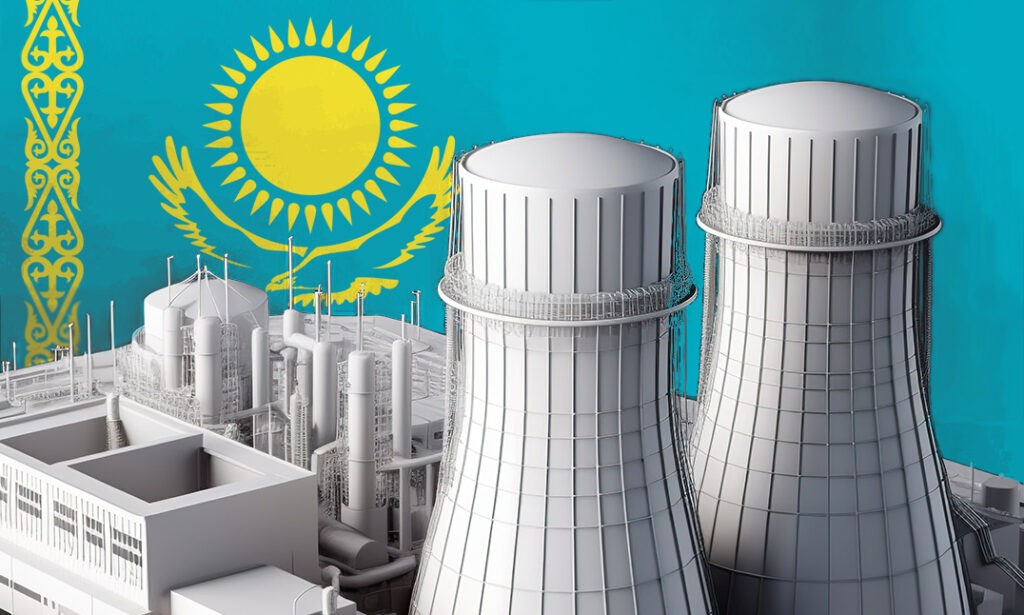
Kazakhstan Referendum Approves First Nuclear Power Plant

More than 71 percent of voters have approved the October 6 referendum for constructing Kazakhstan’s first nuclear power plant (NPP). Turnout was over 63 percent, easily surpassing the 50-percent barrier for validation. This result closely tracks the results of a telephone survey conducted by the Democracy Institute on September 30 and released by the Kazakhstan Institute for Strategic Studies. That survey found 73 percent of those asked to favor construction of a nuclear power plant. It also found that 62 percent of respondents intended to vote, not far from the actual participation rate. 

President Kassym-Jomart Tokayev had announced the referendum initiative in a message to the public in September 2023. In that address, he emphasized that Kazakhstan, as the world’s largest producer of uranium, should also have its own nuclear-power generation capabilities. Following this announcement, a series of meetings between representatives of various government agencies and the public were organized across all regions of the country. During these meetings, the plans for constructing an NPP were discussed in detail, with an emphasis on the potential benefits of nuclear energy for Kazakhstan’s energy independence.

Kazakhstan has held a significant position in the global nuclear-energy market since the late 2000s, accounting for approximately 40 percent of global uranium production. Despite this advantageous position, the country faces severe electricity shortages, which are projected to worsen by 2025, especially in the rapidly growing southern regions. Reliance on aging thermal power plants, many of which are equipped with components that have been in service for over 50 years, has only exacerbated the problem. Frequent energy shortages in multiple regions have left citizens without heat during harsh winter conditions, often with temperatures dropping well below zero.

The proposed site for the nuclear power plant is in Ulken, located in the Almaty region. The shortlist of potential builders for the NPP includes companies from China, South Korea, Russia, France, and the United States. The inclusion of companies from multiple countries is aimed at ensuring competitive bidding and securing the best possible technology for the project. Tokayev has indicated a personal preference for an “international consortium made up of global companies equipped with cutting-edge technologies.”

Developing an NPP will help the country to achieve energy independence and meet carbon-neutrality goals. Without an NPP, rolling blackouts will be necessary and dependence on electricity imports from Russia will continue. However, the legacy of the Semipalatinsk test site looms large, creating a challenging decision for Kazakh citizens.

Kazakhstan’s nuclear history spans from Soviet-era testing to present-day energy challenges. The Semipalatinsk nuclear test site, established in 1947, was where the Soviet Union conducted over 468 nuclear tests, leaving long-lasting environmental and health impacts on the local population. The fallout from these tests has burdened the national health-care system for decades, exacerbated by nuclear fallout from Chinese testing at Lop Nor.

In response to these consequences, then-President Nursultan Nazarbayev closed the Semipalatinsk site in 1991, and by 1994, Kazakhstan had relinquished its nuclear arsenal and became a non-nuclear state. Nazarbayev’s rise to power in the late 1980s was partly fuelled by the transnational “Nevada-Semei” movement, which mobilized Kazakhstani civil society against Soviet nuclear policies.

The national health-care delivery system has been burdened for decades with the effects of nuclear fallout on the population, stemming from the above-ground testing at Semipalatinsk (Semei) during the Soviet era, not to mention fallout blown by winds from Chinese nuclear testing at their own Lop Nor site. In 1991, then-President Nursultan Nazarbayev officially closed the Semipalatinsk site; by 1994, Kazakhstan had relinquished its nuclear arsenal and become a non-nuclear state.

In the run-up to the referendum just held, various media platforms enabled the government to address fears related to nuclear accidents and waste disposal. The public discourse drew comparisons to other countries that have successfully integrated nuclear power. It argued for the feasibility and safety of the proposed plant while addressing fears about nuclear accidents and waste management. The issue is critical for Kazakhstan’s energy security and has the side benefits of promoting job creation and foreign investment.

In the lead-up to the recent referendum, various media platforms were used to address public concerns about nuclear accidents and waste disposal. The government highlighted the safety and feasibility of the proposed plant, drawing comparisons to other countries that have successfully integrated nuclear power. By emphasizing stringent safety standards and international oversight, the campaign helped alleviate fears and promote the benefits of nuclear energy, such as job creation, foreign investment, and improved energy security. 

Initially, public opinion was evenly split between supporters and opponents, but by highlighting the need to address energy shortages, reduce dependence on hydrocarbon fuels, and leverage nuclear power for a sustainable economy, the campaign successfully swayed public sentiment. The promotion of benefits such as job creation, foreign investment, and improved energy security further bolstered public support, making the referendum outcome relatively predictable.

Price of Gasoline Set to Rise in Kyrgyzstan

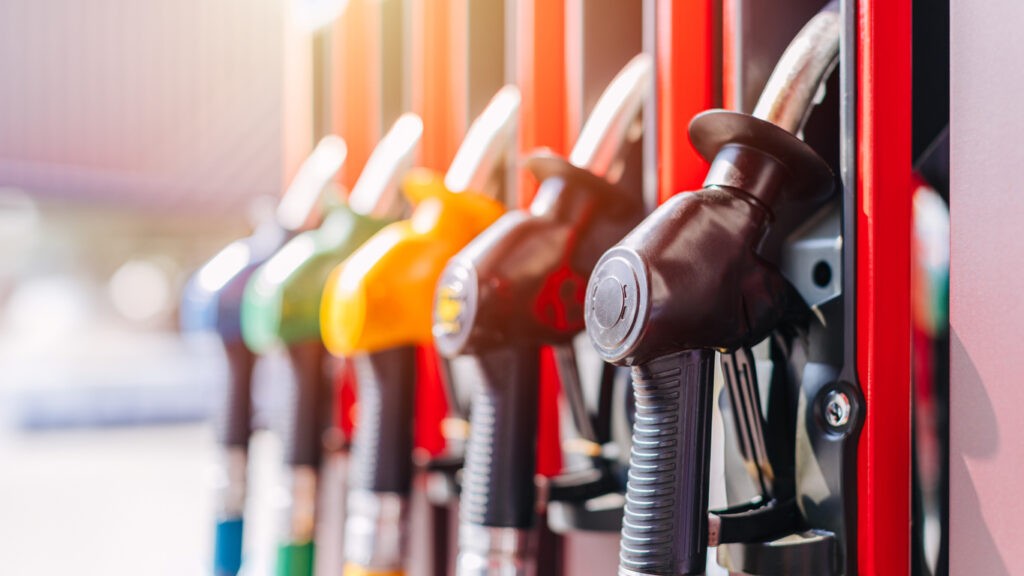
The Ministry of Transport and Communications of Kyrgyzstan has presented a bill, approved by parliament, introducing  new mark-ups on fuel and lubricants.

Legislative changes to impose additional charges on each liter of gasoline sold at gas stations, are intended to accrue extra funds from motorists for road maintenance. In addition, a recycling fee will be introduced for processing automobile tires, alongside a fee for waste oil disposal, to be accumulated in a new Road Fund under the Finance Ministry.

Other regulations introduced by the Cabinet of Ministers include the necessity for all gas stations to use unique markers for gasoline and diesel ; a move which the State Tax Service believes will ensure fuel production transparency and import accounting.

The cost of such labeling is yet to be determined, and as stated by Kanat Eshatov, president of the Association of Oil Traders of Kyrgyzstan, “We don’t know how much gasoline prices may go up. It will all depend on the size of these fees. Initially, they said that gasoline labeling, in general, would be free. Then, they said that it would be at the expense of oil traders. Today, we do not know the price of the marker, whether it will be stable or change, and whether it will be subject to stock exchange jumps or stability. The price of gasoline and its stability will depend on this.”

The cost of gasoline has been rising throughout the year, largely as a result of a general increase in prices and repairs at refineries in Russia, from which Kyrgyzstan receives a significant amount of fuel.

Meanwhile, the State Antimonopoly Service of Kyrgyzstan reports that the situation in the market of fuels and lubricants in the country remains stable. Supplies of oil products to Kyrgyzstan are carried out without interruptions, and fuel reserves in the country are designed for 1.5-2 months.

EU and Turkmenistan Launch Coordination Platform of Trans-Caspian Transport Corridor

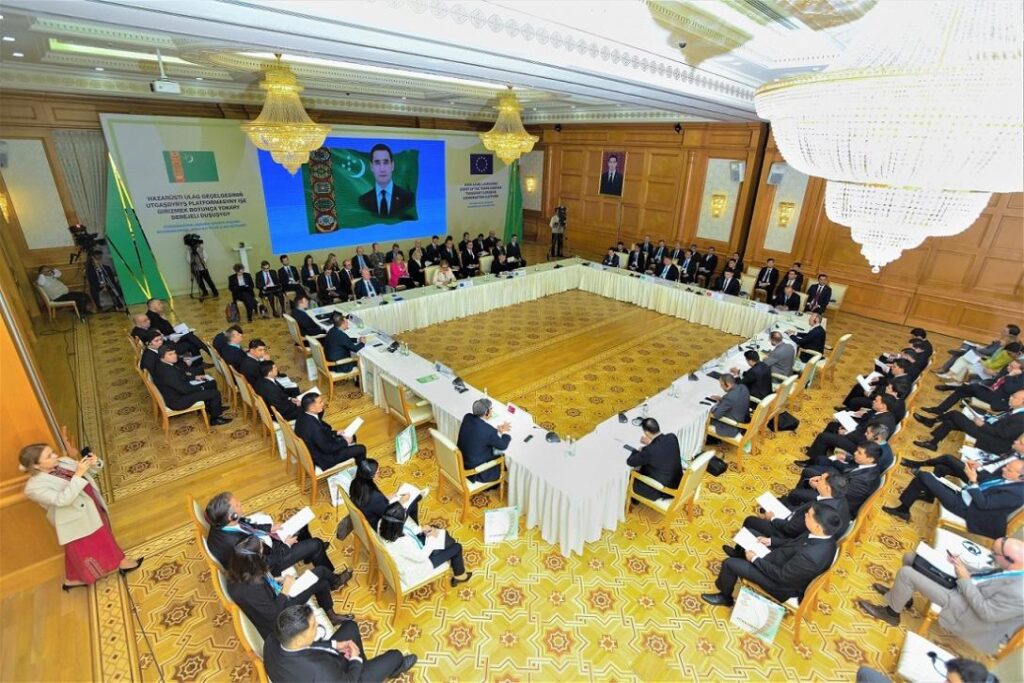
On October 3 in Ashgabat, the European Union and Turkmenistan launched the Trans-Caspian Transport Corridor Coordination Platform. The platform aims to strengthen connectivity by developing transport routes within Central Asia and the European Union.
The event brought together the European Union, representatives of the countries along the Trans Caspian Transport Corridor in Central Asia, the South Caucasus, and Türkiye, and international financial institutions.

The European Union delegation was led by European Commissioner for International Partnerships Jutta Urpilainen. As reported by the EU Delegation to Turkmenistan, the Trans-Caspian Transport Corridor is a flagship of the EU’s Global Gateway investment strategy, and the establishment of the Coordination Platform is one of the key deliverables of the Global Gateway Investors Forum for EU-Central Asia Transport Connectivity held in January 2024. European and international financial institutions at the Forum committed to mobilizing €10 billion for sustainable transport connectivity in Central Asia. The EU aims to work with partners towards a modern route that boosts trade and facilitates the flow of goods between Central Asia and Europe while driving economic development and regional integration.

The platform’s main role will be to promote the corridor and coordinate efforts to implement priority projects in hard and soft infrastructure in Central Asia. It will also coordinate with investments and activities in the South Caucasus and Turkey that are relevant to strengthening operational efficiency and seamless connections across the Trans-Caspian Transport Corridor.

Urpilainen said: “Central Asia, as a region at the crossroads of Europe and Asia, plays a pivotal role in the EU Global Gateway investment strategy and connectivity vision. The Trans-Caspian Transport Corridor is a critical artery linking Europe and Asia, boosting trade, facilitating exchanges, and driving prosperity across our regions while ensuring improved connectivity, cooperation, and economic growth between all Corridor countries. Harnessing this potential will require massive infrastructure investments in the coming years; I am pleased to see governments from countries along the Corridor, key International Financing Institutions, EU Member States, G7 countries, and other partners coming together.”

Urpilainen said that to the European Union, Turkmenistan is an important partner in Central Asia. She also emphasized the European Union’s commitment to supporting Turkmenistan’s transition to a sustainable, green economy while enhancing its business environment.

The EU has further allocated €18 million to strengthen its partnership with Turkmenistan, highlighting its dedication to fostering sustainable development and economic growth.

Referendum for Nuclear Power in Kazakhstan Passes

Kazakhstan’s nuclear energy referendum on October 6 passed with a 71.12 % majority, marking a pivotal shift in the country’s energy strategy. The nation has faced significant challenges with an aging energy infrastructure and a reliance on Russia to fill the gaps.

The decision comes with historical sensitivities as Kazakhstan continues to grapple with the legacy of Soviet-era nuclear tests that caused widespread harm. The referendum offered citizens a direct voice in shaping their energy future, reflecting both the urgency of addressing the country’s current needs and the deep-seated concerns over nuclear safety.

On the referendum ballot, Kazakhstanis were asked, “Do you agree to the construction of a nuclear power plant in Kazakhstan?”.

The voter turnout was high, according to the Central Referendum Commission, with 7,820,918 Kazakhstan citizens receiving ballots, amounting to a 63.87% voter turnout. The voter turnout for the referendum on the new constitution in Kazakhstan, held on June 5, 2022, was similarly high at 68.44%.

As the world’s largest uranium producer, Kazakhstan is well-positioned to leverage its rich resources to transition towards more sustainable energy solutions.

President Kassym-Jomart Tokayev has emphasized the critical importance of nuclear energy, not only in meeting the immediate electricity needs amidst frequent power outages but also in aligning with global environmental commitments. At the Convention on Climate Change (COP28) held in Dubai on December 1, 2023, Tokayev made a Global Methane Pledge to reduce methane emissions by 30 percent by 2030. The nuclear power plant is expected to reduce Kazakhstan’s reliance on fossil fuels, thus decreasing greenhouse gas emissions.

Uzbekistan has already begun construction of a nuclear power plant 55km from the Kazakhstan border. Kyrgyzstan may also build a nuclear power plant in the Chui region, which is less than 300km south of the planned Kazakhstani plant in Ulken on Lake Balkash.

International observers from the Shanghai Cooperation Organization (SCO), the Organization of Turkic States (OTS), and the Conference on Interaction and Confidence Building Measures in Asia (CICA) have all affirmed that the recent referendum was conducted in accordance with current legislation, describing it as open, free, and legitimate. Kazakhstan’s Deputy Foreign Minister Roman Vassilenko noted the participation of over 200 foreign journalists during the referendum, underscoring the transparency and openness of the voting process.

Radio Free Europe, through its affiliate Azattyk, was critical of the referendum. An incident of ballot stuffing at a Turkestan poll station was reported, as were accessibility issues for the disabled voters in the Uralsk region. One observer witnessed a suspicious busload of voters in Turkestan. RFE correspondents reported difficulty in getting voter turnout results throughout the afternoon at a station in Karganda and Aktobe. With that in mind, the irregularities seem to be few and far between overall: The League of Young Voters, a vigilant group of local observers, identified a total of 20 technical violations across the country’s 10,249 polling stations.

The referendum day proceeded without significant issues, shifting attention to Kazakhstan’s urgent energy shortfalls. With the nuclear power plant expected to be operational in 2034, the approaching frigid winter months will remind voters of the need for immediate energy solutions.

For more insights into the nuclear power referendum, see our Special Coverage.

Kyrgyzstan Begins Construction of Another Small Hydropower Plant

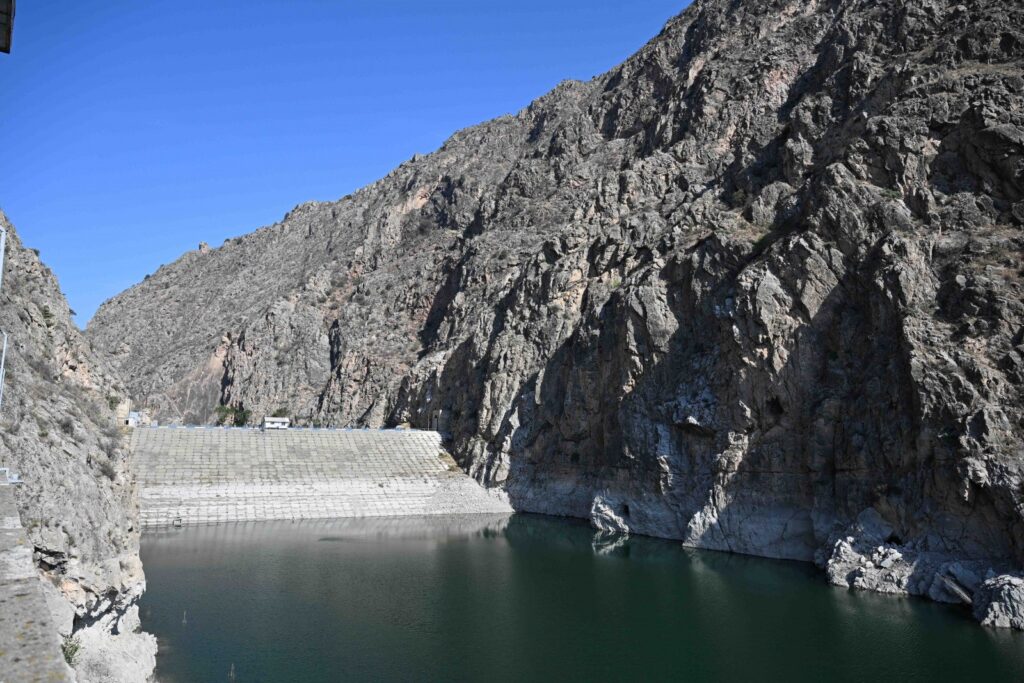
The construction of a small hydroelectric power plant on the Ak-Buura River at the Papan reservoir in Kyrgyzstan’s southern Osh region has begun.

The Ak-Buura River supplies water to Kyrgyzstan’s second-largest city, Osh. The Papan reservoir is located in the Papan Gorge, and the power plant will be constructed in the narrowest part of the Ak-Buura River valley.

The small hydropower plant will have a capacity of 25 MW and will generate 103 million kWh of electricity per year. The project costs $27 million.

“The construction of a small hydroelectric power plant at the Papan reservoir is another strategic step towards the country’s energy independence,” Chairman of Kyrgyzstan’s Cabinet of Ministers Akylbek Japarov stated at the ceremony to launch the construction on October 5.

In recent years, Kyrgyzstan has been working to expand its energy capacity by building small and large hydroelectric plants to address electricity shortages.

Earlier this year, Kyrgyzstan constructed small hydroelectric power plants in Bala-Saruu in the northwestern Talas region and Kok-Art and Kainama small hydropower plants in the southern Jalal-Abad region.

In 2023, Kyrgyzstan met 80% of its electricity demand, which totaled 17.2 billion kilowatt-hours. The remaining 20%, or 3.4 billion kilowatt-hours, was imported.

Energy Minister Taalaibek Ibraev last week stated that despite an increase in water levels at Kyrgyzstan’s largest Toktogul hydroelectric power plant (HPP) reservoir this year, the country would still be facing an electricity deficit of about 3.9 billion kilowatt-hours.

The positive is that Ibraev said in parliament on October 4 that there will be no scheduled blackouts this winter, as his ministry has done a good job preparing the power distribution system for the coming winter. The Energy Ministry has installed new and repaired all the existing transformers nationwide.

In previous years, Kyrgyzstan practiced scheduled restrictions on electricity supply for several hours a day to save electricity during peak consumption hours in winter.

The minister also announced that starting January 1, 2025, Turkmenistan will supply Kyrgyzstan with 1.7 billion kilowatt-hours of electricity.