• KGS/USD = 0.01144 0%
  • KZT/USD = 0.00211 0%
  • TJS/USD = 0.10454 -0.1%
  • UZS/USD = 0.00008 0%
  • TMT/USD = 0.28571 0.28%
  • KGS/USD = 0.01144 0%
  • KZT/USD = 0.00211 0%
  • TJS/USD = 0.10454 -0.1%
  • UZS/USD = 0.00008 0%
  • TMT/USD = 0.28571 0.28%
  • KGS/USD = 0.01144 0%
  • KZT/USD = 0.00211 0%
  • TJS/USD = 0.10454 -0.1%
  • UZS/USD = 0.00008 0%
  • TMT/USD = 0.28571 0.28%
  • KGS/USD = 0.01144 0%
  • KZT/USD = 0.00211 0%
  • TJS/USD = 0.10454 -0.1%
  • UZS/USD = 0.00008 0%
  • TMT/USD = 0.28571 0.28%
  • KGS/USD = 0.01144 0%
  • KZT/USD = 0.00211 0%
  • TJS/USD = 0.10454 -0.1%
  • UZS/USD = 0.00008 0%
  • TMT/USD = 0.28571 0.28%
  • KGS/USD = 0.01144 0%
  • KZT/USD = 0.00211 0%
  • TJS/USD = 0.10454 -0.1%
  • UZS/USD = 0.00008 0%
  • TMT/USD = 0.28571 0.28%
  • KGS/USD = 0.01144 0%
  • KZT/USD = 0.00211 0%
  • TJS/USD = 0.10454 -0.1%
  • UZS/USD = 0.00008 0%
  • TMT/USD = 0.28571 0.28%
  • KGS/USD = 0.01144 0%
  • KZT/USD = 0.00211 0%
  • TJS/USD = 0.10454 -0.1%
  • UZS/USD = 0.00008 0%
  • TMT/USD = 0.28571 0.28%

Art and Inspiration: Capturing the Essence of Almaty

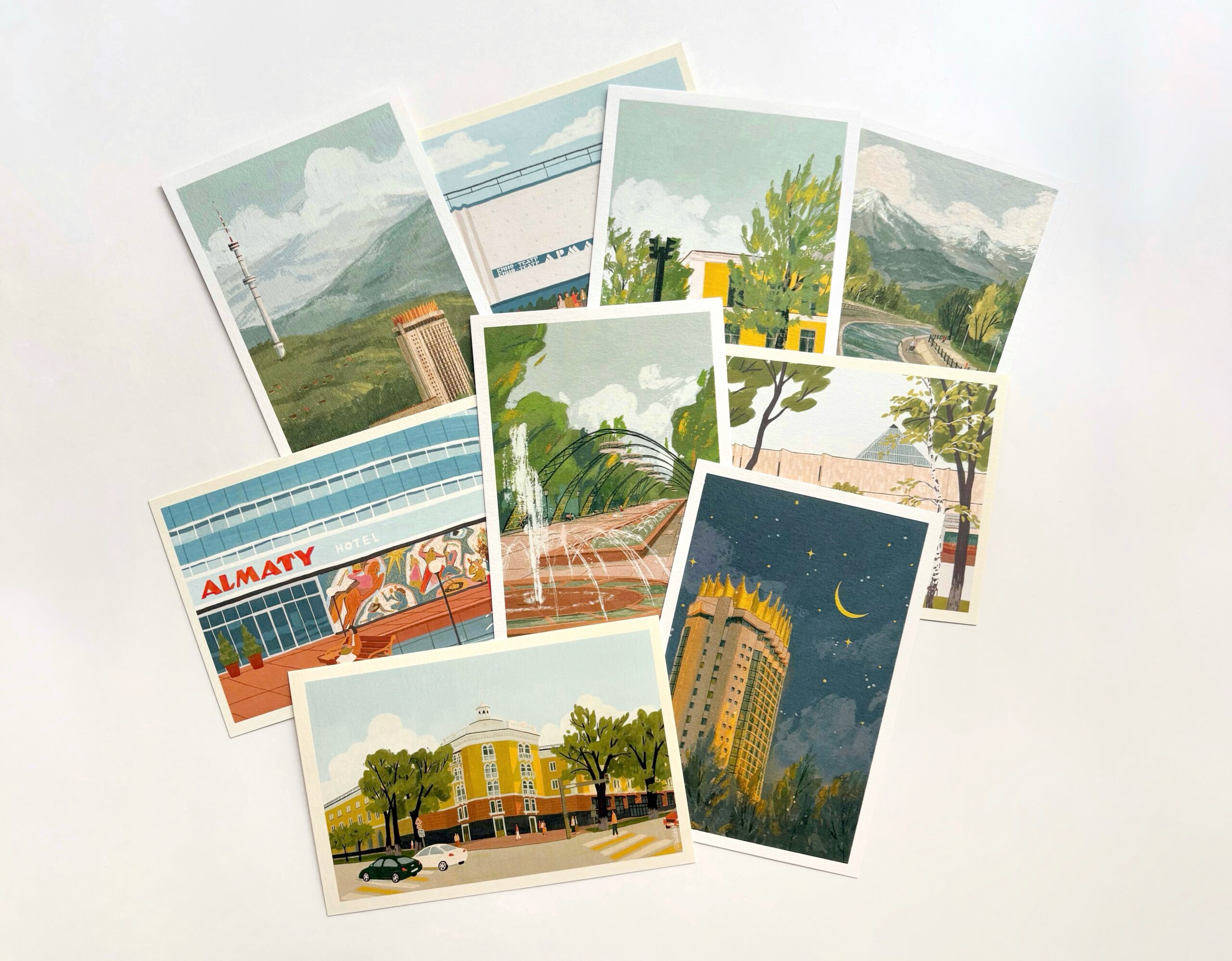
With colorful illustrations of landmarks, natural monuments, and city-life moments, Aidana Niyazalieva’s postcards of Almaty stand out. TCA spoke with the artist to learn more about her inspiration, creative process, and challenges behind her postcards and the Almaty arts scene.

TCA: What inspired you to start making postcards of Almaty?

I’ve been drawing since I can remember; everything surrounding me – my room, the streets, and the buildings – inspires me. This led me to study architecture. However, after working as an architect, I realized that my passion for drawing was stronger. I decided to try it, eventually devoting myself to illustration and turning this hobby into a profession. I started with the city I grew up in, Almaty, and created a few postcards of the views I walked past the most. This became a way to combine everything I love – art, architecture, and my love for the city.

TCA: How do you decide which landmarks, views, or themes to feature in your postcards?

I choose places and themes close to me that evoke an emotional connection in people. Usually, the ideas come from my walks around the city. During my walks, I take many photos for possible drawings. Sometimes, a few buildings of the same type could grow into a series of illustrations, as in the “Houses“ postcard set that was united by the old houses of the Soviet period located in a Golden Square area. Also, I might get requests from people about places they would like to see, as happened with the Kazakhstan Hotel or Esentai River illustrations.

TCA: What is your favorite spot in Almaty to capture in your art, and why?

My favorite place in Almaty is the old city center. Its unique architecture, with characteristic features from different periods from neoclassical to modernist buildings, and its streets with cafes and terraces have always attracted my attention. Those buildings keep their history, whether these are old houses with sophisticated details or monumental facades of theaters and institutes. When I’m there, I always look closely at small elements like the carved balconies, window frames, mosaics, and patterns on the facades – I try to capture them in every illustration.

TCA: Are there specific stories or personal memories behind some of your postcard designs?

As a local, I have a personal connection to almost every location I illustrate. Capturing a place authentically requires more than just visual reference – it also needs an emotional connection. That’s why I barely draw locations I’ve never visited. Behind almost every illustration is a moment tied to the place. For example, the Kasteyev Museum holds a special place in my heart. My grandma used to take me there often when I was little, and it’s where I first took art lessons. So, I decided to create this illustration to capture the architecture of the museum and the memories connected to the place.
TCA: Can you walk us through the creative process behind designing a postcard?

Firstly, after the location is chosen, I create a rough sketch to determine the composition that will best convey the atmosphere of the place. After that, I move on to the detailed drawing, experimenting with colors to find the palette reflecting the general mood. Then, I add finishing touches, like strokes, textures, and people. While placing them, I always love to imagine a little story of who they are and how they communicate with the place and each other. When everything is finished, I step aside and leave the finished illustration until the next day or so, and then I come back to see if anything needs to be retouched.

TCA: What tools and materials do you typically use for your art?

For the past few years, I switched from traditional materials to digital. When I started to take commissioned orders, it was also more convenient for me as it speeds up the process and makes it easier to edit the illustration for the client if needed. I use brushes and techniques similar to analog for digital drawings to keep the feeling of being made traditionally. When sketching just for myself, I usually use materials that are easy to carry with me, like brush pens or colored pencils.

TCA: How do you ensure your postcards capture the essence of Almaty?

There was a moment when I asked myself the same question: “How do you convey the core of Almaty in the illustrations?” To answer it, I decided to make a list of everything that, for me, defines the essence of the city. I later created a sticker sheet from that list called “Almaty is…, ” showcasing my associations with the city. The sheet includes nine stickers with the captions: “cozy balconies,” “summer terraces,” “fountains,” “walks,” “houses with history,” “colorful details,” Medeo,” “mountains,” and “cultural places.” I believe these are the signature elements that reflect Almaty’s unique character. So, when I create an illustration, I try to incorporate at least one of these elements to capture the atmosphere, whether it’s a cityscape or nature.

TCA: Do you collaborate with local businesses or other artists in Almaty?

Yes, I’ve collaborated a few times with local companies. The goal of such projects is usually not to earn money but to create new connections and promote each other’s work. Such projects also help to exchange your audiences. For example, there was a collaboration with a local photo studio for their birthday. We have created postcards and stickers that people could buy at their studio or directly from me. This way, more people reached out to both of us and even brought me more commissions.

TCA: What challenges have you faced as an independent artist in this niche?

During this period working for myself, I’ve had to struggle with a few things. The first thing is finding an audience. In the initial stages, attracting attention to my work was difficult. I had to learn how to properly present my projects on social media and local markets to get noticed. The second thing was the financial side, where I had to consider the cost of expenses on materials such as printing and packaging and, based on this, plan the budget so that the cost pays off and simultaneously keeps the price affordable. Another struggle is finding the balance between creativity and administration. Working for yourself, in addition to drawing, you have to do everything, from taking photos of your products and running social media to responding to messages and shipping orders. That takes a reasonable amount of time and energy, but all these challenges have taught me to stay flexible and organized.

TCA: How do you stay motivated and inspired to create new designs?

To keep myself motivated, I participate in local markets from time to time. Preparing for the market stimulates you to create something new, and it helps you revise and organize your workflow in a limited time, although it can be a little challenging. But mostly, I feel inspired by people who support my work. When I receive feedback from people telling me they have my art and send postcards around the world, it always warms my heart and motivates me to create more.

I also love trying new things: exploring new styles, participating in art challenges, workshops, or visiting shows by other artists. This helps me to stay inspired and not get stuck in a routine. Of course, there are moments of artistic block when it feels like you can’t create anything new. In these moments, I just allow myself to rest, switch to something else, or work on something small and insignificant – usually, it helps.

TCA: How does the culture and landscape of Almaty influence your work?

Over the past few years, the city’s landscape has changed a lot. There are lots of new buildings, cafes, and local businesses that constantly modify the urban identity. It inspires me to create works that combine heritage and modernity and adapt to changes in the city’s culture. For instance, in the past few years, people have spent more time on summer terraces due to the rise of cafes and coffee shop culture. One of the other changes is that people have become more aware of their surroundings, showing more interest in buildings’ history and details. All these changes stimulated me to highlight more of these moments in my illustrations.

TCA: If you could design a postcard to encapsulate Almaty’s spirit in one image, what would it look like?

If I had to think of a postcard to represent the city, I’d choose something that combines architectural landmarks and scenes of nature. I think that description applies to one of the existing postcards where we can see its famous buildings, like the Kazakhstan Hotel and the Kok Tobe TV tower that have become the city’s symbols, and there are our mountains with their green slopes in the background. That is, by the way, the postcard people tend to choose the most when they want to send it to someone to show the essence of Almaty.

If I were to create a postcard for a resident, the landscape would be different and include a place that might not exist today, but was prevalent in the old days. One such place was the Ldinka (Льдинка) Café, located in the heart of the Golden Square area. That postcard would be a mixture of the old and new. Along the way, there’s the Panfilov Street Promenade with crowds passing by, the Abay Opera House in the background, and mountain peaks in the distance. That kind of postcard, in my opinion, would evoke a nostalgic feeling in the older generation, but still be recognizable for the younger one, whilst simultaneously reflecting the city’s soul.
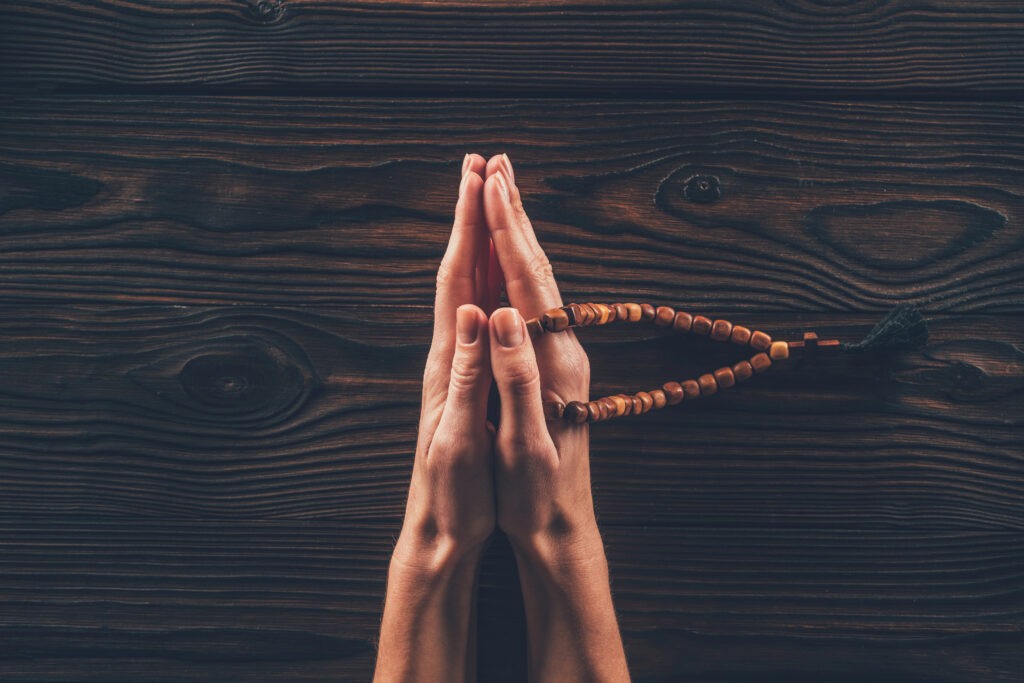

Kyrgyzstan Tightens Regulations on Religious Activities

Kyrgyzstan’s President Sadyr Japarov has signed into law a series of amendments regulating the religious sphere. The amendments, approved by the Kyrgyz parliament on December 26, 2024, aim to ensure the rights of citizens while establishing clear responsibilities for religious associations in accordance with the Law “On Freedom of Religion and Religious Associations.”

Key Provisions of the Amendments

The new legislation introduces several notable restrictions and guidelines:

  1. Prohibition of Face-Covering Clothing:
    Clothing that obscures a person’s identity, such as the niqab, is now banned in government offices and public places. Exceptions include clothing required for work or for medical purposes.
  2. Prohibition of Coercion in Religious Conversion:
    The amendments ban any form of coercion aimed at converting individuals to a particular religion. This includes targeting followers of other faiths, religiously neutral individuals, or atheists.
  3. Restrictions on Religious Ceremonies:
    Religious ceremonies, meetings, and other religious events are now prohibited in nursing homes, homes for the disabled, correctional institutions, pre-trial detention centers, and military units. Invitations to religious figures or preachers from foreign religious organizations for such events are also prohibited.
  4. Limitations on Religious Organizations:
    • Religious organizations are prohibited from interfering in the activities of state authorities or local governments.
    • Dissemination of religious literature, audio, and video materials in public places, educational institutions, or through door-to-door efforts is banned.
  5. Restrictions on Political and Electoral Activities:
    • Political parties cannot be established on a religious basis, nor can they be financed by foreign entities.
    • Civil servants are barred from engaging in religious activities, and religious materials cannot be used in electoral campaigns.
  6. Prohibition on Religious Terms in Business Names:
    The Kyrgyz Cabinet of Ministers approved list of religious words and terms that cannot be used in the names of businesses or legal entities. Prohibited terms include references from various religions, such as “Jesus Christ,” “The Bible,” “Jihad,” “Krishna,” “Kosher,” “Hajj,” and “Caliphate,” among others.

Expanding Oversight of Religious Activities

The new laws reflect the Kyrgyz government’s growing efforts to exert control over the religious sphere in the predominantly Muslim nation. Kyrgyzstan leads Central Asia in terms of the number of mosques per believer, with 3,593 mosques across the country as of 2024. Of these, 46 are registered in Bishkek and 89 in Osh. The country also has 220 religious educational institutions, most of which are located in the southern Osh region.

The restrictions on religious literature, events, and political activity come amid broader efforts to regulate religious influence on public and political life.

Implications for Religious Organizations

The prohibition on using religious terminology in business names has drawn particular attention, as the banned terms include key concepts from Islam, Christianity, and other major religions. This move could limit the visibility of religious organizations and restrict their operations in the public sphere.

Additionally, the ban on foreign preachers in sensitive locations, such as prisons and military units, underscores the government’s intent to limit external religious influence and maintain tighter control over religious practices within the country.

Kyrgyzstan’s amended laws mark a significant tightening of state regulation over religious activities. While the government frames these changes as necessary for ensuring order and protecting citizens’ rights, critics may view them as an attempt to curtail religious freedoms in a country known for its religious diversity. The long-term impact of these measures on the country’s religious landscape remains to be seen.

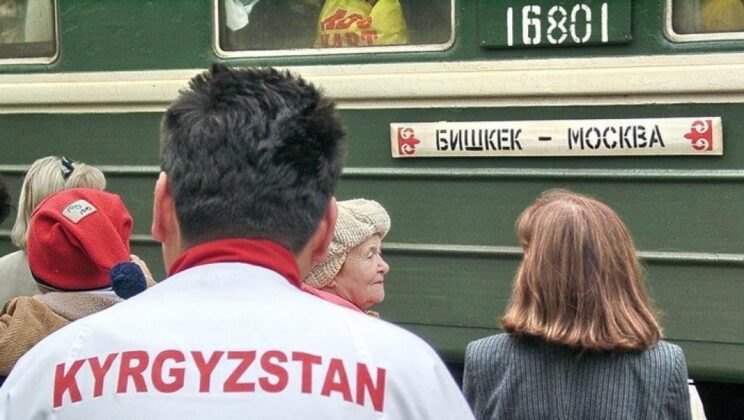
Migrants from Kyrgyzstan Anticipate Tougher Conditions for Work in Russia

A majority of Kyrgyz citizens believe that working conditions for migrants in Russia will deteriorate significantly in the near future, according to a recent survey by the FOCUS Alliance of Euro-Asian Sociologists.

Survey Findings

The survey results paint a grim outlook for migrant workers from Kyrgyzstan:

  • 61.5% of respondents believe that conditions for migrant workers in Russia will worsen significantly.
  • 14.7% think the situation will remain the same.
  • 10.7% are confident that despite challenges, migrants will adapt.
  • Only 4.4% are optimistic, expecting improved conditions for foreign workers.
  • Another 8.9% found it difficult to predict the future of migrant labor in Russia.

A similar sentiment was observed in Uzbekistan. According to the same survey:

  • 35% of Uzbek respondents believe it will become impossible for migrants to find work in Russia.
  • 28% believe the situation will remain stable.
  • 22% are confident that migrant workers will overcome challenges.
  • 6% expect conditions to improve.

The survey, which included 1,433 participants, used a random sampling method with a margin of error of 3%.

Stricter Migration Policies in Russia

Russia has tightened its migration policies in recent months, with the State Duma passing multiple bills aimed at increasing oversight of foreign nationals.

The crackdown on migration follows a terrorist attack at Moscow’s Crocus City Hall, which reignited debates around national security and the regulation of foreign labor. Russian President Vladimir Putin emphasized that the interests of Russian citizens must take priority in drafting migration laws. He also stressed the importance of migrants adhering to local legislation and having knowledge of the Russian language.

These developments reflect a growing trend in Russia to limit migration and impose stricter conditions on foreign workers.

Kyrgyzstan’s Response

Despite the challenges, Kyrgyzstan remains committed to labor migration as a critical aspect of its economy. Deputy Chairman of the Cabinet of Ministers Edil Baisalov reassured that the country will continue to export labor to Russia.

Russia is a key destination for Kyrgyz migrant workers, with remittances from workers abroad making up a significant portion of Kyrgyzstan’s GDP. However, with stricter migration laws and a shifting labor market, the ability of Kyrgyz workers to sustain their livelihoods in Russia may face serious obstacles.

The survey results highlight widespread pessimism among Kyrgyz and Uzbek citizens regarding the future of migrant work in Russia. Stricter migration policies and a focus on prioritizing Russian citizens are contributing to uncertainty for Central Asian migrant workers. While Kyrgyzstan continues to rely on labor migration to support its economy, adapting to the evolving conditions in Russia will require resilience and potentially new strategies to protect its migrant workforce.

Uzbekistan May Reduce Prison Sentences for Inmates Who Read Books

Uzbekistan is considering a new initiative that would reduce prison sentences for inmates who engage in reading, as part of efforts to promote rehabilitation and personal development.

Proposal Details

The Milliy Tiklanish (National Revival) party has been advocating for this initiative for several years, inspired by similar practices in other countries. According to the party’s press service, a draft law has now been developed to bring the proposal to life.

Under the proposed legislation, prisoners who read one book from an approved list and pass an exam on its content could have their sentences reduced by three days. The program would allow inmates to read up to 10 books per year, potentially reducing their sentences by up to 30 days annually.

The reading list will be curated and managed by the Republican Center for Spirituality and Enlightenment, ensuring that the selected books align with the program’s goals of fostering intellectual and moral growth.

International Inspiration

The concept of reducing prison sentences through reading is not unique to Uzbekistan. Last year, Russian politician Vladislav Davankov proposed a similar initiative for inmates in pretrial detention centers and prisons. Davankov argued that reading programs could play a vital role in the rehabilitation and resocialization of prisoners.

Kazakhstan has already taken steps in this direction. In 2021, the country launched a pilot project in correctional facilities in the Karaganda region. Under this program, inmates read books from an approved list, retell the content to a commission, and write essays summarizing the material. Positive evaluations by the commission can lead to improved detention conditions or even early release.

Broader Implications

If implemented, the program in Uzbekistan could serve as a tool to encourage education, personal growth, and rehabilitation among inmates. By focusing on intellectual engagement, the initiative could help prisoners reintegrate into society upon release and reduce recidivism rates.

While the draft law is still in the development stage, it reflects Uzbekistan’s broader efforts to modernize its prison system and promote rehabilitation over punishment. If successful, the initiative could become a model for other countries in the region seeking to implement progressive approaches to criminal justice.

Potato Hunt: Astana Restricts Potato Sales Amid Price Surge

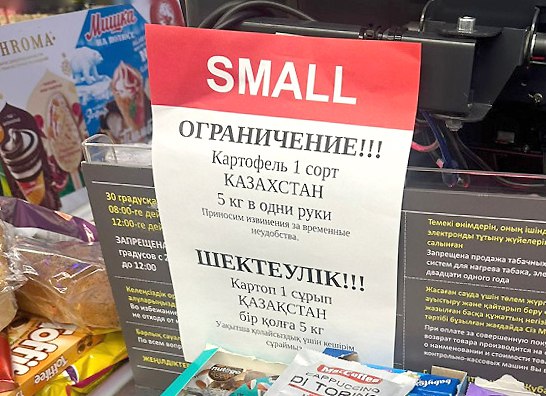
Supermarkets in Astana, including the Small and EuroSpar chains, have introduced a restriction on the sale of potatoes, limiting purchases to no more than 5 kilograms per customer. The Astana Akimat’s Department of Investment and Entrepreneurship Development announced that the measure aims to prevent speculation. However, officials have not provided a timeline for when the restrictions might be lifted.

A Sharp Spike in Prices

The price of potatoes has surged sharply in Kazakhstan. According to the Bureau of National Statistics, this spike occurred within a single week, from January 14 to 21. The annualized price increase averaged 57.8% across the country, with some regions experiencing even steeper hikes. In Astana, the price of potatoes doubled – rising by 100% – with a kilogram costing between 400 and 500 KZT ($0.96).

The Ministry of Agriculture (MOA) attributes the price surge to speculation by unscrupulous middlemen. Deputy Minister Yerbol Taszhurekov clarified that the situation cannot be classified as “price collusion” but acknowledged significant price disparities between agricultural producers and retail outlets.

“This is the result of speculative activity. After the New Year, many vegetable storages and warehouses remained closed, leading to a reduced supply in the market. Resellers and speculators exploited this temporary shortage to raise prices,” Taszhurekov explained.

Tackling the Reseller Problem

In response, local governments (akimats) began releasing potatoes from government stabilization funds at significantly reduced prices—between 115 and 130 KZT ($0.25) per kilogram. These measures were implemented to counter speculative practices and stabilize prices until the new harvest.

The MOA reported that Kazakhstan currently has more than 62,000 tons of potatoes in reserve, excluding stocks in trade networks. These supplies are deemed sufficient to meet domestic demand until the next harvest.

In Astana, this intervention helped bring down prices in retail chains like Small and EuroSpar to 280 KZT ($0.54) per kilogram. However, a new issue arose: small retailers began purchasing potatoes in bulk from these supermarkets to resell them at higher prices. To address this, supermarkets imposed a restriction on potato sales, limiting purchases to 5 kilograms per customer.

“All necessary measures have been taken to ensure stable potato prices in Astana. There is no shortage in the city, and products are sufficiently stocked on retail shelves and in markets. Supplies are being replenished in a timely manner. However, to prevent bulk purchases by resellers for resale in small neighborhood stores, supermarkets in the Small and EuroSpar chains have implemented temporary purchase limits,” stated the Department of Investment and Entrepreneurship Development of Astana.

Collaboration Between Retail Chains and Farmers

The Ministry of Trade and Integration (MTI) also took steps to address the situation. Following discussions with representatives from major supermarket chains such as Magnum, Small, Anvar, and Dina, an agreement was reached for these retailers to directly purchase 1,500 tons of potatoes from farmers. The supermarkets will independently manage the transportation of these goods to ensure steady supply.

“Akimats in the regions must present their specific needs, including the required volumes, so that retail chains can promptly meet market demand. Additionally, there must be stricter monitoring of key markets and improved coordination between agricultural producers and retailers,” said Aizhan Bizhanova, Deputy Head of MTI.

The ministry also disclosed that since the beginning of the year, authorities have identified 49 instances of violations of the regulation limiting trade markups on potatoes – a socially important product – to no more than 15% of the purchase price.

Export Restrictions

To further stabilize the market, Kazakhstan implemented a six-month restriction on potato exports to non-Eurasian Economic Union (EAEU) countries in early January. This decision was intended to ensure sufficient supply within the country and curb price volatility.

While temporary restrictions on potato sales in Astana aim to address speculative practices and stabilize prices, the government’s broader strategy includes improved supply chain management, tighter market oversight, and direct cooperation between farmers and retailers. These measures highlight the complex challenges in balancing market stability with ensuring affordability for consumers.

Chinese Company to Develop Low-Altitude Technologies and Intelligent Manufacturing in Kazakhstan

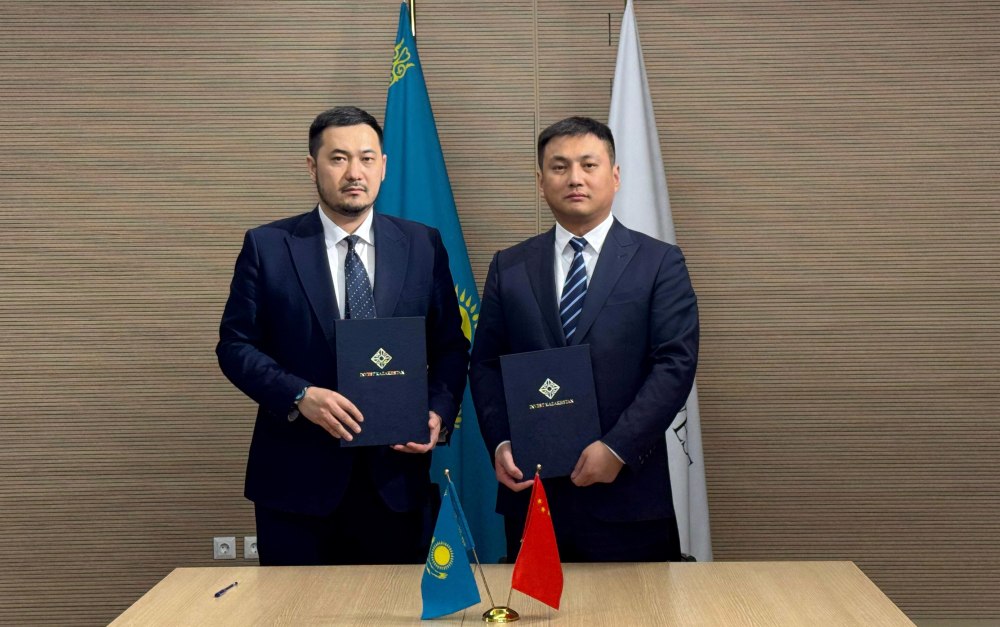
Kazakh Invest, Kazakhstan’s national investment company, has signed a memorandum of understanding (MoU) with China’s Polyking New Horizons Technology Industry Co. Ltd. The agreement focuses on collaboration in the emerging field of low-altitude economy and intelligent manufacturing.

As part of the partnership, the companies plan to establish an industrial park in Kazakhstan, which will integrate drone technologies, smart city solutions, and advanced manufacturing systems. The $200 million project is expected to create 1,000 new jobs, according to Kazakh Invest.

Expanding High-Tech Opportunities

The MoU also includes provisions for developing projects in the chemical industry and innovative technologies. These initiatives aim to strengthen Kazakhstan’s position as a hub for high-tech production and innovation in Central Asia.

Azamat Kozhanov, Managing Director of Kazakh Invest, highlighted the vast potential for low-altitude technologies in various sectors, including agriculture, energy, construction, and infrastructure management.

“The advanced technologies and expertise of Polyking will bring new momentum to the development of this field in Kazakhstan,” Kozhanov stated. He also noted the significant economic opportunity tied to this sector, adding: “By 2050, the global low-altitude economy market is expected to reach $8.8 trillion. Therefore, we are actively creating platforms to develop new industries and providing comprehensive support.”

Broader Trends in Low-Altitude Technology

Kazakhstan has already taken steps to integrate drone production into its economy. The Times of Central Asia recently reported on a $12 million project by Yesil Technology Company, a subsidiary of China’s Shaanxi Kaizhuo Electronic Technology Co. Ltd., to establish an industrial drone manufacturing facility in the country.

This collaboration underscores Kazakhstan’s strategic focus on becoming a leader in the low-altitude economy, a field that includes drones, unmanned aerial vehicles (UAVs), and other advanced technologies that operate at low altitudes.

The partnership between Kazakh Invest and Polyking New Horizons Technology marks another milestone in Kazakhstan’s push to diversify its economy through high-tech industries. The planned industrial park, along with complementary projects like drone manufacturing, positions Kazakhstan to capitalize on the growing global market for low-altitude technologies and intelligent manufacturing. If successfully implemented, these initiatives could transform the country into a regional leader in cutting-edge technology and innovation.