• KGS/USD = 0.01144 0%
  • KZT/USD = 0.00213 0%
  • TJS/USD = 0.10456 0.19%
  • UZS/USD = 0.00008 0%
  • TMT/USD = 0.28490 0%
  • KGS/USD = 0.01144 0%
  • KZT/USD = 0.00213 0%
  • TJS/USD = 0.10456 0.19%
  • UZS/USD = 0.00008 0%
  • TMT/USD = 0.28490 0%
  • KGS/USD = 0.01144 0%
  • KZT/USD = 0.00213 0%
  • TJS/USD = 0.10456 0.19%
  • UZS/USD = 0.00008 0%
  • TMT/USD = 0.28490 0%
  • KGS/USD = 0.01144 0%
  • KZT/USD = 0.00213 0%
  • TJS/USD = 0.10456 0.19%
  • UZS/USD = 0.00008 0%
  • TMT/USD = 0.28490 0%
  • KGS/USD = 0.01144 0%
  • KZT/USD = 0.00213 0%
  • TJS/USD = 0.10456 0.19%
  • UZS/USD = 0.00008 0%
  • TMT/USD = 0.28490 0%
  • KGS/USD = 0.01144 0%
  • KZT/USD = 0.00213 0%
  • TJS/USD = 0.10456 0.19%
  • UZS/USD = 0.00008 0%
  • TMT/USD = 0.28490 0%
  • KGS/USD = 0.01144 0%
  • KZT/USD = 0.00213 0%
  • TJS/USD = 0.10456 0.19%
  • UZS/USD = 0.00008 0%
  • TMT/USD = 0.28490 0%
  • KGS/USD = 0.01144 0%
  • KZT/USD = 0.00213 0%
  • TJS/USD = 0.10456 0.19%
  • UZS/USD = 0.00008 0%
  • TMT/USD = 0.28490 0%

Kazakhstan Restricts Poultry Imports from U.S. and Germany Due to Avian Flu

Kazakhstan has temporarily suspended the import of poultry products from Delaware and South Carolina in the United States, as well as from the German state of Baden-Württemberg, due to outbreaks of avian flu in these regions. The decision was announced by Kazakhstan’s authorities and is based on data from the World Organization for Animal Health.

The ban covers a broad range of items, including live poultry, hatching eggs, down and feathers, poultry meat, and any poultry products that have not been heat-treated at a minimum temperature of 70°C. Additionally, the restrictions apply to feed and feed additives (excluding those derived from plants or produced through chemical or microbiological synthesis), hunting trophies from game birds that have not undergone taxidermy treatment, and used equipment for poultry farming, slaughter, and processing.

The measures concerning Baden-Württemberg took effect on January 20. These steps follow earlier restrictions imposed on January 14, when Kazakhstan banned livestock imports from Germany due to an outbreak of foot-and-mouth disease in the Brandenburg region.

Kazakhstan’s veterinary authorities continue to monitor the global epizootic situation closely in order to respond swiftly to any threats posed by the spread of dangerous animal diseases.

Kyrgyz Businesses and Government Meet to Discuss New Tax Initiative

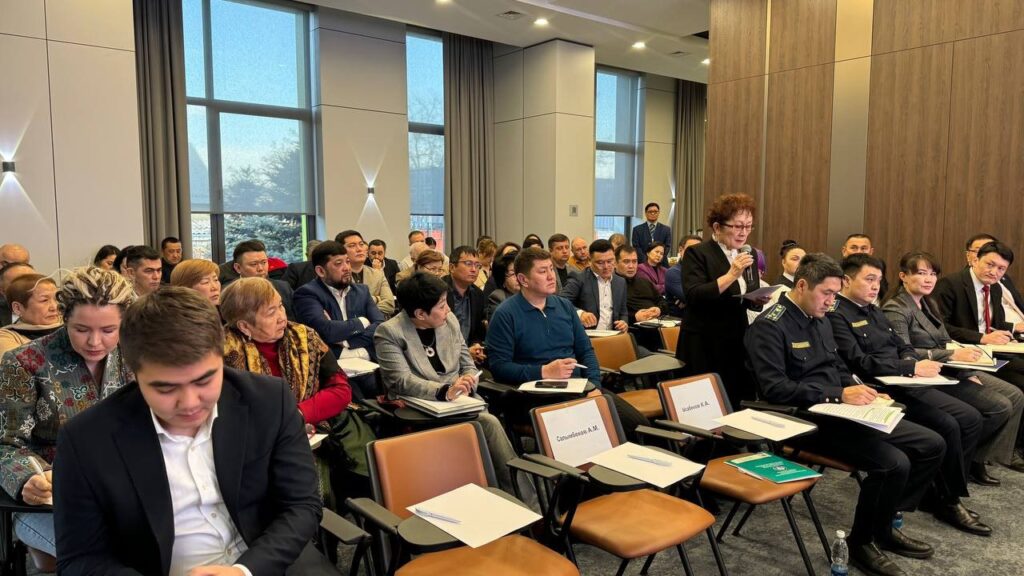
Government officials, members of parliament, and entrepreneurs gathered at one of Kyrgyzstan’s largest business associations to discuss pressing issues affecting the country’s business environment, including taxation and efforts to streamline processes for entrepreneurs.

The primary focus of the meeting was the introduction of the electronic bills of lading (EBL) system. The Times of Central Asia has previously reported on the challenges businesses face with this new system. The State Tax Service (STS) has pledged to revise the EBL system by the end of the month to address concerns raised by the business community.

Almambet Shykmamatov, head of the STS, acknowledged that authorities had rushed the implementation of the EBL system without adequately considering the interests of businesses.

“We understand that the market is a complex system that cannot be changed overnight. We are committed to dialogue and compromise. Our goal is not only to regulate but also to support businesses. That’s why continuous engagement with the business community is essential,” Shykmamatov stated.

Beyond electronic bills of lading, entrepreneurs raised concerns over the lack of preventive measures in Kyrgyzstan’s system of fines. Akzhol Isayev, general director of Dordoi Security, highlighted that unlike Russia and Kazakhstan, which have legal provisions for issuing warnings, Kyrgyzstan imposes penalties without warnings.

“Kyrgyzstan has 11 articles with fines, but none that provide for warnings,” Isayev explained. He also noted that some fines, which can reach as high as one million KGS (approximately $12,000), often lead to business closures or encourage corruption.

Shykmamatov admitted that excessive tax pressure can harm the business environment. Consequently, participants decided to establish a working group to review and reform the system of penalties, aiming for a more business-friendly approach.

Sergei Ponomarev, president of the Association of Markets, Trade, and Services Enterprises, emphasized that protecting private property is critical for attracting investment. However, he warned that businesses in Kyrgyzstan are hesitant to invest in real estate due to legal uncertainties.

“An entrepreneur might honestly purchase property, invest in it, and create jobs, only to later discover that the land was acquired illegally 30 years ago. This uncertainty makes businesses afraid to commit to long-term projects,” Ponomarev said.

To address this issue, the business community has proposed the introduction of a statute of limitations for real estate transactions.

“It’s encouraging when the state not only listens to our problems but also offers constructive solutions. I am confident that this approach will improve the investment climate and raise the standard of living for our citizens,” Ponomarev added.

The STS noted that similar meetings have been held with representatives of logistics companies, the Chamber of Commerce and Industry, and the American Chamber of Commerce in Kyrgyzstan.

Kazakhstan Ships First Batch of Kashagan Oil to Baku

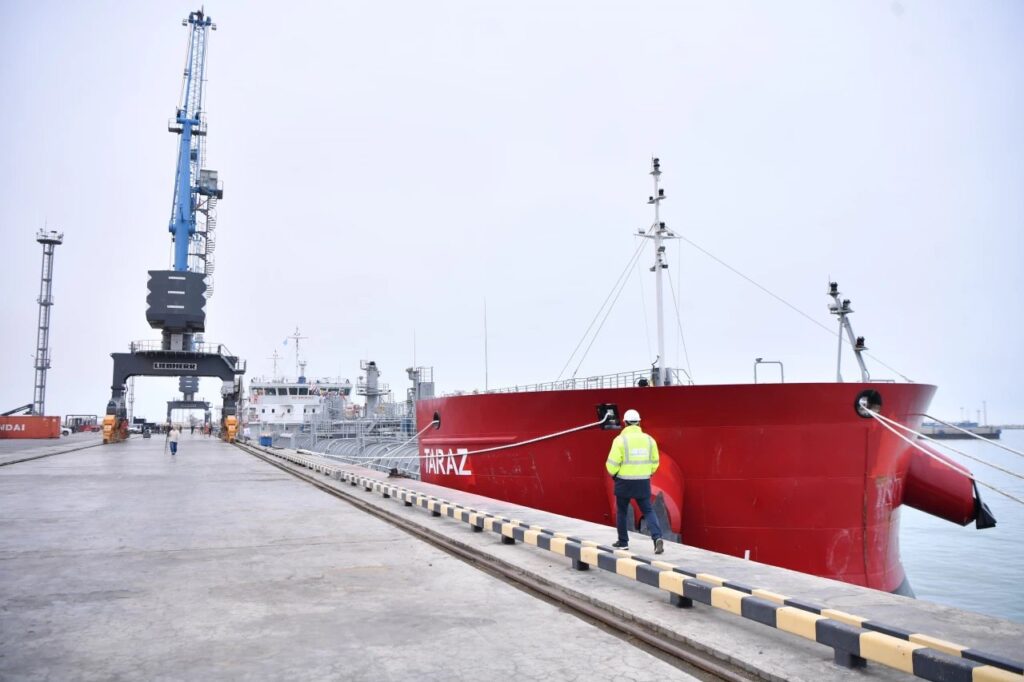
Kazakhstan has shipped its first batch of oil from the Kashagan field to the Azerbaijani port of Baku, marking a significant step in the country’s efforts to diversify its export routes. The shipment was confirmed by the national oil company KazMunayGas (KMG).

The tanker Taraz, carrying Kashagan oil, departed from the port of Aktau and is en route to Azerbaijan. Upon arrival in Baku, the oil will be transported via the Baku-Tbilisi-Ceyhan (BTC) pipeline system to the Mediterranean Sea. The export operation is being carried out by KMG Kashagan B.V., a subsidiary of JSC NC KazMunayGas, which manages Kazakhstan’s share in the North Caspian Production Sharing Agreement (PSA).

This initiative aligns with Kazakh President Kassym-Jomart Tokayev’s directive for KazMunayGas to develop alternative hydrocarbon export routes. The shipment also advances the development of the Trans-Caspian International Transportation Route, a vital corridor for Kazakhstan’s oil exports.

In 2022, KazMunayGas and Azerbaijan’s state oil company SOCAR signed a general agreement to enable the transit of Kazakh oil. In March 2024, the two parties finalized plans for a phased increase in deliveries through Azerbaijan. Under the agreement, annual transit volumes are expected to reach 2.2 million tons.

KMG Kashagan B.V., which holds a 16.88% stake in the North Caspian PSA, represents Kazakhstan’s interests in the North Caspian Project (NCP). The company is responsible for the exploration and production of hydrocarbons in the Caspian Sea, as well as the independent transportation and sale of its production share under the PSA’s terms.

Energy analysts highlight that diversifying export routes will help Kazakhstan reduce its reliance on traditional oil supply corridors, thereby increasing flexibility and resilience in the face of global market volatility.

CNN Report on Ibn Sina Sparks Central Asian Nationality Debate

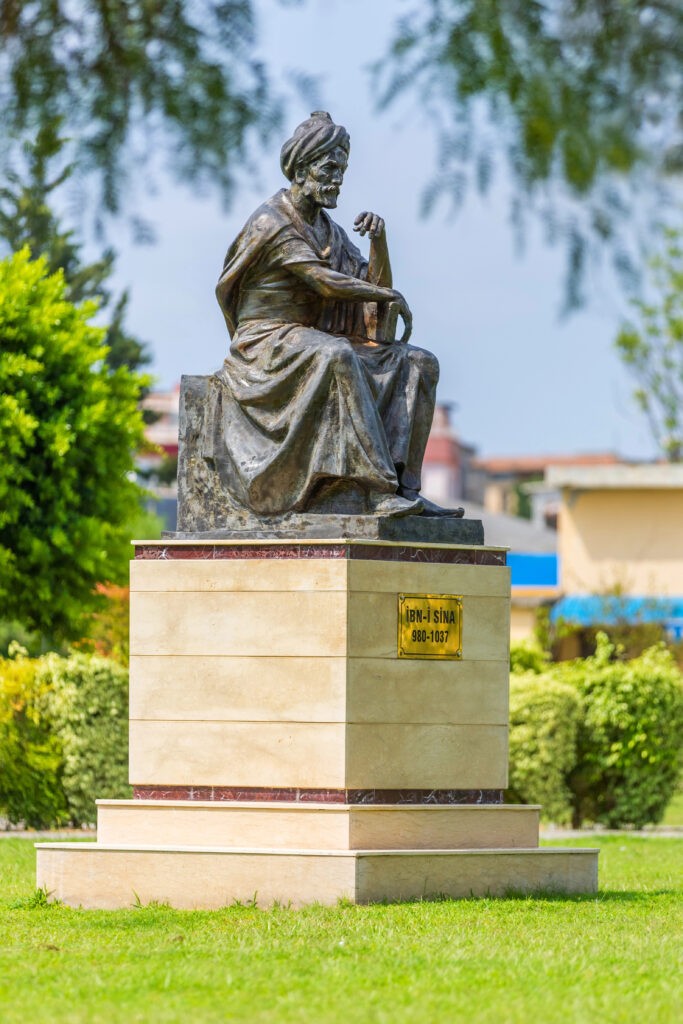
A recent CNN report referring to the scholar Ibn Sina as an Uzbek scientist has ignited controversy in Central Asia, particularly in Tajikistan. Tajikistan’s Minister of Culture, Matlubakhon Sattoriyon, strongly criticized the report, calling it a “distortion of reality.”

Ibn Sina, known as Avicenna in the West, was a polymath who made groundbreaking contributions to medicine, logic, physics, mathematics, and other sciences. Born in 980 in the village of Afshona near Bukhara, an area now part of Uzbekistan, he died in 1037. Over his lifetime, he authored more than 450 works, with about 240 surviving to this day. His most renowned book, The Canon of Medicine (Tib qonunlari), served as a standard medical text in Europe and the Islamic world for centuries.

While the Ibn Sina segment was actually created not by CNN itself but by the Center of Islamic Civilization in Uzbekistan, Sattoriyon accused CNN of disregarding historical facts and described the report as another example of what she called the “appropriation” of Tajik’s scientific and literary heritage. “This is an insult not only to the Tajik people but also to the history and culture of Persian literature worldwide,” she said. The minister urged Tajik scientists and intellectuals to counter such claims with evidence, though she also dismissed CNN’s report as “just a TV channel’s material with no historical basis,” pointing out that it does not reflect Uzbekistan’s official stance.

In Uzbekistan, reactions to the controversy varied. Sherzodkhon Kudratkhuja, Rector of the University of Journalism and Mass Communications, acknowledged the shared history of Uzbekistan and Tajikistan and called for moderation. “At a time when Central Asia is strengthening its unity, we must all approach such issues carefully,” Kudratkhuja said. He emphasized that Ibn Sina is commonly described as a scholar born in Bukhara, a region now within Uzbekistan’s borders, but suggested that he should be seen as a figure representing the entire Central Asian region.

Bobur Bekmurodov, Chairman of Uzbekistan’s “Yuksalish” movement, expressed disappointment with Tajikistan’s criticism. “The legacy of figures like Ibn Sina belongs to the entire region and the world,” Bekmurodov said. He urged Central Asian nations to focus on shared challenges such as climate change, economic growth, and security rather than divisive historical disputes.

Azamat Ziyo, Director of the Institute of History at Uzbekistan’s Academy of Sciences, echoed calls for regional unity. “There is no written evidence about the nationality of many historical figures in Central Asia, including Ibn Sina. What matters is their contribution to science and humanity, not their nationality,” he stated.

Ziyo also appealed to politicians to avoid interfering in historical scholarship. “The science of history is the business of historians. We should rely on objective, source-based research rather than political interpretations,” he said. He emphasized the importance of collaboration among historians from Uzbekistan, Tajikistan, Kazakhstan, Kyrgyzstan, and Turkmenistan to address shared historical legacies.

Drawing on his 40 years of research into the history of Central Asian statehood, Ziyo explained the complexity of national identities in the region. “During the reign of the Timurids, when our region reached its peak of development, historical sources often referred to the people of [Central Asia] and Iran as a mix of ‘Turks and Tajiks.’ For many iconic figures, such as Abdurahman Jami, Abu Nasr Farabi, Mahmud Kashgari, Zakhiriddin Muhammad Babur, or Alisher Navoi, there are no definitive records about their nationalities. The same is true for Ibn Sina.”

Ziyo invited the region’s historians to convene in Uzbekistan to foster dialogue and cooperation. “Our ancestors often stood together against invaders and shared a common history. Let us, as scholars, come together to address our shared challenges instead of arguing over nationality,” he urged.

Nazarbayev Agrees to Meet Belarusian President Lukashenko

Former Kazakh President Nursultan Nazarbayev has agreed to meet with Belarusian President Alexander Lukashenko, according to a statement released by the Belarusian leader’s press service.

“Today, there was a very warm, friendly conversation between the President of Belarus and the First President of Kazakhstan. Nursultan Nazarbayev cordially congratulated Alexander Lukashenko on his election victory and conveyed his sincere congratulations and greetings to the Belarusian people. Alexander Lukashenko also warmly thanked Nursultan Nazarbayev for his kind words and wishes. The Belarusian leader and the First President of Kazakhstan agreed to find an opportunity to meet and talk in the near future,” the statement read.

The meeting is part of a series of diplomatic engagements Nazarbayev has undertaken recently. In December 2024, he held a high-profile meeting with Russian President Vladimir Putin at the Novo-Ogaryovo residence. That visit sparked considerable public attention in Kazakhstan, with some parliamentarians expressing concern. Mazhilis Deputy Samat Nurtaza stated that such meetings cause him “internal anxiety.” Meanwhile, Deputy Yermurat Bapi suggested that Nazarbayev’s visit to Russia might be linked to the “Kazakhgate-2” case currently under review in the United States.

Lukashenko, who has ruled Belarus since 1994, has faced significant international criticism following his re-election on January 26, a process widely dismissed in the West as neither free nor fair. While the Belarusian Central Election Commission reported that Lukashenko secured 87.6% of the vote, the European Union and other international organizations denounced the results as “fictitious” and criticized the election for failing to meet democratic standards.

Despite the controversy, Lukashenko has received congratulations from various world leaders, including Kazakh President Kassym-Jomart Tokayev, who reportedly congratulated Lukashenko during a phone call. According to the state-run BelTA news agency, the election was monitored by 486 international observers from 52 countries, as well as over 44,000 national representatives. However, independent observers and western governments have cast doubt on the credibility of these reports.

The forthcoming Nazarbayev-Lukashenko meeting is expected to further discussions on regional and bilateral issues, though no specific details have been released.

Criticism of Kazakhstan’s Health Insurance System Reaches Parliament

Members of Kazakhstan’s Mazhilis (lower house of parliament) have voiced strong criticism of the country’s healthcare system, particularly the Social Health Insurance Fund, which they argue has lost public trust. Many citizens reportedly view the quality of medical services as unsatisfactory.

Kazakhstan operates a system of compulsory social medical insurance, wherein doctors’ services are funded through a combination of contributions from working citizens, their employers, and the state budget. These financial contributions are collected by the Social Health Insurance Fund, which then allocates the funds to medical institutions based on the volume of services provided to the population.

Speaking in Parliament, Health Minister Akmaral Alnazarova defended the system, claiming that it has led to improvements in key health and demographic indicators since its introduction.

“Today, 83% of Kazakhstanis are connected to the compulsory social health insurance system, 72% of whom are from vulnerable segments of the population. This demonstrates the availability of medical care in the country,” Alnazarova stated.

However, Mazhilis Deputy Chairman Dania Yespayeva pointed out that despite increasing healthcare budgets, public satisfaction with medical services continues to decline. According to surveys, up to 47% of Kazakhstanis consider the quality of domestic healthcare to be poor.

Deputy Askhat Aimagambetov echoed these concerns, accusing medical institutions of manipulating service statistics to secure additional funding from the Social Health Insurance Fund. He cited a case where a five-month-old child, who had not yet developed teeth, was recorded as having received dental services. Aimagambetov also claimed that hospitals sometimes charge the insurance fund for dozens of services provided to the same patient in a single day – an impossibility.

“The financing system encourages such behavior because payments are based on the quantity of services rendered, not on the effectiveness of treatment. As a result, the [Social Health Insurance Fund] has become a de facto bank for the Ministry of Health. Citizens and doctors alike have become hostages of inconsistent and poorly planned reforms, while the availability and quality of care have deteriorated. The system remains underfunded, and the resources it does have are spent inefficiently,” Aimagambetov stated.

He emphasized the need for stricter oversight of the reports submitted by medical institutions to the insurance fund for reimbursement. Currently, inspections cover only about 1% of these reports, a figure Aimagambetov described as insufficient.

Public dissatisfaction with health care is also reflected in broader trends. As previously reported by The Times of Central Asia, approximately 5% of Kazakhstanis considering emigration cite access to better medical services abroad as a primary reason.