• KGS/USD = 0.01144 0%
  • KZT/USD = 0.00192 -0%
  • TJS/USD = 0.10849 0.37%
  • UZS/USD = 0.00008 0%
  • TMT/USD = 0.28571 0.28%
  • KGS/USD = 0.01144 0%
  • KZT/USD = 0.00192 -0%
  • TJS/USD = 0.10849 0.37%
  • UZS/USD = 0.00008 0%
  • TMT/USD = 0.28571 0.28%
  • KGS/USD = 0.01144 0%
  • KZT/USD = 0.00192 -0%
  • TJS/USD = 0.10849 0.37%
  • UZS/USD = 0.00008 0%
  • TMT/USD = 0.28571 0.28%
  • KGS/USD = 0.01144 0%
  • KZT/USD = 0.00192 -0%
  • TJS/USD = 0.10849 0.37%
  • UZS/USD = 0.00008 0%
  • TMT/USD = 0.28571 0.28%
  • KGS/USD = 0.01144 0%
  • KZT/USD = 0.00192 -0%
  • TJS/USD = 0.10849 0.37%
  • UZS/USD = 0.00008 0%
  • TMT/USD = 0.28571 0.28%
  • KGS/USD = 0.01144 0%
  • KZT/USD = 0.00192 -0%
  • TJS/USD = 0.10849 0.37%
  • UZS/USD = 0.00008 0%
  • TMT/USD = 0.28571 0.28%
  • KGS/USD = 0.01144 0%
  • KZT/USD = 0.00192 -0%
  • TJS/USD = 0.10849 0.37%
  • UZS/USD = 0.00008 0%
  • TMT/USD = 0.28571 0.28%
  • KGS/USD = 0.01144 0%
  • KZT/USD = 0.00192 -0%
  • TJS/USD = 0.10849 0.37%
  • UZS/USD = 0.00008 0%
  • TMT/USD = 0.28571 0.28%
11 December 2025

The Geopolitical Battle for Kazakhstan’s First Nuclear Power Plant

Nuclear power plants currently operate in only 32 countries in the world. Kazakhstan seems poised to join their ranks in the near future; but what does this shift mean for the energy-rich Central Asian nation?

Following the collapse of the Soviet Union in 1991, Kazakhstan has been a strong advocate for nuclear non-proliferation and disarmament. Astana not only eliminated its nuclear arsenal, which was one of the largest in the world at the time, but also closed the Semipalatinsk nuclear test site, where the Soviet Union conducted more than 450 nuclear tests over 40 years.

Thousands of people in Kazakhstan experienced birth defects and cancer linked to nuclear testing. This history makes the construction of a nuclear power plant in the former Soviet republic a particularly sensitive issue. Nevertheless, a majority of the population in Kazakhstan is expected to support building a nuclear facility in the national referendum scheduled for October 6. But what comes after the vote?

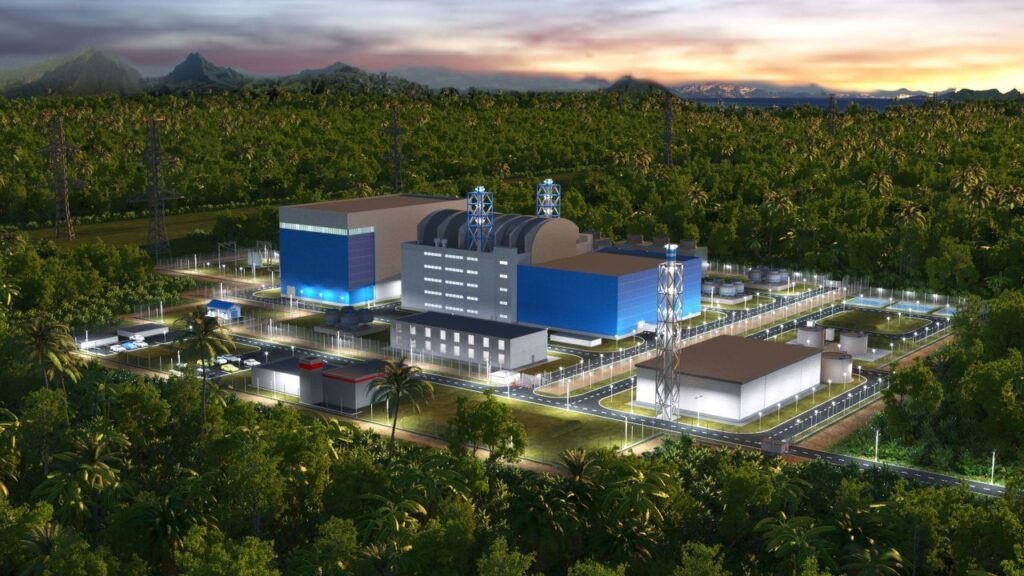
If the citizens of Kazakhstan approve the government’s plans to go nuclear, the country might get its first nuclear power plant no earlier than 2035. In the meantime, Astana will have to find a strategic partner to participate in the development of the facility. Building and operation a nuclear power plant requires advanced technology, engineering expertise, and rigorous safety standards – areas where Kazakhstan currently lacks experience.

“As a result, the country will likely need to rely on international partners to design, build, and possibly even operate its first nuclear power plant,” said James Walker, CEO and Head of Reactor Development at NANO Nuclear Energy, in an interview with The Times of Central Asia.

Although most policymakers in Kazakhstan would like Western companies to build a nuclear power plant in Ulken, on the western shore of Lake Balkhash, at this point the Russian State Nuclear Energy Corporation Rosatom seems to have the best chance of playing a key role in the project. In Walker’s view, Russia has a long history of cooperation with Kazakhstan in the nuclear sector and could be a logical partner, especially given its extensive experience in building and operating nuclear power plants in other countries.

“Rosatom has been actively involved in Kazakhstan’s nuclear sector for years, including uranium mining and nuclear fuel cycle activities. This established presence, coupled with Russia’s geopolitical influence in Central Asia, makes Rosatom a strong contender,” stressed the CEO of NANO Nuclear Energy, pointing out that Chinese corporations are also very interested in the potential construction of the first Kazakh nuclear power plant.

Indeed, according to reports, the China National Nuclear Corporation offered to build a 1.2 GW nuclear power plant unit in Kazakhstan for $2.8 billion, with the construction taking five years. Another candidate for the project is South Korea’s Korea Electric Power Corporation. The largest electric utility in the East Asian nation reportedly proposed building a water-cooled power reactor –using water as a coolant to transfer heat away from the core.

Walker, however, argues that while South Korea has a competitive edge due to its reputation for building cost-effective and high-quality nuclear reactors, such as those in the United Arab Emirates, it lacks the deep geopolitical ties to Kazakhstan that Russia and China possess.

“This may make Seoul a less likely candidate, unless Kazakhstan seeks to diversify its energy partnerships,” Walker emphasized, claiming that energy security and diversification are major reasons why Astana is pushing for the construction of a nuclear power plant.

As he sees it, developing a robust nuclear energy sector would ensure a stable, long-term supply of electricity, particularly as energy demands grow with economic development. It would also allow Kazakhstan to export excess electricity to neighboring countries, further solidifying its role as a key energy player in the region.

“By developing nuclear energy, Kazakhstan can diversify its energy mix, reducing dependence on fossil fuels and enhancing energy security. Moreover, it would enhance Kazakhstan’s position in the global nuclear energy market, transitioning from a raw material supplier to a country with advanced nuclear technology capabilities,” the NANO Nuclear Energy expert stressed.

Presently, nearly 80% of electricity in Kazakhstan is generated by burning coal, approximately 15% is produced by hydropower, and the remainder comes from renewable energy sources. Although Astana is seeking to develop its green energy sector, hoping to eventually begin exporting “green electricity” to Europe, it is unlikely it can achieve such an ambitious goal without nuclear power.

As the US author Michael Shellenberger highlighted in his 2016 New York Times article, the only countries that have successfully moved from fossil fuels to low-carbon power have done so with the help of nuclear energy. It is, therefore, no surprise that the European Union, particularly France, which is very interested in Kazakh energy, is aiming to develop a nuclear partnership with Astana.

But will French, or other European corporations, be involved in the construction of the first Kazakh nuclear power plant?

“Companies like EDF (Électricité de France) or Framatome have significant experience and a reputation for high safety and environmental standards. However, European involvement would likely come with strict regulatory requirements and potentially higher costs, which might be less attractive to Kazakhstan compared to the more financially flexible and geopolitically aligned options presented by Russia or China,” Walker concluded.

It is no secret that Russian companies officially control about 25% of Kazakhstan’s uranium, and that Rosatom plans to build a small nuclear plant in neighboring Uzbekistan. Also, the fact that Russian President Vladimir Putin and his Kazakh counterpart Kassym-Jomart Tokayev discussed energy cooperation amid Astana’s plans to hold a referendum on the construction of a nuclear power plant, clearly indicates that Moscow has significant nuclear ambitions in Kazakhstan.

The Kremlin is undoubtedly aiming to preserve Central Asia in its energy sphere for influence, fully aware that its potential involvement in the construction of a nuclear power plant in Kazakhstan would make Astana dependent on Rosatom’s maintenance. Consequently, the former Soviet republic would, at least in the field of energy, remain in Moscow’s geopolitical orbit.


Children’s Blood Lead Levels in Kyrgyzstan to be Investigated

Kyrgyzstan has started preparing for its first comprehensive study on blood lead levels in children between the ages of 1 and 6.

This project is being implemented by the National Institute of Public Health, the National Center for Health Promotion and Mass Communication, and with the support of the Ministry of Health and the Department of Disease Prevention.

The study will focus on three key areas. First, an information and education campaign to raise awareness among parents and healthcare providers about the risks of lead poisoning will be launched. Second, the prevalence of lead in children will be assessed to determine the extent of the problem. Third, the study will address environmental analysis to identify sources of lead contamination.

Exposure to lead is hazardous for children, as this toxic metal can cause serious health problems even at low levels of exposure. Lead affects brain development, leading to decreased cognitive function, developmental delays, behavioral issues, impaired learning, and reduced concentration ability. Children exposed to lead can also develop kidney and blood pressure problems.

On September 26-27, in preparation for the project, specialists from the Health Promotion Cabinets attended a communications training where they studied theoretical and practical aspects of the impact of lead on the body, methods of prevention, and the importance of public awareness. The problem of lead contamination in Kyrgyzstan is still understudied despite many sources of contamination, including tailing ponds, old batteries, and cottage industries.

The study is being conducted within the framework of the project “Reducing the Risk of Lead Poisoning in Children” and was made possible through the cooperation of Kyrgyzstan’s Ministry of Health, the Pure Earth project, and the public association “ECOIS-Bishkek.” The results of this study will become the basis for the development of targeted programs aimed at minimizing the impact of lead on children’s health.

Rosatom Considering Constructing Nuclear Power Plant in Northern Kyrgyzstan

Representatives of the Russian company Rosatom announced at a briefing that a low-capacity nuclear power plant may be built in Kyrgyzstan’s northern Chui region. According to them, a preliminary feasibility study has already been developed.

According to Rosatom, the company’s specialists have studied the seismic potential of southern Kyrgyzstan and concluded that there are many faults in the earth’s crust. This fact is reason enough not to build the plant in the south of the country. In contrast, Kyrgyzstan’s north is less prone to seismic fluctuations.

“The most suitable location for this project is the northern Chui oblast [region], where seismicity is the lowest. But we have not been able to name a specific site so far. A detailed study is needed. There are places in Kyrgyzstan where a nuclear power plant can be built, but not many,” said Dmitry Konstantinov, general director of Rosatom’s Russian representative office in Kyrgyzstan.

He said many parameters must be considered when choosing a construction site. These include seismic activity, remoteness from population centers, power lines, and a water source needed to cool the plant.

Rosatom stated that the design for the small nuclear power plant potentially being built in Kyrgyzstan was developed by adapting shipboard small-power technology currently used in ships. Each unit at the plant would have a capacity of 55 MW, with the possibility of installing up to six units, allowing the plant’s total capacity to reach 300 MW. For comparison, by 2025, Kyrgyz authorities aim to achieve a capacity of 400 MW (excluding the nuclear plant) through the completion of large hydroelectric power projects.

Two years ago, a memorandum on constructing a low-capacity nuclear power plant was signed between Bishkek and Moscow. Since then, the Russian company has been working on a feasibility study and studying land plots for the plant’s construction. According to the head of the representative office, serious discussions are continuing with the republic’s authorities.

“The decision to build a nuclear power plant in Kyrgyzstan will be made by the people together with the government. And we, for our part, will provide all the necessary information and technology to make it objective. We will inform the population about our technologies and decisions so that they feel safe,” emphasized Konstantinov.

Rosatom signed a memorandum with Uzbek authorities on constructing a small nuclear power plant earlier this year. According to the Russian company, construction has already begun, and the first power unit may operate in 2029.

On October 6, Kazakhstan will hold a popular referendum on constructing a nuclear power plant in Kazakhstan. Among the most likely candidates for construction are companies from Russia, China, South Korea, and France.

The Future of Transit in Kazakhstan

Increasing the volume of transit cargo through Kazakhstan is a strategic priority for the nation as it aims to become a transportation and logistics hub in Central Asia and the Caspian region, with its railways at the forefront of this effort. TCA spoke with Asem Mukhamedieva, Managing Director for New Projects at KTZ Express JSC, about the company’s current capabilities, prospects, and new projects in this direction.


Kazakhstan’s Role in Transit Cargo

TCA: Kazakhstan, has become a vital land transportation corridor between Asia and Europe. How does Kazakhstan Temir Zholy (KTZ) contribute to further increasing transit cargo, and what trends have you observed?

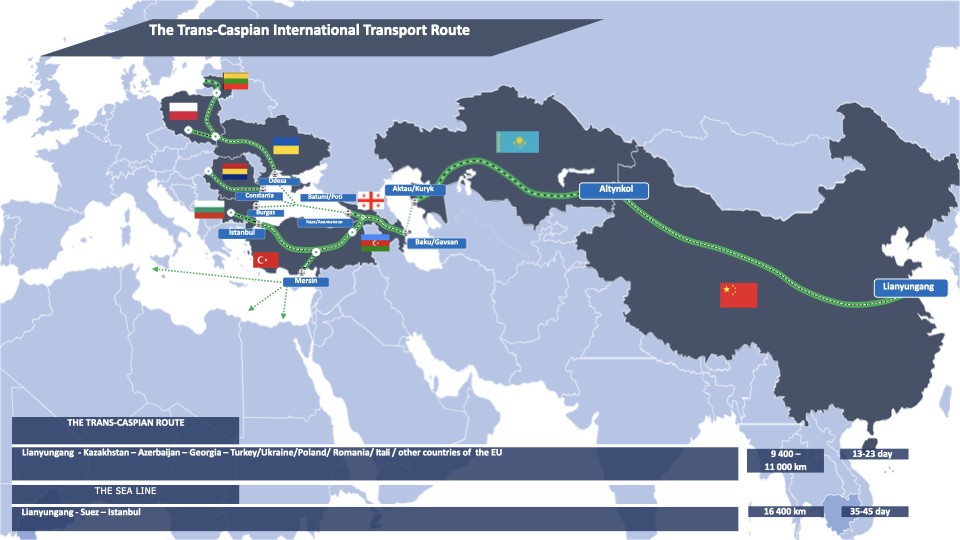
Mukhamedieva-  The volume of transit handled by KTZ Express in the first eight months of this year reached approximately 350,000 twenty-foot equivalent units (TEU). The China-Europe-China route saw a 36% increase, while the China to Central Asia route grew by 17%. Notably, the Trans-Caspian International Transport Route (TITR) dispatched 220 container trains, a twenty-fold increase from last year.

TCA: What new routes have been launched, and what is KTZ doing to increase them?

– KTZ is continuously expanding its transportation network and logistics services. One significant development is the Trans-Afghan route, which was launched this May. Under a pilot project, containers with aluminosilicate hollow microspheres were shipped from Pavlodar to Jebel Ali Port via Uzbekistan, Afghanistan, Pakistan, and the UAE. Offering competitive terms and tariffs has encouraged more cargo traffic along this route.

In July, we cut delivery times in half — down to just five days — on the Xi’an-Altynkol-Tashkent route, compared to the previous 10-12 days. This success is largely due to the new terminal in Xi’an, built by KTZ and its Chinese partners. The terminal consolidates cargo from various Chinese provinces, streamlining logistics processes and significantly improving efficiency.

We also launched several new logistics services to boost cargo traffic and strengthen international links. For example, in June, we introduced a regular South Korea-China-Kazakhstan-Central Asia route. We also reopened a previously unprofitable route from China to Iran and back, reducing costs by collaborating with Chinese partners.


The Growing Importance of the Trans-Caspian Route

TCA: You mentioned the growth of the TITR. Could you elaborate on the regions of China involved, the types of cargo, and what steps are being taken to attract more shipments?

–  The Trans-Caspian International Transport Route (TITR) has become a critical link in Eurasian logistics. This year, the route achieved remarkable growth. In September, we welcomed the 200th train dispatched via TITR at the Port of Aktau. Transit volumes for the first eight months of this year surpassed annual totals from previous years. Xi’an province leads in shipments, accounting for 57% of the total volume on this route. Other key provinces include Yiwu, Chongqing, Sanping, and Henan.

Major markets for these shipments are Azerbaijan (62%), Georgia (23%), Turkey (7%), and EU countries (9%). Over 200 different commodity items were transported, with automobiles, components, textiles, and electronics making up 56% of the total.

To maintain this momentum, we are working with all participating countries to reduce delivery times and establish competitive tariffs.

Reducing Delivery Times

TCA: What steps are being taken to further reduce delivery times along these routes?

–  The current transit times have been reduced by 2-3 times. For example, cargo dispatched from the Xi’an terminal passes through China in 3-4 days and through Kazakhstan, including trans-shipment at the Port of Aktau, in another four days. Containers arrive in Azerbaijan within 11-12 days and at Georgian ports in 14-15 days.

These impressive results were made possible through the launch of the Xi’an terminal and close cooperation between Kazakhstan Temir Zholy, Chinese railways, and port authorities in Azerbaijan, Georgia, and other TITR participants. To further increase capacity, the governments of Kazakhstan, Azerbaijan, Georgia, and Turkey signed a Roadmap to synchronize problem-solving along the route. Additionally, unified pricing principles and digitization efforts are underway.

We also launched container shuttle trains on fixed schedules from Altynkol to Poti/Batumi, and from Batumi port to Turkey and Europe. In Aktau, we are developing a container hub to streamline cargo delivery from road and rail to maritime transport.


The North-South International Transport Corridor

TCA: The International Transport Corridor North-South (ITC North-South) is a promising initiative. Can you provide more details on Kazakhstan’s involvement in this project?

–  We’re actively working to attract cargo to the eastern branch of the North-South ITC, which opens a direct rail link for goods between Kazakhstan, Turkmenistan, India, and Persian Gulf countries. We are establishing a unified logistics operator for this route with Russia and Turkmenistan.

A technical audit was conducted to identify bottlenecks and technological barriers at key rail junctions, leading to a joint action plan for improvements. Kazakhstan, Russia, Turkmenistan, and Iran have also developed competitive tariffs for container and rail car shipments along this corridor.


The Single Digital Window Initiative

TCA: KTZ recently introduced the Single Digital Window (SDW) for customers. Could you explain how it works and what the results are so far?

– The SDW aims to consolidate the services of all KTZ subsidiaries into a single platform, allowing customers to manage logistics more efficiently. Previously, customers had to coordinate separately with each participant in the transportation process, but now everything can be done through the SDW portal or its mobile app, EGOV Business portal, or Single Contact Center.

The project is currently in test mode, and we plan to expand its services to include road, air, and sea transport partners. This integrated system will save customers time and simplify the logistics process.


Challenges and Solutions for Kazakhstan’s Transit Development

TCA: What barriers are hindering Kazakhstan’s transit development, and what measures could enhance it?

–  Kazakhstan is already a key transit hub, but as trade volumes grow, we need to strengthen supply chain integration through the development of logistics hubs. Expanding railway infrastructure is crucial, and KTZ has approved a program to enhance existing infrastructure by 2030. This includes repair, modernization, and the construction of new tracks.

Four major projects are underway: the construction of the Dostyk-Moyinty railway line, the third railway border crossing at Bakhty-Ayagoz on the Chinese border, a bypass around Almaty, and the Darbaza-Maktaaral railway line toward Uzbekistan. These projects are expected to significantly increase transit capacity and efficiency.

Kazakhstan’s strategic position and ongoing infrastructure developments position the country as a key player in Eurasian logistics. With ambitious projects and international collaboration, the future of trans-Kazakhstan transit looks bright.

Kazakhstan to Build Airports in Katon-Karagay and Zaysan Resort Areas

Kazakhstan’s Ministry of Transport has chosen sites to construct new airports in the resort areas of Katon-Karagay and Zaysan in the country’s east.

Katon-Karagay is Kazakhstan’s largest national park, located in the picturesque region of Southern Altai, near the borders with Russia and China.

One new airport will be built in the Katon-Karagay National Park near the village of Soldatovo, 38 kilometers from the village of Katon-Karagay. Another airport will be constructed at a former military airfield 25 kilometers from the town of Zaysan.

One of the most beautiful lakes in Kazakhstan, Zaysan is a vast freshwater lake with lots of aquatic diversity. It is about 100 kilometers long, 30 kilometers wide, and 8 meters deep. Lake Zaysan is 239 kilometers from Ust-Kamenogorsk, the largest city in eastern Kazakhstan, which is currently home to the closest airport for both resort areas.

The new airports will have 2,200-meter-long runways for short-haul planes, providing air service from the capital, Astana, and Almaty.

Plans are in place to extend the runways in the future, which will allow the reception of large aircraft such as Airbus A320 and Boeing 737.

According to Transport Minister Marat Karabayev, construction of the airports will begin in 2025.

Kazakhstan Establishes Coordination Council of Partners for Water Sector Development

Kazakhstan has established a Coordination Council of Partners for the Development of the Water Sector. It includes the Kazakh Ministry of Water Resources and Irrigation representatives, the United Nations Development Programme (UNDP), and other international organizations and financial institutions.

According to the ministry, the Coordination Council will coordinate the actions of government agencies, UNDP, international financial organizations, and donor communities according to national priorities in the water sector. The Council will mobilize and effectively distribute financial and technical resources to achieve the goals.

The Council will support developing and implementing strategic documents, such as the Water Code, the Concept for the Development of the Water Resources Management System, and the Comprehensive Water Sector Development Plan, as well as strengthening the legislative framework and institutional mechanisms for sustainable water management.

By implementing best international practices and innovative solutions in water resources management, the Council will organize the exchange of knowledge and experience, increase the capacity of specialists, and inform citizens about sustainable water resources management principles.

Another key task for the Council is strengthening regional cooperation in water resources management and increasing resilience to climate change and natural disasters such as droughts and floods.

Minister of Water Resources and Irrigation Nurzhan Nurzhigitov commented: “The establishment of the Coordination Council is an important step for the water sector in Kazakhstan. By coordinating the efforts of the Ministry, international organizations, and donor communities, the Council will play an important role in promoting the country’s long-term environmental stability and economic development. The Coordination Council will help mobilize resources, strengthen governance, expand regional cooperation, and promote sustainable water resource management practices. These collective efforts will address growing climate challenges and ensure a stable future for Kazakhstan and Central Asia.”

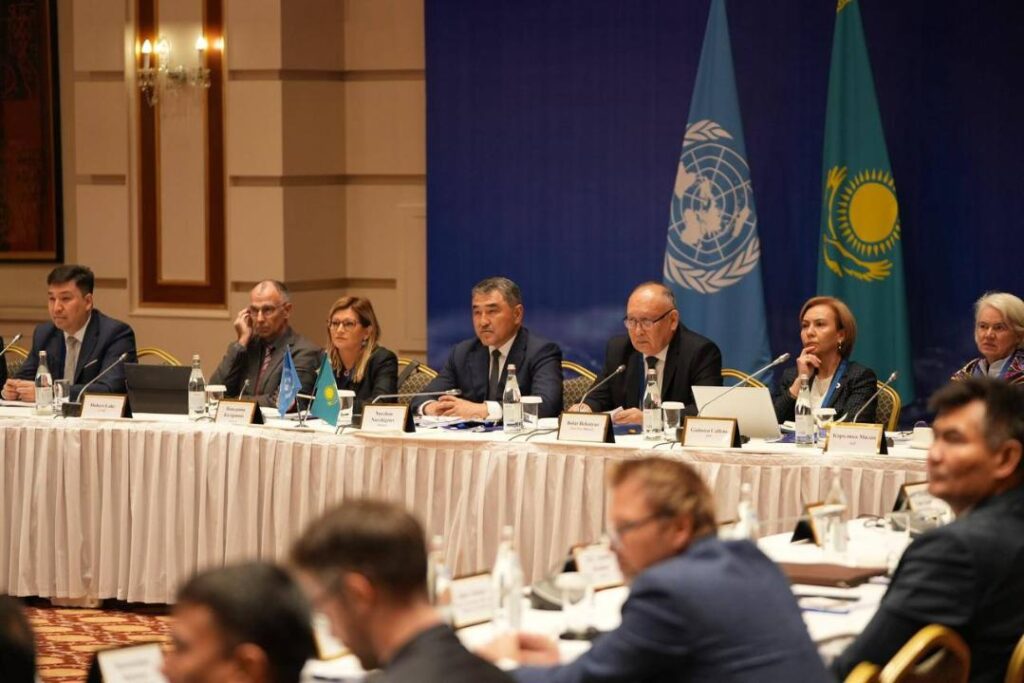
On September 30, the Coordination Council held its first meeting in Astana. The meeting discussed partnerships in managing Kazakhstan’s water resources and presented a Water Partnership Initiative for 2024-2030, a joint proposal between the Ministry of Water Resources and Irrigation and UNDP. The document outlines specific activities, such as developing an information system for water resources, the modernization of water infrastructure to respond to climate challenges, implementing modern irrigation systems, and transboundary water cooperation.

Katarzyna Wawiernia, UNDP Resident Representative in Kazakhstan, stated at the meeting: “Given the complexity of the water agenda, it is clear that no single government or organization can tackle these issues alone. Therefore, addressing these challenges requires combining resources, investments, technical expertise, and innovations. I hope that the Partnership Initiative proposed today by UNDP and the Ministry of Water Resources and Irrigation will be an important catalyst in this process.”

For decades, Kazakhstan has faced a host of water-related challenges, such as the shrinking Aral Sea, largely caused by decreasing water flows in transboundary rivers, devastating spring floods, and irrigation water shortages in the country’s southern regions.