• KGS/USD = 0.01144 0%
  • KZT/USD = 0.00211 0%
  • TJS/USD = 0.10460 0.19%
  • UZS/USD = 0.00008 0%
  • TMT/USD = 0.28490 0%
  • KGS/USD = 0.01144 0%
  • KZT/USD = 0.00211 0%
  • TJS/USD = 0.10460 0.19%
  • UZS/USD = 0.00008 0%
  • TMT/USD = 0.28490 0%
  • KGS/USD = 0.01144 0%
  • KZT/USD = 0.00211 0%
  • TJS/USD = 0.10460 0.19%
  • UZS/USD = 0.00008 0%
  • TMT/USD = 0.28490 0%
  • KGS/USD = 0.01144 0%
  • KZT/USD = 0.00211 0%
  • TJS/USD = 0.10460 0.19%
  • UZS/USD = 0.00008 0%
  • TMT/USD = 0.28490 0%
  • KGS/USD = 0.01144 0%
  • KZT/USD = 0.00211 0%
  • TJS/USD = 0.10460 0.19%
  • UZS/USD = 0.00008 0%
  • TMT/USD = 0.28490 0%
  • KGS/USD = 0.01144 0%
  • KZT/USD = 0.00211 0%
  • TJS/USD = 0.10460 0.19%
  • UZS/USD = 0.00008 0%
  • TMT/USD = 0.28490 0%
  • KGS/USD = 0.01144 0%
  • KZT/USD = 0.00211 0%
  • TJS/USD = 0.10460 0.19%
  • UZS/USD = 0.00008 0%
  • TMT/USD = 0.28490 0%
  • KGS/USD = 0.01144 0%
  • KZT/USD = 0.00211 0%
  • TJS/USD = 0.10460 0.19%
  • UZS/USD = 0.00008 0%
  • TMT/USD = 0.28490 0%

Did Kyrgyzstan’s Security Chief Order an Assassination?

The head of Kyrgyzstan’s State Committee for National Security (GKNB), Kamchybek Tashiyev, has been waging a campaign against organized criminal groups in his country for the last few years and it seems he believes in fighting fire with fire.

Speaking to representatives of Kyrgyzstan’s education sector on January 16, Tashiyev referred to the fight against organized crime, specifically mentioning the slain reputed crime boss Kamchybek Kolbayev.

“I had to take the decision to liquidate the thief in law,” Tashiyev said, “for the sake of the state. And I made this decision, and we eliminated him.”

He quickly regretted such candor after his comments received wide coverage and has revised his version of events leading up to Kolbayev’s killing.

The Gangster

Kamchybek Kolbayev, aka Kolya Kyrgyz, was allegedly the kingpin of Kyrgyzstan’s criminal world.

The term “thief in law” originated in Soviet prisons among inmates who were high-ranking figures in organized criminal groups. This tradition continued after the fall of the USSR and the “Brothers’ Circle” of top thieves in law connects criminal organizations in former Soviet republics.

Kolbayev seemed indeed to be a thief in law and according to the U.S. State Department, he was part of the Brothers’ Circle, and back in 2007 it was said that Kolbayev was the “leader of the most influential criminal group” in Kyrgyzstan.

Kolbayev had been imprisoned more than once, though his prison conditions were not harsh. While in prison in late 2020, a video was posted of Kolbayev and other prisoners enjoying a small feast and singing.

He seemed untouchable.

The Raid

On October 4, 2023, the GKNB’s special Alfa unit raided the Blonder Pub in Bishkek, looking for Kolbayev. Reports from that day said the GKNB intended to detain Kolbayev as a suspect in murder of another criminal figure in July 2022. According to the GKNB, Kolbayev offered armed resistance and was shot dead when the GKNB commandos returned fire.

Given the lenient treatment Kolbayev had so often received from Kyrgyz authorities, it seemed strange he chose to open fire on law enforcement officers rather than submit to being gently detained, as he had been before, and possibly incarcerated in luxury prison conditions.

However, Kolbayev was an odious figure in Kyrgyzstan, greatly feared by many and the circumstances of his death did not seem to matter to most people, so long as he was gone.

A ‘Hit’?

On January 16, Tashiyev explained to deputy education and science ministers, university rectors, and other directors of institutions of higher learning that the organized crime structure in Kyrgyzstan had grown strong and had extended across the country.

Tashiyev said the criminal network was preying upon businesses and individuals. “We were forced to take necessary measures,” Tashiyev declared, and then stated he had given the order for Kolbayev to be eliminated.

He added that the GKNB’s campaign against organized crime was a success. Kyrgyzstan had become “the only country in Central Asia… and probably in the post-Soviet countries, that does not have organized crime.”

It was an “ends justify the means” argument. Media seized upon it as an amazing admission from a security chief about apparently ordering an assassination, albeit of a known crime boss.

On January 18, Tashiyev met with journalists to clarify his comments of two days earlier.

“There was no personal order to liquidate Kolbayev,” Tashiyev said, and repeated the original GKNB version of events at the time of Kolbayev’s death. The GKNB went to detain Kolbayev and when he shot at them, they returned fire and killed him.

“Some journalists, especially Western journalists wanted to twist what I said,” Tashiyev claimed.

However, several media outlets posted a video of Tashiyev speaking at the January 16 meeting with educators and exactly saying that he gave the order to eliminate Kolbayev.

And it was not only, or even mainly, Western journalists who reported on the comments. Domestic media outlets such as Kaktus Media, AKIpress, 24.kg, and Vecherny Bishkek, all reported on Tashiyev’s order to terminate Kolbayev.

Quit while you’re ahead

The GKNB’s battle against organized criminal groups in Kyrgyzstan has been successful.

Shortly after Kolbayev’s death, Kyrgyz authorities began releasing videos of leading local criminal figures renouncing their life of crime and vowing to become law-abiding citizens.

Other members of organized criminal groups have also been arrested and imprisoned. The GKNB has exposed government officials with connections to criminal groups and these officials have been dismissed.

The official explanation of Kolbayev’s death even at the time it happened seemed suspicious, if for no other reason than Kolbayev had been arrested before and had not offered any resistance.

The entire matter was water under the bridge until Tashiyev brought it up on January 16. His attempt to rationalize those comments two days later to journalists made it look worse.

Tashiyev would be far from the first head of a country’s security service to order the assassination of a troublesome individual, but it is a topic that is generally not supposed to be talked about publicly.

Ultimately, this slip of the tongue will probably only raise Tashiyev’s prestige with some in Kyrgyzstan, and will certainly give his enemies something to think about.


Uzbekistan Launches Two New Environmental Projects

Uzbekistan has initiated two major international projects aimed at environmental protection and advancing the green economy.

The projects, spearheaded by the Ministry of Ecology, Environmental Protection, and Climate Change in partnership with the United Nations Development Program (UNDP), are funded by the Global Environment Facility (GEF) with a total budget of $6.5 million. Both initiatives are set to run through 2030.

Project 1: Updating the National Biodiversity Strategy

The first initiative, titled the “Comprehensive Programme to Support the Renewal of the National Biodiversity Strategy and Action Plan (NBSAP) and the Seventh National Report,” is part of a global effort involving 69 countries, including Uzbekistan.

This project aims to update Uzbekistan’s National Biodiversity Strategy and Action Plan in alignment with the Global Biodiversity Framework. The updated plan will guide the country’s efforts to conserve its rich biodiversity and address environmental challenges.

Project 2: Restoring Valuable Ecosystems

The second project, named “Integrated Management for the Protection and Restoration of Highly Valuable Landscapes in Uzbekistan,” focuses on restoring ecosystems and exploring sustainable financing methods for biodiversity conservation.

Pilot areas for this initiative include the Western Tien Shan, Nurata Mountains, and Kugitang landscapes. These ecologically significant regions are home to diverse flora and fauna and are considered critical for Uzbekistan’s environmental health.

A key partner in the ecosystem restoration project is the International Union for Conservation of Nature (IUCN), which established a regional office in Tashkent in 2024 to support conservation efforts in Central Asia.

Key Statements

Deputy Minister of Ecology Iskandar Kutbiddinov highlighted the importance of these projects during their launch. “These initiatives align with Uzbekistan’s goals for a greener future and will play a vital role in preserving our country’s biodiversity and ecosystems,” Kutbiddinov said.

UNDP Resident Representative Akiko Fujii also praised the country’s environmental efforts, noting that “Uzbekistan is taking significant steps to protect and restore its rich biodiversity and unique ecosystems.”

With the launch of these two projects, Uzbekistan is strengthening its commitment to environmental protection and sustainable development. By aligning with global biodiversity goals and restoring vital ecosystems, the country is paving the way for a greener, more sustainable future.

Jackson-Vanik: One Step Away from Repeal

The U.S. Senate has confirmed Marco Rubio as Secretary of State, raising hopes among Central Asian leaders – particularly in Kazakhstan – that his recent comments regarding the Jackson-Vanik amendment may soon translate into concrete action to repeal this outdated policy, which continues to hinder mutual trade.

Passed in 1974 as part of the Trade Act under President Gerald Ford, the Jackson-Vanik amendment was designed to penalize countries with non-market economies that restricted emigration, particularly targeting the Soviet Union. The amendment specifically sought to pressure the USSR to allow its Jewish population to emigrate freely, while also protesting the suppression of Judaism and other religious practices.

The amendment achieved a measure of success by 1989, when the Iron Curtain fell and Soviet Jews were permitted to emigrate in large numbers, primarily to Israel and the United States. However, the policy remained in place, even after the dissolution of the USSR, applying to the newly independent Central Asian republics despite their vastly different political and economic landscapes.

On January 15, Rubio delivered a nearly five-hour confirmation speech during a Senate hearing for his nomination as Secretary of State under the Donald Trump administration. Among the topics discussed was the Jackson-Vanik amendment. Senator Steve Daines specifically asked Rubio for his position on the amendment, emphasizing that its repeal could normalize U.S. trade relations with Kazakhstan and Uzbekistan.

Rubio described the amendment as “an absurd relic of the past,” asserting that it no longer serves any meaningful purpose in pressuring Central Asian countries on human rights. He warned that continued use of such measures could push nations like Kazakhstan and Uzbekistan closer to Russia’s sphere of influence.

Rubio singled out Kazakhstan, noting that the country had “successfully met the conditions” to transition to a market economy, as evidenced by its accession to the World Trade Organization several years ago. He pledged to work with lawmakers to repeal the Jackson-Vanik amendment, signaling a shift in U.S. policy toward fostering deeper economic ties with the region.

Why Central Asia Was Left Behind

The continued application of the Jackson-Vanik amendment to Central Asia can be partially explained by the differing domestic policies of its key players – Kazakhstan and Uzbekistan.

Under Nursultan Nazarbayev, Kazakhstan quickly abandoned Soviet-era restrictions on emigration and took steps to promote religious tolerance and interfaith harmony. By contrast, Uzbekistan under Islam Karimov maintained many of the Soviet Union’s repressive practices, including restrictions on religious minorities. This disparity in policies contributed to Washington’s perception of the region as monolithic and resistant to reform, discouraging efforts to lift the amendment.

Recent Developments and Challenges

In recent years, there have been efforts to lower trade barriers between the U.S. and Central Asia, particularly through initiatives like the B5+1 dialogue, which aims to attract greater Western investment to the region. However, the Jackson-Vanik amendment complicates these efforts, as countries must secure an annual waiver from the U.S. President to maintain normal trade relations.

Kazakhstan has emerged as the frontrunner in advocating for the amendment’s repeal. An August report by the Congressional Research Service highlighted Kazakhstan’s progress and underscored the Biden administration’s support for repeal as a way to strengthen U.S.-Kazakhstan economic ties. The report framed repeal as a step toward helping Kazakhstan diversify its economy, which remains heavily reliant on Russia and China.

Despite this progress, a repeal bill never made it to Congress. With the Trump administration now in office, the responsibility for resolving the issue has shifted. Rubio’s recent remarks offer renewed hope that the amendment’s application to Kazakhstan will finally be repealed, marking a significant milestone in U.S.-Kazakhstan relations.

The repeal of the Jackson-Vanik amendment for Kazakhstan would be a symbolic and practical step toward deepening U.S. engagement with Central Asia. As Kazakhstan continues its economic reforms and seeks to expand ties with Western partners, Rubio’s commitment to addressing this “absurd relic” of the past could pave the way for more robust trade relations and a stronger regional partnership.

eBay Officially Registers for Tax Purposes in Uzbekistan

The American e-commerce giant eBay has officially registered for tax purposes in Uzbekistan, according to UzDaily. As a result, eBay will now pay value-added tax (VAT) on its services in the country.

Other global companies, including Netflix, Amazon, Google, Apple, and Zoom, are also registered with Uzbekistan’s special tax office for foreign digital companies. In total, 64 foreign companies are currently complying with the country’s VAT requirements.

The Tax Committee of Uzbekistan reported that 61 foreign companies providing electronic services contributed 101.9 billion UZS (approximately $7.89 million USD) in taxes to the national budget between January and September 2024. This represents a 2.1-fold increase compared to the same period in 2023, highlighting the growing importance of foreign digital service providers in Uzbekistan’s economy.

In December 2024, Uzbekistan introduced new regulations requiring all companies providing e-commerce services to register as legal entities in the country. Despite their tax registrations, major platforms like eBay and Amazon have not yet established physical offices in Uzbekistan, raising questions about their long-term plans for expanding operations in the local market.

In related news, The Times of Central Asia previously reported that Binance, one of the world’s largest cryptocurrency exchanges, will officially begin offering services to users in Uzbekistan. This move underscores the country’s growing focus on integrating global digital platforms into its economy.

eBay’s registration for VAT in Uzbekistan marks another step in the country’s efforts to regulate and tax the growing digital economy. As more global companies comply with Uzbekistan’s tax requirements, questions remain about whether these platforms will deepen their presence in the country by establishing local offices.

Uzbekistan Receives $14.8 Billion in Remittances in 2024

The total volume of remittances sent to Uzbekistan in 2024 reached a record $14.8 billion, marking a 30% increase – equivalent to $3.4 billion – compared to the previous year. This data comes from the Central Bank’s Brief Review on Currency Transactions of Individuals.

Key Sources of Remittances

Russia remains the dominant source of remittances for Uzbekistan, accounting for 77% of the total, or $11.5 billion – a 29% increase from 2023. Other key contributors include:

  • Kazakhstan: $795 million
  • United States: $577 million
  • South Korea: $534 million
  • Turkey: $405 million
  • United Kingdom: $135 million

July saw the highest inflow of remittances, with $1.785 billion received, while February recorded the lowest amount, at $738 million.

Remittance growth varied significantly by country / region:

  • United Kingdom: Up 83%
  • South Korea: Up 56%
  • United States: Up 35%
  • European Union: Up 32%

While inflows surged, the volume of remittances sent abroad from Uzbekistan also grew, increasing by 19% in 2024 to reach $2.8 billion.

Russia remains the largest source of remittances to Uzbekistan, thanks to the significant number of Uzbek migrants working there. However, new restrictions introduced in 47 Russian regions, including the occupied territories of Crimea, Sevastopol, and Zaporozhye, could negatively impact Central Asian migrant workers.

According to the Russian Ministry of Internal Affairs, there were more than 6.1 million foreigners in Russia in 2024, the majority from Central Asia and other CIS countries. Among them, over 1.88 million Uzbek citizens visited Russia during the first eight months of the year, underscoring the strong ties between Uzbek migrant labor and Russia’s economy.

The substantial increase in remittances highlights the critical role of labor migration in Uzbekistan’s economy. However, the evolving regulatory environment in key source countries like Russia could pose challenges for Central Asian migrants and, by extension, Uzbekistan’s remittance-dependent economy.

Kyrgyzstan’s Capital Grapples with Smog: Minister Outlines Pollution Sources and Plans for Cleaner Air

On January 20, Kyrgyzstan’s Minister of Natural Resources, Ecology, and Technical Supervision, Meder Mashiev, addressed parliament to discuss the sources of air pollution in Bishkek, the capital of Kyrgyzstan. Citing studies conducted by international organizations, Mashiev broke down the contributors to Bishkek’s smog, as reported by 24.kg.

According to the minister, the primary sources of air pollution in Bishkek are:

  • Burning of coal: 40%
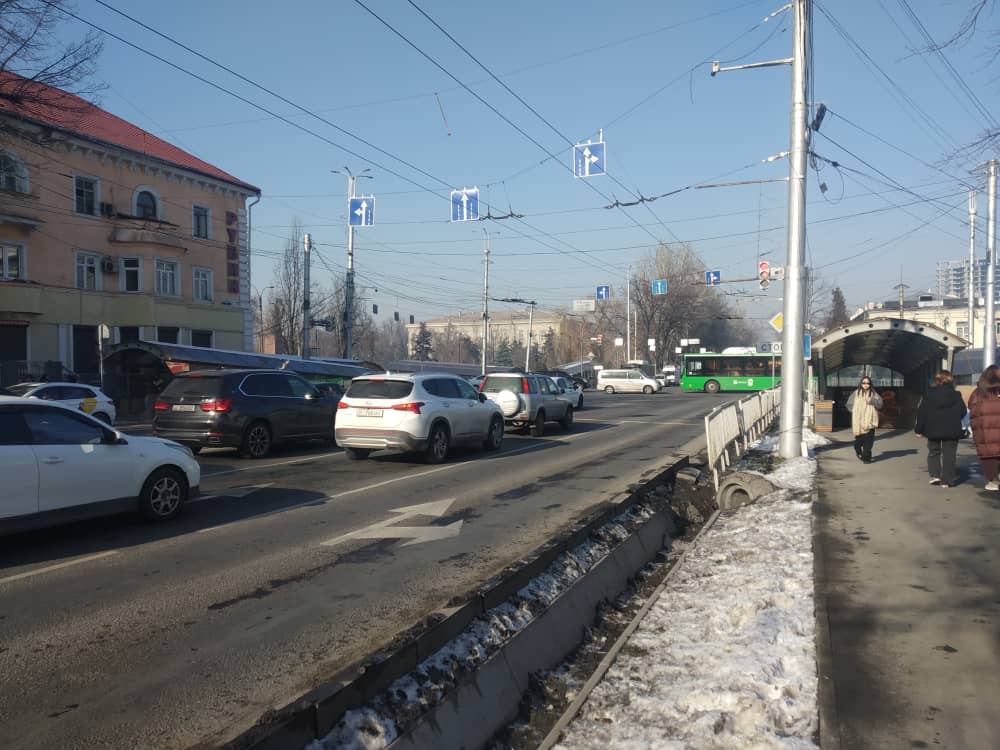
  • Exhaust gases from motor vehicles: 30%
  • Smoke from the Bishkek Thermal Electric Power Plant: 15%
  • Windborne dust: 13.5%

Mashiev highlighted that efforts by the government in 2024 have led to improvements in air quality, based on data from the Hydrometeorological Service. However, he noted that Bishkek experienced its worst smog levels during 2021-2022.

One of the key issues contributing to air pollution is the absence of catalytic converters in 85% of vehicles operating in Kyrgyzstan. Catalytic converters are critical for reducing the toxicity of vehicle emissions by converting harmful compounds into less hazardous ones.

With over 600,000 registered vehicles in Bishkek — nearly double the city’s road capacity of 350,000 — the Ministry estimates that motor transport accounts for 27% of the city’s total air pollution.

During the parliamentary session, parliamentary deputy Balbak Tulobayev proposed several measures to address the smog problem:

  • Replace domestic coal: Prohibit the use of low-calorie, high-ash Kara-Keche coal in Bishkek and switch to high-calorie Kazakh coal, potentially reducing smog by 30-40%.
  • Accelerate gasification: Attract additional companies, such as those from Azerbaijan or Iran, to expand gasification in Bishkek. Currently, Russia’s Gazprom is the only provider of natural gas in the city. The MP estimates this could reduce smog by another 30%.
  • Improve public transportation: Construct a subway or monorail system in Bishkek to reduce reliance on private vehicles.
  • Ban polluting vehicles: Restrict vehicles without catalytic converters from entering the city.

Air pollution remains a persistent issue in Bishkek, a city with over one million residents. The problem worsens in the winter, as household coal burning for heating intensifies. Bishkek frequently ranks among the world’s top 10 most polluted cities on IQAir’s global air quality index.

To improve air quality, the government has outlined a comprehensive plan for 2024-2025, which includes the following measures:

  1. Transition to cleaner coal: Provide households with high-calorie coal that emits fewer pollutants.
  2. Modernize the thermal power plant: Replace outdated filters at the Bishkek coal-fired power plant and work toward converting it to natural gas.
  3. City planning for air circulation: Develop an architectural plan to enhance air movement in Bishkek.
  4. Expand gasification: Continue gasification of residential neighborhoods to reduce reliance on coal.
  5. Improve urban infrastructure: Construct transport interchanges and multi-level parking lots to ease traffic congestion.
  6. Promote public transport: Increase the attractiveness of public transportation and develop infrastructure for electric vehicles, including charging stations.
  7. Green belt initiative: Create a green belt in and around Bishkek to improve air quality and provide natural barriers to pollution.

Air pollution in Bishkek is a complex and longstanding issue driven by coal burning, vehicle emissions, and outdated infrastructure. While the government has made some progress in improving air quality, significant challenges remain. The proposed solutions, including expanding gasification, modernizing infrastructure, and introducing cleaner fuel options, could provide a pathway toward a cleaner and healthier future for the capital.