• KGS/USD = 0.01144 0%
  • KZT/USD = 0.00211 0%
  • TJS/USD = 0.10460 0.19%
  • UZS/USD = 0.00008 0%
  • TMT/USD = 0.28490 0%
  • KGS/USD = 0.01144 0%
  • KZT/USD = 0.00211 0%
  • TJS/USD = 0.10460 0.19%
  • UZS/USD = 0.00008 0%
  • TMT/USD = 0.28490 0%
  • KGS/USD = 0.01144 0%
  • KZT/USD = 0.00211 0%
  • TJS/USD = 0.10460 0.19%
  • UZS/USD = 0.00008 0%
  • TMT/USD = 0.28490 0%
  • KGS/USD = 0.01144 0%
  • KZT/USD = 0.00211 0%
  • TJS/USD = 0.10460 0.19%
  • UZS/USD = 0.00008 0%
  • TMT/USD = 0.28490 0%
  • KGS/USD = 0.01144 0%
  • KZT/USD = 0.00211 0%
  • TJS/USD = 0.10460 0.19%
  • UZS/USD = 0.00008 0%
  • TMT/USD = 0.28490 0%
  • KGS/USD = 0.01144 0%
  • KZT/USD = 0.00211 0%
  • TJS/USD = 0.10460 0.19%
  • UZS/USD = 0.00008 0%
  • TMT/USD = 0.28490 0%
  • KGS/USD = 0.01144 0%
  • KZT/USD = 0.00211 0%
  • TJS/USD = 0.10460 0.19%
  • UZS/USD = 0.00008 0%
  • TMT/USD = 0.28490 0%
  • KGS/USD = 0.01144 0%
  • KZT/USD = 0.00211 0%
  • TJS/USD = 0.10460 0.19%
  • UZS/USD = 0.00008 0%
  • TMT/USD = 0.28490 0%

Kazakhstan Intends to Triple Its Hydropower Capacity by 2030

Kazakhstan plans to significantly expand its hydropower capacity over the next five years. By the end of 2030, the country intends to commission new hydropower plants with a combined capacity of approximately 660 MW, nearly tripling the sector’s current installed capacity, according to the Ministry of Energy.

At present, 43 hydropower facilities operate in Kazakhstan with a total installed capacity of 313 MW. The implementation of agreements already concluded is expected to raise this figure to nearly 1 GW, substantially increasing the contribution of hydropower to the national energy mix.

In 2025, an additional project was added to the portfolio: the 26 MW Korinskaya HPP-2 was commissioned in the Jetisu Region. By the end of the year, total electricity generation from renewable energy sources reached 8.621 billion kWh, of which 1.196 billion kWh was produced by small and medium-sized hydropower plants.

Kazakhstan continues to rely on an auction mechanism to attract investment and enhance transparency in the renewable energy sector. In 2025, 500 MW of capacity designated specifically for hydropower projects was offered through competitive auctions. According to the Ministry of Energy, this approach helps reduce project costs and foster a stable investment environment.

The highest concentration of renewable energy facilities, including hydropower plants, is located in the southern and southeastern regions, Zhambyl, Almaty, and Jetisu regions. These areas benefit from significant river potential and established infrastructure capable of supporting further generation growth.

The ministry states that implementation of the planned projects will diversify Kazakhstan’s energy mix, supply remote areas with stable green electricity, reduce pressure on the main transmission grids, and enhance overall system reliability.

As previously reported by The Times of Central Asia, renewable energy accounted for 7% of Kazakhstan’s national energy mix by the end of 2025.

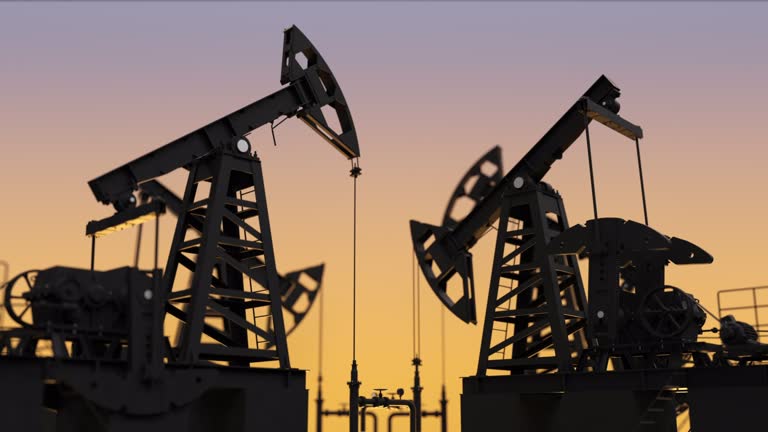
More Than 20 Promising Oil and Gas Fields Identified in Kazakhstan’s Aral Basin

A large-scale state geological exploration program in Kazakhstan has identified more than 20 promising hydrocarbon sites in the Aral Basin. The announcement was made by Kanat Yerubaev, Acting Chairman of the Geology Committee of the Ministry of Industry and Construction.

According to Yerubaev, by the end of last year 29 promising exploration areas had been identified as part of the state geological study program, covering a range of minerals from gold and copper to lead, zinc, and tungsten. Particular attention was given to oil and gas. Work in the Aral Basin enabled specialists to specify the geological structure of the region, identify new structural elements, and assess forecast hydrocarbon resources. More than 20 sites have been classified as promising, and the Ministry of Energy intends to auction subsoil use rights for these areas later this year.

The Geology Committee estimates forecast hydrocarbon resources at one Aral Basin site at approximately 800 million tons. An even larger potential, exceeding 1 billion tons of oil and gas, has been identified in the Syr Darya Basin in the southwest of the country. Exploration activities there began in 2024 and are scheduled for completion in 2026. If these forecasts are confirmed, Kazakhstan’s proven oil reserves could increase by more than 25%. The current state balance sheet records more than 4 billion tons of proven oil reserves, sufficient for over 50 years at current production levels.

In 2026, new seismic exploration projects are scheduled to begin in other relatively underexplored sedimentary basins, including North Turgai, Shu-Sarysu, and Priirtysh. Yerubaev noted that Kazakhstan is moving away from geological surveys conducted at a 1:200,000 scale, which provide only a general overview, and transitioning to more detailed 1:50,000 scale surveys. He compared the shift to “getting a navigator instead of a world map, where you can see every step,” emphasizing that such precision aligns with international standards and supports informed investment decisions.

At the same time, the sector’s digital infrastructure continues to develop. Kazakhstan operates a unified subsoil use platform that provides 22 government services and access to more than 66,000 geological reports. By the end of 2025, 97.5% of primary geological data,  approximately 4.7 million records, is expected to be digitized, with full digitization scheduled for completion this year.

Approximately $485.5 million has been allocated for state-funded geological research projects over the next three years.

Under current legislation, 50% of subscription bonuses collected from auctions for subsoil use rights are to be reinvested in the sector to support geological development and infrastructure modernization. This framework is designed to create a sustainable model in which revenues from subsoil licensing are directed back into further exploration.

The Times of Central Asia previously reported that Kazakhstan had become one of the global leaders in proven rare earth metal reserves.

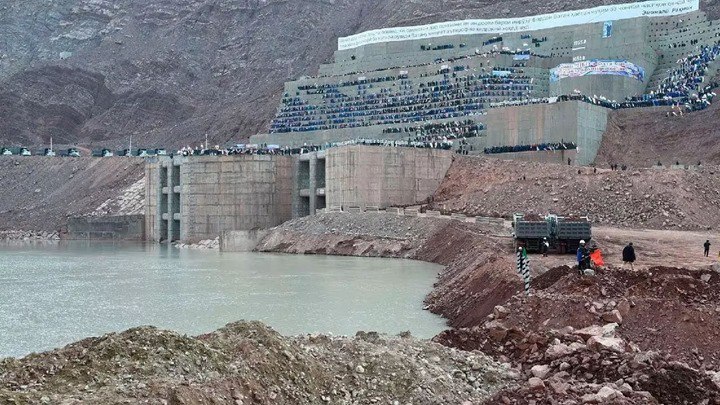
Tajikistan Plans Over $1 Billion for Rogun Hydropower Project in 2026

The government of Tajikistan plans to allocate at least 10 billion TJS (more than $1 billion) to finance the Rogun hydropower project in 2026, Finance Minister Faiziddin Qahhorzoda said on February 13 at a press conference in Dushanbe. The statement was later released by the Ministry of Finance and reported by Asia-Plus.

Qahhorzoda specified that 8.2 billion TJS has already been earmarked in the state budget for completion of the Rogun hydropower plant. He added that additional financing could be mobilized through development partners, as agreements have been signed and the required domestic procedures and partner conditions have been fulfilled.

“Certain conditions had to be met by the government of Tajikistan to access these funds. All conditions have been completed, and financing under the first tranche of $350 million has begun,” the minister said, referring to grant funding from the World Bank. He added that negotiations for an additional $300 million from the institution have been concluded successfully, with the funds expected to become available by mid-year.

The minister also stated that domestic procedures are being finalized to attract $150 million from the Islamic Development Bank, as well as $100 million each from the Saudi Fund for Development, the Kuwait Fund for Arab Economic Development, and the OPEC Fund for International Development. According to Qahhorzoda, the remaining step is the completion of tender procedures.

In addition, all procedures have reportedly been completed to secure $500 million from the Asian Infrastructure Investment Bank, of which $270 million is expected to be disbursed in the first tranche.

According to the Finance Ministry, approximately 11 billion TJS was allocated in 2025 for the completion of Rogun, including 2 billion TJS designated for servicing Eurobonds issued to support the project.

Earlier, at the end of January, the Energy Ministry stated during a separate press conference that several financing agreements signed with international partners in 2024-2025 had already entered into force. Officials noted that activating these agreements required fulfilling a number of technical and procedural conditions.

The Rogun hydropower plant, located 110 kilometers from Dushanbe on the Vakhsh River, is the largest energy project in Tajikistan. Construction began in 1976 but was suspended following the collapse of the Soviet Union. Work resumed after independence. Of the six planned generating units, each with a capacity of 600 MW, two are currently operational and had produced 9.9 billion kWh of electricity by the end of last year.

In December 2025, President Emomali Rahmon announced that the third unit is scheduled to be commissioned in September 2027. Once all six units are operational, the plant’s total installed capacity will reach 3.78 GW, and its 335-meter dam is projected to become the tallest in the world. The total cost of construction has been estimated at $6.2 billion.

Second Uzbek Woman Confirmed Dead in Istanbul Murder Case

A second Uzbek national has been confirmed dead in Istanbul, according to the Consulate General of Uzbekistan in Istanbul. The victim, identified as Sayyora Ergashalieva, born in 1994 in the Namangan region, had previously been reported missing.

Turkish law enforcement authorities informed the consulate that Ergashalieva disappeared shortly after the killing of her close friend, Durdona Khakimova, whose dismembered body was discovered in a garbage container in Istanbul in January 2026. Ergashalieva and Khakimova were reportedly close friends.

According to Turkish media reports, Ergashalieva’s family in Uzbekistan lost contact with her after January 23 and sought assistance from the Uzbek Women’s Rights Association in Turkey. The association’s president, Azade Islamova, together with lawyers Ezgi Ekin Arslan and Cevat Bozkurt, met with the family and outlined possible legal steps after suspicions emerged that Ergashalieva may have been present at the residence where Khakimova was killed.

The family traveled to Turkey and filed a formal complaint with the prosecutor’s office on February 6. Subsequent investigative actions confirmed Ergashalieva’s death. Her parents, who had gone to Turkey hoping to find her alive, were informed of the outcome as the investigation progressed.

Preliminary information from Turkish investigators indicates that on January 22, the two women and several suspects met for lunch at a restaurant in Istanbul’s Fatih district. During the meeting, a dispute allegedly arose between Ergashalieva and one of the suspects. Investigators believe the conflict may have been linked to Ergashalieva’s stated intention to return to Uzbekistan.

Authorities allege that on January 23, two suspects, identified as Dilshod Turdimurotov and Gofurjon Kamalkhojaev killed Ergashalieva and disposed of her body in garbage containers in the same district. The following day, investigators say, the suspects used her phone to send a message to Khakimova, luring her to a meeting. Khakimova was subsequently killed, and her body was found in Istanbul’s Şişli district.

Turkish prosecutors have detained the suspects, who have reportedly confessed. A preventive detention measure has been imposed, and the case materials have been submitted to the court. The investigation remains ongoing.

Local media reported that Ergashalieva’s body had been located but had not yet been transferred to the Istanbul Forensic Medicine Institute, according to the Consulate General. Officials have not released further details pending confirmation.

Earlier, the killing of Khakimova sparked public protests in Turkey. Groups of women gathered in Istanbul and Ankara, condemning what they described as systemic violence against women, including migrant women. Feminist organizations organized a march in the Şişli district, beginning near the Osmanbey metro station and ending on the street where Khakimova’s body was discovered. Participants carried banners and called for stronger protective measures and prevention mechanisms.

The Consulate General of Uzbekistan in Istanbul stated that it is closely monitoring the case and cooperating with Turkish law enforcement authorities. It expressed condolences to the victims’ families and said the public would be informed as additional verified information becomes available.

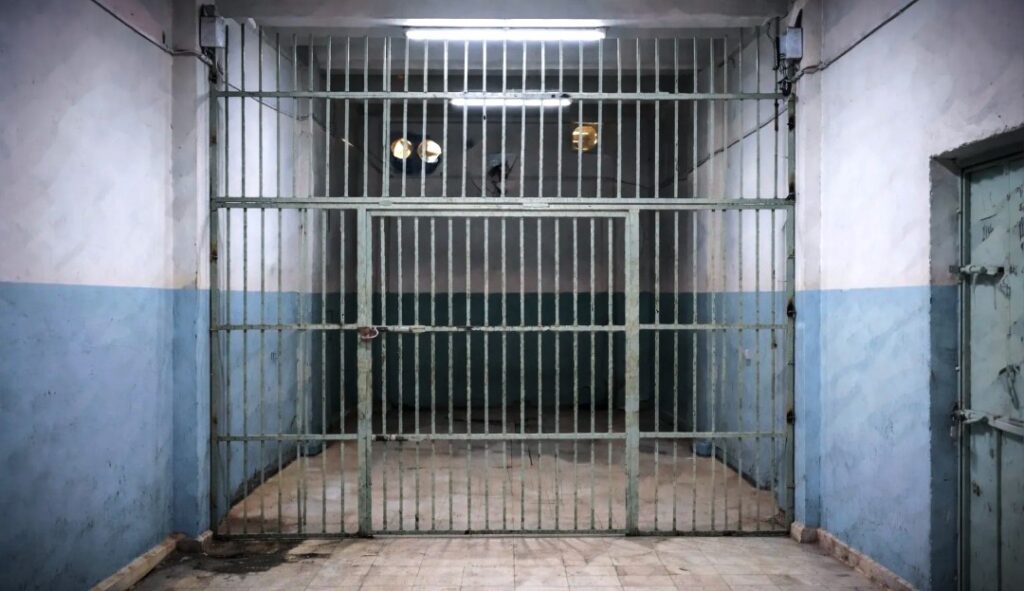
Shooting in Tajikistan’s Detention Center: Prosecutor General’s Office Reveals Details of January Incident for the First Time

Tajik authorities have for the first time officially commented on the incident on January 31 at a detention facility in the city of Khujand. Tajikistan’s Prosecutor General, Khabibullo Vokhidzoda, disclosed details during a press conference in Dushanbe that was reported by Asia-Plus.

Vokhidzoda confirmed that an armed confrontation took place at the Khujand pre-trial detention center. According to him, three prisoners attacked facility staff while in the exercise yard.

The prosecutor general stated that the inmates used “various objects” to inflict bodily harm on staff members and assaulted another prisoner who was present. He said they ignored repeated demands to cease their actions and resisted, posing what he described as a serious threat to employees’ lives. As a result, the three prisoners were “neutralized” by security personnel.

“While in the Khujand pre-trial detention center, in the exercise yard, they attacked the facility’s staff using various objects, causing them bodily harm and even beating another prisoner who was there. They ignored the staff’s demands to stop their actions and resisted, posing a serious threat to the lives of the facility’s employees. In this situation, they were neutralized by staff members responsible for the security of the correctional facility,” Vokhidzoda said.

He emphasized that no staff members were killed, although they sustained injuries. He did not specify the number of injured employees.

According to the prosecutor general, the three inmates had previously been sentenced to 12 to 14 years’ imprisonment for terrorist and extremist offenses. He added that they had repeatedly violated prison regulations, leading a court to impose stricter detention conditions.

At the time of the incident, the prisoners were being temporarily held in the Khujand facility pending transfer.

A criminal case has been opened under Articles 332 and 365 of Tajikistan’s Criminal Code. “How it happened, why it happened, who did it, all these questions will be clarified during the investigation,” Vokhidzoda said.

This marks the first official confirmation of the incident. Earlier, Radio Ozodi reported on the events, citing sources who claimed casualties among both guards and inmates. At the time, journalists’ attempts to obtain official comment were unsuccessful. The Minister of Justice, whose ministry oversees correctional institutions, declined to comment.

The January 31 incident is not the first serious episode of violence in Tajikistan’s penitentiary system, including in Khujand.

In November 2018, a large-scale riot erupted at maximum-security prison 3/3 in Khujand. According to official data, 21 prisoners were killed during efforts to restore order. Two prison staff members were also killed and five guards were seriously injured.

On February 3, 2025, unrest broke out at correctional facility No. 3/2 in the town of Vahdat, commonly known as “Kirpichny.” Official reports stated that three prisoners and three employees, including the prison director, were killed.

On May 19, 2019, another riot occurred at the same Vahdat facility. According to official information, 30 inmates armed with knives and other sharp objects seized three employees and killed them. Five prisoners were also killed. During the subsequent suppression of the riot, 29 inmates died. Among those killed was 18-year-old Bekhruz Khalimov, the son of former riot police commander Gulmurod Khalimov, who later joined ISIS.

Following that riot, the Supreme Court extended the sentences of 28 convicts found responsible for organizing the unrest.

Over the years, there have also been attempted prison escapes in Tajikistan. According to official accounts, most ended in failure, with organizers either killed or recaptured.

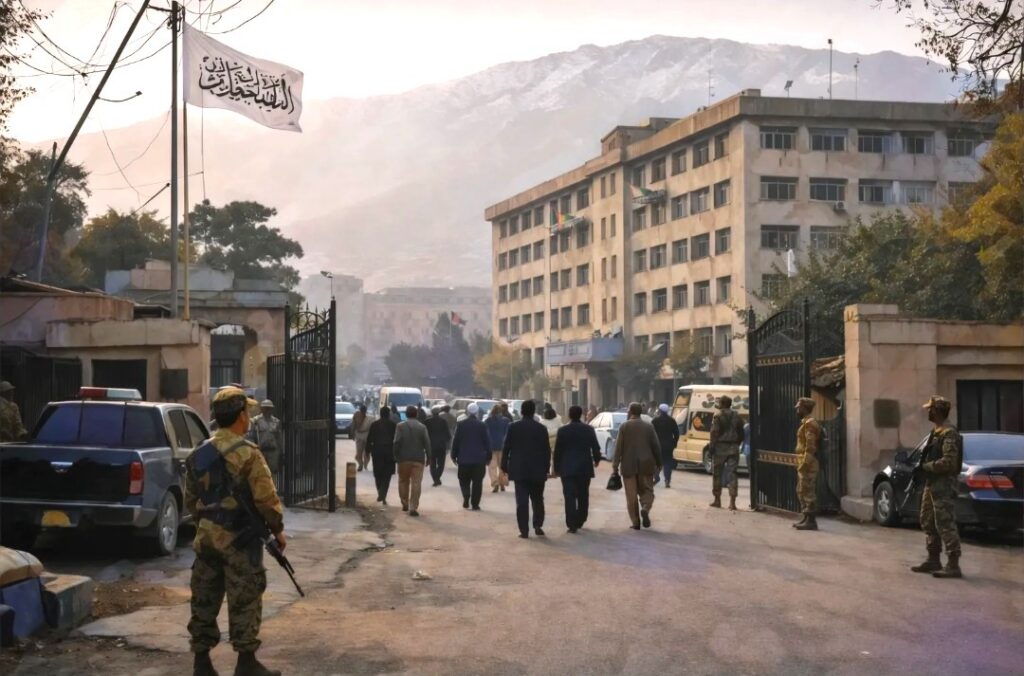
Opinion – The “Board of Peace” and Afghan Diplomacy: A View from Kabul

A new trend is becoming increasingly apparent in global politics: key decisions are being discussed not only within traditional international institutions but also through more flexible political and diplomatic formats. One such initiative is the announcement of the creation of the “Board of Peace” by U.S. President Donald Trump, a structure that, according to its authors, is intended to provide an alternative mechanism for conflict resolution.

Reactions have been mixed. Some states view the new platform as an opportunity to enhance the effectiveness of peace efforts; others warn that it could weaken existing institutions, particularly the United Nations, and contribute to a gradual shift toward closed political groupings in which participants’ strategic interests outweigh universal rules.

At its core, this debate reflects the possibility of a deeper transformation of the international order. Whereas global security architecture was once built primarily around multilateral mechanisms, flexible coalitions and ad hoc alliances are becoming more prominent. In such a system, the role of states capable not only of adapting to change but also of offering independent diplomatic initiatives is growing.

It is in this context that Afghanistan is increasingly asking what role it can occupy in a new international configuration.

One of the key questions raised in Kabul’s expert community is straightforward: Will the current Afghan authorities be considered in emerging international mechanisms, including the Board of Peace?

There is no clear answer. Despite ongoing global discussions on security and economic cooperation, concrete decisions regarding Afghanistan remain limited. Frozen financial assets, sanctions, and uncertainty over the country’s international status continue to impede economic recovery and complicate integration into regional processes.

Against this backdrop, Afghan experts argue that the country should avoid remaining on the periphery of the evolving order and instead seek integration through sustained diplomatic engagement and regional cooperation.

Central Asia could play a particularly significant role in this process. The states of the region are potentially capable of mediating to reduce tensions between Afghanistan and Pakistan and of facilitating the resolution of a conflict that directly affects broader regional security.

Such a role appears logical for several reasons. Many Central Asian countries traditionally pursue pragmatic foreign policies, maintaining working relations with multiple centers of power while avoiding rigid geopolitical alignments. This approach has gradually shaped their reputation as relatively neutral and predictable partners.

The element of self-interest is equally important. Stability to the south is directly linked to border security, the development of transport corridors, energy projects, and trade. In this context, mediation is not merely a diplomatic gesture but an element of a long-term regional strategy.

Moreover, neutrality may prove to be Central Asia’s principal political asset. The region is not generally perceived as a direct party to the conflict and is therefore potentially well placed to offer a platform for dialogue.

At the same time, assuming such a role would require readiness to accept greater responsibility. Effective mediation presupposes regional coordination, institutional maturity, and the political will to engage more actively in security matters.

The emergence of initiatives such as the Board of Peace reinforces the relevance of this strategic choice. If the global system is indeed moving toward a more fragmented model, where political groupings and flexible alliances gain influence alongside universal institutions, the importance of regional diplomacy will inevitably increase.

In such circumstances, those able to create and sustain spaces for negotiation will benefit.

For Afghanistan to secure a more stable position in the evolving international architecture, internal measures will also be essential. These include strengthening domestic security, pursuing economic stabilization, building trust with neighboring states, expanding cooperation with international organizations, and enhancing decision-making transparency.

This is less about political declarations than about creating the conditions in which Afghanistan can be regarded as a predictable and responsible participant in regional processes.

Ultimately, the debate surrounding the function of the Board of Peace extends beyond a single initiative. It reflects a broader restructuring of international relations in which regional actors are gaining prominence.

For Central Asia, this may represent a window of opportunity, a chance to consolidate its role as a space for negotiation and diplomatic balance. For Afghanistan, it is an opportunity to avoid marginalization and instead become part of the emerging order.

The ability to seize this moment may well determine whether the broader region becomes a platform for de-escalation or remains merely an observer of developments unfolding around it.


The views expressed in this article are those of the author and do not necessarily reflect the official policy or position of the publication, its affiliates, or any other organizations mentioned.