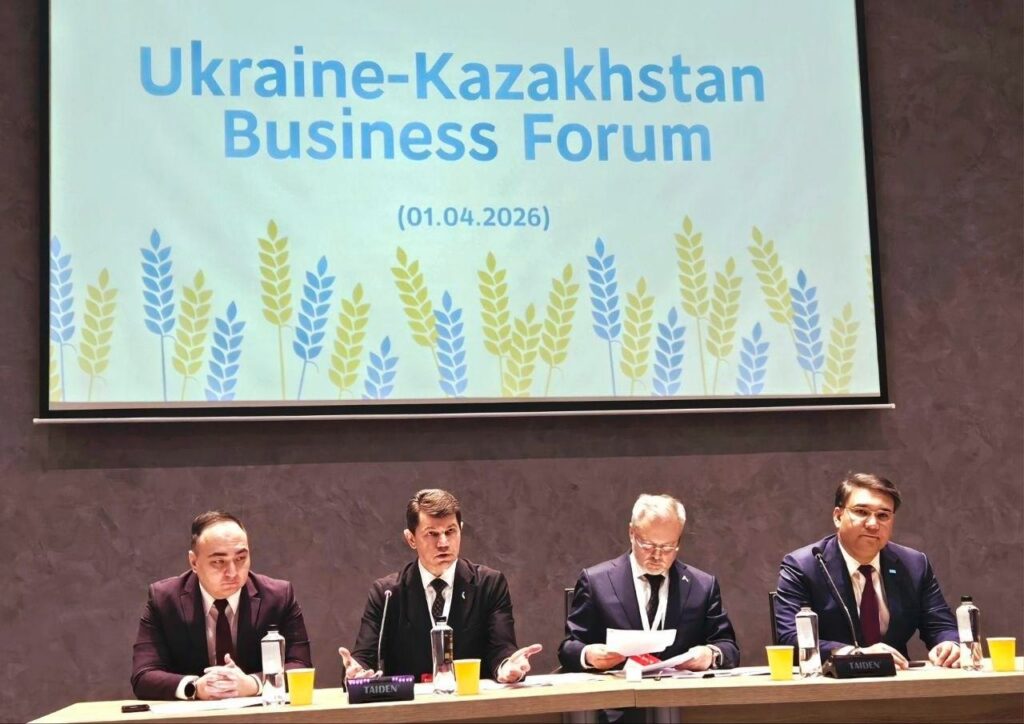
Ukrainian Deputy Foreign Minister, Olexandr Mishchenko, discussed prospects for trade and economic cooperation, including the possible resumption of the Intergovernmental Commission on Trade and Economic Cooperation, during a meeting on April 2 with Serik Zhumangarin, Kazakhstan’s Deputy Prime Minister and Minister of the National Economy.
In comments to The Times of Central Asia, the Ukrainian Foreign Ministry representative said Astana and Kyiv are aiming to restore bilateral trade.
Trade between Kazakhstan and Ukraine reached approximately $5.5 billion annually before the war but has since declined sharply. However, according to Kazakh data, the situation has begun to improve. The Ministry of National Economy reported that trade turnover between the two countries totaled $415.8 million in 2025, up 5.4% from $394.3 million in 2024. Kazakhstan’s main exports to Ukraine include ferroalloys, fertilizers, and rice, while imports from Ukraine consist of chocolate and other cocoa products, flour and confectionery, medicines, cheese, and cottage cheese.
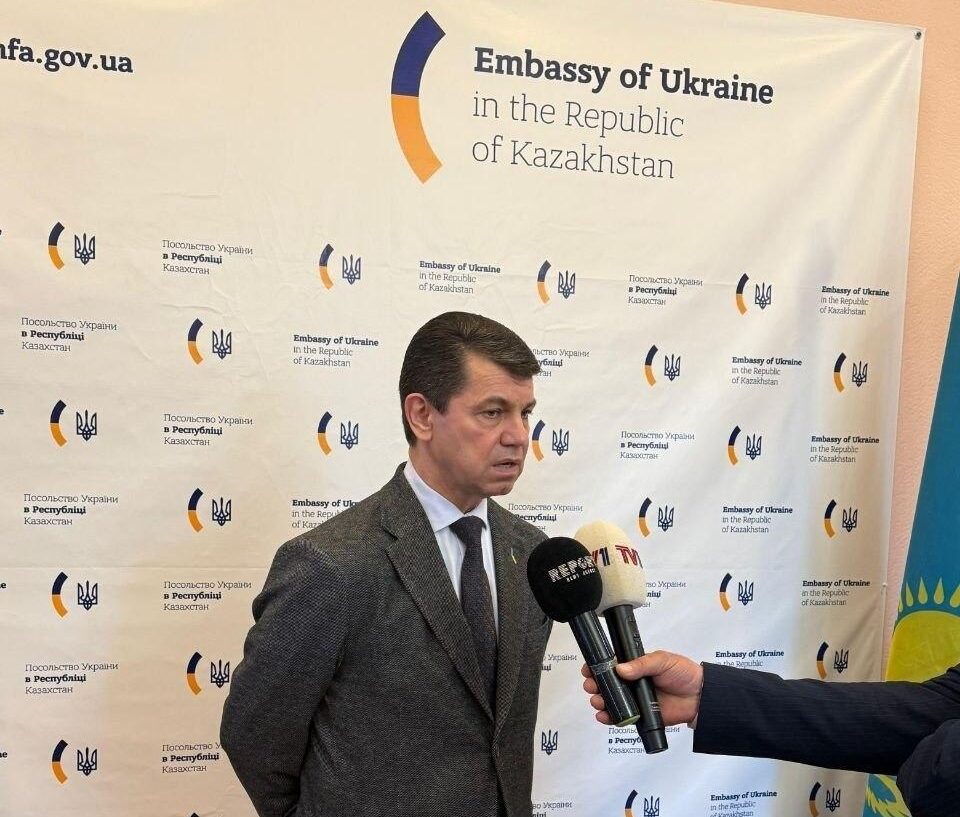
Image: Ukrainian Embassy in Kazakhstan
Astana and Kyiv also intend to expand the range of goods traded. During interdepartmental consultations held in Astana, the sides discussed trade, investment, agriculture, logistics, and humanitarian cooperation, with a focus on export diversification. They agreed to intensify business contacts, consider resuming the Intergovernmental Commission, and expand cooperation in priority sectors, particularly the agro-industrial complex.
Mishchenko said the countries also plan to strengthen cooperation in the energy sector and restore logistics chains. Until 2022, Ukraine provided key transit routes for Kazakh exports to Europe. Before 2022, a significant share of Kazakhstan’s westbound trade relied on routes passing through or near Ukrainian infrastructure. The war disrupted those pathways and forced a broader regional shift toward alternative corridors, including routes across the Caspian and South Caucasus, which remain longer, more complex, and often more expensive.
“Territorial integrity remains the cornerstone of our cooperation. We are deeply grateful to Kazakhstan for its humanitarian aid: more than 600 tons were collected, particularly during the winter. This support was critical to Ukraine’s resilience,” Mishchenko said.
The visit marked the first trip by a senior Ukrainian government representative to Kazakhstan in recent years. A large delegation of Ukrainian entrepreneurs accompanied Mishchenko, seeking to re-establish business ties with Kazakh partners.
“Despite the ongoing conflict, Ukraine is already looking toward the post-war future, and concrete proposals for cooperation, including in energy, are being developed through bilateral engagement with Kazakhstan,” Mishchenko told The Times of Central Asia. “Kazakhstan’s energy resources create opportunities for mutually beneficial cooperation, including potential integration into Ukrainian markets.”
Mishchenko noted that a Ukrainian business mission, the first in many years, visited Kazakhstan, including the Pavlodar Region, a major industrial hub with significant heavy industry and energy capacity. “This creates real demand for modernization, engineering solutions, and equipment supplies,” he said.
The delegation held meetings with government officials, financial institutions, and business representatives, alongside regional visits aimed at launching joint projects.
In Astana, talks were held with the leadership of Baiterek National Management Holding. Ukrainian entrepreneurs also visited the Astana International Financial Centre and the city administration, where they were briefed on investment opportunities, special economic zones, and investor support mechanisms.
The regional program included a visit to the Karaganda Region and the Sary Arka Special Economic Zone, where participants examined investor conditions, state support tools, and production localization opportunities. Meetings with regional authorities focused on potential joint projects.
The delegation also visited several enterprises, including Qarmet, Qaragandy Power Silicon, and the Shans farm, to assess production capacity and identify areas for cooperation.
In the Pavlodar Region, Ukrainian representatives met with leading industrial companies, including Aluminum of Kazakhstan, Eurasian Energy Corporation, and EkibastuzFerroAlloys, to discuss cooperation in industry, energy, and equipment supply.
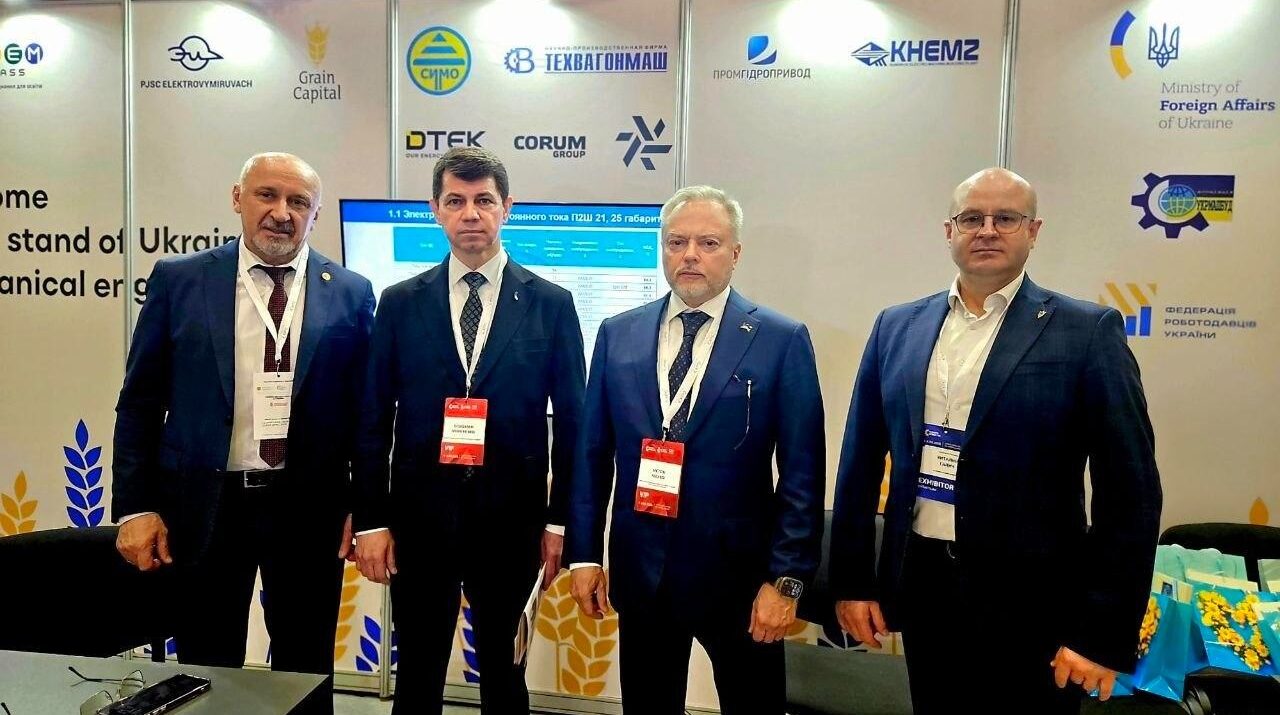
Image: Ukrainian Embassy in Kazakhstan
“Our entrepreneurs also visited the Pavlodar Special Economic Zone, where they reviewed investor conditions and state support measures, and met with regional authorities to discuss local needs and how Ukrainian technologies could address them,” Mishchenko added.
The delegation also traveled to Kokshetau, the administrative center of the Akmola Region, a key hub for Kazakhstan’s agro-industrial sector.
“Such visits allow Ukrainian businesses not only to present their capabilities but also to respond to the specific needs of regions and enterprises in Kazakhstan,” Mishchenko said. “We are ready to explore cooperation in mechanical engineering, agriculture, and other sectors. During my visit, I also met members of Kazakhstan’s parliamentary delegation to discuss industrial cooperation, humanitarian issues, and the possible resumption of academic exchanges.”
The agro-industrial sector remains a key area of cooperation. Dairy farms in several Kazakh regions have worked with the Ukrainian Milk Producers Association for years on breeding livestock supply and professional training. Logistics is also expected to play a central role in restoring bilateral ties.
“We are exploring the possibility of restoring transport routes via the Black Sea and the Caspian region, which could become a strategically important corridor,” Mishchenko said. “Before the war, trade between our countries reached $5.5 billion. We intend to actively restore and expand economic cooperation.”
Previously, Ukraine’s Ambassador to Kazakhstan Victor Mayko told The Times of Central Asia that the two economies are complementary and that bilateral trade could double pre-2022 levels.